The Peripatetic Reviewer
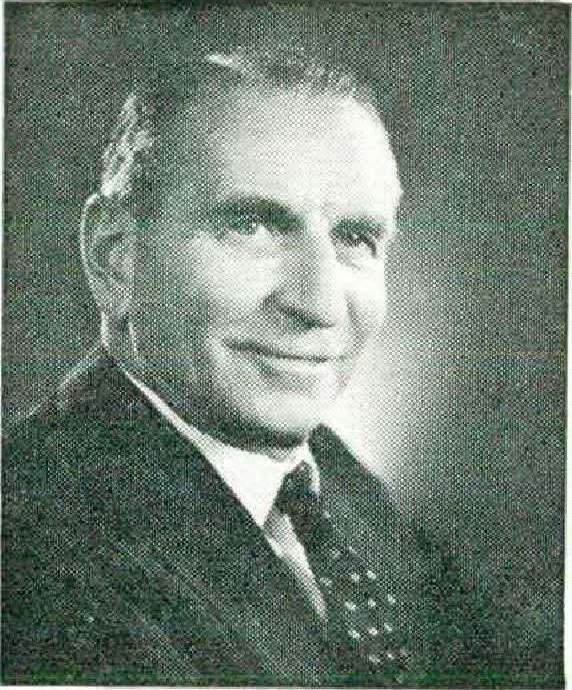
BY EDWARD WEEKS
IN MY graduate study at Trinity College, Cambridge, where my main staple was the reading of English constitutional history, I was assisted to a livelier appreciation of the Greeks by Sir Arthur Quiller-Couch, the first University Professor in English, and by Dr. John Sheppard of King’s College. I was a barbarian, unable to read Greek and greatly in need of their help. Sir Arthur gave a series of discourses, delivered to a restricted group of English and American students who gathered in his library in the evening to discuss Aristotle’s Poetics. The meeting began with coffee and biscuits, and for Sir Arthur, but not for us, a touch of brandy; then someone would read aloud a passage from the Poetics, and at a challenging point our host would call on us for illustrations drawn from our own experience. The trouble was we were too shy, too fearful of making fools of ourselves in the other’s presence, so that Sir Arthur had to do most of the talking, which, being an accomplished novelist and playwriter, he did very well. Dr. Sheppard, on the other hand, was a university character whose passion for Sophoclean tragedy was infectious. I audited his lectures on Greek drama, which were eloquent, and even better, I went to every performance of Oedipus Rex which he coached and in which Dennis Arundel, the best of the undergraduate actors, starred. Seeing this heartwrenching play performed in English by men I knew made of that purgation of pity not something quaint but terrible.
London-born and a graduate of Oxford, MARY RENAULT is reviving in her historical novels the glory that was Greece. Her approach to the ancient legends and to the great days of Athens, like that of Robert Graves, is of one who moves with familiarity through the past in search of the human nature that never changes. Her heroes are men who could have lived then and who do live now in our imaginings. In her new book, THE MASK OF APOLLO (Pantheon, $5.95), she tells the story of a young Greek actor, Nikeratos, who was bred for the stage and had to fend for himself before he was twenty. “Niko,” as his friends call him, is destined for high place, but his adventures before he wins the crown at the Dionysia take him through the hick towns, through political storm and shipwreck, into friendships and feuds that give an intimate and turbulent picture of the Greek theater. This is the November selection of the Book-of-the-Month Club and Miss Renault’s best book thus far.
The Greek theaters were staged in the open, and the acoustics were remarkable, for even a sigh, much less a groan, could be heard by an audience of fifteen thousand. The actors wore masks covering the whole head and including a wig; not the grimacing caricatures of Tragedy and Comedy which are commercially reproduced today, but masks which, especially in the fifth and fourth centuries, followed the trend of sculpture and idealized nature. Three actors sustained all the speaking parts in a tragedy, those of women included. The protagonist was usually the best man of the trio; the sponsor was either the state or the local community; and the chorus, often of boys, would be recruited in the hometown when the rehearsal began. However dissolute the actor might be in private life, the play in which he was performing was held to be a religious rite in the service of Dionysos and as free as possible from political influence. But the double meaning crept in, and politicians watched the theater of that day as they watch the press of ours.
Niko’s father was an actor and a good one, who caught his fatal pneumonia when on a blustery day he changed from the heavy robes of a king to the diaphanous costume of the woman he played next. Niko first went on stage at the age of three; he is an attractive youngster who learns his stagecraft fast, first from his father and then from such scrubby parts as he can pick up for himself on the road. His good looks and intelligence make him attractive to older men, the love of boys being an accepted part of Greek life. At Delphi, where Niko is playing the part of the god Apollo suspended by a crane high above the throng, he feels the rope begin to frazzle — it was half cut by a jealous rival — but goes on with his lines; the danger heightens his performance and wins for him the patronage of Dion, one of the most powerful leaders of Syracuse and a backer of Plato. With such encouragement, with his training and talent, and with his mask of Apollo as a talisman, Niko mounts steadily higher in the competitions leading to the top. He lives only for the theater and pays little heed to the advice given him by the closest of his women: “Take care Niko, how you shrug off public business.” But in his passion for excellence, in his loyalties, above all in his devotion to the greatest of the Greek plays, this young actor leads us to an understanding of the Greek ideals and of the spotted actuality which was so often the best men could do.
THE GLAMOROUS AND THE MATURE
Just as Rupert Brooke personified the sacrifice and gallantry of the First World War, so Hobey Baker personified the glamour of college athletics in the days when they were simon-pure. Anyone who saw him play hockey at St. Nick’s rink or run back Yale’s booming punts at University Field will never forget it. He was light for what he did: he weighed only 165 pounds, played football without a head guard and hockey with a minimum of padding; he had the sturdiest knees in America, and his speed and reflexes were such that he could take the punishment of men who outweighed him by 40 pounds and escape with nothing worse than bruises. The glory and tragedy of his career are set forth in THE LEGEND OF HOBEY BAKER by JOHN DAVIES (Little, Brown, $10.00), with illustrations that are as nostalgic as the text.
With his shock of curly blond hair and classic features, he stepped into the spotlight at St. Paul’s School, where he was a leader of all sports at the age of sixteen, and with a brief interlude before we entered the war, he was to remain in that spotlight until his death. He was a star at Princeton, with the distinction that he could outskate anyone, never lost his temper however they ganged up on him, fought shy of publicity, and though destined to be captain of both football and hockey, never tried to run the college.
The test he never met was how to mature. After graduation he was a misfit on Wall Street and was rescued from that tedium by our entry into the war. As a pursuit pilot he was as sure and instinctive as on ice. He gloried in flying; brought down three German planes, and was somewhat dismayed when he was put in command of the 141st Squadron. On an impulse after the Armistice, with his orders for home in his pocket, Hobey went up on a test flight in a plane that had been having carburetor trouble, and when the engine failed at 600 feet, he was through.
In his nostalgic book, Mr. Davies brings out the diffidence and loneliness as well as the gallantry of his hero and leaves us with the inference that it was better to have gone out in his blazing leadership than as a casualty in the eras of Prohibition and Depression that followed.
Boston has a way of attracting outsiders who come to New England to study and cannot detach themselves thereafter. I am one such, and my friend CHARLES W. MORTON is another. Charlie, the associate editor of the Atlantic for more than two decades, is an unforced humorist; he sees the funny side, not only of what other people are doing but of what he is doing most earnestly himself. He was born to cope with odd situations. His mind is one that delights in whittling away sham, and if the emerging truth proves to be ludicrous, well, that is the way he must tell it. He is not a reformer or a hostile satirist; he is glad such absurdities exist, for he relishes every one of them, as witness his occupational memoir IT HAS ITS CHARMS (Lippincott, $4.50). The title refers particularly to his long devotion to journalism and incidentally to his friendships and his liking for bull terriers, fast motors, poker, and good food.
His schooling in New Jersey and two flings at Williams College gave Morton a distaste for the family hardware business in Omaha. It took him eight years, but eventually he wrote his way East, beginning with the piece in the Haldeman Julius Journal, then a series in Hardware Age, then a piece in The Sportsman and a column in The Independent. In December of 1930, he became a reporter for the Boston Evening Transcript, and he served on this proud Brahmin daily through the vicissitudes of the Depression, when a casual management was becoming debt-ridden and distraught. These are deliciously amusing pages written to be read aloud, and I know them to be true.
HE AND SHE
Short stories when they are gathered in a book tell us a good deal about the versatility of the author, the themes which are most insistent in his imagination, and the stylistic touches by which he achieves his effect. The twenty short stories in JOHN UPDIKE’S new collection, THE MUSIC SCHOOL (Knopf, $4.95), tell us that he is one of the most skillful practitioners of this art, that he sets the mood of his story in swift, telling paragraphs, and that his characters are drawn with economy and a power of suggestion which is admirable. Basically he is a sympathizer who wastes no time getting to the heart of a predicament.
Many of the stories in The Music School are about broken or fractured marriages, and I have doublestarred “Twin Beds in Rome,” “Avec La Bébé-Sitter,” and “The Stare” as my particular favorites, but he is equally deft when he is writing about the attraction of the sexes, as in that delightful piece of cultural exchange “The Bulgarian Poetess.” And he can laugh at the homosexual, as he does in his story “At a Bar in Charlotte Amalie,” with an irony that is telling. He chooses his words with sophisticated accuracy, and when need be, with tenderness. He is a good writer getting better with each book.
AUDUBON PAINTING
Since almost everyone has seen, somewhere or sometime, an Audubon print, it is surprising to realize how few people have ever seen the painting from which the print came. Delicate constructions in an arbitrary combination of ink, pencil, pastel, watercolor, and egg white, Audubon’s original paintings have remained for a century in the possession and protection of the New York Historical Society. They are now made accessible in THE ORIGINAL WATER-COLOR PAINTINGS BY JOHN JAMES AUDUBON FOR THE BIRDS OF AMERICA (American Heritage, $75.00), two large volumes elegantly boxed. Marshall B. Davidson has provided an introduction covering Audubon’s life and methods of working, and has edited the captions, which are mostly in the naturalist’s own words. In addition, Mr. Davidson has identified the various people who helped the artist, a startling number, for Audubon was not one to fuss with backgrounds if he could wheedle a competent colleague to do the job for him. These handsome reproductions of Audubon’s work show that some of the published engravings incorporated several paintings and that the engraver was sometimes required to insert details that the artist had omitted. Imagine being instructed, by letter, to put in a grasshopper for the shrike.