The Right of Divorce
A desire to reform procedures that result in harmful child-custody settlements and encourage widespread perjury and deceit inspired this article by Mr. Cantor, a Hartford attorney who has contributed articles on narcotics and homosexuality to legal publications. The cases cited are composites and do not represent the experiences of actual clients.
by Donald J. Cantor
OVER 800,000 Americans have their marriages dissolved each year. For every four marriages made per year there is one broken. When one realizes that these 400,000 divorces per year involve not only the parties themselves, but witnesses, children, two sets of family, and others incidentally involved, it is clear that our divorce procedures affect to varying degrees a very large segment of our population.
Yet in few areas of American law does there exist a body of precepts less logical, less reflective of actual mores, and less respected and observed than our divorce laws. This is partially because divorce involves the broad question of human sexuality, and we have not learned how to discuss sexuality, let alone deal with it intelligently. And it also can be explained by the fact that divorce and marriage are matters of concern to religious pressure groups. The recent debate in the New York State legislature has illustrated, for example, the opposition of the Roman Catholic Church to liberalization of divorce laws, even in the state with the least liberal legislation.
To grasp the farcical nature of modern divorce, one must understand how marriage is regarded by the law. Marriage is not only a legal contract between spouses, but also the mutual adoption by both parties of a status which is defined, not by the partners, but by the state, because of the importance of marriage to society. Therefore persons may divorce only for certain prescribed reasons which the legislatures in their wisdom consider adequate. These reasons are called “grounds.” Though many different grounds have been enacted in our fifty states, only one of these, adultery, is universally applicable. The others most commonly found are desertion (forty-nine states), cruelty, either physical or mental (forty-four states), conviction of crime or imprisonment (forty-three states), alcoholism (forty-three states), impotence (thirty-two states), nonsupport (twenty-eight states), and insanity (twenty-eight states). Curiously, less than one third of our states allow divorces on all of these grounds.
The grounds have one characteristic in common. They provide a basis for establishing that a spouse has transgressed against traditional marital ethics, but they bear no necessary relation to the success or failure of a marriage. Adultery, for instance, may exist without breaking a marriage apart. There is so much adultery in our society that it would be naïve to suppose spouses cannot live with it. The case of Mrs. T is illustrative in this regard. Her husband, in his early fifties, had a position with a large corporation which required him to travel extensively. She knew he had been having affairs for at least ten years during these jaunts, but she had no thought of divorce until her husband actually began housekeeping with a paramour and lived more with her than with his family. Only after she felt she had ceased to be the primary woman in her husband’s life did she seek divorce. The simple truth is that many marriages are maintained successfully with knowledge of a partner’s adultery, and even with mutual knowledge of mutual adultery.
Despite our romantic propaganda about the nature of true love and marriages made in heaven, no one can really prescribe the elements of a good marriage in a formula all will accept. Some marry for money, some for position, and some to have babies and to stay out of uniform. A few choose marriage as a means of masking homosexual proclivity and are often happiest when they have very little to do with their legal spouses. To some, desertion perfects a marriage; to others, impotence is nirvana. Still others find that an afflicted spouse satisfies a need to be protective.
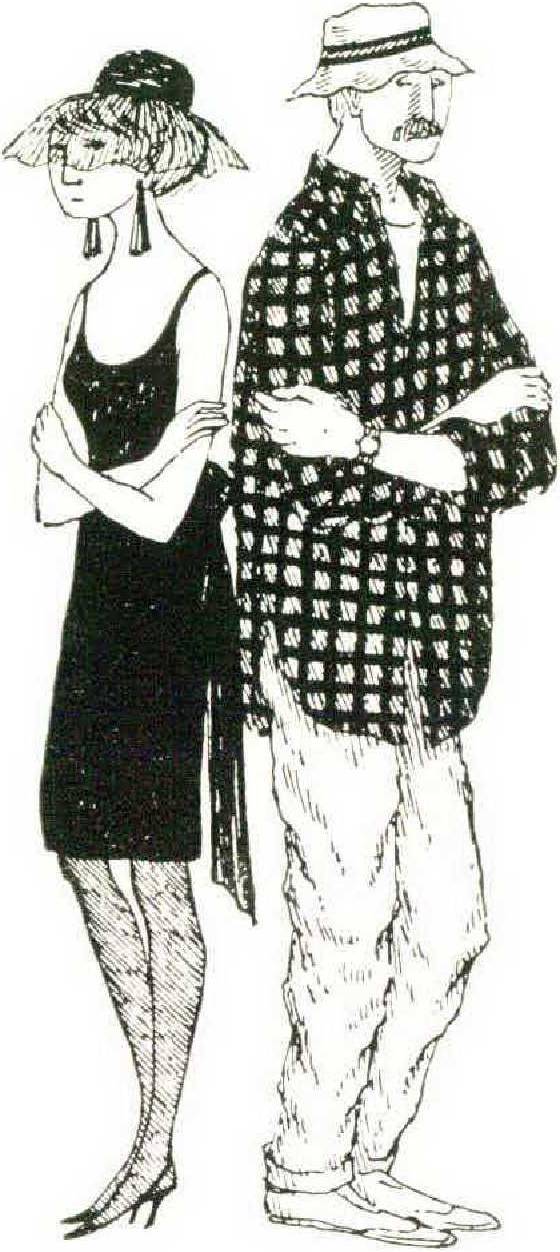
The point is that the assertion of grounds for divorce is simply a manifestation of incompatibility between the partners. The sources of the incompatibility that lead to adultery, cruelty, or any of the other legally sanctioned grounds are varied and numerous. It may be a loss of respect, unclean personal habits, a great intellectual gulf, sexual maladjustment, an unbridgeable gap of interest. Not infrequently the difficulty may be at least partially ascribable to financial disagreements and in-laws. Many persons marry before their essential attitudes and values are formed, and when they eventually do mature, they find their standards unshared by their spouses. (The median age for brides is 19.9; for grooms 22.9 in first marriages.) Inevitably they are then attracted by more suitable personalities.
The simple but apparently unappreciated fact that marriages succeed or fail on the question of compatibility should make it clear that incompatibility is the only logical legal ground for divorce. Why should adulterous, cruel, or other types of presently required acts be proved in court in order to establish sufficient legal incompatibility? The fact that a spouse may not have committed adultery, or been cruel to his mate, does not mean that his marriage is viable and should not be dissolved. The only real judge of that is the individual, who knows whether or not he can bear living with his spouse any longer. If he says he cannot, that in itself is better proof that the marriage has outlived its usefulness than any “evidence” — genuine or manufactured — such as adultery or cruel behavior. For no list of virtues can make A love or even like B, if B, for whatever reason, irritates A. And if the law forces A to stay married to B, certainly their marriage is a marriage only by legal definition. None of the usual amenities of marriage are present.
In short, it only takes one person’s dislike to break up a marriage. If one spouse wishes to divorce another, how can the marriage possibly be compatible? How can it be maintained in rebuttal that the claimant is wrong, that a person really enjoys a marriage he or she is trying to dissolve?
To state the question is to illustrate the answer. And the answer leads to the further question, why should it be necessary to prove a foregone conclusion in a court of law? The trial procedure over the question of the divorce itself is superfluous. This does not mean that all legal process can be eliminated in a divorce case. Naturally, hearings over custody, alimony, and so forth would still be necessary. But the divorce trial itself serves no purpose as a means of determining whether or not the spouse who initiates the divorce proceeding has a substantial claim, because no one can judge the substantial quality of another person’s subjective reactions.
The implications of the above reasoning point quite firmly to four proposals that would overhaul our outmoded procedures and put divorce on a sensible legal basis:
1. Divorce should be made a right to be granted automatically after a fixed period of time by a court, upon the filing of a notice of intention to procure a divorce by a person who wishes to obtain one. No explanation for why the divorce is desired should be required by this notice.
2. Allied matters concerning the custody and support of children should be determined, as is now done, by a hearing, the welfare of the children being the prime consideration.
3. Questions of alimony and the division of estate should be determined, as now, by a hearing. Here acts during the marriage which were contrary to the marriage contract could be used as evidence in determining the amount of any award.
4. Allied questions such as custody and alimony should be decided after the decree of divorce has been granted.
Certain objections to this change of procedure can be immediately anticipated. First, it would be claimed that marriage should not be easily dissolved because of resulting social instability. To disagree with this point of view is not to question the proposition that marriage is a basic social institution or to deny that divorce causes instability. It is to argue, however, that forcing two antagonistic people to stay together, if even only in legal terms, produces more instability than to allow them freedom from each other. Few human relationships are more corrosive to the persons directly and indirectly affected than a marriage of acrimonious partners. The social order can derive no benefit from the perpetuation of such relationships.
Second, what of the rights of those partners who arc divorced against their wills? Should they not be able to seek to preserve their marriage? The answer to these questions must be simply that no one should have the right to deny another person the opportunity either to marry or to divorce. The party who wishes to maintain a marriage that his partner wants to dissolve is acting either from spite, self-interest, or delusion. Even if the legal form is preserved, the spouse cannot force his or her partner to stay under the same roof. In fact, the legally successful spouse gains little more in victory than the perpetuation of his or her own unhappiness; certainly the chance to hurt oneself and another person does not qualify as a right worthy of legal protection.
But, it would be argued, such an easy method of divorce would increase the divorce rate, encourage frivolous marriage, and thus should be opposed.
This is an objection with a large degree of surface plausibility, but it cannot withstand careful scrutiny. It grossly misassesses the mood in which the great majority of people approach divorce. What is truly amazing about divorce is how much people will undergo before they will seek it. The victimized spouse often exhibits a most surprising capacity for self-delusion in trying to convince himself that things will change for the better. Mr. F did not consult me until eighteen months after his wife, he thought, tried to burn him to death; Mrs. M did not consider a divorce when her husband, during her ninth month of pregnancy, locked her in a closet and left their apartment with no one else home. Only when he deserted her did she seek to divorce him. Mr. D for years lived with the hope of saving his marriage despite constant fights and his wife’s refusal to sleep with him, and did so even after finding out that she had had continuous extramarital relations during this period. Only when he discovered that these affairs had involved eight other men, including the milkman and the laundryman, did he seek divorce. These are but a few examples. I have never seen, nor have I ever heard of, a spouse who seriously sought and eventually obtained a divorce without first enduring a lengthy period of tribulation.
This general hesitancy to seek divorce is not hard to understand. Some social stigma still attaches to it, though admittedly not much. More important, it is the disruption of one’s life, both emotionally and physically. It means living alone; it means dating again with thicker waist or balding head; it means separation from children for at least one parent; it means large financial expense; it means many forms of great and small inconvenience. It is not a very attractive prospect, and it is little wonder that people do not generally rush into it.
Of course, some people would, and do, take marriage frivolously. But these people are not deterred from doing so by our present laws. For now, if they have money, they simply establish residence in a state like Nevada, where it is easy to get a divorce, or go to Mexico and obtain quick divorces. If the divorce is not contested, they generally encounter little difficulty in their own states, though they will wait longer. The only people who are really inhibited at all by our present divorce laws are those who lack funds and those whose spouses will not agree to a divorce; for if agreement exists, divorce is presently always available if it can be financed. Sometimes this may require staged raids for “catching” a husband with a paramour, or a little perjury, but where the need is great the means are usually found.
Finally, frivolous marriages entered into with the thought of easy divorce can be deterred at least as well as present statutes deter them by not making divorce effective for a period of time after the decree is entered, or by not entering a decree until a fixed period has elapsed.
THE primary objection to granting divorce as a right would be voiced by those concerned with the effects of divorce upon children. Undoubtedly, the worst effects of divorces are visited upon the innocent offspring, not only because they are deprived of growing up under the same roof with boLh natural parents, but also because too often the parents fight over and through their children. Any alteration in our divorce laws which would complicate or burden the lives of the children would properly stand condemned for that reason alone. But children have no stake worth protecting in a bad marriage. Nothing is worse for children than the atmosphere of a home without love, for such a home invariably is filled with rancor and tension.
Allowing divorce as a right would benefit the children in a number of important ways. By eliminating the need for a trial in order to get a divorce, the terrible spectacle of a child being called as a witness against a parent would be eliminated in most cases. Also, with no trial necessary, no ground for divorce would have to be revealed, and children could thus be spared in many instances the knowledge they now acquire of the misdeeds of one or both parents.
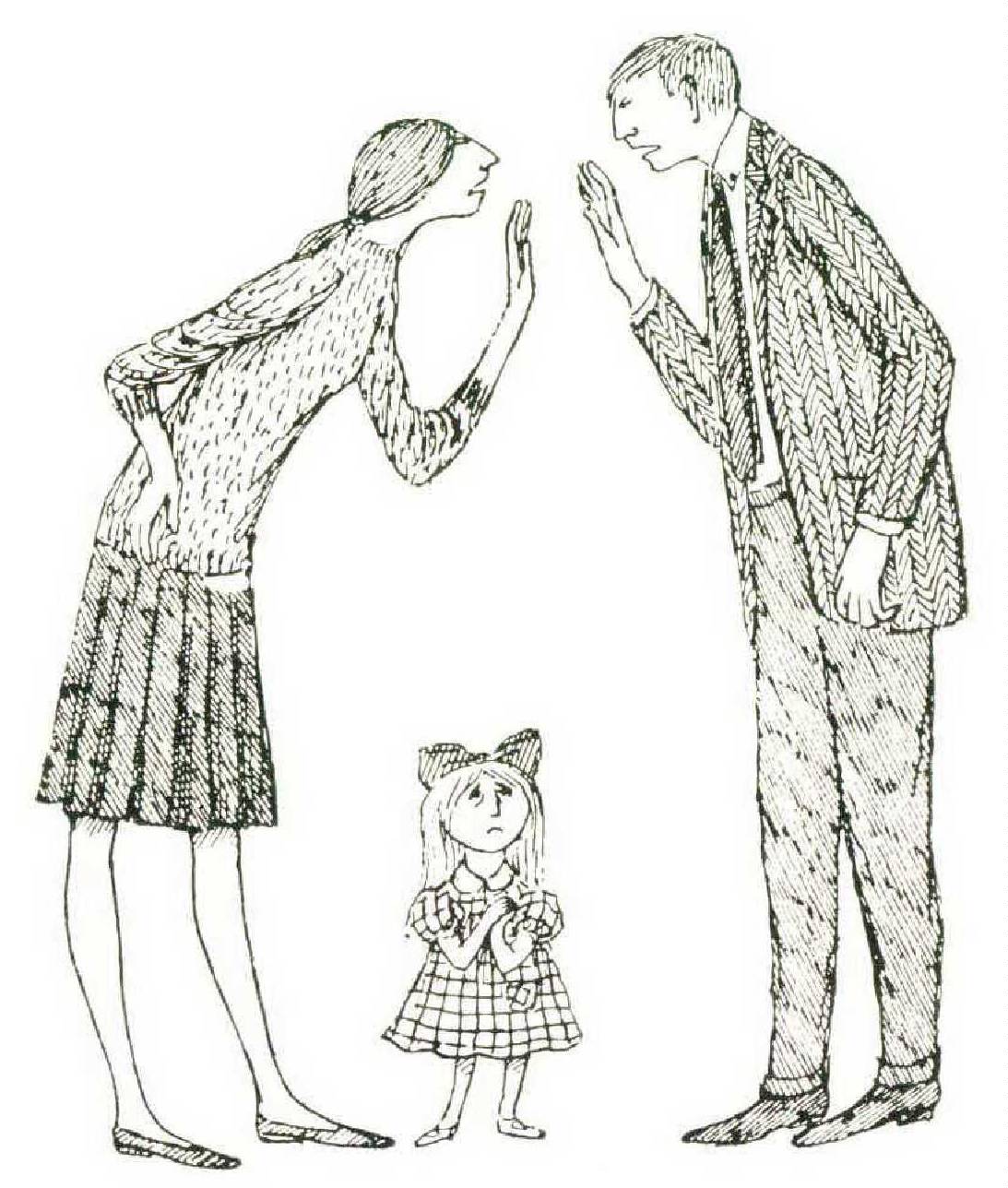
But more important, the questions of support payments, custody, and visitation rights which directly relate to children can be better dealt with if divorce is available as a right. Under our present procedures approximately 90 percent of divorce decrees are granted in uncontested cases, and these decrees usually are merely ratifications of agreements between the spouses. But these agreements are the product of bargaining, and it is the rule rather than the exception that the spouse who most wants the divorce will somewhere have to make concessions. These concessions, unfortunately, are usually made with regard to those matters which affect the children and which should be determined solely on the basis of what is best for the welfare of the children.
Sometimes, where a spouse is desperate enough, custody of the children will be surrendered to the other spouse as the price of the divorce. The case of Mrs. W illustrates this. Mrs. W was extremely intelligent and capable, not only as a wife and mother but also as a professional artist. Her earning potential and her intellectual capacities far outstripped her husband’s. She married young, and as the years elapsed, her husband, once a hero, came into true focus as a man of limited abilities who had chosen the easy path into a family business he detested but lacked the courage to leave. The marriage deteriorated but lasted until she fell genuinely in love with an engineer who was her intellectual peer. Her husband refused to allow her to divorce him unless she agreed to give him custody of their child. She could not have divorced him if he had contested it, and consequently she surrendered custody. She did this partly because she felt the worst thing for the child would be to grow up in such an obviously unhappy atmosphere and partly because she would not pass up the chance to marry the man she loved. The morality of her behavior and decision is irrelevant here; what is relevant is that the child is being reared by a combination of an inept, neurotic father and an unloving housekeeper instead of by its clearly more competent and loving mother. Without question, the court would have granted custody to the mother had custody been heard on its merits.
These extorted concessions also arise in the context of property settlements and alimony and support payments. Mr. X, for example, agreed to give Mrs. X the following to purchase his freedom: their $30,000 house; one-half interest in their $80,000 investment properties; his $100,000 life insurance policy; a $25,000 lump sum alimony payment; his automobile; weekly support payments for each minor child of $35.00. Mr. X also agreed to remain solely responsible for paying the mortgages on the real estate he conveyed, to maintain hospitalization and medical insurance for the benefit of his children, to pay all college expenses the children might incur, and sell without unreasonable delay his valuable stamp collection to apply toward his wife’s attorney’s fee. The net result was to ensure his future impoverishment and her comfort to an utterly inequitable extent. But since the parties “agreed” to these terms, they were accepted by the court and thus became the judgment of the court. Making divorce a matter of right would eliminate these pressures and blackmail tactics and raise the probability that decisions concerning custody, support, and so forth would be made free of extraneous considerations.
It must be conceded, however, that the elimination of the divorce trial will not abolish all of the objectionable features which now accompany such trials. This is unfortunately true because hearings regarding child custody, support payments, division of assets, and alimony will still provide opportunities for the parties to vilify each other, punish their children, and embarrass third parties. But the elimination of the divorce trial would sharply reduce such bitter encounters since they would then occur only when hearings on these ancillary matters were held. No longer would a spouse’s fault have to be established in each case to satisfy the requirements of a ground for divorce. A party’s misconduct would become relevant only, for example, as it might bear on that party’s capacity to be a suitable parent, and not for the purpose of establishing misconduct per se. In such a context, misconduct would be but one factor pertaining to the determination of the best interests of the children. In determining who should have custody of the children, a court will seldom give conclusive weight to adultery, unless it is so flagrant or censurable that incompetence may be inferred.
Since at least 90 percent of all divorces in the United States are uncontested, it seems reasonable to suppose that the withdrawal of the divorce itself from the area of contention would lead to agreement in an even larger percentage of cases.
With elimination of the divorce trial it would no longer always be necessary to expend large sums for attorneys’ fees, and, so often, fees for private investigators to gather evidence of spousal misconduct. No longer would persons always be required to endure the embarrassment and occasionally the trauma of testifying publicly about their marriage and its failure, and, in effect, their failure.
Moreover, if divorce were granted as a right, the law would be freed from the farce of uncontested divorce “trials” where the defendants don’t appear, the testimony falls into patterns, the outcome is known before the show begins, and court personnel, however conscientious, have to struggle to stay awake.
The injury done to the law by this silly yet cruel charade is no less great because impossible to measure, and is all the more injurious because it corrupts not only the law but all the participants. Collusion and perjury are presumed and condoned.
Two ironic inconsistencies pervade present divorce procedure. The first is that our law attempts to regulate divorce, yet imposes almost no controls over marriage. If marriage is such a crucial concern of the state, should not a law regulate not only its dissolution but its birth? The answer, of course, is that we would not stand for such regulation. It would be an intolerable invasion of personal freedom. The second inconsistency is that while men debate whether grounds for divorce should be liberalized, whether parties should be allowed to plan their divorce ahead of time under grounds such as the two-year voluntary separation recently passed by the New York legislature, divorce has already largely become a matter of planning and collusion where uncontested. Practically every uncontested divorce is already a joint venture of the parties. So the real question is, why maintain the divorce trial procedure when it is clearly a sham, not a trial, when its only real use is by spouses who fight legal dissolution of broken marriages for their own selfish purposes, and when the only other persons it affects are those too poor to gain access to easy jurisdictions?
The divorce trial is not a socially useful instrument but a repressive obstacle course inflicted as a punishment. In a political entity founded upon belief in the worth and judgment of man this is intolerable.