Potpourri
by Phoebe Adams
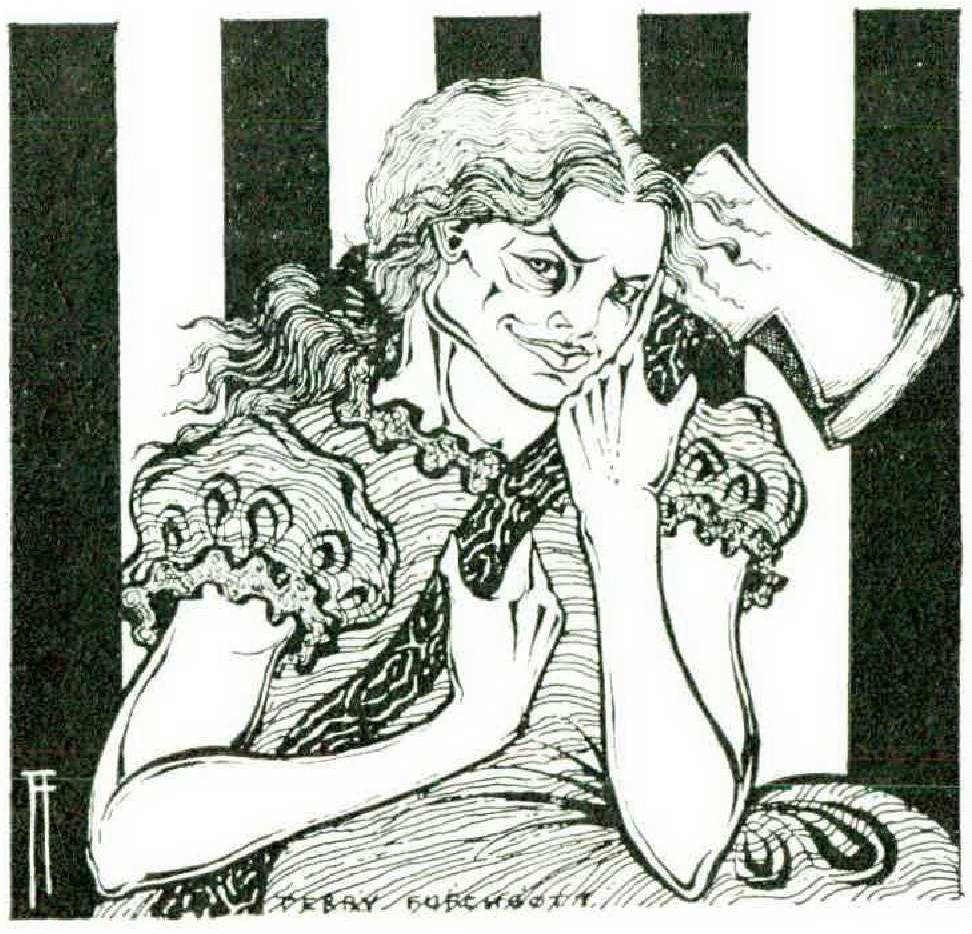
Lizzie Borden, that proper Fall River spinster who disposed of her father and her stepmother with an ax and got away with it, continues to incite writers. Lizzie herself seems to have been as dull as a boiled potato, but as far as I know, nobody has ever written a dull book about her, and VICTORIA LINCOLN’S A PRIVATE DISGRACE (Putnam, $6.95) is no break with tradition in this respect. In some other respects, it does break with tradition, for Miss Lincoln is a native of Fall River and belongs to the same mill-owning crowd that was blessed, peripherally, with the Bordens. No one of this type has ever discussed the case in print before, and if Miss Lincoln is a trifle inclined to belabor her access to the behind-the-scenes gossip of the time, she is not altogether unjustified. In addition to being a local, Miss Lincoln is, obviously, a woman, and this too is unusual, for serious students of the Borden case have all been male. As a female, Miss Lincoln makes sound and new deductions concerning the hanky-panky that went on about Lizzie’s clothes on the day of the murders. As a local, she has rummaged in the memories of elderly friends and turned up what appears to be a precipitating motive — a trinket always woefully lacking in the affair, unless one is willing to believe that a breakfast of mutton stew and johnnycake, on the hottest morning of a hell-hot August, accounts for any subsequent aberration. Miss Lincoln’s nongastronomical motive is “the Swansea place,” a farm which Andrew Borden was proposing to transfer to his wife without consulting his daughters. Such a move had raised strife in the household once before, but old Andrew, a foolishly stubborn man, tried it again, and Lizzie, who “had spells” (Miss Lincoln believes them to have been a minor and generally harmless variety of epilepsy), threw a whopper of a spell in which she chopped both her parents to death instead of merely poisoning her stepmother in the ladylike way she had had in mind when she was normal. Not all the murder details ring true, but that Swansea place does, and so do the portraits of the astounded neighbors, the meddlesome and somehow faintly seedy doctor, and the various lawyers. Miss Lincoln’s indigenous interpretation of the language of old newspaper interviews and trial testimony is wryly funny. These people were New Englanders, and what they said was not necessarily what outlanders thought they meant.
ON THE ROYAL HIGHWAY OF THE INCA (Praeger, $17.50) records archaeological work by HEINRICH UBBELOHDE-DOERING, director of the Munich Museum of Ethnology. Between 1931 and 1964, Dr. Doering made four expeditions to Peru, excavating in several areas and uncovering both Inca and pre-Inca remains. The Inca state, like that of the Aztec in Mexico, was relatively young when the Spaniards arrived and demolished it. Dr. Doering’s finds cover 1000 years of earlier cultures, all of which contributed to the Inca civilization, and all of which left strange and handsome relics behind them. Since the author is as interested in the probable meaning of these relics, in the modern Indians, and in the Peruvian landscape as he is in his digging, the book covers more varied territory than is usual in archaeological narratives. The handsome photographs range from bones bedizened with decayed tapestry to disapproving aborigines draped in ponchos bearing very similar patterns.
The poet was not always malicious, but the SIXTY POEMS OF MARTIAL (Harcourt, Brace & World, $4.75) put into English by DUDLEY FITTS were admittedly chosen by the translator for their satirical snarl. They show evidence of being chosen for modern relevance as well, for the victims include a whole bevy of Roman types that arc still with us, as Mr. Fitts demonstrates with hilarious success by transferring the crowd to Harvard Square.
By ignoring unpleasant detail and restraining emotional excess, MARCIA DAVENPORT has achieved in TOO STRONG FOR FANTASY (Scribner’s, $8.95) an autobiography that reveals very little about the writer. As the daughter of Alma Gluck, she had a wide musical acquaintance, and her sketches of people like Toscanini are engaging. As the wife of Russell Davenport, one of the principal movers in the nomination of Wendell Willkie, she had a close view of the campaign; her report of this experience, which she says was exciting, is coldly reasonable. In the course of writing her fine biography of Mozart, she developed a passion for Czechoslovakia, an inexplicable devotion that drew her back to the country again and again, until the death of Jan Masaryk, whom she had expected to marry, made return impossible. Her account of the last, hopeless, beleaguered weeks in Prague with Masaryk comes as close to live fire as anything in the book, but never quite ignites. It is clear that Mrs. Davenport writes of her hates — she loathed Alexander Woollcott and frankly hopes it was a quarrel with her that killed him — more vividly than of her loves, and that a sense of fair play and the habit of good manners have caused her to restrain her talent for denunciation. The result of this control is something resembling a view through the wrong end of an ice telescope, and the only figures who survive it are Alma Gluck, Masaryk, Toscanini, and a cat named Tamerlane. They form, come to write them down, a distinguished group.
R. P. LISTER, whose poetry has frequently appeared in the Atlantic, describes his travels through Turkey in A MUEZZIN FROM THE TOWER OF DARKNESS OKIES (Harcourt, Brace & World, $5.95). Mr. Lister has an imagination that causes him to see the Danishmend emir as “an enormous, bushy-bearded fellow in a winged hat . . . with his battle-axe propped up in the umbrella-stand.” This vision elaborated is perfectly reasonable, although hardly predictable, and such is the charm of Mr. Lister’s thoroughly charming book. It is perfectly reasonable, Indeed, very informative, but never in the least predictable.