Potpourri
by Phoebe Adams
In THE HAPPENING AT LOURDES (Simon and Schuster, $6.95), ALAN NEAME has picked his way deftly between true believers and total skeptics, paying less attention to the girl who saw a vision of the Virgin Mary than to the society which produced both the girl and the subsequent explosion of churches, chapels, curative baths, and miraculous recoveries on the spot where the vision occurred. In the France of 1858, such a vision was not wildly unusual; there had recently been several others. (One rather wishes that Mr. Neame had provided statistics on visions in other countries and of other divine personages during the same period.) There was also an energetic church vs. state row in progress, with the lines roughly drawn between a conservative Catholic-Royalist party (out of office) and a progressive secular-Republican party (in charge). No doubt there were sensible moderates in each group, but as usual, it was the extremists who made the most noise, and Mr. Neame quotes them at malicious length. Both sides were intransigent and authoritarian, and the Catholic party comes off worse in quotation only because it was addicted to circulating pious prophecies of foggy origin and lamentable style. The development of the shrine at Lourdes, therefore, produced two distinct struggles, both quite nasty. One was between the parish priest and a Marian missionary order for control of the shrine and its money, the other between the secular national government and the enthusiastically Catholic portion of the population over whether the place should exist at all. The shrine began, incidentally, quite spontaneously and with no clerical encouragement. The quarrels have been settled, more or less, by the mere passing of time, but they still make interesting reading when reinforced, as they are, by the history of the district and examination of a whole series of papal pronouncements on the status of the Virgin.
Some of this material, as it emerges in the book, looks like excessive scholarship. It is not. Mr. Neame needs all of it to support his ultimate point. He is arguing that the laconic, practical instructions of Bernadette’s vision, seized upon at the time by the conservative party as endorsement of its cause, actually prefigured modern attempts to liberalize church dogma.
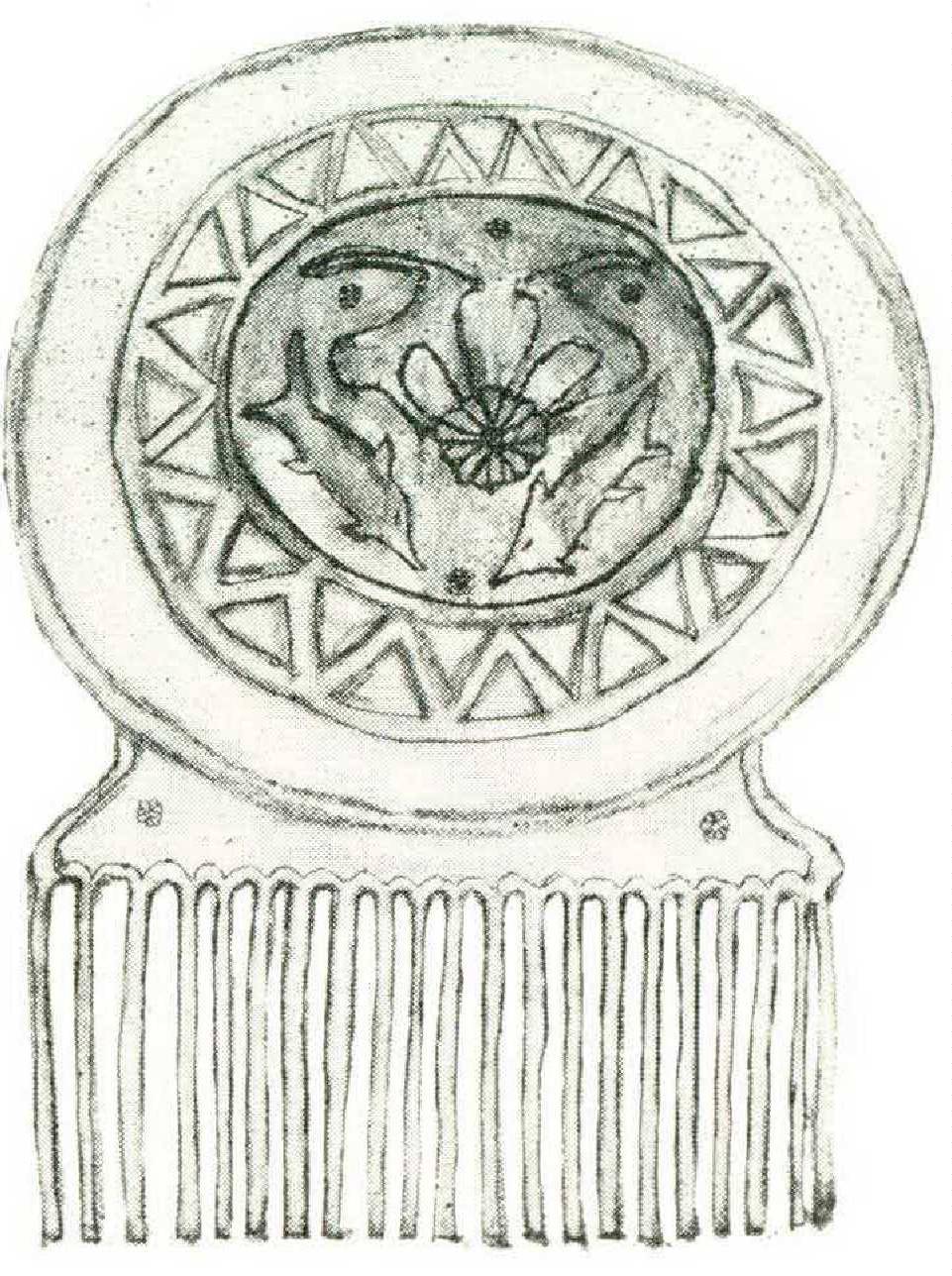
THE DORAK AFFAIR (Atheneum, $4.95) recounts an attempt by two British journalists to discover the truth underlying the Turkish government’s disapproval of the archaeologist James Mellaart. Mellaart, of Dutch origin but digging under British auspices, was a reputable excavator who had worked for several years in Turkey. After his last job, the partial excavation of an 8000year-old town at Çatal Hüyük, he was refused further digging permits and accused of smuggling antiquities out of the country. Anyone who wishes to follow the example of the journalists, KENNETH PEARSON and PATRICIA CONNOR, and poke into the antiquities black market, will discover that the Turks have reason to be a bit paranoid about smugglers. Some of their best stuff is turning up where it has no business to be. The odd thing about Mellaart’s case is that what he supposedly abstracted — the Dorak Treasure — has not turned up, nor has it ever been seen by anyone but Mellaart. He was indiscreet enough to publish a tale of meeting a girl on a train, observing her antique bracelet, scraping acquaintance, getting invited to her house, and there examining, and sketching, some remarkable objects which the girl said had been dug up years before at Dorak. Dorak exists, and the street the girl lived on exists; all else in the business is Mellaart’s word, for he was unable to photograph the objects. Nor was he equipped to make laboratory tests of their authenticity.
The Turkish authorities, jogged by a xenophobic newspaper, chose to assume that there was in fact a treasure and that Mellaart had somehow removed it from the country. Miss Connor and Mr. Pearson, battling through Turkish red tape and sputtering with justifiable contempt over the habits of the Turkish press, have also concluded that something resembling a treasure existed, but that Mellaart, far from stealing any part of it, was deftly made the fall guy for a smuggling ring which could not sell this very peculiar loot until it had some kind of recognition by a professional archaeologist. Except that nobody gets murdered or even bashed on the head, the story makes the average novel of espionage seem a tame, simple affair.
THE MOUNTAIN OF MY FEAR (Vanguard, $4.95) describes the ascent of Mount Huntington by DAVID ROBERTS, the author, and three fellow enthusiasts. The four chopped and belayed their way up the narrow icy peak, and one man was lost on the trip down. The book is compact, well written, and exceptional for the young author’s subtle, unsentimental attempt to define the motives that drive men to climb mountains.
EMLYN WILLIAMS’ book on the Moors murders, BEYOND BELIEF (Random House, $5.95), presents the dreary history and semi-slum environment of Ian Brady and Myra Hindley thoroughly, with a dramatist’s command of narrative and of detail. The book ultimately reveals nothing to explain the murders. Perhaps no study ever can, but this one is hampered by two restrictions. One is inevitable: Mr. Williams could not communicate with the killers and was forced to resort to reasonable but improvable conjecture. The other is self-imposed: out of consideration for readers’ sensibilities, there is no quotation from the sound tapes of the torturing of the little girl. Possibly quotation would add nothing, but it is human nature to suspect that the clue is hidden in what has not been revealed.