Washington
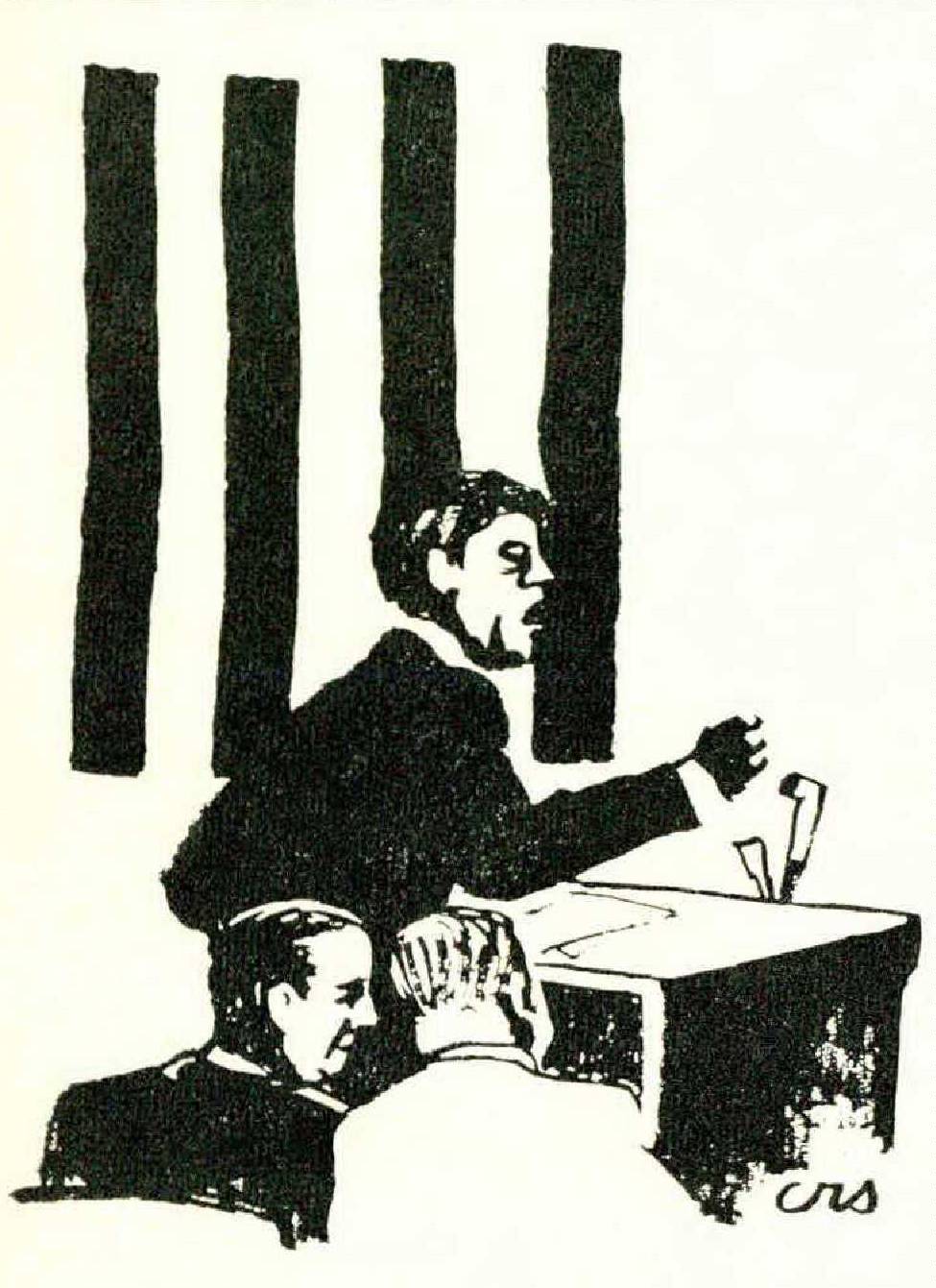
“You are as aware as we are that the shift of opinion in this country is in the wrong direction.”
— Senator Karl Mundt (R., S. Dak.) to Secretary of State Dean Rusk, March 12, 1968
To most people distressed about the course of American policy in Vietnam since 1964, it had seemed sadly but inescapably true that Lyndon Johnson, offering tributes to the magnitude and virtues of “American strength” at a military base, did after all speak for America.
This would probably have been an inaccurate reading of the electorate weeks before the New Hampshire primary, and months before LBJ’s decision not to seek re-election. A band of states stretching across the Northwest and North Central boundaries® of the republic has sent to the United States Senate a collection of supporters of the late Great Society who also make up the rank and file (and some of the leadership) of the Senate’s anti-war bloc. Reading from west to east and north to south, a list of these Westerners and Midwesterners would run like this: Gruening of Alaska, Morse and Hatfield of Oregon, Church of Idaho, Mansfield and Metcalf of Montana, Burdick of North Dakota, McGovern of South Dakota, McCarthy of Minnesota, Nelson of Wisconsin, Hartke of Indiana, Young of Ohio. Five of them are up for re-election this year: Gruening, Morse, Church, McGovern, and Nelson, Democrats all. Also up are Democrats Fulbright of Arkansas and Clark of Pennsylvania, who would appear on any master list of the Senate’s war critics. Republican Morton of Kentucky is retiring.
Senate rebels
Six months ago, none of the five Western and Midwestern senators’ prospects were bright. The primaries, and the political upheaval they wrought, have told their story of what has happened to support for the war since the Tet offensive. A less publicized version of the same story is indicated by the fact that the anti-war senatorial candidates in Lhe West and Midwest are for the first time optimistic about their chances at the polls. Thus, in part, the alarm in the view expressed by Karl Mundt (stalwart conservative) to Dean Rusk.
What and whom do these antiwar senators represent in 1968? The question is complicated by geography, history, and the Administration, which would have you believe that Morse et al. are just the dressedup ghosts of the pre-war isolationists, popular with the liberal intellectuals who understand fashion but not power, soft on Mao as others were blind to Hitler.
In fact, these men do represent the region which from William Jennings Bryan’s day to World War II sent to Washington the most progressive, independent, and controversial politicians of the era. Much of the economic regulation and social legislation of Wilson’s and FDR’s Administrations was first offered in Congress by an avant-garde of men like the Robert La Follettes, father and son, of Wisconsin, William Borah of Idaho, Burton Wheeler of Montana, and George Norris of Nebraska. Some of them — especially Wheeler, Borah, and Gerald Nye of North Dakota — led the fight against American entry into World War II, and it is indeed to the blindness of their isolationism that the President and others have tried to link what they call the “new isolationism” of the Senate doves.
There are in fact as many ambiguities in the alleged “isolationism” of Frank Church of Idaho or Wayne Morse of Oregon as there are in the “internationalism” of Lyndon Johnson. These ambiguities are as important as those which surface in public opinion polls depending on how the question is put: this whopping percentage against American troop commitments to Vietnam or in favor of a phase-out is followed by that whopping percentage in favor of more aggressive prosecution of the war.
The West and the war
How, for example, does one explain the case of George McGovern in South Dakota? At forty-five, he has been a history professor, a congressman, and director of the Food for Peace Program under Kennedy. He is a New Frontier and Great Society liberal, and with Fulbright, Morse, Gruening, and Nelson he is one of the most unqualifiedly antiwar men in the Senate. He was elected by a fraction of a percentage in 1962 in a state which is registered Republican by two to one. Nixon easily carried it in 1960, though Johnson took it four years ago. In February, according to the reliable South Dakota poll, the only Republican the President could have beaten was Reagan. Rockefeller would have carried the state against LBJ, 56 to 25 percent; Nixon would have carried it with 51 percent to Johnson’s 35. But McGovern would poll 70 percent against 27 percent for his nearest Republican opponent. Given the state’s Republicanism, this can only mean that whatever South Dakota Republicans think of Rockefeller, Nixon, or Reagan, many of them like dove McGovern.
Doubting center
Says McGovern, “It’s hard to define what people think about the war—they would like not to think about it at all. There’s no question but that the Tet offensive shocked a number of people who have gone along with the Administration, sharing its optimism and suppressing doubts. People will come up to me to commend my stand and say nothing more specific than, ‘Well, this Vietnam thing, I don’t know ... I think it’s good you’re standing up, asking questions, having it out. I don’t trust this Johnson.’ ” Translation, according to McGovern: if the war gets bigger, these voters of the “doubting center” will probably go along with escalation, but they will want out all the more. They are more inclined than ever to doubt the possibility of “victory.” They will tolerate and listen to the anti-war senators, and perhaps elect them as a measure of their doubts. They have been susceptible to appeals for escalation of the air war. “Bombing,” says McGovern, ex-wartime bomber pilot, “appeals to people. It’s the way to make war without shedding our blood.”
All of these senators get around their states; some, like Gruening and Church, for a week or two at a time; others, like Morse, almost every weekend. Church, McGovern, and Nelson are particularly encouraged by smaller meetings at which they can take questions and experiment with various ways of talking about the war. They agree on the effectiveness of two anti-war approaches. One is to try to split the war-hawk vote apart by showing that escalation means not just “easy” bombing but more American ground troops in Asia. Gaylord Nelson, fifty-one, who served two terms as governor of Wisconsin and now seeks his second Senate term, is a political sophisticate who argues the anti-war position more with irony than with appeals to morality. “The confrontation won’t be about whether one is for or against the war,” he says. “Everyone’s ‘against’ it. It will come on more immediate points. A lot of Republicans will argue for giving the military free rein. I’d say in response, ‘ Does my opponent favor sending another hundred thousand troops to Vietnam? And another? Because that’s what military escalation means.’ ”
“ Yellow peril” and dominoes
The second anti-war tactic these men employ is more daring. It tries to counter the most basic brand of positive support for Administration war policy. The lowest common denominator of support for the Administration, the anti-war senators agree, has been a kind of vulgarized domino theory. Each has encountered constituents who dislike the President’s personality, feel the war is a disaster, wasteful, ugly, dangerous, even unwinnable. These voters think that we are overcommitted; are failing to attain promised goals; never should have gotten in; ought to find a way out. Nonetheless, say these citizens, we are standing against a potential flood of Chinese Communist aggression across Asia. Whatever the validity and refinements of the domino theory in State Department discourse, the vulgarized view of the nature of the confrontation translates out in unsubtle terms, with the help of inflammatory statements from the President and other politicians on down the line. Fact thus mixes with speculation and hokum. The Red Chinese came into Korea against us. Viet Cong or Pekingese, the enemy is “Asian Communism.” “We’ve got what they want and they’re coming after us.” (LBJ, 1966)
The senators have devised rather simple analogies to dislodge the | equally simplified canons of “yellow peril” rhetoric. Each is in effect arguing a reverse of the domino theory. As Gaylord Nelson puts it, i “The Chinese are not there now, but to send a million men to fight in the very border areas of China is certainly the best way to bring the Chinese in.” Nelson’s analogy goes like this: “I say to my audiences, 'What Chinese? Where are they? In twenty years of fighting there haven’t been any Chinese in Vietnam, and it’s only our luck and their weakness that that’s so. Try thinking about it the other way round. Suppose Mexico were split in two and a Communist South Mexico were at war with a pro-American North Mexico. Why, any President of the United States who wasn’t throwing AmeriI can power down there would be impeached!’ ” Church suggests that we are looking for trouble from China rather than meeting a threat, and asks his constituents to “imagine for a moment that we were in China’s place, and that Chinese Communist power positions were poised in a ring around the U.S. from Cuba through Mexico to Alaska.” McGovern speaks of the conflict as “basically a civil war between two groups of Vietnamese which only they can resolve — much as we once fought and resolved a civil war between the North and South in our country. If the big world powers of a hundred years ago had come over here and chosen up sides and tried to settle it for us, it would have been the worst thing that could have happened to us.”
“Arsenal diplomacy”
Morse and Gruening have been as critical of foreign aid as the most fossilized Republican, and increasingly, Frank Church has joined them, in theory, this ought to substantiate the charge against them of “new isolationism.” Even George McGovern, more inclined to vote for foreign aid, suggests that occasionally anti-war liberals vote against aid as a gesture toward rightwing opinion in their states. They are hardly alone. Opposition to foreign aid has crystallized as a vote of no confidence in American foreign policy in more general terms. Frank Church, for example, speaks of America’s “arsenal diplomacy.” The conservative critics of the aid program take as their primary target “waste.” The liberals’ primary target is military aid. There was nothing cynical about the entire Senate’s shock at such consequences of military aid as the use of Americansupplied weapons by both sides in the Indian-Pakistani and Arab-Israeli wars. The liberals’ objection is to the tendency of aid to become a vehicle of American diplomacy, and then for politically angled aid to metamorphose into military aid. U.S. intervention in Vietnam, Church tells Idahoans, began as “just another foreign aid program” — and look at it now.
To call all this “isolationism,” old or new, is to ignore the context of and the motive for these men’s position. Morse’s opposition to foreign aid, for example, is no fiercer than his animus against go-it-alone involvement in Vietnam. Since 1954, when Eisenhower and Dulles refused to sign the Geneva Accords, he has argued that the Security Council and Geneva — not the battlefield — were the proper places to take our case about Vietnam.
Maverick
At sixty-seven, Wayne Morse of Oregon is a throwback in personal style to the proud, intellectually arrogant, maverick style of Borah. Like Norris and La Follette, he finds party labels less important than his independence. In contrast to antiwar senators who were alienated from Administration policy by escalation in 1965 and by the failures of escalation in 1966, 1967, and 1968, Morse has opposed American involvement in Vietnam these last fourteen years both on points of international law, on which he is an expert, and on political and strategic grounds. He and his ally, Gruening, contributed the two nay votes against the Tonkin Gulf Resolution in August, 1964. Morse called it then, accurately and prophetically, a “predated declaration of war.” (It Look the Administration three years to concede Morse the point. In 1967, Undersecretary of State Katzenbach called the Resolution a “functional declaration of war.”)
Though the archetypal loner, Morse is protective of Gruening, and both are proud that they were so right four years ago about what the Tonkin Resolution really meant, and less suspecting senators, like Fulbright, so wrong.* Few people took Morse’s cranky view of the Tonkin situation seriously in 1964, when he first suggested the possibility of American provocation. Today it would be hard to find a senator who fully trusts the Administration’s account of what did and did not happen in the Gulf of Tonkin on the night of August 3—4, 1964.
Two fallible gods
There is little point in someone like Morse trying to adjust his stand on the war so as to confuse hawkish opposition this year. He has been so far out against the war, so loudly, for so long that he has a “kind of product identification” on the issue, says a man who has worked for Robert Duncan, Morse’s pro-Administration challenger in the Oregon Democratic primary on May 28.
Indeed, it is worth considering whether the voters wouldn’t resent it if he did moderate his views. As George McGovern suggests, people do not have to approve of his views to want him in the Senate as a kind of insurance policy against their doubts about the war and the President. In a war in which nothing has been sure, least of all the Administration’s assurances, doubters could count on one constant: Morse’s unyielding opposition to the President (with whom he carries on an obscure personal relationship, in spite of everything). Two unbending, fallible gods — which had fate behind his logic?
This theory is perhaps validated by the fact that Morse’s Democratic opponent, Duncan, has seemed to lose support as he edges away from his 1966 position. That year he lost a Senate race to Mark Hatfield, crying, “If we don’t fight in the Delta, we’ll have to fight in the grasslands of the Columbia River.” This year Duncan spoke of helping Lyndon Johnson “bring peace” to Vietnam. But his “product identification,” either as hard-liner or hedger, would seem to be one the voters have in quite sufficient supply. A third candidate in the Democratic primary, a superhawk, is cutting into Duncan’s appeal, and for the first time the gamblers give odds on Morse.
Globalism
The most interesting DemocraticRepublican race to shape up so far is in Idaho. It is proof that however good these senators’ chances look now, they are not home free. Frank Church, like McGovern of South Dakota, was a quiet critic of the war before the 1965 escalation. As late as February, 1965, he was close enough to the Administration reservation to say, “The judicious use of both the arrows and the olive branch represents our best hope for avoiding a widening war in Asia.” A moderate no more, he faces formidable opposition in November from a young Republican congressman who quotes Curtis LeMay approvingly, and doesn’t like the State Department’s “weak-kneed” attitude toward Russia. A far-right recall movement against Church failed badly last year, and though it focused attention on him as a war critic, it provoked conservative newspapers, which had never previously had a good word for the senator, to repudiate the recall as an extremist effort.
Forty-three, and at the end of his second term, Church would like to hold moderates and conservatives who don’t buy his war views, but who objected to the recall’s challenge to his patriotism. Church lacks the sort of commanding position in Idaho which McGovern seems to have in South Dakota, even though Idaho elects more Democrats and is more accustomed to splitting tickets. His voice is as loud as any opposed to the war, and yet it seems more equivocal. A foreign policy speech delivered to the Senate in February and widely distributed in Idaho was outspoken against the war. At the same time, Church made routine stops at safe and sound flagposts of consensus opinion. He spoke of the “brazen insolence” of “angry rebels” who burn their draft cards, and offered a slightly prissy thought for a hell-raising dove: “No argument can be won by bad manners.” But more suggestive than Church’s use of anti-beard nostrums was the way he attacked the Johnson Administration. Consider the varying strains in these remarks:
“What . . . have we bought with armaments unlimited and foreign aid dished out on a global platter? ... If not security, have we bought peace? . . . Our policy of global intervention has meant war, not peace. During the past 25 years, the United States has engaged in more warfare than any other major power. ... I don’t propose swinging the pendulum back to ostrich-like isolationism. One extreme needn’t call for the other. I propose rather that we seek out the rational middle ground, where the limits of our intervention are drawn to correspond with the limits of our resources . . . [G]lobalism, our present foreign policy.”
Blur
All this is of a piece with what the other anti-war senators say, and with the opinions of George Kerman, Walter Lippmann, and other scholarly, liberal critics of the trend of American foreign policy. And yet, there are allusive echoes. “Globalism,” “our policy of global intervention . . . during the last 25 years”; these have different sounds to different people. No wonder that Church’s challenger, Congressman George Hansen, thirty-seven, former Air Force man, insurance man, opponent of “funny money,” Democratic spending, and “no-win” wars, picks Church up on it and speaks of an “embittered, extremist, homefront, leftist-isolationist minority in high places and low.” (My italics.) Hansen now and then shrewdly throws out a line in the direction of “prudence.” Thus, lacing his Goldwater gin with a touch of vintage — 1964 — Johnsonian vermouth, he opposes using nuclear weapons in Vietnam and deplores our “getting involved in a land war in Asia.” If Hansen, an energetic conservative, echoes Republicanism of the early 1950s and 1964, it is fair to say that phrases of Church’s catch a sufficiently pre-war isolationist or postwar “Fortress-American” flavor to blur the clash of his views with Hansen’s just a bit. The one is not as chemically pure and distinct from the other, to put it another way, as is Wayne Morse’s collective-security internationalism from Lyndon Johnson’s “big-stick" internationalism. In 1968, that blur may be the only way for a liberal Democrat like Frank Church to hold his own against a conservative Republican like George Hansen.
Gaylord Nelson was for a time faced with running against Republican Governor Warren Knowles, which might have made for a close race. Early in the spring, a group of Wisconsin businessmen, who feel Nelson is an effective advocate of Wisconsin’s interests in Washington, reportedly dissuaded Knowles, whom they also like, from getting into a duel with Nelson. But there is no assurance that Knowles is out of the race to stay.
Alaska’s Republicans are well enough financed to keep Ernest Gruening worried, and his eightyone years make him vulnerable. Despite his age, he is chipper, a figure of probity and dignity whose career has been less in politics than in government as the Interior Department’s Director of Territories and Island Possessions under Harold Ickes, and later as territorial governor of Alaska. Until recently, he thought that the war would not be the issue in Alaska which it is in other states. “The war came late to Alaska,” he says. “One reason is that ten years ago, after statehood, a lot of defense installations were put into Alaska because of its proximity to Russia. This made any notion of a threat in Asia seem distant.” Gruening is not much interested in election-year calculations about the war. “I’m quite prepared to stand or fall on my position on Vietnam,” he says.
Twists
Whatever the President thought of running with critics of his policy in other states, these senators would gladly have done without LBJ at the top of their tickets. McGovern expected to run 40,000 votes ahead of the President in South Dakota if LBJ had run. All of them thought the President would lose their states. Their independence is proving an asset in looking for campaign funds among wealthy liberal well-wishers in places like New York as well as at home. The Democratic Senatorial Campaign Committee apportions funds to candidates without discrimination because of their views. Each can count on about $I5,000 from that source. Nelson, Morse, and McGovern have had reason to fear that Eugene McCarthy’s and/or Robert Kennedy’s entry into their states’ presidential primaries would create a bothersome competition for money from anti-Johnson Democrats. On the basis of events, at least they need not fear anymore that these candidacies, however divisive, will stigmatize the anti-war position.
It can be argued that as there is no such thing as a majority “peace vote,” so there is no such thing as a majority “war vote.”The hawk vote is not necessarily a pro-Administration vote, as the more selective polls show. In 1966, several moderately dovish Republican senatorial candidates (Mark Hatheld, Charles Percy, Edward Brooke) deleated rather more pro-war Democrats (Robert Duncan, Paul Douglas, Endicott Peabody). But 1966 was something of a Republican year. This year, though, as the war seems to dominate such conventional categories, there are ironic twists. George Hansen is campaigning in Idaho not only against the profligacy of liberal Democratic spending policies but against tight money conditions under a Democratic President, which are to a large extent a consequence of the war Hansen supports!
The Northwestern and North Central Democratic doves have not particularly been stocking up on conservative votes on domestic issues. All voted for cloture on the civil rights bill this spring. And though Gruening and Church went along with the conservatives on several open-housing amendments, and though only Morse among them stood with twelve other liberals against an “anti-riot” amendment, their records as domestic liberals are as solid as any. There are only a scant number of Negroes (if a number of Indians) in Alaska, Idaho, and South Dakota. Yet Gruening, Church, and McGovern say that white fear of black revolution is as strong there as if the states had Chicago-sized ghettos. Their disinterested votes for cloture won’t hurt them for the same reason they won’t help them: there are no Negroes to move into white neighborhoods — or to vote for Gruening, Church, or McGovern for re-election. But a summer of violence, says Church, will hurt “all incumbents.”
The senators might or might not agree with Richard Hofstadter, who wrote in The Age of Reform in 1955 that “from our earliest history as a nation there has been a curiously persistent association between democratic politics and nationalism, jingoism, or war.” For now, they must each of them face electorates which are not experienced in contemplating distinctions between collective security and unilateral intervention; between “isolationism,” “internationalism,” and “nationalism"; and between what those words meant in the contexts of 1940, before and after August 6, 1945, in 1954, and what they mean today.
Those issues, and the ways in which Democrats and Republicans talk about them, have changed since 1960. LBJ’s withdrawal from the campaign at home and from a commitment to “win” in Vietnam changes them more.
— Michael Janeway
- Though he voted for the Resolution in the end, Nelson of Wisconsin also had something like the power of clairvoyance. He tried, unsuccessfully, to get Fulbright, who was managing the Tonkin Gulf Resolution for the Administration, to accept an amendment making it plain the Congress was not approving any change in the limited “advisory” role of the United States in Vietnam.↩