Labor Arbitration: Britain and the u.s
About a year ago at the Ford Motor Company plant in Dagenham, England, an employee was told to put a new drill in his machine, a simple chore he’d always done before. But now he balked for no apparent good reason. When he was suspended temporarily, 100 of his co-workers walked out in protest. Within two days, 9000 Ford employees were laid off because of the crippling effect of the walkout.
As is the case with about 95 percent of all the strikes in Britain, the stoppage was “unofficial,” without the sanction of the national union, it could hardly be called illegal because almost no strikes are illegal in Britain. But legal or not, these “wildcat” strikes have been characterized by Lord Carron, the ex-president of the one-million-member Amalgamated Engineering and Foundrymen’s Union, as “hammer blows at our [Britain’s] existence.” Largely because of the “quickie” strikes, the Economist, that fount of measured judgments, describes the labor relations picture in Britain as “a uniquely horrible mess.”
If the Dagenham case had arisen, for example, at the Ford stampingplant in Cleveland, Ohio, it would have been handled differently. The recalcitrant employee’s protest against being sent home would have been referred to a formal unionmanagement settlement process for resolution. The odds are 1000 to one against a strike, but if the episode had boiled into a crippling walkout, the United Auto Workers’ national staff would have moved in to end the stoppage.
Grievance
This private system for avoiding wildcat strikes about a multitude of issues from tardiness to the quality of washroom toilet tissue has been written into close to 100,000 separate private contracts between management and labor. It is founded upon a voluntary union pledge not to strike over so-called grievances arising during the period when the contract is in effect. Instead, union and management agree to the arbitration of all unresolved grievances. Those not settled by the supervisor and the union steward or by higher officials in joint conference are sent to a private arbitrator. The parties agree in advance that the arbitrator’s decision must be accepted as final and binding.
Except in highly regulated industries like the railroads and the airlines, the entire system is strictly a matter of private agreements. Neither state nor federal law requires the no-strike pledges given and honored by unions, and only a relative handful of the more than 40,000 arbitration decisions rendered annually ever wind up in court. Each year literally millions of grievances are resolved peacefully. For those not settled at the local plant or office, the arbitrator’s ruling is unre viewable, uncon testable, and unimpeachable. With the rarest exceptions. the incident is terminated utterly. In Alva Johnston’s phrase, it’s “like a building falling on a man.”
There are basically two types of strikes in this country. The first is that which occurs in the legally authorized period after a contract terminates. When the parties cannot agree on new money terms and other benefits, the union has the right to strike.
The second is the strike over grievances that erupt during the contract term. This report deals only with the latter. And, make no mistake, these strikes are no mere sideshow to the crucial emergency affairs. Despite the gravity of the questions raised by major strikes over new contract terms, most of today’s ablest managers would regard the return of midterm “wildcat” strikes as an equally serious menace.
Management’s willingness to pay a high price in return for strike-free day-to-day stability is generally overlooked by the press. This attitude was aptly summarized some years back by Harry W. Anderson, General Motors vice president for industrial relations at the time: “The public doesn’t understand about these highly-publicized settlements: the big thing we’re buying ing that grievance system work. That day-by-day union performance on dealing with grievances and keeping production going smoothly is a damn-sight more important than the money deal we make with Walter [Reuther].'’
In Britain, no such gyrostabilizer for day-to-day employee relations has been developed. As Theodore W. Kheel, the American labor troubleshooter, pointed out recently, the most important practical difference between the U.S. and British systems is the power of a local shop steward in Britain to “call a nuisance walkout any time he chooses.” Recent causes of these walkouts include a welder’s changing a light bulb instead of waiting for an electrician to do it; the installation of automatic tea dispensers to cut down excessive tea-break time caused by individual tea brewing; the disciplining of an Andy-Capp-like brewery employee who regularly “knocked back” more than his two free pints of on-the-job bitter each day; the hiring of a Negro at Alcan Industries in preference to several white applicants; the reduction in the number of sausages at tea breaks at a Liverpool shipyard.
Harold Wilson’s Labor government declared that a wildcat tie-up on the Royal Docks in 1967 was a major factor in driving the government to its November, 1967, devaluation of the pound sterling. The broader result of these walkouts is what Lord Carron called the “suicidal strangling of trade.”
By contrast, as Kheel argued, the U.S. union leader uses his economic muscle to get big gains after the contract expires: “Because the U.S. union delivers the wage-andfringe goodies when the contract is reopened at the end of its term, the union leader can say: ‘Okay, you bastards, you can’t strike for the next three years. Then we’ll exercise our collective strength again and get something more that’s really good.’ ”
Kheel raised a storm in Britain last year by declaring that the British employee relations system is “at least 50 years behind that of the U.S.” Kheel indicated that Britain could be doomed economically unless there is a drastic revision of the current system under which anyone can call a strike anytime he feels like it. He noted that the economic damage of these wildcat strikes is enormous.
Kheel insists that British management fails to comprehend the need for “predictability” in its day-to-day relations with the employees. The British manager “doesn’t know when the hell he’s going to be hit by a strike,” Kheel says, “and he has even less idea of how to settle it, except by giving in.” As Kheel put it: “ The ultimate consequence of this inability to plan” is to discourage industry from “going out and buying the machinery and making the other capital improvements that British industry desperately needs and isn’t getting.”
Miniskirts and moonlighting
In this country, the agenda of issues going to arbitration gets ever longer. It includes disputes about math tests required for promotions: favoritism in overtime assignments; premium pay for five-foot, five-inch operators who can fit into the motor case of a NASA missile; company policy on long hair and beards; the right to take a second job (moonlight) at another company; the effect of miniskirts on production; and civil-rights picketing as an excusable absence. Also on the arbitral agenda: the right to buy “numbers” tickets during working hours, onthe-job sodomy, and a blizzard as an act of God. From dolts to dope addicts, the arbitrators deal with all the variant personalities and problems in employee relations. Of the major issues, the staples are absenteeism, vacation-and-holiday scheduling, insubordination, abuse of sick leave, overtime, ability versus seniority in promotions, and discrimination against women in promotion, assignments, and so on.
Although arbitration of employee grievances in the United States ranges back to an 1865 steel puddlers case in Pittsburgh, only in the last twenty-five years has the system been broadly used. Prior to that, the New York cloak and suit industry, with Louis D. Brandeis as the arbitrator, under the famous 1910 Protocol; the newspaper industry and the typographical and printing pressmen’s unions; and Hart, Schaffner & Marx, with its 1911 arbitration pact engineered largely by Sidney Hillman, the president of the Amalgamated Clothing Workers, did the most important pioneering with grievance arbitration. In the 1930s, Dr. George W. Taylor of the University of Pennsylvania attracted attention with his resourceful services as the arbitrator in the hosiery and men’s clothing industries.
But the real breakthrough did not come until June 10, 1939, at a dramatic meeting of the United Auto Workers’ General Motors Council in Detroit. The 119-day sit-down strike at GM’s Flint plants in 1936-1937 was followed by GM’s capitulation to John L. Lewis, the CIO president. BUT the auto workers were no more appeased than the Paris Commune had been by the Vicomte de Noailles’s 1789 offer to surrender the rights and privileges of the French nobility. Several frenzied years followed in Detroit, Flint, and Pontiac.
One hundred and seventy wildcat stoppages hit General Motors between February and June, 1937. In 1938, there were at least 300. In most of the GM plants, the militant UAW members were cocked for instant strike action at the mere raising of a foreman’s voice. They were about as concerned about GM’s dependence on efficiency as H. Rap Brown is about the future of the Crosse Pointe Yacht Club.
By 1939, Walter P. Reuther, the head of the UAW’s GM Department, saw clearly that wildcat strikes could impair the infant CIO’s opportunity to move into the economic and political big leagues. Advised by Sidney Hillman, Reuther began exploratory talks with GM officials. At the June 10, 1939, showdown of UAW’s GM Council, Reuther spoke out against wildcat strikes: “1 don’t want to tie up 90,000 workers because one worker was laid off for two months. That is a case tor the arbitrator.” To many in the UAW, this was unacceptable appeasement, but Reuther managed to carry the day.
For its part, GM management was looking hard at the idea of a grievance-and-arbitration system before they’d even heard of Walter Reuther. They proceeded in the manner described by a longtime GM adviser from the investment house of Morgan Stanley: '•When GM takes up a question, they don’t just discuss it, they pulverize it.” The result of Reuther’s initiative and GM’s homework was the 1940 agreement for a grievance-andarbitration system.
Rule of law
This agreement, coming at a crucial time, had an influential impact after America entered World War II. The War Labor Board, charged with handling wartime labor disputes, seized the occasion to write grievance-and-arbitration clauses into thousands of contracts. Despite their imposition at many companies as pure diktat, these clauses plainly answered what Justice Holmes has called “a felt need.” They were widely embraced and became the sole point of labor-management unanimity at President Truman’s post-war Labor Management Conference on the whole range of labor policy. Both the NAM and the CIO agreed on the desirability of private arbitration of employee grievances under a plan based on nostrike pledges by local unions.
The practical significance for management. unions, and the economy was summed up a few years ago by Archibald Cox, the former U.S. Solicitor General, now Boylston Professor of Law at Harvard:
The extraordinary accomplishments of collective bargaining in the . . . years since [1935] . . . are all too easily forgotten. It is hard to think of any institution that has accomplished so much in the short span of [a few] years. . . .
Take . . . the vital goal of establishing a rule of law in the mine, mill, and factory — the substitution of a rule of law [through the arbitration process] for the arbitrary and capricious power of the boss. Men have few greater concerns than this kind of justice. What equal example is there of extending a rule of law — both substantive rights and duties and also the machinery to administer them — into so large an area of human life affecting so many people within so short a time. Nothing less has been done by collective bargaining through the rules it brings into the shop and the industrial jurisprudence being made and administered through grievance procedures and arbitration.
In addition to Dr. George W. Taylor, who became a special adviser on labor relations to Presidents Roosevelt. Truman, Eisenhower, and Kennedy, a remarkably able and wise group of arbitrators deserves credit for their role in the grievance-and-arbitration experiment. Most played important roles on the World War II War Labor Board. Thereafter, many served as arbitrators for key companies and unions during the formative and trying stages of collective bargaining. For example, Ralph T. Seward at General Motors and International Harvester. Harry Shulman at Ford, Sylvester Garrett at U.S. Steel, Gabriel N. Alexander at GM, Harry Platt at Ford and Republic Steel, and Saul Wallen at Sylvania Electric Products and B. F. Goodrich contributed mightily to make the grievance systems work. Their constructive influence and example also were felt in many other fledgling relationships and were emulated by new arbitrators.
An arbitrator can be fired at any time by either party. He decides very few “great” cases, and his career can be lonely and often drab. But the luminaries in what is called the arbitrators’ “College of Cardinals” move into the bright public light from time to time as White House mediators and fact-finders in the big labor-relations “spectaculars.” In diese national emergency cases, the role of the mediator is entirely different from that ol the arbitrator, although many in the profession exchange the two hats with alacrity.
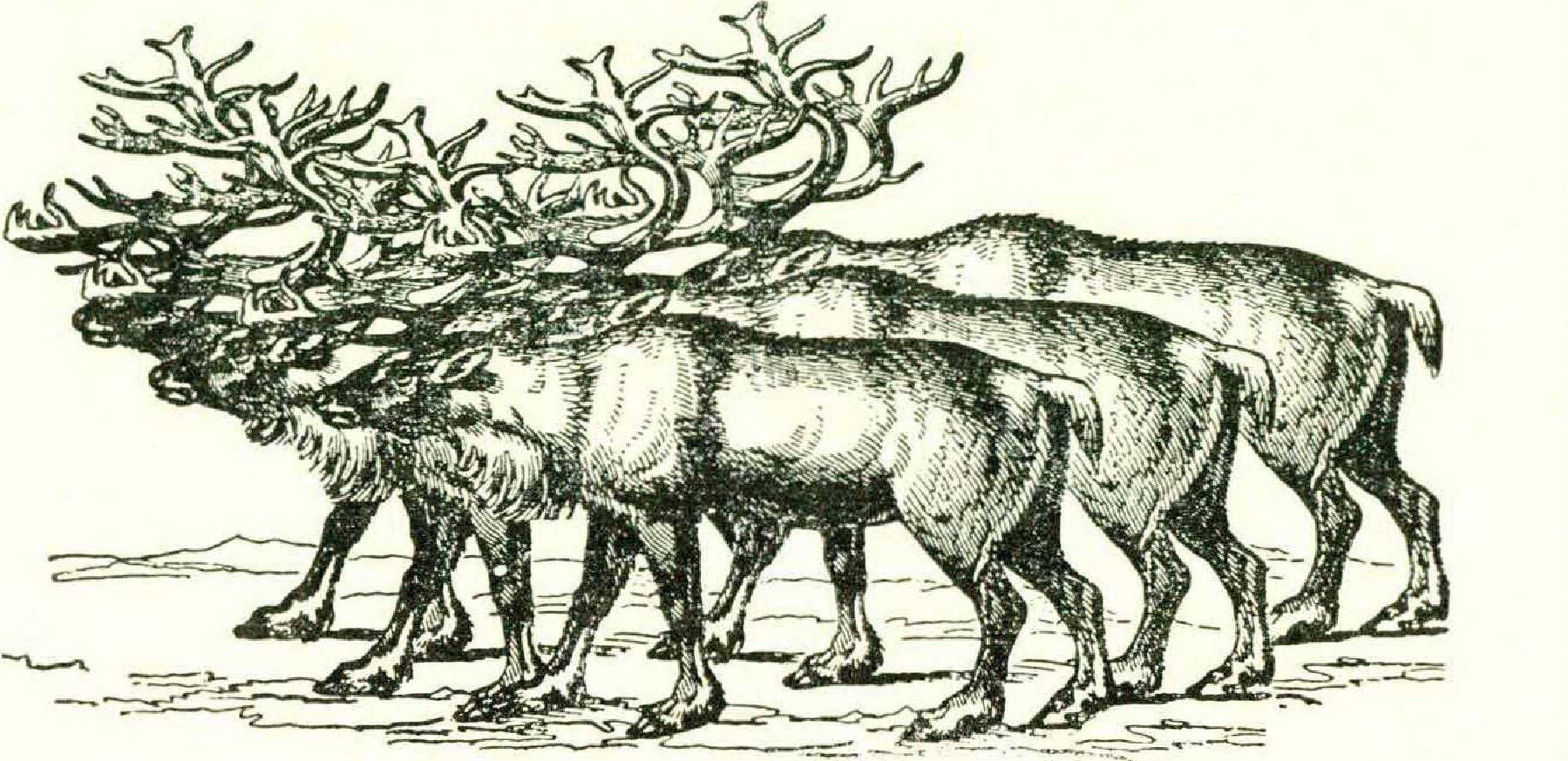
Illustrations in the Reports: p. 4, “An Odium of Politicians,” and p. 24, “A Gang of Elk,” from An Exaltation of Larks, by James Lipton (Grossman, New York, Copyright © 1968); p. 16, “Fetish Figure, Bakongo Tribe,” from The Sculpture of Africa by Eliot Elisofon (Praeger, New York, Copyright© Thames and Hudson, London,1958).
The arbitrator makes like a judge and decides a case; the mediator makes like a high-level con man and tries to get the parties to resolve their differences themselves.
Others who have served with distinction in both categories include Ben Aaron, director of the Industrial Relations Institute at UCLA and a member of the Presidential Automation Commission of 1965; David L. Cole, President Lisenhower’s Mediation Service Director; Archibald Cox; John T. Dunlop of the Harvard Economics Department, who is a dynamic legend even among his fellow “Cardinals”; N. P. Feinsinger
ol the Wisconsin Law School, who was chairman of the National Wage Stabilization Board; Robben W. Fleming, the president of the University of Michigan since 1968; Ted Kheel. who “plays God” in the tangled labor relations of New York City the way Dunlop did until recently in the construction and atomic energy industries; and W. Willard Wirtz, the Secretary of Labor under Presidents Kennedy and Johnson.
In some ways, the second wave of arbitrators has not been of comparable quality. The unions and management have been far too slow in extending their confidence to new arbitrators and in seeing to it that arbitration was made an attractive career. Some of the new arbitrators like Paul Hanlon, David Miller, Richard Mittenthal, and Rolf Valtin are excellent, but more are needed.
Today, about twenty-five years since arbitration was imposed from Washington on a reluctant management, the system is widely accepted. Although some procedures work poorly, and although the nature of the system, with winners and losers in every case, guarantees a hail of off-the-cuff contumely for the arbitrators, the system is under no serious challenge. A quick peek at the British “wildcat" strikes is bound to give pause to the harshest critics of the U.S. system. —Ben Rathbun
REPORT CONTRIBUTORSElizabeth H. Drew is theATLANTIC’SWashington editor. Stanley Meisler reports from Africa for the Los AngelesTIMES.Ben Bathbun is associate editor of the Bureau of National Affairs in Washington, which specializes in labor-management relations.