Taking It Big: A Memoir of C. Wright Mills
Ginsberg and the beatniks can be associated chronologically with the aggressively activist sociology of C. Wright Mills—let us say with the publication of Mills’ Causes of World War III (1957), which is about the point at which Mills’ writing turned from scholarship to first-class pamphleteering. Mills was by no means the first postwar figure who sought to tell it like it is about the state of American public life and culture. . . . But it was Mills who caught on. His tone was more blatant; his rhetoric, catchier. He was the successful academic who suddenly began to cry for action in a lethargic profession, in a lethargic society. . . .
My first conversation with C. Wright Mills occurred in the most inappropriate of places: an elevator. Riding in an elevator with Mills was rather like riding in a Volkswagen with an elephant, not so much because of the reality of his size, which was bigger than average at a little over six feet and 200 pounds, but even more because of the terrific sense of restlessness and ready-to-burst energy about him; and perhaps also because he commuted to Columbia in a rather bulky getup suggestive of a guerrilla warrior going to meet the enemy (which in a way he took the situation to be). He usually wore camping boots of some sort and either a helmet or a cap used for motorcycle riding, and was strapped around with army surplus duffel bags or knapsacks filled with books and notes. At the time of my initial encounter with him in 1954, Mills was an already legendary professor and I was an undergraduate at Columbia College, recently inspired by reading White Collar and anxious to see its author in action; my only chance was to get permission from Mills himself to take his limited-enrollment seminar on liberalism.
I waited for my quarry in the cold, cheerless lobby of Hamilton Hall, ambushed him on the way to the elevator, and squeezed in beside him to make my pitch. He fired the necessary questions at me in a rather aggressive, discouraging tone, and I think my answers made it obvious that I had little qualification and much enthusiasm for the course. When the elevator ejected the crowd at the floor of his office, I had the feeling that Mills glanced back at me and said “OK” primarily to rid himself of a temporary nuisance.
I had no idea then, and would have been too awed to imagine, that I later would get to know this man not only as his student but also as an assistant and a friend; nor could I have guessed how unnaturally short a time it would be until I stumbled onto the news of his sudden death at the age of forty-six. I was reading the Times one rainy spring afternoon in 1962 when I saw on the obituary page the terribly stark and inadequate words:
C. Wright Mills A Sociologist
If in the eyes of many of his academic colleagues Mills was less than that professional designation, he was also in the eyes of a great number of intelligent readers much more than simply “A Sociologist.” The widespread audience he won with his forceful studies of the middle and upper classes in America, White Collar and The Power Elite, was still more greatly expanded by the popular paperback sales of his later, more frankly polemical books, like The Causes of World War III and Listen, Yankee. Mills himself regarded those brief, book-form blasts as a kind of high-level “pamphleteering,” but they were usually judged, and condemned, as sociology. Despite the catcalls of critics, however. Mills received a growing amount of mail from people who wanted to know what they should or could do not only about war and peace, foreign policy, and the social sciences but also about their own lives; and they seemed to feel that Mills, like some all-knowing Dear Abby of the intellectuals, would be able to tell them. Strangers who knew Mills only by his books came to his funeral, and as part of the Quaker service (Mills was actually an atheist, or as he liked to put it, more dramatically, “a pagan”), some of them spoke up, prefacing their statements with “I didn’t know C. Wright Mills personally . . .”and then proceeded to read a passage from one of his books, much as if reciting from a sacred text, as their way of paying tribute. I think the kind of personal response Mills’s works elicited was best explained by his longtime friend and neighbor, the novelist Harvey Swados, who wrote of those works of Mills that first attracted public attention:
For a long time I have thought—I still do—that it was because all these people were responding to what was at bottom not merely a logical indictment which could be upheld or attacked, but a poetic vision of America; an unlovely vision perhaps, expressed with a mixture of awkwardness and brilliance, but one that did not really need statistical buttressing or the findings of research teams in order to be apprehended by sensitive Americans as corresponding to their own sense of what was going on about them, more truly and unflinchingly than any other contemporary statement. They were responding, I think, in that unlovely decade, the fat and frightened fifties, to one who refused to compromise or to make the excuses that others were making—excuses labeled descriptions or analyses—for what was happening to their country. They sensed correctly that, faulty and flawed as it was, the vision of Wright Mills cut through the fog and lighted their lives for them.
I think that Mills himself felt something similar to this; at least he seemed to be expressing such a view when he wrote me shortly after The Power Elite was published that “they [the readers] see, with all its faults, that the book is generally true because they are living parts of what it analyzes.” He added, with his typical attention to such matters, “And they will buy ten or twelve thousand copies this first year.” The healthy and continuing sales of his books, both here and abroad, served as a balm and justification to Mills, a kind of victory over his academic critics who were read only within their own walls. It enabled him to get his own back in some measure, as when he observed in The Sociological Imagination— the brilliant and bitter broadside he fired at his own profession in 1959—that the specialized jargon used by the orthodox sociologists, the “socspeak” that he so scorned, was perhaps “the result of an academic closing of the ranks on the part of the mediocre, who understandably wish to exclude those who win the attention of intelligent people, academic and otherwise.”
When I first got to know Mills he had already begun to feel that sort of exclusion, and one of his responses was the adoption of a gruff, irascible, aggressive exterior toward anyone who he sensed was in opposition to him and his work. That is the “image” many people have of Mills, but it is not the Mills I knew.
He originally took an interest in me because of an offbeat paper I had done for his course comparing Ortega’s The Revolt of the Masses to a short Hemingway piece called “Banal Story.” He called me in after class, and instead of berating me for frivolousness as I had feared, calmly stoked his pipe, observed me with a detached curiosity, and said he’d enjoyed the paper—not so much for its eloquence as its novelty. He said it was a relief from the usual student reports, which bored him to death. He told me to “do some more like that,” and this led to a growing number of discussions between us, and eventually to his offer of a temporary job. When I finished his course and at the same time was graduated in February of 1955, I told Mills I was going to work on a weekly newspaper in New Jersey. He took a calm if derisive puff at his pipe and said, “Small-town stuff, you’ll be back”—and I was, courtesy of the job Mills offered me that summer doing research on The Intellectuals in America (one of several projects he never completed). Another Columbia graduate, Walter Klink, who had done research on The Power Elite, also worked on the Intellectuals project that summer, and Mills took a genuine and fatherly interest in both of us; he helped launch Walt on a distinguished career as a sociologist, and with both of us he was, as a “boss” and a friend, patient, kind, and elaborately helpful.
“Now, Dan,” Mills counseled me once that summer, “you’re not married yet and you’re living alone. You must get one of your girls to come over every Sunday night and cook you a big stew that will last a week. You bottle it up in seven Mason jars, and take one out each day, and you have a good, healthy meal instead of that bachelor stuff.” He was full of advice that was often valuable and always entertaining, from books I should read (he thrust James Agee’s Let Us Now Praise Famous Men on me when it was out of print and not yet in vogue), to hints on work habits (“Set up a file”—and he showed me how). And running through all his advice was one grand theme, which served as his own motto, an approach to the world he called “Taking it big”—by which he meant subjects, and do them in the grand manner; a philosophy he not only preached but applied to everything from eating and drinking to writing. Almost any advice he gave ended with the exhortation, “Take it big, boy!”
In his efforts to help me in my own career, I learned a good deal about his, or about his own view of it. He had urged me at first to go into sociology, and when I said I was more interested in writing than in doing research or compiling statistics, he said that it didn’t matter, the main thing was that a man who wanted to write about the world today had to have a “handle,” that sociology could be used as such a handle, and that is how he used it himself. He liked to think of himself primarily as a “Writer,” and it was to the difficult discipline of English prose that he devoted his most intense efforts. Ideas and theories came rather easily to him, but writing did not, and he sweated and bled over it and constantly sought advice and criticism, often from Swados, who respectfully has described Mills’s “unending and humble desire to learn how to commit to paper with precision and fluency all that he believed.” That desire was indeed so great that it was, as far as I know, the only thing that Mills was humble about.
C. Wright Mills
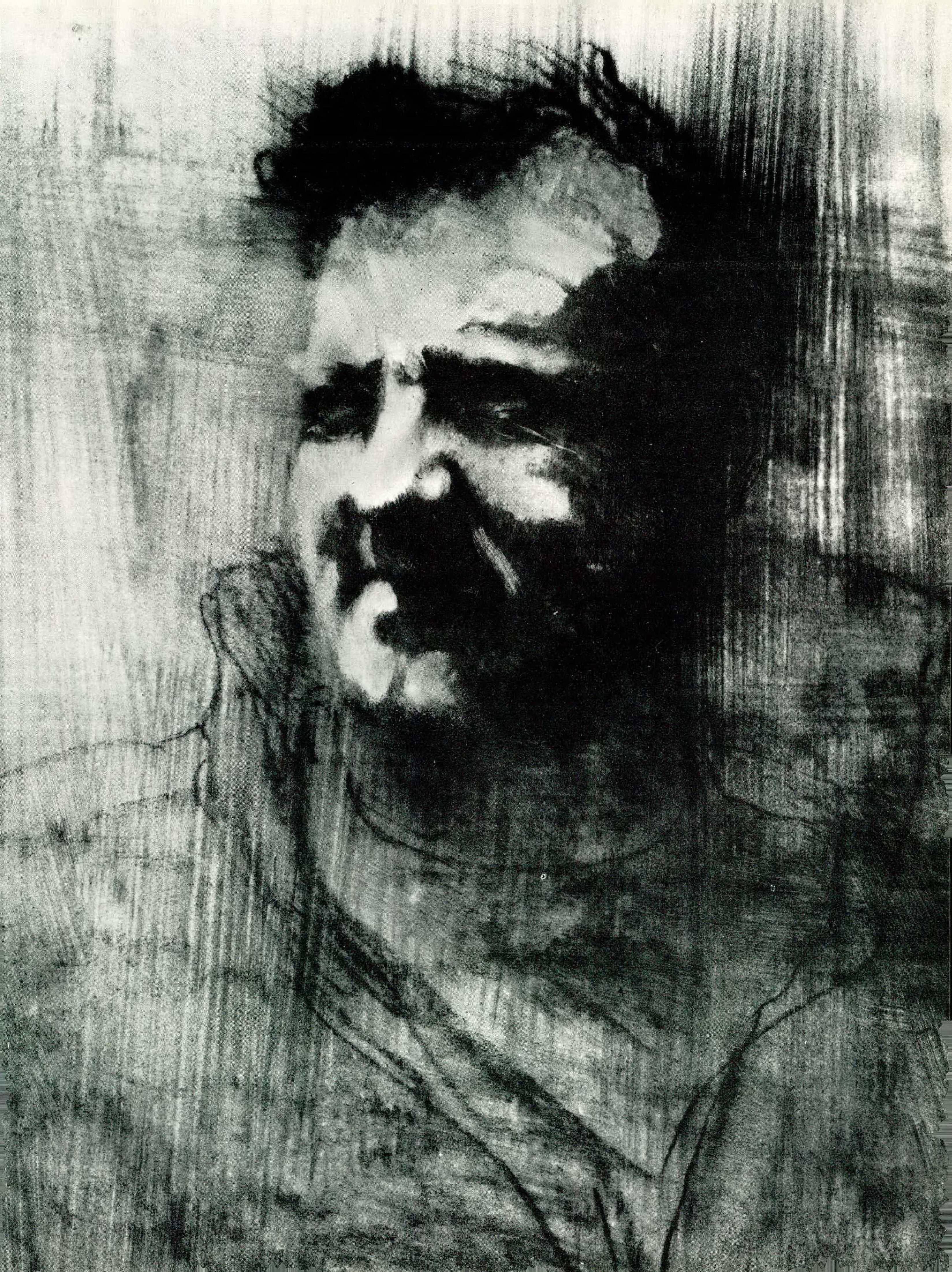
He attached an almost magical quality to the power of writing; after all, hadn’t it brought him, with academic whistle-stops along the way, out of Texas to New York City and national prominence? It was in this spirit that Mills once explained to me how he had managed to escape from what he considered a small-time academic post at the University of Maryland. He said proudly, in his booming voice, “I wrote my way out of there.”
As would be the case with any man who had his own private vision, Mills became increasingly impatient with the technical, impersonal, statistical side of sociology. But first he proved he could play that game as exactingly and efficiently as any man could, directing studies for unions and government, and leading a research team in a study of the Puerto Rican migration that resulted in a book Mills coauthored, The Puerto Rican Journey. The book is a solid and valuable one in its field, but could have been done by any number of research teams—it is hardly recognizable as Mills. He later wrote me that “my own slight experience with them [the Puerto Ricans] was disappointing, especially in PR itself. They’ve little Spanish stuff and they’ve only the most blatant U.S. stuff. A sort of culture-less people. Hollow and really hysterical. But I don’t really know them. My stuff was at a great distance and necessarily Statistical in nature.” A journalist friend of mine who interviewed Mills a few years before his death said that when he brought up the old controversy about Mills’s relation to his profession. Mills waved his hand, as if brushing the matter away, and said, “What the hell, I take polls.”
It was not polls but the personal vision that absorbed and obsessed him, and White Collar was the first book he was able to express it in. Later he wrote, in discussing his own work, that White Collar was “a task primarily motivated by the desire to articulate my own experience in New York City since 1945.” He once put it more personally and dramatically when he slyly told me he had met a woman at a party who “really understands me. She told me, ‘I know you, Mills—I’ve read White Collar and I know what it’s all about.’ I asked her to tell me, and she said, ‘That’s the story of a Texas boy who came to New York.’ ” Mills paused, frowning, and then broke into a giant grin as he said with delight: “And my God, she was right!”
Certainly there were elements in Mills—that big, gruff, motorcycle-mounted scholar who had burst out of Texas—of a kind of intellectual Gatsby. He mentioned once that the first books he remembered reading were a series of little volumes on “Success” that were owned by his father, a middle-class businessman. Like all boys from the provinces, Mills identified New York City as the citadel or headquarters of Success, and as a boy who had come there myself from Indiana, I well understood the feeling; I think the mutual sense we shared of escape from province to city was one of the things that informed our friendship. I remember once driving with Mills from his house in Spring Valley to Columbia on a bright winter morning, and as we crossed over the George Washington Bridge, he pointed to the dazzling skyline, and with a sweeping gesture said, “Take that one, boy!” I shivered and smiled, imagining that in other crossings he had said the same thing to himself.
During my summer of research for Mills, I worked mainly in the Columbia library and my own apartment, and every week or so spent a day at his house in Spring Valley, reporting, discussing, and listening as Mills paced back and forth, thinking out loud, the puffs of smoke from his pipe reminding me of the steam from an engine, for his mind in high gear seemed like a dynamo. When classes resumed in the fall, I moved my notes and typewriter into Mills’s office in Hamilton Hall and worked out of there. But his real office was at home. The Columbia office simply contained old student papers, files of finished projects, a hot plate for warming up soup, and an electric espresso machinesuch frugal fare was all he desired in that room. Neither his stomach nor his mind operated with its usual gargantuan appetite at the college office, and our talks there were disjointed and disappointing. Mills always seemed subdued when he came in, said very little, and stalked off to class. He would usually burst back into the room tired and out of sorts, as he had that day when he slammed down his books, and said, referring to his students, “Who are those guys?”
Nor did he get much more sustenance from his colleagues, especially in sociology, whom he rarely saw and rarely mentioned, except to note some attack or other one of them had made on him in a professional journal. He took more lightly and humorously his occasional intellectual conflicts with men in other departments, and especially enjoyed a little exchange with a distinguished English professor. Mills had published a magazine essay in which he gibed at this faculty colleague along with other intellectuals for partaking in what he called “The American Celebration”—an uncritical and flowery praise of the United States. One day in the office Mills received a long letter of reply from the professor—so long, in fact, that he held it up and said, “My God, he could have published this!” The effort seemed especially wasteful since his correspondent’s office was only one floor below, and Mills wrote him a card suggesting they get together sometime and discuss the matter. Mills got a card in reply, with an elaborately worded postponement of such a talk, but then one day he came into the office in especially high spirits, having accidentally resolved the matter to his own liking. While coming to the office he had found himself alone in the elevator with this very professor. After an awkward silence the professor looked at Mills, who was that day wearing some new sort of motorcycle cap, and said, “Why, Wright, what a lovely cap—wherever did you get it?” Mills simply smiled and answered: “Not in this country.”
Mills became increasingly critical of this country, and he longed to spend some time abroad. At the time I worked for him he had only once been out of the United States, and that was when, as an avid owner of a BMW motorcycle, he had flown to their factory in Munich to take a brief course on the fine points of running and servicing his machine. (At the end of the course he received a “certificate” which he proudly had framed.) That fall when I worked in his Columbia office, Mills was looking forward to a sabbatical the following academic year, and he received a Fulbright lectureship at the University of Copenhagen, which would enable him at last to live and travel awhile in Europe. My research job with him was to end in January, and in the meantime I had sold my first magazine articles and arranged for a series of assignments that would take me to Israel. Mills was pleased about both our good fortunes, and during the last weeks of my job, when anyone came into the room, he announced with a seriocomic flourish and pride: “This office is leaving the country!”
We corresponded after I got to Israel, and Mills wrote me in Jerusalem in May of 1956, just before he sailed for Europe. He reported that he had been promoted to full professor at Columbia—but the heart of the letter was concerned with the reception of The Power Elite, published that spring. It was a typical Mills appraisal, the way he might have sounded talking about it over a bourbon:
The book goes very well: about 1200 copies a week is the current rate of sale. The reviews are very mixed but apparently two things are true of them: it is the right kind of mixture: the bad people dislike it, the good guys are all for it and everyone smart enough to understand it is either for or against it. Second, as you leave the pseudo crap of NYC, the reviews across the country get more and more respectful and neat. I think we have to say it’s a success if only because it really is being talked about like mad. Gilbert Seldes, Bill Leonard and Quincy Howe have given it good radio stuff. I’ve turned down TV stuff since I won’t do anything to help out their circulation. Funniest review is in the Nation where that boy revolutionary from Central Park West, Robt. S. Lynd [author of the famous sociological studv Middletown] tried to review it from the left of it and succeeds in showing that . . . you can’t generalize from small-town stuff he knows to the nation which he doesn’t. I don’t of course reply to any reviews. Let the boys talk and any mention is etc. Lynd’s review is 4 pages long! Best notice so far is Lambert Davis Editorial in the Saturday Review a month after publication: he used the book as a text for a sermon to all and indirectly answers TIME’S stuff about naivete by calling it Fitzgerald-like. Davis is John Dos Passes Editor . . . when Dos was doing USA. One must never pay too much attention to reviews: the thing to do is get on with the next book. Who are all these little shit heels to spent [sic] two nights if that with a thing I fooled with six or seven years? There is coming about a core of a public for the book that pays no attention to the reviews. It spreads by word of mouth so it takes a little time. But it is very solid and it really reads . . .
I had hoped to go on to Europe after my Israel assignments and eventually to visit Mills in Copenhagen, but the planetary or internal influences that delight in wrecking our well-mapped courses were especially hard at work on me that year—as they were soon to be in even greater strength on Mills’s life— and the closest I got to Copenhagen was a week of waiting for a plane in Rome before hurtling home minus a front tooth, some fifteen pounds, and with my arm in a sling. It was not till the next fall, of 1957, that, rather repaired again, I saw Mills. He had been through his own turbulent times, with family misfortunes, and was back at Columbia, living alone in an apartment on 114th Street, which he had managed to make into comfortable living and working quarters, imposing his order of books and files and bright decorations on one of those stubbornly dingy flats of Morningside Heights.
Like a great wounded bear he had retreated inside this comfortable cave and refused to go out except to meet his classes. If a publisher or editor—or even a friend—wanted to see him, he had to journey uptown to his lair, but was rewarded for the trip not only with Mills’s good talk and bourbon but also with one of his superbly cooked meals. He was cooking for himself, attacking that art as he had previously mastered motorcycles and photography, and, as with any of his newfound enthusiasms, he looked with mock scorn on anyone who hadn’t discovered this new key to the universe. So on my first trip to that apartment, after a marvelous home-cooked lunch, he asked me incredulously, “My God, man, you mean you don’t bake your own bread?” (just as he had asked me in the same tone in former times, “You mean you’d live in a house you didn’t build yourself?”).
In the course of my acquaintance with him, Mills showed himself to be one of those rare and resourceful men who in time of personal difficulty work harder and longer and more ferociously; instead of talking about his troubles—which he gave a brief, straightforward account of, in the manner of the New York Times covering a story—he talked about his plans and ideas and projects. On that first visit to his Morningside apartment, after we had lunched and had a Mills-strength highball in hand, he began, as he always did with people, by pumping me—what was I reading, what was I working on, what was going on that he should know about—all the while jotting down notes, and later sending off for any books mentioned that caught his interest. He ordered books as needfully and as regularly as a housewife orders groceries. After that he asked what my plans were for next year and, as has always been the case, I didn’t know. He then proceeded to tell me what they should be:
“China,” he said.
“China?”
“A third of the earth’s population,” he proclaimed with hushed drama, “and we know nothing about it.”
“But I—”
“You’ll be the reporter. We’ll also have a photographer, an economist, and perhaps a cook, so we won’t have to fool with that. I’ll be the sociologist and head up the expedition. We’ll fit out a Volkswagen bus, or two, and tour Red China, getting real stuff—it has to be done. We’ll worry about the State Department nonsense after we come back.”
I know absolutely nothing about China, and that part of the world has never held any fascination for me; but by the time Mills was finished with his spiel,
I could hear the mysterious tinkle of bells in ancient temples, feel the immense weight and drama of that massive landscape, and when he wound it up, harking back to the beginning motif—“a third of the earth’s population and we know nothing about it”—I was ready to pack for Peking. The great project never came off, but like everything Mills went in for, he could make you believe it was the most important and exciting thing in the world; I’m sure he could have done the same with Labrador.
But while Mills dreamed of China, he was stuck again at Columbia. I enjoyed making pilgrimages to visit him in his den, and after some months I learned he’d begun to venture out of it a bit. He told me about attending a party of Columbia graduate students in sociology, and his account of it seemed to sum up the relations he had reached with his scholarly profession;
“I simply sat in a chair in a corner,” he said, “and one by one these guys would come up to me, sort of like approaching the pariah—curiosity stuff. They were guys working on their Ph.D.’s, you see, and after they’d introduced themselves I’d ask, ‘What are you working on?’ It would always be something like ‘The Impact of Work-Play Relationships Among Lower Income Families on the South Side of the Block on 112th Street Between Amsterdam and Broadway.’ And then I would ask—” Mills paused, leaned forward, and in his most contemptuous voice, boomed:
“WHY?”
He was working himself then on The Causes of World War III, a subject he considered worthy of the attention of “a full-grown man.”
The next year Mills married again, for the third time, and built a new house in Rockland County. Some local people supposedly mistook it for a bomb shelter, because it was built with its windowless, concrete back to the road, while its marvelous glass front faced an unpeopled but scenic natural view.
I visited Mills there shortly after he moved in, and again when he returned from a lecturing trip to Mexico. He’d been frequently questioned there about his—and his country’s—stand on Cuba, and the overriding interest of Latin-American intellectuals in this question kindled his desire to go there and write about it. After intensive preparation during the summer of 1960, he went to Cuba that fall, equipped with his latest beloved gadget, a tape recorder (“You mean you’d go on a research trip without a tape recorder?”), and on his return, working with furious energy, he wrote Listen, Yankee in six weeks’ time. The book was widely read and widely attacked in the American press. Its aim—clearly stated and seldom acknowledged—was to present the viewpoint of the Cuban revolutionary about the revolution, and for all the faults of the frankly polemical pamphlet, it was the first, and I think last, time that such an attempt was made by a leading American intellectual.
After the enormous effort of getting out the book, Mills, instead of relaxing, drove himself back into high gear to prepare for a nationwide TV debate with A. A. Berle on U.S. Foreign Policy in Latin America. I saw Mills once while he was immersed in this preparation, and he was terribly worried, alternately unsure of himself and brashly confident. He seemed to take it as some crucial test which he would either pass or flunk with profound results, as if it were a matter of life and death, which in some weird way it turned out to be. The night before the broadcast Mills had his first heart attack.
Walter Klink, Mills’s former assistant, drove me out to visit him in January of 1961. It was incredible to see Mills in a sickbed, and yet his old fire and enthusiasm hadn’t left him. He was pleased and proud about the circulation—if not the reception—of Listen, Yankee, and above his bed was an advertising poster proclaiming that the paper edition of the book had 400,000 copies in print; Mills delightedly explained that such posters were carried on the sides of newsdelivery trucks in Philadelphia. He was reaching a greater public now than he ever had—“mass circulation stuff,” as he happily called it. He lectured us on publishing, among other things, that day, and emphasized that paperbacks were now the important thing. He also told us how much more intelligently all types of publishing were done in England, and reported that after seeing the English setup, he had told one of his older, more conservative American publishers, “You gentlemen do not understand what publishing means. You think the verb ‘to publish’ means ‘to print,’ but that is not so. It means ‘to make public.’ ”
Flat on his back, he kept us entertained and laughing, joking about his pills, praising his doctor (a fine young man whose excellent qualifications included a familiarity with some of Mills’s work), talking of books, and of the world, and even then, in that condition, “taking it big.”
That was the last time I ever saw him.
When he was on his feet again, he went on a frustrating journey to Russia and Europe, not finding the answer for his heart problem that he hoped a Russian clinic and specialist might offer, and groping and grappling with unfinished projects. He sent me from there a rough copy of The Marxists, which he finished in Europe—an anthology with commentary in which he blasted all political orthodoxies from right to left—but when he came home exhausted in the spring of 1962, there were many projects left hanging, including the book on The Intellectuals, a political book proposing and hoping to create what he called “The New Left”; an imaginary dialogue between a Russian and an American intellectual to be called “Contacting the Enemy”; and plans for a giant, or Mills-sized, “World Sociology.”
Shortly after his death, Mills and his work were being claimed by various individuals and groups to support their own stances, whether sociological or political, and if in some ways he left himself open to this with his overenthusiasms and generosities, I don’t think he deserves it. Of all the men I have known, Mills was the most individual, the most obstinately unorganizable, the most jealous of his right and need to “go it alone” and to fire at all sides when he felt so moved. I think his deepest, most characteristic outlook—the long-range one that he always returned to after excesses of enthusiasm—was expressed that summer I worked for him. A man who belonged to a small, socialist splinter group came to seek Mills’s signature on a petition asking that the group be removed from the Attorney General’s list of “subversive” organizations. Mills obligingly signed, but then in discussing politics, as was his habit, he challenged all his visitor’s beliefs and arguments until the poor fellow, pushed to the wall, said in frustration, “Just what do you believe in, Mills?” At the moment Mills was tinkering with his motorcycle, and he looked up and said without a moment’s hesitation: “German motors.” Later when the fellow had left, Mills told me; “It’s ridiculous to say those guys are a threat to the government. In the first place they’ve only got about 150 guys—how could they overthrow anything? Besides, their stand is really anti-Moscow and anti-Washington, and that’s where I stand.” His real home was outside of any group or government or intellectual clique, and his favorite political heroes were “The Wobblies” (Industrial Workers of the World), the homegrown American radicals who opposed nearly everything and everyone, and valued most of all their independence. Whenever he liked someone, he’d say, “That guy’s a real Wobbly.”
His search was to explain, to comprehend, or, as he put it once, to “define and dramatize the essential characteristics of our time.” The spirit of his search can perhaps be glimpsed in a treasured letter he wrote me from Europe in November of 1956, after I had written him my plans to write a book about a Puerto Rican neighborhood. He advised me that:
In books you’ve got to get a little way back and spread out in time—a span of 2 or 3 years at least. The PR deal will allow that if you can get 5 or 6 solid themes and carefully generalize topics and events. The knife-edge present isn’t for books. You’ve got to let the readers do that. The faith that they will is what is meant by “serious” writing of a social and political sort. Isn’t that so? And that’s why we’ve got to work out a new form of writing—using some fictional techniques and some reportage tricks and some sociological stuff. Of course all that’s nothing without some really big view into which all the little stuff fits and makes sense. That’s why this kind of writing I’m talking about can’t be done in essays. It takes a book or maybe a sequence of them to create such a world. I guess the rule is that no matter what you are writing about, you’re also writing about the whole goddamned world. Hisinga does that [J. M. Huizinga, in one of Mills’s favorite books, The Waning of the Middle Ages]—it’s easier to do it for the past, less risky. Agee touched it on those sharecroppers. Dos Passos did in USA.
The trouble is when you try it, you can fall so very, very hard. It’s easier not to try. Go detailed scholarly. Go clean journalist. Disguise it . . . in fiction. No fiction nowadays that I know is “about the world” in this sense. For example, what compares on East Europe with Milocs [Czeslaw Milosz, The Captive Mind]?
In trying these things, in “taking it big,” Mills sometimes fell very, very hard, a risk that he understood and was willing to take. He appreciated other men who took the same risk, as he showed when he wrote a sensitive appraisal of James Agee’s Let Us Now Praise Famous Men for Dwight MacDonald’s magazine. Politics. Mills praised Agee for “taking it big” in writing about the sharecroppers, and said that the important thing about the book “is the enormity of the self-chosen task; the effort recorded here should not be judged according to its success or failure, or even degree of success; rather we should speak of the appropriateness and rarity of the objective.”
In that same spirit, I speak of Mills.