The Fbi File: Men and Machinations in the Court of J. Edgar Hoover
They were the G-Men dukes who dared to aspire to the throne of a bureaucratic king no President dared displace. As Hoover aged, as successive Presidents grew itchier to make the FBI dance to the White House tune, the Bureau itself—and its two “most likely to succeed" men-in-waiting, Deke DeLoach and Bill Sullivan—grew deeply enmeshed in intrigue. Some of it had to do with “domestic security.”Some of it had to do with presidential politics. Some of it had to do with the internal struggle to succeed Hoover. And in the end, inevitably, some of it had to do with Watergate, and its aftermath.
DeLoach was a capable and loyal administrator while in the Bureau and he has still maintained that loyalty since he left the Bureau. I know of several instances in which he upon his initiative came to the defense of the Bureau, one being in talking particularly with Congressman Boggs, the old drunk from Louisiana. As for Sullivan, your comments concerning him were certainly true. I only wish that I had been able to spot his instability long before I did. When the crisis finally came, I moved swiftly and forced him into retirement.... I personally think that I have been blessed with an exceptionally outstanding staff of executives through my administration of the Bureau with the exception of Sullivan. You certainly were tops when you were in the Bureau and I have never questioned your loyalty since you left it.
-from a letter from J. Edgar Hoover to Louis B. Nichols, January 7. 1972
One effect of the Watergate scandals has been a parting of the curtain of secrecy and reverence that for decades protected venerable American institutions, among them the Federal Bureau of Investigation. Clearly visible and in focus for the first time are machinations and intrigues that were for years merely rumored or half-told bureaucratic maneuverings, mysterious goings-on, intra-agency disputes and rivalries that broke out into inter-agency battles. At the center of the drama is a man who built the FBI into a monolith, stayed for forty-eight years, and would not let it go; not for Lyndon Johnson, not for Richard Nixon, not for anyone. J. Edgar Hoover, in a word, behaved like a king, and serving in his court were some extraordinary characters who dared to aspire to the throne.
It was a secret court. Many of the secrets were supposed to have been buried with J. Edgar Hoover after he died on May 2, 1972. Others-as John Dean put it to Hoover’s first successor. Acting Director L. Patrick Gray, Ill—“should never see the light of day.”But the secrets are leaking out, and the rumors are now being substantiated. For the war for the succession to Hoover grew unsavory, and seemed for a while to have no end. Similarly, the uncovering of the secrets goes on and on.
“I used to think, ‘What the hell’s wrong with wanting to be director?’ Does the President get mad at every kid that wants to be President?”
Once J. Edgar Hoover became entrenched in his position, it was heresy for anyone high up in the Bureau to express a desire to succeed the Director. As far as he was concerned, no one could ever take his place, and so he made absolutely no preparations for any such eventuality. It was never clear whether Hoover had dreams of immortality or merely wanted to die in office, but FBI Associate Director Clyde Tolson, Hoover’s constant companion and loyal right-hand man, was heard to say on many occasions, “I don’t think Mr. Hoover will ever leave this job.” Even to be the subject of rumors about the directorship, or to discuss it with anyone, was a sin. When an FBI man came up with an unpopular idea, or disagreed with Hoover, he was, as likely as not, accused of aspiring to become director. “I used to think, ‘What the hell’s wrong with wanting to be director?’ ” says John P. Mohr, for many years assistant to Hoover on the administrative side. “Does the President get mad at every kid that wants to be President? ... I never said that to Hoover, though.” Mohr knew better than to commit such an indiscretion.
Heresy or not, there were many key FBI men who over the years dreamed of taking charge of one of the most powerful agencies of the American government and stepping into the most noticeable job in the world of law enforcement. It was never clear just how a successor to Hoover might be selected. There was no precedent, and until 1968, no precise legal machinery to govern the exercise.1 In order to enter the unofficial running, anyone who aspired to the position had to fulfill several unwritten requirements:
• show unremitting devotion to his work, putting in days of perhaps sixteen to eighteen hours, sometimes merely weeding through stacks of paper work, often at the expense of family life and personal health;
• display unrelenting fealty to Hoover, supporting him on the most insignificant of issues and reporting faithfully on his opponents;
• get transferred back to FBI headquarters in Washington at the earliest possible moment in a Bureau career and stay there, learning the protocol and power structure, and practicing how to control the field offices;
• exhibit a healthy respect for the old values, a strong religious faith or a pretense of same, and an awe for the titans of big business and others who hold private power;
• gain some powerful political allies in both houses of Congress as well as a few major cities;
• build a durable constituency or two outside the FBI, preferably elsewhere in the executive branch of government and among private organizations such as the American Legion.
As Hoover’s reign progressed, a few people rose to the very top through a combination of cunning, luck, and skill at bureaucratic politics as well as in the performance of official FBI duties. They were generally in the right place at the right time, somehow caught Hoover’s attention, and moved quickly; and they did not rock the boat. Insofar as the public was concerned, they remained anonymous and gave their best for the endless glorification of the Director. They were friendly with each other, but cautiously so.
One man long assumed to be a prime candidate for the succession was Louis B. Nichols. He spent many of his twenty-three years in the FBI bureaucratically and personally close to Hoover, and, until his retirement in 1957, may have been the last person inside the FBI capable of getting Hoover to change his mind or reverse a decision. It was Nichols who got the American press accustomed to the idea that the FBI knew best what should or should not be printed about itself.
Nichols’ public position was always that he did “not want to be in the Bureau the day after Mr. Hoover leaves it.” But many who worked with Nichols, and learned from him, had the distinct impression that he would not mind returning after Hoover had left, as director, to carry on the tradition. Some said that the position he took after leaving the FBI, as executive vice president of Schenley Industries in New York, was merely a way for Nichols to make a great deal of money and keep in touch with things until a propitious moment arose—such as the election of his close friend Richard M. Nixon as President. In 1965, Nichols persuaded his boss at Schenley, the liquor industry magnate Louis S. Rosenstiel, to establish and endow the J. Edgar Hoover Foundation. A lawyer, he became active and influential in American" Bar Association affairs, and sometimes when he was in Washington to lobby for Schenley’s interests, Nichols also made discreet pitches on Capitol Hill on matters of special concern to the FBI.
But by the time Nixon was elected in 1968, it was more inconceivable than ever that a President would take the political risk of replacing Hoover, and Nichols, sixty-two, was about to retire from Schenley. If he had ever had designs on the FBI directorship, he had by then abandoned them.
Although second in command to Hoover, the one man who was never really considered as a possible successor was Clyde Tolson, whose interest seemed to be only in helping the Director; indeed, as Tolson’s health failed over the years, some Bureau officials were amazed that he was still able to do even that.
But as the FBI grew to maturity in the midtwentieth century, during the years when reasonable men dared to believe that Hoover might one day retire, fade, or be unseated, two Bureau figures emerged who seemed at times to be jockeying for the succession and trying to make themselves available. They stood out from the rest. They were the dukes of the FBI, Cartha Dekle DeLoach and William Cornelius Sullivan.
There’s something about a man from a country town in Georgia,”President Lyndon B. Johnson used to say in an attempt to explain his reliance upon people from that state, including Secretary of State Dean Rusk, White House aide Tom Johnson, and ”Deke" DeLoach, who became as close to Johnson as any FBI man below the rank of director ever became to any President in the Bureau’s history. Perhaps closer.
DeLoach’s “something” included speaking softly, moving gently, and oozing humility; only an occasional twitch of the cheek hinted at anything less than total control of himself and his surroundings. He was the kind of man who inspired confidence, who could be sent on delicate missions and be counted upon to perform occasional unsavory tasks. Sometimes he sounded like a fundamentalist, punctuating his conversations with thanks to the Lord for the most minute favors. He was smooth. Because of Johnson’s faith in him, and Hoover’s almost unprecedented degree of trust, DeLoach sometimes had to walk a tightrope; but he exercised extraordinary prerogatives as Hoover’s surrogate, and occasionally as Johnson’s, so that during the 1960s he became a very powerful man in Washington. To the public, DeLoach was little known, but his could be the kiss of life for a newsman who sought favor with the FBI, or the kiss of death for a congressman who offended or defied the Director. He could be gracious or mean, whichever seemed necessary for the good of the service.
The country town in Georgia was Claxton, west of Savannah, where he was born into the poorest of families. His father died when Deke was eight years old, and his mother ran a boardinghouse. While growing up, he delivered newspapers and picked pecans and cotton to earn money. His mother wanted him to stay in Claxton after high school, but he won a football scholarship to Gordon Military College and then, after a year, to South Georgia College, where he stayed for two years before going on to the Stetson College of Law in Florida. DeLoach was determined to stand on his own two feet. He washed dishes and sold jewelry to earn spending money; he often told the story that once, when his mother sent him a check for eighteen dollars, he sent it back (in part, he confessed, because he was afraid it would bounce).
DeLoach was enrolled in law school in 1942 when he heard a radio announcement about the FBI’s capture of saboteurs from Nazi Germany who had been landed on Long Island after crossing the Atlantic in a submarine. (What the announcement did not say was that one of the saboteurs wanted to throw in the towel, and put the FBI onto the case with several phone calls upon arrival.) Excited by that romantic image, as so many others were at the time, the twenty-year-old DeLoach applied immediately to the Bureau; but the assistant director who interviewed him in Washington found him “baby-faced.”So he was required to spend time as a messenger on the midnight shift before being admitted to agents’ training class. Although his FBI career got off to a good start when some of his early work as a street agent in Norfolk, Virginia, came to the admiring attention of supervisors at headquarters. DeLoach soon was ringing doorbells in Toledo and Akron, Ohio, investigating members of the Communist party. Bored, he applied for military leave, joined the Navy, and spent most of his service time teaching boxing and other sports in Oklahoma.
After the war the FBI assigned him back to Ohio, but within a year DeLoach was one of many young agents called to Washington and assigned to help coordinate the flood of work generated by the Bureau’s new responsibility for background investigations of people who were required to have security clearances under the Atomic Energy Act. Then he was transferred to the group that handled liaison with the Central Intelligence Agency and the Office of Naval Intelligence—sensitive duty, because of Hoover’s deep and abiding resentment of any agency with which the Bureau shared jurisdiction in the intelligence field. In his new capacity, DeLoach was assigned to attend an international conference on intelligence matters in Europe and to write a report about it for Hoover.
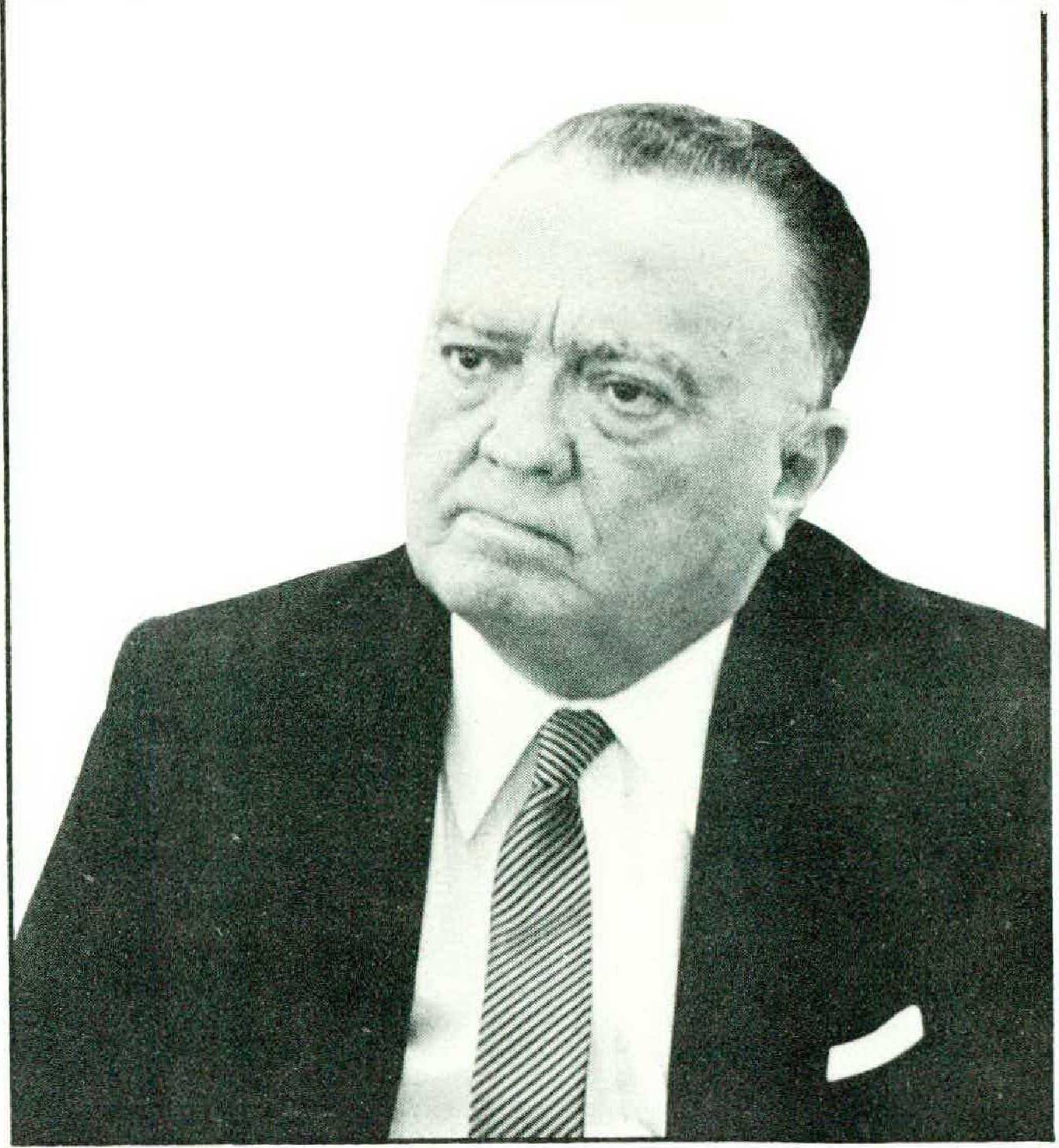
That was in 1951, and when Hoover called the young man in for a discussion about his report, “an immediate spark,”as DeLoach would later describe it, was struck between them. The Director apparently decided to take DeLoach under his tutelage, as he had done with only a few agents over the years. As their relationship became closer, mans FBI colleagues observed that DeLoach seemed to fulfill the role of a son to Hoover; others thought it was more like that of a hatchet man.
Hoover gave DeLoach special assignments, mostly involving investigations of men in the field who had violated FBI rules. Within months the Director’s new whiz kid had been skip-promoted to the rank of inspector. His arrival in a field office was not exactly welcomed, because he was known to be the enforcer of the Director’s harsh and impersonal disciplinary policies. The yardstick for determining severity of punishment usually involved subjective factors such as “extent of embarrassment to the Bureau,”or “damage to Mr. Hoover’s position with the American public.”One DeLoach mission, for example, took him to Honolulu, where two agents had been unwittingly tape-recorded while they interviewed members of the American Communist party and tried to persuade them to become FBI informants. When the incident was publicized, Hoover was furious about the way it made the Bureau look. DeLoach recommended that the two agents be placed on probation and suffer a $1000 cut in pay; Hoover agreed, but added to the punishment a thirty-day suspension without pay and transfer to different field offices.
Sometimes DeLoach was considered fair by his colleagues in the ranks, as when he urged that two agents in the New York field office not be punished for their failure to convince a spy to become a double agent. But Hoover was outraged by that recommendation; he not only punished the unsuccessful New York agents, but also censured DeLoach for his unacceptable advice. DeLoach was involved in the punishment or dismissal of FBI agents for sexual infidelity to their wives; the failure of an employee to report such an indiscretion by another itself became a punishable offense.
Before long DeLoach tired of the travel and the amount of time he was spending away from his family, so he asked Hoover for reassignment. Many people would have suffered for such impertinence, but DeLoach again landed on his feet, this time as a special assistant in Clyde Tolson’s office. There he remained at Hoover’s beck and call.
In 1953, Hoover called upon DeLoach to help with “the American Legion problem.” The Director had long enjoyed enthusiastic, unrestrained support from the Legion, but there had been moments when the Legion’s fervor had become embarrassing. In 1940, for example, as American involvement in World War II approached, there was a move to establish an investigative corps within the Legion to look into alleged subversive activities that legionnaires felt were a threat to the national security. It would have been a vigilante squad. Hoover calmed the organization by proposing that Legion post commanders maintain liaison with the special-agents-in-charge of FBI field offices and hold discussions of “national defense” issues. The Legion could call the Bureau’s attention to problems, but would not actually investigate. Now in the midst of the McCarthy era, the American Legion was, as Hoover put it, “causing trouble”—demanding FBI investigations of specific liberals and left-wing figures. Hoover did not object to the spirit of the Legion’s interest, but he liked to set the ground rules and choose the targets himself. The Director also felt that the antics and horseplay at Legion conventions reflected poorly on the mutual cause.
Hoover wanted DeLoach to join the Legion and try to straighten it out. DeLoach took the job seriously. His FBI credentials served him well inside the organization, and he became a post commander, department vice commander, department commander, and eventually, national vice commander. At one point, he was urged to run for the position of national commander, but Hoover vetoed that as “too political" a job. Instead, DeLoach became chairman of the Legion’s national publicrelations commission in 1958. In that position and in his other Legion offices over the years, he exercised a great deal of influence over the organization’s internal policies as well as its public positions. The Legion remained a strong supportersome might even say a servant-of the FBI.
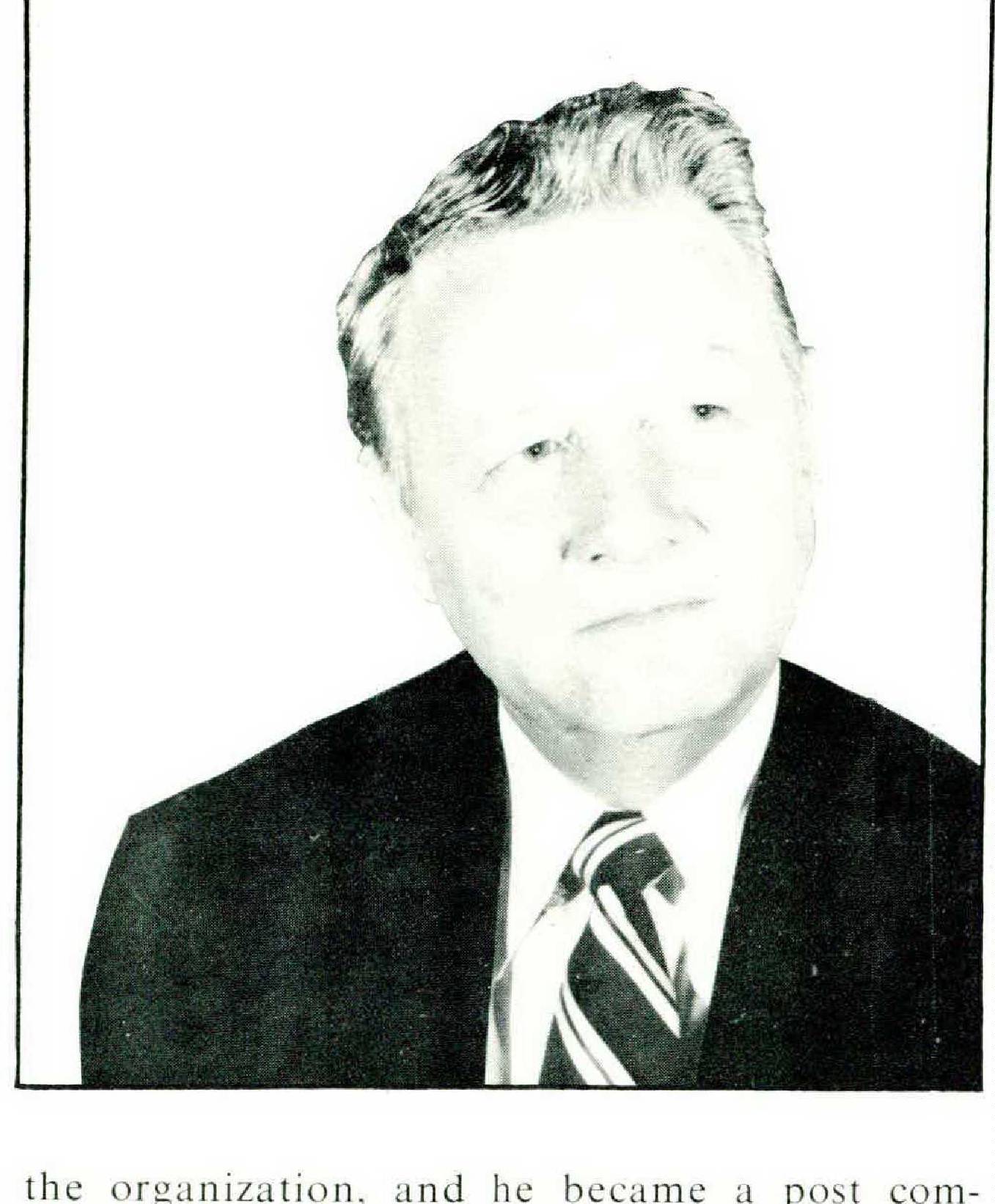
Back at the Bureau, DeLoach moved from Tolson’s office into what was euphemistically called the Crime Records Division, which was responsible for FBI public relations and the Bureau’s dealings with Congress. There he worked for Lou Nichols, who sought to mold DeLoach in his own image. In 1959, two years after Nichols left to join Schenley, DeLoach took over Nichols’ old job of assistant director for Crime Records. Six years later, he moved up to the rank of assistant to the director in general charge of all investigative activities, and also retained jurisdiction over Crime Records as well as other special jobs for Hoover. These included liaison with LBJ’s White House.
DeLoach’s rapid advancement provoked both admiration and resentment among his colleagues. He cultivated a good image for himself that was bound to wear off on others and on the FBI as an institution-young, dynamic, personable, a conservative but spiffy dresser whose FBI cuff links gave off just the right amount of sparkle. He was an organization man, ever loyal to Hoover. He lunched almost every day with Alex Rosen, an older man, assistant director for the General Investigative Division. But even some of DeLoach’s friends in the Bureau were quick to call him a wheeler-dealer; they were not quite willing to trust him. Everything Deke DeLoach did seemed to have been well thought out in advance.
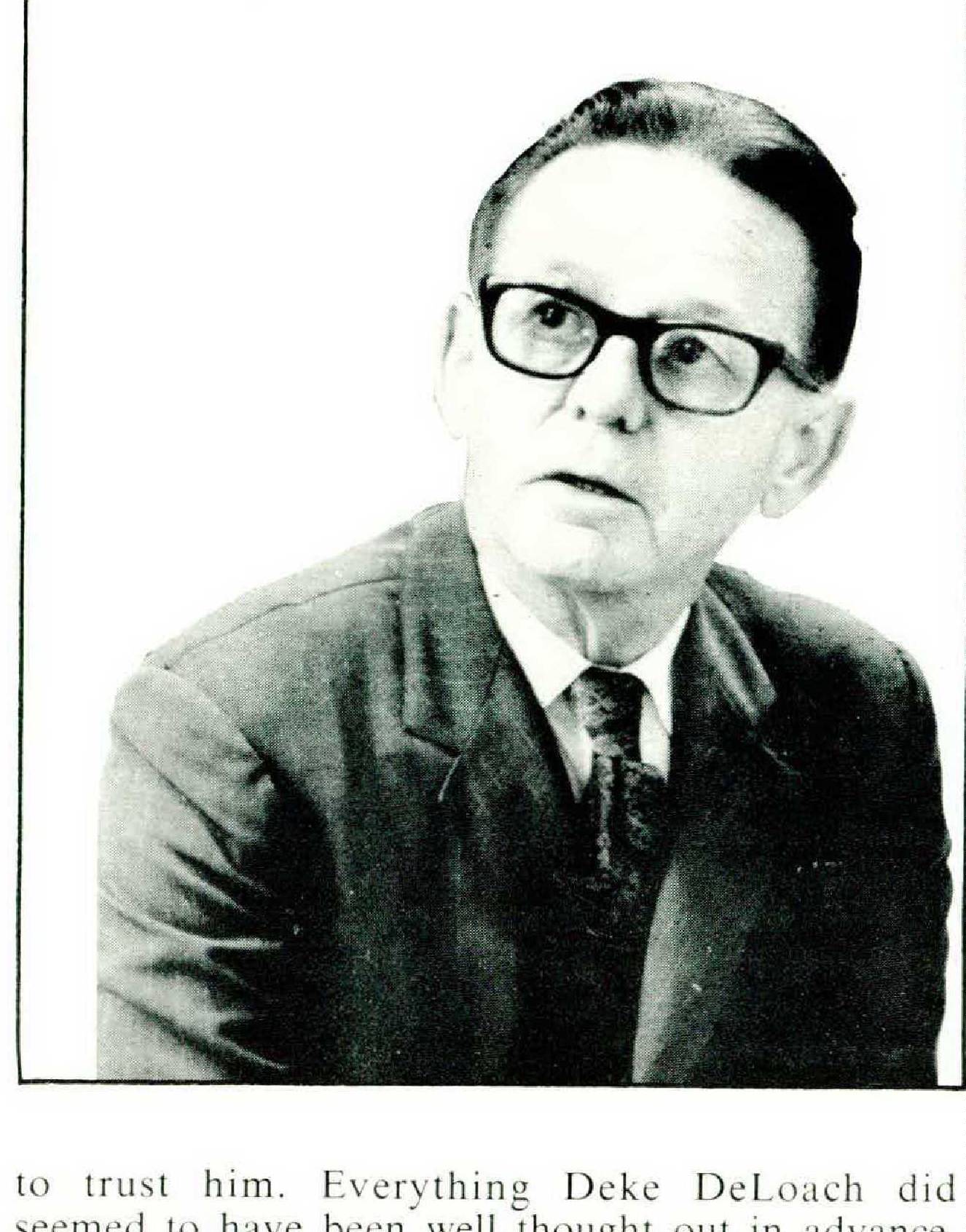
Sometimes there were several Deke DeLoaches. One was a public speaker who could outdo some of the archest right-wing ideologues with his invective and sloganeering. In an address to the American Farm Bureau Federation, DeLoach assessed the social movements that were sweeping the country in the mid-1960s as a “malignant disease.”Reflecting the Hoover line, but seeming to go well beyond it. he declared:
. . . growing number of citizens racketeers. Communists, narcotics peddlers, fifth merchants and others of their ilk —hold themselves above the law. . . . Look, for example, at the “celebrity status" which has often been accorded those morally and emotionally immature misfits who have cast a shadow of disgrace across the streets of many American communities and the campuses of some of our educational institutions. I refer to the lawless demonstrators, the draft-card burners, the raucous exalters of the four-letter word. I refer to the arrogant nonconformists, including some so-called educators, who have mounted the platform at public gatherings to urge “civil disobedience" and defiance of authority And I refer also to those members of the self-proclaimed “smart set" who consider it a sign of “sophistication" to ridicule decency, patriotism, respectability and duty.
Later, talking to the Association of County Commissioners in Georgia, he said that those who commit civil disobedience in the name of a cause use “infantile reasoning" and are dedicated criminals who “don’t give a tinker’s dam about the rights of others.”He called for “a new impatience" in detiling with such tactics.
Some of DeLoach’s speeches, in the early days, were written for him by an expert, William Sullivan, a man eight years older who was making his way through the Bureau ranks at the same time. They were friends for many years, exchanging gifts and favors, living similarly one-dimensional lives that had them driving in from the Washington suburbs early in the morning and returning late at night. Often Sullivan, an expert in the field of subversion and espionage, would recommend books for DeLoach to read. DeLoach seemed preoccupied with more mundane concerns, borrowing money occasionally to keep up the front that he thought was necessary for a man in his position in the FBI. Over time the friendship faded, especially as DeLoach advanced more quickly than Sullivan. DeLoach eventually accused Sullivan of being obsessed with his specialty, of exaggerating the importance of some security work for the purpose of his own self-aggrandizement within the Bureau hierarchy, while Sullivan would charge that DeLoach had no principles and was a vicious, brutal, political creature.
Another DeLoach was a discreet operator who, like Nichols before him, labored behind the scenes to sustain a Bureau image to the Director’s liking. Every press release was required to begin with Hoover’s name and to include at least two other mentions of him; the Director’s name also had to appear twice in every script approved by the Bureau for the weekly program about the FBI on NBC Radio’s weekend Monitor program. Part of the press policy also involved cooperating only with certified FBI “friends,” and cutting off all contact with reporters, editors, and organizations perceived to be “enemies.”
As chief spokesman for the Bureau, DeLoach kept a stable of trusted journalists well supplied with information—people such as Hoover’s close friend Walter Trohan of the Chicago Tribune, labor columnist Victor Reisel, Jeremiah O’Leary of the Washington Evening Star, Sandy Smith of Time and Life magazines, and syndicated columnist Jack Anderson, who was later classified as a bona fide enemy. Like many other government agencies in Washington, the Bureau profited from selectively leaking to its friends material that it wanted to see in print or on the air. Several influential journalists, not all of them close FBI friends, revealed at one point that DeLoach had privately played for them tapes of some of the indiscretions of Rev. Martin Luther King, Jr., warning the journalists that if he were revealed as the source he would deny having done so. (They kept his secret for years before revealing it.)
DeLoach’s job also required getting things done on Capitol Hill. It was standard operating procedure for the FBI to draft letters for friendly members of Congress to use in making statements important to the Bureau, or to pry loose documents from other parts of the government; sometimes this was even a useful tactic in intramural disputes with the Justice Department—particularly during the tense period when Robert Kennedy was Attorney General in President Johnson’s Cabinet, and his feuds with both Johnson and Hoover were coming to a head. It was an intricate game, in which DeLoach played a role not unlike that of an outside lobbyist. He kept his tracks carefully covered.
In dealing with Congress, DeLoach drew upon the Bureau’s elaborate indexing system, which catalogued every reference in FBI files to a member of Congress, whether it was part of a criminal or background investigation, unsolicited and unsubstantiated material transmitted by members of the public, or information submitted by the field offices to satisfy Hoover’s taste for gossip (a taste shared on occasion with special friends—especially Presidents). If there were enough individual items, they would be gathered together in a separate file on the congressman. In addition, under a system begun by Nichols in the early 1950s, the Bureau’s Congressional Services Office kept a sheaf of clippings and other background material on each congressman, enough to indicate whether he could be counted as a Bureau “friend.”
DeLoach was one of the few Bureau officials who appeared to believe in cordial diplomatic relations with some of the more political and partisan appointees in the Justice Department, usually the objects of FBI scorn. At one point, he even offered to include some of Attorney General Robert Kennedy’s aides in a typical Bureau “deal,” an arrangement whereby top FBI personnel bought their meat from a Washington supplier at wholesale prices. DeLoach was also a friend of Ramsey Clark’s, who was a guest in DeLoach’s home the night after he was named Attorney General by President Johnson. (The two men had an irreparable falling-out, however, when the FBI announced the solution of the Martin Luther King assassination case, in the midst of Robert Kennedy’s funeral, without first notifying Clark.)
But by far the most important role Deke DeLoach played came when he was assigned to be liaison with President Johnson, almost from the moment Johnson succeeded to the office. He developed a degree of involvement and intimacy with the nation’s First Family that was previously unheard of in the FBI. Other FBI agents had close relationships with Presidents— Ralph Roach was a confidant of President Truman’s, for example, and Orrin Bartlett sometimes traveled with President Eisenhower—but it was perhaps Johnson’s own personality, and his tendency to suck people into his inner circle, that made DeLoach’s situation unique. During the Johnson Administration, White House communication with the Bureau not only circumvented the Attorney General, which was often the case under other Presidents, but it sometimes even bypassed Hoover. DeLoach and his family were invited to White House social functions (although not to the weddings of the Johnson daughters), and spent an Easter weekend with the Johnson family at Camp David, the presidential retreat in the Maryland mountains. Lady Bird Johnson would seek out DeLoach’s advice from time to time on whether it was safe for her to make certain public appearances. DeLoach was the only Bureau official ever to have a White House phone extension in his home. Johnson ordered it installed in the master bedroom-in a fit of temper one Saturday night when he was unable to get through because DeLoach’s teen-age daughter was on the family telephone. He would call DeLoach at home for information about demonstrations and riots, to check on the progress of FBI background investigations of presidential appointees, to make informal requests for help, or just to chat about his problems as President.
By far the most important role Deke DeLoach played came when he was assigned to be liaison with President Johnson, almost from the moment Johnson succeeded to the office.
Johnson had met DeLoach when they were senator from Texas and Hoover’s representative on Capitol Hill respectively. During the 1950s, when word was passed by Clyde Tolson that it would be a nice thing to do, DeLoach worked with Johnson and with Republican Senator Styles Bridges of New Hampshire on legislation that would maintain payment of Hoover’s full salary even if he retired as FBI director. As Democratic Senate majority leader and as Vice President, Johnson enjoyed DeLoach’s cooperation and extended his own in return. When Johnson became President, and feared for his life, he wanted protection by the FBI. Although there was no specific statutory authority for this—the job is officially assigned to the Secret Service-DeLoach established a procedure whereby an FBI agent would ride with Johnson on the presidential aircraft. Air Force One, on virtually every trip he took as Chief Executive. DeLoaeh selected the agents who would go along, and the Bureau field office at Johnson’s destination was often pressed into service. Frequently, DeLoach himself was invited to travel on the plane, but he generally refused.
There was little surprise to anyone familiar with the relationship when Johnson asked Hoover to send a team of about twelve FBI agents to the Democratic National Convention in Atlantic City in the summer of 1964, and the Director selected DeLoach to lead the team. The official reason for sending the special detachment was to determine the seriousness of any “danger” or “threats” to the President. The convention task force also supervised another operation, the on-going electronic surveillance of the Reverend Martin Luther King. Jr. and other civil rights leaders who the Bureau was then insisting were under the influence of members of the American Communist party. It would later be charged, however, by Sullivan and others, that the information gathered by DeLoach’s team at the convention was purely political in nature, and that the only “danger” in question was Johnson’s worry about whether Kennedy loyalists— not least of all, King-would work among delegates to interfere with the President’s control and manipulation of the convention that was to nominate the Johnson Humphrey ticket. Years later, in a statement to the Senate Watergate Committee, Leo T. Clark, who was senior resident agent in Atlantic City at the time of the 1964 convention, said that DeLoach had told him the special convention surveillance of “threats” to LBJ was not to be revealed to the Secret Service and especially not to Hoover’s nominal superior. Attorney General Robert Kennedy.
DeLoaeh has repeatedly denied the allegation that the FBI conducted electronic surveillance of the 1964 Republican presidential campaign of Senator Barry Goldwater at Johnson’s request, as frequently charged. Four years later, however, he was the intermediary for a request from Johnson that a check be made of telephone calls from the campaign plane of then vice presidential candidate Spiro T. Agnew, to determine whether Agnew and the Chinese-born Republican socialite, Anna Chennault, were in touch with South Vietnamese officials in Washington in an effort to sabotage the Paris Vietnam peace talks launched by Johnson. It was widely believed in American intelligence agencies that the Republicans were trying to keep the South Vietnamese away from the Paris talksthe National Security Agency routinely intercepted a cable to Saigon, from the South Vietnamese Embassy in Washington, advising delay in the hope that the South Vietnamese would get a better deal if the Republican ticket were elected. Johnson, fuming with anger, initially called DeLoach at home at 11:00 P.M. and demanded an immediate investigation, but DeLoach did nothing before discussing the matter with Hoover the next morning. Then, he had the Albuquerque field office check the record of toll calls made from a portable telephone that had been plugged into the Agnew campaign plane during a stop there a few days earlier. The investigation also included a wiretap and physical surveillance of Mrs. Chennault, but the FBI never conclusively connected Agnew or her to the maneuvering with the South Vietnamese.
Some of DeLoach’s prestige with the Johnson Administration had obvious advantages for the Bureau. For example, DeLoach was the FBI representative on Johnson’s National Crime Commission, and thus he was in a position to defend the agency in another important forum.
After a time during the Johnson presidency, it became clear that DeLoach was emerging as an heir apparent to Hoover. The Director began to show his irritation and his jealousy of DeLoach’s closeness with the President—by pouting and making sarcastic remarks—and DeLoach worried that his position might become analogous to that of Courtney Evans, who became so close to Attorney General Robert Kennedy as FBI liaison that he felt he had to leave the Bureau as soon as Kennedy left the Justice Department. Sensitive to the delicate balance he had to strike between his relationship to the Director and his warm personal friendship with the Johnsons, DeLoach several times specifically asked the President to make things easier for everyone concerned by occasionally calling Hoover himself with requests, rather than always going around the Director to DeLoach. Johnson usually replied that although he had once revered Hoover, and he and Mrs. Johnson had gotten along with him back in the years when they were neighbors in Washington, he now had difficulty understanding him, because the Director talked too fast. The President complained further that he was no longer sure he could believe everything that Hoover told him. Johnson promised to try to change his habit, but generally he slipped right back into the routine of calling DeLoach, and sometimes DeLoach was in the difficult position of having to take the calls while in Hoover’s office.
Rumors frequently swept the Bureau (sometimes helped along by Sullivan) that Johnson was ready to urge Hoover to retire, and to replace him with the younger man he trusted so much more. Hoover acted to make that difficult to do, using as his delegate, of course, DeLoach, the man he thought might present a threat. The word filtered down, through Tolson, as usual, that it would be a good idea if President Johnson were to waive the mandatory federal retirement age of seventy in order to permit Hoover to stay on indefinitely in the director’s chair. DeLoach dutifully went to Johnson with the request, and the two men had a soulsearching discussion, in which the President warned. “Deke. I hope you know what you’re getting into”-the probability that DeLoach would never become director. Neither man was prepared, however, to risk Hoover’s wrath, and so the waiver was promptly granted, and phrased in such a way that it sounded like something Johnson had thought up for the good of the country. Johnson’s action made it even less likely that any future President would take the political gamble of trying to separate Hoover from the FBI during his lifetime.
After Nixon’s inauguration in January, 1969, DeLoach was noticeably less in the swing of things at the White House, despite the efforts of his mentor, Lou Nichols, a Republican who was active in the 1968 campaign and was thought to be headed for an Administration job, to commend DeLoach to Nixon. At the Justice Department, however, DeLoach was seen as an ideological ally of the new hard-line officials, and he became a close friend of Deputy Attorney General Richard G. Kleindienst. Despite the much touted affinity between Hoover and the Nixon Administration, Attorney General John N. Mitchell disliked dealing with the Director, and after a short time he adopted the policy of waiting until Hoover had left for the day, usually at 4:45 P.M., and then calling DeLoach with any direct requests of the Bureau.
With Johnson gone, DeLoach was close once again to Hoover. But at their best moments, the relations between Hoover and his favorite young lieutenant were peculiar and ambivalent. DeLoach would be trusted with the most sensitive of assignments—including the task of taking signed statements on two occasions from people who accused Hoover and Clyde Tolson of having a homosexual relationship. And yet, for someone who was thought to be playing the part of Hoover’s son, DeLoach was invited to Hoover’s home only three times in his entire FBI career, and Hoover accepted invitations to DeLoach’s home only twice, although he often gave Christmas presents to the DeLoach children. At one point the Director offered to pay the $1700 hospital bill of one of DeLoach’s sons, but DeLoach declined the gift and borrowed instead.
At certain crucial times, Hoover rejected DeLoach’s advice and got into situations that resulted in ridicule of the FBI. One was the famous 1964 press conference in Hoover’s office, for selected women reporters only, in which the Director twice blurted out that Martin Luther King was “the most notorious liar in the country.” DeLoach slipped Hoover a note, asking him to make it clear that this comment was off the record, but the Director sent the note back. When asked by one of the reporters for clarification. Hoover said his remark about King was definitely for attribution. DeLoach tried two more notes, but the advice was rejected, and finally Hoover said aloud, “I will not. . . . DeLoach is trying to tell me to take that off the record, but I will not.” Hoover’s words about King were, of course, widely reported, and served to aggravate the FBI’s mixed reputation among black people. Sullivan obtained a degree in education from American University in Washington and returned to New England, first teaching school in Bolton, and then working for the Internal Revenue Service in Boston. As World War II approached, he applied for a position with Army intelligence, but a college friend who was working for the FBI urged Sullivan to try there. The Bureau was building up its manpower, because of new internal security responsibilities given it by President Franklin D. Roosevelt, and the thought was that Sullivan, with his background in education, could teach in the Training Division. He had a choice between the Army and the FBI, and picked the FBI. Like most other new agents of the era, alter he began duty in August, 1941, Sullivan was rapidly transferred from one field assignment to another-Milwaukee, Albuquerque, Philadelphia, Baltimore, and San Antonio. Those were days when the FBI was not so heavily regimented and regulated as it would later be, and as resident agent in Brownsville, Texas, Sullivan regularly made impromptu excursions to Mexico to look for fugitives. He paid a fixed dollar amount to the Mexican police for each head they helped him hunt.
“I thought you were one who would never leave me,” said Hoover.
By mid-1970, as he approached his fiftieth birthday, DeLoach had resigned himself to the fact that Hoover would probably never step aside voluntarily, and he had decided that he was not willing to chance the controversy that might come from being Hoover’s replacement if the old man were forced out. Donald Kendall, chairman of the board of Pepsico, Inc., and a prominent Republican friend of President Nixon’s, had offered DeLoach a job previously, and DeLoach had said that if Hoover was still director when he turned fifty, he would accept. Now he decided that he could not stay at a salary of $38,000 a year with seven children to support and considerable debts to pay.
DeLoach broke the news to Hoover six weeks before the birthday, and was greeted with utter disbelief. “I thought you were one who would never leave me,” said the Director in a conference that DeLoach clocked at two hours and forty-seven minutes. Unable to persuade DeLoach to change his mind, Hoover reacted characteristically, cutting him off for a couple of weeks, refusing to talk with him or send him mail. He eventually relented, however, and gave DeLoach a warm send-off, including a gift of a set of gold buttons. Later he would tell DeLoach he was welcome to return to the fold anytime.
Before DeLoach left, he did one last important favor for Hoover: he persuaded Attorney General John Mitchell to endorse the Director’s opposition to a new domestic intelligence program that was being pushed by the White House and by Assistant FBI Director William C. Sullivan. Then Hoover named William Sullivan to replace DeLoach as the number three man in the FBI, just behind Tolson.
Bill Sullivan was as rough as Deke DeLoach was smooth. Or so it seemed. Although his personal appearance had been questioned in some of his earliest field office assignments, Sullivan had managed to climb up through the Bureau ranks without paying any of the attention that most of Hoover’s top men did to being neat and fastidious. His ties were often spotted, his shirt collars curled, and his suits sometimes looked as if he had slept in them overnight. His personal style of management and organization was chaotic; he moved frenetically and could easily misplace things or, in the midst of a conversation, lose his train of thought. He had a habit of coming in to his office on the weekends and typing his own letters; they were unmistakable for the smudges and dropped words or transposed letters. His temper was unrivaled. Sullivan became legendary for calling up colleagues in the Bureau leadership on the special telephone circuit that circumvented their secretaries, shouting a tirade into the receiver, and then hanging up without giving even a moment for a reply. Whatever Sullivan said, fast or slow, came out in a coarse New England country accent that years of travel and experience had never flattened.
But there was another side to Sullivan. While many of the other ranking FBI officials associated mostly with one another, and often knew surprisingly little of what was going on in the outside world, Sullivan had a wide circle of acquaintances—wealthy businessmen, philanthropists, and even some of the intellectuals whom Hoover despised. Sullivan impressed them with his knowledge of communism and espionage and his assessments of the country’s internal security. Other members of the Bureau hierarchy would give no credence to someone like liberal historian Arthur M. Schlesinger, Jr., who was on the FBI’s “no-contact list” (because of an article he had written for Life magazine that displeased Hoover); Sullivan voraciously read and annotated books by Schlesinger and writers ranging from Will and Ariel Durant and Alexander Solzhenitsyn to religious philosophers. A lifelong Democrat, he had a way of letting conservatives believe he was a conservative and liberals believe he was a liberal.
“Crazy Billy,” as he was sometimes affectionately known by friends and detractors alike, did some things that none of his Bureau peers would have dared. For example, he went out of his way to befriend former members of the American Communist party who had left the organization in disgust and undergone conversion to anticommunism. At one point, uncertain about the quality of coverage the Bureau would get on a peace march between Washington and Baltimore. Sullivan simply marched along himself and filed his own report. In 1968, Sullivan filed a surprise request with Hoover for military leave, asserting that he wanted to go to Vietnam and see if he could help save American lives by using counterintelligence techniques that had worked against the Communists and other groups within the United States. (Hoover denied the request.)
When people made unflattering references to Sullivan’s disheveled appearance, he liked to reply that he “grew up in overalls” in a farm community where that sort of thing did not matter much. Indeed, Sullivan was raised on a farm on the outskirts of Bolton, Massachusetts, and even when he went to high school, in nearby Hudson, the “city boys" there poked fun at him as a scrawny country bumpkin.
Sullivan liked to compare the Director to German Chancellor Konrad Adenauer and French President Charles de Gaulle.
During the war, Sullivan joined the Bureau’s “Special Intelligence Service" and was sent on a “confidential mission” to Spain, which was being used by the Germans for the transit of espionage agents. Sullivan’s assignment was to calculate how the Bureau could intercept the agents. While in Spain he became ill, apparently because of his frenetic pace, and he had to come back home early. On his return, he became a supervisor in the security field at FBI headquarters in Washington; there he spent the rest of his FBI career.
“Security” was big business for the FBI in the postwar years, and there was no better place to be, from the standpoint of having your work appreciated by Hoover, than in the research section of the Domestic Intelligence Division. Sullivan moved steadily up in the hierarchy, from supervisor to unit chief to section chief to inspector to chief inspector, and finally, in 1961, to the rank of assistant director of the FBI in charge of the Domestic Intelligence Division. Along the way, he achieved the reputation of being the house intellectual and its foremost anticommunist, who was invariably buried in a scholarly analysis of espionage techniques or subversive literature. (He eventually had a personal library of three thousand books in this field, many of which he kept at his office so that his associates could use them. At one point he willed the entire collection to the FBI, but later he changed his will.)
Sullivan could be an ingratiating personality. He made all the fawning gestures toward Hoover that were necessary for advancement, not the least of which involved feeding the Director’s obsession for derogatory information about the American Communists and warnings about the danger they presented. He was said to write the obligatory admiring letters to Hoover, as others did. Sullivan liked to compare the Director to German Chancellor Konrad Adenauer and French President Charles de Gaulle, and urged him to follow their example by remaining in office until a ripe old age. He was one of the few assistant directors close enough to Hoover to be addressed by his last name only—as in “Dear Sullivan"—for Hoover, a more familiar and respectful form of address than the first name alone.
Sullivan was exceedingly skillful at the FBI’s peculiar variety of bureaucratic politics. He knew, for example, that if Hoover and Tolson were going to a cocktail party at a foreign embassy in Washington, they did not like to discover any of their subordinates there; so he would check carefully before accepting any such invitation. He also realized that they could be equally upset if one of their assistant directors gave a speech that was widely praised or attacked. Sullivan tried to stay in the noncontroversial middle range. He also made it a point to quote Hoover at least once in every speech, even if that meant quoting something he had himself ghostwritten for the Director.
In the heyday of Cold War concern about communism, and even after those days, Sullivan was much in demand as a lecturer. He spoke three years running in the early 1960s at the Harvard Graduate School of Business Administration, and those addresses were later published, in a pamphlet called “Freedom Is the Exception, ” by the Standing Committee on Education Against Communism of the American Bar Association. They include strident warnings of the sustained Communist assault on capitalism and descriptions of how Communists had allegedly managed to infiltrate and take over American labor unions. He appealed to the future businessmen to remember that “every citizen should report facts regarding communism to the FBI.” and he sounded a theme that he would take up more strongly in later years:
If experience in dealing with communism has taught us anything, it is that there are certain types of communist activity which can be countered effectively only by the employment of highly trained, professional intelligence services. For the most part, communist intelligence, espionage and underground operations, as well as some aspects of Communist Party activities, are conducted by professionals. To deal effectively with these communist operations, we must resort to professionals of our own—trained investigators and experienced counterintelligence personnel. Today, counterintelligence activities stress skills and training which depend upon complex scientific aids. This is no area for amateur anticommunists. Rather, it is the province of experts.
Sullivan got along well with the Kennedy Administration and its Justice Department under the President’s brother, Robert F. Kennedy. During the Johnson Administration, by contrast, Sullivan was at times somewhat out of the mainstream, and in 1964, he began to warn Hoover and Tolson that Deke DeLoach was involved in political dealings with the White House that could “subtly undermine" the Director’s position.
Although Sullivan repeatedly followed a Hoover dogma by alleging Communist infiltration of the civil rights movement-insisting, for example, that the 1963 March on Washington had included some two hundred Communists trying to exploit the occasion for their own purposes—he also took the position that the Ku Klux Klan was hurting the nation, and urged that the FBI use its substantial resources against that organization, something Hoover had always seemed reluctant to do.
After a characteristic dispute among assistant directors, responsibility for the Klan was transferred at Sullivan’s request from the General Investigative Division to his Domestic Intelligence Division. Sullivan soon convened a conference in Atlanta, where he invited veteran agents who had spent most of their careers in the South to talk about how the Bureau might fight the Klan. According to one participant in that meeting, “they really told the truth.” as they had apparently never done in their reports to headquarters. “They talked about what goes on, the problems they had with sheriffs, police departments, and hostile communities.” Out of the conference came a bold decision—and what would turn out to be a major precedent—to use against a purely domestic organization techniques that had previously been reserved for espionage cases, foreign intelligence matters, and the Communist party and other old-line, leftist political groups with alleged foreign connections: to set up a fullfledged “counterintelligence program,” in Bureauese, a COINTELPRO, against the Ku Klux Klan.
“The purpose of this program,” said a memorandum that went out from headquarters to Atlanta and other southern field offices on September 2, 1964, “is to expose, disrupt and otherwise neutralize the activities of the various Klans and hate organizations, their leadership and adherents.”
A victory for Sullivan, the “COINTELPRO Disruption of White Hate Groups” led to a broad expansion of such techniques in the domestic intelligence field. Eventually he proposed, and obtained Hoover’s approval for, other similar COINTELPROs against “Black Extremists” and the constellation of groups that the FBI helped to label as the “New Left.”Sullivan glowed with satisfaction as FBI agents made phone calls under false pretenses, faked documents, and otherwise gummed up the works of organizations they were “investigating.”
But while Hoover endorsed some of Sullivan’s ambitious “programs,”he irritated his domestic intelligence chief in other ways. In 1966, without much explanation or discussion, the Director suspended the use of a number of traditional FBI tactics, including the “black bag job,” generally used to break into foreign embassies and consulates to obtain cryptographic information, and legal “mail covers,” in which the post office cooperated with the FBI by recording the names and addresses ot the people who corresponded with the subject of an investigation. With no apparent motive except to avoid embarrassment of himself and the Bureau, Hoover also cut back substantially on the use of wiretaps and other forms of electronic eavesdropping. Those restrictions chafed Sullivan, who felt they would make it more difficult for the FBI to combat the espionage conducted by “illegals” from the Soviet Union and other Communist countries.
Sullivan had other problems. He was increasingly involved in petty internal quarrels that seemed to divert energy from the substance of the Bureau’s work. He and DeLoach sparred often; they quarreled over DeLoach’s alleged leak to selected reporters of information from the Domestic Intelligence Division. Sullivan’s insistence that the Johnson Administration was making improper political use of the FBI usually fell on deaf ears, except that it seemed particularly to aggravate DeLoach’s patron, Clyde Tolson. That would usually result in tiffs with Tolson over such issues as whether Sullivan properly initialed all the mail that came across his desk. The skirmishes would generally conclude with Sullivan writing a duly contrite letter to Hoover, like one in November, 1969, in which he quoted a speech by President Theodore Roosevelt in Paris in 1910, and had these musings to share with the Director:
No person knows better than yourself that life is never simple and human relations are not always tranquil. This is a world of tension, struggle, strife and turmoil. It has always been so. We may not understand it fully in all instances but irrespective of this we have no choice but to accept it as it is understood or not. Hence, the wisdom in the old saying: Change that which can and ought to he changed. Accent that which cannot be changed. Learn to distinguish between the two.
It is this learning “to distinguish between the two” where I have on occasions failed in life and sometimes seriously.
When Sullivan had difficulties, they were often compounded by W. Mark Felt, a ranking official in the Inspection Division, and eventually its assistant director. Felt, an uncannily handsome, whitehaired man who looked about ten years younger than his actual age, could be as smooth, it not as clever, as DeLoach, and he became one of the Director’s favorites in his declining years. It was Felt who had the responsibility of policing the Hooverordered cutbacks in wiretapping, and who blew the whistle when he discovered orders coming out of the Domestic Intelligence Division to about twenty field offices to open an investigative file on every resident of every commune in their territory. He also opposed in executive conference a proposal to open a file on every member of Students for a Democratic Society.
Sometimes Sullivan just did what he thought was necessary, without getting advance approval or without notifying those above him after the fact. At the 1968 Democratic National Convention in Chicago, for example, he directly contravened Hoover’s instructions by assigning several agents from the field office there to dress appropriately and penetrate the ranks of the antiwar protesters who were threatening to disrupt the convention. The agents fed substantial information to the Chicago Police Department, information which may have had an effect on the violent confrontations that ensued.
Although he apparently voted for Democratic candidate Hubert Humphrey in the 1968 presidential election, Sullivan was delighted with the policies and performance of the Administration of President Richard M. Nixon. He welcomed the arrival of a get-tough Attorney General, John N. Mitchell, and of a White House staff that was willing and eager to pursue the sources of alleged security leaks from the government, a job that Hoover regarded with reluctance since he felt that each federal department should police itself. Sullivan was the key middleman when, beginning in May, 1969, President Nixon and his then national security adviser, Henry Kissinger, launched a “special program” of wiretaps on thirteen government officials and four newsmen in an attempt to determine how information was getting out about secret American military operations in Southeast Asia and the strategic arms limitation talks with the Soviet Union. Sullivan was responsible for reporting to Kissinger and his deputy, Alexander M. Haig, and later to presidential chief of staff H. R. Haldeman, whenever the taps produced something of interest. Two of the taps were kept in operation, on Morton H. Halperin and Anthony Lake, after they had left the National Security Council staff and gone to work for Democratic presidential aspirant Edmund S. Muskie, a senator from Maine. Sullivan kept the logs and reports of all these wiretaps in his own office, rather than in the Bureau’s general files.
Hoover also selected Sullivan for a confidential mission to Paris in June, 1969, where Sullivan arranged with French authorities to have electronic surveillance placed on syndicated columnist Joseph Kraft, who was interviewing Communist representatives to the Vietnam peace talks and was then planning to proceed to the Soviet Union on a reporting trip. Sullivan instituted full coverage of Kraft, in his hotel room and elsewhere, and later the FBI’s “legal attache” at the American Embassyin Paris shipped the tapes back to Washington in the diplomatic pouch.
One development that delighted Sullivan was the arrival of a kindred spirit, Robert C. Mardian, as assistant attorney general in charge of the Justice Department’s long-dormant Internal Security Division. Mardian was a hard-liner and, like Sullivan, seemed to have an almost pathological concern with student protest and the growth of the Black Panther party and other black, militant groups. Mardian’s office, like Sullivan’s, was in the Federal Triangle Building, a short walk from the main building that was Justice Department and FBI headquarters. The two men spoke often, initially at arm’s length-they argued about politics, with Sullivan suspicious of Mardian for having worked in Senator Barry M. Goldwater’s 1964 Republican presidential campaign organization-but later more intimately. Mardian let Sullivan in on what the assistant attorney general said was a developing Nixon Administration plan to dump Hoover and name a new director. Some of the President’s advisers who were impatient with the aging Hoover saw Sullivan as an ally. In meetings of the President’s Foreign Intelligence Advisory Board, Sullivan, as the FBI representative, complained openly that Hoover imposed restrictions that were preventing the Bureau from coping adequately with the espionage threat.
The standoff was dramatized in the summer of 1970, when Nixon convened a meeting with Hoover and the directors of the Central Intelligence Agency, the Defense Intelligence Agency, and the National Security Agency to discuss what they perceived as a need for better domestic intelligence operations in light of the antiwar upheaval and other civil disturbances across the country. Sullivan was Hoover’s delegate to. and therefore the effective chairman of, the working group of intelligence agency representatives that came up with a proposal for reinstituting the surreptitious entries, mail interception, and other “programs” suspended by Hoover in the mid-1960s. Although the recommendation was signed by White House aide Tom Charles Huston, many parts of it were revised and typed in the FBI’s Domestic Intelligence Division, where Sullivan and some of his aides were ready to expand operations. Hoover balked again when he saw the final proposal. Although he approved resumption ot a few of the tactics—such as “trash covers,”which involved rummaging through a suspect’s garbage looking for potential intelligence or character information-and backed down on his opposition to some others—including the recruitment of college-age informants who would be able to spy on radical groups more effectively than older ones—he vetoed most of the plan. Whether some parts of the plan were instituted unofficially anyway has never been clear, but Nixon later claimed Hoover’s veto was the reason he found it necessary to establish the Special Investigations Unit, better known as the “plumbers,” in the White House. Similarly, the CIA and both its friends and critics cite the Director’s recalcitrance, and resulting feuds with other agencies and with the White House, as important causes of that agency’s escalation of its already controversial domestic intelligence activities in the early Nixon years.
Sullivan was the key middleman when, beginning in May, 1969, President Nixon and his then national security adviser, Henry Kissinger, launched a “special program” of wiretaps.
As strained as relations were becoming between Hoover and Sullivan, in June, 1970, the Director nonetheless named Sullivan to replace DeLoach as assistant to the director for all investigative activities. Cynics entertained two theories about the appointment: either Hoover was trying to appease the Nixon Administration by advancing one of its favorites, or he was trying to hurt DeLoach. who had been so disloyal as to retire, by replacing him with his arch enemy.
Tensions only increased. Although Sullivan was assumed by the outside world, and even by some in the Justice Department, to be a close and trusted associate of Hoover, his colleagues in the Bureau leadership kept him at a distance. In his resistance to the Hoover-Tolson world view, and to their long-established system of doing things—he even refused to accept gifts on his thirtieth anniversary as an FBI agent—Sullivan was saying what a lot of other people were thinking but felt should not be said. A few discreetly egged Sullivan on, but most of his associates opposed him. The FBI became as polarized internally as it had ever been since Hoover took control in 1924; within the Crime Records Division, there were even informal spokesmen for the two factions.
In a public appearance, Sullivan flatly declared that there were no direct links between the Communists and the student radicals, and that the American Communist party no longer represented a significant threat to national security. That was a challenge to the Director’s credo, and as soon as Hoover and Tolson heard about it, they called Sullivan on the carpet for “downgrading” the Communist party. They fumed for months.
Sullivan criticized the Director for breaking off liaison with the Central Intelligence Agency over a minor dispute. He opposed Hoover’s move to expand the number of “legal attaches” representing the Bureau in American embassies overseas, and accused him of using that proposal in an effort to paper over the FBI’s failings at home. He spoke up against some severe examples of the Director’s disciplinary policies. He was one of the FBI officials who were enraged when, in an appearance before the Senate Appropriations Committee in November, 1970, Hoover revealed an investigation of Revs. Daniel and Philip Berrigan and other militant antiwar Catholics. Hoover all but declared that the Berrigans were guilty of conspiring to kidnap presidential adviser Kissinger, and his prejudicial remarks, which he insisted upon releasing publicly, gave the Bureau and the Justice Department serious trouble as the investigation and eventual prosecution of the Berrigan case evolved.
In June, 1971, when the New York Times, the Washington Post, and other newspapers published the top-secret Pentagon Papers, Hoover was initially reluctant to launch a major investigation, preferring to treat it as a “leak case” that was the primary responsibility of the department where the leak had occurred. Once Daniel Ellsberg, a former researcher for the Defense Department and the Rand Corporation, had been identified as the probable source of the documents, Sullivan and his protégé C. D. Brennan, then heading the Domestic Intelligence Division, prepared a recommendation that Hoover permit agents in New York to interview Ellsberg’s father-in-law, millionaire toy manufacturer Louis Marx. Special permission was necessary because Hoover and Marx were casual acquaintances, and often at Christmastime Marx sent the Director a large shipment of free toys to distribute to the children of friends and to his favorite charities. Through a communications mishap, the interview with Marx was already completed by the time Hoover’s reply, denying permission to interview him, came through. The Director became furious; he demoted Brennan and ordered his immediate transfer to Cincinnati. Sullivan went straight to his friends in the Nixon Justice Department and got Mitchell to rescind Brennan’s transfer. But the demotion stuck, and for months Brennan was virtually in solitary confinement, permitted to work only on the Ellsberg case.
Sullivan said that unless something was done with the logs he had been keeping that related to the special, secret wiretaps, Hoover “might use the records in some manner” to blackmail Nixon into letting him remain as director.
By the next month, July, 1971, Hoover had apparently resolved to squeeze Sullivan out. He promoted Sullivan’s opponent, Mark Felt, into a newly created position of “deputy associate director,”thus placing him between Tolson and Sullivan. What Sullivan did not realize was that Hoover, in an exercise of classic bureaucratic good form, had gone to Mitchell and obtained official endorsement of his intentions for Sullivan. Mardian exhorted Sullivan not to press the dispute, but it was already too late.
Sullivan’s bravado only intensified, and he deliberately provoked further confrontations with the Director. He went to his office on Saturday morning, August 28, 1971, and wrote Hoover a bitter letter outlining broad criticisms of Hoover’s policies and management. “It is regretted by me that this letter is necessary. What I will set forth below is being said for your own good and for the FBI as a whole of which I am very fond,” he wrote, and then went on to challenge allegations that he had been “disloyal” to Hoover:
I wish to direct your attention to my 30 year record in the FBI. It is well documented and I don’t need to present it to you here with its letters of commendation and awards given by you. You have access to all this. If this record of three decades is not conclusive evidence of loyalty, what is? You have said that I consistently put the work of the Bureau above personal considerations. My family certainly will attest to this for they have year in and year out suffered from my neglect. This I now realize was a mistake on my part. . . .
. . . during the past year in particular you have made it evident to me that you do not want me to disagree with you on anything. . . . you claim you do not want “yes men" but you become furious at any employee who says “no" to you. . . . If you are going to equate lovaltv with “yes men. “rubber stamps,”"apple polishers.”flatterers, self-promoters and timid, cringing, frightened sycophants you are not only departing from the meaning of loyalty you are in addition harming yourself and the organization. There is no substitute for incisive, independent. free, probing, original, creative thinking. I have brought up my children to believe and act upon this truth. They disagree with me regularly. But, they are not disloval to me. In fact I think their loyalty is more deep, strong and lasting because of this kind of thinking. . . .
. . . you are incensed because I have disagreed with you on opening new foreign liaison offices around the world and adding more men to those already in existence. It seems to me you should welcome different viewpoints. On this subject I want to say this here. I grew up in a farming community where all people in a family had to literally work from the darkness of the morning to the darkness of the night in order to make a living and pay their taxes. It could be that this is what causes me to be so sensitive about how the taxpayers’ money is spent. Hence, I want to say once more that I regard it to be a serious waste of taxpayers’ money to keep increasing the number of these offices, to continue with all that we now have and to be adding more and more manpower to these offices. . . . You keep telling me that President Nixon has ordered you to do it and therefore you must carry out his orders. I am positive that if President Nixon knew the limitations of our foreign liaison operations and was given all the facts relative to intelligence matters he would reverse these orders d such have been clearly given. A few liaison offices can be justified but this expansion program cannot be no matter what kind of “reports" your inspectors bring back to you. Do you think many (if any) will disagree with you? What would happen if they did?
. . . you have refused to give Assistant Director C. D. Brennan and mxself any more annual leave. The reason you give is not valid and you know it. All it amounts to is this: you dislike us and you intend to use your absolute power in this manner as a form of “punishment.”I am hardened to all this and can lake it. But my family cannot. My oldest son is registering for college in New Hampshire this coming Tuesdav. Naturally he wanted me to he with him and is extremely disappointed that I cannot be. Of course, I want to be with him and find out what kind of a roommate he has. talk to his professors, etc. My wife, in addition to respiratory trouble is now ill. . . . Surely. I don’t need to explain to you why my wife and three children regard you. to put it mildly, as a very strange man. . . .
. . . what I have said here is not designed to irritate or anger you but it probably will. What I am trying to get across to you in my blunt, tactless way is that a number of your decisions this year have not been good ones: that you should take a good, cold, impartial inventory of your ideas, policies, etc. You will not believe this but it is true: I do not want to see your reputation built up over these many years destroyed by your own decisions and actions. When you elect to retire I want to see you go out in a blaze of glory with full recognition from all those concerned. I do not want to see this FBI organization which I have gladly given 30 years of my life to along with untold numbers of other men fall apart or become tainted in any manner. We have a fine group of men in the FBI and we need to think of every one of them also. . . .
. . . When you are angered you can take some mighty drastic action. You have absolute power in the FBI (I hope the man who one day takes over your position will not have such absolute power tor we humans are simply not saintly enough to possess and handle it properly in every instance). . . . you can fire me, or do away with my position ... or transfer me or in some other way work out your displeasure with me. So be it. I am fond of the FBI and I have told you exactly what I think about certain matters affecting you and this Bureau and as you know I have always been willing to accept the consequences of my ideas and actions.
Three days later, Hoover excoriated Sullivan during a long, angry session in the Director’s office, called to discuss the contents of Sullivan’s letter. Hoover relented on the matter of vacation, but that was all. The Director wrote back on September 3—by now calling his assistant “Mr. Sullivan.” a clear indication of his fall from grace as follows:
I have given, as you know, very careful attention to your letter of August 28, followed by a lengthy conference with you concerning it’s [sic] contents.
It has been apparent to me that your views concerning my administration and policies in the Bureau do not meet with your approval or satisfaction [sic], and has brought about a situation which, though I regret, is intolerable for the best functioning of the Bureau.
Therefore I suggest that you submit your application for retirement to take effect at the close of business alter you have had such leave to which you are entitled.
Sullivan left Washington for his family’s new home in New Hampshire (bought a few years earlier because of his wife’s respiratory ailment) on September 13, but first he contacted Mardian to warn that the end of his FBI career was in sight. Sullivan said that unless something was done with the logs and other materials he had been keeping that related to the seventeen special, secret wiretaps, Hoover “might use the records in some manner to blackmail Nixon into letting him remain as director. Mardian flew to the Nixon estate in San Clemente, California, for an urgent conference with the President, who directed that the wiretap information be removed from the FBI files and transferred to the White House. Sullivan complied. There are conflicting versions as to whether the material was turned over to John Ehrlichman, then Nixon’s chief domestic adviser, or to the President himself; but with Sullivan’s cooperation it was safely out of Bureau files where it could have been found and submitted, as required, in federal criminal trials of people who had been overheard, including Daniel Ellsberg.
By the time the recalcitrant Sullivan had returned to Washington from New Hampshire. Hoover had named as his successor old-timer Alex Rosen of the General Investigative Division. Sullivan still resisted, so Hoover wrote again on September 30:
Since you have not as yet responded to my suggestion in my letter of September 3, 1971, you are hereby being relieved of all duties as Assistant to the Director at once and placed on annual leave pending your submission of application for retirement.
I deeply regret the occasion to take action such as this after so many years of close association, but I believe it necessary in the public interest. Your recently demonstrated and continuing unwillingness to reconcile yourself to, and officially accept, final administrative decision on problems concerning which you and other Bureau officials so often present me with a variety of conflicting views has resulted in an incompatability (sic] so fundamental that it is detrimental to the harmonious and efficient performance of our public duties.
While Sullivan took a day of “sick leave” the next day, Hoover had the lock changed on his office door and his name removed. Five days later, on October 6, 1971, after first considering an appeal through his friends Mardian and Mitchell, Sullivan relented and submitted his retirement after more than thirty years of service-but not before sending Hoover a final, even longer, written blast, tracing the same ground, which was never answered. Hoover called DeLoach at Pepsico to discuss the situation; they talked for forty-seven minutes.
DeLoach settled into the lap of luxury as a corporate vice president at Pepsico’s world headquarters on an estate in Purchase. New York. Board chairman Kendall assigned him important projects including working up plans for a Nixon Library—and he moved to Greenwich, Connecticut, to live the life of abundance he had always dreamed of. When the Director died in May, 1972, people from all over the country called DeLoach-to express their sympathies and to discuss the implications of Hoover’s passing—and he was in the front ranks of the mourners who gathered in Washington. DeLoach had visited with Hoover at a banquet in New York City just a week before the old man’s death, so he had had new and affectionate blessings from the Director.
Sullivan, for his part, went into exile in Westport, Connecticut, where he worked briefly for the Insurance Crime Prevention Institute, run by James F. Ahern, former police chief of New Haven. He too had an unprecedentedly comfortable income, but he nevertheless longed for vindication and dreamed of eventual reattachment to— or at least reacceptance by—the Bureau.
Barely a month after Hoover’s death, Sullivan received a call from Attorney General Richard G. Kleindienst, inviting him to return to Washington and help establish an Office of National Narcotics Intelligence within the Justice Department, which would theoretically serve as a clearinghouse for intelligence information gathered by various agencies about the nation’s drug problems. Sullivan accepted, and by August, less than a year after he had left Washington in disgrace, he was back in an ambiguous status. He was assigned a suite of offices in the Federal Triangle Building, just a few floors away from his old colleagues in the FBI’s Domestic Intelligence Division. His presence stirred considerable tension, especially when he hired individuals who had left the FBI under fire from Hoover (including Jack Shaw, the agent who made negative remarks about the Director in a university term paper, refused to accept a disciplinary transfer to Butte, Montana, and ultimately sued and won $13,000 in damages from the Bureau).
Each man wondered whether, had he done things differently, he might have become director of the FBI.
Sullivan made several approaches to Acting Director L. Patrick Gray, offering his advice. But Gray, who had named Mark Felt his acting associate director, kept his distance from Sullivan and met with him discreetly only a few times. As if to strike the appropriate balance, Gray, at the suggestion of Kleindienst, also called DeLoach to Washington for consultations.
With Gray giving him the cold shoulder, and with rumors spreading that Gray might not be able to hold on to his job, Sullivan turned elsewhere. Robert Mardian was now an official of the Committee for the Re-election of the President, someone who would presumably have some influence after November, 1972, and Sullivan besieged him with letters about the FBI at his home address. He sent Mardian commentaries on the FBI’s budget, its structure, its management, and myriad other topics. Mardian encouraged the letters, but never replied to them on paper. Sullivan also wrote a number of rambling letters about the Bureau to Kleindienst, offering proposals for changing it.
There were mysterious events in early 1973 involving the dukes: John Mitchell, no longer holding any office, and increasingly under suspicion in connection with the Watergate scandals, met with Deke DeLoach in New York City and apparently said he was authorized by President Nixon to offer him the permanent directorship of the FBI. DeLoach. after discussing it with his wife and Kendall of Pepsico, came back to Mitchell and said no. Gray was thereupon nominated.
While Gray’s nomination was in trouble, and there were charges that he had abused the FBI for political purposes, White House counsel John W. Dean, III was in touch with Sullivan. Dean and Sullivan had had occasional contact while Sullivan was still in the Bureau, and on at least one occasion, Dean phoned Sullivan to ask for an FBI file check on a woman Dean was dating. Now Dean asked the former FBI official about the secret seventeen wiretaps, about how he thought the White House should handle the Watergate scandal, and about previous political exploitation of the FBI. On the latter point, Sullivan said he knew of voluminous examples, and offered to testify publicly about them. Dean, in conversations with Nixon thal were tape-recorded and later released by the White House, said Sullivan would cooperate in exchange for a job as head of a new domestic security agency. (Sullivan denied that interpretation and said he never sought or was offered any such job.) There were also suggestions in the White House tapes that if DeLoach did not cooperate in detailing political uses of the FBI under other Presidents, the White House would have Kendall fire him from Pepsico.
The Office of National Narcotics Intelligence was dissolved—before it had done anything of substance-and merged into a new Drug Enforcement Administration within the Justice Department. Sullivan was one of several candidates considered for the post of administrator of the new agency, but he was never formally offered the job.
Gray resigned, under fire for destroying documents connected with the Watergate investigation. William Ruckelshaus, as interim acting FBI director, hunted down the records of the secret wiretaps (which led in part to dismissal of all charges against Daniel Ellsberg in the Pentagon Papers case). Even after Sullivan’s role in conducting and concealing those wiretaps had become known, he was considered by the White House as a possible permanent director of the Bureau. According to some sources, he came close to being named. Instead, Clarence M. Kelley was selected.
Sullivan returned to New Hampshire. He did some consulting work on security problems for the Atomic Energy Commission, suffered a severe heart attack, and considered a teaching position at a small college in New Hampshire. He sent a paper to a conference sponsored by the Roscoe Pound-American Trial Lawyers Foundation on “Privacy in a Free Society,” in which he allowed as how “the FBI as it is now structured is a potential threat to our civil liberties.” DeLoach stayed at Pepsico. Sullivan lived humbly ever after, and DeLoach graciously. Each was called to testify before the Senate committee and grand juries investigating the Watergate affair. Both men’s names surfaced often in controversy concerning the Bureau and in recycled news stories about the interand intra-agency intrigues of the 1960s and 1970s. Both offered their cooperation to Kelley.
Each man wondered whether, had he done thinas differently, he might have become director of the FBI. □'
- As an amendment to the Omnibus Crime Control and Safe Streets Act of 1968, Congress adopted a measure, sponsored by Senator Harry F. Byrd. Jr., Democrat of Virginia, and George Murphy. Republican of California, requiring Senate confirmation of any future directors of the FBI. As Senator Murphy put it, during debate on the amendment. Hoover “will regrettably not be with us forever.”↩