Escaping False Categories
by Richard Todd
I suppose it would be possible actually to dislike Saul Bellow’s new book, HUMBOLDT’S GIFT (Viking. $10,00). And I have a hunch that soon somebody will be explaining that it’s “deeply flawed.”And before that happens I urge you to let yourself enjoy this ebullient novel.
Humboldt’s Gift recalls the Saul Bellow who wrote Herzog (though plainly a lot has happened to him since then). He’s once again a writer who is fervently amused, if not obsessed, by worldly issues - status, success, money, and sex, and self-regard as they are experienced on the lovely, hypocritical island known as the “American intellectual community.”Like Herzog. Humboldt’s Gift is a portrait of a literary man coming apart at the seams and spilling out his stuffings: ideas, ideas, ideas, none of which are wholly foolish, bin most of which are gloriously inconsequential and irrelevant to the course of his troubled life.
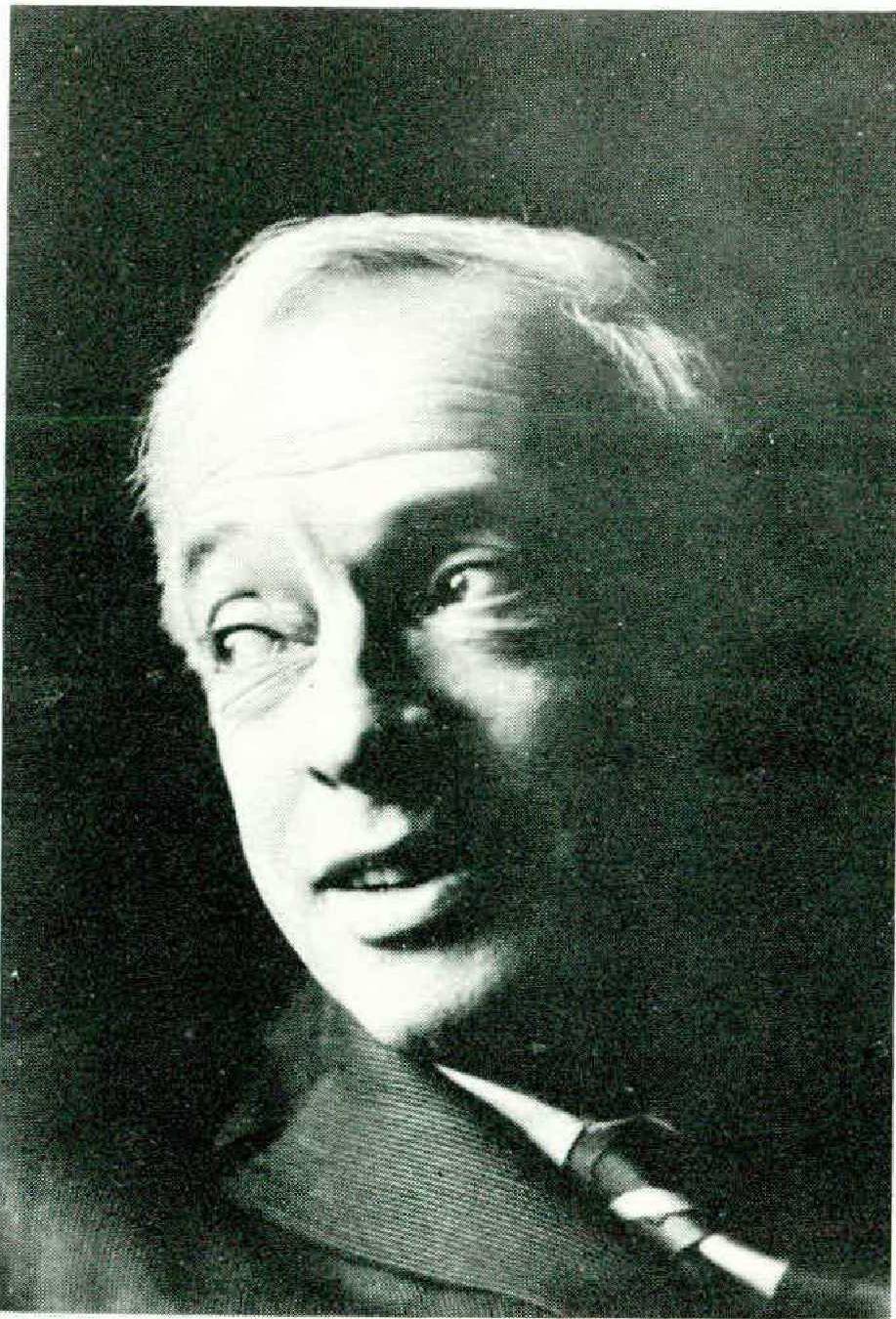
The story is told in the voice of its hero, Charles Citrine. Pulitzer prizewinner, biographer, historian, playwright, scriptwriter, essayist. Think of Arthur M. Schlesinger, Jr., Arthur Miller, Arthur Penn, and you have a melange of personalities that suggests Citrine’s social and cultural rank. Of course one thinks unavoidably, also, of Saul Bellow. Suggestions of autobiography (Citrine, to begin with, is Chicago’s leading intellectual figure) enhance the comedy and lend a certain tension to the novel. Bellow will no doubt be accused of preening. But to the extent that it is autobiographical at all, the book’s dominant mode is a heady, almost reckless self-parody.
Citrine has a various past, all of it upwardly mobile: son of an immigrant family, a Big-den boy with hig-city ambitions. he’s befriended by the briefly famous poet Von Humboldt Fleisher (whose life recalls that of the late Delmore Schwartz). Fleisher launches Citrines career as an academic and a writer, and inspires him with manic, untidy social visions. (When Fleisher’s own career burns out in madness and obscurity, Citrine guiltily neglects him. but Humboldt’s legacy—spiritual, and in the end, actual—continually affects Citrine’s life.) When we meet him, Citrine is living high but heading for a fall. He’s divorced from a shrew and in love with a woman whom he secretly thinks of as a “floozy" (the exquisite Renata, whose perfection is so complete that one has to look to a slightly outsized knuckle to find a flaw). He’s unable to work—stalled on an essay about boredom-and he’s about to have his fortune demolished by the divorce courts.
The other thing about Citrine is that he’s the figure we Americans are bred to dislike: The Brain, who’s really dumber than the rest of us. The smart guy who, as they say in the Army (where they’re often right), doesn’t know shit from Shinola.
It is a large part of Citrine’s charm that he couldn’t agree more with this diagnosis of his character. And it is Bellow’s primary accomplishment in this book to have created a narrative voice that works beguilingly on several levels. Taken straight. Citrine is a swell talker, full of epigrammatic wisdom and halfwisdom about American life, and aware of his own ineptitude and vanity: he’s critical of himself for thinking too much about the white hairs in his nostrils. At the same time he’s comically unaware of his larger moral failings.
In a winning scene, the cosmopolitan son Citrine encounters his boyhood sweetheart. Naomi Lutz, whose social station has remained unchanged. She wonders what their life might have heen like together:
I was in love with you, but I married a regular kind of Chicago person because I never really knew what you were talking about. . . . I’ve often asked myself . . . whether you’d make more sense today. Would you talk to me the way . . . you talk to yourself? Did you have an important thought yesterday, for instance?
Citrine, with what he takes to be a warm responsiveness to her question, explains that he thought a great deal about sloth, his own and sloth in general, and there follows the most imaginatively boring disquisition on sloth that you could hope for, laced with selfaggrandizement. At the end, Naomi asks, “Is this really a sample of your mental processes?”
“Yes,” I said. . . .
“Oh Christ, Charlie.” said Naomi, . . . and reaching over and breathing kindly into my face, she patted my hand. “Of course you’ve probably become even more peculiar with time. . . .”
Citrine may be endlessly self-contemplating, but he understands a crucial fact about his fellow citizens— “what a tremendous force the desire to be interesting has in the democratic USA.” The country is full of people who, justifiably enough, want to grab each other by the shoulders and shake, who want to say: Listen man, listen kid, listen lady, listen chickadee, listen to my story and you’ll learn something.
Citrine has an admirable appetite for this sort of encounter, and he gets his fill. Much of the action of the novel turns on his relationship with a Chicago thug named Cantabile, who has a wardrobe, office furniture, and a mistress that impress the elegant Citrine. He also has a fine gift for intimidation (“I’m in a position to throw their balls into the Osterizer”), which he uses on the novel’s hero. Citrine is subjected to a ritualistic humiliation by the criminal, who begins by demonstrating that he knows how to hit Citrine where he lives, right in his symbol system. Cantabile, or his boys, rough up Citrine’s silver Mercedes 280-SL, emblem of his accommodation to the materialistic life. Citrine laments: “My elegant car, my shimmering silver motor tureen which I had had no business to buy—a person like me, hardly stable enough to drive this treasure-was mutilated. Everything! ... I felt like swooning.”
Cantabile is one of many people who want to say to Citrine: “Don’t you understand what you’re doing to me? You’ve written all that stuff. You’re in Who’s Who. But you dumb asshole you don’t understand anything.” A high point of their association occurs when Cantabile suckers Citrine into being cast as a hit man while Cantabile confronts a wouldbe defaulter. (“Take a good look at my associate,” he says, to his victim, of the hapless, mild-mannered Citrine. “. . . You’ll see him again. He’ll catch up with you. In a restaurant, in a garage, in a movie, in an elevator.”)
Well, one could go on. I see I’ve made flyleaf notes on dozens of items which don’t lend themselves to sequential argument except to suggest the richness of observation and invention in Humboldt’s Gift. A piece of Chicago slang: “buffaloes,” meaning blacks, suggesting. presumably, a wish for their extinction. The scene in which Citrine’s Renata steals his shoe as they lunch in the Oak Room of the Plaza. And odd bit characters— Flonzaley the mortician, or the loutish fellow with modish hair who’s described as having a “pig-in-wig appearance.” Much of the pleasure of this book lies in seeing one of the country’s best novelists at work, and in allowing yourself at least the illusion that his energies are carefree and boundless.
Once I met Saul Bellow. This isn’t wholly irrelevant. It was some time ago and I remember little that was said, but I do remember the tone of the conversation. Meetings between the famous and the nonfamous don’t often go well; it’s too easy for everyone to assume roles. But there is a compliment that occasionally can be paid in these circumstances: tentativeness, curiosity, an attitude which says, in effect, that most people are full of surprises and most situations are up for grabs. And it’s that attitude that Bellow brought to the small occasion. In the book, there’s a line of Citrine’s, embedded deeply in farce but intended with sincerity: “If there is one historical assignment for us it is to break with false categories.” That’s the spirit in which the novel is written.
There are at least a couple of recently published novels that haven’t been mentioned in these pages, and ought to be. Thomas Berger’s SNEAKY PEOPLE (Simon and Schuster, $8.95) is a darkly comic tale set in the Middle West of the 1930s. Berger is always a subtle writer, and from behind the bizarre events of this novel there emerges a tenderly conceived story of a boy’s trading-in of his innocence.
I’m less enthusiastic than many other readers have been about Judith Rossner’s LOOKING FOR MR. GOODBAR (Simon and Schuster, $7.95), an account of a sexually adventuresome woman’s life and violent death. Large claims have been made for it as a statement about the exploitation (and self-exploitation) of women. The claims seem to me overstated—for one thing, the book is too much concerned with men, too little with its heroine’s interior life (though I suppose you could say that’s just the point). But it asks a lot of right questions, and it’s an absorbing read.
And a further PS. It somehow doesn’t seem right to remark on these novels without saying that the single most affecting piece of fiction I’ve read recently was a small story in the June 23 New Yorker called “Separating” by John Updike. Updike, of course, has been blamed and praised for his elegant, luminous style; again and again it’s been said that he certainly is eleven, but that cleverness gets in the way of sentiment. Anyone trying to make that argument in the future will have to think twice after reading “Separating,” a wrenching account of a man explaining to his children that he and their mother must part. Here self-consciousness falls away, and Updike seems aware of his “craft” only as a horse may be aware of its stride.