Washington
1. The odd couple at the SEC
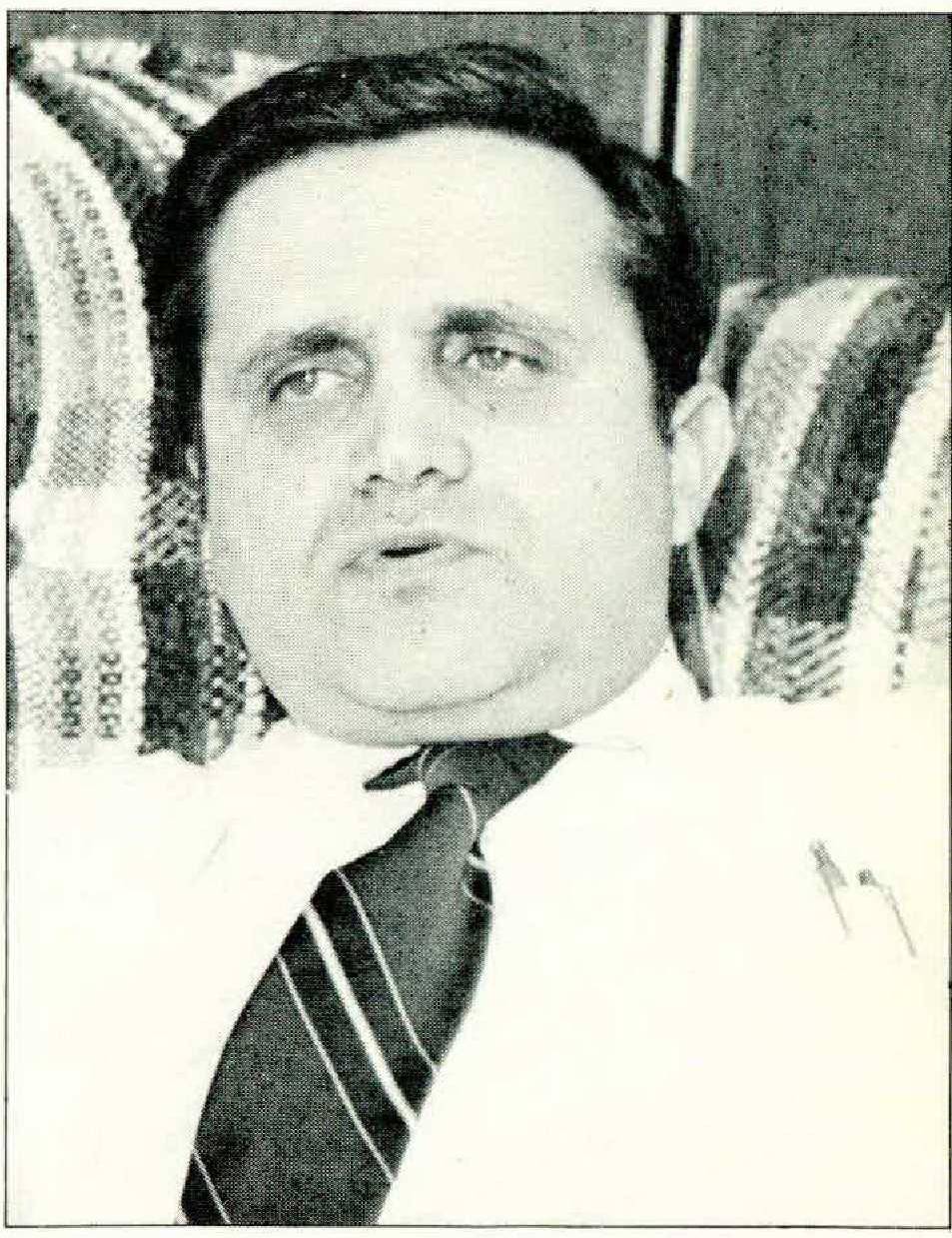
If Roderick M. Hills and Stanley Sporkin were to sit next to each other on an airplane, they would appear to be uncomfortable together. Hills looks like the solid button-down Republican corporate lawyer and sometime business executive that he has been. He is the picture of suavity, despite some middleaged puffiness of the cheeks and neck, and he exudes self-control and steely willfulness. Sporkin, by contrast, has the disheveled look of a man who has spent fifteen years laboring in the anonymous back alleys of the federal bureaucracy. He has an enormous gut that gives the impression of being strapped onto his torso underneath his shirt, and he is volatile, the sort of character who has little sense of restraint and, when annoyed, is more likely to shriek than fume.
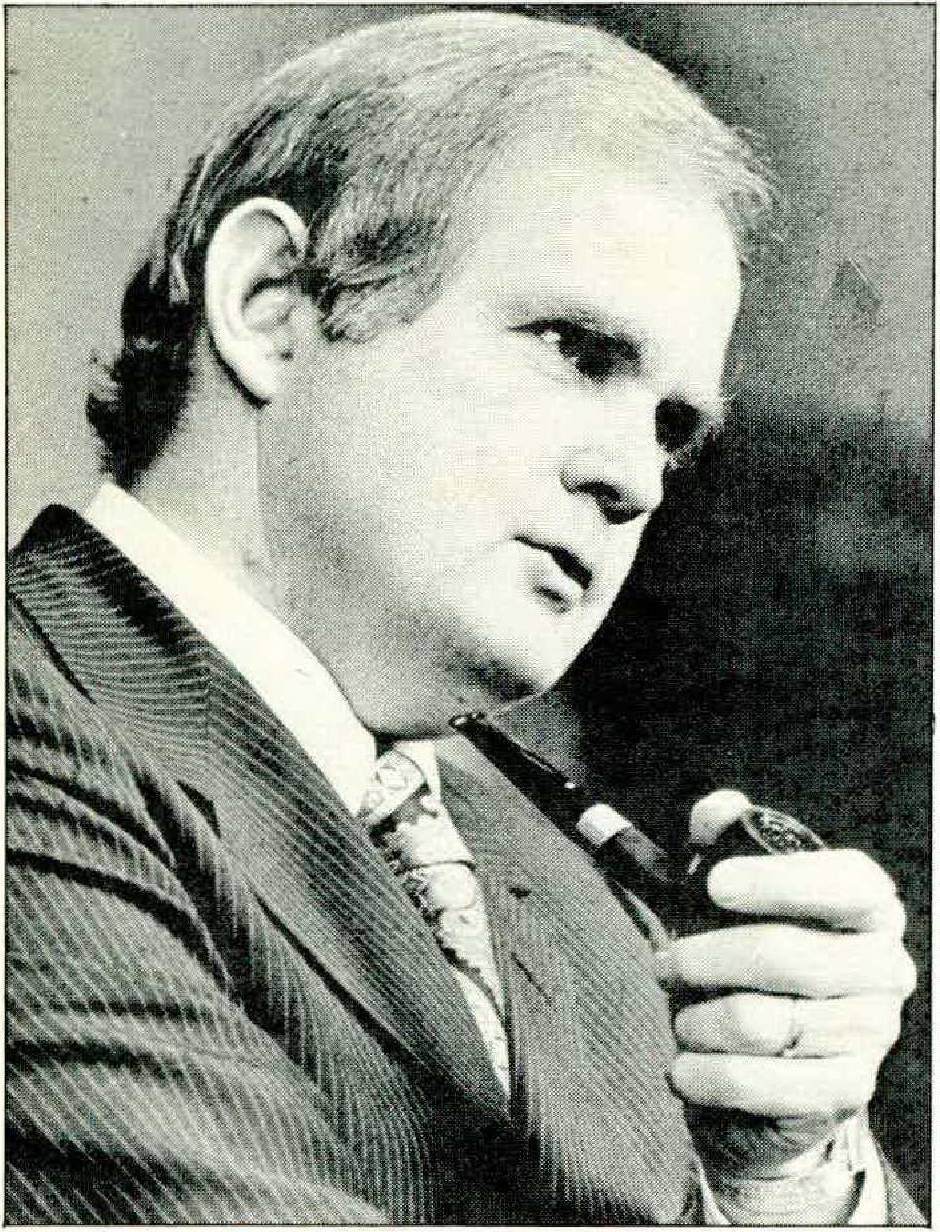
By the ordinary rules of Washington, Hills, forty-five, the latest politically appointed chairman of the five-member Securities and Exchange Commission, and Sporkin, forty-four, the career director of the SEC’s Division of Enforcement, should be suspicious of each other and should not get along very well. Hills, who is often known around town as “Carla’s husband” (his wife is secretary of housing and urban development), is Gerald Ford’s man; in a previous incarnation, as counsel to the President, he was in charge of drawing up a program to deregulate business and industry. (“Reregulate" is the term sometimes preferred by the Ford White House.) Sporkin, as the chief pursuer of international financier Robert Vesco, caused plenty of trouble for the Nixon Administration. (A forthcoming book about Vesco by his pilot, in fact, quotes Vesco describing Sporkin as “that sheeny prick at the SEC who’s trying to stick it to me. ... I ought to have his lights put out.”) Sporkin also has his own independent cheering section on Capitol Hill, including the outspoken chairman of the Senate Committee on Banking, Housing and Urban Affairs, William Proxmire, Democrat of Wisconsin. Proxmire has taken to requiring SEC commissioners who testify before his committee to swear that they will not fire Sporkin or impede his investigations.
Yet Sporkin praises Hills as a brilliant manager, an activist who has the courage of his convictions and is gutsy beyond custom. Hills, for his part, treats Sporkin as one of the most valuable officials in the federal service, and recently took pains to recommend him for a special award from the Civil Service Commission. The basis for this mutual admiration and good will is that the unlikely duo of Hills and Sporkin has come to symbolize the government’s vigorous, albeit belated, battle against bribery and corruption in corporate circles. The crusade has now affected some 220 companies. It includes the notorious cases of the Northrop Corporation, Lockheed Aircraft, and Gulf Oil, as well as disclosures that have brought discredit and shame on less controversial corporations such as General Tire & Rubber, Kraftco, Westinghouse, Phillips Petroleum, and Minnesota Mining & Manufacturing. It has led to the replacement of dozens of corporate executives by their boards of directors and has kept corporate scandal in the forefront of public consciousness.
It is not as if Hills, Sporkin, or others at the SEC first discovered the misbehavior of major American corporations. On the contrary, critics wonder where the primary regulator of the securities industry was during those postWorld War II years of expanding trade and overseas investment, when business executives were developing their habits of buying competitive advantage under the table, paying dummy “commissions” to influence-peddlers, and hiding slush funds from their stockholders. Enter the Watergate special prosecution force in 1973, which charged corporations and their officers with diverting corporate funds into illegal political contributions. Then the Senate Subcommittee on Multinational Corporations, led by Frank Church, Democrat of Idaho, went public with its investigation of business spending overseas to influence elections and foreign government policies and purchases. But it was the SEC—at first cautiously under Hills’s predeéessor, Ray Garrett, Jr., and now more boldly—that established a system and a process for the ongoing disclosure of what it neatly calls “management fraud.” Along the way, the agency means to assure that revelations of corporate misdeeds are not just a detail of the fading Watergate landscape, to be forgotten when business as usual resumes, but that genuine, ongoing reforms are instituted.
Sporkin approaches this task with a certain irreverence, bred during his years as a skeptical regulator. “The time comes,” he says, “when things begin to stink like dead fish; you cannot cover over that stench.”But not so Hills. He is, as one congressional aide who has dealt with him regularly puts it, “the most sincere capitalist I’ve ever met.” Hills asserts proudly that he shares “the almost mystical belief, the worship of competition” that underlies the existence of the SEC and the American system of capital formation. When he speaks of the bribery and kickback scandals, it is in the hushed and measured tones of someone who is talking about wrongdoing within his own family: he is not shocked, but “disappointed that so many companies did this.” A few corporations, he says, displayed “venal, unacceptable social and political behavior,” but most of them were just exhibiting “silliness” and “bad business practices.” Hills seeks no revenge or overly severe punishment of the corporations, rather “a rational, intelligent, enforceable, and compilable policy” they can follow in the future.
After an initial finding that the illegal campaign contributions, slush funds, and dishonest corporate books and records violated the federal securities laws, the SEC began in 1974 to sue the offenders, who invariably agreed to permanent injunctions prohibiting any such violations in the future. Later, it instituted a “voluntary disclosure program,” under which corporations can save themselves some anguish and possibly negotiate themselves out of embarrassing and costly court cases, if they come forward and admit their questionable or illegal activities to the commission.
The trick of the enforcement mechanism is that under either set of circumstances, an SEC lawsuit or a voluntary admission, the corporation is then required or encouraged to investigate itself. An “outside audit committee,” composed of members of the board of directors who are not corporate officers and were not involved in the activities in question, must examine at least five years’ worth of records and events and submit a complete report to the full board of directors. Since Sporkin and his hard-hearted sleuths in the SEC Enforcement Division have access to the report and its underlying documentation, there is a powerful incentive for the committees to be thorough and candid. Eventually, the five-member SEC decides, on the basis of recommendations from the various staff divisions of the SEC, how much of the material must be made public.
Initial experience with the outside audit committees was dramatic. It was through that system, for example, that details of Gulf Oil’s multiple sins, including improper payments to American politicians, were revealed by a committee of Gulf’s own directors, headed by John J. McCloy, former chairman of the board of the Chase Manhattan Bank. As a result, Hills wrote a public letter last May to William Batten, the new chairman of the New York Stock Exchange, urging that formation of such an audit committee be made a condition for the listing and trading of any company’s stock. The Exchange, in a historic turn toward self-regulation for the business community, will apparently comply.
Quite apart from its substantive impact, the drive against bribery and corruption has done wonders for morale within the SEC. Established in 1934 to prevent repetition of the abuses that led to the stock market crash of 1929, the commission had among its early chairmen Joseph p. Kennedy and William O. Douglas. Over the years it developed a tradition of independence and of lowkey, no-frills regulation, in the process attracting to its staff some of the sharpest young lawyers from the best law schools. There were periods when the agency became unduly cozy with the securities industry and protected the major brokerage houses from any threat of serious change; critics complained that the commission too often punished violators of the law with mere “consent decrees,” promises to behave better in the future. But the SEC suffered its first serious scandal only in 1973, when G. Bradford Cook, thirty-six, resigned after serving only ten weeks as the youngest chairman in the agency’s history. The cause was the revelation that Cook, in his earlier position as the commission’s general counsel, had played a role in deleting references to Robert Vesco’s $200,000 cash contribution to Richard Nixon’s 1972 re-election campaign from an SEC lawsuit concerning Vesco’s alleged looting of foreign-based mutual funds. Many people on the commission staff see the current emphasis on corporate corruption as a means of reasserting the SEC’s independence from powerful political and business figures.
Some on the outside, however, including major figures on Wall Street, complain that it is a distortion of the SEC’s limited authority. A number of corporate leaders and financial analysts have been heard to mutter that Hills, who should know better, has permitted himself to be brainwashed by the aggressive Sporkin, and that their unholy alliance, if unchecked, will seriously damage the ability of American business to compete internationally. American business often must deal overseas with unscrupulous elements—even thieves and extortionists—and, these experts and skeptics argue, it is important for U.S. officials to be realistic about the rules of the game under such circumstances.
Elliot L. Richardson, one of the few Republican heroes of Watergate, who is now secretary of commerce and chairman of the White House Task Force on Questionable Corporate Payments Abroad, lent his considerable prestige to that view when, in a controversial letter to Proxmire last June, he said, “The Commission’s enforcement policy in this area, however laudable, may be based on tenuous legal grounds.” Richardson proposed legislation that would have companies report questionable foreign payments to the Commerce or State Department, not the SEC, and would provide that the information become public after a year or more of secrecy, giving the State Department time to help foreign governments prepare for the impact.
But Hills, with considerable backing in Congress, insists that this issue is “absolutely essential and central to the whole purpose in creation of the SEC,” because the agency has unchallenged jurisdiction over the integrity of corporate books. He also believes that American business can compete quite adequately by using legal methods and high principles, and that the nature of business methods is relevant to the concerns of investors. Letting his own competitive instincts take over, Hills suggests that “Elliot had an understandable desire to come into a department that doesn’t do very much [Commerce] and try to find a big new problem for it to handle.” He and his colleagues at the SEC shake their heads with surprise over their feeling that Richardson—“a man with that kind of image,” as Sporkin puts it—has allowed himself to be co-opted by the Commerce Department’s own traditional constituency, big business. If Richardson had wanted to show real leadership, Hills suggests, he would have reduced the personnel at Commerce and taken a hard new look at the department’s own “meaningless” regulatory activities.
There has been criticism from another side too, from those who feel the SEC has been too mild. Commissioner John R. Evans, for example, has complained that “perhaps only a strong enforcement approach will convince cynics that the voluntary disclosure program is not just a fad to be followed by the weak.” Evans also suggests that the commission could be far more vigorous about requiring American companies to disclose their participation in the Arab boycott against Israel.
Many congressmen believe that the SEC is still trusting the corporations undeservedly through the voluntary disclosure program. The Subcommittee on Oversight and Investigations of the House Committee on Interstate and Foreign Commerce, for example, complained in a recent report that the commission was soft-pedaling by not requiring full disclosure of all illegal and questionable corporate payments and by helping conceal the identity of company employees who know about them. Publishing details of internal SEC deliberations on eight Cases, involving such corporations as Cities Service and du Pont, the subcommittee revealed that the commission often rejects staff recommendations for disclosure, and it suggested expansion of the Enforcement Division to permit more thorough SEC review of voluntary corporate reports.
Yet it was the House that failed this year to pass a bill (pressed by Hills and Proxmire and approved by the Senate in an unusual 86-0 vote) that would have directly outlawed most corporate payments to foreign governments, officials, and political parties and severely tightened up corporate accounting and auditing procedures. Concern about the latter provision prompted the American Institute of Certified Public Accountants to lobby successfully against bringing up the bill on the House floor.
Hills resists the idea of enlarging the Enforcement Division’s staff of under 200, arguing that “if we doubled its size, it might be half as effective and we wouldn’t have the same quality of people.” Rare as it may be among federal bureaucracies, the SEC has grown very little in recent years—a small reduction of personnel is actually programmed for fiscal year 1978—and Hills is proud of the fact that with just over 2000 employees, “we get a higher degree of moral affinity to our rules than any other agency.” Counting on that moral force and on the notion that corporate executives will now recognize that “there is a high possibility of being caught” if they misbehave, he believes that a strict cost-effectiveness standard must be applied to the SEC’s work. He estimates that when he ran the Republic Corporation (a conglomerate based in Los Angeles that is largely involved in the aircraft industry), five or six people—out of 11,000 employees—were probably stealing $20,000 a year each, but that it would have cost far more to find them and stop it.
“We are not here to police every $5000 payment, so long as a company is doing business properly,” he says. “If it is in a gray area, we will leave it to the company to decide . . . They can deal with the stockholders and the press.” Even Sporkin, a bulldog scowl on his face, opines philosophically that “corruption and bribery have been with us since the beginning of the world . . . You can’t force people to change their social habits . . . If we have no faith in the system, then we’re all in trouble.”
That said, however, Hills and Sporkin are quietly charting their next move: a more intensive look at bribery, kickbacks, and questionable payments by American corporations in their domestic affairs. As Hills puts it with a wan smile, “He who bribes abroad is unlikely to lose his habit when he gets home.”
2. Bonsai bonanza
France gave a son et lumière show for Mount Vernon, reproductions of portraits of Louis XVI and Marie Antoinette for Independence Hall in Philadelphia, and other assorted items. South Korea presented the city of Los Angeles with a nineteen-ton traditional bronze bell and belfry. The Netherlands sent a million tulip bulbs. Spain, Venezuela, and Yugoslavia were among those offering statues, and Australia provided six koalas to the San Diego zoo. Great Britain, of course, sent a copy of the Magna Carta.
But the Bicentennial gift to the United States that will attract the greatest and longest-lasting attention is likely to be the fifty-three bonsai trees presented by the Nippon Bonsai Association of Japan. Ranging in age from thirty to 350 years, the dwarfed trees and shrubs are estimated to be worth about $4.5 million (the antique Chinese pot pictured below holding one is worth $35,000) and were the personal property of some of Japan’s wealthiest and most powerful families. (The tallest one comes from the imperial household.) More profound than their monetary value, however, is their symbolic and emotional significance to the Japanese and to American devotees of the ancient art of bonsai. The story is told of one particularly precious specimen from Japan that died in Brooklyn some years ago: it was subsequently cremated and its ashes sent back to be scattered on its native soil.

After a year of quarantine at the federal plant introduction station in Glenn Dale, Maryland, the bonsai collection was installed last summer at the National Arboretum, which is also the home of, among millions of other things, eleven species of trees and shrubs, including a Siberian larch, Manchurian lilac, and European little leaf linden, that were given to the United States by Soviet Premier Nikita Khrushchev in 1960 in anticipation of his summit conference with President Dwight Eisenhower. The Russian trees were planted discreetly and without ceremony after the summit was canceled when an American U-2 photo reconnaissance plane was shot down over the Soviet Union.
This time, not even the Japanese connection to the Lockheed scandal could prevent the authorities from staging a proper dedication of what was to be dubbed “The National Bonsai Collection.” Nonetheless, there was a major problem: money. The arboretum is run by the Department of Agriculture, and, perhaps because it is tucked away in northeast Washington, closer to public housing projects than to the usual congressional and tourist paths, it is starved for funds. For several years its annual budget has hovered around a million dollars to cover all costs—including research to develop a pollution-resistant shade tree—and the arboretum is so down-at-heels now that the gardeners only come around once a year to pull the wild vines out of the famous azalea bushes. A special allocation was found for the design and construction of a viewing pavilion and Japanese garden to accommodate the bonsai trees, but it was left to the National Capital Area Federation of Garden Clubs to make the arrangements and pick up the tab for a gala reception for 2000, including Secretary of State Henry Kissinger and the Japanese ambassador. When a heavy wooden painted screen, entitled “The Dawn of U. S. Bicentennial” and intended by artist Tenkei Tachibana of Tokyo as a backdrop for the dedication ceremony, arrived by air express collect, John L. Creech, the horticulturist who has been director of the arboretum since 1973, had to seek emergency donations from the Japan-America societies of New York and Washington to pay the $850 freight bill.
All was well for the bonsai collection until one night late in August when a young apprentice surveyor for a landscaping firm diverted the security guard, scaled the fence, and walked off with a thirty-inch needle juniper worth $100,000 that he had taken a shine to. That was the biggest crisis at the arboretum since the day a couple of years ago when a valuable Australian black swan disappeared from a lake on the grounds, only to strut into the kitchen of the Holiday Inn on New York Avenue some hours later. But within two days the bonsai tree was back unharmed, and the culprit had been arrested by the FBI and charged with the felony of tree theft.
More than 25,000 people have toured the bonsai collection so far, and the management of the arboretum is taking no further chances. Although there is no room in the budget for new maps of the grounds to guide visitors, the Agriculture Department is installing an elaborate security system to protect the bonsai trees—sensing devices under each pot and at the top of the viewing pavilion, as well as a laser beam that will sweep the area and pick up any untoward human advances on the trees. That kind of anticrime measure will surely make the new arrivals feel like true Americans.
3. Vaccination blues
Dr. Theodore Cooper is a slight, precise, and unassuming man, a surgeon and a pharmacologist by training. As assistant secretary for health in the Department of Health, Education and Welfare, he would like to be going calmly about the business of designing national health policy and administering the Public Health Service, the Food and Drug Administration, and other important agencies under his supervision. However, these have been turbulent and difficult times for Cooper—and not just because his splendid office on the top floor of HEW’s brand-new building on Independence Avenue leaks whenever it rains. He has been besieged with requests for interviews, including an appearance on the Today Show, and he is caught in a crossfire among drug manufacturers, insurance companies, state and local public health officials, politicians, and private physicians. For months his mail accused him of participating in a communist plot to meddle in people’s lives, or, alternatively, a Republican one to make the Ford Administration look good in an election year.
This turmoil results from the fact that Cooper has ultimate responsibility for the federal government’s crash program to inoculate as many Americans as possible this year against the dreaded swine flu, a suspected variant of the brutal influenza virus that killed hundreds of thousands of people all over the world in the great pandemic of 1918-1919. (One bitter legacy of that flu was that an unusual number of its victims who did survive developed severe cases of Parkinson’s disease thirty to forty years later.) The fear this year is that Americans, while they have battled other influenza strains, do not have antibodies to the swine flu virus. Even though antibiotics are now available to deal with the secondary bacterial infections that were so dangerous in 1918-1919, those drugs are ineffective against viral infections.
Nobody really knows whether or when swine flu will strike. So far only a handful of cases have turned up, most of them at Fort Dix, New Jersey, where Army Private David Lewis died from a particularly virulent attack of the disease during a march in the snow last winter; the Southern Hemisphere apparently got through its flu season this year without any sign of it. Nor is there any absolute guarantee that if a swine flu epidemic does break out, the vaccine that is now being manufactured and distributed in this country at record speed will be effective against it. The slightest mutation of the virus as it spreads could give the flu a capacity to get past the antibodies that its potential victims have developed. Everyone worries about swine flu—technically, the A/New Jersey/76 strain. But this year’s bug could actually be A/Victoria, the same variety of flu experienced last season and one against which few Americans have been inoculated. (The government is distributing a “bivalent” vaccine, intended to immunize against both types of flu, for the elderly and certain other high-risk groups.)
What is clear, though, from the evolution of policy and public reactions on the issue of swine flu is that the government has no cogent preventive medicine policy at all and is virtually incapable of dealing rationally with such matters of scientific controversy. At each step along the way, the program has been doomed to misunderstanding or failure, while from the sidelines other countries laughed at the confusion.
After officials of the Army, the New Jersey Health Department, and the Center for Disease Control in Atlanta identified the Fort Dix soldier’s ailment as swine flu, a recommendation for a national vaccination program was rushed through the chain of command, via Cooper and HEW Secretary David Mathews, to the White House. President Ford seized on the idea and, television cameras whirring, urged that Congress appropriate money for every man, woman, and child to receive the vaccine. Although briefing papers had stressed that some groups in the population, including young children, pregnant women, and people with certain allergies or diseases, might not be appropriate for inclusion in the initial one-shot-in-the-arm program, that cautionary note somehow got left out of the rhetoric and the President’s enthusiasm along the way. Thus, when those reservations first became public, they stimulated immediate and widespread skepticism about the vaccine.
Similarly, few people involved in the decision-making process remembered to take account of the new climate of suspicion and litigation on the issue of medical malpractice. Pharmaceutical manufacturers had told government officials that they saw no cause for concern over the safety of the vaccine and said they were confident about obtaining the necessary insurance to cover any risks. But the insurance companies— aware of the latest rash of lawsuits brought on behalf of children who became ill with polio after taking oral polio vaccine—had a different idea. When they balked at insuring the swine flu program, their hesitation was widely interpreted as a reflection on the quality of the vaccine. (One drug company, Parke, Davis, made a huge batch of the wrong vaccine, for reasons that are still not entirely clear.) Only after the death toll from the mystery disease that struck attendants at the American Legion convention in Philadelphia last summer passed twenty, causing a national panic, was Congress persuaded to pass legislation making the federal government initially responsible for defending lawsuits growing out of the vaccination campaign.
Even with that hurdle out of the way, and the vaccine in production, new problems arose: some state health officials, finding that federal appropriations would cover only about one fifth of their costs in administering the inoculations, questioned how serious the threat could really be. Physicians in private practice, especially pediatricians, who had been expected to take some of the burden off public health facilities, began to back down when they learned that they would be personally liable for any hazards if they charged for the shots. The drug companies were suspect on at least two counts—that they would try to use the indemnification bill passed by Congress as a precedent for future immunization programs and all other new drug research; and that because they stood neither to make money nor to suffer financial risks in the swine flu program, they might be less careful than necessary. The possibility that the vaccine itself might be a killer was raised in mid-October when several dozen people (out of 2.5 million vaccinated by then) died within fortyeight hours of being vaccinated. Noting that all who died suffered from heart disease or some other serious ailment, and that their mean age was seventyone, federal officials insisted there was no evidence that the vaccine was causing the deaths.
All of these concerns weigh heavily on the beleaguered Cooper, who could be in the unenviable position of seeming like a shrill alarmist if swine flu never arrives. But even if it does not, he insists, “my view is that this is good preventive medicine.” He warns that should the dangerous virus strain make only a mild strike this season, it could come back more powerfully a year later, which was the pattern in 1918-1919. Safe is better than sorry, Cooper says as he points to his own vaccinated arm: “I don’t need to be vindicated.”
Nonetheless, several months in the hot seat have convinced Cooper that “in retrospect, it might have been better if the President had hedged a bit in his announcement . . . We could have stayed out of hot water with a lowerkey approach.” He is even willing to look belatedly at the suggestion of some public health officials, including Dr. Martin Goldfield, the New Jersey man who helped diagnose the original Fort Dix outbreak, that the vaccine should have been stockpiled and an emergency program launched only when there was reliable evidence that the virus was spreading.
Not until November did HEW convene a two-and-a-half-day open meeting of scientists and other concerned parties to consider the fundamental issues at stake in any such mass inoculation program: the appropriate state, federal, and private roles; assessment of benefits versus risks; the selection of vaccines; the assignment of liabilities; and the question of how to promote “informed consent” by the public. A clear-cut policy in these areas may be urgently in order because, the pros and cons of the swine flu controversy notwithstanding, the American performance on vaccinations against dangerous diseases has slipped badly. Measles are on the increase, supplies of safe polio vaccine have run low in many cities, and it is estimated that as many as 40 percent of all children now start school without the proper immunizations.
-SANFORD J. UNGAR