Private Places, Public Faces
The city is a fine and private place. And like the grave, it is also horrifying, if you allow yourself to think about it. In this city, Boston, there is an old restaurant, famous for its beer, where you can get a not-bad lunch in surroundings that don’t seem to have changed much in seventy-five years. An abundance of dark wood, waiters dressed in mothy tuxedos, a pleasant din, a comfortable spot. Now step outside. You are in a low-life neighborhood, as it happens, and soon you walk discreetly around a fellow on the sidewalk who is drunk or dying or both, and there’s a whore working the parking lot across the street, and next to the parking lot stands a white hospital where even now someone’s anesthetized chest is being entered by a knife, and next to you on the sidewalk, close enough to hug, is someone delivering himself of a loud and angry lecture, and you pass him by only half hearing, move through a throng of equally oblivious fellow citizens, across the pavement, beneath which flow the usual rivers of electricity and excrement. All this life, and an infinity more, happens within the space of a good-sized hayfield. It’s the demonic genius of the city to cram together in a small space more life than God could ever have thought possible– sheer density of experience is the source of the city’s power both to free the spirit and to numb the nerves.
For the last couple of centuries much human energy has gone into the search for ways to cope with city life, and the history of these urban strategies is the subject of Richard Sennett’s new book, THE FALL OF PUBLIC MAN (Knopf, $15.00). Sennett, a young sociologist, has already written three books on similar themes; this is his most ambitious, an attempt to synthesize his previous work and to make a large statement about the way in which urban culture shapes character.
As the title suggests, Sennett feels city life has reached something of a nadir. Not an unusual notion in itself, but Sennett’s diagnosis is quite at odds with conventional despair. It is axiomatic to speak woefully of the city, to lament its coldness and impersonality, the alienation and dislocation that it breeds. Sennett takes an interesting position on this sort of talk. He thinks it is mostly bunk.
What we need, he feels, is more impersonality. Our cities may appear to lack warmth and fellow-feeling, but their truest spiritual hunger is for a shared allegiance to some rules– to a set of public manners, a style, some code that makes civilized behavior possible and pleasurable. We are in want of a way of living that honors “the essence of urbanity, which is that men can act together, without the compulsion to be the same.”
Just what this elegant-sounding urban world might be like isn’t immediately clear (bowlers? bustles? hansom cabs?), and Sennett’s imagination remains wisely nonspecific on the subject. He has some general, though tart, advice for city planners: “Urban planners have yet to learn a profound truth which conservative writers have perceived but have put to the wrong uses. It is that people can be sociable only when they have some protection from each other; without barriers, boundaries, without the mutual distance which is the essence of impersonality, people are destructive . . . when town planning seeks to improve the quality of life by making it more intimate, the planner’s very sense of humanity creates the very sterility he should seek to avoid.”
But the interest in this book lies not with schemes for urban renewal; Sennett doesn’t concentrate on buildings, parks, and squares, but on the human personality– on how it looks in its characteristic twentieth-century setting, the cityscape.
In Sennett’s view the contemporary city-dweller (and by extension everyone but the most rusticated of us) is an “actor deprived of his art.”The urban man’s natural art is theatrical: to survive and prosper emotionally amongst hordes of strangers, it is necessary to have a “role,” a comfortable way of being seen and of seeing, even though such roles inevitably misrepresent the private self. Sennett insists that we need the solace of ritual and gesture.
To be in favor of ritual is today a bit like supporting perjury. Formalized gesture is immediately suspect, an emblem of hypocrisy and deceit, a way of preventing what is desirable– sincerity and intimacy. We speak approvingly of “open” people who are “up front” with others, scorn secretive sorts who prepare a “face to meet the faces that they meet.” “The reigning belief today,” Sennett points out, “is that closeness between persons is a moral good. The reigning aspiration today is to develop individual personality through experiences of closeness and warmth with others.”
In Sennett’s view, this “ideology of intimacy” wreaks havoc on social relationships, though he admits that to say so is to sound like a “snob or a reactionary.” (Sennett is a man of the Left, and proud of his political credentials.) He finds little but perversity in current styles of “relating.”The continual search for closeness inspires incivility, “burdening others with oneself.” Expectations of “community" inhibit a sense of tolerance for difference. And constant worry over the sincerity of one’s feelings breeds narcissism. It is easy in contemporary life– in fact it is expected– to name one’s feelings ("I’m depressed,”"excited,” “regressing,”“growing-as-a-person”). but only more difficult to express them.
The Fall of Public Man is a provocative book in the best sense of that term. It is complicated and forceful, and it invites argument. Sennett’s thesis seems to me particularly weak in its insistent view of the history of public life as a study in steady decline.
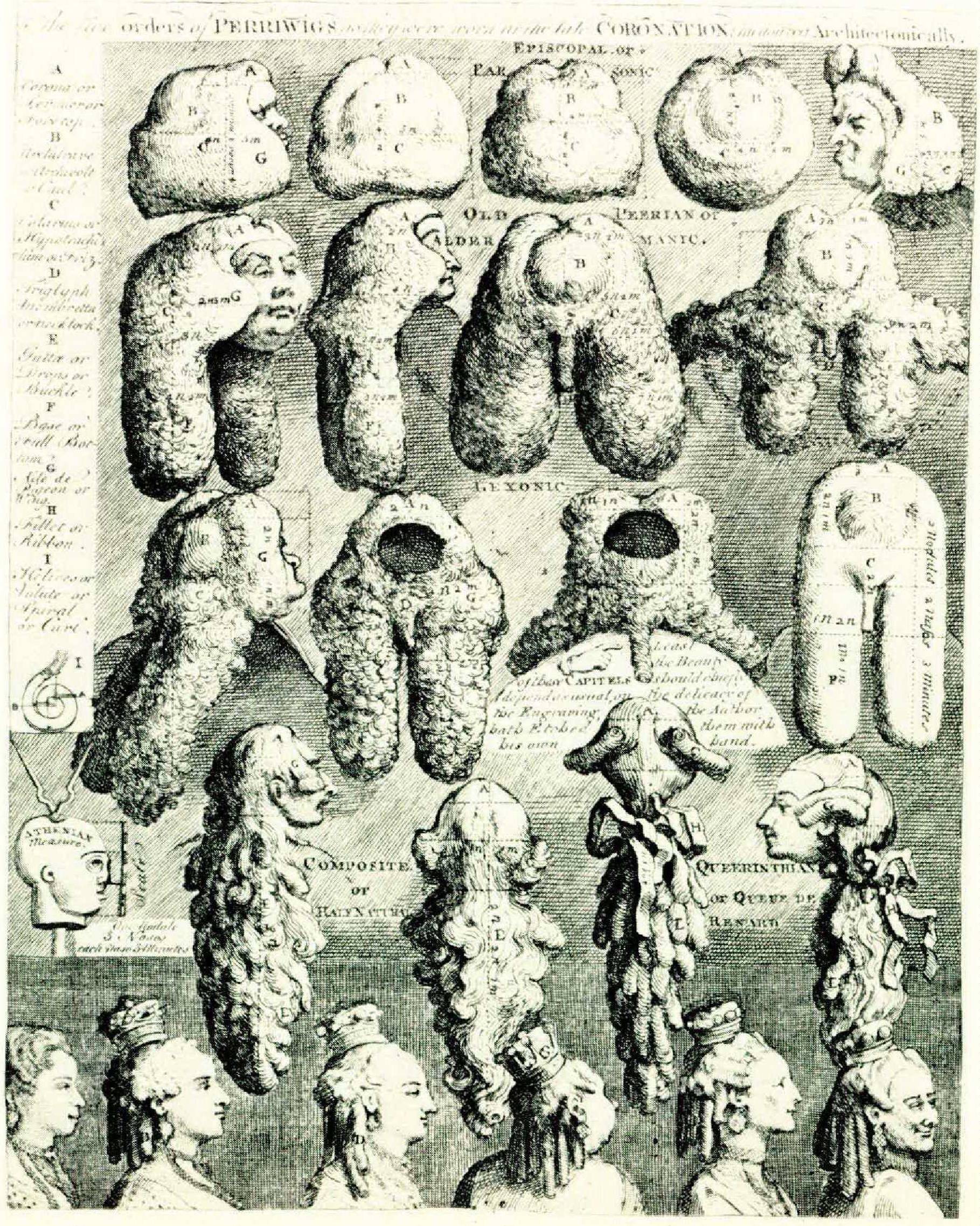
The brightest moment in metropolitan society occurred early in the game, Sennett feels, in the new cities of the eighteenth century, a subject on which he is entertaining though not wholly persuasive. London in 1750 knew, if it knew anything, that the world was a stage, and public life was conducted by the adopting of quite conscious masks. People one met on the street wore literal disguises– elaborate cosmetics, wigs, and coiffures. Sennett’s historical imagination waxes fond over the pouf au sentiment, a confection of hair arranged as a nesting spot for various decorative objects—fruits and vegetables, models of birds and butterflies and cupids. Seen from the present, this seems an inconceivable act of self-display. Sennett’s contention is just the opposite; he views it as a costume, “an attempt to blot out the individual character.”
Safe in their disguises. Sennett’s eighteenth-century citizens experience a freedom to be expressive, to show feeling, to “act out.”They contrive intricate styles of greeting and praise. Their behavior is particularly noticeable in the theater, where they weep unembarrassedly in response to a moving performance, and at the same time maintain a cunning critical distance that allows them to call for instant encores of good speeches. Sennett draws a lesson from all this: “Can it be that the freedom to feel is greater when one’s personality and one’s identity in society are quite clearly separated? Can spontaneity and what we have learned to call artificiality have some hidden and necessary relationship?”
One can assent to that idea without seeing eighteenth-century London as an idyll. (In fact it looks grotesque now and it looked grotesque to many then as the testimony of such observers as Fielding and Pope reveals.) The intense theatricality of the time can, however, be plausibly seen as one imperfect solution to a problem that endures throughout urban history: how to preserve a sense of self in the face of the chaos and heterogeneity of the city.
Sennett’s trip through the intervening centuries is similarly suggestive, similarly flawed. In dealing with the present he makes relatively scant use of evidence, perhaps because its abundance and contrariety would play hob with his thesis. But his book opens the eyes. (For one thing, it makes one see surviving fragments in contemporary life of manners of the past. There is an opaque style among sophisticated big-city blacks, for instance, that does the eighteenth centuryproud. and professional sport provides what the theater no longer does– an occasion for anonymous show of sentiment.) And in the end Sennett brings us to an undeniably recognizable place, the contemporary urban scene, filled with millions of actors too self-absorbed to realize they have forgotten their lives. I’ve recently encountered two other writers with fresh ways of looking at the man-made environment. In a thoughtful essay that appeared in an October issue of The New Yorker, Suzannah Lessard turns her gaze on a region that can be even more discomfiting than the city: the suburbs. She gives voice to a sensation that countless suburbanites have had, a way of seeing a ruined landscape. She writes that the viewer of a world that has been transformed before his eyes is likely to engage in a form of “selective perception.” She describes the remnants of rural areas around Oyster Bay, Long Island, and remarks, “When the landscape was whole it was, for me, something outside myself which was supportive. . . . When it began to break up, it became something I had to combat.
I had to edit and pervert the reality in order to create an illusion to see a landscape that exists, for the most part, inside my own imagination.”
What is it that arouses such feelings? Why care about public manners, or the look of a town or city? The ultimate explanation perhaps is that the mind longs for coherence, for a world that seems to make aesthetic sense. It feels that all that is not natural should therefore be art. I have not lately, if ever, read anyone so completely afflicted with that wish as Robert Harhison, author of a beguilingly idiosyncratic book called ECCENTRIC SPACES (Knopf, $8.95).
Its subject matter ranges from museums to maps, castles, and pubs, to train stations and paintings and fast-food places, to gardens and novels. The book commingles objects and places and ideas in an effort, as its author acknowledges, to make “these states harder to distinguish.”He succeeds. This is alternately a charming and infuriating book– infuriating because it is so ungivingly allusive: the only true preparation for reading it would be to have spent several years behind the eyes of Robert Harbison. At a minimum, though, you should be as intimate with English and Italian countryside as you are with Kafka and Hawthorne. But the fetching quality of the book is its gradual revelation of a mind obsessed with an aesthetic vision of the world, a heightened sensibility capable of such sentences as, “The world of red brick and machinery seems a deliberately unimagined one; because technology tries to stay neutral, engineers never paint faces on machines, nor bridge-builders copy animal tendons in their cables.” It’s plain that Harbison would be delighted if they did. His book, in a way wholly different from that of Richard Sennett, performs a similar service: it awakens the reader to the space around him, and it is a reminder of how much we want from the world.
— Richard Todd