Culture Watch
The celebrity
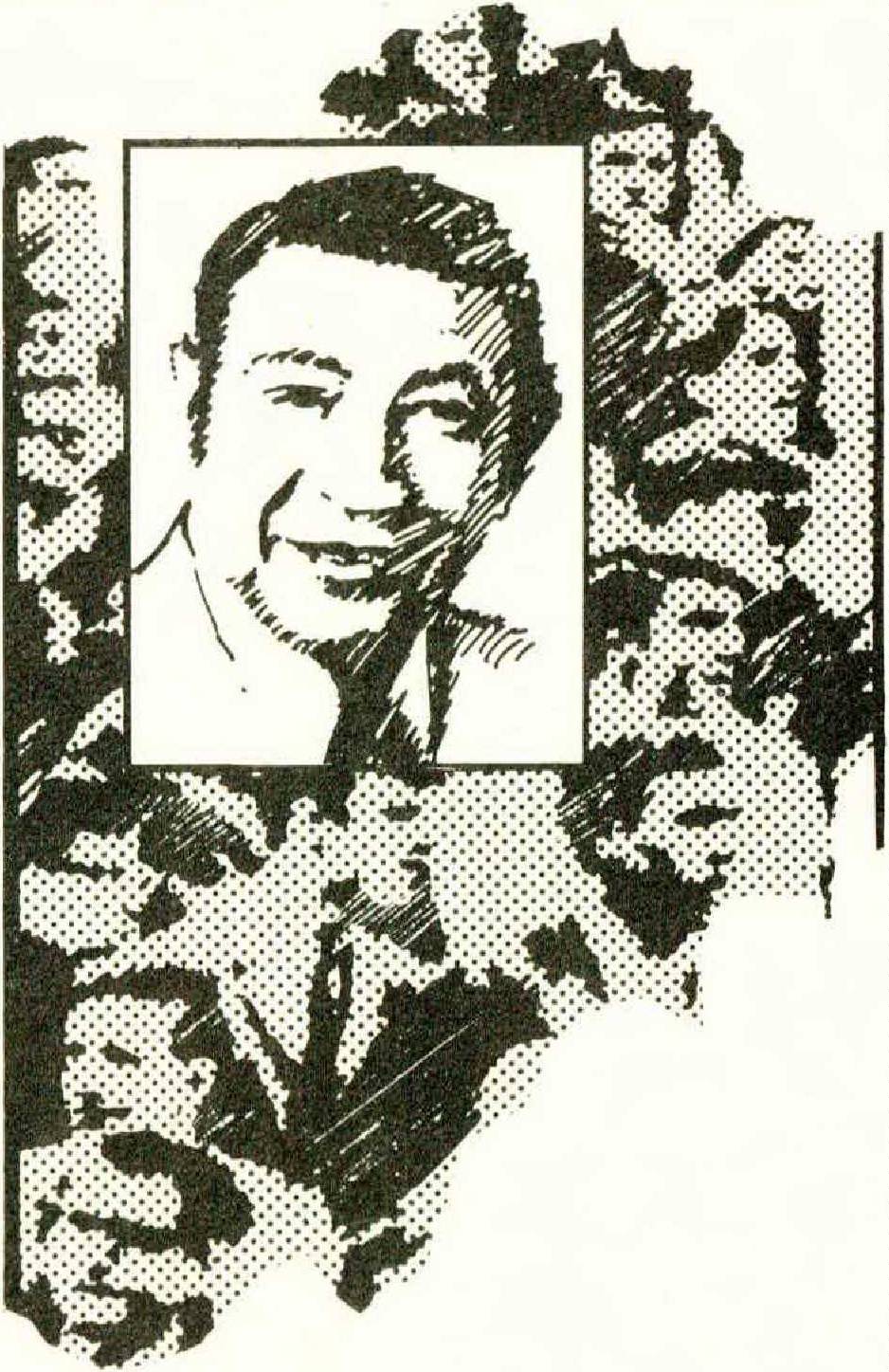
The pre-season Yanks-Rangers night game was half over when Howie Cosell arrived, and for a while there wasn’t any fuss. Nelson Briles, the Rangers’ starter, was in process of being knocked out (homers by Jackson and Chambliss) and the good-sized crowd, mostly Yankees fans, had cause to keep its mind on business. Once the shelling subsided, though, the crowd’s attention shifted quickly to the box beside the Yankee dugout. Autograph hounds who had lined up earlier—besieging the Yanks’ owner, George Steinbrenner, and Cosell’s announcing partner at ABC, Chris Schenkel — materialized agai n in greater numbers for a greater prize: Cosell himself. The Carlton Fisk fan across the aisle from us, a blond, beerflushed, hoarse-voiced twenty-year-old who couldn’t be distracted, even during the blasting, from noisy taunting of Thurman Munson, the Yanks’ catcher, scuttled purposefully down the stairs to join the latest autograph line. Two men behind us, older than the Munson heckler, one from St. Louis, the other from Worcester, who had kept up an informatively detailed conversation about the lifetime batting averages and forgotten, interesting trades of yesteryear, fell silent, focused like the rest of the nearby crowd on the Steinbrenner-Cosell box.
A new entertainment began.
It wasn’t a shapely or dramatic entertainment, to be sure. Cosell in the front row, hearing a sally from Steinbrenner behind him, swings round, grins. Cosell and Schenkel face each other, speak animatedly for a moment. Cosell says a word of greeting to Munson, who’s headed for the on-deck circle; Munson nods, pauses, smiles in his mutton chops at a second Cosell offering, then replies. Cosell calls Jimmy Wynn, a lively-eyed black man, over to the box—Wynn is on his way to the on-deck circle. After an exchange or two Cosell pats this ballplayer, a first-class powerhitting outfielder just traded to the club, on the top of his helmeted head. A blessing. Double play on the field, side is retired. Cosell accepts and signs a piece of paper presented to him from the dugout by another autograph-hunter—the Yankee batboy. Cosell rises, leaves the box, ascends the stairs as the adjacent rows watch and a group above, at the beer counter, sets up a chant— How-weee. How-weeee. Cosell returns shortly, and, as the assemblage watches him descend the stairs, the HowieHowie chant resumes. After another inning it, picks up again, stops, picks up once more.
It’s neither hostile, the chanting, nor exactly affectionate —more like involuntary, or sheepish, or both. Cosell, teased over the years by a thousand homemade banners slung from football stadium railings, behaves as though used to it. No doubt he’s aware that the so-called “celebrity culture,” like the Grapefruit League itself, is widely understood to be a kind of joke—weightless, theatrical, semigenuine. George Steinbrenner, a cheerful moyen sensuel homme to judge from his appearance, is a ship-building executive, contributes heavily and illegally to Nixon campaign, is fined $15,000 for so doing in 1974, buys a ball club, and overnight becomes an object of interest to autograph hunters. Amusing. Cosell, a toupeed gent whose voice is a mechanically variegated monotone, holds a mike to the lips of athletes humiliated or triumphant (“Did he hurt you? Did he hurt you at any time?”), and becomes a household word, a “personality” whom brilliantly coordinated athletes allow to tap their heads condescendingly. Amusing. A celebrity is a person famous for being well-known: witty remark. Historians who bother to comment on these phenomena—Daniel Boorstin, for example—speak of pseudo-events and the image. Novelists— William Gaddis, for example—work up metaphors of forgery and counterfeiting. A light tone prevails. Everyone is assured that there are no real hazards, that as long as people bear in mind where they are, no serious damage can be done.
Yet despite the seeming good sense of taking all celebrity worship lightly, this intermittent semigenuine chanting at a semigenuine game didn’t finally come off, for some reason, as innocuous. It was a joke, yes, but the third or fourth time round it was a habit as well—a habit of sheepishness, of unwarranted deference, of behaving as though celebrities really are different from us. And it was out of keeping. Florida ball parks—Sarasota, Lauderdale, many of the rest—take you back, as they say. They’re smaller even than most Double-A parks and much more intimate than the friendliest big league stadium. Wood is what they’re made of, often, and the grass is grass; the feelings stirred are green, clean, fresh. The child beside you is yourself. Elskimo Pie is as it was. Nothing illicit or sly. But listening and watching the celebrity and his fans introduces the illicit and the sly. Neither party has met the other, yet each feigns familiarity, closeness. The air becomes knowing and cynical. Cosell gestures once or twice at the chanters, raises his chin to them, smiles as though in bonhomie, as though assured of the quality of the relationship between the chanters and himself as private persons. Perceiving this, the chanters grow for a moment more raucous—more daring? more mocking? And the rest of us are transformed into voyeurs, forced to try to read an unreadable primal scene, an obscure play of faked personal relations. It’s like catching a scent, on a forest walk in crisp air and golden sunlight, of putrescence, and realizing, at once, that you won’t be able to hold your breath long enough.
Celebrity Cosell passed near us as he climbed the stairs from the owner’s box. The gait was leaden and ungraceful, a match for the conversational style, and a certain superficial arrogance was unmistakable. But the true look in the man’s eye was furtive.—If they think I’m different from them, mustn’t I be? Am I really? In the celebrity culture fan and hero are caught in the same jam, share the same fear— that of being found out—and the consequence is confusion of feeling, ceaseless shuttling between pugnacity and shame. At any hour the world could change. At any hour it could decide, suddenly, no notice, to recover responsiveness to talent, developed gifts, wellmade objects, accomplishments (athletic, medical, diplomatic, editorial, other) as opposed to fluff. What if it happened? Best to stand ready, best to run scared. Best to chant Howie-Howie in a neutral tone.
As for the ballgame, some of it was beyond spoiling. (Line drives, fast-ball pitching, men on in every stanza; the
Rangers were blown out, 10-4.) But the sound sticks in the memory anyway— the automatic, unwilled quality, the utter absence of conviction, the squandered self-respect. How-weee . . . Howweee.
The glass booth
“ ‘I didn’t ask to be a legend. How does a legend behave? Are there any rules to follow? Nobody has written a book about it,’ complained Judy Garland. And she was right. The life of an entertainment legend is incomprehensible because what is scrutinized and loved, what millions of people pay to see is the unprogrammable, indefinable essence of the private person who agrees to live in public—not to live a public life, but to live in public the life that is otherwise hidden away in the impenetrable otherness of other people. . . . The uncertainty of the star as to what he or she actually does to merit such attention is nothing more than the uncertainty and confusion every individual feels about his own meaning.”
— Martin Pawley, The Private Future
(1974)
The interviewer
Studs Terkel, author of Hard Times, Division Street America, and other inquiries into (mainly) American working-class life, published an autobiography this past SPRING-TALKING TO MYSELF: A MEMOIR OF MY TIMES (Pantheon, $10.00)—and was feted thereafter on several dozen TV and radio talk shows around the country, as well as at a publication day cocktail party in the Chinese Room of the Algonquin in New York. A short, tousled, raffish, impish, deeply tanned man in his sixties, Terkel has an odd conversational style, full of ebullient breakings-off—a near-wordless garrulity. He also has an admirable power of democratizing his immediate social environment. In his company celebrities appear to come off it a little, and other folks play their accustomed professional roles less intimidatingly. On the evening of the Algonquin party, Tom Wolfe’s white suit was off-white and gemütlich, not dazzling. Tom Wicker and a man from Time showed up tieless. The Pantheon staff photographer, a tall young woman who could easily have managed the postures of remoteness and arrogance commonly affected by literary camerapersons, had she chosen to, was instead convivial and unguarded, confiding that she didn’t know “who anybody is,” accepting help genially right and left.
Besides being a democratizer, Terkel is, some say, a luck-bringer, and at least one soul in the room—Nelson Algren, his old Windy City pal —had bags of twenties on him, in each jacket pocket, to prove it. Algren, a man with a gray brush cut and startled-looking George C. Scott-ish features, had celebrated his friend’s “day” by spending the afternoon at Aqueduct and had risen to a condition of high euphoria because Flip’s Folly, a 10 to 1 shot, Steve Cauthen up, came home first in the fifth. (He, Algren, had “twenty and twenty on The Kid.” Later that evening, the sight of Algren, Terkel, and the managing director of Pantheon, Andre Schiffrin, at a table at Sardi’s, heads together, roused speculation in me that another kind of lucky parlay, involving books, not long shots, was in the works.)
As of this hour, though, Studs Terkel, innovative interviewer, luck-bringer, and democratizer, is on his way to huge fame, and that could mean problems. Presuming on old acquaintance, I asked Terkel what he thought about this. After years of full, easy access to the uncelebrated as a fellow anonymous man, he’d lost his anonymity. Would that—
“No, no, no!” Terkel burst out, laughing. He waved his cigar, likably animated. “You don’t see— They see I can’t work things. The tape-recorder doesn’t do it. They see I can’t run it. The Uher. The Sony. It’s got me stopped. I forget and it’s not plugged in. You remember the man said to me in the middle of my interview, Hey, Mister, your thing isn’t turning. Hey! They see I’m just—not that good, you know? I’m no different. Listen,” Terkel said, warming to the theme, “back in my job at the station [the author of Working continues to do a regular interview program for Station WFMT, Chicago] they gave me a scroll, a plaque. The studio people. It says, Studs, you’re this and that, you’re great, grand—but, listen, you’re crazy. They’re always telling me this. I come out of a great interview, I know it’s great, and they say, Studs, stop mumbling. You mumble. Why don’t you stop mumbling? Everybody sees that. It’s—I’m incompetent.” Terkel grinned, shrugged. “I see the point. I talk to the uncelebrated and now I’m big. It’s an irony, all right. But it doesn’t matter. Absolutely not. They’ll never see me any other way than what I am.”
It really doesn’t matter, added a Pantheon publicity aide named Sally Lodge earnestly, a few minutes later, on the other side of the Chinese Room. She had heard Terkel’s reflections on fame and wanted to second his views of himself. Her job this week, Miss Lodge explained to me, was accompanying the author on his Manhattan TV round. Over and over he wondered out loud about the celebrity business. (“Why me? Why?”) Also, he had tried to cool the whole publicity engine, telling people, “It’s too much, hold it down.” And anyway, Miss Lodge averred, it’s a matter of manners. “Authors on publicity tours—it’s their time of glory and they’re in a cloud and I understand. I don’t blame them. They don’t even know you’re there and it’s perfectly natural. You’re just Publicity. But Studs ...”
She smiled to herself.
“We came in together once and there was David Susskind, so of course I stepped back, and they were talking about the show. But right away Studs stopped. He turned around to me. ‘Have you met Miss Lodge?’ he said to Susskind. He introduced me to the man as though it was done.” Miss Lodge shook her head. “Studs will never be different. He knows there are people out there. He doesn’t forget because he can’t.”
Sir Galahad for losers, a tricky part. It often forces writers into undiscriminating endorsements of bottom dogs. And Talking to Myself, in many respects the least disciplined of this author’s books, isn’t bare of such endorsements. (It’s one thing to mock the insularity, obliviousness, and piety of the rich, and another to cheer the Mafia—as Terkel does in this memoir— because the Mafia offers a leg up to one’s working-class high school chums.) But because of his exceptional, seemingly ineradicable responsiveness, Terkel remains an impressive figure. Other minds deal in symbols. Confronting, say, a rude waitress, they discover the decline of culture or the collapse of standards, something. To Terkel a rude waitress is a human being with troubles, imaginable troubles. Her old man is beating up on her at home? By instinct Terkel wonders what’s causing the hurt, by habit he dismisses nobody except dismissers. (His label for dismissers is “solipsists.”) Back in the fifties, when he was simply a well-kept literary secret, not a culture hero, Studs Terkel was seen by many as a significant national resource. Agreeing for once with the Publicity Department, and discounting the sentimentality in Talking to Myself as a momentary aberration, I still see him that way.
The face in the crowd
Floods ruining towns along the Monongahela; camera crews race to the spot. Footage of turbulent waters for the evening news. Footage of pedestrians hurrying across the interstate bridge, refugees who’ve heard that Kentucky, unlike West Virginia, has funds for relief services. Reaction footage: a homeless victim seated in the lobby of a state relief office—a broadfaced middle-aged woman with bewildered eyes. Looking full into the camera, she utters a single sentence for the evening news: “I don’t know where I’ll go—after tonight I haven’t a place in the world left to stay.”
Sign-off and anchorman.
Squeeze it, said somebody in authority-producer, director, editor. “We’re running kinda long.” Somebody else on the production side, sensing a bump—a noticeable abruptness—just conceivably had a qualm. But if so, it was over quickly. The idea of explanations, whole stories, “roundings-out,” dies easy these days. Outfits such as the Aspen Communications Program once interested themselves in the philosophy of news show choices of quotes—even in the question of how TV news crews find persons like the homeless lady to begin with. Thanks to the Rockefeller and other foundations, some who had a role in those original Aspen ventures haven’t yet given up. Michael Novak and Richard Adler are at work on a potentially useful handbook for parents, teachers, and kids about, among other things, how to watch the evening news. Given the pace at which media conventions take hold, however, Novak and Adler themselves couldn’t be blamed if they wound up convinced that wondering about what finally happens to the homeless lady—death by exposure?— is as dumb as trusting a Geritol ad. But is it really dumb?
“Life is in the transitions,” said William James, “as much as in the terms connected.” He never saw the evening news. Death is in evening news transitions— little deaths of the heart, casualties unnoticed, unrecorded. (Vaguely equivalent murder is regularly brought off by the viewer flipping the dial, checking out faces, laying waste to people abruptly, ripping off multitudes beyond counting, cutting the President himself dead in mid-sentence, on his way to concluding nothing’s on.) Time and again we’re enticed into momentary participation in feelings of solidarity and pity and then jerked away, summarily, in a cloud of breath deodorant, every question up in the air. Only an especially blatant piece of savagery wakes a thought. As I say, I wonder about the “effect,” to use media-specialist jargon, on us. On responsiveness generally. A Howard Cosell or a Mike Wallace emerges, for some people, as more real than they themselves are. The suffering of “unknowns” seems unreal. Caring sensibilities like Terkel’s grow rarer and a touch more self-indulgent. This trifling with human sympathy on the evening news isn’t the cause, of course. I’m positive, though, that it’s the meanest TV violence of all.