Colette's True Life and Times
The French novelist Colette (1873-1954) isn’t my favorite author. I avoided her work for a long while because the characters I had heard were central in it—salon habitués, polylingual aesthetes, expressionist dancers, lesbians—don’t especially draw me, and probably also because she wasn’t in vogue. The books I finally began with— Chéri and The Last of Chéri, about an aging Parisian “professional beauty” who keeps a young chap she calls Chéri as her gigolo—had an air of wish-fulfillment.. (Twenty-five years old and full of beans, Cheri nevertheless kills himself when he discovers that Lea, the aging professional beauty, has grown too old to respond to his physical embraces.) The Vagabond, in which the heroine is a divorced music hall performer with a patient and devoted male admirer, splendidly evoked its milieu, but seemed evasive about why the devoted admirer was rejected. Other volumes I remember sampling ran on, in a fashion I found blush-making, about the smell of this or that man’s skin. Then, too, there was the problem of the writer’s seeming lack of mind. In America people good at thinking tend to shun letters as a profession, having been warned by the surgeons general (literary critics) that braininess may be harmful to a writer’s health. But in the country of Flaubert, Sartre, and Barthes, writers are expected to be commanding intellectual presences, and when they’re not, as Colette is not (the woman wrote more than a score of books without a peep about theory, and once told an interviewer that, if she could start life over, she’d like to be a grocer), their bona fides come into question. I wouldn’t have guessed, in short, on the basis of old impressions, that an exhaustive, carefully detailed life of this author would emerge, for me, as the reading delight of the winter. But Michèle Sarde’s COLETTE (Morrow, $12.95) is all of that: a literary biography that’s at once admirably sympathetic with its subject, continuously entertaining, and—this I’d have sworn had to be impossible—uncommonly provocative.
One source of the book’s charm, no doubt, is its comparative lack of preoccupation with literary wars of reputation. Striking in social and experiential range, Colette’s life had a struggle for recognition at its core, yet she herself was free, straight to the end, of the obsession with rankings that grips many authors and most of their biographers. She cared so little, indeed, about where she finished in the prestige race that she declined to pay calls on a few lions whose backing would have assured her election as the first woman member of the French Academy. Born Sidonie Gabrielle Colette, daughter of an improvident army captain who held an appointment as a tax collector in the provinces (Yonne) and died bankrupt, the author of My Mother’s House was, at pubescence, a musically talented beauty without a hint of career ambition. Educated in village schools, she saw no future beckoning except that of a wretchedly paid schoolteacher, and, dowryless, no hope of salvation through marriage. On a visit to Paris at sixteen, she met a family friend named Henry Gauthier-Villars, her elder by thirteen years, father by a married woman of an illegitimate son whom Colette’s mother had cared for as a favor. The man proposed and, after an extended engagement marked by scandal, a duel, and several Don Juan-like attempts by the reluctant groom at weaseling-out, the couple was married.
“Willy,” as Gauthier-Villars signed his pieces, wrote music criticism for Paris newspapers and also served as supervisor for a literary factory engaged in producing light romances and other consumer goods, packaged in book and magazine lengths, published as Willy’s work, and paid for by Willy at rates ranging from zero to 10 percent of the fees and royalties he collected from publishing houses and periodicals. “A novel by Willy was turned out like a Renault. He hired experts: there were idea men . . . landscape specialists . . . specialists in rhymed broadsides . . . in stage scripts . . . and common laborers who were assigned to secretarial work and odd jobs. . . .” Within months of her wedding, Colette had been pressed into a Grub Street captivity that was to last a dozen years. “A real jail,” was how she described it; “and that sound of the key turning in the lock, and being set free four hours later with ‘Show me your papers!’ What I was forced to show were papers well and closely filled up.” From the well-filled pages came six money-making books, each unashamedly signed by Willy.
The first of these works was Claudine à l’école, a novel about provincial schoolgirls with special emphasis—in accordance with Willy’s dictates—on youthful sexual experience of the kind then categorized as spicy. The book was a popular triumph and the author was ordered to devote herself to sequels. Sinking ever deeper into self-contempt, she sought to fight back, tried, by means of such devices as periodic writing blocks, to win easements of her servitude—a room of her own to write in, a patch of time away from Paris. In her early thirties, on toward the end of the marriage, she was awarded, as “Claudine,” an ambiguous byline (“in collaboration with Willy”) for a showbiz newspaper column called Claudine au concert, and once she was permitted to sign a book Colette Willy (for nearly a decade after her marriage was dissolved, she continued to use that name). But these were the only concessions she could extract from her unlovely mate. Vain, mean-minded, publicity-mad, Willy cheated her out of any share of present or future royalties. Having decided to replace her with a younger woman, he arranged for her to take cheap lessons in mime as part of a scheme to pass her off as capable of supporting herself as an actress (“a convenient way,” Colette later wrote, “to show me the door, my own door”). And after the marriage was over, Willy maliciously exerted himself to prevent her from earning a livelihood by her pen.
He failed, obviously. Although Colette performed often, throughout her life, as a dancer and actress, her chief income came from writing. Coping desperately with her former husband’s attempt to cut her off from markets, she managed to establish herself in journalism as a critic, columnist, and reporter, and at length her artistry as a fictionist won the praise of Proust and Gide. But, to repeat, her life wasn’t dominated by fantasies and frustrations centered on literary prestige. Her dream was survival, and her joy—once she escaped from Willy—lay in human connection. Equally intimate with fabricators of potboilers and of classics, she knew a Paris that extended beyond the neighborhoods of both. For a time she inhabited the world of bottom dogs—penniless chorus girls, harried prostitutes, the existing French versions of Pal Joey; through her second marriage, to the diplomat Henry de Jouvenel, which made her a baroness, she knew Top People as well.
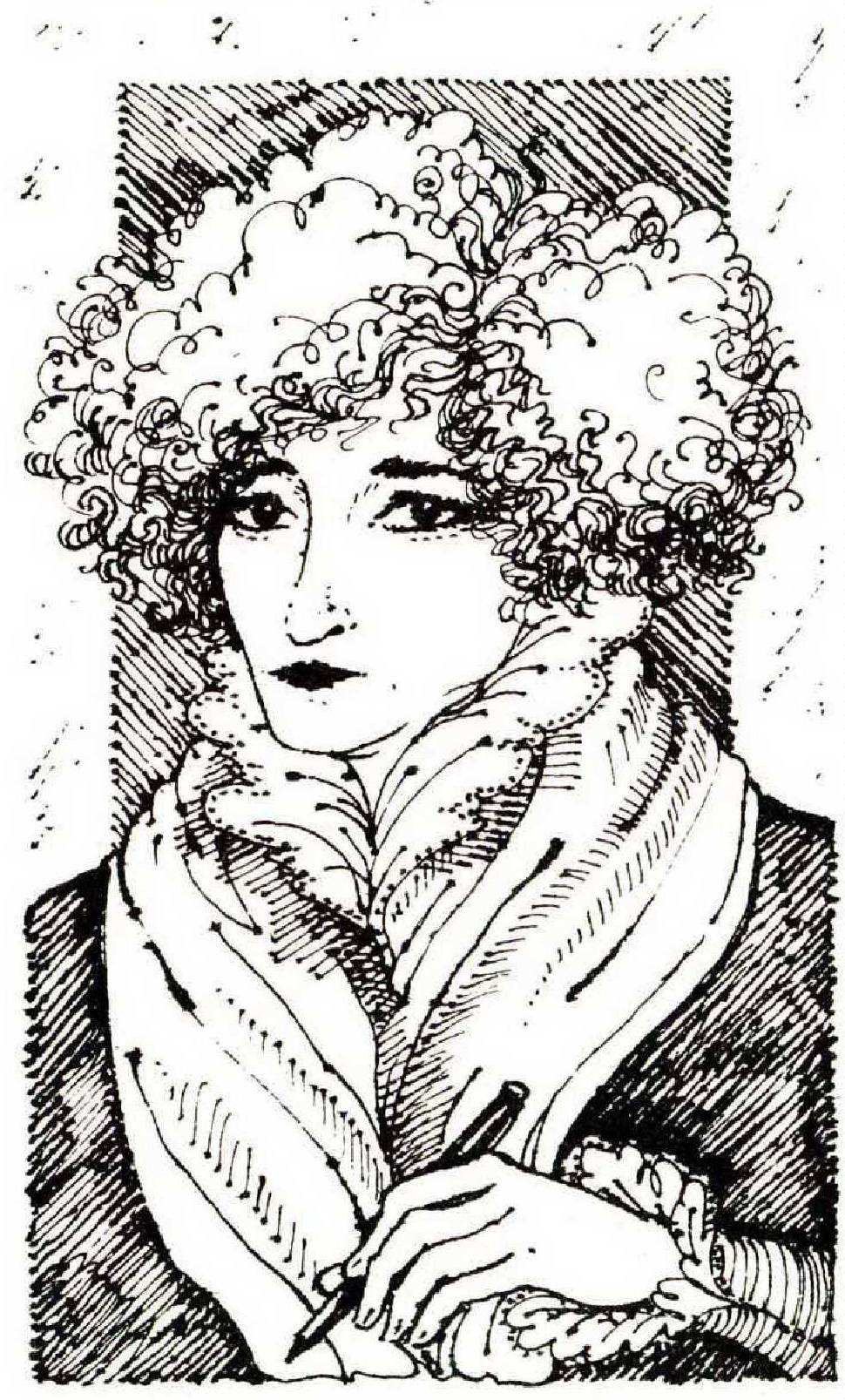
The attachments that filled her days were often bizarre and sometimes shocking. There were three marriages in all; a sapphic interlude with an exhibitionistic marquise; a dozen love affairs, including one with her stepson which began when Colette was in her late forties and the stepson was sixteen. No less bizarre were a number of her nonliterary enterprises—nude dancing on the vaudeville circuit, a turn in World War I as a war correspondent in the Argonne, and the creation of a “beauty institute” and her own line of “beauty products.” The absence of literary monomania, together with the extraordinary circumstances of her initiation into letters, meant that there was space in her days for variety and surprise—elements ruinous to decorum but indispensable to lively biography.
And the time and place—the Belle Epoque, Paris at the birth of the new century —were nourishing. Morally distinguished the period was not, but it was brilliantly animated, rich in experimental styles of art, life, and communication in the large. As a publicist and an insider in the musical culture, the hateful Willy—and his wife, once she was allowed to punch out at the factory—were welcome in glamorous circles. Among the notables Colette met, in the very period of her incarceration, were Debussy, Proust, and St. John Perse, not to mention political stars such as Clemenceau, Poincaré, and Blum. Salons seethed with cards and cutups. Sacha Guitry introducing himself as “President of the Mahogany Eyeglass Company.” Marcel Schwob, whose household included a Chinese male nurse named Ting, “a dormouse, a squirrel, a Japanese dog given him by Robert de Montesquiou [original of Proust’s Charlus] which slyly devoured Anatole France’s kidskin boots one happy day, and a Belgian griffon.” Paul Masson, partial to hobbies that a later generation would term Borgesian, in particular the invention of “Latin and Italian works of the fifteenth century . . . highly interesting works that should have been written. . .”
No small portion of the wit of Colette’s contemporaries was harsh, and much that was directed at the Marquise de Belbeuf, the exhibitionist just mentioned, was gross. A columnist observed wickedly that the Marquise “was a woman of breeding . . . even when dressed as an automobile mechanic she was reserved, her manners polished.” Willy’s custom was to travel in “train compartments marked ‘For Women Only.’ When someone would finally complain of his presence, he would reply: ‘But I am the Marquise de Belbeuf.’ ” But if “civilized” savagery is well represented in these pages, so too is generosity—in Colette’s relationships with the humblest of her music hall co-workers, in the camaraderie of the circle of sexual outcasts that was her refuge after her first marriage, and above all in the warmly imaginative loving-kindness of Sido Colette, the author’s mother. It’s not, in other words, just the age that’s vibrant in this book, but the people good and bad, and their energy—the force both of their hostilities and of their affections—put an edge on every part of the biographer’s tale.
What is best about Colette, though, is the author’s re-creation of her subject’s prolonged struggle to summon the courage of resistance to her tyrannically exploitative husband, and of her near disbelief, in the aftermath, in her own victory. This part of the narrative—the book as a whole, for that matter—could easily have become merely another boring brandishing of militancy. Mme. Sarde is fully versed in the politics of sex, having learned it (judging by her decision about which authority deserves most frequent citation) from the primary source—Simone de Beauvoir. She has mastered, furthermore, the standard Foucaultian gospel about the ambiguities of sexual identity. And she has a capacity for outrage— at the absoluteness of Willy’s power (half of those from whom Colette might have hoped for aid were directly dependent on her husband’s factory for their subsistence, the other half were in the habit of sucking up to him as an “opinion leader”), and at the cynicism with which Willy used his sexual infidelity as a means of persuading his wife of her utter worthlessness (the house the couple shared was regularly filled with Willy’s mistresses).
But, most important, Mme. Sarde seldom forgets that conceptual tools derived from Beauvoir or Foucault belong to our age, not to Colette’s, and that, while they are invaluable means of clarifying, to ourselves, the situation in which Colette was placed, they cannot open up the inner truth of that situation as experienced by the person who endured it. It’s evident from the start that this book is an effort at reconstructing, from within, the moment-to-moment emotional realities of the life of a young provincial woman who, after having been thoughtfully nurtured, was abruptly detached from human comfort and support, stripped of rights, property, and freedom to believe in her own intelligence, and shown no model of survival other than as recipient of erratic or nonexistent male mercy. But we’re never permitted to assume that simple contrasts of “oppression” with modern styles of womanly independence, or with the sense of possibility those styles generate, can contribute much to that reconstruction. With compassionate alertness, weaving words written by her subject more tightly into the fabric of her own analytical speculation than is the rule in conventional biography, the biographer searches out facts of feeling that lie beyond stereotype. And in the process she not only takes her reader inside a woman’s struggle to achieve a self, but arrives at subtle truths about differences between then and now.
She shows us, for instance, that a daughter’s uncomplicated adoration, in childhood, of her mother could, at that moment, shape a set of expectations of life far richer than any inspired by lists of career options. Colette seems to have had, in Sido, a genius mother. It was the quality of the latter’s gifts that made her daughter “demanding when it came to other kinds of love,” as well as excruciated by the idea of herself as someone who could come whining home to an elder when marriage “didn’t work.”
How many mothers offer their child Dawn as a special treat, how many awaken their daughter at three-thirty in the morning and send her off, an empty basket on each arm, to the marshy fields in the sharp bend of the river, where there were strawberries and bearded red-currants? Sido would watch her Beauté, her Joyau-en-or, and see her grow small in the distance; the narrow-minded countryside was not a dangerous one. Yet she had misgivings at allowing her child, her fairy princess, to wander freely, and her anxiety increased as the child turned thirteen, fourteen, fifteen. Still, sacrificing her own peace of mind, she allowed her to run free. When her daughter, now an adolescent, would finally appear at the corner on her way home, Sido would hide, would pretend not to have been waiting for her. Then, beneath the pale green globe of the hanging lamp, her ashen look, sharp and almost harsh, would examine me from head to toe, would read from my scratched cheek tomy muddy shoes, adding up the damage: a trace of blood on the cheek, a tear at the shoulder, the hem of my skirt unsewn and da mp, shoes and stockings sopping wet . . . that was all. That’s all there was. Once again, thank God, that’s all there was! (The italics are quotations from Colette’s writings.)
In a single stunning page Mme. Sarde evokes Colette’s inexpressibly tentative relief upon awakening in a slummy room — the place in which she was to serve “a solitary, laborious apprenticeship in living alone”—on the morning after her flight from her jailer:
Colette had never before lived on her own; like so many women she had moved straight from her father’s and her brothers’ house to the home of her husband. On the first night I spent in this groundfloor apartment, I left the key outside in the door. It wasn’t absentmindedness, it was trust. I never trusted any shelter as I was to trust that one which cost me 1,700 francs a year. There were three rooms, one of which was flooded with sunlight. In the mornings she could hear the carriages as they slowed down outside her window before turning onto the avenue. Separated from them by her tulle curtain and the windowpane, she felt close to these dear human beings passing by so close to her. I dedicated to them my passionate unsociability, my lack of experience of human nature, my shyness. . . .
Most tactfully and affectingly the book establishes that the Gomorrah where Colette found help after her escape was altogether “unvirilized,” hence capable of satisfying her understandable longing for a return to childhood and maternal security.
On occasion the biographer’s reading of interior feeling loses, momentarily, its delicacy. In a section called “Mirages of Male-Female” she contends that Colette developed “a particular concept of androgyny in which everyone was predisposed to discover within himself, herself, and in other people, a subtle mixture of male and female components.” And she then races on to Foucaultian generalizations (“. . . man and woman are ambiguous entities dictated by History”), as though Colette’s diffidently offered reflections on these matters qualified her as A Precursor.
And I have a few other quibbles. I’d argue, for example, that the charge of immorality laid upon one or two of Colette’s books deserves a more reasoned refutation than it receives here. (“Women courageous enough to deal frankly with sexual problems,” says Mme. Sarde, “the problems of their own sexuality, have always been accused of immorality.” Case dismissed.) Conceivably the indictments both of Willy and of Henry de Jouvenel, the second husband, would have been still more effective if acknowledgments had been made of the former’s probable skill as a writing teacher and of the latter’s evident generosity.
But these are minor flaws. Thanks to (in this country) the scholarly wing of the women’s movement, probes of lost continents of female experience have multiplied during the past decade— broad-scaled, book-length surveys of the development, among nineteenthcentury women writers, of literary codes for the expression of frustration, scores of specialized socio-historical inquiries such as those appearing in the shrewdly edited journal of women’s studies called Signs. But while the least impressive of this work usually contains suggestive evidence or observations, there’s a stiffness even in the best of it—an uneasy concern about academic conventions, scholarly objectivity, and the like—that blunts its force.
Colette is clean of such inhibitions. It finds the places in its subject’s work where the voice of anguish sounds most clearly:
But no, that man is my husband . . . I tremble at the thought of him just as I tremble in his presence. A creature restrained, unaware of its chain, this is what he has made me. . . . Overwhelmed, I stubbornly search back to our past days as a young married couple, looking for some memory that will bring back the husband I “believed” I had chosen. Nothing, there’s nothing . . . but my obedience, like a whipped child, nothing but his smile, condescending, without kindness.
And it achieves, through the intensity of its imagining, full responsiveness to that anguish, and to Colette’s terrible effort to learn to breathe inside a smothering self-pity. Everywhere in these pages we sense the biographer saying to us: If you knew what guts it took for this woman . . . If you could imagine how it would feel to have been free at last of this, how she would have rejoiced afterward in any and every contest or challenge to Them, how she would have relished taking any or all of Them on at a minute’s notice —Puritans, the prurient, corset-promoters, whomever. . .
Nobody can be sure now that these forgotten struggles, as recovered to view in feminist books, will one day seem the only convincing work in the heroic mode produced in our time. But I’m positive that this is an altogether exceptional biography. At a single stroke, through a deed of passionately loving intelligence, Colette becomes an author with whom one knows one will have to start over.