The Years of Lyndon Johnson
INTRODUCTION
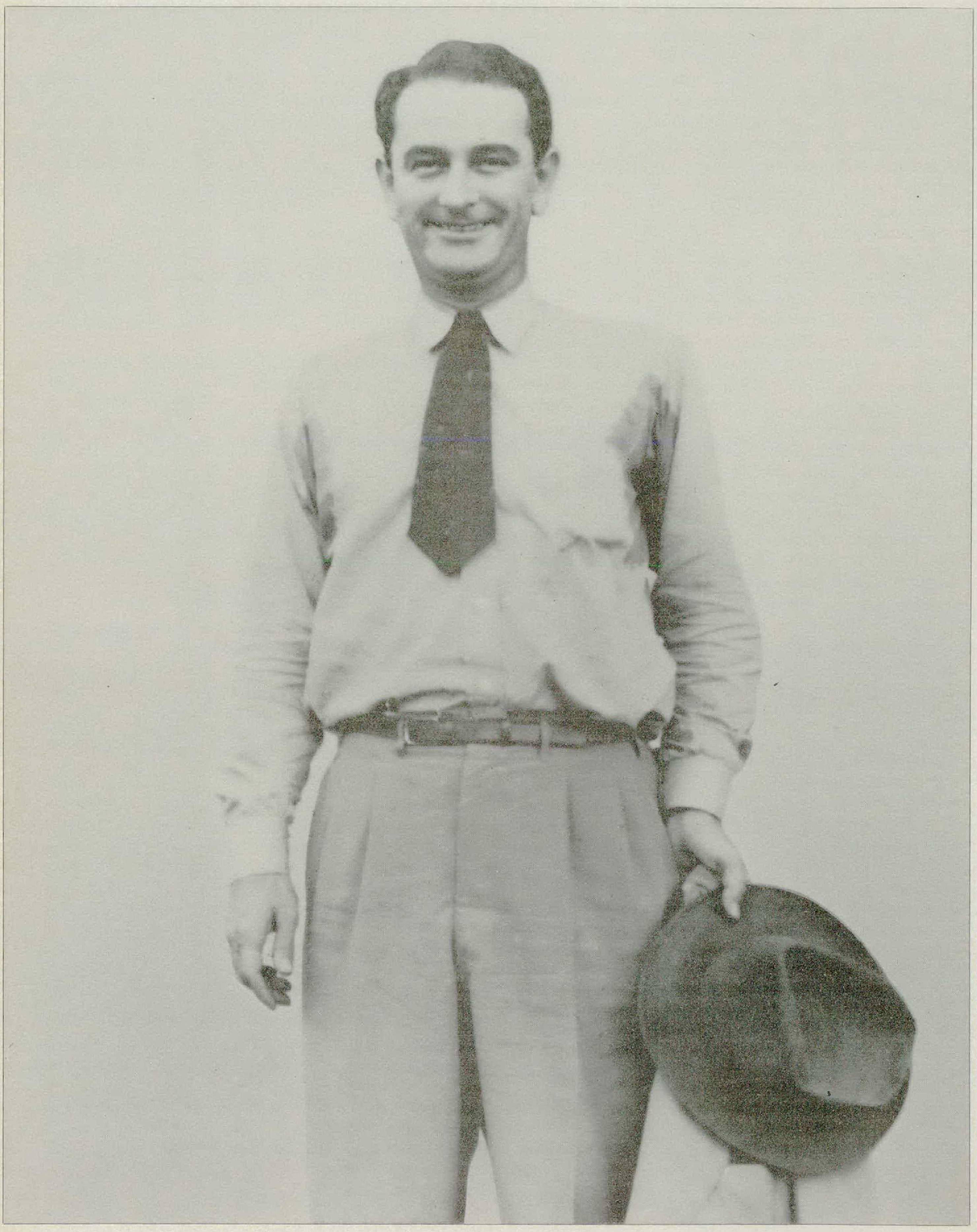
TWO OF THE MEN LYING ON THE BLANKET THAT DAY in the autumn of 1940 were rich. The third was poor—so poor that he had only recently bought the first suit he had ever owned that fit correctly—and desperately anxious not to be: thirty-two-year-old Congressman Lyndon B. Johnson had recently been pleading with one of the men, George Brown, to find him a business in which he could make a little money. So when Brown, relaxing in the still-warm October sun at the luxurious Greenbrier Hotel in the mountains of West Virginia, heard the other man on the blanket, Charles Marsh, make his offer to Lyndon Johnson, he felt sure he knew what the answer would be.
Brown wasn’t surprised by the offer. Marsh, a tall, imperious man of fifty-three, whose profile and arrogance reminded friends of a Roman emperor, was addicted to the grandiose gesture, particularly toward young men in whom he took a paternal interest. Only recently, Marsh, pleased with a reporter’s work, had told him he deserved a “tip”—and had thereupon given him a newspaper company. Some years earlier, his sympathies having been engaged by the story of Sid Richardson, a young oil wildcatter reduced by a series of dry wells to pawning his hunting rifle for room and board, Marsh had, in return for a share of future profits (profits he believed would never materialize), agreed to guarantee bank loans to enable the young man to continue drilling. And Marsh’s feelings toward Johnson, whose control of his congressional district had been cemented by the enthusiastic support of Marsh’s powerful Austin, Texas, newspaper, were particularly warm. “Charles loved Lyndon like a son,” Brown says.
Brown wasn’t even surprised by the size of the offer. A rich man himself by most standards, he knew how far from rich he was by Marsh’s. The newspaper Marsh had so casually given away was only one of a dozen he owmed; and he held—and collected interest on—the notes of a dozen more. In Austin alone, his possessions included the city’s biggest newspaper, much of the stock in its biggest bank, all of the stock in its streetcar franchise, and vast tracts of its most valuable real estate. And newspapers, banks, streetcars, and real estate were just minor items on Marsh’s balance sheet, for his partnership with Richardson was not his only venture in the fabulous oil fields of West Texas; forests of derricks pumped black gold out of the earth for his sole account. So Brown listened with interest but not astonishment when Marsh said he no longer got along with Richardson and he had one inflexible rule: if he didn’t like a partner, he got out of the partnership. This partnership, he said, hadn’t cost him a dime, anyway—he had obtained his share in Richardson’s wells just by guaranteeing those bank loans years before. He would sell his share to Johnson at a low price, he said, and, Brown recalls, he said, using a characteristic phrase: “I’ll sell it to you in a way you can buy it.” There was only one way for a young man without resources, and that was the way Marsh was proposing: as Brown listened, Marsh offered to let the young congressman buy his share in the Richardson enterprises without a down payment. “He told Lyndon he could pay for it out of his profits each year,” Brown explains. The share was probably not worth a million dollars, says Brown, who had seen the partnership’s balance sheets—but it was worth “close to” a million, “certainly three quarters of a million.” Marsh was offering to make Lyndon Johnson rich, without Johnson’s investing even a dollar of his own.
But if George Brown wasn’t surprised by the offer, he was surprised by the response it received. Johnson, polite, ingratiating, and deferential as he always was with the older man, thanked Marsh. But, polite, ingratiating, and deferential as he was, he was also, Brown recalls, quite firm. He would like to think the offer over, he said, but he felt almost certain he was going to have to decline. I can’t be an oilman, he said. If the public knew I had oil interests, it would kill me politically.
All that week, Lyndon Johnson considered the offerin a setting that emphasized what he would be giving up if he declined it: the Greenbrier, with its immense, colonnaded Main House rearing up, gleaming white, in the midst of 6,500 acres of lush, manicured lawns and serene gardens; its vast, marble-floored ballroom, in which guests danced under cut-glass chandeliers; its Spring House, surmounted by a bronze Hebe, cupbearer to the gods, around which, every afternoon, cold champagne was served at canopied tables; its arcade lined with expensive shops; its fleet of limousines, which brought arriving guests from the nearby station, at which their private railroad cars were lined up in a long row; its battalions of green-liveried servants, was, as Holiday magazine put it, “opulent America at its richest”—the distillation of all that was available in the United States to the wealthy, and not to others. As the three men lay every morning on their blanket, which had been spread on a slope in front of their accommodations—a row of white cottages, set away from the main building for privacy, which were the resort’s most expensive—the mountain slopes before them were turning, day by day, into the glorious shades of an Allegheny autumn, like a show presented for their private enjoyment. Day after day, Johnson discussed the offer with Brown, telling him details of his life he had often told him before: about the terrible poverty of his youth, about his struggle to go to college, and about the fact that, after three years in Congress, three years, moreover, in which he had accumulated, thanks to President Roosevelt’s friendship, far more than three years’ worth of power, he still had nothing— not a thousand dollars, he said—in the bank. Again and again, he told Brown about his fear (a fear that, Brown believed, tormented him) of ending up like his father, who had also been an elected official—six times elected to the Texas State Legislature—but had died penniless. He talked repeatedly about his realization that a seat in Congress, with its inadequate salary and no pension, was not a hedge against that fate; so many times since he had come to Washington, he said, he had seen former congressmen, men who had once sat in the great chamber as he was sitting now, working in poorly paid or humiliating jobs. Again and again, he harked back to one particular incident he could not get out of his mind: while riding an elevator in the Capitol one day, he had struck up a conversation with the elevator operator, who had said that he had once been a congressman too. He didn’t want to end up an elevator operator, he said. Accepting Marsh’s offer would free him from such fears forever, he knew. But, again and again, Johnson would return to the statement he had made when Marsh had first made the offer: It would kill me politically,
George Brown had been working closely with Johnson for three years; Johnson’s initial nomination to Congress, in 1937, had, in fact, been the result of an immensely complicated transaction with a very simple central point: the firm in which Brown and his brother, Herman, were the principals—Brown & Root, Inc.—was building a dam near Austin under an arrangement with the federal government that was of dubious legality, and needed a congressman who could get the arrangement legalized. Johnson had succeeded in doing so, and the Browns had made a million dollars from the new federal contract. Ever since, Johnson had been trying to make them more, an effort that had recently been climaxed by the award to Brown & Root of the contract for a gigantic naval base at Corpus Christi; this contract would make the Browns not one million but many. Having worked with Johnson so long, Brown felt he knew the young congressman and understood how anxious he was to obtain money. He had a feeling, moreover, that this anxiety was intensifying, a feeling nurtured not only by the increased intensity of Johnson’s pleas that Brown find him a business of his own but by a story circulating among Johnson’s intimates. Several months before, Johnson had introduced two men to each other at an Austin party, and one had later bought a piece of Austin real estate from the other. The seller, a local businessman, had been astonished when the congressman approached him one evening and asked for a “finder’s fee” for the role he had played in the transaction. Telling Johnson that he hadn’t played any role beyond the social introduction, he had refused to give him a fee, and had considered the matter closed; the transaction, he recalls, was small, and the finder’s fee would not have amounted to “more than a thousand dollars, if that.” When, therefore, he opened the front door of his home at 6:30 the next morning to pick up the newspaper that had been dropped on his lawn, he was astonished to see his congressman sitting on the curb, waiting to ask him again for the money. And when he again explained to him that he wasn’t entitled to a fee, he recalls, “Lyndon started—well, really, to beg me for it— and when I refused, I thought he was going to cry.” Brown, knowing how anxious Johnson had been for a thousand dollars, was surprised to hear him hesitate over three quarters of a million.
He was surprised also by the reason Johnson had advanced for his hesitation. It would kill me politically — what “politically” was Johnson talking about? Until that week at the Greenbrier, Brown had thought he had measured Johnson’s political ambition — had considered the measuring simple, in fact, for Johnson talked so incessantly about what he wanted out of politics. He was always saying that he wanted to stay in Congress until a Senate seat opened up, and then run for the Senate. Well, his congressional district was absolutely safe. Being an oilman couldn’t hurt him there. And when he ran for the Senate, he would be running in Texas, and being an oilman wouldn’t hurt him in Texas. For what office, then, would Johnson be “killed” by being an oilman?
Only when he asked himself that question, George Brown recalls—only during that week at the Greenbrier—did he finally realize, after three years of intimate association with Lyndon Johnson, what Johnson really wanted.
And only when, at the end of that week, Johnson firmly refused Marsh’s offer did Brown realize how much Johnson wanted it.
GEORGE BROWN, WHO HAD THOUGHT HE KNEW LYNDON Johnson so well, realized during that week at the Greenbrier that he didn’t know him at all. Their lives would be entwined for thirty more years: as Brown & Root became, with Johnson’s help, an industrial colossus, one of the largest construction companies—and shipbuilding companies and oil-equipment companies— in the world, holder of Johnson-arranged government contracts and receiver of Johnson-arranged government favors amounting to billions of dollars, suave George Brown and his fierce brother Herman became the principal financiers of Johnson’s rise to national power. But at the end of those thirty years—on the day Lyndon Johnson died—George Brown still felt that to some extent he didn’t really know Lyndon Johnson at all.
No one knew him. Enlisting all his energy and all his cunning in a lifelong attempt—the details of which are in themselves a remarkable story—to obscure the facts of his personal life, his rise to power, and his use of power, he succeeded so well that no one saw him whole: not his wife, who, contrary to the carefully contrived legend, was until the last decade of his life kept largely in the dark about his political and financial activities; not his mother, who had a mother’s unique understanding of his complex personality but who saw her son infrequently after he reached manhood; not his “intimates,” for no intimate was permitted to see more than a fraction of the man or his maneuvers; not the citizenry of the nation he led as President, the citizenry that gave him his full term as its leader by what was then the greatest voting majority in history. No one. He rose to the leadership of the nation’s Senate, held the leadership for five years, and during those years exercised more power in the Senate than any other man in the nation’s history—enough so that he was called, during those years, “the second most powerful man in Washington”—and was the subject of a thousand newspaper and magazine articles, and no one knew him. He came to the presidency and remained in it for five years, during which he was perhaps the most powerful man on earth, and, despite newspapers and magazines and television, still no one knew him. In a nation whose Constitution provided, in the words of an earlier President, Abraham Lincoln, that “no one man should hold the power of bringing the nation into war,” this one man brought the nation into war—escalating a limited involvement into a war that drained its treasurehouses, and soaked up the blood of hundreds of thousands of its young men; into a war that not only cost it more money than World War II but also lasted longer; into a war abroad that caused civil disobedience verging on civil insurrection at home—and the nation did not know that man. He attempted to make that nation a Great Society—with education acts, and civil-rights acts, and antipoverty acts, and Model Cities acts, and a hundred other laws that constituted the most sweeping attempt at social reform since the New Deal—and the nation did not know the man who was doing that, either. If, during the long evolution from a “constitutional” to an “imperial” presidency, there was a single administration in which the balance tipped decisively from one to the other, it was the presidency of Lyndon Johnson. It was during his presidency also that there began the widespread mistrust of the President that was symbolized by the phrase, coined during his administration, “credibility gap.” Both these developments, which were to affect the nation’s history profoundly, were to a considerable extent a function of the personality of the man—but the nation did not know the man.
THIS LACK OF KNOWLEDGE WAS NOT DUE TO LACK OF curiosity. Indeed, during Lyndon Johnson’s presidency, there was in Washington what one columnist termed an “obsession” with his personality. (“Under Kennedy,” a columnist’s wife said, the main topic of Washington dinner-table conversation was ideas; “now it is Lyndon Johnson’s personality.”) Rather, the lack of knowledge was due to an aspect of that personality with which Washington had become familiar: Lyndon Johnson’s preoccupation with and talent for secrecy. This talent was striking even in his youth, and in the concealment of his own life story the President had outdone himself. His years at college are one illustration—one among very many—of his efforts at concealment, and of their success. While still an undergraduate at Southwest Texas State Teachers College, in San Marcos, he arranged to have excised (literally cut out) from hundreds of copies of the college yearbook certain pages that gave clues to his years there (luckily for history, some copies escaped the scissors). Issues of the college newspaper that chronicle certain crucial episodes in his college career are missing from the college library. A ruthless use thereafter of political power in San Marcos made faculty members and classmates reluctant to discuss those aspects of his career.
As a result, although twenty-one previous biographies have been written about Lyndon Johnson, not one has mentioned certain facts about his college years that should at least be considered in assessing his character and personality: that, for example, Lyndon Johnson, who won a seat in the United States Senate in a stolen election in 1948, stole his first election in 1930, to give himself a seat on his college’s senior council. No previous biography has mentioned that if he stole one election at college, he won another by the use, against a young woman guilty of a single, insignificant indiscretion, of what his lieutenants call “blackmail”; that a score of political tricks on the same moral level earned him a reputation on campus as a man who was not “straight,” not honest; that he was, in fact, so deeply and widely mistrusted at college that his nickname, the nickname he bore during all his years at college, the nickname by which he was identified in the college yearbook, was “Bull” (for “Bullshit”) Johnson. (The yearbook, in terms far harsher than those employed about any other student, also mentions his “sophistry,” and calls him “a master of the gentle art of spoofing the general public.”) Most significant, perhaps, no biography has mentioned that the dislike and mistrust extended beyond politics: no biography of Lyndon Johnson, who as President was accused of lying to the American people, has mentioned that some of his fellow students (who used his nickname to his face: “Hiya, Bull”; “Howya doin’, Bull?”) believed not only that he lied to them—lied to them constantly, lied about big matters and small, lied so incessantly that he was, in a widely used phrase, “the biggest liar on campus”—but also that some psychological element impelled him to lie, made him, in one classmate’s words, “a man who just could not tell the truth.”
But if in San Marcos he was regarded with mistrust, in another little town in Texas, during these same years, Lyndon Johnson was regarded as “a blessing, a blessing from a clear sky.”
The town was Cotulla, a tiny, predominantly Mexican community of tin-roofed shacks broiling under the fierce sun on the vast, desolate plains of the South Texas brush country. Having been forced to drop out of college for lack of funds, Johnson spent a year there teaching in the town’s Mexican school.
He got the job because no one else would take it, and Cotulla had never had a teacher like him. No teacher had ever cared if the Mexican children learned anything or not; this teacher cared. He battled the school board to get them equipment so that they could play games at recess like the white kids, and insisted that they, too, have baseball games and track meets with other schools. And he taught—taught with a furious energy, coming to school very early and staying very late, inspiring his thirty-two pupils with the promise that if they learned, success would surely be theirs, spanking them if they didn’t do their homework. His pupils didn’t resent the spanking, because they felt that the emotion behind it was concern for their future—and they were right; for the rest of his life, Lyndon Johnson would remember lying in his room before daylight and hearing motors, and realizing that his pupils wouldn’t be in school that day because they were being “hauled off in a truck to a beet patch or a cotton patch” to earn a few dollars instead. And he didn’t teach only children. The school’s Mexican janitor didn’t speak English; Johnson bought him a textbook and tutored him on the steps of the school with endless patience as the loafers across the street sat laughing at them. Hints of the Great Society as well as of the credibility gap can be found in Lyndon Johnson’s youth.
Before San Marcos and Cotulla was Johnson City, a town in the Texas Hill Country, one of the most remote and impoverished areas in the United States. In Johnson City, a town so isolated its inhabitants felt it was an island surrounded by an ocean of empty land, Lyndon Johnson spent a childhood in which he was held in contempt, not so much because of his personality (although the determination to manipulate and dominate was already vividly apparent, and aroused resentment) but because he was a member of a despised family. He spent a childhood in which, often, the only food in his house was the food that neighbors brought out of charity, a childhood in which he had to wonder, from month to month, if the mortgage payments would be met and his family would still have a home to live in; a childhood in which the parents of the girl he wanted to marry refused him permission to date her because he was “a Johnson,” and as he stood in the courthouse square with his cousins in the evenings, he had to watch her drive around with another man. Before San Marcos and Cotulla, also, was California. Trying to escape a life of brutally hard physical labor wresting a living from an infertile soil, Lyndon Johnson ran away to California to become a lawyer, but the attempt came to nothing, and he found himself back in Johnson City working on a road-building gang, in effect working in harness with a mule, the two of them forcing a scoop through the rocky Hill Country soil. He emerged from his childhood—broke out of Johnson City—desperate for respect and security, so desperate that for the rest of his life all considerations fell before the demands of ambition.
HIS PURSUIT OF WEALTH WAS ONE EXAMPLE.If at the Greenbrier Johnson subordinated his desire for money to his desire to become President of the United States, he found, not long thereafter, a way to reconcile the two ambitions—and in years to come he found a dozen ways: twenty-three years after he had lain poor on the Greenbrier blanket, he entered the Oval Office the richest man ever to occupy it. By the time he assumed the presidency, Life magazine estimated his fortune at $14 million; Johnson’s representatives protested publicly that that estimate was far too high; privately, some now admit that it was far too low.
Attainment of the presidency did not slake his thirst for money. Upon assuming the office, he announced that he was immediately placing all his business affairs in a “blind trust,” of whose activities, he said, he would not even be informed. In truth, however, the establishment of the trust was virtually simultaneous with the installation in the Oval Office of private telephone lines to certain Texas attorneys associated with the administration of the trust—and over those lines, during the entire five years of his presidency, Johnson personally directed his business affairs, down to the most minute details, not infrequently working on those affairs, according to some of his attorneys, for several hours a day. Johnson’s business could be conducted even during affairs of state. For example, during a visit to the Johnson Ranch by German Chancellor Ludwig Erhard, the President sat behind closed doors browbeating a group of businessmen in connection with a television option agreement—an agreement he had won through his behind-the-scenes influence over the Austin City Council, which he had earlier manipulated like a ward boss. In his direction of his business affairs, he did not hesitate to use the power of the presidency itself, and to use it with utter ruthlessness. And during his presidency, Lyndon Johnson piled atop the millions of dollars he had already made millions more.
More significant than the dollar total of Lyndon Johnson’s fortune were the methods he employed to accumulate it—for a detailed examination of such methods is an instructive lesson in the means by which, in twentiethcentury America, a position of public power can be used to accumulate private wealth. But although dedicated investigative journalists produced from time to time scattered articles detailing one or another episode in that accumulation, these episodes were never pulled together to show an overall pattern, in part because of Johnson’s talent for secrecy; for example, the telephone setup was arranged so that those business-related calls would not be handled by a White House operator or appear in White House telephone logs. The one aspect of his accumulation of wealth that was explored in any depth at all was the Johnson radio and television interests, which were in his wife’s name. There existed a vague public awareness that Johnson had somehow employed political pressure to force the Federal Communications Commission to grant concessions to his small Austin radio station and to the Austin television station that he later added to it. There were jokes—bitter in Austin, knowing in Washington—about the fact that for fifteen years the capital of Texas had to make do with a single television channel. But the extent of the pressure and of the concessions was seldom detailed; little public understanding existed of the fact that the FCC not only created the Johnson broadcasting monopoly and protected it against incursion but steadily expanded its sphere until it was a radio-television empire that, far from being limited to Austin, or even to Texas, eventually spread over cities in three states. This empire, which had grown from a radio station that the Johnsons bought on Christmas Day of 1942 for $17,500, was by the time he entered the presidency worth $7 million—and was producing profits of $10,000 a week.
The growth of the radio-television empire was, in fact, one of the less sordid episodes in the story of his accumulation of wealth. Never explored in sufficient detail was the economic fate of those men who, owning their own television stations (or banks, or ranches), tried to compete with Lyndon Johnson, or simply to hold on, against his wishes, to their property—men who were broken financially on the wheel of his power. And Lyndon Johnson left the presidency, and lived out his life, and died, with the American people still ignorant not only of the dimensions of his greed but of its intensity.
IF, HOWEVER, JOHNSON THREW HIMSELF INTO THE PURsuit of wealth with a furious, frenzied, almost desperate energy, that energy characterized his work in other areas, as well.
His election to Congress came when he was only twenty-eight years old, but as a result of it the land in which he had been raised was transformed. When he went to Congress, in 1937, the Hill Country had only recently obtained its first paved roads, and had not yet obtained electricity; its families worked their impoverished farms by the same methods by which they had been worked a hundred years before. If he went to Congress to get a dam built and make its backers rich, before he left Congress he got a half-dozen dams built—and he also succeeded, in the face of difficulties almost unimaginable to residents of more highly developed areas, in using the dams to provide electricity to the lonely ranches of the Hill Country. When he realized that he had to teach the people of the Hill Country how to use electricity—that it meant more than just light bulbs hanging from the ceiling—he taught them to use it, and he taught them soil conservation and crop rotation, and other methods of easing a harsh round of life that had gone uneased since the first settlers came to that country, in 1836. During his first years as a congressman, he obtained for his congressional district, a district in which county budgets were figured in tens of thousands of dollars, $70 million—for the biggest rural electrification cooperative in the United States, for roads, for schools, for federally insured mortgages to save his people’s farms, for federal loans to help his people’s children go to college. Johnson’s effort to bring the people of his region into the twentieth century is as much the bright side of democracy as other aspects of his career are the dark side of democracy.
THE STORY OF LYNDON JOHNSON’S RISE TO POLITICAL power sheds light on economic forces that had immense impact on the nation.
Two incidents are particularly significant in this story. One occurred in 1944, the other in 1948. In the 1944 incident, President Franklin D. Roosevelt, after a conference in the Oval Office with Johnson and the President’s viceroy for Texas—a shrewd, silent country lawyer named Alvin J. Wirtz, who was Johnson’s political godfather — personally intervened with the Internal Revenue Service to quash an investigation into Brown & Root’s financing of the career of the young congressman who would one day sit in Roosevelt’s chair. In the 1948 incident, President Harry S. Truman, was whistlestopping through Texas. Aboard his campaign train were the local dignitaries who could be expected to be aboard—among them the governor of Texas and two of the state’s congressmen, House Speaker Sam Rayburn and Lyndon Johnson—and one whose presence was entirely unexpected: George Parr, the “Duke of Duval.” Parr, who ruled sunbaked, cracked-clay Duval County and a half-dozen others stretching down to the Mexican border with gangs of armed pistoleros, wanted certain assurances from the President himself in connection with his gift to Lyndon Johnson of the votes that had elected him to the Senate and placed him finally on the path to the presidency. The notorious Parr was not the type of figure a President would want on a train ridden by the national press corps, but Johnson and Rayburn had insisted that Truman see Parr, and the border-county dictator was not only on the President’s train but in the President’s compartment, closeted with him in private conference—and receiving the assurances he wanted.
Both these incidents occurred because of a President’s realization of the importance, in an era in which money increasingly was becoming the basic fuel of politics, of coming to terms with new economic forces. Minor though they are, therefore, they are convenient benchmarks of the rise of these forces. The impact on America’s politics, its governmental institutions, its foreign and domestic policy, of these new economic forces that surged out of the Southwest in the middle of the twentieth century has not been adequately explored by historians. America has had its great books on the robber barons of the nineteenth century and on the impact on the nation of the economic forces they represented. The great books on the robber barons of the twentieth century —the oil and sulfur and gas and defense barons of the Southwest—have yet to be written. And they should be written. As the robber barons of the last century looted the nation’s land of its wealth—its coal and coke, its oil and ore, its iron, its forests—and used part of that wealth to ensure that the government would not force them to return more than a pittance of their loot to the nation’s people, so the robber barons of this century have drained the earth of the Southwest of its riches and have used those riches to armor themselves against government.
Lyndon Johnson was not the architect of this control, but he was its embodiment and its instrument—its most effective instrument. It was these new economic forces— the oil, gas, sulfur, defense, space, and other new industries of the Southwest—that raised him to power and, once he was in power, helped him to extend it. For years, men came into Lyndon Johnson’s office and handed him envelopes stuffed with cash. They didn’t stop coming even when the office in which he sat was the office of the Vice President of the United States. Fifty thousand dollars (in hundred-dollar bills in sealed envelopes) was what one lobbyist—for one oil company—testified that he brought to Johnson’s office during his term as Vice President. They placed at his disposal sums of money whose dimensions were revolutionary in politics, and he used it to bend other politicians to his will. From the day, before the 1940 election, on which, still a young, unknown congressman from a remote region of Texas, he went to President Roosevelt and asked for a political role with national power—and told the President that he would bring with him to the national campaign, to be dispensed to Democratic congressional candidates, huge donations from Charles Marsh and George Brown (and from their friends, the newly rich Texas oilmen) —he played an increasingly prominent role in the financing of the careers of other legislators. Congressmen and senators worried about money to ensure their return to Capitol Hill learned that all the money they needed was available from Texas—from Texas and from the new industrial order of the Southwest, of which Texas was the heart— and that Lyndon Johnson, more than any other single figure, controlled it. This money was the basic source of his power on Capitol Hill. Lyndon Johnson was described as a legislative genius, a reader of men, a leader of men—thousands of articles described how he could grasp men’s lapels, peer into their eyes, and talk them around, of how he could create consensus out of disparity. Lyndon Johnson was a legislative genius, a reader of men, and a leader of men, but his genius would have had far less impact without the money to back it up, without the knowledge on the part of the legislator being approached that the man grasping his lapel had the power to help his political career or—by aiding his opponent, instead—to end it. The “Johnson Treatment”—his blend of threats and pleading, of curses and cajolery—became a staple of the national political folklore. But these picturesque elements of the Johnson Treatment were only tassels on the bludgeon of power.
Caro devotes several hundred pages to describing the factors in the formation of Johnson’s personality—his family’s poverty, his early need to “be somebody, ” his mother’s idealism, his father’s crushing financial failure as a farmer in the Texas Hill Country. The Atlantic takes up the narrative at a point at which Johnson has been debate coach for a year in a Houston high school and then, as a result of some precocious volunteer work he has done for Welly Hopkins, a Texas state senator—work that led Hopkins to say that Johnson was “gifted with a very unusual ability"—has gone to Washington as secretary to Richard Kleberg, the new Democratic congressman from Texas’s Fourteenth District.
THE PATH TO POWER
HE LIVED IN THE BASEMENT OF A SHABBY LITTLE hotel, in a tiny cubicle across whose ceiling ran bare steam pipes, and whose slit of a window stared out, across a narrow alley, at the weather-stained red-brick wall of another hotel. Leaving his room early in the morning, he would turn left down the alley, onto a street that ran between the red-brick walls of other shabby hotels. But when he turned the corner at the end of that street, suddenly before him, atop a long, gentle hill, would be not brick but marble—a great shadowy mass of marble, marble columns and marble arches and marble parapets, and a long marble balustrade high against the sky. Veering along a path to the left, he would come up Capitol Hill, and around the corner of the Capitol, and the marble of the eastern facade, which would already have caught the early morning sun, would be a gleaming, brilliant, almost dazzling white. A new line of columns— towering columns, marble for magnificence and Corinthian for grace—stretched ahead of him, a line, broken only by the pilasters that are the echo of columns, so long that columns seemed to be marching endlessly before him, the acanthus leaves of their mighty capitals hunched under the weight of massive entablatures, the long friezes above them crowded with heroic figures. And columns loomed not only before him but above him; there were columns atop columns, columns in the sky, for the huge dome that rose above the Capitol was circled by columns not only in its first mighty upward thrust, where it was rimmed by thirty-six great pillars (for the thirty-six states that the Union had comprised when the Capitol was built), but also high above, 300 feet above the ground at its climax, where, just below the statue of Freedom, a circle of thirteen smaller, more slender shafts (for the thirteen original states) made the tholos, a structure modeled after the place where the Greeks left sacrifices to the gods, look like a little temple in the sky, adding a grace note to a structure as majestic and imposing as the power of the sovereign state that it had been designed to symbolize. And as Lyndon Johnson came up Capitol Hill in the morning, he would be running.
At first, because it was winter and she knew that he owned only a thin topcoat and that his only suits were lightweight tropicals suitable for Houston, Estelle Harbin, the woman who worked with him—and who, coming to work in the morning, sometimes saw the gangling figure running, awkwardly, arms out and flapping, in front of the long rows of columns on his way to the House Office Building, beyond the Capitol—thought he was running because he was cold. “We weren’t used to weather like they had in Washington,” Miss Harbin recalls, “and Lyndon couldn’t afford any warm clothes. When I would get to the office, his cheeks would still be all rosy.” But even in spring, after the weather turned warm, whenever she saw Lyndon Johnson coming up Capitol Hill, he would be running.
THE DAY LYNDON JOHNSON FIRST ENTERED THE CAPItol—December 7, 1931, the opening session of the Seventy-second Congress—was the day on which the first order of business was the election of a new Speaker of the House of Representatives. After the election, as the House rose in applause (applause mingled with Indian war whoops and the Rebel yell), a committee escorted to the triple-tiered white marble rostrum—on the topmost tier of which there stood, above the crowding and turmoil of the House, a single, high-backed chair—a short, red-faced man with fierce white eyebrows, dressed in a cheap, rumpled brown suit and a rancher’s heavy, blunt-toed brogans: John Nance Garner, “Cactus Jack” Garner—Garner of Texas.
Later that day, the great standing committees of the House met to select their chairmen. For twelve years, these chairmen had been Republicans; under Coolidge prosperity and Hoover prosperity, Democratic rolls had dwindled until one Democratic congressman muttered, “We’re going the way of the Whigs.” The Crash had changed the situation; the election of Lyndon Johnson’s new boss, in fact, had sealed the change. The 1930 congressional elections had reduced the Republican majority in the House from 104 to two. By October of 1931, special elections to fill the seats of representatives who had died had given the Democrats their first majority in the House since 1919. But the majority was only two, and with two seats still vacant and a third held by a member of the Farmer-Laborite Party, three votes were uncertain, and the Democrats could not be sure they would be able to organize the House when it reconvened in December. Then, on November 6, 1931, Harry Wurzbach, the only Republican congressman from Texas, died. It was the election of Richard Kleberg, a Democrat, in Wurzbach’s district, on November 24, that gave the Democrats a majority of 218 to 214 and assured them of enough votes to control the House. Within the parties, seniority determined chairmanships, and Democratic Texas had for years been sending congressmen to Washington and keeping them there. After the standing committees met on December 7, the chairman of the House Committee on Interstate and Foreign Commerce was Garner’s righthand man, Samuel Taliafero Rayburn—Rayburn of Texas. The chairman of the Rivers and Harbors Committee, overseer and dispenser of funds for the nation’s great public works, was Joseph Jefferson Mansfield—Mansfield of Texas. The chairman of the Judiciary Committee was Hatton W. Sumners of Texas, of the Agriculture Committee Marvin Jones of Texas, of the Committee on Public Buildings and Grounds Fritz Lanham of Texas. Texans were elected on December 7,1931, not only to the Speakership of the House but to the chairmanships of five of its most influential committees. Lyndon Johnson’s first day in the Capitol was the day Texas came to power in it—a power that the state was to hold, with only the briefest interruptions, for more than thirty years.
But the coming to power of Texas had nothing to do with Lyndon Johnson then. His congressman had no power; in a body in which power was determined almost solely by seniority, his congressman, the last one elected, had the least seniority of any of its 435 members.
His congressman, moreover, cared very little about being a congressman. Richard Mifflin Kleberg was one of the wealthiest men in Texas, owner of a full 20 percent of the colossal King Ranch, which had been founded by his grandfather, Richard King, and expanded by his father, King’s son-in-law, Robert Kleberg, into a 2,000-squaremile empire—a domain so large that automobiles crossing it had to carry compasses to navigate and there was a full month’s difference in seasons between its southern and northern boundaries. Extending the ranch’s influence beyond its borders, founding colleges and banks, building railroads, harbors, whole towns, in fact, Robert Kleberg turned much of South Texas into “Kleberg Country.” And when, in 1922, Kleberg suffered a stroke, his son, Dick, then thirty-six, was put in charge of the empire’s affairs.
But Dick displayed little interest in his inheritance. During his youth, he had loved to play polo and golf (he was one of the best golfers in Texas) and to spend his time outdoors; he was renowned even among the King Ranch’s hundreds of hard-riding Mexican vaqueros as a great rider, a great roper, a great marksman. In his forties, he still bulldogged steers in rodeos, sat up all night drinking and playing poker, and, accompanying himself on the accordion, singing Mexican songs to the adoring vaqueros, who called him “Mr. Dick”; he still vacationed in Mexico City for weeks at a time. He was an easygoing, affable, considerate man. “A sweeter man than Dick Kleberg never lived,” a friend says. “But he was a playboy. As for work, he had no interest in that whatsoever” He let the affairs of the great ranch slide until, almost unbelievably, it was in financial difficulties, and the trustees replaced him with his younger brother (who soon had it back on sound footing). Dick didn’t seem to mind; business, he said, was not for him.
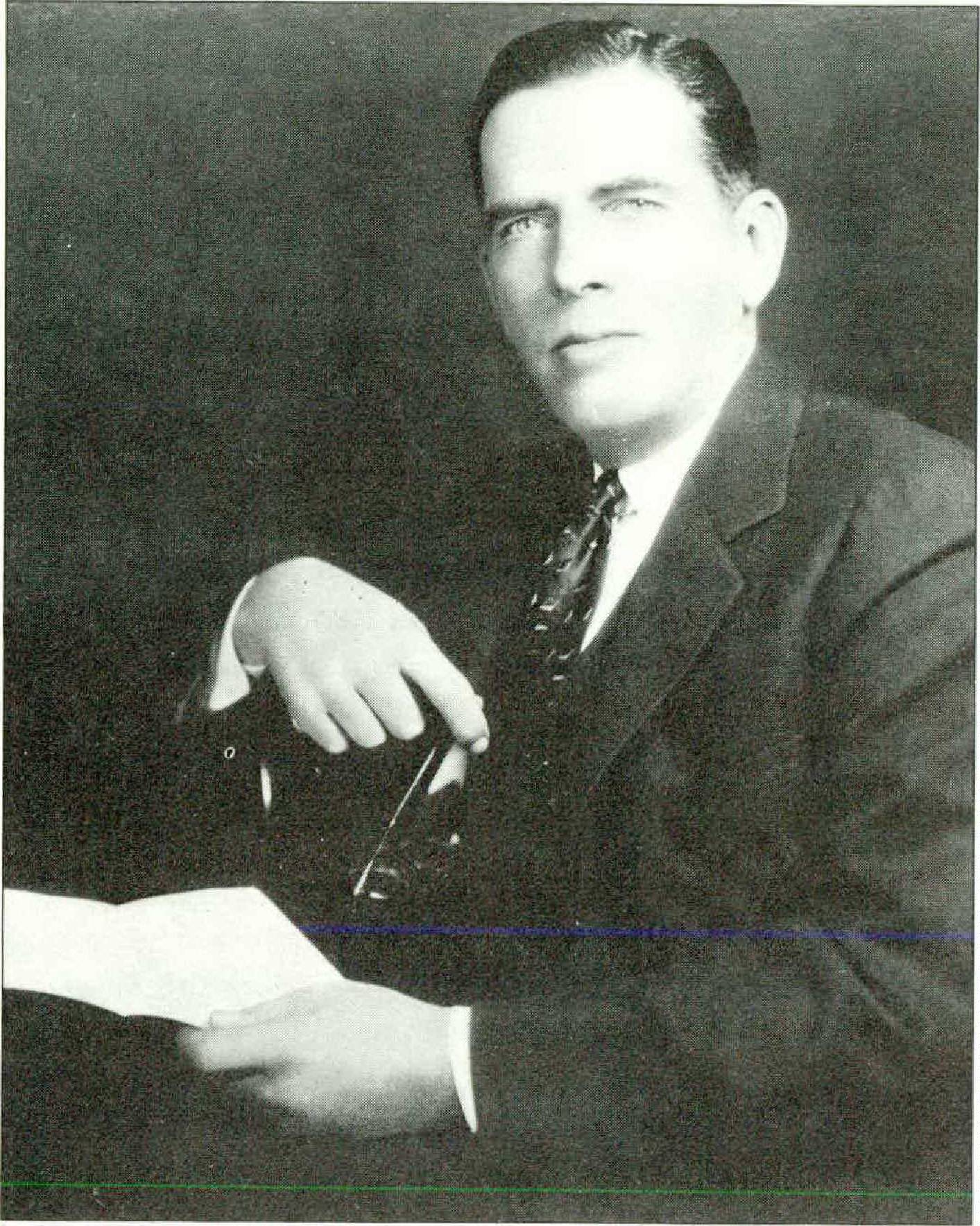
Neither, it turned out, was politics. His views on government were strong, if a trifle simplistic. The cause of the Depression, he felt, was A1 Capone. “The trouble with the nation’s economy,” he declared, was simply Prohibition, which “makes it possible for large-scale dealers in illicit liquor to amass tremendous amounts of currency”; the “present economic crisis,” he explained, was caused by the “withdrawal of billions of dollars from the channels of legitimate trade” by these bootleggers. His passions were also aroused by Herbert Hoover—not because, as some felt, Hoover was not doing enough to fight the Depression but because he was doing too much. Kleberg’s first speech in the House, in January of 1932, urged Congress to begin “whittling down . . . government interference in business and society and the expenses of maintaining these interfering agencies.” Not long thereafter, he sharpened his attacks, calling Hoover’s policies “unAmerican,” because of their “enormous expense.” He had had, however, no desire to enter politics. He had become a candidate as a favor to a friend: the legendary Roy Miller, the one-time “Boy Mayor of Corpus Christi,” whose lobbying activities for the gigantic Texas Gulf Sulphur Corporation were making his pearl-gray Borsalino and silvery mane as familiar in Washington as they had been in Austin. Miller was a Garner ally; when Wurzbach died, the paramount qualification necessary, in Miller’s view, for the Democratic nominee in the Fourteenth District was electability—since his election would give the Democrats the previously Republican seat, and with it the vote that would ensure Garner’s election to the Speakership— and in Kleberg Country who was more electable than a Kleberg?
Kleberg won easily. But campaigning was the extent of his interest in his new job. At Lyndon Johnson’s request, Kleberg had, on their first day in Washington, taken his secretary around to introduce him to his influential friends, but had done little thereafter to help him with his work. The House convened at noon; most congressmen spent mornings in their offices handling their districts’ “casework” —individual requests from constituents—either taking care of it themselves or calling bureaucrats to tell them that their secretaries would be calling, thereby smoothing the secretaries’ way. (Secretaries were the equivalent of today’s administrative assistants.) Kleberg, however, spent his mornings sleeping off the previous evening’s poker-and-bourbon session and his afternoons indulging his passion for golf at Washington’s famous Burning Tree Golf Club. On his trips to Capitol Hill, his first stop would be the House cloakroom —not his office, in which the work bored him. Kleberg had given Miller carte blanche: permission to use his office—Room 258—as if it were his own. The lobbyist “was in there every day,” says one congressional secretary, dictating letters (not only letters Miller signed with his own name but letters he signed with Kleberg’s) and telephoning. Kleberg seldom appeared in Room 2581 before the House adjourned in the late afternoon—when he would show up to welcome friends, his own and Miller’s, dropping by for a drink. On many days, he never showed up at all. Room 258 was a congressman’s office without a congressman. The work of the Fourteenth District was left to the congressman’s secretary.
IN SOME DISTRICTS, THIS MIGHT NOT HAVE MATTERED much. With air travel still in its infancy, distances insulated congressmen—and their secretaries—from their constituents, few of whom came to Washington to be greeted, entertained, and taken on tours of the capital. Because the national government touched the lives of its citizens only occasionally, there was little communication between them and the representatives who were their link to it; the office of a congressman representing a typical western district might receive only ten or fifteen letters a day, most of them from job-hunters or from veterans needing assistance to obtain or increase government pensions. Many congressmen therefore employed only one secretary, often an elderly spinster who had spent a lifetime working for one or another congressman and was notably slow-moving in the performance of her duties. Life was leisurely on Capitol Hill. The House Office Building (there was only one House Office Building then, the one now known as the Cannon Building, and each congressman’s office consisted of a single room) was a place of open doors; in the late afternoon, congressmen and secretaries would drop in on each other, desk drawers would be opened, and bottles would be pulled out for a friendly drink.
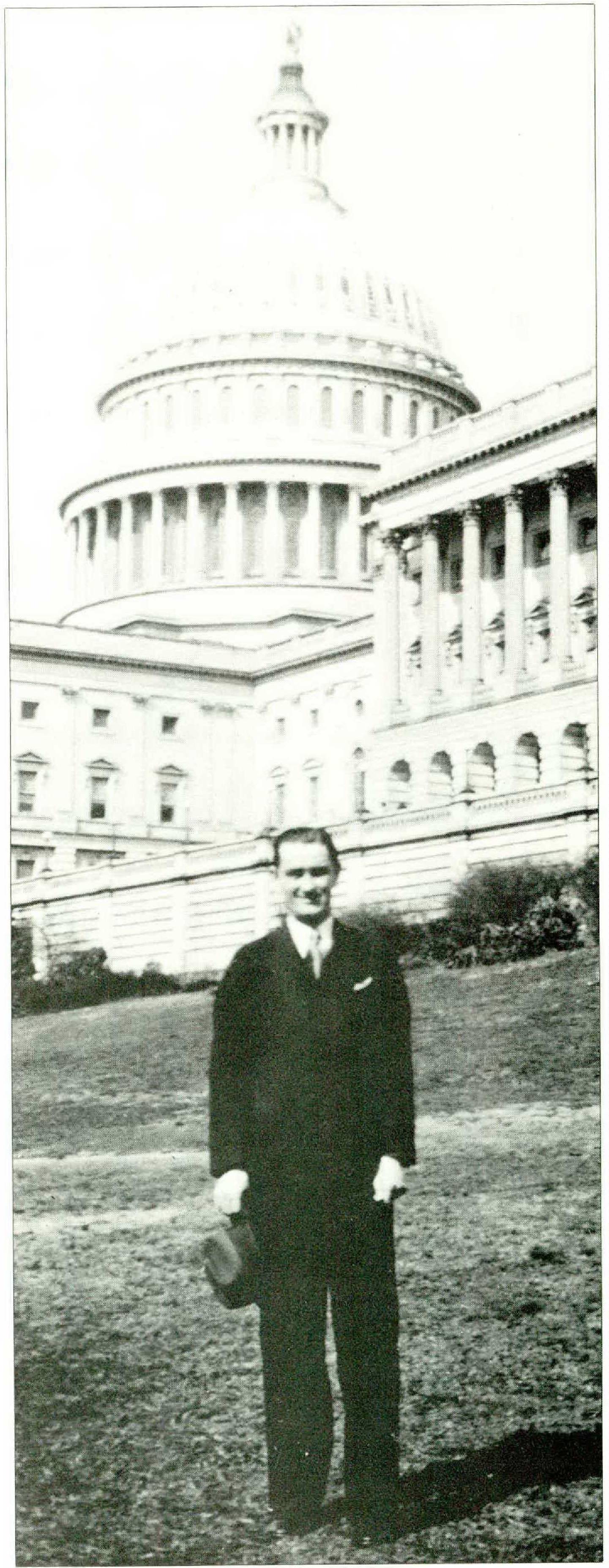
But Texas’s Fourteenth was not a typical district. Included in its half-million residents (twice as many as in the average Texas district) was one of the nation’s largest concentrations of servicemen and veterans, the constituents who made the most demands on a congressman—for San Antonio was the site of Fort Sam Houston, the nation’s largest Army post, and the center of a ring of military aviation fields, including Kelly Field, Brooks Field, and Randolph Field, the “West Point of the Air.” Tens of thousands of men had trained in the city (31,000 at Kelly Field alone during World War I), and enough had made their homes there after their enlistments were up to ensure that the district’s congressional office would have an outsize share of mail about pensions, disability benefits, and the new issue that was agitating ex-servicemen in 1931: prepayment of their bonuses for World War I service. Kleberg’s predecessor had been ill for more than a year, and his office had fallen behind in its work even before his death; when Lyndon Johnson opened the door to Room 258 for the first time, gray bags bulging with months’ accumulation of mail were heaped before him.
And the new congressman’s new secretary didn’t know the district. Its northern end was Johnson’s native Hill Country, but from the southernmost ridge of the familiar hills, the district stretched more than 200 miles farther south, to the great half-moon shoreline of the Gulf of Mexico.
Johnson didn’t know the problems of this district—not of teeming San Antonio, not of gracious Corpus Christi and humming Port Aransas, the district’s two port cities, not of the farmers and ranchers in the little towns he had passed in between. He had never even heard of some of those towns. He didn’t know the problems—and he didn’t know the people. As Johnson opened the mailbags, there spilled out on his desk requests to the congressman for postmasterships and assistant postmasterships and rural-route mail-delivery assignments, for jobs with the federal government in Washington, for appointments to West Point and the Naval Academy, for help in obtaining contracts to supply food or to pave roads at Fort Sam Houston or Kelly Field. The new secretary didn’t know the names signed to the letters or mentioned in them, much less the names’ political significance. There were scores of jobs to be filled; he had no idea who should be getting them.
And he didn’t know Washington.
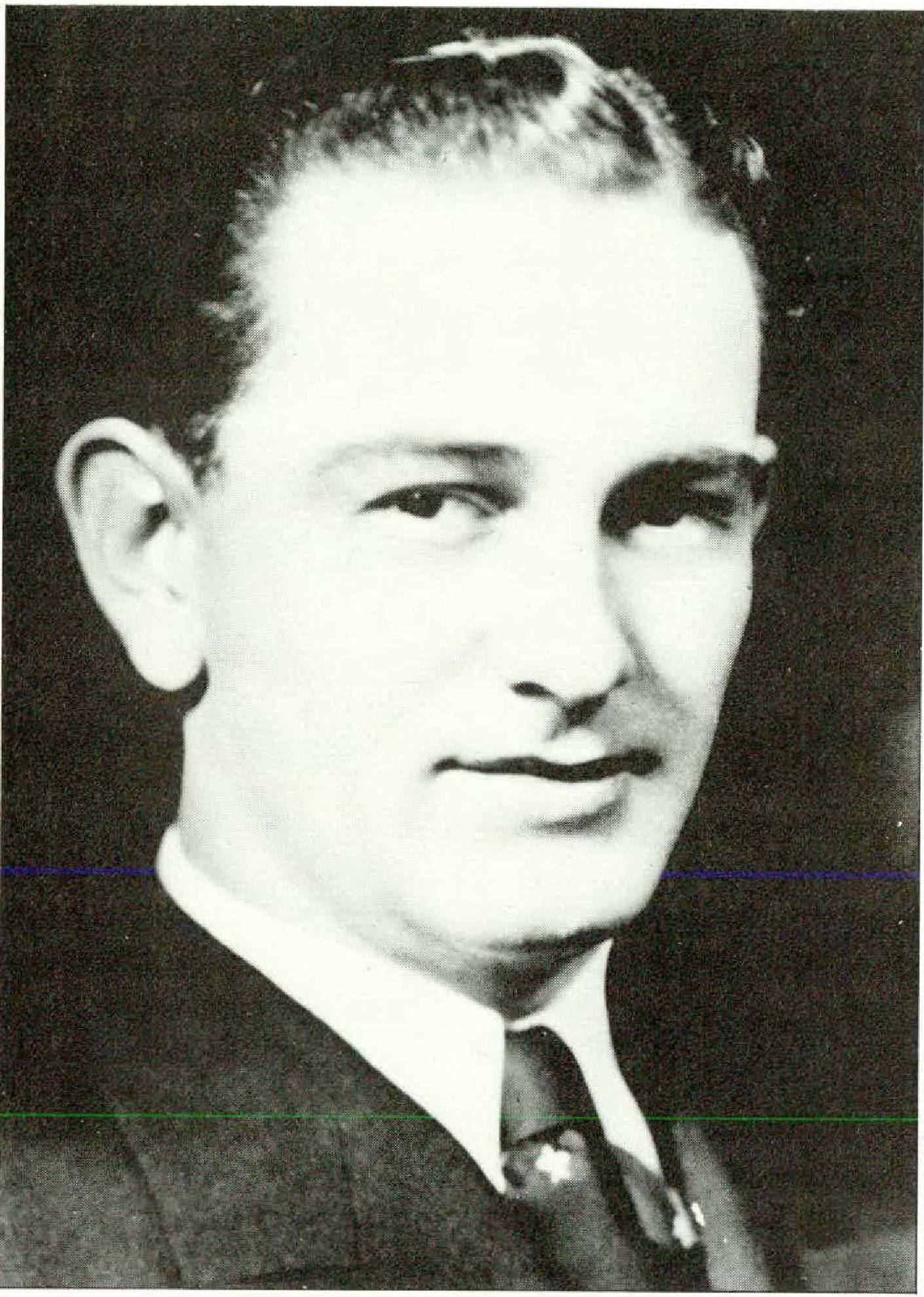
The hundred new congressmen who had come to Washington in December of 1931, had brought with them a hundred new secretaries, but few were less sophisticated than twenty-three-year-old Lyndon Johnson. When Estelle Harbin, a twenty-eight-year-old secretary from Corpus Christi who had been hired to assist Johnson, met him for the first time, in January of 1932, she saw “a tall, real thin boy” with huge ears, an outsize nose, dark eyes, dramatically white skin, and coal-black hair, who couldn’t stop talking about the wonders of train travel; he asked her excitedly, “Have you ever ridden in a Pullman? I never did until I went up with Mr. Kleberg. Have you ever eaten in a dining car? I never did.” When Johnson received his first monthly paycheck, he told Miss Harbin that he wanted to deposit it in a bank but that he didn’t know how to open a bank account; he had never had one. And as for the intricacies of government, “That,” says Miss Harbin, “was a whole new world to us.” The mailbags contained letters from officials of farm cooperatives asking for the congressman’s endorsement of an application for a loan from the Division of Cooperative Marketing of the Bureau of Agricultural Economics, or for assistance from the Department of Agriculture’s Federal Farm Board, and hundreds of letters from veterans asking assistance with a complicated pension or disability problem. There were mailbags full of requests requiring action from some federal agency or department or bureau. Johnson didn’t even know which agency or department or bureau. And when, after a day or two of fruitless telephoning, he decided to go to the Veterans Bureau in person, he found himself standing in front of a building a block square and ten stories high, each floor filled with hundreds of offices.
“We didn’t know which bureau to go to, to ask about something, or to try to get something done,” Estelle Harbin recalls. “We didn’t know you could get books from the Library of Congress—and, my God, we never even thought of asking them for information. My God, we didn’t know anything! The first time we heard that there was a little train that senators could ride [from the Senate Office Building] to the Capitol—well, we just couldn’t believe that! Lyndon didn’t know how to type, and he didn’t know how to dictate a letter—he had never dictated one. We were two ignorant little children.” Kleberg gave them his two complimentary House Gallery tickets to President Hoover’s address to a joint session of Congress, but when they arrived, all the seats had been taken, and they sat, Miss Harbin recalls “on the two top steps,” not saying a word. “Lyndon was there beside me as scared as I was. We sat there like two scared field mice.”
Johnson could not persuade his boss to read the mail, much less to dictate replies. If he asked the congressman to call a government bureau on behalf of a constituent, Kleberg would always agree—but he never seemed to get around to doing it. When he asked Kleberg to call an official so that he, Johnson, would have an easier time dealing with him, that call never seemed to be made either. Johnson realized that he would have to handle the mail himself. And three times each day, another bundle would arrive. Years later, Johnson would recall: “I felt I was going to be buried.”
Johnson was, however, living in the right place to get the information he needed about how to get things done in Washington’s bureaucratic maze.
Once, the Grace Dodge Hotel had been a “ladies’ hotel,” with its name in Old English gilt lettering above its door, the most elegant of the cluster of eight-story red-brick hotels near Union Station, at the foot of Capitol Hill. With the Depression emptying its rooms, however, its management had decided to cater also to young men whose paychecks were small but, coming from the government, regular. The two basement floors were divided into cubicles and rented out—at forty dollars a month for rooms on the “A” floor, which was just one level down from the lobby and had bathrooms that had to be shared only with the tenant of the adjoining room, and thirty dollars for the smaller rooms on the bottom, or “B,” floor, where a single communal bathroom served all rooms and, since this level was partly below ground, the only daylight came from half-windows, high up on the walls, facing on a back alley. Most of the basement tenants were, like Lyndon Johnson (who lived on “B”), young congressional aides whose offices were right up Capitol Hill, and because many of them had several years’ experience, they had expertise in the subject Johnson was interested in: how to get things done in Washington.
Since they couldn’t afford to eat in the Dodge dining room, the young men walked out the hotel’s back door into the alley, and down to the All States Cafeteria, which was decorated with plaques of state seals, on Massachusetts Avenue, for a meal that southern secretaries called the “Fo-bitter,” because it cost fifty cents. A lot of joking and horseplay went on among the young men standing in line for their food, but Johnson didn’t wait in line. After walking over to the cafeteria with the other secretaries, he would, as they entered the cafeteria door, dart ahead, grab a tray, select his food quickly, and then hurry to the large table where they would all be sitting and wolf down his meal. And he wolfed down information just as greedily. One of the older secretaries in the group, Arthur Perry, a Capitol Hill veteran, saw that Johnson rushed through his food because he wanted to be done with it before the others got to the table—so that eating wouldn’t interfere with his conversation. “That left him free to shoot questions at us while we ate,” Perry would recall.
The questions were all on a single theme: how to get things done in Washington, how to get ahead in Washington, how to be somebody in Washington. “He’d say, ‘But how did he do it?’ (Whatever it was.) ‘Did he know somebody? Is he a nice guy? What’s his secret of getting ahead?’ ” The simple answer—the shallow answer— didn’t satisfy him. If one of the other men at the table replied, “I don’t know as he has any special secret . . . Maybe he’s just lucky,” Johnson would say, “I don’t believe in luck. You look into it and you’ll find it’s always a lot more than just luck.”
ONCE JOHNSON KNEW HOW TO DO THINGS IN WASHINGton, he started doing them, with the same frenzied energy he had displayed in Cotulla and Houston — the energy of a man fleeing from something dreadful.
Estelle Harbin, accustomed to the early rising ways of Texas, would arrive at the House Office Building before eight o’clock, saying good morning to the guard at the desk inside the New Jersey Avenue entrance, and then turning down the corridor to her right. The corridor, which was silent, for congressional offices didn’t open until nine, was longer than a football field, so long that the light from the window at its far end reached only a little way toward her, and so high that the lighted globes on its ceiling did little to dispel its dimness; the tall, closed office doors between which she marched, her heels rapping sharply on the marble floor, stood like sentries in the gloom. When she reached the far end, she would turn left into another corridor, unwindowed and even darker—except that, halfway down, from the twelfth door on the right, a single shaft of light would always be falling across it, from the open door of Room 258.
Often, Johnson would be writing when she walked into 258. Because of his difficulty giving dictation, he wrote out the letters he wanted Miss Harbin to type, writing and rewriting them until he was satisfied—and he wanted to finish with that work before eight o’clock, because at eight the dollies carrying the new day’s mail began clattering down those long corridors. “The minute the mail arrived, we would start opening it together, and decide what to do about it,” Miss Harbin says. “Then I’d start the letters he had written out before I got there, and he would get on the phone.”
He knew whom to call now—and he knew how to talk to the people he was calling. “He had charm to burn,” Miss Harbin says. “He would get someone to do something for him, and then he would hang up, and we would laugh about it. Very soon he had a real pipeline to all the bureaus. And he wouldn’t take no—he would pursue these things like it was life and death. And when he got something for somebody—when we could write and tell somebody that they could look forward to getting something—that was a real victory. He’d put down the phone— ‘Stelle! Yay!’ He’d just practically jump up and down.”
Work not only began unusually early in Room 258other secretaries say that no matter how early they arrived, the light in 258 was always on —but ended unusually late, often too late for Miss Harbin to return to her boardinghouse for dinner. Generally, the Kleberg office staff would dine at Childs’ Cafeteria. “Lyndon knew the price of every dish in that restaurant,” she says, “and a lot of times, we had to put our money on the table and count it to see what we could afford to order. We’d do this in the office [before leaving]. He’d say, ‘This is Wednesday, and on Wednesday they have’ so-and-so.”
Soon an unusually heavy stream of letters “telling somebody that they could look forward to getting something” was pouring out of Room 258. But repetition did not dull the thrill Johnson received from each “victory.” And it didn’t dull the edge of his effort. When spring came, Miss Harbin would sometimes persuade him to take a brief stroll on the Capitol grounds. But although the stroll might begin at a relaxed pace, inevitably, Miss Harbin recalls, she would have to start trotting—because her companion would walk faster and faster. “He was so tall and he took such long steps, and I couldn’t keep up with him. I would say something, and he’d slow down, but soon he’d be going faster again. I’d skip to keep up with him, and then I’d have to run.” And when they turned back to the office, he would begin striding faster and faster, “and then he would take my hand, and we’d run, literally run, across the Capitol grounds. He just couldn’t wait to get back to that office.”
If he no longer had time to eat dinner with the Dodge boys, he was still a participant in their late-evening bull sessions—but the tone of his participation had changed with striking rapidity. Coming in late from work, he would walk into a discussion in one of the crowded little basement cubicles and begin at once to dominate it. He didn’t want to talk about anything but politics, and steered every conversation onto that subject. And while he had been asking questions at the Dodge only a week or two before, now he wasn’t asking anymore, he was telling-talking with the attitude of someone who knew all the answers. “We used to have discussions,” one of the participants says. “Now we were having lectures—lectures by Lyndon.”
His demeanor had changed elsewhere, too. In January, he and Estelle Harbin had sat on the steps of the Gallery of the House of Representatives like “two scared field mice” during President Hoover’s address to Congress. In February, the President addressed Congress again. Several congressional secretaries who were sitting in the Gallery remember Johnson coming in late and pushing aggressively to get to an empty seat. Reaching it, he began introducing himself to everyone around him, in a very loud voice. One secretary, who was sitting in a front row of the Gallery, remembers the people around him hunching down a little in embarrassment and says that he had done so too—when he felt a tap on his shoulder and, turning, found the tall young man who was making the fuss leaning down toward him, and stretching out his arm for a handshake. “Lyndon Johnson from Johnson City, Texas!” the young man said loudly. “Dick Kleberg’s secretary.”
In the halls of the House Office Building, when he wasn’t working the telephone in 258, Johnson could be seen roaming around with the air of a successful politician. A secretary to a Pennsylvania congressman says, “I remember him bounding in the door every day with a big smile, and saying, ‘Hi! How’s everyone from Pennsylvania today?’ He just radiated self-confidence.”
He acted like a successful politician in other ways, too. Despite the thinness of his suits, his first paycheck went not for warm clothing but for a formal portrait—and a hundred prints—by Washington’s most expensive photographer. Inscribing and autographing the pictures, he mailed them back to Texas, as if he were a congressman responding to constituents’ requests for an autographed picture. Recalling this mailing, one secretary says, “What I remember about Lyndon Johnson was his fantastic assurance in everything he did.”
CONFIDENCE? ASSURANCE? THE PHOTOGRAPHS weren’t the only communications that Lyndon Johnson sent to Texas. No sooner had he arrived in Washington than he began writing to Gene Latimer and Luther (“L. E.”) Jones, who, as sixteen-year-olds, had been his debaters at Sam Houston High, and to other young men who had been his students there. These letters were not the conventional letters from a teacher to former students. Though he wrote them late at night, after a grinding day in Kleberg’s office, they were not brief notes but detailed descriptions of his life in Washington that often ran four handwritten pages. And in them he didn’t merely ask his former pupils to stay in touch; he pleaded with them to stay in touch. The happygo-lucky Latimer was not a faithful correspondent; Jones was, but on one occasion he didn’t reply promptly. “Dear L. E.,” said the next letter from Washington, “have you forgotten me?” And when Jones wrote back, Johnson replied: “Thanks for your letter ... I had almost begun to think you had quit me too. Haven’t been able to get a line out of Gene et al for weeks. . . . It’s now after 12 and I’ve just finished work. Must drop Gene a note also. Love and for goodness sakes write me a long letter now.” Johnson’s letters reveal not only a penchant for secrecy rather surprising in personal notes (atop one, entirely innocuous, he wrote, “Burn this—others probably won’t understand the personal references”) but also concern about how his letters were being received (“Hope you haven’t been bored with this long letter”) and an urgent need to be reassured that these two teenagers to whom he had once been close still wanted to be close to him. Pouring out affection, he asked—over and over, in every letter, in fact, that survives—that the affection be reciprocated. In a letter written on a Sunday night (“Haven’t been out of the office all day. Didn’t get up until late this morning so I was forced to rush to work and have been at it until only a few minutes ago. I never get time to do anything but try to push the mail out”), he told Jones, “You are a real boy. I love you and Gene as if you were my own. I know you are going places and I’m going to help you get there.” The letter ends: “Thanks for your . . . letter. I’m waiting for another long letter.”
He needed other letters more than he needed Jones’s. Johnson was very close to his mother, Estelle Harbin says; if a few days went by without the mailbags containing a letter in Rebekah Johnson’s carefully rounded script, Johnson would get “quiet and homesick.”
Sometimes he would get quiet even when the letters from Johnson City were regular, Miss Harbin says. As he had previously done with several other women somewhat older than he, he made a confidante of her, and she had the same picture of him that they did—a different picture from that seen by the young men in the Dodge or on Capitol Hill. “Now, Lyndon had a side to him,” she says. “He could get very low. When he got real quiet, it was bad.” Sometimes, in a phrase that echoes the words of the older women he had known in San Marcos and Cotulla, Estelle Harbin says—although she will not say precisely what she means—“it was very bad.” She felt she understood why he ran —not only physically but “in his mind, too”: “He had a burning ambition to be somebody. He didn’t know what he wanted to be, but he wanted to be somebody.” He ran, she says, because “he couldn’t stand not being somebody—just could not stand it. So he was trying to meet everyone, to learn everything—he was trying to gobble up all Washington in a month.” Dining with him at night, she sometimes felt that even after the long day’s work, “he was still running in his head.” Walking toward her bus in the dark, watching him physically running, gawky and awkward, down Capitol Hill toward the Dodge, she would hope that he would relax when he got there. But often, when she walked the next morning through the only open door in the House Office Building and his pale face turned to her, he would say something that told her he had been running all night, too. When he got quiet, she says, it was because he was doubting himself, because he was afraid he would never get to be somebody. Because she felt she understood him, “sometimes,” Estelle Harbin says, “I felt very sorry for him.”
But if Estelle Harbin saw doubt and fear, no one else did; they saw self-confidence and assurance —“fantastic assurance.” He didn’t want anyone else to see.
And no one else saw.
HE RAN HARDER, IN JUNE OF 1932, ESTELLE HARBIN left Washington and Johnson had the opportunity to hire a new assistant—two, in fact, since among the pieces of information he had acquired at the Dodge was the fact that a $130-a-month patronage job as mailman in the House Post Office traditionally “belonged” to the Fourteenth District. And he had his new assistants already picked out. He brought Gene Latimer and L. E. Jones to Washington.
Latimer, a little Irish boy with a “wonderful smile”— “the best-natured little guy you ever saw,” says one of the Dodge residents—came for love. His fiancée and her family had moved to Washington, and Latimer was anxious to be near her. He also wanted to earn enough money to get married. The only job he had been able to find in Depression-wracked Houston had been as a delivery boy. Johnson told him a job was waiting for him in Washington. “L. E.” came for ambition. The son of an impoverished druggist, he had spent his childhood in a Houston slum, from which he was desperate to escape; he had worked his way through two years at Rice University but was afraid he would have trouble getting a job when he graduated. Johnson, who had promised to help him “go places,” said the place to start was a government job in Washington.
He got them cheap. So that he could keep for himself the balance remaining for 1932 in the district’s $5,000 annual “clerk-hire” allowance, Johnson had arranged for Latimer (who arrived several months before Jones) to be given the $130-a-month mailman job, which put him on the payroll of the House Post Office instead of the district. Since that, job was not yet open, he had arranged for Congressman Kleberg to pay Latimer out of his own pocket: twenty-five dollars a month. He would not need much money, Johnson assured him; he could share Johnson’s room at the Dodge and therefore have a place to sleep for only fifteen dollars a month, leaving ten dollars to spend as he pleased.
After a month, Latimer told Johnson that he simply could not live on ten dollars. Johnson arranged to have Kleberg pay him fifty-seven dollars. For several months, that was Latimer’s total salary. When he finally began receiving his $130, Latimer found it to be a low wage even in Depression Washington, too low to enable him to save much money. It was, however, a higher wage than Jones received. Johnson had persuaded Kleberg to increase his share of the $5,000 allowance for 1933 to the maximum allowed by law: $3,900. Jones’s annual salary was therefore the remaining $1,100, or $91.66 per month.
And Johnson got a lot for his money. He asked the House postmaster to assign Latimer to the earliest shift, which began at 5 A.M. and ended at noon. Johnson allowed Latimer to take a half-hour for lunch. At 12:30 sharp each day, he said, Latimer was to be in-Room 258, ready for work.
This work might be over at eight or nine o’clock in the evening, Latimer says, “but often I would stay until 11:30 or midnight.” During much of this time, Johnson would be out of the office, cultivating bureaucrats or other congressional secretaries. Latimer would be alone in 258, an eighteen-year-old boy working eighteen-hour days. Soon Johnson found a way to get even more work out of him. “My job in the post office was sorting the mail, pitching it into different bins, and we made two or three deliveries [each day]. He urged me to pitch the mail faster, and I got so I did it faster than any other clerk, and then between deliveries I might have ninety minutes free at a time. And I’d run over to the office [Kleberg’s office], and do ninety minutes of typing.”
By the time Jones arrived in Washington—a third bed was moved into the little room at the Dodge—Kleberg had been given a two-room suite, Office 1322, in the new House Office Building (now known as the Longworth Building), which had just been opened alongside the old one. A routine was soon established for the staff of that office. It began before five, when Johnson shook Latimer awake and started him on his way up Capitol Hill. Not long thereafter, he would awaken Jones. Pulling on their clothes—Johnson had taught Jones his trick of taking off his necktie still knotted so he wouldn’t have to waste time tying it in the morning—Johnson and Jones would hurry out of the Dodge and up Capitol Hill in the dark, past the shadowy mass of the Capitol and into the Longworth Building. Having raced through his mail-sorting and delivering, Latimer would arrive about the same time; at Johnson’s request, he had been assigned to a route that included 1322, so he brought the mail himself.
Ripping open the mail sacks, Johnson would begin sorting through the mail—“reading it so fast that you couldn’t believe he was reading it, but he was,” Latimer says. At first, Johnson dictated replies to every letter, but he discovered that his former debater had a gift of Irish blarney with not only the spoken but the written word. Johnson wanted to flatter “important people” with whom he was corresponding, Latimer says, “to butter them up,” and “he liked to have the butter laid on thick. It was almost impossible to put too much on. If he wanted to tell someone he liked him, he didn’t want to say, ‘I like you.’ He wanted to say, ‘You’re the greatest guy in the world.’ ” Johnson, riffling through the mail as rapidly as if he were dealing a deck of cards, would hand many letters to Latimer with only the briefest of instructions— “Say yes.” “Say no.” “Tell him we’re looking into it.” “Butter him up.” Latimer would expand those instructions exactly as Johnson wished; Johnson had, in fact, discovered a genius in a minor art form: the letter to constituents. When the last letter had been dealt, Latimer sat down at his desk, in front of a heavy Underwood typewriter, and began typing. To dictate replies to letters on which more detailed instructions were needed, Johnson would lead Jones, carrying a stenographer’s pad, into the adjoining room, so that, as Latimer explains, “his dictating wouldn’t distract me, because my typewriter was supposed never to stop.”
When the dictating was finished, and Jones had sat down at his Underwood, Johnson would “mark up” district newspapers—the big San Antonio and Corpus Christi dailies and the scores of small-town weeklies— putting check marks next to the articles (a wedding, a birth, the opening of a new business, a local Kiwanis Club election) that merited a letter of congratulations. “Some of those papers would just be filled with check marks,” Latimer says. Before most congressional offices opened and began sorting mail, Kleberg’s staff had finished sorting it and was well into answering it.
By this time, government agencies were open. Johnson would get on the phone to them, while the two typewriters clattered away. Since that typing was “supposed never to stop,” no coffee was allowed in Kleberg’s office, because Johnson felt making it and drinking it would distract Latimer and Jones from their work. Less ominous distractions also were frowned on. “If he caught you reading a letter from your mother, or heading for the bathroom, he’d say, ‘Son, can’t you please try a little harder to learn to do that on your own time?’ ” If Jones asked if he could go out to buy cigarettes, Johnson would say, “What am I paying you for? Buying cigarettes? Buy them on your own time.” “Our job was to keep those typewriters humming,” Latimer says. “He would come down the hall —I could hear his heels clicking—and if he didn’t hear both those typewriters going ninety miles per hour, he wanted to know what the hell was going on.” The natural competitiveness of young men was used as a spur. “He had a way of getting us to work even faster,” Latimer recalls. “He’d say, ‘Gene, it seems L. E.’s a little faster than you today.’ And I’d work faster. ‘L. E., he’s catching up with you.’ And pretty soon, we’d both be pounding for hours without stopping, just as fast as we could.”
The Depression was swelling the mail now, as more constituents asked for jobs and new government programs, and as veterans appealed more urgently for bonus prepayment. With only one or two staffers in each congressional office, many offices answered more and more of the mail with mimeographed form replies or with pro forma promises, or simply didn’t reply at all —and still fell further and further behind. Kleberg’s office didn’t use mimeographed replies and didn’t make pro forma promises and answered every letter that could possibly be answered. For Lyndon Johnson, the mail possessed almost a mystique. At that time, government programs touched the lives of few constituents, so the mail—the only means through which a congressman could keep friends and make new ones, by performing services for them, by responding to their suggestions, by asking them for advice, and the only means, in a district 2,000 miles from Washington, by which a congressman could keep in touch with his district—was a key to a congressman’s power. Johnson could hardly have avoided hearing, over and over, about one former congressman or another who had “lost touch with his district”—and who was a congressman no longer. But although other congressional staffers heard the same stories, they didn’t answer every letter. For Johnson, the mystique of the mail went beyond the political. So anxious was he to succeed, to flee from what was behind him, to be somebody, that he had done every job, in the words of an associate, “as if his life depended on it.” Believing that “if you did just absolutely everything you could do, you would succeed,” as another associate put it, he had tried to perform every task, even minor ones that no one else bothered with, perfectly. For such a man, congressional mail, which consisted so largely of minor details, was a natural métier. Doing everything one could do with the mail meant answering every letter, and that was what he insisted his office must do. Moreover, for a man who was so insecure that the women who knew him best say, every one, “I felt sorry for him,” a man who at first felt he was going to be “buried” by the mail, there was only one way to keep from being buried— only one way to keep the mail from piling up. He adopted that course. Not only must every letter be answered, he told Latimer and Jones, it must be answered the very day it arrived. “The only excuse that was accepted for not answering the same day was that you had lost a file, and, boy, there had better not be too many of those: not being able to find a file—that was some sin!” Latimer says. “And if your reply said, ‘We have asked the Veterans Administration to look into this,’ you really had to ask— that same day. So that the next day you could write another letter about it.” The early-morning mail delivery was only the first of three—and then, as the Depression deepened, four, and then five—made during the day, and still the bundles of each delivery grew heavier. After typing his way for hours through a pile of letters, Jones or Latimer would finally be almost to the bottom—and then Johnson would smack down on his desk another pile, “a pile that,” Jones says, “might be a foot high.” And before he would be allowed to leave the office that night, the pile would have to be gone.
After the typing came the retyping. No letter was going out of the office unless it was perfect, Johnson said, and to ensure perfection he read every one. “And if he didn’t like a letter,” Latimer says, “he would just make huge, angry slash marks across it.” No explanation would be vouchsafed. “You had to figure out what was wrong,” Latimer says. “He wouldn’t tell you.” A single error in spelling or punctuation and the letter was slashed. “He had no compunction at all about making you write them over,” Jones says. “You handed him fifty, sixty letters . . . and he might mark out every one of them.”
Finishing at 11:30 or midnight, Latimer and Jones would return to their room to fall exhausted into their beds, to grab a few hours’ sleep—for no matter how late they had worked the night before, they would be dragged from those beds at five o’clock the next morning. Recently completed on the long slope between the Dodge and the crown of Capitol Hill was an elaborate fountain, with streams of water jetting from the mouths of dolphins and cascading down terraces whose lips were crested like waves. This fountain was illuminated by colored lights. The lights were turned off in the daylight. They were on only between sunset and sunrise. “I almost never saw that fountain without the lights on,” Latimer says. Returning from his work in the dark, he went back to his work while it was still dark.
THE WILLINGNESS OF THE TWO TEENAGERS TO ADHERE to so brutal a routine—a seven-day routine, for Kleberg’s office did not close on weekends—was based in part on admiration for their boss. Listening to him “work the departments” over the telephone, they heard him tailoring his approach to the person he was talking to, bullying one bureaucrat with a threat of bringing down Congressman Kleberg’s displeasure on his head (or, with increasing frequency, masquerading as the congressman himself), pleading with another, and obtaining results that they felt other secretaries could never have achieved. Listening, for example, to Johnson talking to the Veterans Administration about a veteran’s request that a disability be considered “connected” to his war service, which would make the veteran eligible for a pension, Latimer and Jones would be awed by his glibness. “He could sit there and talk like a great lawyer or doctor,” Jones says. And they were amazed by his persistence. If a veteran’s request was denied by the VA, Johnson would pursue it by telephone and in person, and if it was still denied, would, without the veteran’s asking, arrange for a formal hearing before the Board of Veterans Appeals, at which Johnson would be present. And if the hearing seemed to be going against his constituent, Johnson would not remain a silent observer. When Johnson took a personal hand at a Veterans Board hearing, he displayed his obsession with secrecy, asking that the stenographer be instructed not to take down his remarks, but he also displayed considerable persuasiveness. Reading the typed minutes of the hearing later, Latimer would invariably see the same sentence: Mr. Johnson spoke off the record. “I’d say to myself, ‘Here it comes!’ And sure enough, when they went back on the record again, the attitude would have changed. It was almost unheard of to get someone ‘service-connected’ after it had been denied, but the Chief did it. Many times.”
The two teenagers’ willingness to work so hard was based in part on their boss’s ability to inspire enthusiasm. To Johnson, Jones says, “every problem had a solution. . . . He was completely confident, always optimistic. ... And this was contagious. It would absolutely grab ahold of you.” Casework was, moreover, not only a crusade but a crusade complete with triumphs, in which the whole office shared. Johnson reacted to word of success as he had when Estelle Harbin had been present. “He would get ecstatic,” Jones says. “I mean we had won a real victory.”
They were also willing to work long hours because they were not working alone. If they awoke at five, it was because their boss was awake at five, and if they trudged up Capitol Hill before daylight, their boss trudged beside them. The days they spent chained to typewriters he spent chained to the telephone—bullying and begging on behalf of their constituents. And often, after they had returned to their little room, and were falling asleep, they would hear their boss still tossing restlessly on his narrow bed. “He worked harder than anyone,” Latimer says. “His head was still going around when the rest of us had knocked off.”
Other factors, however, were also involved. Sometimes, Latimer rebelled. Rebellion was generally related to his fiancée. Johnson had brought him to Washington ostensibly so that he could be near her. But the work schedule that Johnson had set up for him left little time for romance. He was allowed time off from the office to see her on Sundays after 3 P.M.—and only on Sundays after 3 P.M.
The response to rebellion might be a sneer: a sneer with a particularly telling point. Once, Latimer requested an evening off, and was viciously tongue-lashed by Johnson for his temerity. “I couldn’t stand it, and I packed the wicker suitcase I had come up with, and said I was leaving.” Towering over the little Irish boy, Johnson said, sneering, “How are you going to get back?” When Latimer, sobbing, said, as he recalls it, that he would rather hitchhike all the way to Texas than remain, Johnson said, “What are you going to do when you get there? How are you going to get a job? If you leave, how are you ever going to marry Marjorie?” The suitcase was unpacked, and Latimer remained.
But rebellion was rare. To the great reader of men, Gene Latimer was an easy text. Rebellion could be anticipated, and headed off. “He wouldn’t really have a talk with you for months,” Latimer says. “And then he would hug you, and he might spend an hour talking about your problems. He didn’t do it very often, so you might think he was getting a hell of a lot for not very much, but if he did it very often, it wouldn’t mean very much, you know.” The way Johnson did it, it meant so much that the hug and the talk generally ended even the hint of revolt.
He could deflect any of Latimer’s desires. Latimer was always broke during his years in Kleberg’s office, as might be expected on so low a salary. He was always falling behind in his bills for clothing and dry cleaning, and he relates with gratitude how Johnson consolidated his bills, and then collected his salary and paid the bills out of it, putting Latimer on a $10-a-week allowance. But he also relates how once, “when the pain had been severe for some time,” he summoned the courage to ask about the possibility of a small increase in salary. “He listened with sympathetic concern, commented at some length on the shortage of money and jobs all over the country at the time, and especially in our own office, then told me he had been thinking for some time on how to reward the excellent work I had been doing. He had finally decided that I merited having my name put on the office stationery as ‘assistant secretary.’ As he described the prestige and glory of such an arrangement, I could see the printing stand out six inches.” Latimer accepted the title instead of a raise.
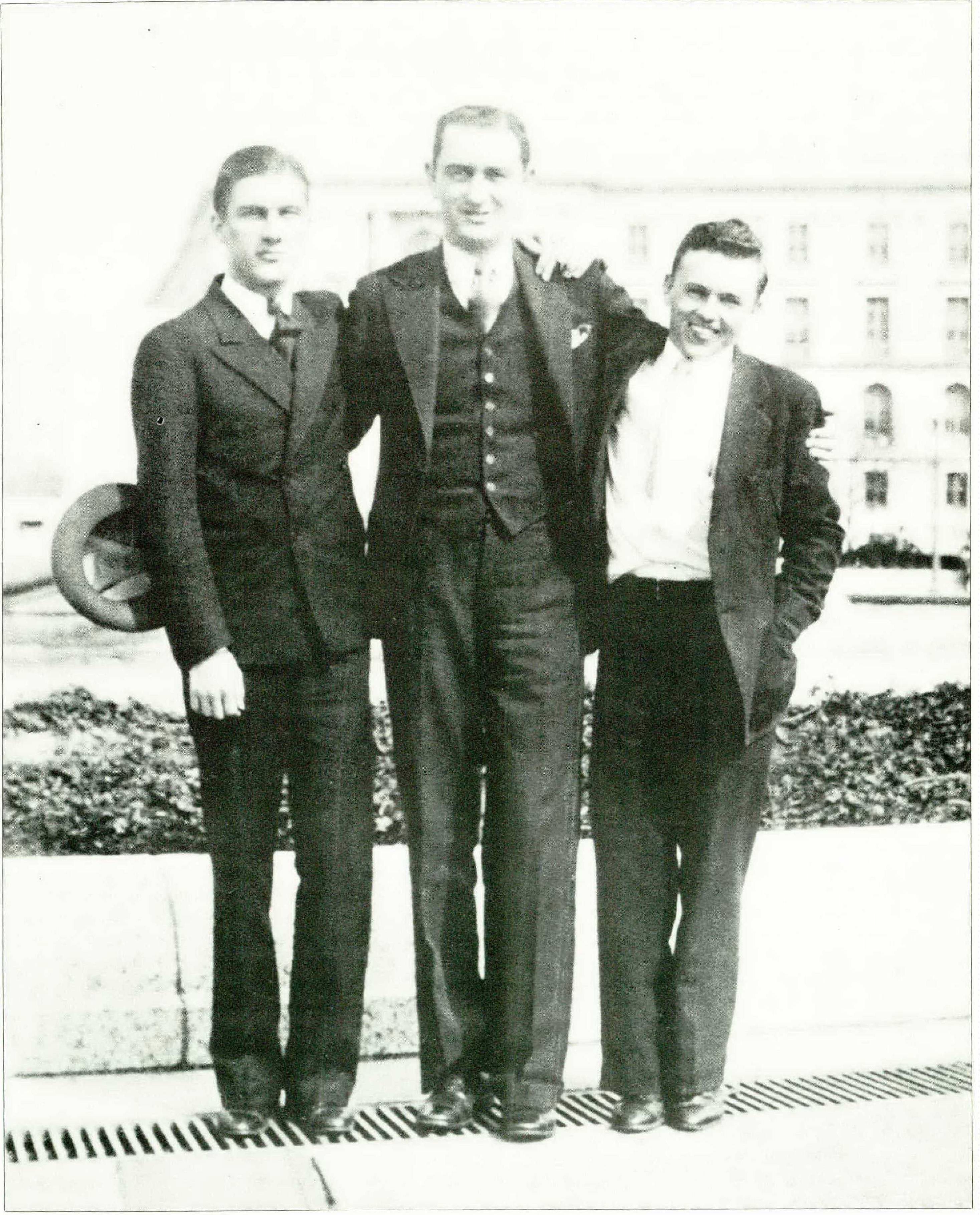
In general, Latimer accepted whatever Johnson gave him. Ask Latimer why he was willing to work so hard, and he replies first, “I guess I didn’t know there was any other way to do it. He was the only guy I had worked for. And he keeps the pressure on you all the time. . .” But Latimer himself knows that this is only part of the explanation, and he soon goes on; for Gene Latimer, sixtyseven years old at the time he spoke, sitting alone in a little apartment in a Texas town—a tiny Irish elf with sad eyes that always seem brimming, and that often spill over with tears as he describes his life as an employee of Lyndon Johnson, so that he periodically excuses himself and goes to wash them off his face—understands, even if he was unable to alter, the subservient nature of his relationship to Johnson: to listen to him talk is to hear a man who is fully aware that during his sixteenth year, he surrendered, for life, his own personality to a stronger personality. To listen to him talk is to hear a man who is fully aware that he has been used as a tool. “He never talked to me too much, because with someone like me, all he wanted was to keep me busy,” Latimer says. “When he saw me: ‘Where’s your [stenographer’s] book? I want you to take this down.’ When he saw me, he just wanted to know what orders he could give me.” But the awareness is accompanied by acceptance, not resentment. Johnson called him “Son”; he called Johnson “Chief.” Asked if he ever called Johnson by his first name, he replies, shocked, “I would never have dreamed of calling him by his first name. He was The Chief!” Johnson had found a man who liked taking orders as much as he liked giving them. Gene Latimer talks of Lyndon Johnson with idolatry. “I don’t think he’s ever been scared in his life.” And he talks of him with fear. “He can be mean. He can make people cry. He can make you feel so bad that you could go out and shoot yourself.” And he talks of him with a feeling deeper than idolatry or fear. “I had such tremendous respect for the man,” he says. “I don’t know any other man I had such respect for. And, hell, you just had faith—hell, he could talk you into anything and make you feel it was right, and absolutely necessary and proper. He can make you cry, he can make you laugh—he can do anything. And if you like him, then he puts things on such a personal basis, you know. You felt like ‘I belong to him, and he belongs to me.’ Whatever you do, you do it for him.”
He did a lot for him. Gene Latimer worked for Lyndon Johnson for the next thirty-five years, as (in the words of another Johnson staffer) “his slave—his totally willing slave.” This term of service was not, however, continuous. In 1939 began the first in a series of nervous breakdowns; Latimer spent a substantial portion of his life recuperating from them, and from recurrent, severe, bouts of alcoholism. He understood their cause. “The work broke me,” he says. But as soon as he recuperated, he always returned to the same work. Because the work was for Lyndon Johnson.
FOR ALMOST A YEAR AND A HALF AFTER HE WENT TO work for Richard Kleberg, veterans were, in general, the only constituents for whom Johnson could win victories. The mail sacks might be bulging with pleas for help from the farmers of the Fourteenth District, but he had no help to give. On March 4,1933, however, Franklin D. Roosevelt was inaugurated, and on May 12, he signed into law his Agricultural Adjustment Act and Emergency Farm Mortgage Act. And on May 13, when Johnson opened those letters asking for help, there was help available for him to give.
All the organizational problems that might be anticipated in a gigantic administrative machine created in such haste were present in the Agriculture Department’s huge South Building, where clerks were struggling to reduce a nation’s agriculture to millions of punched cards running over and over through automatic tabulating machines, each card representing a farmer, his farm, and his complex crop-reduction agreements with the government. Not even in existence in April, by the end of May the AAA had 5,000 employees; the seven-story South Building, as big as three city blocks, was a sea of desks, its miles of corridors crowded with delegations of cotton growers, wheat growers, and dairymen, with packers and processors and farm leaders, in a monstrous bureaucratic maze.
Assistance from his congressman would have been helpful to Johnson in finding his way through this maze, but in the spring Dick Kleberg spent his time at Burning Tree. (“Mr. Dick” was not disposed to cooperate with the AAA, anyway. He would, in fact, have voted against the AAA, which he called “socialistic” and “radical,” even after Johnson told him that mail from his district was running thirty to one in favor of the measure, had not Johnson, and the pragmatic Roy Miller, assured him his vote didn’t matter because the bill was going to pass by an overwhelming margin.)
So Johnson found his own way. Telephoning an AAA bureaucrat, he would introduce himself as “Congressman Kleberg, from the Agriculture Committee,” and ask the bureaucrat to give all assistance possible to his secretary, Lyndon Johnson. Not long thereafter, Johnson would show up at the bureaucrat’s office.
Other secretaries similarly used their congressman’s name on the telephone to gain entrée, although not as brazenly (or as frequently—it was almost matter-ofcourse for Johnson to introduce himself as Congressman Kleberg now). But what he did with that entrée was not at all usual. “He was smiling and deferential,”says one man who saw Johnson in action, “but, hell, lots of people can be smiling and deferential. He had something else. No matter what a guy thought, Lyndon would agree with him—would be there ahead of him, in fact. He could follow a guy’s mind around and figure out where it was going and beat it there.” And he touched every base; leaving a bureaucrat’s office, he smiled and chatted with the assistants and the secretaries, until soon he had entire bureaus, top to bottom, willing to help him.
He was pushing farmers as well as bureaucrats. Confused by the complexity of the new programs and distrustful of government promises that they would actually receive money for plowing up crops, farmers all across America were hesitating to sign AAA applications and plow-up contracts. Many of the Agricultural Extension Service’s county agents, whom the AAA had been counting on to educate farmers about the new programs, didn’t understand the programs, and others, Republicanappointed, long in their jobs, and deeply conservative, were unwilling to cooperate with “socialism.” Johnson educated his district himself; hour after hour he sat in Room 1322 telephoning his county agents; when he heard about an influential farmer who was balking, he telephoned the farmer. The nationwide progress of the cotton sign-up program was so slow in 1933, despite two appeals by President Roosevelt for cooperation, that on July 11 Secretary of Agriculture Henry Wallace was forced to announce that the program would be canceled if the sign-up rate did not double. At the time Wallace made that announcement, the sign-ups from the Fourteenth Congressional District of Texas had already far exceeded the district’s quota. Applications and plow-up contracts from other districts became stalled or lost in the South Building, because, as a result of the bureaucratic reshuffling and power struggles that never seemed to stop, the bureau to which they were addressed no longer handled them, and no one seemed to know who did. Johnson knew—and he saw to it that applications from his district were sent to the right office. After they arrived, he would show up at that office, and get them moved to the top of the huge piles awaiting action. With approval from a dozen different bureaus required for each contract, contracts from other districts might be stalled for months. Johnson would show up at each bureau —and contracts from the Fourteenth District were approved and back in the mail within days. In a White House ceremony on July 28,1933, President Roosevelt presented the first AAA check for plowed-up cotton. Its recipient was William E. Morris—a farmer from Texas’s Fourteenth Congressional District.
THE COTTON PLOW-UP PAYMENTS ENABLED South Texas farmers to make their monthly mortgage payments, but were insufficient to enable them to pay their arrears. The machinery established by Roosevelt for assistance with these arrears—the mortgage-refinancing Federal Land Bank—was not yet in gear. Not only was refinancing more complicated than plowing up crops; refinancing required appraisals of each individual farm, and during the first three weeks of September alone, 2,631 desperate Texas farmers applied for refinancing to the Federal Land Bank in Houston — whose appraisal staff consisted of nine men. Before the machinery could get in gear, a lot of farms would be lost. Mortgage companies, already overstocked with farms they could not sell, did not want more farms if they could instead get the money they were owed on them, but by fall, they had decided they could wait for it no longer. In October of 1933, sheriffs began tacking up foreclosure notices on sixty-seven farms in the Fourteenth District, farms for which the Roosevelt rescue operation was going to come too late.
With Congress in recess, the district’s congressman was home, in Corpus Christi. The farmers appealed to him for help, asking for a meeting. The congressman was not disposed to grant them one, seeing no way in which he could help them, but his secretary said the meeting should be held. He had thought of a plan.
Only the furnishing of new collateral would persuade the mortgage companies to wait for their money. The farmers felt they didn’t have any collateral, and in the traditional sense they didn’t: their savings, even the butter-and-egg money, were long gone; not only every acre of land but every piece of machinery was already mortgaged. But Lyndon Johnson had thought of new collateral: crops that hadn’t been planted yet. The farmers, he felt, should each agree to give their mortgagor a landlord’s share—a third —of the 1934 crop, in exchange for a year’s extension on the mortgage. The mortgage companies might not normally agree to this, but Johnson felt they would if they could be given assurances that the extension would enable them to get their money—not only current interest payments but the arrears. And Johnson had conceived an innovation that would give farmers enough money to pay their arrears. The richness of the black loam of the Gulf Coast, which produced more cotton per acre than any other section of the United States, had made its farmers prosperous in good times. Johnson wanted to use the richness of the soil to help them in bad times as well. He wanted the Federal Land Bank to agree to take soil productivity into account in deciding how much to lend on a farm. Such an innovation would mean considerably more money for each farmer than the Federal Land Bank had previously been willing to lend, enough to pay the mortgage arrears. The mortgage companies would also, he knew, want assurances that they would get their money on time—within the year’s extension. At the slow pace at which the Federal Land Bank had been moving, no one could be assured of that. So he wanted the pace accelerated. He wanted the Land Bank to promise the mortgage companies that it would give priority to loan applications from the Fourteenth District. He needed, in other words, commitments both for a new policy and for speed in implementing it.
He got them. To obtain the commitments, two requirements had to be met. A Federal Land Bank official had to be persuaded to come to Corpus Christi and meet personally with the farmers; Johnson was sure that a faceto-face meeting with these desperate men could not help but win the official’s sympathy. And the official had to be high enough in rank to give commitments on the Land Bank’s behalf, so that the sympathy would be translated into the immediate action needed. In dealing with the Federal Land Bank, he had a weapon available. The deputy governor of the bank’s parent body, the Farm Credit Administration, was W. I. Myers, an old friend of Dick Kleberg’s. Tracking down Myers in Dallas, he put Kleberg on the phone with him, and the old friend agreed to make the 400-mile trip to Corpus Christi himself for the meeting, and to bring with him the president of the Federal Land Bank’s Houston office, A. C. Williams. Then Johnson began telephoning; all day, he telephoned bankers and mortgage-company representatives; at night, when they were in from the fields, he telephoned farmers.
And on the evening of October 25, sixty-seven farmers—sixty-seven men who had given their lives to their land, and then had received notices saying that the land would be taken away from them—trooped onto the broad, shady porch of Dick Kleberg’s enormous home overlooking the Gulf in Corpus Christi to meet there with the men who had sent the notices and with the two men who could provide the money to save their land.
Kleberg’s secretary explained his proposal, and everyone accepted it: the farmers agreed to write letters to the mortgage companies promising them a third of their crop; the government promised to speed, and to liberalize, mortgage refinancing; and the mortgage-holders agreed to accept the letters and the promises, and to take down the foreclosure notices. Myers went off to the King Ranch for a few days of hunting—after first, at Johnson’s discreet urging, telephoning the head of the Land Bank appraisal division in Houston. Within a week, all sixty-seven farms had been refinanced; by the end of the year, Federal Land Bank mortgages, stretching out amortization payments from five years to fifteen, and reducing interest payments from 8 percent to 4, had been given to every endangered farm in South Texas.
Whatever the New Deal program, Johnson reaped for his district every dollar it could provide. He urged district farmers to repay their 1933 crop-reduction loans as quickly as possible, so that they could get new loans—so that, as a press release from Congressman Kleberg’s office put it, “the record for this section would remain on the favorable basis established and so that this section would be in a position to ask for consideration on any farm matters which might arise in the future.” On November 19, 1933, the AAA announced that the Fourteenth Congressional District of Texas had the best loanrepayment record of any of the nation’s 435 congressional districts. And in 1934, the district received the type of “consideration” Johnson had had in mind: it was the first congressional district to have every one of its crop-reduction loan applications approved by the AAA. (Eighty-five percent of its farmers had applied for these loans, a figure that may itself have been the highest for any congressional district in the nation—the figures are unclear on this point.) Other specific figures are impressive testimony to Johnson’s diligence. During the first ten months the Federal Land Bank program was in operation, the only period for which this figure is available, not a single Land Bank loan request from the Fourteenth District was turned down. Although district-by-district figures are not available for the Home Owners Loan Corporation, 450 HOLC loans were made in Corpus Christi alone, a figure that appears to be the highest in the United States for a city of its size. As other New Deal programs—CWA, PWA, WPA—were inaugurated, the district received more than its share of these, too: so many CCC camps (one, at Floresville, was named for Kleberg), for example, that when, in 1936, the government established limits to the number in any one district, the Fourteenth was a distinct embarrassment.
Four hundred and thirty-five congressional districts: among them districts represented by congressmen of long seniority, whose favor even a President had to court; among them districts represented by congressmen who chaired powerful committees; among them districts represented by congressmen who were allies of the New Deal; among them districts represented by congressmen who worked hard for their constituents. Few districts fared better under the New Deal’s programs than this district represented by a junior congressman who opposed the New Deal—this district whose only asset on Capitol Hill was a young secretary who worked for it with an almost desperate aggressiveness and energy.
WITH AGGRESSIVENESS AND ENERGY-BUT WITH another quality, too. With the quality that had led the first politician he worked for, watching the twenty-one-year-old volunteer worker in action, to suddenly realize that he was watching someone “gifted with a very unusual ability.” With the quality that had led the canny politicians of Austin, watching him, at the age of twenty-two, ramrodding eight tough districts in a statewide race, to call him “a wonder kid” of politics. With the talent for politics that was beyond talent and was genius.
There existed in Washington an organization called “the Little Congress.”
It was a moribund organization. Formed in 1919 to provide congressional secretaries with experience in public speaking and a knowledge of parliamentary procedures, it was modeled on the House of Representatives, and held debates under House rules. But it had degenerated into little more than a social club, whose desultory meetings, held in the Cannon Building’s chandeliered Caucus Room, were attended by no more than a few dozen secretaries.
In April of 1933, Johnson approached a few carefully selected fellow residents of the Dodge Hotel and asked them to help him become the “Speaker,” or presiding officer, of the Little Congress.
As in the House of Representatives, seniority and line of succession had determined the selection of previous Speakers: at each election, only one new officer, a sergeant-at-arms, always an older man with long Washington tenure, was chosen; the other officers each simply moved up one notch, the former sergeant-at-arms becoming clerk and the clerk becoming Speaker. Johnson, however, had a plan to sidestep this practice.
The plan depended on secrecy. William H. Payne, who ran for sergeant-at-arms on the Johnson ticket, says Johnson had determined that so many new secretaries had been brought to Capitol Hill in March by the new congressmen elected in the Roosevelt landslide that their votes would give him the Speakership—if the older secretaries, who still far outnumbered the newer ones, did not realize what he was planning and turn out in force at the April meeting. To minimize chances of discovery, he waited to launch his campaign until only a day or two before the election, and when he campaigned, he campaigned not in person but by telephone —remaining in Kleberg’s office and calling new secretaries in other congressional offices to ask for their votes—so that there would be as little activity visible as possible. He had discovered another cache of votes: although only congressional secretaries had attended past meetings of the Little Congress, and there existed a general impression that only secretaries were eligible for membership, the organization’s bylaws actually made any person on the “legislative payroll” — including Capitol Hill mailmen, policemen, and elevator operators appointed under congressional patronage—eligible so long as he paid his two-dollar dues.
Johnson told Latimer to round up his mailmen friends and bring them to the meeting, and not to tell them about the meeting until the last possible moment. He asked a friendly elevator operator to do the same with the other elevatormen, and repeated the enjoinder of secrecy. And on the night of April 27, 1933, as a few handfuls of Little Congress regulars sat all but lost in the rows of seats in the spacious Caucus Room, they were taken completely by surprise when, just as the meeting was about to begin, there suddenly burst into the room enough newcomers to crowd it to the doors—and to elect as Speaker a tall, thin Texan, whom few of the older men even knew. “Who is that guy?” one asked, as Johnson came forward to take the gavel.
(When, the next day, the older men collected their wits, they had other questions—about the honesty of the election. Many of the votes that had elected Johnson, they said, had been cast by men not eligible to vote. Many of the mailmen and elevator operators who had shown up for the first time had not paid their dues, they said, and hence were not members of the Little Congress. Moreover, they said, many of the new voters could not be members, even if they paid dues: Johnson’s supporters, they charged, had simply rounded up every Capitol Hill employee they could find, whether or not the employee had been appointed under congressional patronage. Soon, questions about the honesty of Little Congress elections began to increase. Little Congress bylaws allowed a Speaker only a single term. While Johnson made no attempt to change the bylaws—in the opinion of at least one ally, because there had already been too many rumors about the circumstances under which he had been elected—he kept control of the organization through handpicked candidates. Ballots were counted by officers of the Little Congress, who, after that April election, were all allies of Johnson. At subsequent elections, rumors began to circulate not only that votes were being cast by ineligible voters—by mailmen and policemen who were not members of the Little Congress—but that votes were also miscounted in favor of Johnson’s candidates. As several secretaries put it, “He was stealing the elections.” These suspicions—the same that had swirled around Johnson at college—were not explored for two years, until the March, 1935, meeting of the Little Congress. Then a group of members opposed to Johnson’s candidates asked, in a surprise move, that the ballots be counted publicly, in front of the audience, by one teller from each side, and that the names of the voters be checked against a membership list. And the first time that the suspicions were checked, the result proved to be precisely what Johnson’s opponents had charged it would be. A number of votes for his slate proved to have been cast by persons who were not members of the Little Congress. With those votes thrown out, Johnson’s candidates lost.)
During 1933 and 1934, Johnson turned a social organization into a political organization—into an organization, moreover, to serve his own ends.
One of those ends was entrée—the entrée a congressional staffer needed but found so hard to obtain. Henceforth, Johnson announced, meetings would be held not every month but every week, and would include not only debates but speeches by “prominent figures.” And although the new Speaker said the reason for this innovation was to make the meetings livelier, his teenage assistants knew there was another reason as well. Latimer says, “It gave him an excuse to go and see Huey Long or Senator Tom Connally or a Texas congressman who was head of a committee he thought he might need for something, and invite them to speak, and once he got in to see somebody, the Chief, being the way he was, would make them remember him.”
“LITTLE CONGRESS” RECEIVES GAVEL
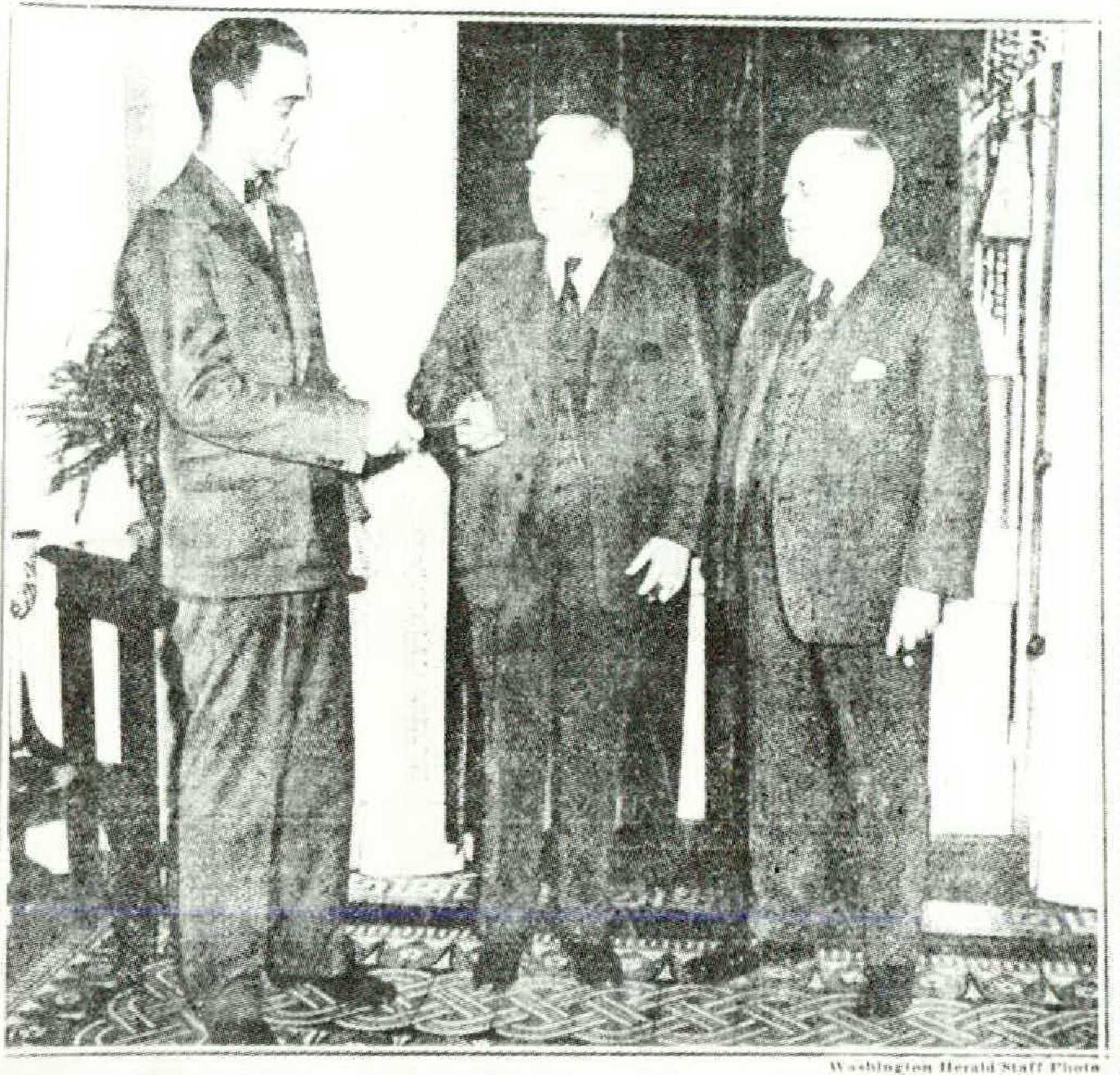
THE LITTLE CONGRESS PROVIDED JOHNSON WITH PUBLICITY
Another end was publicity. First, he organized the Little Congress debates. Previously, anyone who wished could speak; now only assigned speakers could take the floor. He made the assignments, naming teams to represent both sides of an issue currently before Congress (one “floor leader” would generally be the aide of the congressman who had introduced the bill, the other the aide of a congressman who opposed it); kept checking with the leaders to make sure they were actively organizing their teams; further formalized the atmosphere by assigning speakers places at the long witness table that ran across the front of the Caucus Room. Sitting at the center of the long raised horseshoe used by congressional committees, he ran the debates strictly. Payne says, “The first time he presided, everyone knew: by George, here was a man who was running the show. The Little Congress was run by the same rules as the House of Representatives, and he knew those rules. He was his own parliamentarian, and there wasn’t anyone who could argue with him about whether the proceedings were proceeding according to the rules, because he knew them. He was in command.” At the end of each debate, the Little Congress voted on the “bill.” Once he had the debates organized, he persuaded newspapers to cover them. Congressional aides generally reflected their bosses’ feelings, he told reporters, and Little Congress votes on pending legislation were therefore previews of upcoming votes in the big Congress. The reporters came, and were impressed; “one of the most interesting forums in Washington,” the Washington Post said. And when they found that House votes could, indeed, be predicted on the basis of voting in the Little Congress, they began to cover it regularly, in stories that generally contained a statement from—or at least a mention of—its Speaker. Assured press coverage made even the most famous political figures receptive to Johnson’s invitations to address it. When Johnson said he was inviting the colorful and controversial Huey Long to speak, recalls Wingate Lucas, another Little Congress member, “none of us thought he could pull it off.” But sure enough, Long came. The Caucus Room was, one secretary says, “just crowded with newsreel cameras. Pathé News and Metro News and all that. . . . There were lights all over the place, these movie lights. A tremendous number of reporters were there.” And when Long came into the room, surrounded by a phalanx of toughlooking bodyguards, the Speaker of the Little Congress was there to welcome him, shaking his hand and smiling at him as the flashbulbs popped and the cameras rolled.
Soon two hundred or more congressional aides were crowding into the Caucus Room every week. Wingate Lucas, who some years later was Speaker himself, says, “Little Congress became quite a big thing. Members of Congress wanted their bills debated by the Little Congress for publicity, and because it would help prepare them for debate on the floor. So if you were Speaker, you were respected by members of Congress, and called upon by members of Congress.” In a remarkably short time—in little more than a year spent on Capitol Hill as a congressional aide—Lyndon Johnson had, through an organization in which advancement had previously depended upon longevity on the Hill, lifted himself dramatically out of the anonymous crowd of congressional aides.
Johnson’s control of the Little Congress tightened. He never campaigned publicly for the candidates he supported. “Word just circulated around that so-and-so was Johnson’s candidate,” Lucas says. “He did everything behind the scenes.” But behind the scenes he was very effective. A half-dozen Johnson allies would telephone other members before each election to suggest who should be supported. It became understood that antagonizing Lyndon Johnson was not a good idea for anyone who wanted to advance in the only organization in which advancement was possible for congressional secretaries. “He had a machine,” says Lacey Sharpe, a former secretary. “And if you wanted to run, you had better have the blessings of Lyndon Johnson.” The machine’s existence had become an acknowledged reality in the self-contained little world of Capitol Hill. Another secretary, newly arrived on the Hill, recalls seeing Johnson for the first time. Struck by his appearance—his height, his huge ears, his flashing eyes and smile, the confidence with which he walked, arms akimbo, down a House Office Building corridor—the secretary asked a friend who he was. The friend replied, “That’s the Boss of the Little Congress.”
Did his “very unusual ability” work only with contemporaries? Only with the congressional secretaries who were his equals in rank? The Speakership of the Little Congress may have furnished Johnson with entrée to officials other secretaries never got to talk to; it was the use he made of the entrée that awed those contemporaries who had a chance to see him use it.
At the Department of Agriculture, for example, the hundreds of patronage jobs created by the new Agricultural Adjustment Administration programs were dispensed by three tough Tammany politicians: Julian N. Friant, special assistant to the secretary of agriculture, and Friant’s assistants Vincent Maguire and Lee Barnes. Even congressmen had difficulty getting these men on the phone; for most congressional secretaries, personal communication was all but impossible. Congressional secretary Lyndon Johnson wanted another assistant to help with his district’s mail, and, with no more room on the district’s payroll, he wanted the assistant, Russell M. Brown, a young law student from Rhode Island, put on Agriculture’s. Aware of the inaccessibility of Agriculture’s personnel trio, Brown was startled when Johnson casually suggested running over to see them. He was even more startled by the reception Johnson received. When Johnson told Maguire, whose office they went into first, “Mac, I got to have a job for Russ, here,” Maguire replied simply, “I can arrange it, Lyndon.” (“That’s great,” Maguire added with a smile, “Texas helping Rhode Island.”) Then Maguire said, “Would you like to say hello to the Boss?” and they all strolled down to Friant’s office, where the reception was equally warm. (“The Chief and Friant got along fine,” Latimer recalls. “Anything he could do for the Chief he was happy to do.”)
Brown was to receive a larger shock. While they were chatting in Friant’s office, the door opened, and in walked Friant’s boss, the great personnel director himself, chief patronage-dispenser of the New Deal, Postmaster General James A. Farley. Brown stared, almost speechless, at this living legend, but Farley, he says, “was very affable and shook hands.” And Johnson, who had met Farley when the Postmaster General accompanied Vice President Garner to the King Ranch some months before, was affable right back. “This is my friend Russell Brown from Rhode Island,” he said. Farley, who never forgot a name—or a political affiliation —remembered something Maguire and Friant hadn’t. He asked Brown if he was Charles Brown’s son, and then said to Friant, “What are you doing helping a Republican?” A moment of tension ensued, but it evaporated when Johnson, putting his arm around Brown, said expansively, “He’s mah Republican.” Everyone burst out laughing, Brown recalls, with the Postmaster General, beaming at Johnson, laughing loudest of all.
Other Capitol Hill aides witnessed similar scenes. Not only, they came to realize, did Johnson know powerful officials who were in a position to help him; these officials knew him, knew him and liked him, and wanted to help him. A measure of this feeling was the number of patronage jobs Johnson obtained in the AAA and other newly formed New Deal agencies, such as the Home Owners Loan Corporation and the Federal Land Bank. Such jobs were generally rationed by the New Deal on the basis of a congressman’s importance. The office of the average congressman might be given four or five, the office of a senior or powerful congressman perhaps twenty, the office of a committee chairman as many as thirty or, in rare cases, forty. The office of Richard Kleberg, a congressman with neither seniority nor power, was given fifty.
DID HIS ABILITY WITH THE POWERFUL CONSIST MERELY of the capacity to make friends with them? One Texan notably unmoved by Johnson’s charm was Vice President Garner, whose desire for new friendships was limited. “Me and my wife,” tough old Cactus Jack explained once. “My son and his wife. We four_and no more.” As for his paternal instincts toward bright young men, even his son was able to obtain a loan from him only after he had agreed to the most onerous terms. In May of 1933, the Texas Legislature redrew the state’s congressional districts. Seeing Garner’s hand in the redistricting, Texas congressmen feared it would be present as well in the confusion that was going to follow. During the year-and-a-half interim before the redistricting went into effect, in January of 1935, federal patronage in counties that had been shifted from one district to another would be in dispute between the congressman they had elected and the one into whose district they had been shifted. In some counties, moreover, a vacuum would exist: three new districts had been formed by taking counties away from old districts; these counties would have no opportunity to elect a new congressman until November of 1934. Aware of Garner’s ruthlessness and appetite for power—and of his long and close friendship with Postmaster General Farley—Texas congressmen feared he would step into the vacuum by claiming, as the state’s highest federal official, the patronage power in counties in which it was in dispute. After a number of secret caucuses, they still didn’t know how to meet this threat.
One of their secretaries did. Lyndon Johnson had not, of course, been present at the caucuses, but Kleberg had told him about them, and he had a suggestion. If, instead of fighting among themselves, all twenty-one congressmen—plus Texas’s senators, Tom Connally and Morris Sheppard—agreed on a division of patronage powers, both vacuum and confusion would be eliminated. Without a vacuum, Garner’s maneuvers would become more difficult; without confusion to cloak them, they would be revealed as a naked grab for power. A united front among the congressmen would deter Farley, too, since he wouldn’t want to interfere in a state’s internal politics against the wishes of its entire congressional delegation. Such a united front, Johnson said, should take the form of a signed “gentleman’s contract” between all Texas congressmen and senators stating that patronage power in every Texas county would remain in the hands of its present congressman until the redistricting went into effect. And when Kleberg asked how Connally and Sheppard, who might themselves see confusion as an opportunity for patronage gains, could be induced to go along with the congressmen, his secretary had an answer for that, too. The two senators, jealous of their statewide powers, would be as worried as the congressmen about the Garner threat; therefore, they would agree if they were given a small inducement: the right, previously reserved to the local congressman, to name the postmaster in their home towns.
Johnson drafted the agreement: “Until January 1, 1935, present representatives of the district shall control in counties of their present existing districts. . . . We ask that this agreement be respected by all [federal] departments and offices.” Kleberg was reluctant to engage in a fight, particularly with his old friend Garner, but Johnson told him that the existence of a clear agreement was the way to avoid one. And when he reminded Kleberg, to whom personal honor was very important, that in return for support in his last election he had promised federal positions to supporters in Bexar County, which had been removed from his district in the redistricting, and that if the right of appointment was given to Garner he would be unable to live up to his promises, Kleberg agreed to circulate the “contract” to the whole delegation. Everyone signed it. And when, in January of 1934, Garner made his move—Texas congressmen who submitted recommendations to Farley on federal postmasterships in the redistricted counties were told to clear them with the Vice President—Johnson knew how to use the weapon he had forged. He leaked the agreement to the press—not to a local Texas newspaper but to the Associated Press. Huge headlines (“REVOLT AGAINST PATRONAGE ARRANGEMENT”) and angry editorials (“Postmaster Farley’s insistence upon giving Garner control . . . will make political orphans of dozens of Texas counties”) in Texas, combined with nationwide publicity, had precisely the effect Johnson had calculated.
Within the week, Garner had beaten a hasty retreat. In the presence of a “grievance committee” of Texas congressmen, he dictated a document of unconditional surrender—a letter of his own to Farley. “Dear Jim: ... a committee representing the Texas delegation are in my office at this moment. They are very much worried about the proposal that I pass on qualifications of postmasters in the new districts in Texas, and, to be frank with you, Jim, I am worried about it myself because of the friction that might arise between the Texas members of Congress and myself. ... I want to ask you if you won’t relieve me of the burden of saying anything about the qualifications of any postmaster anywhere in Texas.” Farley agreed to Garner’s request, dashing off a letter of his own telling Texas congressmen to submit their recommendations directly to him, as in the past. William S. White, then an Associated Press correspondent in Washington, recounts that “for days [Garner] went among fellow Texans with a scowling, half-amused demand: ‘Who in the hell is this boy Lyndon Johnson? Where the hell did Kleberg get a boy with savvy like that?’ ” Others familiar with the episode say White’s description is accurate except for the hyphenated adjective; Cactus Jack Garner was not even half-amused. Garner’s question, moreover, was a natural one. “This boy Lyndon Johnson”—a twenty-fiveyear-old congressional aide —had defeated, in a small but bitter skirmish, the Vice President of the United States.
FEW, IF ANY, CONGRESSIONAL SECRETARIES IMPLEmented New Deal programs more successfully than Lyndon Johnson. His assistants were, therefore, surprised when they realized what Johnson thought of the New Deal. The man with whom he was “most in tune,” says L. E. Jones — and Gene Latimer and Russell Brown agree—was Roy Miller, the legendary lobbyist who had made the district’s office his own. Miller looked to the three young assistant secretaries like the very model of a southern senator. Erect and dignified, he strode through the Capitol as if he owned it—which, some said, in the areas in which he was interested, he did; with the seemingly unlimited funds at his disposal for “campaign contributions,” he bought national legislators as easily as state. The three young assistant secretaries in the Fourteenth District office admired Miller and were awed by him —by his manner (“He was so suave and smooth,” Jones says); by his salary (“He was making $80,000 a year, and this was during the Depression!” Latimer says); by his luxurious suite at the Mayflower; by the way in which, in those days before regular air service, he seemed to stride around the country as easily as he did around the Capitol. “Roy Miller would call from Texas . . . and say, ‘I’m going to be in the office in the morning,’ ” Jones recalls. “It was always quite a thing that he’d call from Texas on Monday and be in the office on Tuesday, because he would come up in a private airplane.” And their immediate superior was just as impressed, they say. “Lyndon hero-worshipped Roy Miller,” Jones says.
If in public Miller seemed the archetypal southern senator, however, in private he might have been the model for another caricature: the wealthy businessman venomously ranting and raving, in Peter Arno’s New Yorker cartoons, about That Man in the White House.
Miller and a group of friends would often gather in Kleberg’s office for a late-afternoon drink. These men were Roosevelt-haters, who saw in the President’s programs the erosion of the power and the privilege so dear to them, and their hatred was made more bitter by the President’s popularity, which forced them, for the sake of expediency, to keep their feelings hidden. So in the privacy of Kleberg’s office, their laughter at the latest scatological joke about Franklin’s physical disabilities, or about Eleanor, was all the louder, and their railing against “Reds,” and against the “dictatorship” being foisted on the American people, and against the “socialists,” “Communists,” “Bolsheviks,” and—even worsecollege professors who surrounded the dictator was all the more vehement. Of that group—Martin Dies, later chairman of the House Un-American Activities Committee; Kleberg himself; Horatio H. (“Rasch”) Adams, a Kleberg golfing partner and reactionary lobbyist for General Electric; other ultra-conservative Texas congressmen such as Nat (“Cousin Nat”) Patton, James P. (“Buck”) Buchanan, and Hatton W. Summers—no one laughed louder or railed more vehemently than Roy Miller. Lyndon Johnson was always invited in for a drink. Since the door between the suite’s two rooms was open, Jones, Latimer, and Brown could hear what their Chief was saying.
His tone with these powerful men was very different from the tone he used with them. It was a tone that would have been familiar to the classmates at San Marcos who had heard him talking to professors, for on Capitol, as on College, Hill, he was as obsequious to those who were above him as he was overbearing to those who were not. “In talking with these guys,” L. E. Jones says, “Lyndon was very much the young man, very starry-eyed, very boyish. It was very much the junior to the senior. ‘Yes, sir.’ ‘No, sir.’ ” His position, too, would have been familiar, because even if there was a vacant seat in Kleberg’s office, Johnson would often be sitting on the floor, his face upturned to whoever was speaking, an expression of the deepest interest and respect on his face. To the surprise of Johnson’s three young assistants, their Chief not only flattered these men but agreed with them, agreed enthusiastically. “Miller just hated Roosevelt,” Jones says, “and Lyndon was in tune with Miller. Hell, sometimes he was louder against Roosevelt than Miller was.”
At first, Jones assumed that Johnson did not believe what he was saying. Johnson’s energy and enthusiasm in implementing New Deal programs in his district had led Jones to assume that his Chief supported the philosophy behind those programs. Moreover, Jones, watching Johnson’s constant display of thank-you letters from constituents, had seen in his Chief a deep “need for gratitude,” and, as Jones put it, “For someone who needs gratitude, the New Deal is the natural philosophy, because it lets you do things for people, and therefore gives you the greatest opportunity to get gratitude.” But Jones and his fellow assistants were soon convinced that their initial assumption had been incorrect.
And Johnson did not, for a while at least, espouse a conservative philosophy only in the company of conservatives. During bull sessions at the Dodge, Johnson, echoing one of Miller’s pet phrases, would say of Roosevelt, “He’s spending us into bankruptcy.” The President’s first priority, he would repeat emphatically, should be to “balance the budget.” Most of the young men of “A” and “B” floors were liberal; Lyndon Johnson was the basement conservative.
He was “in tune” with Miller, moreover, not only in talk but in action. When, for example, Kleberg’s bid for re-election was challenged in the Democratic primary by a more liberal candidate, Johnson and Miller orchestrated a campaign that tarred the liberal as a “Communist,” guilty of “radicalism” and similar “filth and slime.” Jones concluded—and Brown and Latimer and a dozen other aides who knew Johnson at the time agree— that Johnson was implementing the philosophy of the New Deal without believing in it.
Even during the period in which Johnson harmonized most loudly with the anti-New Deal sentiments of Roy Miller and other powerful reactionaries, he sang quite a different tune in the company of powerful liberals. Once, a congressional aide, who had just heard Johnson “talking conservative” with Martin Dies, came across him “not an hour later,” “talking liberal” with populist Congressman Wright Patman. When talking with older men, men who could help him, Lyndon Johnson “gave them,” this aide says, “whatever they wanted to hear.”
Younger men he gave nothing. There was a sudden change in his behavior at the Dodge. For a time, he had been “B” floor’s conservative; then, abruptly, he started, in the words of another “B” floor resident, “shifting gears,” drawing back from his position. Other residents noticed that on two consecutive nights, Johnson would argue on opposite sides of the same issue. And then, in a very short time, he stopped arguing about issues at all. He would no longer, in fact, even discuss them. His silence in this area was especially conspicuous because of his volubility in all others. If political tactics, for example, were being discussed, Johnson would be the center of the discussion. If the discussion concerned political issues—philosophy, principles, ideas, ideals—Johnson would not be part of it. He would refuse to take a stand even when directly challenged to do so, turning aside the challenge with a joke, or a Texas anecdote. During those first exciting years of the New Deal, when discussion of great issues swirled through Washington, nowhere was discussion more animated than in that basement home of a hundred bright young men in government. Amidst the swirl the tall, skinny figure of Lyndon Johnson stood untouched. The son of a man who had said, “It’s high time a man stood up for what he believes in” seemed ready to stand up for nothing.
Congresswoman Helen Gahagan Douglas, who would later spend a lot of time with Johnson, felt that she understood why “no one ever knew exactly where he stood on a particular issue.” He possessed, she said, the ability to look quite far ahead down the road of his career. “He was always aware that what he said might be repeated years later, and he didn’t want someone to come back years later, and say, ‘I remember when you said . . ”
The young men at the Dodge saw Johnson’s ambition expressed in other ways. The Texas State Society, composed of all the Texans in Washington, held monthly dances in various Washington hotels. At these dances, young men danced most of their dances with young women, but not Lyndon Johnson. He danced almost exclusively with older women. “I don’t remember his ever taking a girl [to a dance], but he would dance with all the wives of all the congressmen and Cabinet officers,” Brown recalls. Even the adoring Latimer felt he knew why. “He danced with members’ wives because he didn’t know the husbands, and the wives would introduce him,” he says. Other aides held the same opinion. Brown recalls standing with a group of friends from the Dodge and watching Johnson dancing, and one of them saying: “Do you notice he ignores the young, pretty, single women? He’s dancing with all the wives.” Another said: “Lyndon’s campaigning for something.” And a third chimed in: “He never quits campaigning. He’s always campaigning.”
Ambition was not uncommon among those bright young men at the Dodge, but they felt that Johnson’s was uncommon —in the degree to which it was unencumbered by even the slightest excess weight of ideology, of philosophy, of ideals, of beliefs. “There’s nothing wrong with being pragmatic,” one says. “Hell, a lot of us were pragmatic. But you have to believe in something. Lyndon Johnson believed in nothing, nothing but his own ambition. Everything he did—everything—was for his ambition.” A saying about Johnson had gained wide currency among these young men, because they felt it described him accurately: “Lyndon goes which way the wind blows.”
To those closest to him—the three assistants who worked in the same office—the statement that “Lyndon Johnson believed in nothing” is an oversimplification. He did, they feel, have beliefs—quite conservative beliefs. His “basic orientation,” Brown says, “was on the conservative side.” Jones says, “Intrinsically, he was conservative.” But, they feel, the crucial point is that regardless of what his beliefs may have been, beliefs had little relevance to his career. Having spent years in close proximity to Johnson, they feel sure that beliefs didn’t have the slightest influence on his actions. “In his actions,” Jones says, “I don’t think Lyndon was either a conservative or a liberal. I think he was whatever he felt like he needed to be. . . . Winning is the name of the game. I have no doubt that he could have become either an ultra-liberal or an ultra-conservative, if that would have brought victory. Now that suggests hypocrisy, doesn’t it? But, well — winning is the name of the game.”
SOON THERE WAS SYMBOLIC PROOF OF THIS JUDGMENT. During redistricting in 1933, Bexar County (the city of San Antonio) and its 240,000 inhabitants had been split off from the Fourteenth Congressional District and placed in a new—Twentieth—district. In 1934, it would elect its own congressman. One of the candidates had been impressed, during a visit to Washington, by Kleberg’s “very efficient” secretary, with his “ready entrée into all of the government departments”; upon his return to Texas, he told reporters that “Lyndon B. Johnson ... is considered to be the brightest secretary in Washington.” He asked Johnson to work for him during the 1934 Democratic primary, which would be held during Congress’s summer recess. Johnson, with Kleberg unopposed in the primary, agreed—although the candidate was Maury Maverick, the fiery radical whose utopian schemes and fierce defense of Communist organizers in Texas had already caused an opponent to charge him with a desire to “supplant the American flag with the Red flag of Russia.”
Arriving in San Antonio with Latimer and Jones in tow (he had persuaded the genial Kleberg to “donate” all three of them to the Maverick campaign), Johnson put them to work mailing out brochures. He himself began writing them. Soon he was writing speeches and serving as an adviser—one of Maverick’s inner circle. And he was a campaigner, as well—a campaigner whose “very unusual ability to meet and greet the public,” in Welly Hopkins’s description, was as effective in San Antonio’s teeming Mexican-American ghettos as in the isolated little towns of the Hill Country. The embrazo, or embrace, was a key element in campaigning among MexicanAmericans, and Johnson had always been addicted to hugging and kissing. Towering above swarthy men in brightly colored shirts and old women in black rebozos, the tall, skinny, pale young man with the big ears and long arms was a conspicuous figure as he embrazoed his way enthusiastically through the crowded, pushcartjammed San Antonio slums. Maverick won the June primary, but not by the requisite plurality, so a second primary, in August, was required. Johnson spent most of the intervening two months handling Kleberg’s affairs in Corpus Christi, but on weekends he would race back to San Antonio. During the summer of 1934, therefore, Johnson was working simultaneously for one of the most reactionary members of Congress and for the man who would, immediately upon his arrival on Capitol Hill a few months later, be one of the most radical.
The 1934 Maverick campaign also marked Johnson’s first involvement with one of the more pragmatic aspects of politics.
Awakening early one morning a day or two before the election, in the big room in San Antonio’s Plaza Hotel that he shared with Johnson, L. E. Jones experienced an awakening of another sort. Johnson was sitting at a table in the center of the room—and on the table were stacks of five-dollar bills. “That big table was just covered with money—more money than I had ever seen,” Jones says. Jones never learned who had given the cash to Johnson, but he saw what Johnson did with it. Mexican-American men would come into the room, one at a time. Each would tell Johnson a number—some, unable to speak English, would tell the number by holding up fingers—and Johnson would count out that number of five-dollar bills, and hand them to him.
“It was five dollars a vote,”Jones realized. “Lyndon was checking each name against lists someone had furnished him with. These Latin people would come in, and show how many eligible voters they had in the family, and Lyndon would pay them five dollars a vote.”
“EVERYTHING WAS FOR HIS AMBITION.” Elective office, Johnson was starting to say now, was what he wanted. “You’ve got to be your own man if you’re going to amount to anything,” he told Russell Brown. He knew which elective office he wanted. Once, Brown recalls, “he was talking about somebody who . . . had run to succeed his boss . . . and he said: ‘That’s the route to follow.’ ”
A few adjustments began to be made in the physical arrangement of Suite 1322. Under standard practice in congressional offices, the senior aide placed his desk as far as possible from the front door, so that subordinates would “handle”—and shield him from—casual visitors, mostly tourists from the district. Now Johnson moved his desk immediately inside the entrance door, “so that,” in Latimer’s words, “no visitor could possibly advance further without his interception.” In part, Latimer says, the purpose of the shift was “to keep the typewriters humming. If anyone talked to L. E. or me, we’d have to stop typing. And that typing was supposed never to stop.” But Latimer began to suspect there were other reasons as well. Johnson did not want to be shielded from visitors from the district. Visitors were voters. The new position of his desk ensured that he met voters. A favor routinely bestowed by congressmen’s offices—passes to House and Senate galleries—frequently impressed visitors and made them grateful. Johnson wanted visitors—voters— to receive that favor from his hands. The position of his desk ensured that they would. “The casual visitor who just ‘happened to be in town’ was weeded out” by Johnson, who “talked with him thirty seconds, and had him out of the office and on his way in another thirty, happily clutching” his passes, Latimer says. Sometimes, moreover, a casual visitor would turn out to be what Latimer calls “an important person” back home. “The Chief would steer him into Mr. Kleberg’s [vacant] private office,” sit down (behind the congressman’s desk), chat with him, ask if there was any favor he could do for him, and strike up a friendship, which would be cemented a few days later by a “buttering-up” letter from Latimer.
Noticing that such private audiences were held not only with “important persons” but with any visitor who happened to mention an interesting piece of district political gossip, Latimer felt there was still another reason for the change in the position of Lyndon Johnson’s desk: “He didn’t want anything concerning his districtno matter how small—going on without him knowing about it.” Positioning himself right at the door was Johnson’s best defense against such a contingency, Latimer understood.
This defense contained one loophole. Each of the two rooms in a congressional suite had its own door to the corridor outside, and, in the casual atmosphere of the 1930s, those doors were both generally kept unlocked. Visitors—particularly knowledgeable late-afternoon visitors who were aware which door led to Kleberg’s private office, and who wanted to see the congressman without being cleared by his staff—were able simply to walk in that door, knowing they would receive his invariably pleasant welcome.
Now that loophole was closed. Johnson locked his boss’s door, and kept it locked. Kleberg never objected to this new development—he may not have noticed it: he customarily entered and left the two-room suite through the anteroom, so that he could chat with his staff. If he did notice it, he did not understand its significance. But Latimer understood. “He didn’t want anyone to see Mr. Kleberg without going through him first; he didn’t want anyone seeing Kleberg that he didn’t know about,” he says. The effect of locking Kleberg’s door, moreover, was in a small but not insignificant way (since a visitor knowledgeable enough to know the right door was probably an important visitor) to isolate the congressman from his district, to give a tighter hold on it—at his expense—to his secretary.
Latimer and Jones began to notice some other changes. Johnson had always been diligent in grabbing for his boss the credit for federal projects—a PWA sewer or a CCC camp—in the district. Now he still grabbed the credit—still raced for Western Union and got the wire off to the mayor of the lucky town before Connally or Sheppard—but not always for his boss. More and more now, the releases he dictated began: “Congressman Kleberg’s secretary, Lyndon B. Johnson, announced yesterday that...”
As was, of course, the custom in all congressional offices, letters advising individuals that they had received federal favors—pensions, visas, private bills—had always gone out over the congressman’s signature, to ensure that the gratitude was directed to him. Now the letters being mailed out of this office were beginning to have a different signature, as well as a different opening phrase: “In the Congressman’s absence, I am advising you . .
And more and more of a certain portion of the district’s business—its political business—was no longer transacted by letter. In Kleberg Country, all chairmen of county Democratic organizations had been Kleberg men: personal friends of Dick’s and of his relatives’, or men economically in thrall to the King Ranch, either as employees of ranch-controlled enterprises or as businessmen dependent on its favor. Now Johnson persuaded Kleberg that a tighter organization was needed in the district. (Not much persuading was needed, Latimer recalls. “Anything the Chief wanted, Mr. Dick would just say, ‘Sure, go ahead.’ He didn’t care.”) Johnson began to tour its nineteen counties. He met the Democratic county leaders, but he also met other leaders—the local banker, the local lawyer, the editor of the local weekly newspaper, the farmer who, his sharp eyes observed, was the man other farmers listened to at meetings of the local Grange or the county AAA crop-control committee. Upon his return to Washington, he asked county chairmen to send in regular reports on local political conditions. Those chairmen who responded found themselves in correspondence with Johnson, who replied to their letters the day they were received and asked for another letter in return. Failure of a chairman to respond regularly was the excuse Johnson needed to have a co-chairman appointed—and these co-chairmen were not Kleberg men but men with whom Johnson had, during his tour, established a personal rapport. He made certain, moreover, that each of these new appointees understood that he owed his appointment not to Kleberg but to him.
In communicating with these men, he used the telephone. Each month, when Latimer opened the phone bill, the list of long-distance calls to Texas grew longer.
One explanation for Johnson’s increased use of the telephone was his desire for secrecy. The door between Kleberg’s private office and the staff’s anteroom had always been open. Now, more and more, it was closed, for when the private office was vacant, Johnson would go into it to telephone and shut the door behind him, for hours at a time. When he was forced by Kleberg’s presence (or, more likely, Roy Miller’s) to use his own telephone in the anteroom, he would often cup his hand around the mouthpiece to prevent Latimer and Jones from overhearing his words. Other clues about these conversations were also kept to a minimum. In the past, Johnson’s invariable practice during telephone calls had been to jot down lists of things to be done as a result of the call, so that Latimer and Jones could do them. Now—on these calls made with his hand shielding the mouthpiece—nothing was put in writing. “Once, we had known just about everything that was going on in the district,” Latimer says. “Then we started to realize that there was starting to be a lot going on that we didn’t know about.”
Latimer began to wonder whether use of the telephone was providing Johnson with an advantage beyond secrecy. From the few words he overheard, he knew that the telephone calls to these new friends in the district often concerned favors, including the obtaining of federal patronage jobs, that Johnson was doing for them. Written communications—press releases and letters—were, more and more, bearing Johnson’s name as well as Kleberg’s. In these verbal communications, Latimer wondered, was one of those names being omitted entirely?
“In a letter,” Latimer says, Johnson “would have to sign the congressman’s name,” or, even if he signed his own name, he would have to make clear that he was only acting for his boss. “The letter would have to say, ‘At the Congressman’s suggestion, I am’ doing such-andsuch ... It might have been dangerous for him otherwise. But on the telephone, it was him—Lyndon Johnson-speaking, not Dick Kleberg.” Latimer had, in fact, discerned an overall pattern in his Chief’s behavior. “Before, he had been making friends for Mr. Dick. Now he was making friends for himself instead.”
Latimer was right. A new political organization was being created in the district, an organization that was coming, more and more, to be centered not on the district’s congressman but on the congressman’s secretary. The purpose of Johnson’s creation was not to take his boss’s seat away from him—there was not the slightest chance of anyone defeating a Kleberg in Kleberg Country—but to place Johnson in a position to take the seat should it become vacant.
And he was working to make it become vacant.
The minimum age at which a person could become a congressman was twenty-five, and Lyndon Johnson would become twenty-five on August 27, 1933, During that year, there began a quiet movement to float the name of Richard M. Kleberg for the post of ambassador to Mexico. Stories were planted in Texas newspapers; one went out on the Associated Press national wire—no one was quite sure who was planting them. There began to be some talk about the possibility in Washington; no one was quite sure who had started it. The Texas State Senate even passed a resolution formally proposing Kleberg for the post; the introducer of that resolution was State Senator Welly Hopkins. Kleberg loved the idea; he had little interest in being a congressman, and, he often said, of all the cities he had ever visited, Mexico City was his favorite. For a while, Miller and other Texas insiders thought he was going to get the ambassadorship. He didn’t; it went instead to Josephus Daniels. But periodically thereafter, whenever any hint was received in Washington that Daniels was tired of the post, the quiet push for Kleberg would begin again. Having determined the route he wanted to follow, Johnson was paving it.
BUT WAS HE ALSO PAVING A LONGER ONE? ONE THAT only he saw? One that he, who talked so much, never talked about at all?
Since he was not a resident of the adjoining—Twentieth—congressional district, in which Maury Maverick had won election, he was not eligible for elective office in it. But his interest in that district did not cease with Maverick’s election.
The key appointive post in the district was the San Antonio postmastership, which controlled 600 postal-service jobs. Since the incumbent postmaster’s four-year term was to expire during 1934, before Maverick took office, under the “gentleman’s contract” that Johnson had devised earlier that year, Kleberg, as the area’s former congressman, had the right to name the new postmaster. Kleberg didn’t care about the successor’s identity, Russell Brown says, but Johnson cared. He had his postmaster all picked out, in fact: Dan Quill, a tough young Tammany-style Texan from the San Antonio stockyards and a power in the city’s labor circles. “You see Dan Quill, and you see 5,000 votes,” Latimer says.
Kleberg’s nomination of Quill evoked demands from the old-line San Antonio machine for intervention by Garner, a longtime ally, but the Vice President, having lost one skirmish over the “gentleman’s contract,” declined to participate in a second, and when the machine nonetheless persisted, Brown remembers, Johnson “put on a first-class war” and got the appointment for “Kleberg’s” man. To cement Quill’s allegiance to him, he got Quill’s sister, Eloise, a job with the Department of Agriculture, in Washington. Had Johnson devised the “gentleman’s contract” in anticipation of the San Antonio postmaster fight—because he already had his candidate for the job picked out? Was that the real reason he had had Kleberg give the document his imprimatur, and thereby persuade the other Texas congressmen to sign it? No one knows, but the appointment that resulted from the contract was to prove important to Johnson over not only the long run —Quill would be his staunch ally in San Antonio for thirty-five years—but the short. An extravagant admirer of Lyndon Johnson, Quill immediately began handling small but vital political favors for Johnson in San Antonio and giving jobs to at least a few of Johnson’s San Antonio friends.
Johnson and Maverick, who had hit it off so well during Maverick’s first trip to Washington a year before, became fast friends when Maury arrived to be sworn in. The friendship was based partly on Johnson’s ability to talk as liberal with the liberal Maverick as he could talk conservative with conservative congressmen. Discussing a New Deal bill coming up in Congress, he would demand: “You’re not going to throw down the President on this, are you?” Partly it was based on Maverick’s admiration for what he had called Kleberg’s “very efficient” office setup; at his request, Johnson showed Maverick’s secretary, Malcolm Bardwell, a newcomer to Washington, how to set up the Twentieth District office. (Maverick autographed a photograph: “To Lyndon Johnson, who got me started.”) And Johnson cemented the friendship. Maverick’s younger brother, Albert, a resident of Kleberg’s Fourteenth District, was given a coveted patronage post there. Johnson was only a congressional secretary, but he had influence now—influence on a level that most congressional secretaries never achieved—not just in one congressional district but in two.
And not just in two.
Among the more popular of the rubber stamps provided by the office of the House stationery clerk was one that read: RESPECTFULLY REFERRED TO―. Most congressional offices routinely employed that stamp on all out-of-district requests. A staffer would smack the stamp down on the letter, fill in the name of the proper congressman to seè, and drop the letter in the “Out” file. “The normal man working for a congressman doesn’t care about people living in other districts,” Latimer points out.
In the office of the Fourteenth Congressional District of Texas, however, the use of that stamp was more selective. “We would not do what was normally done,” Latimer says. “Not if the person needing something was important, not if he knew other people who were important, not if he had money.” If a person needing something was “important,” Johnson would work for him—and have his assistants work for him —no matter where he lived.
More and more important businessmen needed “something”—specifically, entrée—in Washington, as government regulation of and participation in business escalated. They needed guidance through the immense, jerrybuilt maze of bureaucratic regulation; they needed introductions to officials who could help them circumvent those regulations; they needed someone who could tell them whom they should see and who could get them in to see him.
Businessmen from Richard Kleberg’s district learned that his office could provide them with that entreé—and, because Johnson was making friends now not for Mr. Dick but for himself, the shrewder of them learned that it was not Mr. Dick who was providing it. Becoming exasperated over his inability to reach Kleberg on the telephone, former Texas State Senator Alvin J. Wirtz, an influential and powerful attorney for a score of Nueces County clients, as well as the Humble and Magnolia oil companies, asked Russell Brown one day, “Do you suppose if I called the Burning Tree Golf Club I could get our congressman?” The embarrassed Brown said, “Well, I just don’t know where he is, Senator Wirtz.”
“I know, I know,” Wirtz said with a grim chuckle. And then, Brown recalls, Wirtz said, “Lyndon isn’t there, is he?” And when Brown said no, Wirtz asked to have Johnson, not Kleberg, call him back, and said, “I know he’ll call me.” And after that, Brown says, “He stopped asking for Congressman Kleberg and he always called for Lyndon.”
Johnson, of course, always did call back, and provided influential district residents not only with the assistance they requested —whether it was hard-to-obtain hotel reservations on their trips to Washington or aid of a more significant nature—but with assistance they had never thought of requesting. For example, Elmer Pope, a wealthy Corpus Christi businessman, wanted introductions to the staff of the House Interstate Commerce Committee in connection with a bill that would provide federal aid for Corpus Christi. Johnson provided him with the introductions —and, unasked, with a detailed memorandum on the need for the legislation which Pope could present to the staffers.
Attempting to impress such men with his entrée and competence, to make them feel secure in his hands, he was careful never to let them realize what young and low-level hands they were; he never let them see his living quarters. The one prominent visitor from Texas who saw the Dodge basement—Welly Hopkins—was shocked. “They were living just like youngsters, like in a dormitory,” he recalls. When they asked for hotel reservations, Johnson provided them—as if it were easy for him to do so. The visitors never suspected that because he possessed in fact no influence with hotels, he was often forced to frantically telephone one after another until he found a room—and sometimes, when he had been turned down everywhere, to make a trip in person to see a reservation manager, and spend his own money on a big tip. He never gave them even a hint of the difficulties he might encounter in attempting to secure interviews for them with high-ranking officials—difficulties that occurred frequently with officials who did not need Congressman Kleberg’s support on a pending bill, and who had never heard of Congressman Kleberg’s secretary. His care was rewarded. Businessmen from the Fourteenth District were as impressed as he could have wished. And when businessmen from other Texas districts complained to them that their congressmen couldn’t provide much help with the Washington bureaucracy, they would suggest calling Dick Kleberg’s secretary.
The newly formed Lower Colorado River Authority, for example, was planning to operate not in south but in central Texas. But its counsel was Wirtz, and he told the board members that it was to the Fourteenth District office that the Authority should look for help in Washington. Thomas C. Ferguson, the board member who accompanied Wirtz to Washington, saw that Wirtz was right.
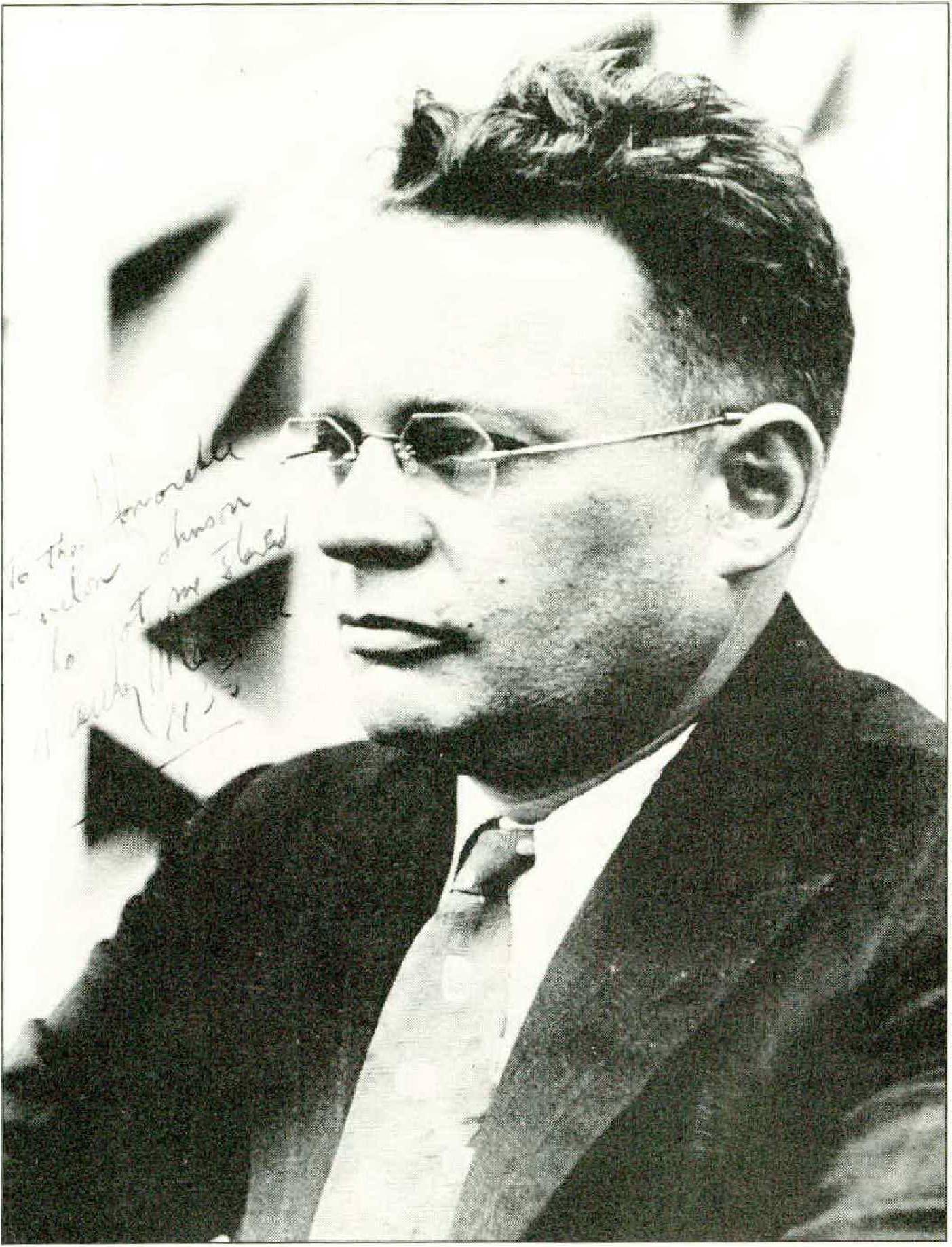
Entrée was vital to the LCRA, whose planned construction of a series of flood-control dams required not only funding from the PWA but permits from a dozen federal agencies. Provisions of the legislation under which the State of Texas had created the agency, moreover, made it necessary to obtain the funding and permits very quickly. Some of the officials they needed to see, Ferguson says, were “high officials”; one was Jerome N. Frank, then chief attorney for the Federal Power Commission. “And we couldn’t get in to see them,” Ferguson recalls. “Senator Wirtz said, ‘Let’s go over to Kleberg’s office and see Lyndon. Maybe he can help.’ ” Ferguson was surprised to see how friendly the powerful and normally reserved Wirtz was with this young secretary. “They had a love fest there, for a few minutes,” Ferguson says. Then Wirtz told Johnson whom he needed to see. Johnson made an excuse not to call Frank and the other officials while Wirtz and Ferguson were present; he did not want them to see the shifts to which he would be put to arrange the appointments. When, that night, he telephoned the two Texans at their hotel, he simply told them the appointments had been made, as if it had been no trouble at all. And the image he had wanted to create with the visitors was the image he created. “Johnson called over there, and got us in to see them real quick,” Ferguson was to recall. “He helped us a whole lot. Senator Wirtz was very much impressed, and so was I. He knew Washington. He could get you in to any place.”
That was the word on Lyndon Johnson—that he “knew Washington,” that he could “get you in to any place.” And now that word was beginning to be heard in wider and wider circles; it was beginning to be heard in conversations of wealthy and influential men across all the length and breadth of Texas. John Garner, they said, was a good man to know in Washington. Certain senior and powerful Texas congressmen were good men to know. Certain senior and powerful Texas lobbyists were good men to know. And so was a young man who was only a secretary to a congressman. More and more, in Houston and Dallas and El Paso, businessmen who needed help in Washington were turning not to the offices of their own congressmen but to Dick Kleberg’s office, and to Dick Kleberg’s secretary. Although he was the secretary for only one congressional district, Lyndon Johnson was creating an acquaintance—the kind of acquaintance that matters—in twenty congressional districts, across the entire vast state.
HE WAS CREATING —ACROSS THAT STATEmore than an acquaintance. As the New Deal’s new programs resulted in new bureaucracies, and as the bureaucracies swelled and swelled again, thousands of new federal jobs were created, jobs that could be filled with minimal reference to merit, since Congress, in approving the new agencies, had thoughtfully exempted many of them from civil-service requirements. The choice plums on this spreading patronage tree were out of the reach of Dick Kleberg, junior and inactive as he was, not to mention the reach of his secretary. But the secretary plucked quite a few jobs on the tree’s lower branches: in government mail rooms (Gene Latimer’s best friend, Carroll Keach, of Houston, was stuffing gray bags for the Federal Housing Administration); at the endless banks of desks in the Department of Agriculture’s South Building (where Eloise Quill had been joined by several other young women from the Fourteenth Congressional District of Texas), and in the immense federal warehouse on D Street, S.W., that was the temporary headquarters of the Treasury Department’s vastly expanded Procurement Division (where at least one of its 2,000 clerks, Ivan D. Bell, addressed Lyndon Johnson as “Chief”); and in nooks and crannies of federal service ranging from library stacks on Capitol Hill (several Kleberg constituents were researchers at the Library of Congress) to border-crossing stations on the far-off Rio Grande (federal customs officers along the Mexican border came under Kleberg’s patronage, and by 1935, Latimer says, “Johnson just about had the final say on who got hired to the Border Patrol”).
Low-ranking and low-paying, these jobs were nonetheless precious, in the Depression, to the persons for whom Johnson obtained them. They included young men who had graduated from the teachers’ college at San Marcos, only to find teaching positions all but unavailable; young men from the Hill Country who had, against long odds, managed to put themselves through not only college but law school, only to find that hanging out a small-town shingle meant starvation; and other young men from the Hill Country who, without a college education, had been able to find no job at all. “Lyndon didn’t make you rich,” says one of them. “But he got you a job.” Ben Crider, of Johnson City, received a $145-a-month job as an appraiser with the Federal Land Bank’s Houston office, and could hardly believe his luck. “The best job I ever had,” he says. They were very grateful. San Marcos graduate Ernest Morgan says, “I would have done anything within reason that he asked me to do.”
Cementing the gratitude, in some cases, was self-interest and ambition. The ability of a contemporary, a young man with whom they had gone to school, to distribute jobs reinforced their belief that he was “going somewhere, somewhere up.“ And, one of them says, “I had sense enough to tie on [to him], because I wanted to go up with him.”
Gratitude—and other aspects of the quality he considered most important, the unquestioning obedience that he called “loyalty”—was, in fact, the prime qualification for a man receiving a Johnson job. The college classmates who got government positions from Johnson were men who had demonstrated at college a willingness to follow his leadership. Meeting them for the first time, L. E. Jones observed that they were all slow-talking, goodnatured country boys and that they shared another quality: all, he says, were “yielding” in nature, men willing to take orders.
Some, in fact, now demonstrated that quality anew. Intending to be a lawyer, one of Johnson’s San Marcos classmates, Willard Deason, had been studying law at night while teaching in San Antonio’s Alamo Heights High School. But when, in 1934, he obtained his law degree, school officials “sort of halfway” promised him the principalship. That prospect, with its annual salary of $4,500, made him ecstatic. Johnson had gotten him a summer job as a $125-a-month junior attorney with the Federal Land Bank’s Houston branch. Deason was planning to return to Alamo Heights in September. Johnson, Deason recalls, said, “So you get to be a principal— what’s that? If you’re a lawyer, you can get ahead in the world.” Deason says, “Johnson was very insistent that I stay at the Land Bank.” Deason agreed to stay at the Land Bank for a while.
In determining whether or not a potential recruit had the Johnson brand of loyalty, Johnson sometimes had to be guided by what he saw in a single meeting. But he had very sharp eyes. His relationship with these recruits over the years to come, in fact, was to demonstrate that if Lyndon Johnson was not a reader of books, he was a reader of men—a reader with a rare ability to see into their souls.
In no field was Johnson’s energy—his willingness to do whatever was necessary to accomplish a goal—more evident than in obtaining and filling patronage positions. Hearing that a job was opening up, he would spend endless hours on the telephone talking to men who might be willing to make another telephone call to the man in charge of hiring someone to fill the job, and who might be willing to ask the man to give it to someone recommended by Dick Kleberg’s secretary. Such patronage was vital to him. “I remember hearing Lyndon say that this business of getting these people jobs is really the nucleus of a political organization for the future,” Russell Brown says.
And his work paid off.
A network was springing up, a network of men, linked by an acquaintance with Lyndon Johnson, who were willing, because of Lyndon Johnson, to help each other. Johnson had few jobs at his disposal; if one of them was vacated by the friend for whom he had obtained it, he wanted it to be passed on to another friend. Deason’s acquiescence to Johnson’s insistence that he not return to Alamo Heights meant that a job would be vacant there when school re-opened in September of 1934. Deason did not notify school officials of his change of heart until the very day that classes began in September. And it had been arranged that at the very moment when Deason was telephoning a school official to say that the school needed another teacher, another teacher was actually standing in the official’s office, application in hand: San Marcos graduate Horace Richards, who was quickly hired. “We always passed jobs on this way,” Deason says. Johnson, in fact, had “passed on” his own. When he had left Sam Houston High School to become Kleberg’s secretary, he had persuaded school officials, in something of a quandary because of the suddenness of his departure, to hire as his replacement San Marcos graduate Hollis Frazier. Frazier, at Johnson’s suggestion, later passed his job on to San Marcos graduate Bert Horne; Richards passed his on to San Marcos graduate Buster Brown.
Among the significant aspects of this network was its location. More and more of the jobs he was obtaining now were in Texas—all across Texas. Kleberg’s secretary had parlayed Kleberg’s friendship with Myers, of the Federal Land Bank, into a friendship for himself with the head of the Land Bank’s Houston office. That office was to hire 294 appraisers and attorneys in the first two years after its establishment. Among them would be Ben Crider and Bill Deason—and a dozen other men hired on Johnson’s recommendation. Also in Houston, of course, were Sam Houston High and Hollis Frazier. In San Antonio there were Horace Richards and Buster Brown—and Dan Quill and his post-office jobs. In Austin, when the Federal Housing Administration opened a branch office, there was an appraiser or two. And in Corpus Christi, and in many of the little towns of the Fourteenth Congressional District, there were postmasters and rural mail carriers, and WPA and CCC employees. Houston, San Antonio, Austin, Corpus Christi — the network was beginning to cover a significant part of Texas.
It was not yet a political organization. It was, however, what Lyndon Johnson said it was: the nucleus of a political organization. Thanks to his skill in distributing the meager resources he possessed, the skill with which he had selected the recipients of his precious jobs, those jobs were held by men bound—by gratitude, by ambition, by love—to a single leader, even though that leader was still only a young congressional aide. They were men he could count on. The road he saw before him —the road to the dim, vast ambition about which he never spoke—was a very long road. Though its general direction—elective office—had become clear, he still couldn’t see its turnings, still didn’t know which of many paths he would follow. But now, as a result of his genius in distributing jobs, he could be sure that, whatever the paths he chose, he would not be without assistance when he trod them. As a far-seeing and determined explorer caches supplies along a route he knows he will follow in years to come, so that they will be waiting for him when he needs them, Lyndon Johnson had cached along his route the resource indispensable to his plans: men. These men were hidden now, low-level aides in nooks and crannies of vast bureaucracies. But when he needed them he would be able to call them, and they would march at his command.
Geography had always been a barrier to the ambitions of Texas politicians. The state’s vastness, coupled with its division into 254 counties—more than twice as many as in any other state, each with its own independent political machine—(and coupled also with the strict constitutional limits placed on state governmental powers by a citizenry notably distrustful of government) had blocked efforts to achieve statewide political power. During the ninety years since Texas had become a state, only Governor James E. (“Farmer Jim”) Ferguson had been able to form an organization responsive in all corners of Texas to the command of a single man. In ninety years, only one statewide political organization had been created—by an immensely powerful and resourceful governor.
Another was being created now—by a congressional aide, one of a thousand congressional aides, not yet twenty-seven years old. □
- Offices in the House Office Building, later renamed the Cannon Building, have been renumbered. Kleberg’s office is the room—now unnumbered—next to the present Room 244. ↩