Fillmore Regained
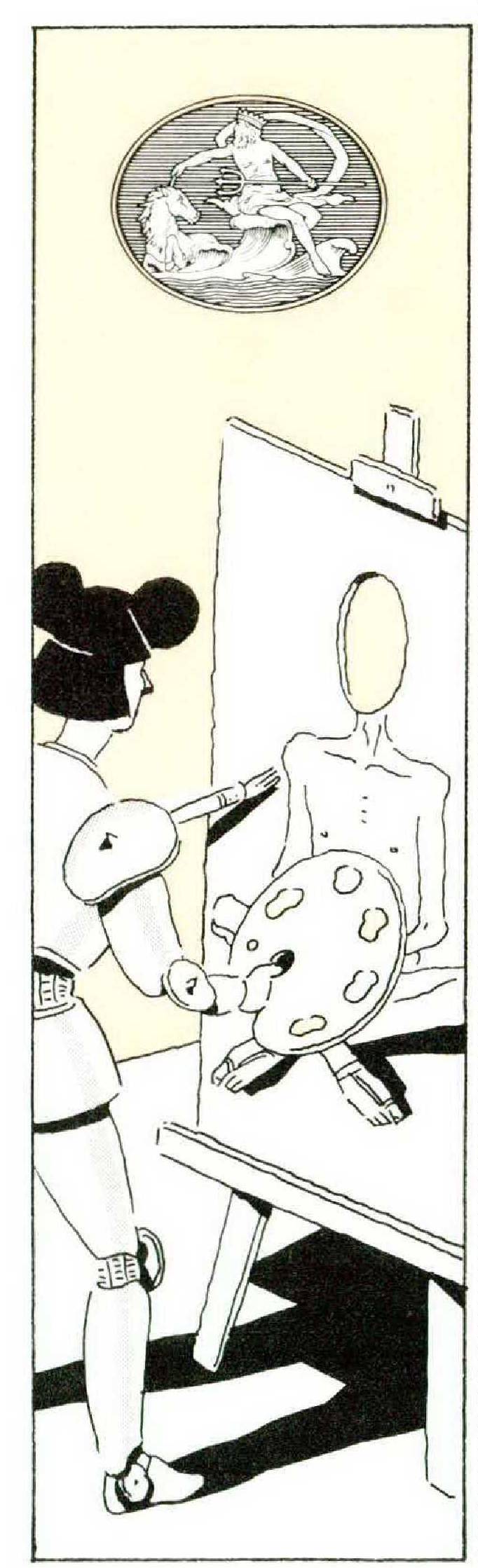

I GUESS YOU SAW the headlines: “So You Swallowed George’s Wooden Teeth? Get Them Out of Your HeadDental Historian.” There is no way, historians now agree, that George Washington could have had wooden teeth.
Okay? First the cherry tree, now the teeth. Another old chestnut tossed onto the fire by the spoilsport, or “No, Virginia,” school of historiography.
The trouble with historians, they don’t like a good story. Or a good line. “You know what Sherman said . . . ,” you begin to say, and they interrupt: Sherman didn’t really say “War is hell.” Actually he said either “Well, well” or “Well, hell”; there is no telling what he had on his mind. And Babe Ruth didn’t really call his shot in the 1932 World Series. He was actually signaling to a vendor in the bleachers for a frank. Several years ago, I remember, a couple of French historians declared that there was no Joan of Arc. Never was one. Best just forget her.
We all know what prompts these disclosures. Some historian starts telling his class about Joan of Arc. “This morning we take up the story of a simple shepherd girl who ...”
“Oh, no,” the class groans. (Because they are all jaded sophomores.) “Not that again.”
“Well, not a word of it is true,” the historian says, hastily; and then he begins to improvise.
It is easy to tear things down, History! What are you going to give us to take their place? If Joan of Arc wasn’t a simple shepherd girl who had visions and led the French against the English at Orléans and went on to be burned at the stake and played by Ingrid Bergman and Jean Seberg, then who was?
No one, according to these French historians. The whole thing was a publicity stunt. Joan was actually a girl of royal blood who was brought out at Orléans for morale purposes. She wasn’t executed at all. She later married someone named Robert.
What a charming tale. What are we supposed to do now, when Joan of Arc’s birthday comes around? Reflect on what a kick it must have given Joan and Robert (pron. “Ro-bair”) in their declining years to sit at home and chuckle about all the crazy legends a girl can start if she will play along with the military?
When that story came out, it didn’t just spoil Joan of Arc for me. It spoiled history as a whole. I threw up my hands. I became willing to accept that nothing ever happened in ages past that couldn’t be reduced to simple administrative terms, or worse.
Rasputin was just a minor Russian official who had a little something going with the Tsarina, and she worked up a disguise for him that everyone but the Tsar saw through from the beginning. He died in a boating accident.
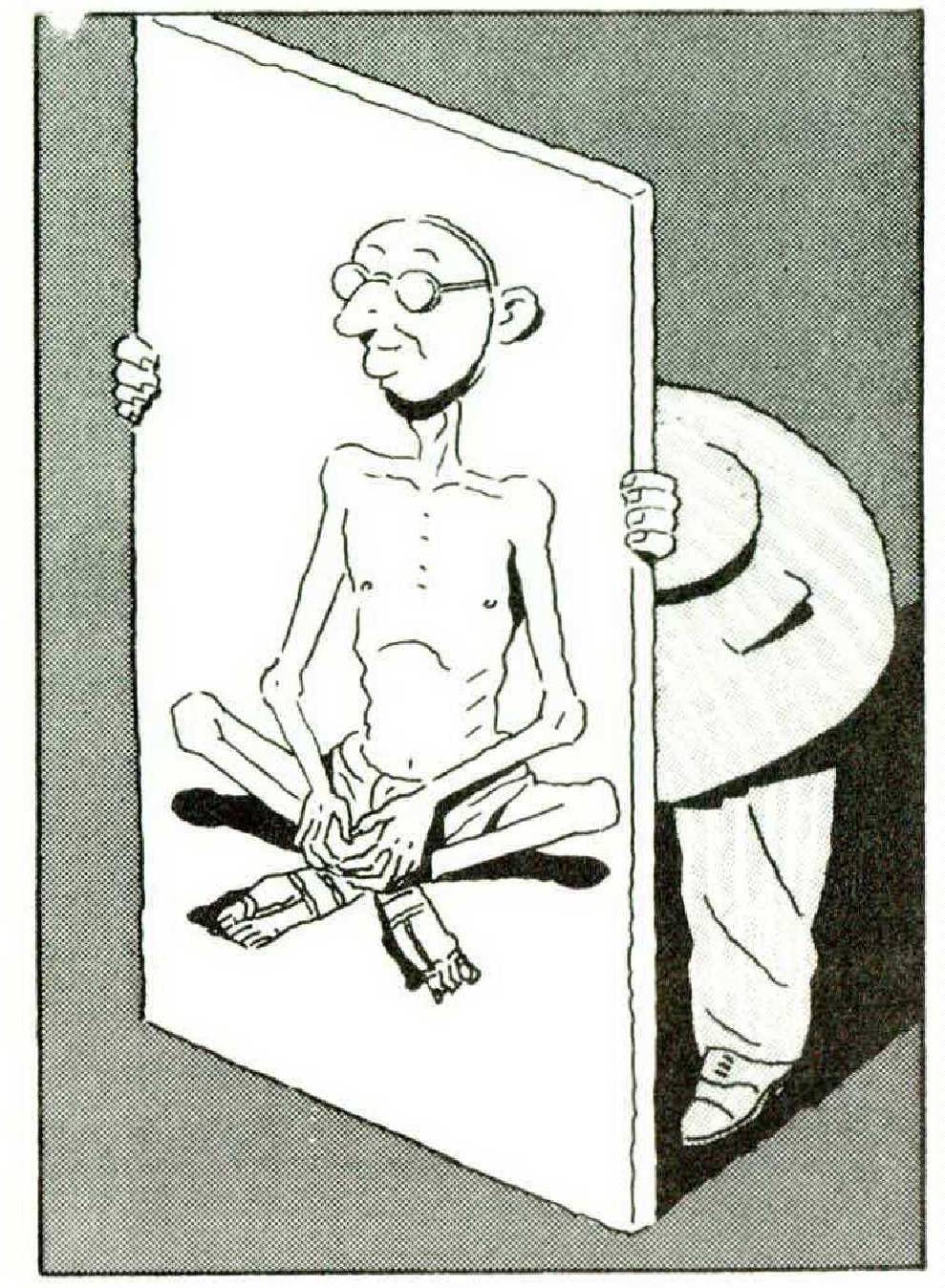
Mohandas Gandhi was actually a portly behind-the-scenes type who dressed, mutatis mutandis, like Col. Tom Parker, except that—in the curious belief that it would impress the English—he carried a shillelagh. For photo opportunities, of course, there were the several interchangeable, wizened standins.
Cleopatra was a man, and not even a very prepossessing one, who, as a matter of fact, was immune, because of the quantities of garlic he ate, to asp venom.
The historical Charlemagne wasn’t a man but rather a primitive committee.
Vincent Van Gogh never set foot outside the town of Bort-les-Orgues, France, and his mother painted all of his best things. The famous mailed decapitated ear was a figment of the public-relations firm engaged by Van Gogh’s dealer—himself not an imaginative person. Actually, Van Gogh never had a mistress, and took both of his ears to the grave. Indeed, the only reason that the outsized woolen cap his mother made him wear never slipped completely down over his eyes was that his ears were always so large and firmly attached. Henever had any moods, incidentally, to speak of.
Romulus and Remus were no more suckled by a wolf than you and I and Henry Steele Commager were. They were suckered on a wharf.
Then I snapped back out of italics and started to think: “History, wait a minute. You owe me more than that.”I can understand why historians resist being doomed to repeat themselves, but why don’t they try making historical figures more numinous, instead of less? That’s what the average person would do, if he or she had the chance to be a historian.
Millard Fillmore. If the truth be told, Fillmore would roll into the Oval Office about 9:45 in the morning after being up half the night playing Whigs and Masons with Henry Clay. Whigs and Masons was a wrestling game. It is said—even if not by historians—that Fillmore would summon Alex H. H. Stuart, his Secretary of the Interior1, to tie his (Fillmore’s) right foot to his (again, Fillmore’s) left arm and then he (yes, Fillmore) would still throw Clay four times in five. Of Whigs and Masons, Fillmore was the Magic Johnson.
But after getting into the office a couple of hours behind everybody else—and you know the secretaries are all grumbling because why should they be at their desks hitting it bright and early when the President was out till all hours horsing around—Fillmore would immediately put everyone in a dynamic, progressive frame of mind by telling how he bested legendary riverman Mike Fink in a gator-cowing contest. (Fillmore, in only a breechclout, once cowed a 1,200pound gator just by going “Well?” at it. This has been documented.)
Then Fillmore would make a statement of national purpose so clearly put and deeply felt that all those who heard him, however small their roles in the government’s workings, felt lifted and involved: this, Fillmore’s listeners felt, is why we must hold our great plural union together, and never let it succumb to meanness or fixed ideas. And “here,”the White House staff and any average citizens on hand would reflect, “is one who is larger than we, yet one of us.”
At which juncture Clay might pop in, tousled from the night before. (No matter what he had been up to, Fillmore always arrived for business looking cleaner than the Board of Health.) Fillmore would wink at Clay’s stout, scuffed Kentucky brogans and lighten the moment with a remark about “feet of Clay,” which Clay himself—being possessed of a firm yet unoppressive sense of his own authenticity—would take in good spirits.
Another thing about Fillmore, he never secretly taped his telephone conversations. □
- Ironically enough quite an extrovert, Stuart was a real pistol in his own right whose mother, a seeress, had imparted unto him the power literally to contain multitudes. It is from his middle initials alone that we derive not only Hubert Humphrey and Herbert Hoover but also Horace Heidt.↩