Gatsby Without the Dream
BY ROY BLOUNT, JR.
DREAM MAKER: The Rise and Fall of John Z. DeLorean byand. Putnam’s, $16.95.
GRAND DELUSIONS: The Cosmic Career of John De Lorean by. Viking, $15.95.
ON THE EVIDENCE of these two withering accounts of his rise and fall, John DeLorean resembles Jay Gatsby in several particulars. For one thing, according to Grand Delusions, DeLorean changed his name—inserting a space between the “De” and the “Lorean” because it looked more aristocratic that way.Dream Maker does not acknowledge this space. Neither do I.
Then there is DeLorean’s reportedly enthralling way of focusing on a person, which (though neither of these books makes the nature of DeLorean’s vaunted charm very clear) may be construed to have entailed a smile like Gatsby’s, which, in Nick Carraway’s words,
. . . faced—or seemed to face— the whole eternal world for an instant, and then concentrated on you with an irresistible prejudice in your favor. It understood you just as far as you wanted to be understood, believed in you as you would like to believe in yourself, and assured you that it had precisely the impression of you that, at your best, you hoped to convey. Precisely at that point it vanished—and I was looking at an elegant young roughneck . . . .”
Like Gatsby, DeLorean is a striking physical figure of an enigmatic, selfmade man who disdains his roots, drinks little, fails to fit into the high socializing to which his aspirations have led him, and does a great deal of dubious business by phone. A beautiful woman is important to DeLorean, who, instead of clinging to Gatsbian dreams of one Daisy, has beat back against the current by remarrying twice, each time to a woman younger than he by more years than her predecessor. Sporty automobiles play a key role in each man’s story. So do illicit intoxicants.
Of course, Gatsby got away with the bootlegging that made his fortune. (Incidentally, how might history have been changed if Joseph Kennedy, Sr., had been caught in a government sting?) DeLorean seems to have gotten away with a great many financial improprieties (like the one Gatsby’s operative seems to have been caught at just as Gatsby was dying), but his one known venture into cocaine dealing turned out to be an FBI set-up that caused his arrest and finally brought down his automotive empire.
When DeLorean was nabbed, just over a year ago, for conspiring to bring a big load of cocaine into the country in or-
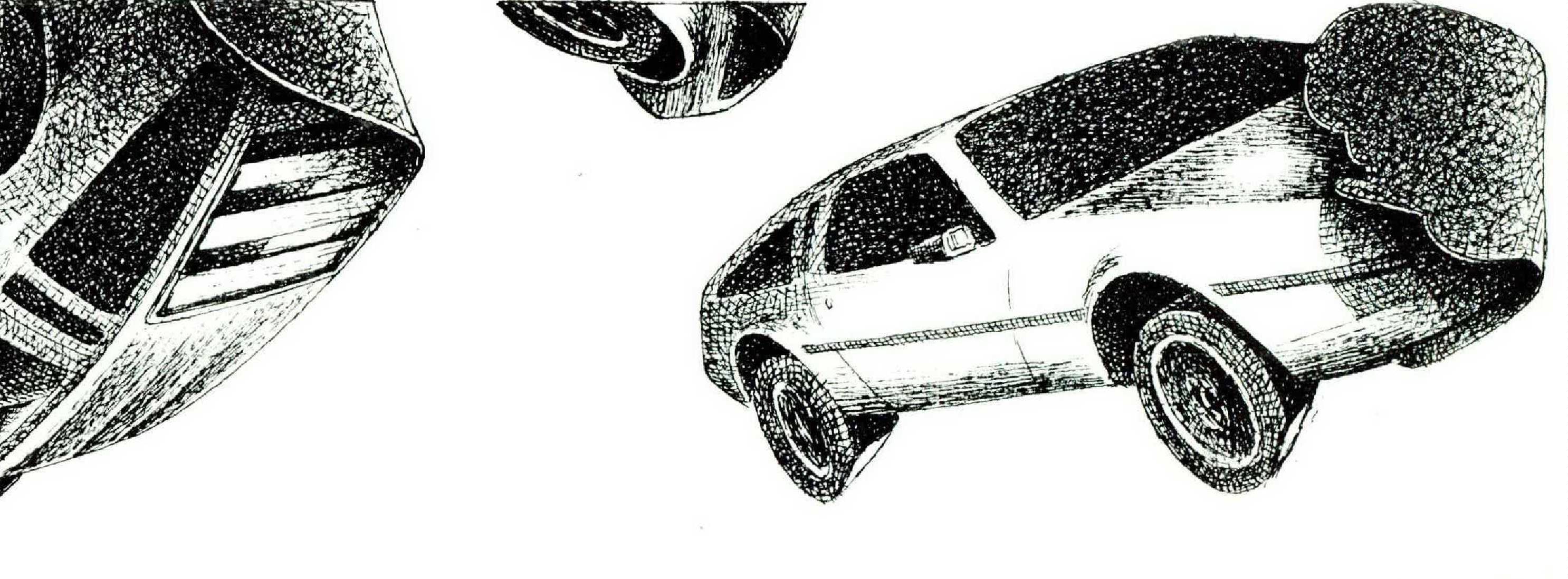
der to raise $15 million, it was possible to feel sympathetic toward him. He’d been desperate to find cash to save his dream, the DeLorean Motor Company, which against all odds had managed to produce what he called “the ethical car”—a car projected to be extraordinarily safe, fast, efficient, and beautiful. DeLorean, widely believed to have scorned a great future at General Motors because corporate soullessness chafed, had proved that one man’s operation could create and market an automobile from scratch. DMC’s factory in strife-torn Belfast employed workers previously without hope. DeLorean himself did look a bit too much like a slightly long-in-the-tooth model for gothic-novel covers, but hey, he had a lovely model-actress wife, Cristina Ferrare, and two nice-looking kids.
IN THE WAKE of these books, all that remains to DeLorean’s credit is the attractive family. Dream Maker and Grand Delusions assert that the car was badly made; that DeLorean became indifferent to its quality; that he was probably fired by General Motors, and, at any rate, was not so hot a shot there as he has claimed; that he is responsible for dashing the hopes he raised in Belfast (not to mention blowing $160 million of British taxpayers’ money); that his resemblance to Dick Tracy’s friend Vitamin Flintheart was not natural but contrived by facelifts and surgical strengthening (foam implants) of the chin; and that the cocaine deal, though dumber, seems scarcely less ethical than many another fund-raiser the books say he mounted, without the excuse of desperation, over the years.
A dreary story. Both books lay it out very thoroughly. In Grand Delusions, Hillel Levin, an editor of Monthly De-troit magazine, presents the American aspects of DeLorean’s career somewhat more fully. In Dream Maker, which is, on the whole, the better read, the British financial editor Ivan Fallon and the BBC business analyst James Srodes get further into the European end, although they accept DeLorean’s claim that his father was from Alsace-Lorraine. Levin reveals that the man was in fact—to DeLorean’s chagrin, for some reason—Rumanian. Neither book has the ugly vividness of last year’s flash of movie-biz putrescence Indecent Exposure, but these authors have done a great deal of hard reporting, and they show a refreshing scrupulousness in refraining from reading people’s thoughts and from recreating boardroom confrontations as if verbatim. (A lawyer for DeLorean says that both books are full of lies.)
I wish they had managed to render DeLorean a more interesting character. If only for the sake of complexity, I would have liked to believe that DeLorean was a serious man brought down by the difficulty of his mission and the imagistic hustling that large-scale American business requires. But, no, what we have here is a sort of elegant fifty-eightyear-old roughneck.
DeLorean is described as a predominantly unentertaining presence, in and out of the office, and I’m not even convinced that he worked very hard. Both these books give him credit for industriousness, and he certainly kept an inordinate number of deals in the air simultaneously, but a good many of his office hours were devoted to looking through magazines like Country Life in search of estates to buy in England or New Jersey. He would tear out pictures that appealed to him, and one of his secretaries would write off for information.
“Every little thought that came into his head he had to put down in a memo,” says his former executive assistant. “Some were about the car company. Others were about people. Some seemed to be just stray ideas. . . . We had a typist going full time just typing up all his notes. There were times when he’d just disappear for a few hours in the middle of the day without warning anyone and sneak over to the New York Athletic Club and lift weights.”
Having sold himself as a maverick, DeLorean bent his energies to creating buffer after buffer between himself and responsibility. Before he apparently tried cocaine-based financing, he made an unsuccessful last-ditch effort to raise funds by floating a stock-issue entity whose “principal shareholder . . . would not be John DeLorean personally, but the DeLorean Manufacturing Company, which in turn was wholly owned by a Nevada-registered company called Cristina. DeLorean owned 100 percent of Cristina.” By this time, the DeLorean Motor Company was already in dreadful shape, and allegations of chicanery had been brought against DeLorean by former employees. Yet prominent Wall Street firms worked diligently with him to extend this investment opportunity to the American public. (From my economic viewpoint—that of a piecework small businessman with no typist—American business on the creative-financing level appears to be infuriatingly under-regulated and ill audited.)
THE AMAZING THING is that DeLorean seems to have screwed up a dream that he could have pulled off. He was good at persuading people to capitalize him and to work hard for him, and he was a good engineer. According to both books, however, he wasted the capital, abused his co-workers, and lost interest in engineering. His true vocation seems to have been asset-grabbing. Grand Delusions asserts that DeLorean built up a personal financial base by snookering one party out of a ranch, another out of a dealership, another out of an invention. Dream Maker goes into an aspect of the “ethical car" enterprise that became more important to DeLorean than the car itself: a mysterious Swiss-based, Panama-registered company called GPD, which DeLorean seems to have set up as a device for diverting millions of dollars into his own exchequer. If you have any children or domestic help whom you suspect of Marxist leanings—unlikely as that may be, in the eighties—don’t let them read these books.
The DeLorean of Grand Delusions was such a trashy manipulator. One of his litigating tactics, the book says, was to refuse to pay a given set of his lawyers, thereby delaying a case and adding to the plaintiff’s legal expenses. When he moved DMC headquarters from Detroit to New York, Levin says, he charged the company $40,000 for the old furniture in his Detroit office, which never made it to New York, and he took $78,100 as a “locale adjustment” although he had already been living in Manhattan with his family for two years. Levin also says that he borrowed a cardealer’s rare gull-wing Mercedes, never returned it, and had the company buy it from his bully-boy aide, Roy Nesseth, for $20,000.
Here is an anecdote from Dream Maker, told by “a long-time Detroit friend and business associate” of DeLorean’s. After his second marriage, to Kelly Harmon, ended, DeLorean returned from California elated, because
. . . his Hollywood friends had hired three prostitutes who looked a lot like Kelly. . . . So they get these girls all made up with their hair and makeup just like Kelly’s. . . . And then they put the girls in a house at Malibu and packed it full of booze and threw John in the middle of it for the weekend. John . . . said it was the classiest thing anyone had ever done for him—that was his phrase, classy.
DeLorean got business-community and foreign-government juices flowing because he had proved so mediagenic. In magazine interviews, he had been the charismatic, socially conscious American independent. And yet he is scarcely muckrakegenic, or whatever the term is for a person who leaps—as David Begelman did in Indecent Exposure—from the pages of an exposé. The most striking character in these books is DeLorean’s sidekick Nesseth, whose principal function was to browbeat anyone who stood in DeLorean’s way, and who “lived on airplanes.” “The man didn’t think anything of booking three or four different flights in different directions and not deciding where he was going to go until he got to the airport.”
One source who was burned by DeLorean and Nesseth describes what the latter was like over breakfast. “He ordered a fried egg and when the waitress brought it, he told her it was overcooked, and he just tossed it off the plate and onto the floor. That’s when I realized what kind of a guy we were dealing with.”
Lawyers I have talked to feel that DeLorean will probably beat the cocaine rap on grounds of entrapment. He has apparently retained plenty of money that was not touched—in fact was in large part generated—by his automotive debacle. The cocaine sting had this positive effect: it rendered DeLorean notorious enough to give rise to these books, which should serve to warn investors away from his enterprises hereafter.
But DeLorean’s delusions are too banal to resonate like Gatsby’s pursuit of “the orgiastic future.” DeLorean surely did believe in “the green light,”as in “go for it”: hop on the Concorde, whip up a new corporate entity, appropriate some poor soul’s Mercedes. Go for it, with no real notion of what “it” is, except liquidity. In this he is like the heroes of such successful recent movies as Risky Business and Trading Places. In Grand Delusions, one of DeLorean’s Belfast executives is quoted as calling him “this caricature of an American.”That seems right.