Glorious John
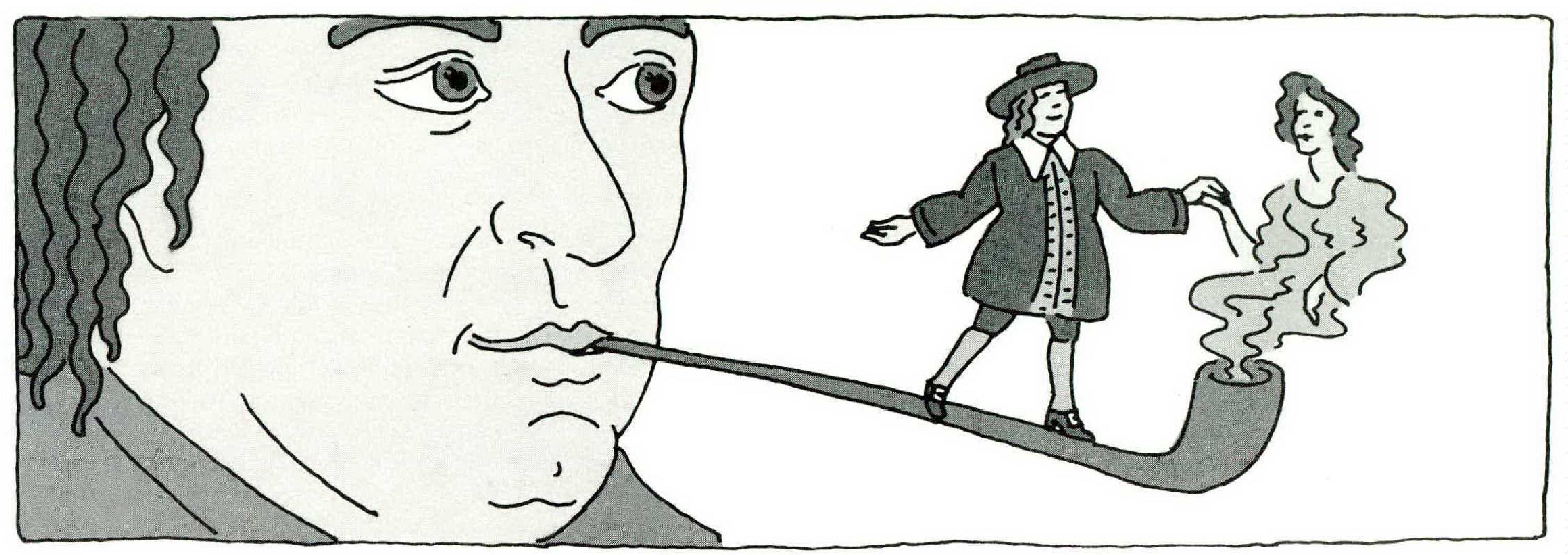
BY ANTHONY BURGESS
JOHN DRYDEN AND HIS WORLD
by
Yale University Press, $29.95.
EVEN TELEVISION WATCHERS know something of John Dryden’s world, if not of John Dryden. Forever Amber is a frequent late-night movie, with everyone accurately dressed and Henry Purcell on the sound track, though the dialogue would have benefited from a good dose of Restoration drama. The major dates of Dryden’s time are moderately familiar—in 1660 Charles II came to the throne, after Cromwell’s Commonwealth; 1665 brought the Great Plague, which was burned out by the Great Fire of 1666. Dryden lived through these events and wrote about them in witty and elegant verse. He saw James, Duke of York (who renamed New Amsterdam), come to brief power as James II, fail to reimpose Catholicism on a Protestant people, and then yield to Dutch billy, or William of Orange, and the Hanoverian dynasty that was to antagonize America. Dryden’s world is not at all remote. Listeners to the BBC’s Overseas Service hear the news prefaced by “Lilliburlero,” the tune that drove James II out of his kingdom. It is in order to regard Dryden as a modern writer, not one who has to be cosseted by scholars and cautiously resurrected. Lines like these are still very much alive:
In pious times, e’r Priest-craft did begin,
Before Polygamy was made a sin;
When man, on many, multiply’d his kind,
E’r one to one was, cursedly, confin’d . . .
Then, Israel’s Monarch, after Heaven’s own heart,
His vigorous warmth did, variously, impart
To Wives and Slaves: And, wide as his Command,
Scatter’d his Maker’s Image through the Land.
Before Polygamy was made a sin;
When man, on many, multiply’d his kind,
E’r one to one was, cursedly, confin’d . . .
Then, Israel’s Monarch, after Heaven’s own heart,
His vigorous warmth did, variously, impart
To Wives and Slaves: And, wide as his Command,
Scatter’d his Maker’s Image through the Land.
That is the opening of Absalom and Achitophel, in which the state of England at the time of the Monmouth rebellion is presented in the terms of biblical history. Charles II, lavishly philoprogenitive, is King David; his illegitimate son the Duke of Monmouth is Absalom; the Earl of Shaftesbury is the accursed counselor Achitophel; the English are the Jews, a moody chosen people. Plague and fire and trade wars with the Dutch were small beer compared with the problem of the monarchical succession. Charles II’s queen was a Catholic, and his major financier was the Catholic King of France; the religious convictions of Charles’s brother James were all too well known. The Monmouth rebellion was an attempt to secure the Protestant succession. Dryden turned it all into a comic masterpiece untainted by frivolity. He became a Catholic himself, and in Religio Laici and The Hind and the Panther, remarkable didactic poems, limned the progress of his soul. Yet he once had an affection for Monmouth. Dryden was a complex and divided character who wrote verse of brilliant lucidity. Some of us regard him as a great poet, though that title is of very recent provenance. The Victorians thought little of him; it was left to T. S. Eliot to re-evaluate the nature of poetry and to place Dryden higher than Keats and Shelley. Poetry needed to look into the cerebral cortex and the digestive tract; the romantic heart was not enough. Poetry had to be well made, not just a clumsy effusion ennobled by its sincerity. Dryden was a master of form, a brilliant professional. Our own age needs a Dryden more than it needs a Tennyson or a Swinburne.
PROFESSOR WINN’S detailed biography shows us a man whom today’s selfsupporting scribblers are bound to find deeply sympathetic. In a barely literate age, when literature was a hobby for aristocrats, this small country gentleman, with a pitiable rent from land and no patron, strove to make a living from writing. Literature then had a social function: it commented on events; it praised great men in power. The age rightly saw that verse, especially the well-chiseled heroic couplet or heroic stanza, performed the task of memorializing current history far more efficiently than prose. The brisk couplet is memorable; prose dawdles. For all the acknowledged importance of the writer’s craft, the concept of the well-paid professional had not yet come into being. It was only with Alexander Pope, Dryden’s successor, that the writer could call the tune, if he were great enough, and demand large advances. Dryden did what he could: he accepted the Cromwellian Commonwealth and then the Stuart Restoration.
He wrote Astraea Redux to greet Charles’s reassumption of his kingdom and Annus Mirabilis to celebrate Charles’s heroic rehabilitation of a burned-out capital and his skilled management of a trade war. He was eventually made Poet Laureate. He sought advancement, which was in order for a struggling poet.
Like Shakespeare, he also sought money from the stage. The Puritans had killed the London theater and intermitted a great dramatic tradition. The Restoration dramatists had to start again from scratch. Dryden wrote moderately successful comedies (the palm has to go to Congreve and Wycherley) and grew bold enough to seem to challenge the tragic Shakespeare on his own ground. All for Love does not attempt to improve on Antony and Cleopatra; it merely dares to be different. The State of Innocence is Dryden’s version of Paradise Lost, and its crisp couplets are not meant to be an improvement on the Miltonic organ music. Dryden idolized Milton, despite the latter’s regicidal Puritanism, but knew he could not learn from him. He idolized Chaucer and Shakespeare, too, but had the historical sense to realize that the present could not learn much from the past. He knew he lived in an age of remaking, and he was one of the great creators of a new sensibility.
His greatness was acknowledged negatively by scurrilous detractors. It was a scurrilous age, and Dryden himself was not above scurrility, though he managed it with a delicacy not granted to smuthounds like the Earl of Rochester. A small, squat man with a beak, Dryden was sneered at as “Drvbob,” a term that referred to coition without emission. His gift of repartee and devastating satire did not permit him to stand in Olympian aloofness when he was attacked as a political trimmer or a closet sodomite: he devastated a minor poet in Mar Flecknoe (“The rest to some faint meaning make pretence,/But Shadwell never deviates into sense”) and prepared the way for Pope’s Dunciad. He lived in a contentious period in which it was not proper for a poet to withdraw to a country estate and neglect the duties of citizenship. Toward the end of his life Dryden translated Virgil, but self-immersion in the times of the Emperor Augustus was only a means of obliquely acknowledging that he belonged to the age of James II.
Arms, and the Man I sing, who, forc’d by Fate,
And haughty Juno’s unrelenting Hate;
Expell’d and exil’d, left the Trojan Shoar:
Long Labours, both by Sea and Land, he bore;
And in the doubtful War, before he won
The Latian Realm, and built the
destin’d Town
And haughty Juno’s unrelenting Hate;
Expell’d and exil’d, left the Trojan Shoar:
Long Labours, both by Sea and Land, he bore;
And in the doubtful War, before he won
The Latian Realm, and built the
destin’d Town
That is good translation, but it is also more. Virgil’s fata profugus is expanded to “Forc’d” and “expell’d” and “exil’d,” and it is natural to see there a reference to the veteran general and admiral James II, brooding on expulsion from his rightful realm in St. Germain. And when Dryden writes
His banish’d gods restor’d to
Rites Divine,
And setl’d sure Succession in
his Line
Rites Divine,
And setl’d sure Succession in
his Line
he is hardly translating Virgil at all: he is referring to the hopes of persecuted Catholics and the restored Jacobite succession. He is, to be fanciful, looking ahead to 1715 and 1745 and Hollywood films about Bonnie Prince Charlie. When Orangemen and IRA terrorists clash in Ulster, and the Battle of the Boyne is memorialized as a triumph and a disaster, John Dryden is still with us, poet of an age in which so many of our present preoccupations began—human rights and a rational constitution, mercantilism, the limitations of political power, public morality and the problems of faith.
It might seem bizarre to relate John Dryden to Rudyard Kipling, but in both you find the ability to mythicize public events and summarize in a well-wrought line or two a national predicament and a way out of it. We no longer have public poets, and the mass of private poets we have are mostly incompetent to divine what is happening in the great world of affairs. We need writers like Dryden, able to put in the mouth of a ruler words like “Beware the fury of a patient man” and say of a political idiot that he was “everything by starts, and nothing long.” Dryden, living to see the end of a century, could bring on stage a number of mythical figures to say about it all that had to be said:
Momus: All, all, of a piece throughout;
Pointing to Diana: Thy Chase had a Beast in View.
To Mars: Thy Wars brought
nothing about; To Venus: Thy Lovers were all untrue.
Janus: ‘Tis well an Old Age is out,
Chronos: And time to begin a New.
Pointing to Diana: Thy Chase had a Beast in View.
To Mars: Thy Wars brought
nothing about; To Venus: Thy Lovers were all untrue.
Janus: ‘Tis well an Old Age is out,
Chronos: And time to begin a New.
Will we be able to say much more when our millennium ends?
PROFESSOR WINN’S book is admirably comprehensive, and it undoubtedly will, as he hopes, send lovers of fine craft and high art back to John Dryden—the “glorious John” whom Alexander Pope, awed, saw in his winter or summer chair in Will’s coffee house. I have only one complaint, and it is one that applies to most biographies of poets long dead. We see Dryden’s world, but we do not hear it. American readers may fancy that Charles II spoke like George Sanders, all too patricianly modern British, but they would do well to listen for his tones in present-day Dublin. Recite Dryden’s lines from his Song for St. Cecilia’s Day in the rollicking phonemes of a New York cop and you will come close to the sound of Restoration London:
The double double double beat
Of the thundering DRUM
Cryes, Heark the Foes come;
Charge, Charge, ‘tis too late to retreat
Of the thundering DRUM
Cryes, Heark the Foes come;
Charge, Charge, ‘tis too late to retreat
(Note the very Drydenian realism— cynicism, if you wish—of that last line.) Chroniclers of an age ought to be able to chronicle its language. Poems are more than marks on paper.