Rediscovering Complexity
A handful of American thinkers several decades ago sought to revitalize political liberalism by ridding it of platitudes and cant, and instilling an appreciation of the real world’s contrarieties. Over the years this critique of liberalism has been distorted and misinterpreted, and in our own time it has been used—wrongly—to justify the attitudes and policies called to mind by the term “neoconservative.”It is time, the author argues, to recover the original ideas.
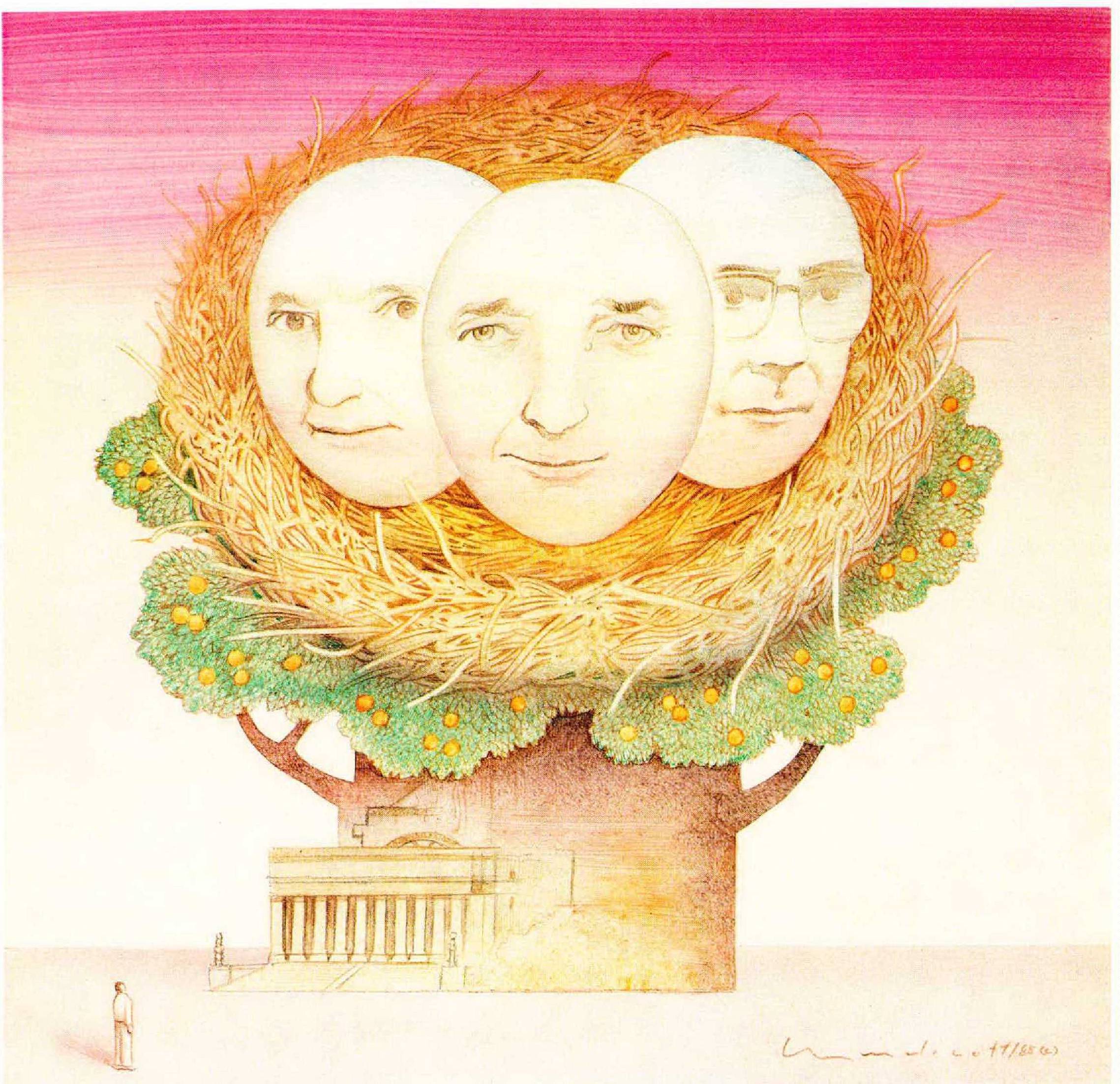
Fulfilling the promise turned out, not surprisingly, to be a larger order than anticipated. Over the decades threats came both from the ascendancy of the specialist and from the pressure of unprecedented public events. In the sixties, modernism—a set of ideas subversive of political and moral authority—took to the streets; gang warfare subsequently commenced between modernism and counterideologies. The warfare is still in progress, to judge from recent major quasi-intellectual disputes (for instance, over Robert Bork’s nomination to the Supreme Court and Allan Bloom’s Closing of the American Mind). Memories of the mid-century moment of promise have faded badly.
Why should one attempt to freshen them now? Partly because a visit to the pertinent historical corridor puts us in touch with a valuable—and often badly misinterpreted— body of political thought. Its chief ideas and themes were arrived at independently, by thinkers in separate fields; later, as the principals grew familiar with one another’s work, the ideas became mutually animating and reinforcing. At length a successor generation, with a different selfconcept, transformed the themes for its own purposes, readying them, as it turned out, for the mind of the eighties, and producing in that process what came to be called neoconservatism. (Several who participated in the transformation are household names for us—Reagan-era fixtures.) At this late date neoconservatism itself—essentially an oversimplification and distortion of the mid-century critique of liberalism—needs no exegesis. But the ideas neoconservatism distorted warrant careful re-examination. Acquaintance with this original body of thought, as it existed in its freshness, could be useful to any would-be architect of future political renewal.
A second reason for retrospection just now is to correct the illusion of autonomy. Even the most casual comparison of relevant texts from the past and present quickens awareness of the messy, unpredictable ways in which, despite the will to independence and an enthusiasm for the “tradition of the new,” we continue to live life backward and forward in time, and can never win full release from the hand of the past. No formal history, armored with methodology and documentation, is required to show us this. A nudge of memory suffices, a glance over the shoulder at a yesterday that’s still as close at hand as the bookshelves in more than a few middle-class American homes.
The Sound of the Elders: Double Truths
THE THINKERS RESPONSIBLE FOR THE AMERICAN Resurgence of thought were remarkable for general intelligence—the capacity to construct order out of confusion not for the purpose of self-dazzlement but to help the community as a whole think and feel its way forward to clearer social vision. Uncommonly alert to the reductive practices and habits of mind which then, as now, ossified factions, they fashioned an exceptionally useful standard for the evaluation of social and political discourse. The most important reason for returning to them is to recover that standard for effective, immediate use.
The debate in which the standard was shaped centered on three issues:
The efficacy of “purposive social action" undertaken with an eye to solving local, national, or global problems.
The adequacy of historical models presenting the American past—from the age of Jackson through the New Deal and later—as a series of battles pitting the purity of the folk, the little people, against the selfishness of the interests (big business).
Whether intense adherence to absolutes—ideals of progress, humanitarianism, and justice—facilitates or hinders the development of sound moral imagination.
The shapers of the standard—Robert Merton, Richard Hofstadter, and Lionel Trilling (a sociologist, a historian, and a littérateur)—were well known to one another; occupied the same base, Columbia University; attained commanding reputations in their respective professions at early ages; and shared an unexpressed yet momentous goal: emancipating American liberalism from naiveté.
About the closeness of the relationships of these three to one another, as thinkers, there is no doubt, and the interactions of their thought are absorbing. In the 1940s and 1950s, employing different methods and tools, investigating different materials (historical movements, novels and poems, social structure), Hofstadter, Trilling, and Merton separately published critiques of simplistic liberal moralism as that phenomenon engaged their academically specialized eyes. Hofstadter, bent on overturning idealized versions of the Populist Crusade, claimed that liberal intellectuals “suffer from a sense of isolation which they usually seek to surmount by finding ways of getting into rapport with the people, and they readily succumb to a tendency to sentimentalize the folk.” Trilling, building a case for the living novelist he admired most (E. M. Forster), located that novelist’s distinction in his witty brief against the “liberal mind”—the mind that believes “the order of human affairs owes it a simple logic: good is good and bad is bad”; the mind that understands “the moods of optimism and pessimism” but can neither name nor understand “the mood that is the response to good-and-evil.” Merton, for his part, supplied a theoretical analysis of social structure which cast light on the “latent,” as opposed to “manifest,”functions of institutions, and upon unintended, as opposed to intended, consequences of social action; in Social Theory and Social Structure (1949) he effectively undermined simplistic liberal versions of such institutions as the “corrupt” urban political machine.
All three writers were selectively influenced by Marx. Although increasingly heedful of Marxism’s anti-individualist strain and of the inapplicability of Marxian economic concepts to advanced industrial nations, they could not delete from consciousness the convictions and attitudes that had drawn them to Marx in the first place. Their writing is bare of signs of impassivity in the face either of the suffering of the underclass or of destructive uses of the social wealth of the West. They were capable of anger at unintelligent, self-deceiving caring—“concern” that lacked vitality because encrusted in reality-obscuring cliché and piety. They held that a liberalism lacking in critical self-consciousness, unwilling to confront the toughness of its moral and social task, would in time be helpless to beat back totalitarian threats. And since, as Trilling pointed out in 1950, there was no chance that help could come from American conservatism (that tradition was intellectually dead), he and the others would have to try to supply the criticism themselves, from within.
But obviously it could not be destructive criticism— would of necessity fight hard against the righteous rage that leads some correctors of faults to demolish the structures they set out to repair. Functioning as a critic-fromwithin of liberalism would mean turning an unsparing light on weaknesses without gutting either one’s own best self or the best selves of like minds. The talents required would include both self-restraint and adeptness at the handling of double truths.
THOSE GIFTS ARE WELL ILLUSTRATED IN THE PERson of Stephen Elwin, the hero of “The Other Margaret,” a short story by Trilling that appeared in Partisan Review in 1945. Among the earliest attempts by a reflective critic of liberalism to use his urban experience as a means of revealing the contrarieties of liberal faith, the story follows Elwin, a publisher, through a routine urban day in which he and his wife encounter misbehavior on the part of several representatives of the underclass. The encounters direct the hero’s inner reflections and prepare him for the story’s crisis, which is brought on by the misbehavior of the Elwin family’s new black maid, the other Margaret of the title. (Elwin’s daughter, a teenaged schoolgirl, is also named Margaret.)
The approach to the crisis begins before dinner, when Elwin’s wife, patience gone, tells her husband and daughter that the new maid is a “nasty, mean person.” The daughter objects, having learned at her progressive school that Negro domestic servants are exploited by families like her own. When she proceeds to argue, further, that the poor can’t be held responsible for their acts, Elwin—to his own moderate surprise— interrupts. “Why not?” he asks, and his daughter explains, “Society didn’t give her a chance. . . . She has a handicap. Because she’s colored. She has to struggle so hard—against prejudice. It’s so hard for her.”
Cautiously, non-rhetorically, Elwin draws young Margaret’s attention to family experiences—happy experiences—with an earlier black maid, proposing that handicaps are borne differently by different people and that moral behavior depends heavily on the individual human being’s self-conception. The earlier black maid had had to borrow money from the Elwins and was still repaying it. Elwin’s daughter insists that “she can’t afford it”; Elwin, agreeing, adds that “she can’t afford not to,” either, because “she needs to think of herself . . . as a responsible person.”
Comes an eruption, a few moments later: Margaret the new maid gives notice abruptly to her employers, and then smashes, seemingly by intention, a bit of pottery that Margaret the daughter had made for her mother as a birthday present. This event, together with Elwin’s previous criticism of the talk of “prejudice” and “handicaps,” begins young Margaret’s advance from cant.
Much commented on at the time of its publication, “The Other Margaret” is Forsterian in aspiration, a shade solemn in execution, and (for us) outdated in idiom; it is not a masterwork of fiction. It is, however, a suggestive portrait of the liberal wrestling with himself. Like much of Trilling’s best literary criticism, it shows us a mind determined not to dodge the difficulties inherent in any autarchic concept of either societal or personal responsibility. Frustrated by those difficulties, Elwin has been sorting them out for himself, and takes no satisfaction in his effort to do the same for his daughter. (Satisfaction isn’t the hallmark of “the mood that is the response to good-andevil.”) When, toward the end, he declares himself, his tone is rueful:
Had he been truly the wise man he wanted to be, he would have been able to explain, to Margaret and himself, the nature of the double truth. As much as Margaret, he believed that “society is responsible.” He believed the other truth too [the truth of personal responsibility].
But it is a declaration, and it is commensurate with the events of Elwin’s day. Those events— ranging from a patch of Jew-baiting witnessed by his wife to a bus conductor’s harshness to a child—bring pointed reminders that individual failures to achieve standards of personal responsibility are in part a function of lack of advantage (the “gentle rearing and the good education that made a man like Stephen Elwin answerable for all his actions”). The same events confirm that mean deeds are committed by whites and blacks alike and demand to be considered in the light of the circumstances generating the need for acts of resistance and rebellion; the circumstance that counts most is that low-income blacks are, in the main, bullied and powerless. As “The Other Margaret” closes in on the conduct of one member of that class—and upon one kind of liberal platitude — none of these reminders is forgotten. And as a result the unflamboyant assertion of belief in a “double truth” has strength and weight.
AN EXACTLY PARALLEL EFFORT-AN EFFORT TO SUBject cant to cold-eyed scrutiny without obstructing potential moral progress—animates Hofstadter’s and Merton’s writing. And the authorial personas of both scholars constitute models of liberal thoughtfulness comparable to that which Trilling created in Stephen Elwin.
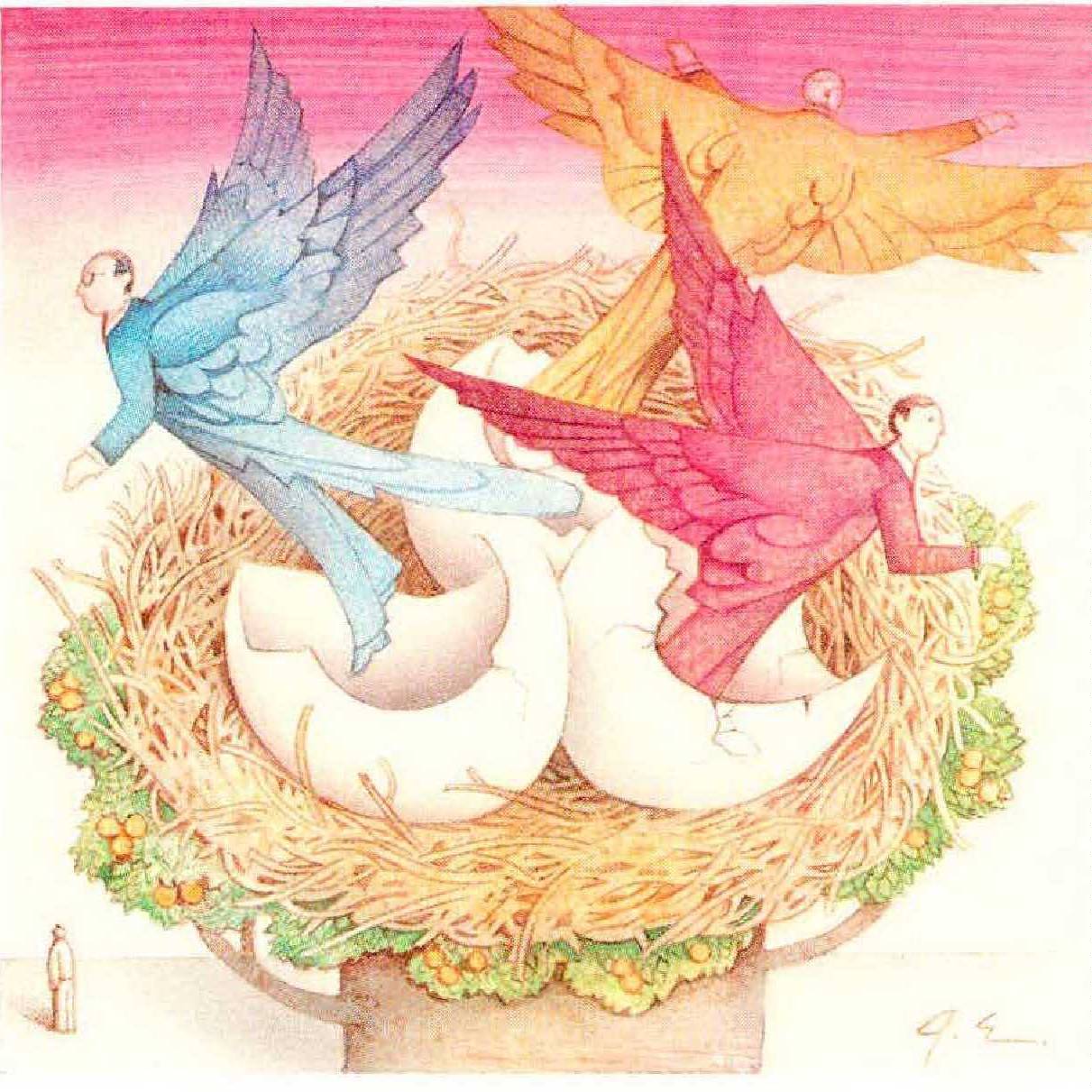
The moral oversimplification that troubled Hofstadter arose, as noted, in contemporary idealizations of populism and progressivism as crusades, by the little people, to “bring back a kind of morality and civic purity that was . . . believed to have been lost.” Be realistic, Hofstadter counseled himself and others in The Age of Reform (1955). The evidence reveals that populists were often parochial and sometimes anti-Semitic. Then, as ever, heartland innocence had a kinky streak. (“The commercial farmer was beginning to cast off habits of thought and action created almost as much by the persistence of the agrarian myth as by the realities of his position.”) Writers and thinkers who signed on with progressivism, from above, were given to fantasy about the interest of “the masses of people" in “logic and principle.” The moral status of populism and progressivism, like that of other popular reform movements, was “ambiguous,” and fools alone found them credible as crusades.
And yet the movements do not warrant scorn or dismissal. “Humanitarianism, courage, and vision” figured in them from beginning to end. What’s more, “within the limited framework of the reforms that were possible without structural alterations in the American social and economic system, the muckrakers did accomplish something. . . .” If we’re to avoid replacing mere lamebrained puffery with mere bombshell exposé, we need to work our way in closer to the reformist psyche, tracing contrarieties of character, spelling out the etiology of behavior. One reason for the reformers’ excessive revulsion at trusts, bosses, and other evils was that “the religious institutions of Protestantism provided no mechanism to process, drain off, and externalize the sense of guilt.” Another was that “American political traditions provided no strong native tradition of conservatism to reconcile men to evils that could not easily be disposed of.” Evangelical Protestantism induced a conception of responsibility according to which “everyone was in some very serious sense responsible for everything,” and self-deception entered because the typical person in whom the sense of guilt and shame was quickened had no intention of making “any basic changes in a society in which he was so typically a prosperous and respectable figure.”
As the historian shifted focus to character and character formation, he stepped forth as a writer aiming at sustained responsiveness to a multi-leveled moral reality. Advising against idolatry of characters who are “ready to be convinced that the country [is] thoroughly wicked” but aren’t prepared to make personal sacrifices to correct the situation, he nevertheless stood firm for the notion that such idolatry isn’t totally invalidating or crippling. The reformist sensibility did not know itself and certainly deserved chiding for its flaws; but it also commanded respect as a humanizing, broadening, and healing force whose shame was sometimes honest and whose influence saved America from becoming “nothing but a jungle.” Our goal, as readers of our past, should be not to exchange sentimentality for indifference but rather to press ourselves for comprehension of the double truths within our own moral natures.
IT WAS PARTLY FROM ROBERT MERTON’S SOCIAL THEORY and Social Structure that Hofstadter learned how to write about corruption-obsessed reformers from a viewpoint not of superiority to public-spirited concern but of anxiety about the moral dimness that can accompany— and disable—that concern. (Merton had brought off this feat in his treatment of the latent functions of political machines.) But Merton’s unique contribution flowed from his probing of two other liberal faults: overhasty disillusionment with the masses of people and overconfident belief in miracles by planning.
Two chapters of Social Theory and a famous paper titled “The Unanticipated Consequences of Purposive Social Action” dealt with the nature of the obstacles besetting planners and with the reasons for rejecting generalized despair about planning. (“Unanticipated Consequences” was written in 1936, when huge optimism about planning was giving way to huge pessimism.) Merton’s functional analysis uncovered a world layered in ironies: good producing evil, evil producing good, a variety of evidence testifying that benign intention, in emergencies or otherwise, never ensures favorable results. Among the factors handicapping attempts to predict and control the future was the tendency of predictions themselves to affect outcomes. Yet, Merton argued, “widespread, even typical, failures in planning . . . [cannot] be cited as evidence for pessimism”; “it is the successful experiment which is decisive and not the thousand-and-one failures which preceded it. More is learned from the single success than from the multiple failures. . . .” One example of recent success was an interracial housing experiment in Pittsburgh—Merton and a fellow researcher had been following it for several years—in which amity seemed to be replacing fear of conflict. But in describing the project the sociologist cautioned explicitly against beamishness. Success does not come quickly and can’t be achieved by moral hectoring. Changes must be wrought patiently, within the institutional fabric.
And resiliency has to be endless. That quality appeared to be running out among liberals in the late thirties and early forties; one sign of this was the earnest attention then being paid to academicians and others who had begun arraigning the Depression-battered underclass, on pseudobiological grounds, for weakness, lack of self-control, and collapse into deviant or criminal behavior. (A typical arraignment was E. W. Bakke’s The Unemployed Worker, which appeared in 1940). In the manner of Trilling confronting defects in the underclass, Merton rehearsed the varieties of meanness, failure, and worse targeted by these voices of disillusionment. He acknowledged that clinical case histories often establish that episodes of underclass defiance—“dramatic kinds of illicit adaptation”—are “linked with patterns of discipline and socialization in the family.” But then, in the manner of Hofstadter moving sympathetically inside the grievances of farmers and analyzing their systemic roots, Merton explained why it was a mistake to link deviancy solely with individual failure to control “imperious biological drives.” His explanation ranks to this day as the classic account of anomie in the American context.
It began with an analysis of the uniqueness of that context. Here was a culture teaching that everyone should “strive for the same lofty goals,” that “seeming failure is but a way-station to ultimate success,” and that “genuine failure consists only in the lessening or withdrawal of ambition.” Yet, Merton said, the same culture “restricts or completely closes access to approved modes of reaching these goals,” to people at the bottom. Those shut off often know nothing about the “structural sources” of their plight. They’ve been teased away, many of them, from the solidarities that might ease their pain, been instructed to “identify themselves, not with their compeers, but with those at the top. . . .”They can see no substance in—no reasonable place in their daily lives for—virtues and habits considered by others to warrant thoroughgoing respect. Given these realities, what kind of expectations of the poor or of low-income minorities are realistic? And does it make sense to posit biological causes for deviancy? “When poverty and associated disadvantages . . . are linked with a cultural emphasis on pecuniary success as a dominant goal, high rates of criminal behavior are the normal outcome.”
Neither here nor elsewhere in Merton’s work is the principle of personal accountability denied, or a hint offered that crime ceases to be criminal if committed by somebody on the bottom rung. And there is no tolerance of evasion or euphemism. Deviancy swarms in its variousness, bearing plain labels, in his pages: “psychotics, autists, pariahs, outcasts, vagrants, vagabonds, tramps, chronic drunkards and drug addicts.” But the writer drives himself against the overpersonalization of behavior. His book anatomizes disillusionment with the masses in a way that clarifies why the disillusionment itself is a species of blindness to the workings of “the social and economic system.” There are blunt words for the racism lurking in so-called biological accountings of the underclass (“the anti-Negro charges which are not patently false are only speciously true”). Well before the end Social Theory gives substantial reality to the figure of the critic-from-within whose liberal faith is supple and muscular, schooled by harsh realities and disappointing failures, and yet unshaken.
To repeat, each of the Columbia luminaries had a firm sense of the possibilities of this faith. All three clearly believed that exposing strains and contradictions in fundamental values—sympathy, generosity, hope—not only serves truth but ultimately strengthens the values. Often acerb, seldom suffering fools gladly, they nevertheless would not descend, when engaged in dissecting liberal fatuity, into mockery of the feelings of compassion, within themselves and others, that ennoble great struggles against injustice. Their social tone was humane.
The Next Generation: An End to Ambiguity
THE TONE DOES NOT SURVIVE A MONO THE ELDERS’ successors, and its deterioration was evident years before the late sixties and the seventies—the seed time of contemporary conservatism. The works in which Merton, Hofstadter, and Trilling had brilliantly demonstrated the use of that tone were all in print by 1955. Within a decade their versions both of the underclass and of liberal faith had been sharply revised by the younger writers who had begun intellectual life as their disciples. And the process has continued into our own decade, wherein politically influential works of theory regularly invoke the names and language of the first critics-from-within while espousing positions the elders could not approve. Books and authors by the score, hundreds of issues of weekly, monthly, and quarterly journals of opinion, have played a role in the transformation. And this chapter of the history of ideas has been written in a period of social upheaval every phase of which has had as much impact on thinkers and writers as the Depression and the Cold War had upon Merton, Hofstadter, and Trilling.
One key text, Norman Podhoretz’s “My Negro Problem—and Ours,” appeared in 1963. The then-young editor of Commentary had been Trilling’s strident at Columbia, and he emulated his teacher in “My Negro Problem” by drawing on his own urban experience in a critique of liberalism. But there were differences. (Podhoretz had an increasingly embattled relationship with his mentor in Trilling’s later years.) Dispensing with the distancing, softening screen of fiction that locates imagined problems in imagined worlds, Podhoretz wrote his piece as an autobiographical essay set in a cityscape of hard facts. It opened with a description of the author’s puzzlement when, as he was growing up in Brooklyn, in the 1930s, he saw in print the claim that “all Negroes were persecuted.” The puzzlement arose from his experience of being “repeatedly beaten up, robbed, and in general hated, terrorized, and humiliated” by blacks. They “were supposed to be persecuted [but] it was the Negroes who were doing the only persecuting I knew about—and doing it, moreover, to me. . . . What could it mean ... to say that they were badly off and that we were more fortunate?”
The center of “My Negro Problem—and Ours” consists of several pages of incidents of violent real-life bullying by blacks. Podhoretz remembers himself one day angering a “surly Negro boy” named Quentin—who had “a very dark, very cruel, very Oriental-looking face”—by answering in class a question the Negro boy had failed to answer. Later that day Quentin and his little brother, “who is carrying a baseball bat and wearing a grin of malicious anticipation,” come after Podhoretz, “in front of my own house,” and the bat, wielded by Quentin, “crashes colored lights into my head.”
The next thing I know, my mother and sister are standing over me, both of them hysterical. My sister—she who was later to join the “progressive" youth organization—as shouting for the police and screaming imprecations at those dirty little black bastards. They take me upstairs, the doctor comes, the police come. I tell them that the boy who did it was a stranger, that he had been trying to get money from me. They do not believe me, but I am too scared to give them Quentin’s name.
After several similar accounts of murderous violence, Podhoretz asserts that he still feels hatred for blacks, that he believes most white Americans are “for whatever reason, it no longer matters . . . twisted and sick in our feelings about Negroes,” and that he despairs of “the present push toward integration.”He acknowledges that his feelings of hatred must be overcome, alluding to “that clichéd proposition of liberal thought,”namely that “it is wrong for a man to suffer because of the color of his skin.”And in his closing sentence he imagines himself one day having strength enough to give his daughter “my blessing" if she wants to marry a Negro.
In “My Negro Problem” the underclass is powerful—not, as in “The Other Margaret,”simultaneously powerless and capable of making enraging gestures of rebellion. The situation of the underclass vis-à-vis that of the rest of the population becomes enviable (Negroes are “the very embodiment of the values of the street—free, independent, reckless, brave, masculine, erotic . . . not giving a damn for anyone or anything”). The underclass is evoked as all of a piece, not made up of individuals of various colors, variously capable of maintaining standards of personal responsibility, but almost uniformly violent, persecutory, and black. And liberal faith is no longer cliché-ridden and morally energizing; it is purely hypocritical. “Everywhere we look today in the North, we find the curious phenomenon of white middle-class liberals with no previous personal experience of Negroes . . . discovering that their abstract commitment to the cause of Negro rights will not stand the test of a direct confrontation,”and “fleeing in droves to the suburbs.”
Over the years the themes would become increasingly familiar: liberal concern for the underclass is in excess of the value of the members of the class (exaggerates both the worth of the people and the seriousness of their wound), and liberalism itself is a dogmatic faith (“abstract,” inelastic, terrified of fact). But the themes count for less, probably, than the writer’s own self-concept. It’s a self-concept in which reflectiveness is imagined as a process of shucking off. The elder put himself forward as someone aware that without wisdom, judgments of others are empty, and that wisdom, because modest, seldom recognizes itself; his approach to wisdom led through complexity, elaboration, qualification, irony, and self-doubt. The successor, harder-nosed, envisages himself as a specialist in unadorned shocking fact that tells its own story plain. His name for double truth is tedium.
STANLEY ELKINS, AN ACADEMIC HISTORIAN AND THE author of Slavery (1959), spoke in a gentler voice than Podhoretz’s, and on matters more distant, but delivered a yet more jolting message: moral outrage at slavery in nineteenth-century America was groundless. Like Podhoretz, Elkins began with a perspective framed in its basics by the critique of liberalism from within. The crucial text for him was Hofstadter’s The Age of Reform (Hofstadter had been Elkins’s teacher at Columbia). Slavery, a sensation when it appeared and the work with which every scholar in the field still must cope, developed an argument in which mid-nineteenth-century and earlier enemies of slavery corresponded to the enemies of trusts and bosses in Hofstadter’s study of progressivism. The book echoed Hofstadter in tracing the moral extremism of the reformist sensibility to Protestant guilt. But to his reformers Hofstadter had granted courage and a measure of effectiveness; he also treated the problems and conditions they protested as worthy of public outrage. Elkins was stonier. He represented the abolitionists as “morally implacable” prigs, nowhere acknowledged that they were effective (were unquestionably responsible, that is, for emancipation), and raised doubt about the seriousness of the problem they were addressing.
It was the doubt about slavery as evil that made Slavery a cultural incident. Elkins claimed that it was wrongheaded to reject, automatically, the stereotype of the full-grown Negro slave in America as less than human, as a lazy, lying, silly, dependent child—a Sambo. Historians should seek a “way of dealing with the Sambo picture, some formula for taking it seriously.” The formula at which Elkins arrived found the Sambo picture to have been essentially correct. The slavery system had infantilized Negroes; hence the Sambo picture was no insulting myth but a fair likeness of the reality. The conclusion that followed—a shaky conclusion—was that the abolitionists who whipped themselves into frenzy about the crushed humanity of the slaves were caught in fantasy, victims of abstract moral absolutism and mindless anti-institutionalism.
Had they been sensible, the abolitionists would have been quieter and more understanding of slavery as an institution. They would have adopted a gradualist strategy, respecting the rights and sensibilities of slaveholders, and treating slavery as less appalling than their ferocious damnation-dealing had made it out to be. Sambo was Sambo, was he not? How could he have known what was happening to him? The intellectual should have sought “a relationship to the humane slaveholder which need not inevitably have been one of ‘friendly sympathy’ but would certainly have had to be one of responsibility, of sensitivity to his requirements.” A possible model might have been “the hard-bitten Englishman Wilberforce, who, for all his merciless campaigning for emancipation, could still be appalled at a premature proposal in the House of Commons to do away with the whip as the badge of authority in the West Indies.”
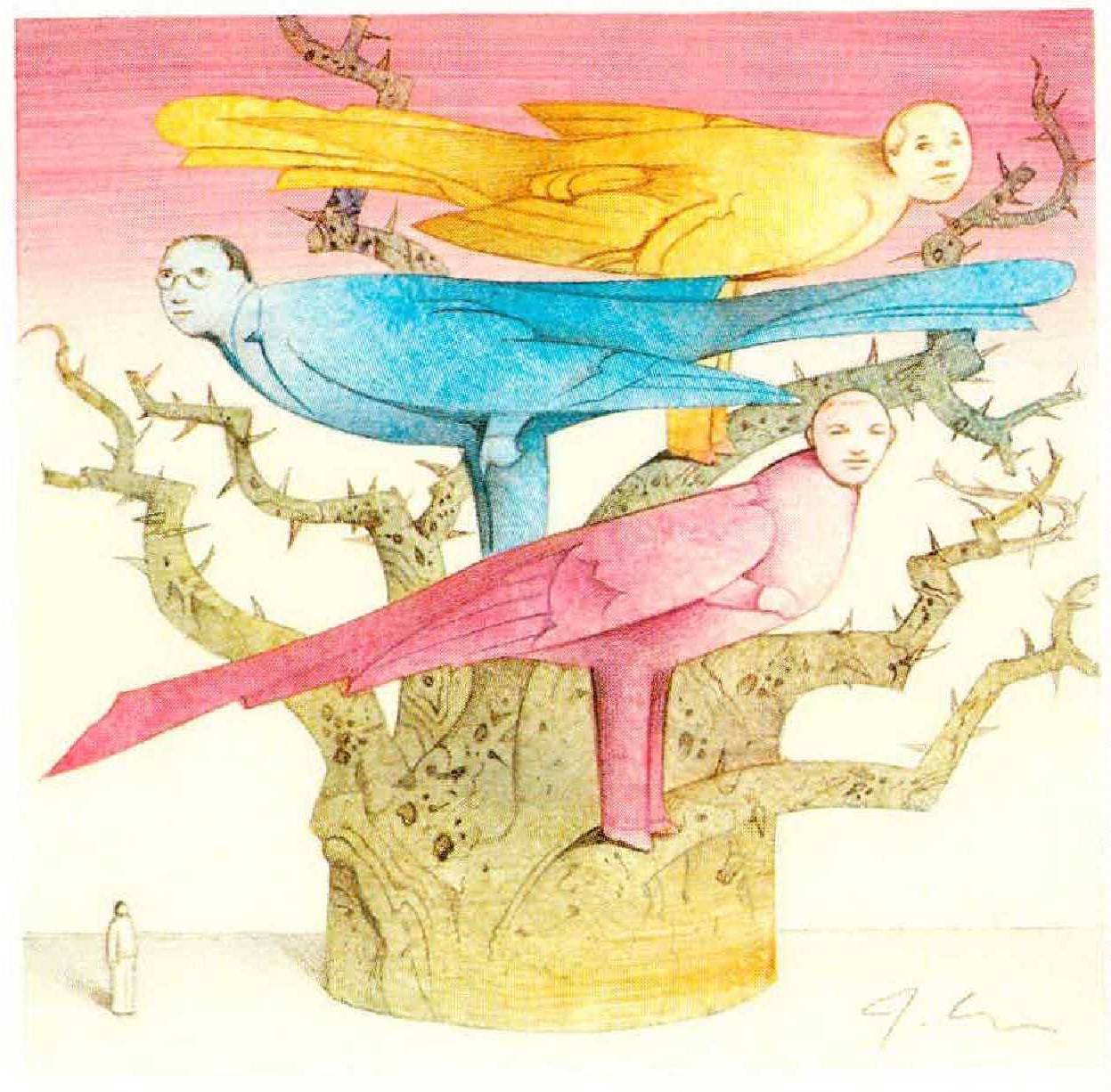
The subjects of Elkins’s Slavery and Podhoretz’s “My Negro Problem” stand worlds apart, but the relation of these works to the earlier minds that made them possible is the same. In each instance the younger writer sheds the elder’s concern for elements of contrariety and ambiguity in reformist or liberal sympathy. He signals that the response of outrage to injustice (“merciless” campaigning for emancipation, “premature” doing away with whippings) is inappropriate. He indicts as abstract and destructive the feelings of shame at the condition of the underclass which the elder would not criticize without first honoring as essentially humane. He disallows the claims of the underclass to the status of an oppressed group, edges toward mockery of humanitarianism, and reads double truths out of the record. Yet he continues to behave as though assured of the continuity between his own project of self-simplification and the elder’s struggle for a self commensurate with complexity.
The Present Age: Controlled Contempt
AT NO TIME IN THE SIXTIES AND SEVENTIES WAS THE generation of critics-from-within forgotten, but memories of what it stood for grew steadily fainter. By the late sixties it seemed almost as though sociologists and others who cited Merton in their work had no realization whatever of his attitude toward so-called biological denunciations of the underclass. In The Unheavenly City (1970) Edward C. Banfield, a professor of government at Harvard University and the head of President Nixon’s task force on model cities, presented himself as “a social scientist [thinking] about the problems of the cities in the light of scholarly findings” (“facts are facts, however unpleasant”). His thesis was that American cities are disaster areas because the underclass isn’t normal—it is pathologically sick.
The lower-class individual lives from moment to moment. . . . Impulse governs his behavior, either because he cannot discipline himself to sacrifice a present for a future satisfaction or because he has no sense of the future. He is therefore radically improvident: whatever he cannot consume immediately he considers valueless. His bodily needs (especially for sex) and his taste for “action" take precedence over everything else—and certainly over any work routine. He works only as he must to stay alive, and drifts from one unskilled job to another, taking no interest in the work.
Throughout The Unheavenly City Professor Banfield used the term normal, as he said, “to refer to class culture that is not lower class.” The implication—namely, that the lower class is pathological—was “fully warranted both because of the relatively high incidence of mental illness in the lower class and also because human nature seems loath to accept a style of life that is so radically present-oriented. ”
The notion of societal responsibility has no place in this study; no mention is made of the factors that Merton found relevant to deviancy, rebellion, breakout. Yet both Merton and Trilling are quoted in the work—Trilling, who insisted that personal and societal responsibilities intersect; Merton, who found anti-Negro charges patently false or speciously true. At a pivotal point in Banfield’s argument Merton’s concept of self-fulfilling prophecy is misused to justify the claim that it is socially harmful to blame black protest on the “environment.” Such explanations “are bound to be taken as justifications, or at any rate extenuations, of [the] behavior and therefore tend to reinforce the irresponsibility that is characteristic of the age and class culture. . . .” A new theme enters, soon to become commonplace: allusions to double truth incite to violence.
A GOOD EXAMPLE OF SIMILAR THINNING-OUT IN OUR own immediate period is found in a widely cited volume by Charles Murray. In Losing Ground(1984) Murray studied thirty years of federal welfare programs. Each of the reductive themes first sounded in the Podhoretz-Elkins generation of the late fifties and early sixties has a prominent place in the book. Murray’s analysis of those who cried mea culpa about poverty in the 1960s strikes the note of controlled contempt heard in Elkins’s dismissal of those who cried mea culpa about slavery. White anti-poverty activists are accused of “moral agonizing” and “guilt.” Quotation marks sneer at “the simple, purely ‘good’ civil rights movement against the nasty southerners.”Concern for the poor is defined as irrational and obsessive: “White confusion and guilt . . . created what Moynihan has called ‘a near-obsessive concern to locate the “blame” for poverty, especially Negro poverty, on forces and institutions outside the community concerned.’ ”
More than three decades separate Losing Ground from Merton’s Social Theory (the only classic of sociology Charles Murray cites), but the rhetoric of the book is distinctly Mertonian. The author lays down three laws of social programs; each is couched in the language of paradox and irony that Merton taught to a generation of sociologists. The second law is termed “The Law of Unintended Rewards.” It specifies that “any social transfer [through welfare programs] increases the net value of being in the condition that prompted the transfer.” Murray’s language directly echoes that of Merton’s discussion of “unanticipated” and “unintended” consequences of “purposive social action.” But Merton’s substance—his certainty that pessimism about planning should not be allowed to predominate—has disappeared. All welfare programs fail, Murray says; hence he proposes “scrapping the entire federal welfare and income-support structure for working-aged persons, including AFDC, Medicaid, Food Stamps, Unemployment Insurance, Worker’s Compensation, subsidized housing, disability insurance, and the rest.” The scrapped programs would be replaced . . . by nothing.
The Right Conduct of Mind
THE CRITIQUE OF LIBERALISM INTENSIFIED WITH the coming of disillusionment about the ill-considered crash programs of LBJ’s Great Society, and with the onset of revulsion at the years of protest. But it bears repeating that the refashioning of the critique had begun a decade earlier. Oedipal influence could have been at work; sons on these shores have a culturally prescribed duty to overreach fathers. Hofstadter, Trilling, and Merton were under that imperative as they confronted their elders—whether Marx and Freud or Beard and Parrington— yet their desire to challenge did not become a need to destroy. Arguably, in American intellectual life the risk that the pursuit of identity will become inseparable from the pursuit of extravagance varies according to the size of the gifts of the competing generations.
Not surprisingly, one aspect of the processes sketched above involved the fabrication, over the years, of a kind of substitute identity for the critics-from-within: mythic versions of their careers. Hofstadter, for example, was reconceived as a kind of muckraker. No matter that he asserted both that populism contained paranoid elements and that it was a healing force; by convention the latter point came to be deleted. Merton, who fought affirmatively for the yoking of conscience and competence, was revised into a voice of impotence and gloom. Trilling’s fate was still worse: he was made out to have been a convert. His lifelong commitment to greater social liberality was disremembered, as was his often repeated condemnation of social niggardliness. In their place stood a myth of rebirth. The revolutionary of the early thirties was held to have seen his error and reversed course abruptly in the sixties, taking for his mission the defusing of radical passions.
A valuable legacy of political thought has been troublingly misused, and everywhere in contemporary political life the direct and indirect results of that misuse are visible. The Chief Executive assumes a stance of doubt—of instant incredulity—when told early in the eighties of inequity. He observes that the Sunday newspaper lists thousands of jobs for which there are no takers, and that some homeless people are sleeping on grates “by choice.” Edwin Meese insists that “some people are going to soup kitchens voluntarily. . . because the food is free and that’s easier than paying for it.” These seemingly rote gestures have cultural roots in a period a quarter century ago, when concern about slavery itself was dismissed as excessive. Or again: the voice of political sophistication among us intimates that the sense of shame or of pity for the miserable and the unlucky reflects an absurd “passion of compassion” (as The Public Interest has characterized it)—soft, emotional, Rousseauistic. And this, too, is rooted in yesterday—in the period when the underclass was discovered to be composed exclusively of carefree persecutors undeserving of pity. Under the influence of that past we accept condescension to—even the taunting of—our best selves as a mark of discernment and wit.
THE WORK TO BE DONE NOW IS, AS I SAID AT THE start, essentially that of recovering the standard of discourse capable of breaking those habits of condescension. Guided by the standard in question, we can begin to search out respectable living arrangements for shared yet competing values, developing in the process broad philosophical agreements about proper government roles, keeping the contrarieties alive within us throughout the negotiations. The key to the undertaking does not lie in the contrivance of neoliberalisms to match (and cancel) neoconservatisms, or in efforts to refurbish the reading lists of yesteryear. It lies, instead, in scrupulosity about intellectual methods—in the recovery of feeling for what Lionel Trilling called “the right conduct of mind.”
In the great Jefferson Lecture he delivered in Washington in 1972, three years before he died, Trilling pressed the point that the way a nation thinks determines in the end the quality of its governance. We’ve come, he said, to “judge societies and their governments by the same criteria we use in estimating the rightness of the conduct of mind,” and we’re correct to do so; we can find “the paradigm of a just society in the right conduct of mind.” Nor are the fundamental principles of this right conduct obscure or mysterious. We locate them in the very act of trusting the energy of mind—trusting the mind’s “intentionality, its impulse toward inclusiveness and completeness, its search for coherence with due regard for the integrity of the elements which it brings into relation with each other, its power of looking before and after.”
From this sense of mind—this love of the mind’s disciplines and ambitions, its variousness and flexibility—grew the standard of discourse that was responsible for the country’s last memorable moment of broadly based intellectual promise. In the voice of the elders—in their tone— two truths resound that deserve to live on a little longer, and our task is to find a language that will ensure their survival. One truth is that nothing can be done to ease injustice or oppression except with the aid of the flexible intelligence, the mobile imagination, and the will to self-sacrifice. The other truth, simpler and deeper and inexpressibly precious, is that honest shame is not to be mocked.