Africa: The Long Good-Bye
Concluding that sub-Saharan Africa can’t be helped, Western governments and businesses are losing interest
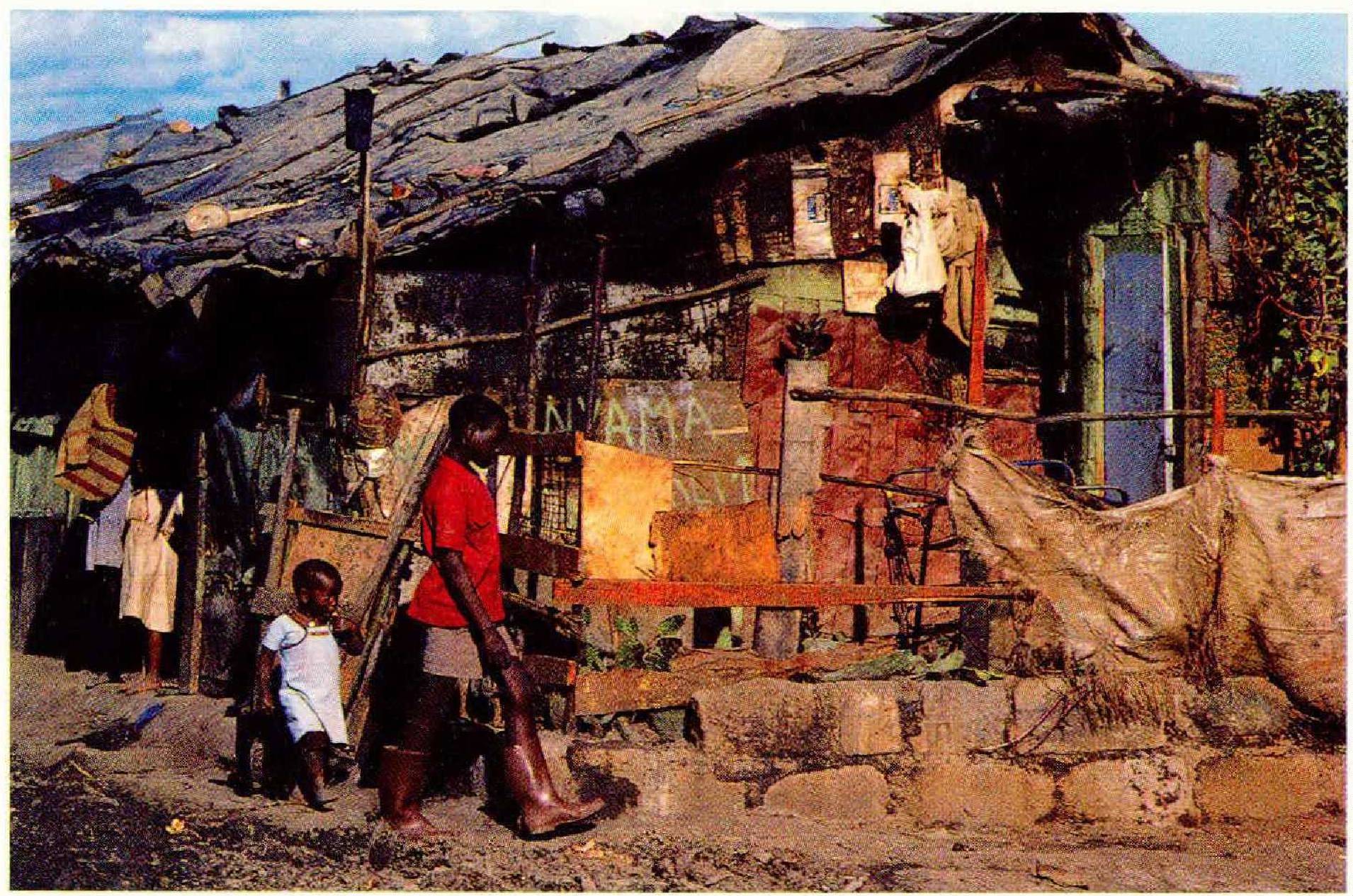

THE MARGINALIZATION of subSaharan Africa in the 1980s has been relentless. Its share of world trade is half what it was thirty years ago. Private investment is virtually nonexistent. Aid money from the United States is dropping, and total global aid to Africa has stagnated. With the Cold War winding down, superpower competition in sub-Saharan Africa is on the wane—a welcome development in certain ways, no doubt, but one guaranteed to make Africa seem all the more irrelevant. General Olusegon Obasanjo, a former President of Nigeria and a highly respected voice in African affairs, said in a speech last year that “Africa has become peripheral to the rest of the world on global issues. Everywhere in Africa the evidence is of dereliction and decay, and we are rapidly becoming the Third World’s Third World.”
Despite infusions of cash totaling more than $100 billion in the 1980s, the overall economy of sub-Saharan Africa’s forty-five countries (henceforward I’ll refer to these countries simply as Africa) has declined in size by more than 20 percent. Africa’s total gross domestic product, which was $135 billion in 1988, is roughly equal to the GNP of Belgium, a nation that in population is only two percent the size of Africa, and in land mass much less than one percent. Africa’s debt, though small by world standards, equals 100 percent of its GNP, and is rising faster than the debt of any other underdeveloped region. Industry is in a steep decline. Agriculture has failed to keep up with population growth. One quarter of African families face chronic hunger, and fewer and fewer children are going to school.
To conduct business in Africa never has been easy for outsiders. In the 1980s it became virtually impossible. Political instability and corruption are now a way of life in all but a handful of countries. Many governments continue to restrict ownership and the expatriation of profits, while tying up investors in endless red tape. In an age of computers and fax machines it is difficult to raise a dial tone in some African cities. The crumbling infrastructure often forces companies to provide their own generators for electricity, their own water for drinking and industrial uses, and their own radio transmitters for communication. In most African countries the markets for modern goods are minuscule and not expected to grow. Properly trained laborers and technicians are few in number.
Statistics about Africa are sometimes suspect, but they can provide a rough portrait of the face of tragedy:
•African exports as a proportion of all world exports are down by a third and are also declining in absolute terms, and Africa’s world market share in nearly every commodity it produces has been cut into by competitors, mostly in Asia. From 1970 to 1988 its world market share of coffee dropped by 45 percent, of copper by 45 percent, of cocoa by 21 percent.
•Private outside investment in Africa has declined from a peak of $2.3 billion a year in 1982 to $500 million in 1986. Outside investors have shown little interest even in those countries whose economies have shown some signs of recovery, such as Ghana and Senegal. Commercial loans have all but ceased. •Western Europe, Africa’s major trading partner ever since colonial times, retreated from Africa in the 1980s, and the process is likely to accelerate with the integration of the European Community in 1992. Sizable numbers of European citizens and people of European descent living in Africa are leaving. Overall trade with Western Europe dropped by more than 25 percent from 1980 to 1987. France, traditionally a country that has done one of the largest volumes of business with Africa, reduced its export credits from more than $1 billion in 1982 to minus $256 million in 1986. French businessmen have reduced investment in Africa from roughly $1 billion a year in the early 1980s to less than $50 million a year today. Aid from some European countries (and Japan) has increased, but not by enough to compensate for losses from other sources.
•The United States reduced bilateral aid to Africa by more than a third in the late 1980s, and has simply eliminated programs outright in some countries. In 1988 Africa received about 11 percent of all U.S. aid, or about $750 million, as compared with a larger share of a larger budget in the mid-1980s.
• The aid from outside that Africa does still receive — about $13 billion a year—is largely offset by the outflow of cash to service Africa’s debt, which has averaged $9 billion in recent years. As economic and environmental crises mounted in the 1980s, aid priorities shifted away from long-term development projects to short-term balanceof-payments assistance and famine relief.
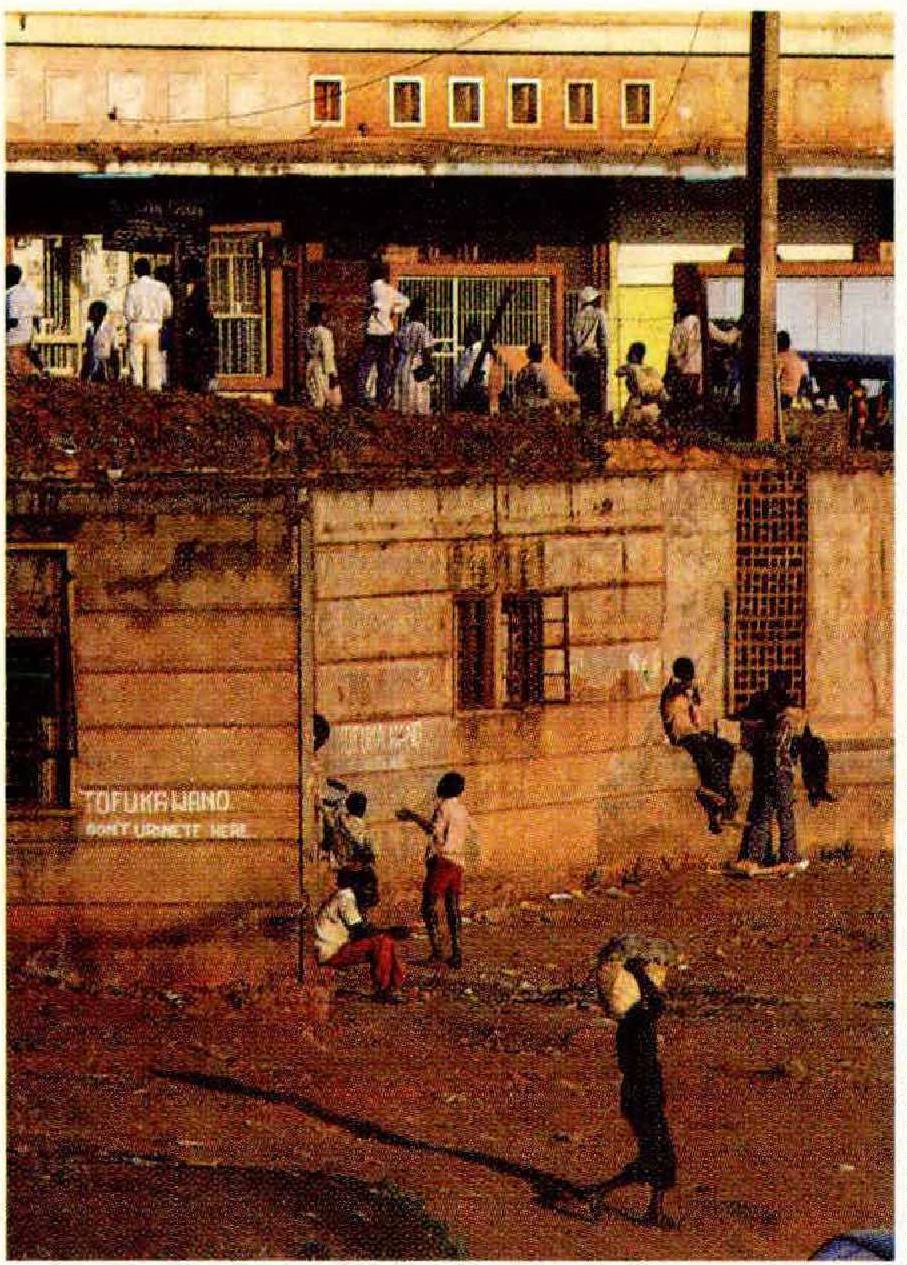
•Africa’s decline is seen most starkly when compared with the situation in other areas of the world. Capital and operating costs in African countries are 50 to 100 percent higher than they are in South Asian ones, and the rate of return on investment in South Asia is nine times greater than it is in Africa. Twenty-five years ago the regions were even. In nearly every category, from number of telephones to magnitude of industrial production, Africa has fallen behind South Asia and other developing regions.
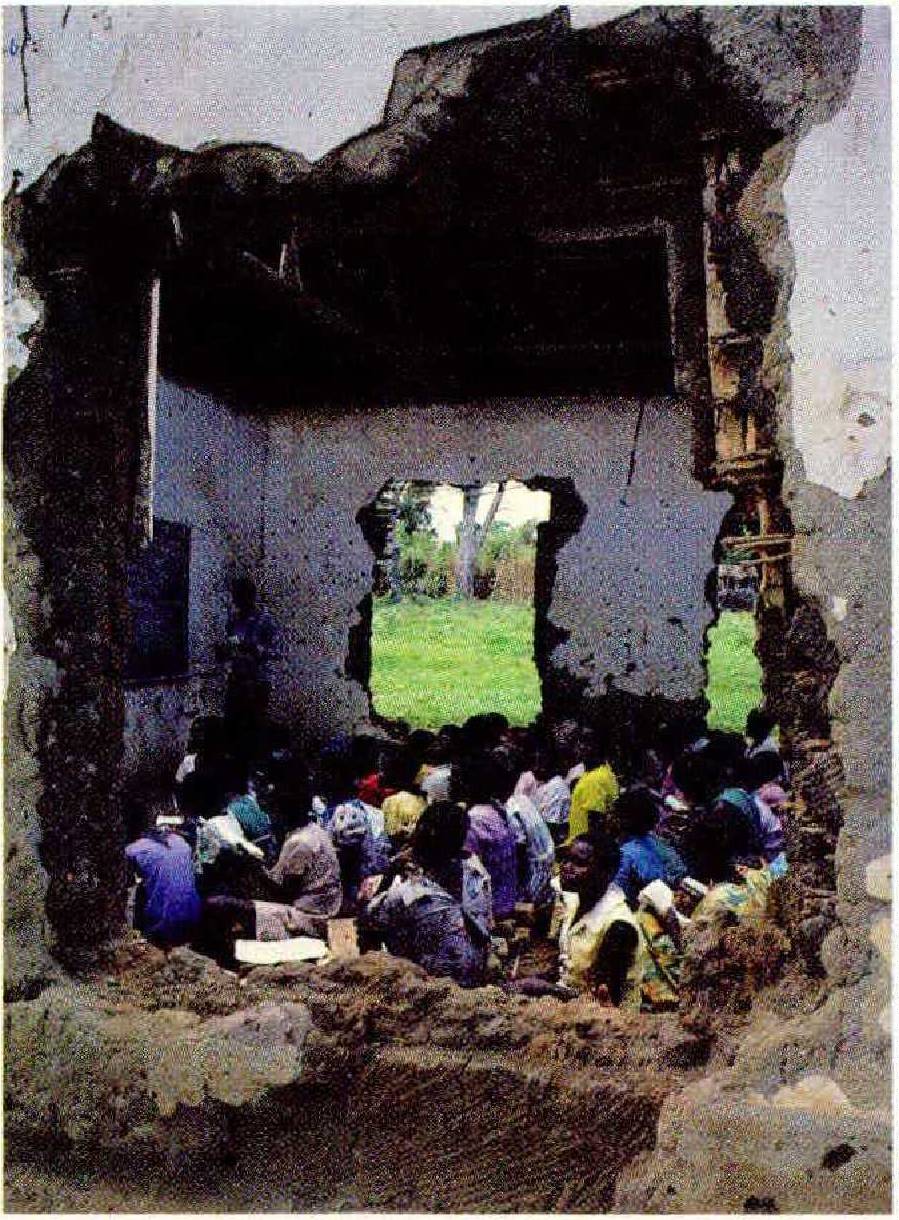
•Perhaps most ominous is Africa’s inability to control its population growth, currently at 3.2 percent a year, the highest rate in Africa’s known history. South Asia and Latin America, whose rates stand at 2.1 percent and 2.5 percent respectively, have reduced population growth since 1960. In the United States the average woman will be a source of fourteen children, grandchildren, and great-grandchildren; the comparable figure for an African woman is 258.
WHY IS AFRICA in such a sorry state? Africa hands debate the reasons endlessly. Some blame factors beyond Africa’s control — droughts, declining world commodity prices, the legacy of colonialism. Others blame development policies, which have swung wildly from one faddish approach to another, and often have proved to be too simplistic, too ambitious, and too top-down to be effective. Everyone agrees that development has been crippled by warped priorities: Westerners, looking for a “big fix,”lavished money on pet theories. An African leadership class showed itself to be more adept at lining its pockets than at building a stable society.
The latest proposed solution for Africa’s woes, called “structural adjustment,” started out in the mid-1980s as a typical big fix. Simply put, structural adjustment ties U.S., European, and World Bank aid and loans to a country’s willingness to back away from a controlled economy and to embrace free enterprise and a reduced role for government. On balance, it has failed.
Structural adjustment has shown some modest successes. Ghana, for instance. has increased its GDP from negative numbers in the early 1980s to positive ones, with a growth rate of 1.4 percent; the rate of growth in industrial output has gone from minus 17 percent annually to 15 percent. Zambia, whose economy was among the worst on the continent in the early 1980s, managed briefly to reverse its shrinking output and GDP, until riots protesting the human cost of structural adjustment—notably the loss of jobs and subsidies—forced the government to cancel the program in 1987. The gains on paper, where there have been gains, have been largely offset by increases in population, and have been purchased with great suffering. Moreover, roughly twenty nations out of the forty-five in sub-Saharan Africa either have been unwilling to accept the bitter medicine of structural adjustment or are in such decay that there is no structure left to adjust.
Economists continue, with mounting desperation, to tinker with structural adjustment. Last fall the World Bank released a 300-page study, SubSaharan Africa: From Crisis to Sustainable Growth, acknowledging, among other things, that adjustment policies had to become more “human-centered" and responsive to past failures. The report listed minimum targets for growth in such areas as agriculture and exports, and suggested dozens of reforms in the way international agencies and African governments do business. However, the president of the World Bank, Barber Conable, admitted that the task ahead was daunting, and that “the margin for maneuver is slim indeed.” Conable’s gloom is reflected in what the World Bank calls a “crisis of confidence” among Africa experts, both in Africa and elsewhere. Many of them are abandoning Africa to concentrate on other regions.
AFTER THITY YEARS of sometimes intensive, even bullish interest, the world is wearying of Africa. In an era when the world economy is becoming more integrated and everything from infrastructure to production techniques is experiencing quick cycles of technological change and consolidation, Africa is being bypassed for regions where investments have paid off, particularly the Pacific Rim and South Asia. Eastern Europe also is likely to move up on the agenda in the 1990s, particularly for Western Europe, Africa’s traditional patron. Much of the aid that Africa continues to secure will go toward short-term emergency relief, a tendency that already has led several countries to become hopelessly dependent on outside money. Few of these countries use the money for long-term improvements, and many barely subsist on what is essentially a dole.
There is every indication that conditions in Africa will only worsen in the 1990s, and that Africa’s position in the world will become even more peripheral. The result will be a disaster for Africa in terms of human suffering. When one remembers what the words “human suffering” mean in Africa, it is difficult to countenance the idea that there might be a silver lining. But there are some experts who suggest that disengagement by developed countries, including a reduction in aid, might have one positive result. “A withdrawal of outsiders might make Africans behave more sensibly,” says Nelson Kasfir, an East Africa specialist at Dartmouth College. “In the past they have had little incentive to try to solve their own problems.” There are signs that some Africans already are taking matters into their own hands. As rural people have become disillusioned with outsiders and with their own governments, millions of them have begun grass-roots efforts, a so-called “peasant movement,” to organize local resources. In the cities millions more operate as small-time entrepreneurs in a vibrant underground economy that defies the image of a moribund Africa. Both these developments, though as yet small-scale and fragile, reveal an underlying potential for improvement.
But the improvement remains only potential, and will not come, if it ever does, for a very long time. Meanwhile, Africa continues its slide into a not so splendid isolation.
—David Ewing Duncan