Luck

A Short Story
by Richard Bausch
CAME BACK IN NO TIME WITH THE BURGERS, AND when he reached into the bag I smelled it on him. I didn’t say anything. He got his burger and opened it, talking goofy like he does. “Best car ever made was the Chevrolet, Ray.”
“Right, Dwight,”I said, but my heart wasn’t in it.
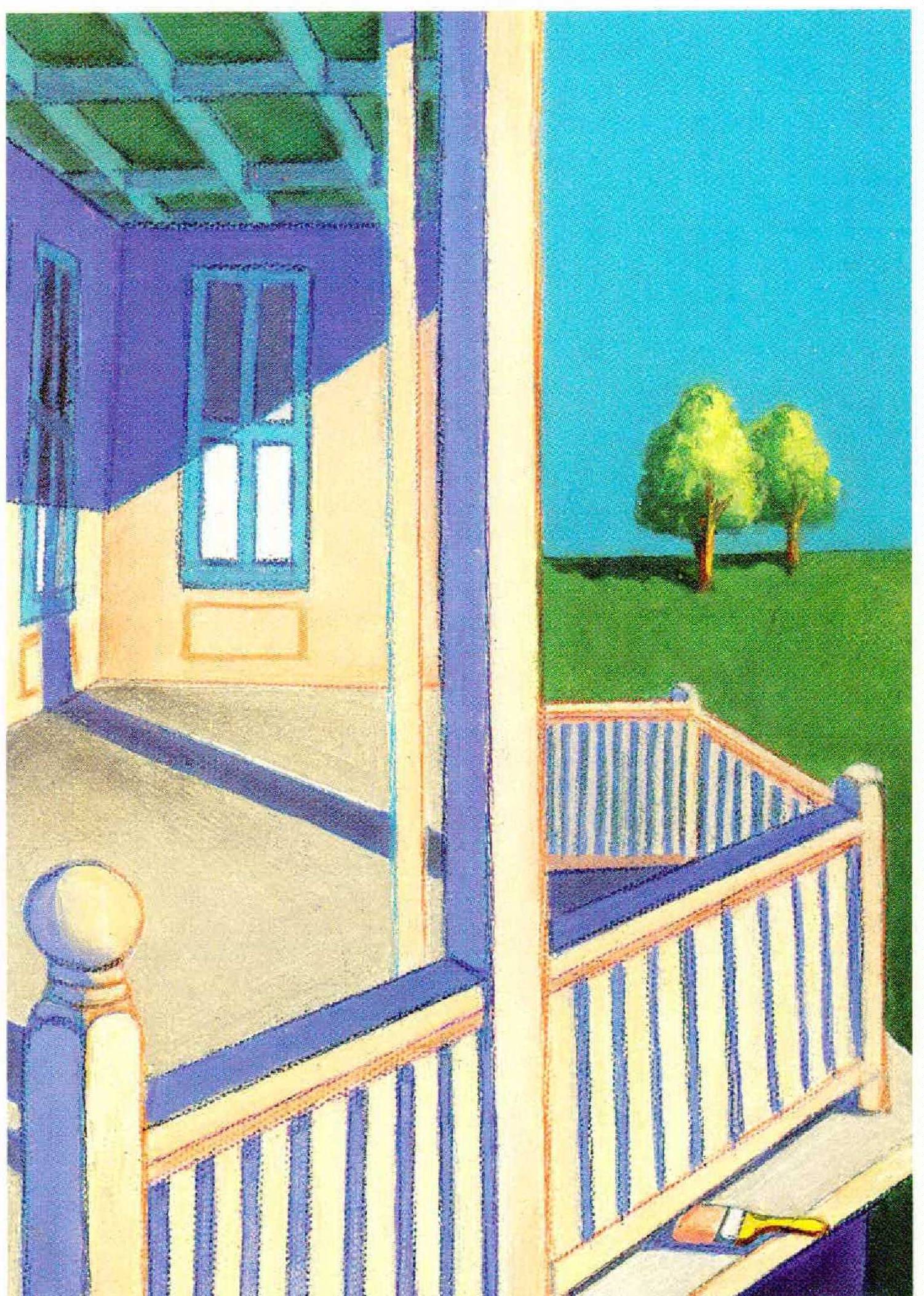
He sat on the stairs, and I sat in the window seat of this place. We’d done the walls and the first coat of trim. We had a lot of touch-up to do, and if he was going to start drinking, the work wasn’t going to get done. Outside, we still had the porch railing. It was a big, wraparound porch. Two days’ work at least, with both of us pushing it.
“Dad,” I said.
He was chewing, shaking his head. He liked the hamburger. All his life, I think, he enjoyed things more than other people. “Man,” he said.
It was getting dark. We still had to finish the trim in the dining room—the chair rail. “Well,” I said. I was watching his eyes.
“You know,” he said, “I do good work. Don’t I do good work?”
“The finest,” I said.
He smiled. “And you help me.”
I concentrated on my food. I could’ve maybe figured I’d made a mistake until now. But this was the way he talked whenever he was on the stuff. I started looking around casually for where he could hide it.
“You’re a good son,” he said. I might’ve nod_ ded. I was eating that hamburger and trying not to show him anything.
“Twenty years ago I painted my first house,” he said. “Helped a friend one summer. I’ve told you this. Never dreamed I’d have a son to help me. You ought to be in college, son. But I’m just as glad you’re here.”
I thought he might start crying.
“Best get back to work,” I said.
He was sitting there, thinking. I knew what he was seeing in his mind. “Your mother sure can pick them,”he said. “I don’t know what she saw in me.”
I stood. I had what was left of my burger in my hand. I put it in the bag and went over to the paint can.
“Hey,” he said.
I said, “Hey.”
“I said I don’t know what she saw in me.”
“Me either,” I said.
“Good thing you look like her,” he said.
“Right, Dwight,” I said.
“ That’s the truth, Ruth,”he said. He was still sitting there.
“Ton want me to do the second coat in here?” I said.
“Naw. Get the dining room.”
I said, “Okay.”
“Hey,” he said. “What if I take you and your mother out to dinner tonight?”
“That’d be all right,” I told him.
“Okay,”he said. “You’re on.”
“Great,” I said. It was getting dark. We’d been eating burgers.
“You think she’ll feel like going out?” he said,
“Got me,” I said.
“She’s been staying in the house too much. Working too hard. She doesn’t need to put so much time in every day. Right?”
I said, “Sure.”
“Yeah,” he said. “And you’ve been working hard.”
“Yes, sir,” I said.
“You think we did a good job here’ so far?”
around at everything.
I did the same. I saw that over the kitchen cabinets, where he’d been painting when I left to get the burgers, someone was going to have to do a lot of touching up. He’d missed some places. He’d been hurrying it. You couldn’t mistake a thing like that. Back before he was too bad, when I was small, he used to take me through the houses when he was finished with them, and he would point out where other painters cut corners and he didn’t. He’d show me where he’d taken the extra step and done it right. He was teaching me. Do a thing, boy, you do it right the first time. You take pride in what you do. He drummed it into me. You go that extra mile. You take pains. People remember good work. People remember excellence. And when I worked with him summers and he was okay, he’d do a thing, put the last touch on something, and he’d stand back and look at it. proud as hell. “New money.” he’d say.
And I’d say, “New money.”
You could hear the satisfaction in the way he breathed, looking at what he’d done.
That was when he was okay.
“Little touch-up over the sink,” he said to me now.
I didn’t answer.
“Well. I better get off to the bank before they close the drive-in window.”
“The bank,” I said.
He didn’t look at me. “The bank, Frank.”
I just stared at him. For a long time we were like that, you know. Staring at each other from opposite sides of the room, with the tarpaulin and the paint cans between us, like we were listening for some sound.
“How’m I going to take you guys out to eat without some money, honey?” he said.
“Oh,” I said. “Right.”
“You go ahead and finish what you can in the dining room.”
I nodded.
“We straight?”
“Straight,” I said.
It was what we had always said when he’d had to discipline me and he’d come in afterward and explained the punishment. We’d been saying it as a joke between us since I was sixteen.
“Surer” he said.
“Very, Jerry,” I said.
He put his hand out with the thumbs-up sign. “I’ll be back, Jack.”
“Okay,” I said.
I watched him get out of his coveralls, because I thought it might fall out of one of the pockets. He laid the coveralls across the kitchen counter, smoothed his hair back with both hands, and looked at me. “Don’t bust yourself,” he said. “We did enough for one day.”
“Right,” I said.
I knew what would happen now. He went into the bathroom and flushed the toilet. When he came out, he went to the door and got himself through it quick, calling back to me that he’d be five minutes. I stood by the front window and watched him get into the truck. He wouldn’t be back tonight. He wouldn’t be back for days, maybe. A week. Then we’d get the call. We’d go get him. He’d be in the hospital again, going through the treatment. This is all stuff you know. You don’t need me to paint the picture.
I went back into the dining room. We still had a lot of work to do. These people were supposed to occupy in two days, and now the painting wasn’t going to get finished. No way. But I starred on it just the same. I was sick, thinking of what tonight was going to be like. Everything she went through, over the years. And the thing was, there didn’t seem to be anything in particular that triggered it. When she met him, she told me, he was a kid who liked a drink. She did too. He’d get plowed, and sometimes she’d get plowed with him. But they were always okay after ward, and she couldn’t say when he began not to stop. She’ll tell you now she doesn’t know where he went over the line and the stuff got ahold of him. You have to know that he was never the kind that got mean or violent either. That was the thing. You could always walk away from somebody who knocked you around. The worst he ever did was disappear, and he did that often enough for me to know that it was happening again. But when he started, it was always how much he loved everybody. He’d cry and be sad, and incredibly gentle. And when he was sober again, he was always very contrite. Sometimes he was good for months at a time, and when he was, you couldn’t find anybody better as a companion and a friend. You could trust him with your life.
Which was why I let him go like I did, knowing what he was up to. I didn’t for the life of me have the heart not to trust him one more time.
Anyway, I was going to paint all night. I was going to get it done. I figured that after a while, when we didn’t show up, she’d come looking for us, and she’d know. She’d pull up and see rhe truck gone, and all the lights burning. I didn’t want to have to look at her when she knew again, but I couldn’t see a way around it.
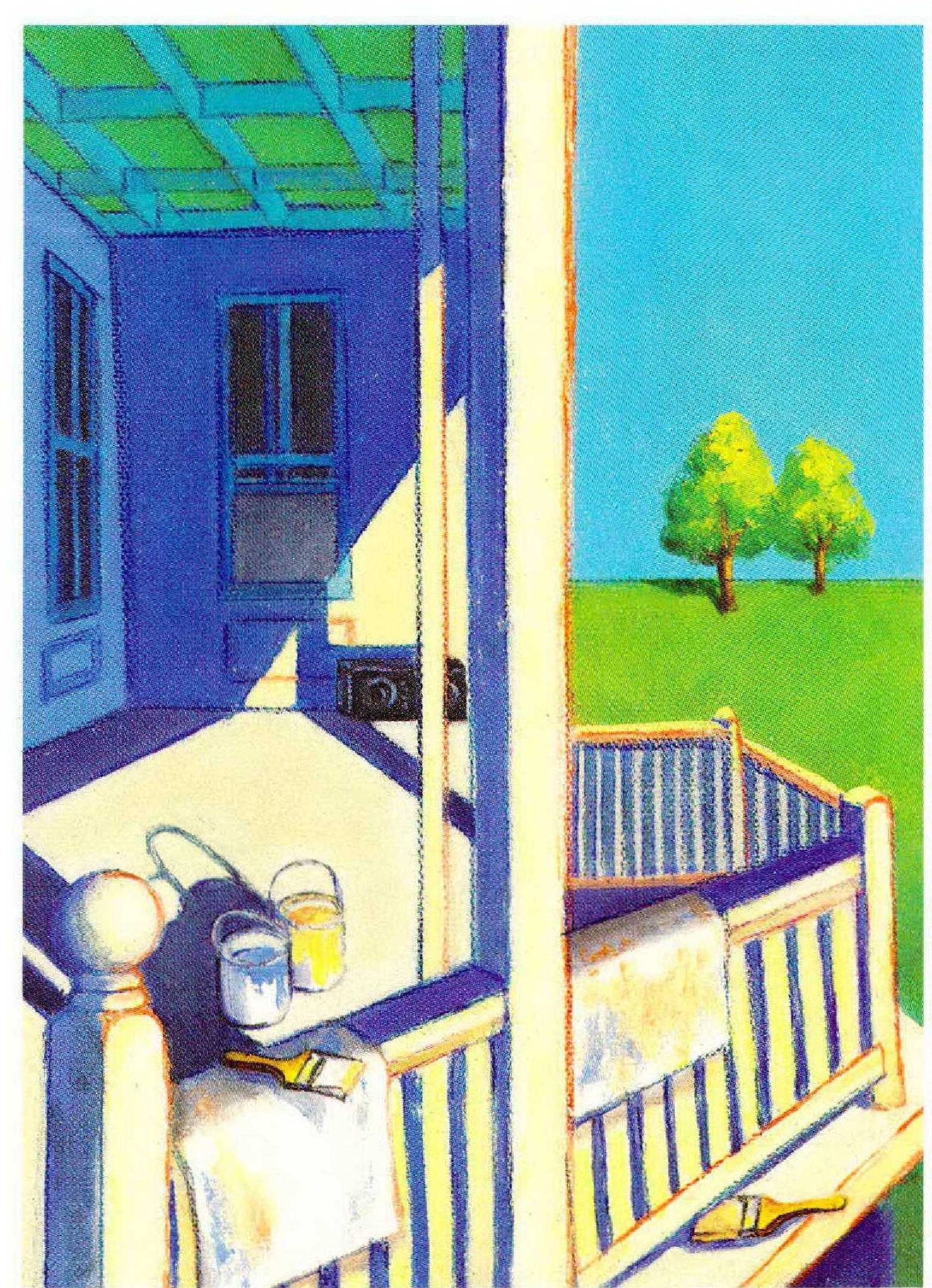
“I WORKED MAYBE AN HOUR. I GOT INTO THE WORK, INto the rhythm of the whole task. We had the blaster there, but the tapes were all his: The Beatles and the Stones. Aretha Franklin. Rock-and-roll. Guitars and drums. The music sounds enough like what I like so I never complain. But I was just working in the quiet, and so I heard the truck pull in. I can’t say what that did to me. He had gone to the bank, like he said. I mean that’s what I thought. I heard the engine quit, the door open and close. I worked on. I wanted him to find me working. Then I thought I’d give him something. I put the Beatles on. The Beatles were all over that house. Revolution. I was in the dining room, moving myself to the music, and when I turned to smile at him, I saw the guy who was having this place built, the owner. Big, heavy bearded guy, looking like somebody with not much patience. I’d seen him walking around the lot when we first knew we were going to have the job and his house was nothing more than a hole in the ground.
“Hey,”I said.
He was standing in the doorway, looking at me. I went over and turned the music off. He walked on into the family room. “You do nice work,”he said. He was looking at the mantel. I saw several places that needed a touch. “Is it dry?” he said.
“Not quite yet,” I said.
“Listen,” he said. “Are you going to finish in two days?”
I nodded. I felt awful.
“You work fast,” he said. “I was in here yesterday, and none of this was done yet.”
“Yes, sir,” I said.
“Looks good,” he said. He was moving around the room now, appreciating everything. It was good work. We had done real good work together for this part of it.
When we got to the living room, which was the most finished, I said, “My dad’s the one who painted in here.”
“He does nice work,” the guy said. “Very nice.”
“Yes,” I said. “My dad always says—you know, do a job with pride.” If I started crying. I thought I might hit him. I never felt that way before. If he noticed something wrong anywhere, I just wasn’t sure what would happen.
“It shows,” he said, smiling at me. “The pride shows.”
“Yeah,” I said.
“You must be very proud of your dad.” I looked at him. For a second I wasn’t sure what he knew.
“What’s it like, working with your father?”
“It’s great,” I said.
“Well.” He turned and appreciated the room. “You don’t find quality work these days. It’s refreshing to find it.”
“If you don’t do a job right ...”I said. I just wanted him to get out of there before something happened. I was breathing hard. I had this awful tightness in my throat, as if I were a kid and I’d got caught doing something wrong.
“These days,” he said, “you give a kid an inch and he takes a mile, you know? Does your father trust you?”
“Sure,” I said. I was watching the way his hands moved near his mouth. Something was on his nerves, and it made me nervous.
“You work like hell to give them something and a lot of them just throw it in your face. You know— drugs. Disobedience. Insolence, really. Hell, defiance. I think working like this, working alongside your father—I think that’s a good thing. I wish I did something that my son could do with me, you know?”
I just nodded.
“You can’t ask a kid to help you sell stocks in the summer. It’s not a thing you can do together.”
“No,”I said.
“When I was your age, you know what I wanted to be? I wanted to be a carpenter. I sometimes wish I’d done it.”
“Never too late,” I said.
“I wouldn’t know.” He was thinking hard about something, looking off. Then he said. “I guess you communicate pretty well.”
I didn’t know what he meant.
“You and your father.”
“Oh,” I said. “Yeah.” I couldn’t look at him.
“Must—must be nice.”
“It’s okay,” I said.
“You’re about my son’s age, aren’t you? Finished high school a couple years ago?”
“Year ago,” I said.
He nodded. “It’s nice to see such respect for a father.”
I didn’t know what he wanted me to say to this.
He was quiet a long time, standing there looking at the room. “Well,” he said finally. “Tell your dad I think he does very handsome work.”
“I will,” I told him.
“It sure looks nice,” he said.
“Hard work,” I said.
He smiled. “New money.”
“Right,”I said. “New money.” I couldn’t believe it.
“What’s wrong?” he said.
“Nothing. My father says that—‘new money.’”
“Oh, yeah. I don’t know where that comes from.”
“It comes from my father,”I said.
He was thinking about something else. “Right,” he said. “Well.”
“That’s the only place I’ve ever heard it,” I said. He looked at me with this expression, like he might ask me for a favor. It was almost hangdog. “I hope you both realize what you have.”
I said, “Oh, right.” Then we stood there, looking at the room. It seemed like a long time.
“I’ll let you get back to work,”he said, and I headed away from him. “It’s a nice job,” he said. “An excellent job.”
“People notice good work,” I said. I was just mouthing it now.
“Your dad teach you that?”
“That’s it,” I told him. I thought something might break in my chest. I just wanted to know why he wouldn’t get out of there and let me get on with the job. “That’s what I learned,” I said. And for half a second I could see it in his face, what he was thinking: how, between me and the man with the money to buy a big house like this, with its wraparound porch and its ten-acre lot and the intercom in the walls and three fireplaces and all the nice stuff that was going to be moved into it soon— how, between that man and me, I was the lucky one.