Education: A Lesson to Us All
Decree a tough, national curriculum? Make schools subject to market forces? Great Britain is trying to do both, with mixed results
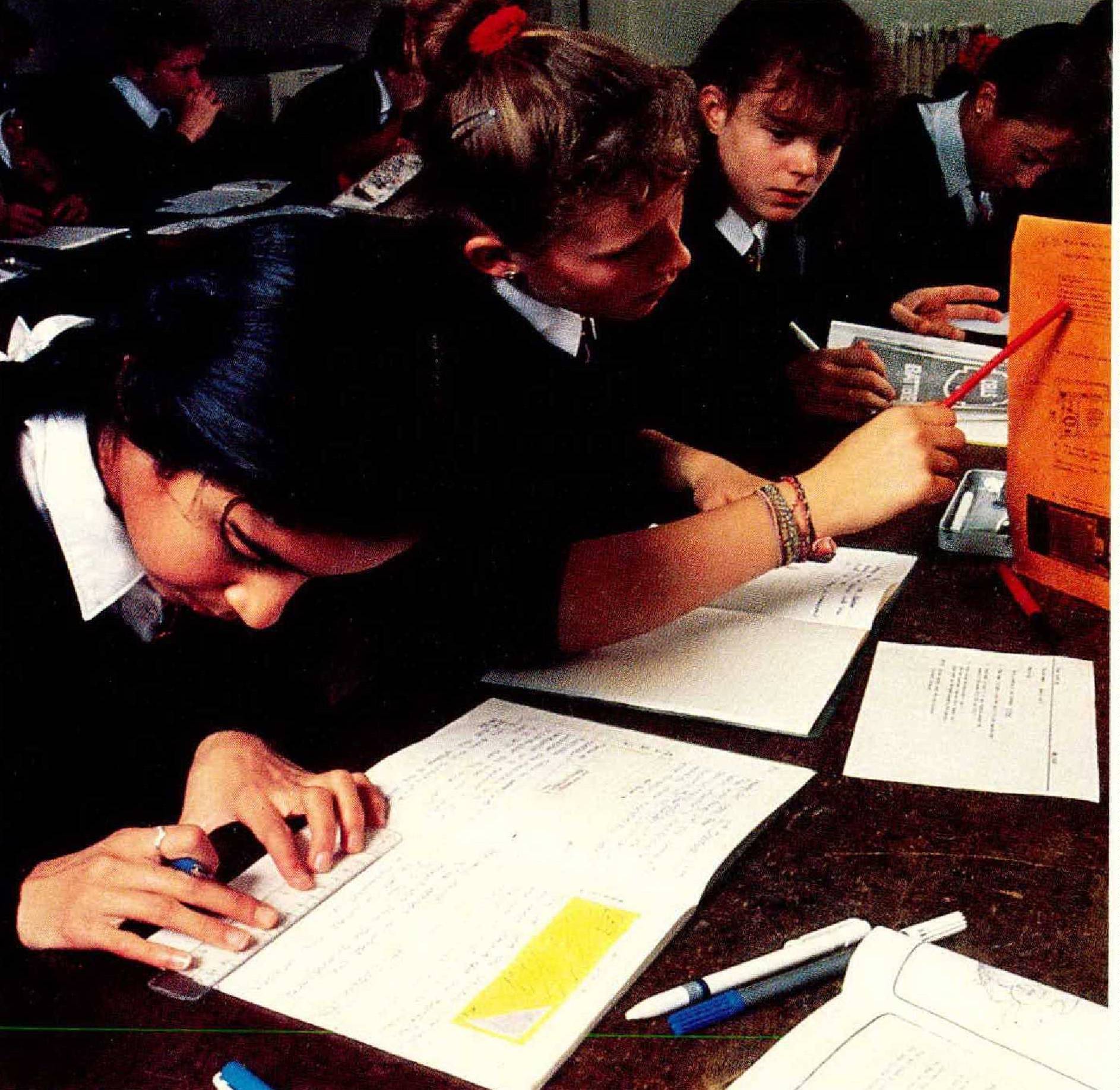
THE MOST CLOSELY observed session of the Second International Conference on Innovations in Special Education, which was held in Kansas City in 1989, had nothing to do with special education, innovative or otherwise. The largest crowd of the conference gathered to hear a passionate and highly articulate debate between two British educators on a subject of which the average American is unlikely to be aware: Britain’s new national curriculum, an education reform of enormous ambition that is still incomplete and has attracted considerable criticism.
American educators are watching with interest—albeit from a safe distance—while their British counterparts pursue several schemes that have periodically been the subject of heated debate in American education. First, the national curriculum is an attempt to improve education without increasing spending—the goal of not a few American educators (often, it must be conceded, for lack of any other choice). Second, while one group of American educators is calling for a national assessment system and another is going to the other extreme and arguing for “site-based management” (the ultimate form of local control, in which all decision-making devolves upon individual schools), the national curriculum with its associated administrative changes appears, bewilderingly, to combine the two. Finally, after a decade in which “accountability” became a rallying cry on both sides of the Atlantic, the national curriculum takes accountability to a logical—perhaps an alarming—extreme.
FOR AT LEAST a decade education has faced many of the same problems in Britain that it has faced in the United States. There are the same loud complaints from businessmen that incoming employees lack basic skills, the same glaring inequalities in teaching and resources, the same concern that technology is advancing faster than science teaching, the same apprehensive glances at Germany and Japan.
But Britain and the United States also differ in fundamental ways. In the United States, state governments and local boards of education exert some semblance of control over the curriculum. In Britain, within certain broad guidelines, each school was, until 1988, free to develop its own course of study. In the United States each of the two standardized tests is administered for secondary-school students by a single testing organization; the major secondary-school examinations in Britain were, until recently, drawn up and graded by more than twenty examination boards. Politically, of course, the two countries also diverge. In the United States, with most of the power over education residing in the states and most of the education funding coming from local voters, federally led education reform faces an uphill struggle. Not so in Britain, where political and fiscal power is far more centralized and where the government by definition cannot be subjected to the inconvenience of a hostile Parliament. Consequently, when Margaret Thatcher and her Conservative colleagues decided to move ahead on education reform, they were able to do so with speed unimaginable in the United States. One month after the June, 1987, general elections Kenneth Baker, then the Secretary of State for Education and Science, produced a consultative document that sketched out some of the radical reforms he proposed. Starting in September of 1989 schools would devote 30 to 40 percent of their teaching time (more in primary schools) to three “core” subjects: mathematics, science, and English. In due course all students would also take six “foundation" subjects—technology, history, geography, music, art, and physical education—and all secondary-school students would study a modern foreign language. In Wales, Welsh would be a core subject in Welsh-speaking areas and a foundation subject elsewhere. (Scotland, which already had a more coherent curriculum than England, and Northern Ireland are developing their own national curricula along similar lines.) Besides the ten mandated subjects, students would also, in theory, be able to study other subjects such as Latin, business, and a second modern language.
The national curriculum was not only about raising educational standards. It was also about getting value for money—“to secure the best return on resources invested in education,” as a Department of Education official told me. The remark was apt to the point of literalness. The Education Reform Act was an attempt to help the ailing British economy by ministering to the education system—in fact, by considering it to be part of the economy. Faced with the task of improving education at no additional public expense, Thatcher and Baker chose to see education as an enterprise that could be made more efficient by making schools subject to market forces. Under a section of the act governing enrollment, parents, now redefined as consumers, could send their children to any school they chose. Forced to compete for pupils, schools would have to raise standards and streamline budgets (over which they would now have more control). Good schools would attract pupils and income; bad schools would have to mend their ways or, by implication, go bust.
The national curriculum, meanwhile, would have a double value: it would keep the newly liberated schools within an overall curricular template, and it would enable parents to compare the published exam results of schools against one another, thus introducing greater accountability among teachers. Hence the peculiar impression that the act was moving in opposite directions simultaneously: Baker could announce that he was devolving power “from the hub to the rim” while granting himself greater authority over education than any British education secretary had held in recent history. The act also had political value for Thatcher: it reduced the influence of local councils over education funding. (Labour-controlled local councils had long been a thorn in Thatcher’s side.)
Despite widespread opposition — Ted Wragg, the director of Exeter University’s School of Education, described the theory as “market-mad”; schools, he wrote, could not be run like factories—in July of 1988 the Education Reform Bill became law. Within a year the basic outlines of the core-subject curricula had been published. In September of 1989 schools began teaching all three core subjects in the first grade, and math and science in the sixth grade, even though a steady flow of changes and updates was still arriving.
“ The educational establishment, left to its own, will take a hundred years to buy a new stick of chalk,” says Duncan Graham, the chief executive of the National Curriculum Council, which was set up to help move the reforms along. Graham, a cheerful Scot with magnificent eyebrows and the slight embonpoint of a successful city councillor, goes on, “In the end, to say, ‘It’s time you guys got on with it; here’s an act and a crisp timetable’ was probably necessary.”
THE NATIONAL curriculum is best seen as a structure for education, rather than a cargo of facts or values. The new curriculum didn’t order teachers to teach Shakespeare, say, on Wednesdays at 9:00 A.M.; in fact, it turned out to be a more coherent form of what the better schools were already teaching. The subject headings, which had led some teachers to fear that the government would attempt to impose a rigid, fact-laden course of study, actually solved a political problem: they represented rigor and tradition to a government with a marked affection for the nineteenth century; the actual content, embodying a progressive, skills-based approach, was more to teachers’ liking.
In planning the new curriculum, each subject was first broken down into areas of knowledge and skill called attainment targets. Science has seventeen attainment targets, including genetics and evolution, human influences on the earth, forces, electricity and magnetism, and sound and music. English includes speaking and listening, reading, writing, spelling, handwriting, and presentation.
Each attainment target was designed as a progressive course of study, building up from a rudimentary to a sophisticated level of understanding. The tricky issue of sex education, for example, is one of the concerns of science attainment target 3: “Processes of life.” At level 1 (each level roughly corresponds to a year of education) pupils should be able to name the external parts of the human body and of plants. By level 2 students should know that living things reproduce their own kind. Allied issues are also raised: students should “know that personal hygiene, food, exercise, rest and safety, and the proper and safe use of medicines are important.” Level 4 demands, among other things, that children understand reproduction in mammals. By level 6 sex is seen within the complex range of issues that adolescents must face: students are expected to “know about the physical and emotional changes that take place during adolescence, and understand the need to have a responsible attitude to sexual behaviour; understand the risks of alcohol, solvent and drug abuse and how they affect the body; [and] understand the processes of human conception.” Level 10, the most advanced stage in “Processes of life,” demands that pupils “understand how homeostatic and metabolic processes contribute to maintaining the internal environment of organisms.”Each school may decide how to teach the attainment targets, although the National Curriculum Council issues “nonstatutory guidance”—practical teaching suggestions—for each subject.
Far from being dogmatic, the national curriculum is flexible enough to allow cross-curricular teaching. Primary school teachers accustomed to teaching by themes rather than subjects could spend several weeks studying weather, for example, therein addressing attainment targets in geography (including study of the environment), science (one science attainment target is “Earth and atmosphere”), design and technology (making a rainfall or wind gauge), English (writing about the weather), mathematics (collecting data, measuring rainfall, drawing graphs), art, music, and so on.
Not surprisingly, individual features of the curriculum were hotly disputed. Many of the “independent” (that is, private) schools, which had the option of adopting the national curriculum, were dismayed to learn that Latin was not among the foundation subjects. Right-wing pressure groups criticized the music curriculum for including pop and folk music, and the physical-education program for insufficiently stressing competition. The mathematics working party (which Duncan Graham served on; he describes its first few months as bedlam) had to decide whether to allow students to use calculators, which conservative opinion tended to see as newfangled and a spur to laziness, or to require them to memorize multiplication tables. (Computers and calculators were endorsed, but the value of mental arithmetic continues to be stressed.)
The history report came out several months behind schedule—a reflection, perhaps, of the degree to which it had become a political football. Margaret Thatcher was known to want a high proportion of British history; many teachers wanted to emphasize European and world history. The working party’s report called for such breadth—including Third World history and Scottish, Irish, and Welsh history— that it outstripped the available textbooks. (Subsequently, in what Ted Wragg and others see as a perfect example of the mess that can be caused when government gets too closely involved with the specifics of the curriculum, the current education secretary, Kenneth Clarke, caused a furor by announcing that for the purposes of the classroom “history” would be deemed to have ended in 1967; events occurring after 1967 would be regarded as “current affairs.”)
The modern-foreign-language curriculum also drew fire. In requiring only one European language it hardly seemed designed to prepare Britain for the free-trade European Community of 1992—an impression reinforced when, alone among Community governments, Britain’s refused to commit the nation to Lingua, a European initiative to foster the teaching of two member-country languages in schools. (If Britain agreed to Lingua, Baker said, the EC might make Britons study European history, and where would it all end?) Practically speaking, though, to teach every secondary student two modern foreign languages would put an enormous strain on Britain’s highly insular languages program, which is short several thousand teachers. “I’ll regard it as a major achievement if we end up teaching them all one foreign language,” Graham told me.
The religious content of the national curriculum—an odd element, to be sure, from an American point of view—emerged almost as an afterthought. Under unexpected and embarrassing pressure from its own right wing in the House of Lords, the Conservatives added an amendment in which religious education would be compulsory but would not follow a set curriculum and would not be tested. In an attempt to acknowledge that Britain is a multiracial society (more than 95 percent of pupils in some schools in London and Bradford are Muslim) the act required schools to set up a course of religious study in consultation with representatives of their communities; but pupils are nevertheless required to take part in a daily “act of collective worship" that is to be “wholly or mainly of a broadly Christian character.” Nobody I spoke to in schools, however, expected the religious dimension of the curriculum to be fastidiously monitored. Religious education, explained Christine Chinnery, a practicing Christian who is responsible for religious education at the Wells Central Junior School, one of two schools in Wells for fiveto eleven-year-olds, “covers morals, faith, spirituality—which can include the feeling you get from listening to poetry and music—multicultural education, religious faith. It’s very broad.” It’s unlikely to become an opportunity for proselytizing, she said, if only because so few teachers in Britain are practicing Christians.
Perhaps the complaint one hears most frequently about the national curriculum is that teachers are now staggering under the weight of its ambition. The overload is probably greatest in primary schools. Broadening the curriculum imposes intense pressure on teachers who once tended to specialize in specific subjects and are now asked to teach a nine-subject curriculum, much of which is wholly unfamiliar. Little history and geography was taught in primary schools prior to the national curriculum. Primary teachers are now understandably anxious. “Many don’t understand the basicprinciples they are teaching, especially in science and technology,” said Wragg, whose department runs training programs for primary teachers. “They’ll sprinkle sand on water and sometimes it’ll float, and sometimes it’ll sink. When a kid asks them why, they just don’t know.”
IF THE GOAL of a core curriculum is to make an education system more accountable, then it is necessary to be able to test students accurately and consistently. In Britain the aspects of the national curriculum that continue to cause the greatest concern are testing and the reporting of rest results.
Assessment has a crucial twofold role in the value-for-money purpose of the Education Reform Act: test results tell parent-consumers not only how their children are doing but also, through the publication of exam results, how their children’s teachers and schools are doing in comparison with other schools. (Such a box score, it has been argued, could present a distorted view of educational quality: better exam results may be the consequence of a school’s middle-class catchment area rather than of the quality of its teaching.)
So far, assessment plans have mostly tested everyone’s patience. English educators have debated for years whether pupils should be tested by traditional examinations (the Tory preference) or continuous assessment in the classroom (which many teachers prefer). The act plumped for both options, and as a result, British schoolchildren will soon be the most assessed in Europe.
The national exams will test pupils at four “key stages”—roughly at ages seven, eleven, fourteen, and sixteen. Plans for testing have run into various kinds of difficulties. The first Key Stage One tests, called Standard Assessment Tasks (SATS, pronounced “sats”), are scheduled for this spring, and are causing teachers considerable anxiety. A pilot project last year resulted in teachers’ having to test each pupil’s performance in as many as 250 separate areas, including such time-intensive assessments as listening to individual students read or give instructions to other members of the class. There simply was not enough time. SAT’s have since been scaled back, but teachers still complain that from Easter until the end of the school year they will have time to do nothing but administer tests. Moreover, according to Ted Wragg, as of last March not one teacher in a hundred had seen a SAT.
Meanwhile, each teacher is expected to monitor the progress of every child, noting, for instance, when he or she “know[s] that some materials conduct electricity well while others do not” (science attainment target 11, level 3). Such annotation requires considerable time and paperwork, especially from primary teachers, who typically teach classes of as many as thirty pupils, have no “non-contact” time during the day, and could easily find themselves having to write up their assessments in the evening.
These detailed assessments will be useful for students transferring from one school to another; but it also goes to show that if you base a curriculum on accountability, the product may make sense only to accountants. Sample assessment reports that I saw had the frightening complexity of a minefield map. Kenneth Baker’s vision of parents as thoroughly informed consumers, able to monitor their children’s progress and compare one school with another, has yet to be realized: most parents know little about attainment targets and apparently care less.
Parents are ill informed partly because everything keeps changing. Wragg has published two guides to the national curriculum. The first, which ran in the London Observer in 1989, is already an antique; the second, published by a national bookstore chain in September of 1990, was already somewhat out-of-date by Christmas.
ONE OF THE most significant recent differences between British education and American lies in the treatment of teachers. In the United States various steps have been taken to make teaching a more attractive profession. In Missouri, to take but one example, the Excellence in Education Act of 1985 not only identified educational objectives but set about raising the standard of teaching by establishing state minimum salaries, providing financial aid to encourage better students to choose teaching as a career, and introducing a career ladder and a variety of incentives for initiative.
In Britain teachers’ commitment to their profession seems largely to have been taken for granted. In fact, the greatest danger to British education may be not that the various contradictions and gaps in the national curriculum can’t be worked out but that there won’t be enough teachers left to teach it. One official estimate has predicted that there will be a shortfall of 15,000 teachers in the core subjects alone by 1995; an estimate by a teachers’ union puts the number at 18,000 or more. Fewer graduates are opting for a teaching career, more of those who qualify are deciding not to teach, and more teachers are leaving the profession. Over half of the country’s secondary school teachers are now teaching subjects for which they lack a college qualification. The shortage of substitute teachers is reportedly even more acute.
Top-down reform that, as teachers see it, deliberately ignored teachers’ opinions and concerns has only added to other causes of extremely low morale. According to the unions, teachers’ pay has been steadily declining in relarive terms since 1974, when it was 36 percent above the national average wage for non-manual labor: by 1991 it was less than that national average. Other complaints include diminishing respect in the community, unacceptable student behavior, having to teach largely unfamiliar subjects—and being surrounded by grumbling colleagues. A 1989 poll conducted by the conservative Daily Telegraph revealed that a third of all teachers were contemplating resignation.
Ironically, Margaret Thatcher, the grocer’s daughter who believed that small business was the key to reviving the economy of Great Britain, may have championed the virtues of the entrepreneur too effectively. I have heard teachers discussing, as if it had only just occurred to them, how well the experience of teaching prepared one to start one’s own business. Seventy percent of teachers leaving the profession are becoming self-employed, according to a report in the Times Educational Supplement in January of last year— opening guesthouses, working as tour operators, selling insurance, driving taxis. By playing down the public-service component of education and encouraging teachers to view themselves as entrepreneurs, the government has pointed teachers toward the conclusion that money is, after all, the important thing.
Under the system of governance known as local management of schools—an important part of the recent reforms—the situation may deteriorate further. LMS not only gives schools more responsibility for their own finances; it also changes the way they are funded. In the past each school was in effect owned by the local education authority. Under LMS the local authority finds its power drastically reduced. It still pays each school a sum, determined by formula, per pupil, and it still owns the grounds and the building, and generally sees to major repairs, but the running of each school has been turned over to the school’s board of governors. The governors become in essence the school’s directors, the head teacher its CEO. In theory the school understands its own needs better than outsiders could and therefore manages its own finances more efficiently.
The problem here is that each local authority must determine its formula according to the average costs for its region rather than the actual costs of running that particular school. This apparently egalitarian provision has infuriated those on both sides of the political fence. Although roughly half of all schools should lose and roughly half should gain under LMS, large schools with low staff turnover and high teaching costs—conditions that imply a high quality of teaching—will lose most heavily. A bottom-line-minded head teacher could save a great deal of money by laying off more-experienced teachers and hiring new and less-qualified staff. “When I left college,” said one woman I spoke with who received her postgraduate teaching qualification in 1988, “I was told, ‘It’s a good time to be a probationary teacher. They’ll all want you because you’re cheap.’ ”
AFTER THE Education Reform Act became law, Kenneth Baker was first promoted to chairman of the Conservative Party and then appointed Home Secretary. Margaret Thatcher has been forced into what she has euphemistically described as a “backscat” role in Parliament. Baker’s successors have generally been seen as pragmatists who have been left with the job of implementing the details of Baker’s scheme, which is losing some of its ideological purity in the face of political pressure and practical obstacles.
The dust raised by these reforms is unlikely to have settled by century’s end. Even then it’s doubtful that LMS will have changed British schools into lean, efficient businesses; it’s equally unlikely that school-eat-school competition will have destroyed the weaker schools. (The whole question of whether badly run or underenrolled schools will be allowed to suffer the equivalent of bankruptcy is still the subject of intense political debate.) Michael Pollard, the assistant principal education officer for finance in the county of Somerset, points out that parents in his county are far less likely to “vote w’ith their feet” than those in cities, because in many parts of the county their children can conveniently get to only one school. “Offering free scarves and ties”—as he has heard that one school elsewhere in the country has done to entice enrollment—“or ten percent off double glazing because the chairman of the board of governors owns a double-glazing company, I can’t imagine [Somerset schools] doing.”
What is almost certain to persist is the innovation that is least rooted in business and draws most heavily on pure educational research and the involvement of teachers—namely, the national curriculum itself.
“When I was first appointed, I used to need a bodyguard when I was going round the country,” Duncan Graham says wryly. “Now I don’t find much opposition at all, though there are great worries about assessment. Not many people, if you ask them if we should abandon the national curriculum, would say yes. It’s like sliced bread: once you’ve got it, you begin to see some of the benefits. You might change the way you cut the slices, but vou keep the principle of the sliced loaf.”
— Tim Brookes