The Border
In the second part of a two-part article the author continues his journey along the U.S.-Mexican border through the unslakable fields of the Imperial Valley and the grim industrial landscapes of Nogales, Juárez, and Matamoros: locales that exemplify the environmental, economic, and social consequences of the fact that Mexico is our neighbor
BY WILLIAM LANGEWIESCHE
Denying the Desert
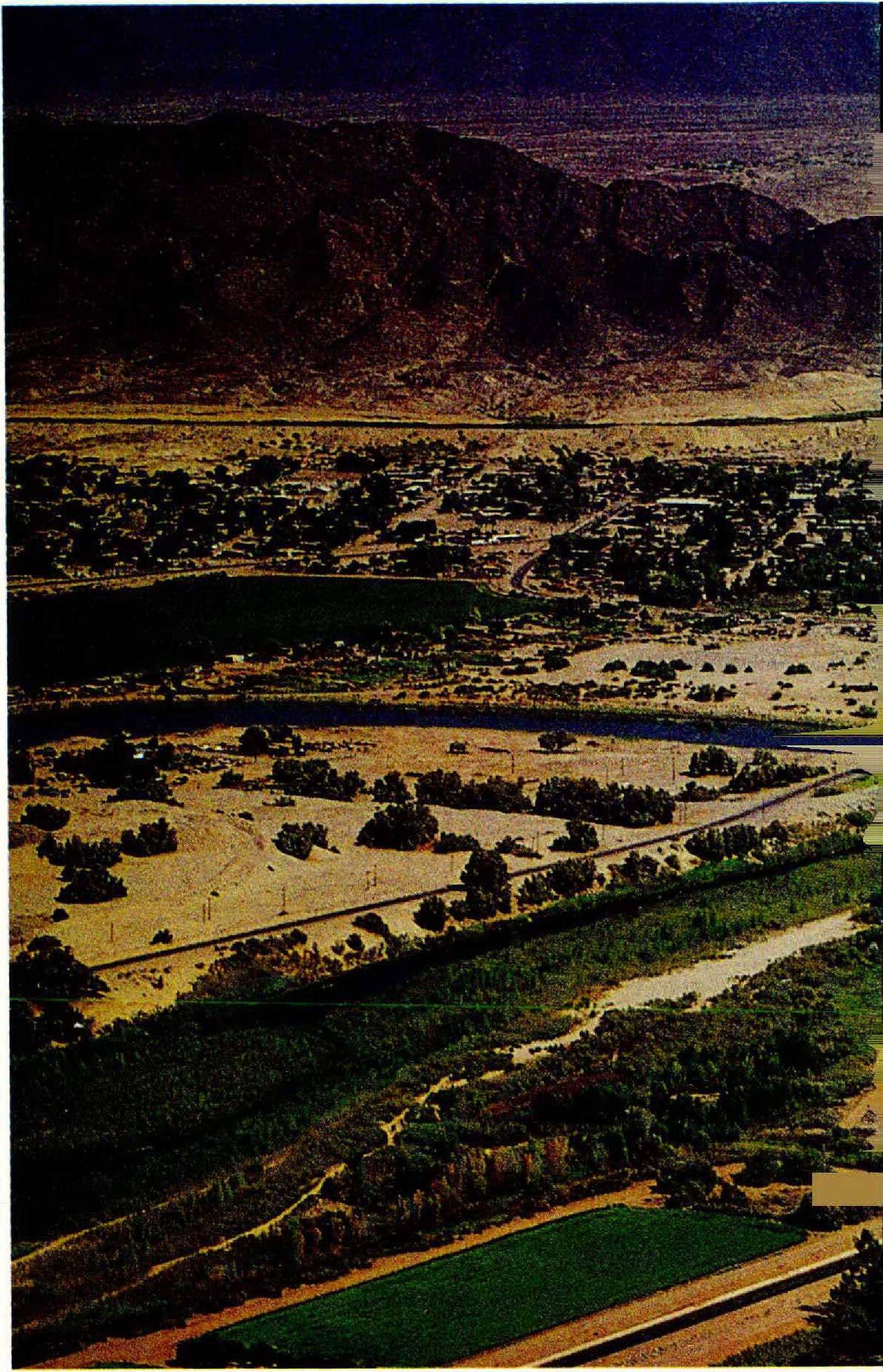
THE AIRPLANE IS NO BIGGER THAN A CAR, AND IT does not require roads. You take off from Lindbergh Field, in San Diego, and climb through the cool overcast, moisture rolling across the windshield. At two thousand feet, with your wing down, you slice into the clear sky and turn east along the border. Outside, the air warms by twenty degrees—a temperature inversion, which caps the city smoke and concentrates the Pacific moisture into cloud. On top it is a primeval morning. The sun is young but strong. The stratus below forms a brilliant white sea that laps against the mountains ahead. San Diego and Tijuana have vanished. Where the clouds dissolve, you fly across rugged uplands rising to four thousand feet.
Taller mountains stand to the north and south. The desert is brown and scruffy: dirt tracks scar the surface, ranch compounds nestle by wells in the shade of planted trees, mine shafts spew their tailings down the stony slopes. In places the U.S.-Mexican border is visible as a three-strand fence line, a line of demarcation between overgrazed pastures. Like opposing images, two highways swing up to the border, turn, and swing away. A railroad in the United States winds through the badlands, ducks through a tunnel, and emerges into Mexico; the rails are rusted and do not glint. Farther east the ground slopes down into a vast, elongated depression. You descend with it into an intensifying desert, until the altimeter reads less than zero and you are flying below sea level. Now the desert vanishes, replaced by miles of crops. Bugs splatter against your windshield. The green is shocking. It is an engineered color, a bit too bright, manufactured with artificial rainfall pumped from manmade streams. The water comes from the Colorado River, which flows by just over the eastern horizon.
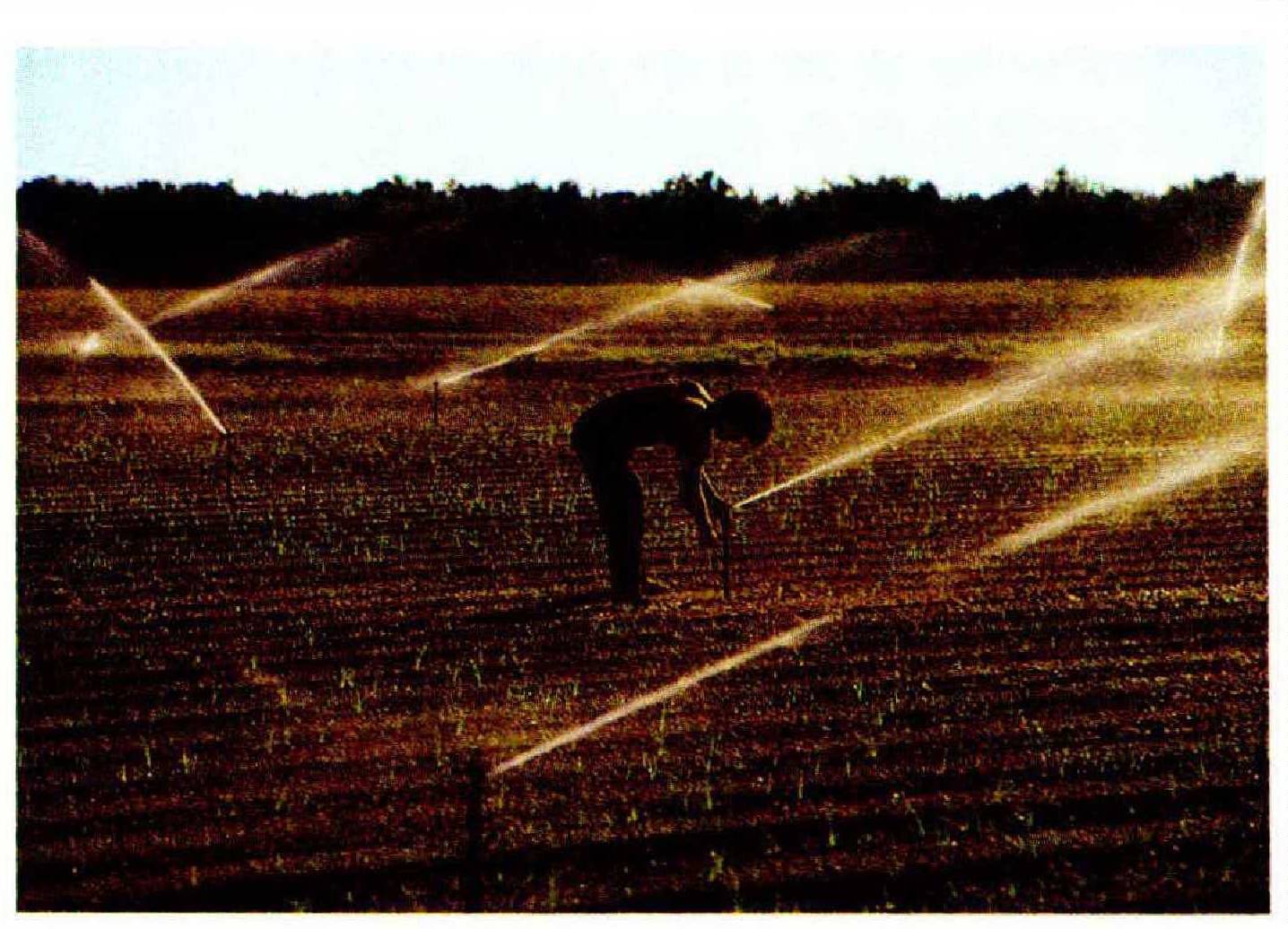
On the U.S. side this fertile lowland is known as the Imperial Valley. Four hundred and sixty thousand acres are irrigated in an average year. The fields are large and flawless, and the population is thin. In the winter, retirees from the Midwest fill the trailer parks. They are known with tentative affection as snowbirds. The Mexican side, called the Mexicali Valley, is about the same size but more densely populated. More than half the land is held by ejidos, communal farms established during the land reforms of the 1930s. The ejidos are poor and inefficient, and many ejidatarios have fled to find work in the United States. Elsewhere in the Mexicali Valley the land is held in small farms and the towns are bursting with people, Tight against the boundary fence stands an unlikely city of a million people, also named Mexicali. A century ago it did not exist. Now it is a state capital and an important industrial center. Like the fields, the city is an implant living by the uncertain grace of a troubled river.
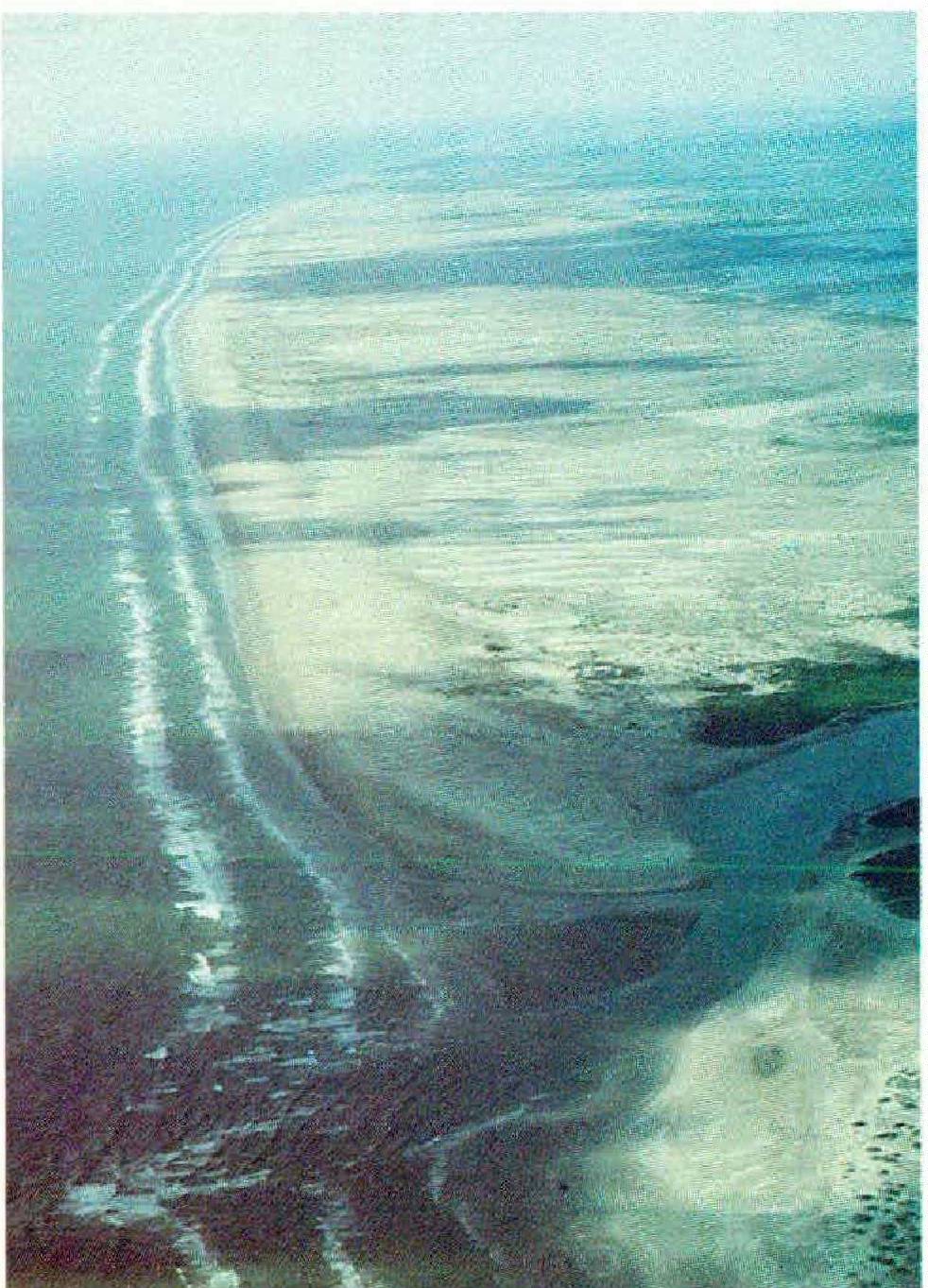
The Colorado River has so many dams and diversions that by the time it approaches the border it contains barely enough water to meet the obligations of a treaty with Mexico. The last of the flow is diverted into the Mexicali canal system by the Morelos Dam, which lies on the U.S.Mexican border near Yuma, Arizona. Below the dam the river is dry and the delta is dormant. No water has reached the Gulf in years. On a geologic scale this may prove to be a hiatus, since the reservoirs upstream are silting up. In the meantime, Imperial farmers say, not a drop is wasted. What they mean is, not a drop goes unused.
In the town of Imperial, I found a pamphlet that boasted of abundant sunshine and mild temperatures in the winter, the rainy season. Here is the other three fourths of the story: The rest of the year is hell. Though the maximum temperature of 119° has been recorded only four times since 1914, almost every afternoon in the summer gets close. The soles of your desert boots melt on hot pavement. The pavement itself melts. They call it dry heat, but “parched” describes it better. The average annual rainfall is under three inches. In 1956 the year’s total was 0.016 inch. June is the driest month, in which measurable rain has fallen only twice since 1914: 0.04 inch in 1948, and 0.01 inch in 1988.
Nonetheless, the soil is rich, and thanks to the legendary Imperial Irrigation District, the land is cultivated year-round. Water from the Colorado is diverted at the Imperial Dam and flows eighty-two miles through the All-American Canal. The All-American is a giant ditch, up to two hundred feet wide and twenty feet deep. It runs so close to the border that Mexican squatters throw hoses in and siphon water for their vegetable plots. The losses are insignificant. The three million acre-feet of river water diverted into the canal annually is roughly a fifth of the Colorado’s total flow. (An acre-foot is the volume of water necessary to cover one acre to a depth of one foot, which is the amount necessary to support a family of five in the United States for one year.) Ninety percent of the All-American water goes to the fields, each acre of which receives, on average, five and a half acre-feet every year. That is a lot of water, but evaporation and transpiration rates are high, and at least a foot is needed just to flush the soil and keep it from becoming too salty. The price is about $11.50 per acre-foot, which is cheap compared with the $1,000 per acre-foot that some water-starved California cities are now considering paying. The farmers have made the Imperial Valley one of the great agricultural areas of the world. The desert is never far from view, a reminder of the consequences if the water stopped flowing or became too expensive. The Irrigation District encourages this understanding in publications that juxtapose color photographs of sand dunes and crops. You have to admire the gall of the farmers: their biggest crop is alfalfa, a cow food that is notoriously wasteful of water. They farm in hell and thumb their noses at the devil.
At the sprawling headquarters of the Imperial Irrigation District, I talked to an official about the problems across the border in Mexicali. He said, “I’m just amazed that the Mexican farmer has to plant his crops on the basis of water availability. Our farmers plant on the basis of the market. Water is a given.”
The Politics of Water
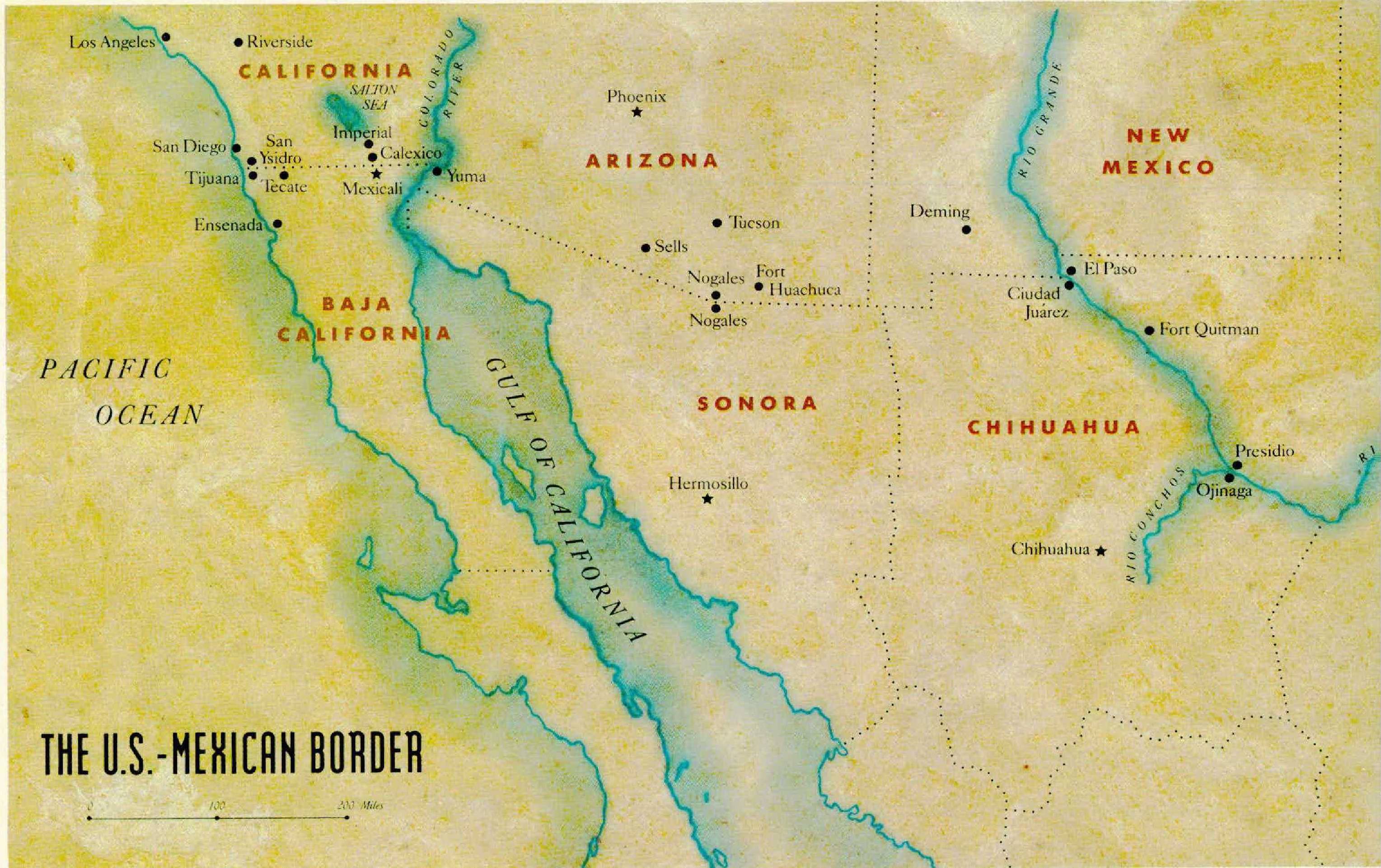
THE STRANGEST FEATURE OF MEXICALI CITY IS the way it is lopped off at the boundary. You can walk along the fence near the center of the city and look north into the fields of the Imperial Valley. Mexicali does not feel like a border town; it has wide, shaded avenues, elegant neighborhoods, good schools, a university, and a shopping mall. Still, it is a Third World city. Things often don’t quite work—a telephone, a light switch, an appointment. The poor live in cramped central slums and in looser shantytowns wedged among developments on the outskirts. If they are lucky, they serve the wealthy, or toil in sweatshops, or sit on assembly lines in the new factories. If they are unlucky, they rely on their families, or work the streets. They do not seem resentful. The rich drive by in black cars with smoked windows and air-conditioners. You feel in such a place that you cannot see, that the contrasts blind you and all the middle ground has been obscured.
In downtown Mexicali, within yards of the fence, a tall, bearded man whose right leg has been amputated stands in the traffic in 110° heat. If you went there today, you would find him. He sets a can on the ground and does not move. Others stand nearby—a boy without hands, a man without sight, an Indian mother with a sick child. The tall man watches them begging, and beneath his beard his expression never changes. He does not hustle or hope. I walked by him day after day, and finally stepped into the traffic to drop a few coins in his can. He said nothing, and did not look at me.
There are thousands of Chinese in Mexicali City, descendants of the valley’s first farmers. They speak Spanish as well as Chinese, and own the restaurants where middle-class Mexicans eat lunch. I sat in one such restaurant and talked about the free-market reforms of President Carlos Salinas de Gortari, and the proposed North American Free Trade Agreement, with an unreformed agronomist. He was a serious man, maybe fifty-five, weathered at the edges, who had fallen from favor at the federal agricultural office. He worried that I would use his name. He looked around nervously and said, “Mexico is too political—resistance to the new orthodoxy is unwise.”
In the Mexicali Valley the new free-market orthodoxy means this: the irrigation districts are turned over to the users; water prices go up; crop supports and food subsidies are eliminated; farmers are encouraged to combine, expand, and plant for the market; commercial banking standards are applied to agricultural loans; eventually even the communal ejidos are privatized. The idea of selling ejidos has outraged much of agrarian Mexico, but not the Mexicali Valley. Like most of the north, it admires the U.S. model of undiluted competition.
The agronomist was different. He said, “We won’t wait for a free-trade agreement. California growers are already buying up the best land. They use our soil, use our water, hire a few laborers, and send the crops home. We have been through this before.” Then he looked embarrassed and said, “You understand, I have nothing against Americans personally.”
I answered delicately, “I have wondered about sovereignty myself.”
He continued, “Of course, we have an answer. We say, We can compete as equals.”
“You don’t agree?”
“A few farmers can compete, yes, but only a few. Imperial irrigates with three million acre-feet a year of highquality Colorado water. We get one and a half million at Morelos, and in dry years not a bit more. We pump in another seven hundred and fifty thousand acre-feet from our wells—water that is often so salty it would kill crops if we didn’t mix it with the surface supply.”
Thinking of the waste on the other side of the border, I said, “The fact remains that you have two and a quarter million acre-feet.”
He wagged his finger at me. “This tea we’re drinking, it’s irrigation water too. Our first priority has to be urban use. Look at the size of this city, and the industry moving in. The farmers get only fifty percent of the allotment.”
I scribbled some calculations on a napkin. “In Imperial they farm the same acreage with two and a half times as much water.” He slipped on a pair of reading glasses and checked the figures. “You see, we need to conserve water, not imitate the United States.”
I said, “I noticed alfalfa here, too.”
But he was lost in his thoughts. He said, “Now we grow onions, broccoli, carrots, garlic, all the vegetables. Maybe only one crop a year, but enough to live on.”
They also grow cotton, lots of it, which is another thirsty crop, and cannot be eaten. But I didn’t want to quibble.
He said, “Can you imagine what this valley will look like when only the big farmers are left and all they grow is alfalfa? Think of the water use! They will return the valley to desert.” At the end of the meal he broke open his fortune cookie and chewed it miserably; then he ate mine.
TO UNDERSTAND THE LAND, KEEP YOUR EYE ON the water. After the Morelos Dam, the last of the Colorado flows through Mexico in a canal called Alimentador Uno. The current is too strong, and the banks are too steep, to make swimming safe. But you can fish it, and the water is clear, cool, and beautiful to see. It shimmers in the sunlight and swirls under bridges. It gurgles through gates. It divides, and divides again, until, after fifty miles and perhaps a day, it gushes into the onion fields of Oscar Sanchez Lopez. Sanchez is a universitytrained farmer, tall, balding, and thirty-five. He harvests the onions, crates them up, and ships them north to California. In this form, repackaged, the Colorado comes to Seattle, Chicago, and New York. We eat it with hamburgers raised on alfalfa.
Sanchez’s farm lies close to the dry riverbed, on the best earth in the valley. Sanchez was waiting for me there. He acts and looks more like a diplomat than a farmer. He dresses neatly, carries a calculator in his shirt pocket, drives a Landcruiser, and speaks impeccable English. He spent a year as an exchange student in White Lake, South Dakota. “Nice folks,” he said, and answered his car phone. It was his wife, calling from their home in Mexicali City; Sanchez commutes to work.
He took me for a tour of the farm. By U.S. standards it is a small operation: two hundred acres of well-drained soil, ten employees, nine tractors, three disks, two plows, two chisels, two cultivators, three planters, two sprayers, three pumps, and six hundred acres’ worth of irrigation piping. Last year it produced 200,000 boxes of green onions, 70,000 boxes of zucchini, and 8,000 boxes of radishes—all sold to the United States. During the peak winter harvest four hundred laborers come to pick the crops, and to clean, sort, and pack them.
Sanchez works hard to meet the strict standards of his U.S. buyers. Nonetheless, his boxes get stamped MEXICAN and are worth less for it. He brought it up and then told me he didn’t care. “I’m in this for the money and the challenge.”
I asked why he sold exclusively to the United States.
“Because in Mexico there are always problems collecting. With the United States, business can be done over the telephone. You set a price; they send you a check.”
Sanchez grows crops year-round, because he rents water rights from less energetic landowners; nonetheless, he worries constantly about his supply. He asked, “Did you read Time on the Colorado—how even after the drought ends, there will not be enough to go around?”
“But there’s a treaty. You’ll always receive your one and a half million.”
“I don’t trust the treaty if the drought continues.”
Even within the treaty he has had problems in the past with the Mexicali Irrigation District. He said, “Last year we were doing a thousand boxes of zucchini a day, until suddenly they cut our water. Our production dropped to four hundred.”
We went to a freshly planted onion field and watched water cascading from rows of sprinklers. Sanchez squinted with an artist’s eye and spoke about the wet reflection on the surface: “We’ll water until the mirror is uniform.”
The sprinklers were driven by a loud diesel pump, drawing eight gallons a second from a ditch. A muddy, bare-chested man stood next to it, clearing the intake. He watched us warily. Sanchez called him a loner, the pump man, the farm’s most important worker. Through the worst summer heat he tends the pump unceasingly: he eats beside it and sleeps beside it, rolled in a blanket. I asked how much he made. Sanchez poked at his calculator and came up with $23 a day.
The farm is flanked by a large canal, which runs next to train tracks and the paved highway to town. Along its length squatters have built shacks and planted vegetable gardens, which they irrigate illegally by siphoning water. Many of them have tapped into the power lines,
and recently some have installed television antennas. Squatters are a common are a common sight along all the Mexicali canals.
Later, at lunch, I said I had noticed something odd— that even on the border few people in Mexico speak English. I said, Think of Europe or Africa. Sanchez answered, It’s changing now, and everyone wants to learn. There are English-only schools for children in Mexicali.
Because of the free-trade agreement?
Because of hope for it.
I asked him what hope he had.
He fussed over his calculator. “I hope it saves me ninety-three thousand and five hundred dollars in import fees.”
The Maquiladoras
ALTHOUGH CAPITALISM IS A LATECOMER TO MEXIcan agriculture, the border does not otherwise want for evidence of its power. Three hundred miles east of the Imperial Valley lie two towns named Nogales. They stretch along a narrow valley about an hour’s drive south of Tucson. The one in Arizona is gray and disheveled, but it has grown to about twenty thousand residents. Though the people are poor, by some standards the town has prospered. According to Governor Fife Symington, who mentioned Nogales last year in a Wall Street Journal article, taxable retail sales there exceed $300 million a year, which is 50 percent more than in a town of the same size near Phoenix. The taxes impress the governor. What is more, much of the revenue comes from shoppers who do not live in Arizona—Mexicans, who stream through the port of entry to buy brand-name goods in U.S. stores. They are allowed through the port because they have steady jobs, and thus qualify for shortterm border-crossing cards. They prefer brand-name goods for the reasons we all do. They shop in the United States for the cachet, and because the prices are lower. Then they go home.
Home is the other Nogales, across the line in Sonora, a city of a hundred thousand that fills the valley and climbs the slopes on either side. The growth there is vigorous and new. In a reversal of the Arizona pattern, the rich live near the central district and the poor occupy the suburban high ground. The poor are called parachutists, as if they had floated down from the sky and dug into the steep hillsides. The reality is less exotic: they come on the bus, seeking employment; they trudge up the hills dragging suitcases, and find a spot to live near family or friends. Slowly their camps have grown together. The poorest neighborhoods are chaotic, streetless, and so dense that the eye has trouble taking them in. There is no electricity or plumbing. Steep paths wind between the shelters, which are built of scrap plywood, packing crates, car doors, salvaged tin, worn tires, and cardboard. People suffer from malnutrition, disease, parasites. Rainstorms slicken the hillsides and scour the garbagestrewn gulches. Down in the valley the Nogales wash runs with sewage and industrial waste. The mixture flows north into Arizona, carrying sickness and poison. Last year it caught fire. For all this, some people blame the maquiladoras.
Maquiladoras, also called maquilas, are a peculiarly Mexican invention—foreign-owned factories that import all their materials from the United States, employ Mexican workers (mostly young women) to assemble them, and ship the finished merchandise back north again. Import codes in both countries allow this to happen almost duty free. The scheme was devised in the 1960s as an exception to Mexico’s traditional exclusion of foreign companies; it was meant to create employment along the border while protecting Mexican industries from damaging competition. The arrangement boomed after 1982, with the collapse of the peso. Mexican labor was suddenly among the cheapest in the world; it still is.
Nearly two thousand maquilas operate in Mexico today, most within a few miles of the border. They do not look like much—windowless warehouses in industrial parks—but they employ half a million people and constitute a multibillion-dollar industry that has become Mexico’s second largest source of foreign revenue, after oil. Definitions have blurred: as part of his reforms, Salinas has eased the laws that restricted the maquilas’ access to the Mexican market; for want of more-conventional investors, he can use the maquilas to force competition on a lethargic economy. Free trade and liberalization may eventually eliminate the maquilas, but only in the most technical sense. To the extent that Mexico ties its future to ours, industry will continue to concentrate on the border. The maquilas will shed their skins but live on in similar forms. This is an unhappy prospect for people who worry about, for instance, disease and fire in the Nogales wash.
Critics in the United States have used the publicity surrounding the prospect of free trade to strengthen their attacks on the maquiladoras. They accuse the industry of undercutting U.S. labor, exploiting Mexican poverty, and abusing the environment. The existence of maquilas raises a difficult question: we talk about progress, but if Mexico took care of its poor or cleaned up after itself, would our companies still invest there? The maquila managers would rather not answer this question; they are business technicians, not advocates, and they are paid to get on with the job. But they are proud that they have created employment, and some even feel they have pioneered a Mexican recovery. Most are not sophisticated thinkers. They respond to critics by excluding them, a reaction that has given the industry a reputation for secretiveness.
FRANK MCGINLEY TALKED OPENLY TO ME NONETHEless. He is the Nogales plant manager for Coventry Manufacturing, a young Los Angeles-based company that specializes in plastic foams. McGinley lives with his wife and children in a comfortable house in Tucson, and commutes daily to his work in Mexico. At age forty he is an unassuming, thoughtful man, with a trace of the world-weariness that Americans and Europeans develop in poor countries. I met him in central Nogales on a stormy afternoon, during a gubernatorial campaign in Sonora. Ubiquitous Institutional Revolutionary Party (PRI) posters proclaimed ¡VAMOS FOR MAS PROGRESO! McGinley smiled wryly and said, “Sure, why not?”
“You’re not convinced?”
“Tell it to the people living in these shacks—yeah, let’s go for more progress.” He works too close to the ground to care for slogans. He said, “It’s been an education in political power. They talk about the new Mexico, but where’s the opposition? I’ve seen only one [National Action Party] poster, on the window of a shop, and now that guy’s out of business.”
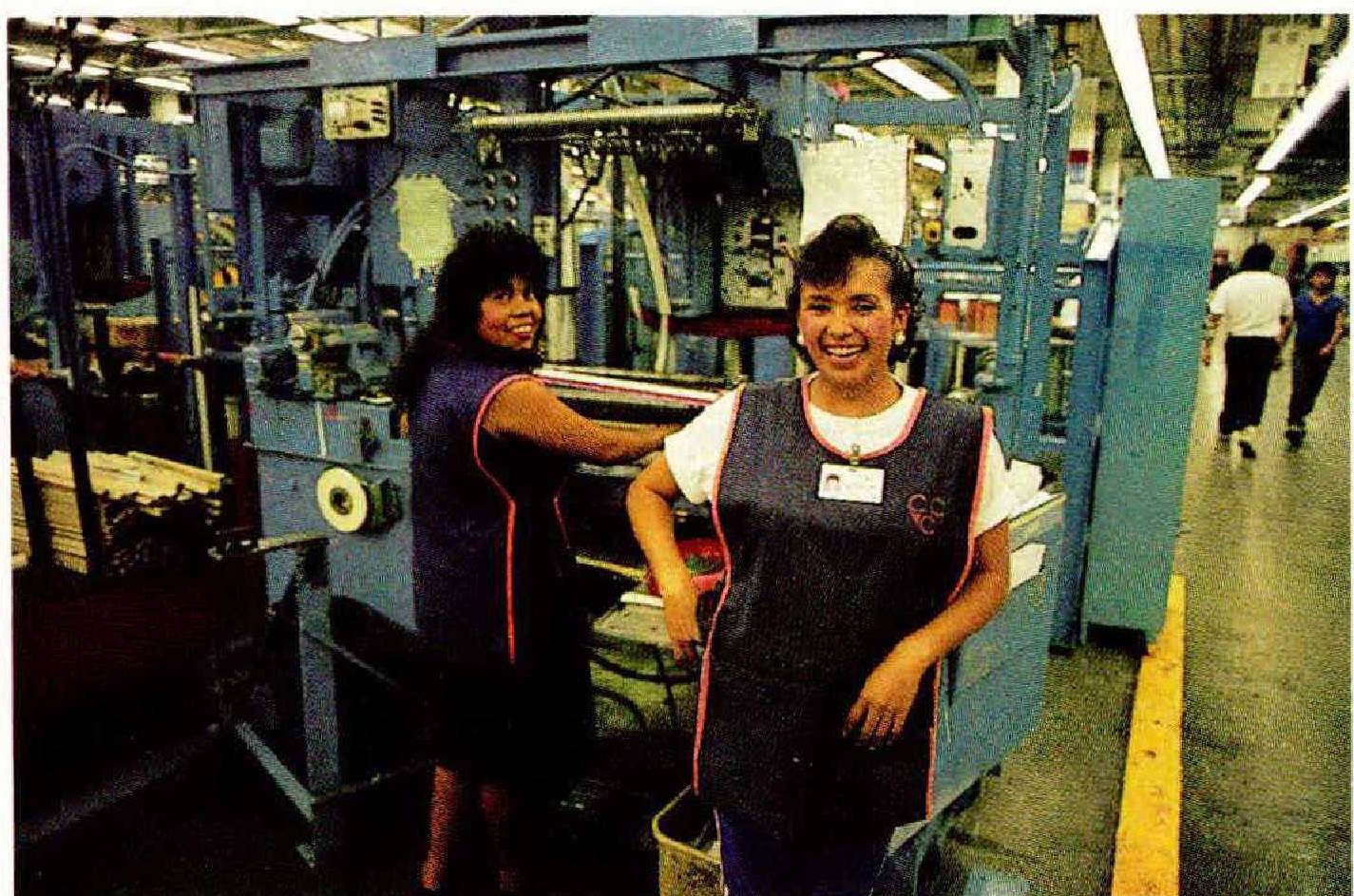
We navigated the flooded streets to the cement-block warehouse where he runs his maquila. It is a small operation, employing ten men and twenty women to produce foam pads for electric car polishers, and the cloth bonnets to go with them. McGinley values efficiency: in addition to the weekly output of 6,300 pads and 30,000 bonnets, the plant produces about 1,200 industrial towels from the scraps. The men who work there are energetic teenagers, wiry street kids wearing T-shirts and crucifixes; they form, cut, and glue the pads, and stack them on heavy pallets. The women, some of whom are older, sew the bonnets on industrial sewing machines arranged in rows under fluorescent lights. Monday through Friday, work starts at seven and ends at five, with fifteen minutes for coffee in the morning and afternoon, and a half hour for lunch. Coventry gives the workers two weeks’ vacation a year, two weeks’ bonus pay at Christmas, a production bonus for high volume, and a solid lunch every day. The base wage is about eight dollars a day, which is twice the standard of other maquilas in Nogales.
I asked McGinley why he paid such high wages, and he answered, To reduce turnover. An unstable work force is one of the greatest problems for U.S. companies in Mexico; at some of the large plants the annual turnover approaches 60 percent. Industry blames this on the immaturity of the workers, which is nonsense: in truth, their lives are insufferable, and they escape if they can. Many of the most courageous move on to the United States. McGinley said that Coventry has a greater sense of responsibility than do other maquilas, but he did not claim to have rescued his employees from poverty. He mentioned their large families. When he described the misery of their dirt-floor hovels, I did not ask him to reconcile his dismay with the eight dollars a day. The problems facing even his own employees are too deep for Frank McGinley to solve, and he felt no guilt. Hardly pausing for breath, he told me about a seamstress he had hired, a malcontent who tried to organize the workers to strike for still higher wages. McGinley made a few phone calls, found she had caused trouble at other maquilas, agonized over it, and confronted her. She quit after the other women warned her that if she continued to agitate, she would not easily find another job. I said to McGinley, But they have the right to organize. He answered, But look what we pay already—she was trying to take advantage of us, and the others knew it.
We talked about SEDUE, the Secretariat of Urban Development and Ecology. Mexico’s environmental regulations are as complete as those in the United States, and were written with the guidance of our Environmental Protection Agency. In the political heat of free trade there is a new emphasis on enforcement. McGinley described it as “permits for permits’ sake.” He said, “The enforcement is full of holes.”
I asked, “Does money change hands?”
He denied that it happened—at least at Coventry. “We operate by the letter of the law . Most maquilas do. Once you start paying la mordida [‘the bite’], it never ends.” He pondered this, and continued. “Of course, sometimes you might not have a choice. I’ve heard they come to you and say, ‘You need to buy these filters, and from this man. If you do, your plant will be in compliance.’”
I brought up the maquilas’ reputation for environmental recklessness. He said, “There are how many plants now? Sure, some of the shops are dirty, like the chromeplaters who moved to Tecate just so they could dump into the river. But it’s too easy to blame the maquiladoras. The problem in Mexico is ignorance.” He took me to the back room, where the pads are glued together and the molds are washed in acetone. He said, “For instance, we give these guys masks and respirators, but as soon as we turn our backs, they take them off. They get mad. They think safety equipment’s not macho.”
COVENTRY IS THE CREATION OF A CHARISMATIC salesman named Simon Burrow, who remains its president. When he visits Nogales, he gives short inspirational speeches in English to the assembled employees, and they applaud politely without understanding. In delicate recognition of the similarity between “Burrow” and “burro,” they call him Señor Simon. He founded the company, in 1981, on the idea of die-cut adhesive-backed shipping pads, which he sold to glass manufacturers to separate their panes. His next idea was even better: a way of cutting foam and putting it on a plastic stick to make a high-tech swab for the computer industry. IBM came through with a huge order, and Coventry prospered, manufacturing the swabs in Los Angeles.
Three years later disaster struck when a competitor with Korean-made swabs underbid the company and won the contract. Forced to lay off most of its employees, desperate to lower its costs, Coventry moved its production to Mexicali, into an old building next to the boundary fence.
The swabs were a perfect product for Mexicali—the manufacturing was repetitious and labor-intensive. In 1987 Coventry made No. 283 on Inc. magazine’s list of the fastest-growing private U.S. companies. Mexico was Coventry’s salvation. The company found other work that could be done there. “Tedious things like packaging,”McGinley said. And fishing leaders. “Have you ever wondered what poor soul had to tie those things together? It’s us.”
Today Coventry employs a hundred and twenty production workers in Mexicali and keeps a few technicians in Los Angeles for the more difficult special jobs. This is the sort of everybody-works arrangement that supporters of free trade dream of. They say that Mexico can be to the United States what Thailand is to Japan—a low-cost production machine in an arrangement that has strengthened the economies of both countries. Some observers disagree, believing that it is dangerous to view the ThaiJapanese relationship as a model of unfettered trade. They say Thailand has been crafted by Japan as a platform from which to export to the rest of the world. The crucial difference is this: Left to the efficiencies of unregulated trade, Mexico will be used, even by U.S. companies, mostly to export to the United States. This will widen the U.S. trade deficit and further weaken our economy. It is an argument for government intervention, resisted by the Bush Administration.
McGinley does not generalize. He described a few simple truths to me: Coventry was forced out of Los Angeles by high wages. If it had moved to Korea or the Philippines, it would have bought its supplies there. Because it moved to Mexico, it buys its supplies in the United States. That may change as Mexico develops. Coventry keeps the Los Angeles operation going because the Mexican workers can’t handle the special equipment. That may change too. In the meantime, the company is still trying to persuade them not to fix production machinery with baling wire.
CIUDAD JUÁREZ IS THE cradle of the maquiladoras. At a North American Philips plant the personnel director led me onto the production floor, where nine hundred young women in white T-shirts sat on stools along semi-automated assembly lines. The personnel director was a middle-aged American, a company man with a neutral face, easily forgotten. He said, “I ask you, does this look like a sweatshop?” The hall was cool, bright, pristine.
I answered, “Impressive.” With no standard by which to judge television assembly, what I meant was the presence of so many young women—white shirts, red lips, combed black hair, erect backs, quick eyes, row upon row. They perched their feet on the rungs of the stools in a dazzling display of footwear.
“Seven thousand sets a day,” the man said. “Vertical integration. Sylvania, Magnavox, Philips. Top quality.”
The women worked in silence, shielding their thoughts as we walked among them. Their fingers flew nimbly through the repetitive motions. The machines hissed and clanked. My host explained the details of production.
I interrupted him. “Why women?”
“Concentration and dexterity.”
He was not unaffected by them. He said proudly, “The white shirts were my idea.” He stopped behind one worker and, in a fatherly gesture, laid his hands on her shoulders. “Our plant beauty queen.” She was about eighteen, and had delicate features coarsened by makeup. She turned to smile. We walked on. He said, “Juárez has developed a skilled labor force. The changes in just the last five years are incredible. People who think the Mexicans don’t do good work are out of date. Productivity is as high here as anywhere in the world.”
Well, almost. Productivity is about 80 percent as high as in the United States. But the labor costs are less than a tenth as much. (The “fully loaded” wage of the Philips workers is $1.88 an hour, including taxes, social services, one hot meal a day, and transportation from the slums.) This combination of low wages and big results is what worries the U.S. labor unions. They disagree with the theory that only low-skilled jobs go to Mexico. They say free trade will add fuel to the fire.
The Mexicans are counting on it. By their most optimistic model, the border industrialization will slowly spread south, bringing development and wealth with it. Mexican companies will be invigorated by competition. The pioneering enterprises will reshape Mexico around themselves, improving the roads and telephones, training the work force, and raising the standard of living. They will bootstrap Mexico out of the Third World.
In a Juárez hotel I met an American engineer who ridiculed the idea. He was a ferretlike man, badly frustrated. He had been sent by the home office to solve yet another failure on the maquila production line. In Mexico “the corruption kills you,”he said. “Someone is always demanding a fee. You can say it’s unethical, but if you don’t pay, after a while you notice that things just aren’t happening. These reforms won’t amount to much. The comparison to Asia is a pipe dream. Take Korea—you can go there and say, ‘Copy this,’ and they’ll do it, and do it better and cheaper. You don’t even have to go there; they come to you. Mexico?” He snorted. “Mexico lacks the midlevel management. Mexico lacks the infrastructure. Most of all, Mexico lacks the entrepreneurial spirit.”
I took his doubts across town to Frederico de la Vega, a patrician businessman who was instrumental in bringing the first maquilas to Juárez. De la Vega was an affable, thoughtful man in an open-necked shirt. We sat in a polite restaurant, where many of the patrons knew him. He said, “Nothing is certain. Mexico is built on a system of patronage that will take generations to undo. I myself am worried because the PRI won so overwhelmingly in the last regional elections—we need a strong opposition if for no other reason than to keep the party in line.” He smiled reassuringly. “But don’t let people convince you that nothing can change in Mexico. Juárez is the perfect example.”
I asked him to explain. He said, “Forty years ago, when I came home from college in the U.S., I saw my city with fresh eyes. It was nothing but an entertainment center. I don’t want to use harsher words.”
“The Tijuana syndrome,” I said.
“Women, liquor, quick divorces, good times for American soldiers. We fought it for decades and finally won. The irony is that El Paso is still pushing us to develop our tourism. To hell with it. One good factory will provide more jobs than the entire tourist industry.”
Another wealthy Mexican I met in Juárez spoke of the future. He was in the commercial real-estate business. He said, “We have a slump now because of the U.S. recession, but I am not worried. The maquilas are just the beginning. Your labor unionists, your environmentalists, think they can control the process, but their power is like this.” He showed me an inch between thumb and forefinger. “They can play politics. They can squeeze words from us. But we don’t need the free-trade agreement to have foreign investment. We have only to invite industry, and it will come.”
“That hasn’t proved exactly true,” I said.
“Not true? In 1979 there were seventy-five maquilas in Juárez, and now there are three hundred and twenty. In ten years there will be twice as many. Salinas is doing what anyone would have done. Time will show that Mexico was the great void waiting to be filled.”
“If so, it’s understandable that American workers are unhappy.”
“Yes, of course. History has turned against them.”
I APPRECIATED HIS FRANKNESS. YOU HAVE ONLY TO look at El Paso to see damage caused by economic proximity to Mexico. The city is unkempt and unhappy. Wages are depressed by the availability of cheap Mexican labor. The median family income is at least 20 percent lower than the national level, and a third of the residents live in poverty. Unemployment is 11 percent, “which is not bad for a border town,” according to a spokesman for the Chamber of Commerce. If not for the Army, which has a large base there called Fort Bliss, the numbers would be worse. El Paso is pervaded with a sad boosterism. Television anchors chatter about the city’s improved rank on Money magazine’s livability list of 300 American places (El Paso has risen to eighty-sixth place, from No. 261 in 1990). A business leader said to me, “Take tourism: there’s a lot we could do there. We’ve just got to find a way to get the drivers off the interstate.”
The crumbs are for El Paso. The same logic that would take a company there takes it one step farther, across the Rio Grande. This is likely to become even more true as Mexico opens to investment. There are exceptions, of course: industrial space in El Paso is less expensive than space in Juárez, so if you are in the warehousing business, you might locate there. But the only reason you would consider the city in the first place is its closeness to Mexico. For El Paso, used to thinking of Juárez as that honkytonk next door, the new symbiosis is bitter.
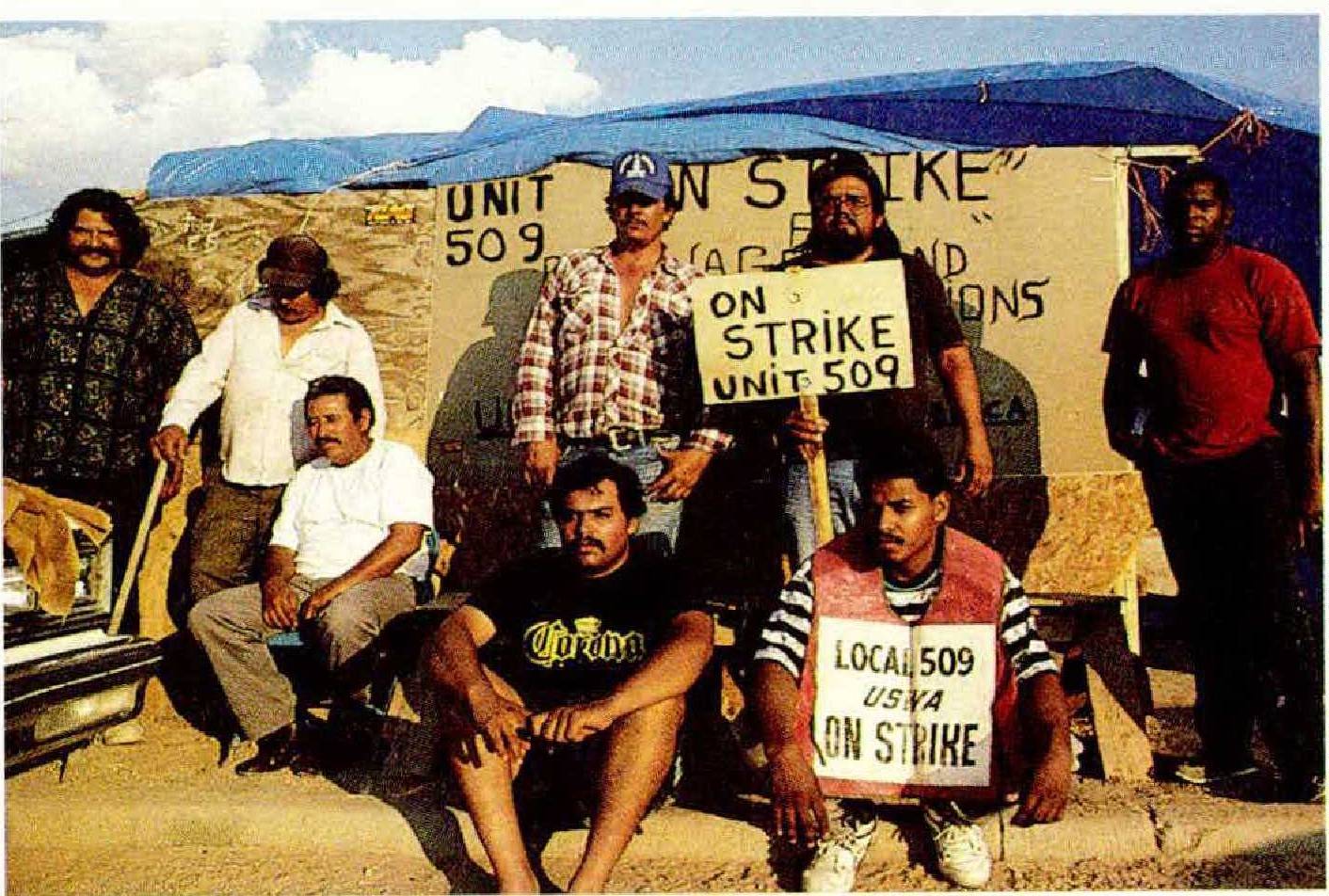
I discovered picketing steelworkers on the western edge of town. They had walked off the job at a small plant that manufactures sucker rods for oil wells, and had set up a makeshift camp across from the main gate. Seven strikers sat with me in the shade of a tarpaulin. They were picketing around the clock, on the same shifts they had worked inside. They had a small tent, a basketball hoop, and a Porta-John. I asked if they would win. One answered with a defiant V sign, and said they had already shut down the plant. Another seemed less sure. He said, “Every morning the manager drives by, and he just looks at us and laughs.” He swore. They were burly men in sloppy clothes. Some had been drinking.
The man who talked most had a drooping moustache and an intense, impatient face. He introduced himself simply as Jorge. He said, “All we’re asking for is a seventy-five-cent raise—cheap bastards. I make six dollars an hour. My wife works too, but we run out of money three days before payday.”
“No savings,” I said.
“I forgot—there’s a retirement plan. They give you a hundred dollars a year, a U.S. savings bond.”
Someone said drunkenly, “That’s the goddamned American way.”
Jorge watched me carefully, as if I might have taken offense. He continued, “Same company in Houston, right? Guys doing our job are making ten, twelve dollars an hour.”
“For how much longer, do you think?”
He looked somber.
I said, “Of course you realize in Juárez people work for six dollars a day. Your seventy-five-cent raise is what they make in an hour.”
“That’s what management tells us. I mean they threaten us with it. But El Paso is part of the United States, and we want to be part of it too. We want to live like American citizens.”

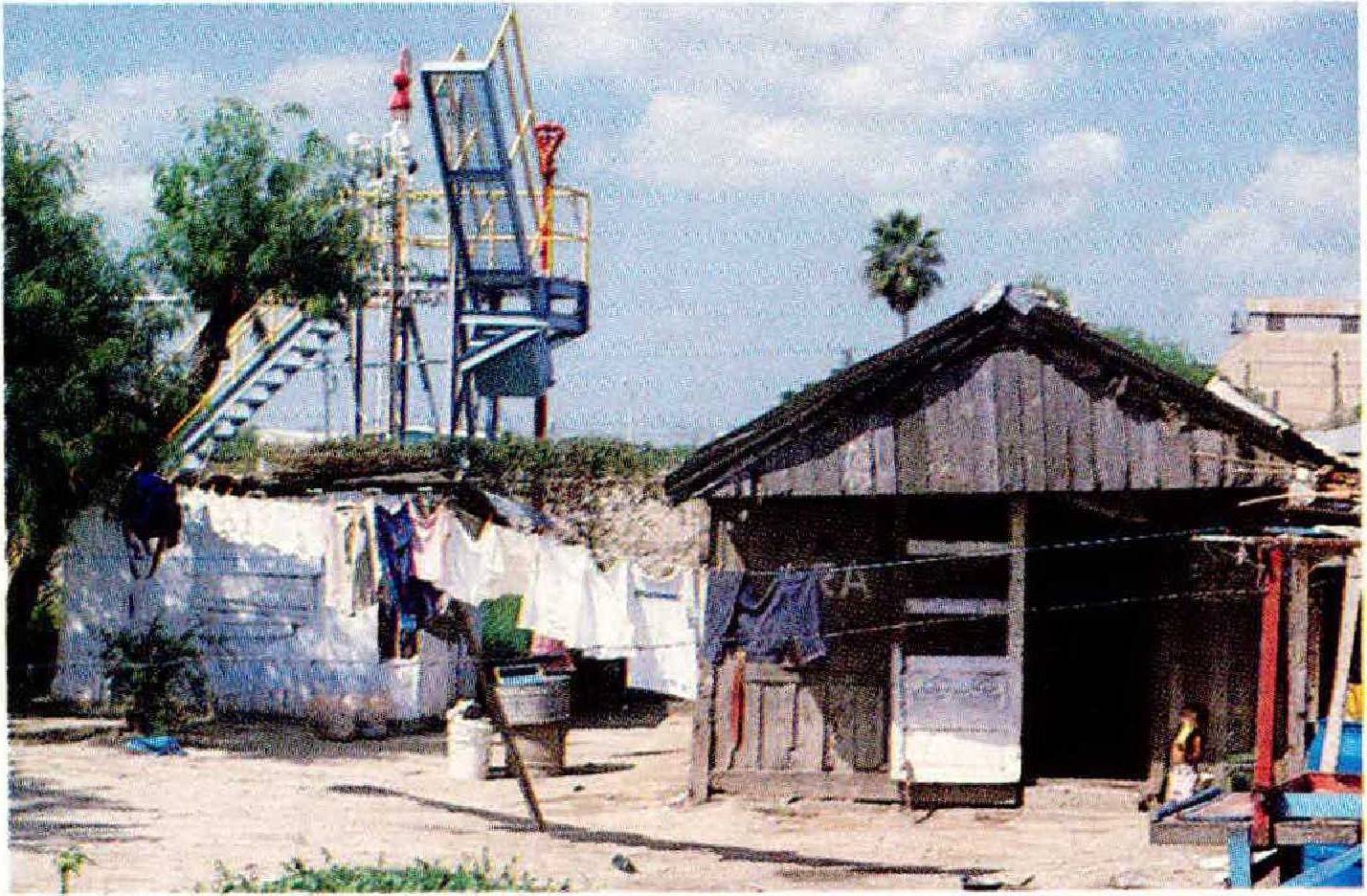
FAR TO THE EAST, AFter hundreds of miles of virtual wilderness, the border once again becomes a place punctuated by urban desperation. This is the sweltering coastal plain known as the Lower Rio Grande Valley. On the Mexican side, life is dominated by the presence of large maquiladoras. Reynosa, which lies on the Rio Grande, is a flat industrial city of perhaps three hundred thousand people, about seventy miles from the Gulf of Mexico. To get there from Texas, you cross the Rio Grande, passing a mile of trucks waiting to clear Mexican customs. Colonia Roma is one of the districts where the maquila workers live. It sprawls across a swampy lowland beyond the Pemex refinery—a large and desolate slum, strewn with trash, where vegetation does not survive. The shacks are made of scraps discarded from the factories. Children wear rags and go barefoot. Here and there a Coke sign is hammered to a wall, indicating a small grocery, a place perhaps with electric power. A paved road passes beside the neighborhood, on higher ground, and crawls with buses blowing smoke. During the shift changes at the maquiladoras, workers stream between the shacks and balance on planks across mud and sewage. The women dress in pressed skirts and blouses; they look like office workers from a better neighborhood in a better city. Many go into debt to achieve this effect. Life is expensive in Mexico, since inflation has outpaced wages. The average maquila worker in Reynosa has to work forty-five minutes for a quart of milk or a pound of chicken, two hours for a bottle of shampoo, three and a half hours for two boxes of cornflakes or a toddler’s used sweater, twenty hours for sneakers, 125 hours for a double mattress.
Drainage in Colonia Roma is poor. The district flooded the week before I got there, and residents perched with their belongings on their beds while they waited for the water to subside. This seemed hardly noteworthy to the family I went to see. They lived in a single-room plywood house that was just about taken up by two iron beds pushed together. On subsequent visits I counted eight people there; I’m sure more called it home. The oldest was a toothless Indian grandmother who questioned me about my religious beliefs. I was cautious: she wanted to talk about God’s grace and the afterlife. The youngest resident was a girl of perhaps five who seemed ill. I talked to a man in his twenties who had been working for three years at Zenith, which employs up to ten thousand workers in Reynosa. He was small, thin, and discouraged.
I asked, “How is the job?”
He answered, “Good.” But his eyes were furtive. “Good?”
“Little good. The problem is there is no money.”
“And the union?”
“It can’t protect us.”
“How long will you stay?” I asked.
“I don’t think about it.”
The shack smelled of lard and garbage. Chairs hung from nails on the walls because there was no room for them on the floor. A pair of prized cowboy boots stood under one bed, by a stack of clothes. The kitchen consisted of a camp stove, a water jug, and an insulated box. There was a kerosene lantern, and a transistor radio. The buzzing of flies mixed with the shouts of children outside. Smoke from a refuse fire drifted by the open door. The yard was a mess of cinder-block rubble imbedded in mud.
Seen from a distance—say, in a photograph—such poverty evokes powerful feelings. Seen close up, however, it can seem unreal. It is bewildering that people whom you can touch, who share the same air with you, can be suffering in conditions so different from your own. I have experienced this before, in Africa, in the midst of starvation.
We carry our own world with us, and it is numbing.
The Organizer
MARÍA GUADAlupe Torres Martínez lives in Matamoros, across the Rio Grande from Brownsville, Texas. I met her in a café to talk about her efforts to organize women workers in the maquiladoras. At forty-eight, Torres has a gentle face thickened by hardship. For most of her adult life she worked on the production lines in Matamoros for a company called Kemet. Now she works for an organization called Comíte Fronterizo de Obreras, or Border Committee of Working Women. The committee has no membership rolls, but it is well known to thousands of maquila workers along the lower Rio Grande. Its approach is low-key: it does not exhort the women to march or strike but, rather, encourages them to meet discreetly in small groups in the shantytowns. They teach themselves about their rights under Mexican federal labor law, and about the dangers in the factories. Torres helps them to learn, as she herself learned. She encourages them to ask for small improvements from the maquila managers, and for better representation from the big Mexican unions. Faced in their offices with delegations of women who are calm and resolute, the men often give in to the demands. Torres has nourished herself with these small victories. She is a strong woman who has grown stronger with age.
Torres was born in 1944 in Cárdenas, a large town in the state of San Luis Potosí, about three hundred miles south of the border. Her father was a railroad laborer who fell off a car and died when she was a few months old. Her mother, with no means of support, went to work as a domestic for other railroad families. They could not afford to pay her, but gave her food and a place for the night. María Guadalupe grew up in their shacks, sleeping in blankets on the floor. When she was seven, she caught typhoid and almost died. She spent a year recovering. At the age of ten, having completed the third grade, she dropped out of school and went to work with her mother, cleaning houses and looking after children.
In 1960, when Torres was sixteen, she and her mother came to the United States. The Bracero guestworker program was still in
full swing. Mexicans could cross the bridge into Brownsville without documents; it was thought of as part of the natural border traffic. Nonetheless, moving to the United States was a big step. Mother and daughter hesitated for eight months in Matamoros, working next door to each other in upper-class households.
When they finally ventured into Brownsville, they found live-in jobs within three days. Torres became the nanny in a family of four children, for eight dollars a week. She stayed until she was twenty, saving a little money and going often to dances. Then she and her mother moved to Harlingen, the next town north, where again they found jobs in separate households. Then it was back to Brownsville. In her mid-twenties, Torres moved back to Mexico to look for work in a factory.
It took two months to get a job, at a pottery factory in Matamoros. After the first week she learned she would not be paid, because she was “training.” She wondered how she was going to survive. There were twenty workers there, and they told her this was standard. She answered, “If they haven’t paid you either, then you should ask for your money.”
They told her not to make trouble.
When the owner arrived, she said to him, “I won’t work here anymore, but you owe me for the work I’ve already done.” She pointed to the pots she had made. “I did all this, and I’m sure you’ll sell it. I won’t leave until you pay me.”
The owner refused.
Torres raised her voice. She used strong language, and said, “These other women have been here for months, and have never been paid for their training either. You owe them, too.”
The owner hushed her, and agreed to pay. He wanted to write her a check, but she had never been to a bank, and she demanded cash. Leaving the factory, she waved the money at the other workers, and cried, “Look! Look!” She heard later that they, too, were paid.
The next factory was a clandestine operation making knitted handbags. There were twelve workers. They had no chairs or tables, but sat on newspapers on the floor. One day a union man arrived and got into a shouting match with the owner, who was Italian. The union man took out a pistol and made the owner pay the workers then and there. He said, “Any who want to work in an electronics factory, come with me in my car.” It was a black Buick. Torres was the first one in. The others crowded in after her, filling the car so completely that the union man barely had room to steer. Somehow he drove them to his office.
The electronics factory was an American maquiladora, set up by the Electronic Control Corporation to manufacture electrical coils. There were two hundred workers. Torres was given a three-month probationary contract, with a promise of permanent employment if she performed well. At the café in Matamoros she showed me what the job entailed: she folded a paper napkin and with deft and reflexive fingers simulated wrapping wire around a spool. The company required the women to produce 400 coils a day, six days a week, for about eighteen cents an hour. Despite swollen and bloody hands, Torres worked quickly, and by her second week was producing 800 coils a day. The supervisors were pleased, but after eight months they still had not given her a permanent position. Then, just before Christmas and a mandatory two-week bonus, the company fired all two hundred workers.
Torres was in trouble. Her savings were gone, and her clothes, which she had been given while working as a nanny, were wearing out. To help with the rent on her small room in central Matamoros, Torres’s mother moved in, and both women took occasional day jobs in Brownsville. Every morning Torres went to the union hall. Another eight months went by. She knew already about the conditions at Kemet, the maquiladora where she was to work for eighteen years. She took a job there because she felt she had no choice. It was 1969, and she was twenty-five.
KEMET WAS AS HAD AS THEY SAID. SHE WORKED IN the department of injection molding, forming capacitor bodies from hardening epoxy. She washed the bodies bare-handed in methylene chloride, a volatile solvent that turned her hands papery and white. Methylene chloride is a chlorinated hydrocarbon, linked to liver damage, birth defects, and cancer. It is in the same chemical family as chloroform, and it can have similar soporific effects. The warning labels cautioned in English against breathing the fumes, and mentioned narcosis, respiratory failure, and death. The workers did not understand the dangers; probably their supervisors did not either.
Over the years Torres grew more angry. “I felt they were constantly loading more work on us. I began to ask the others, ‘Don’t we have any rights?’ One day my friend Ludivina told me that her brother, who was a law student, had mentioned a federal labor law to her. This was the first I heard of it.”
Torres had put in eleven years at Kemet. The idea of a comprehensive labor law, its mere existence, strengthened her resistance to the supervisors. But she did not know where to find this law, or how to use it. She kept asking questions. Eventually she discovered that an American was holding meetings in a church, teaching Mexican workers about their rights. The American was Ed Krueger, then fifty, a soft-spoken man who had spent years helping the migrant farm laborers of Oklahoma and Texas. In February of 1981 Torres went to her first meeting and took fifteen Kemet women with her.
The rest of Torres’s story—her success as an organizer—I knew already. I asked her about the American managers at Kemet, and their attitudes toward safety. She was reasonable. “One day they announced everyone would have to wear safety glasses. That was it—no explanation. The girls complained about having to wear something that wasn’t natural to them. The glasses didn’t fit, and they gave a magnification even for girls who didn’t need it. The managers answered, ‘Just wear them.’ By then I was on the health-and-safety committee. After the first month we asked for more educational material. The managers finally brought in a movie that showed a wire in a woman’s eye. It was dramatic, because the eye was bleeding. When the workers saw that, they finally accepted the safety glasses. But words alone didn’t do it.”
I asked her to generalize. “Do you think the managers are reckless?”
“They worry most about losing time. They don’t pressure the supervisors to enforce the safety procedures, because everyone knows the procedures slow the production line. It’s ridiculous, but that’s how it is. The businessmen, the ones at the top, discard their noble feelings in order to be powerful.”
We had been sitting in the café for most of the day. I asked Torres if she still lived in the same rented room in central Matamoros. She smiled. “It was unlivable. My mother and I had a room on the ground floor. The house was so rotten that a man upstairs fell through the floor and landed in the bed of a woman below. He was walking from one room to another. Luckily, she had just rolled over. In the rain we had to put our furniture on blocks; in hurricanes we had to leave altogether. I went to the union and the federal housing authority, but no one would help. This went on for years, and our situation kept getting worse.”
In frustration she wrote a letter to the President, Miguel de la Madrid, complaining that the government did not care about the people. Three months later she got a letter back. She took it to the chief housing official, who was surprised, and asked her to wait. She did, nervously, thinking he would trick her. But the man returned and said, “For me, this is an order.” He took out a map that showed new houses, and invited her to choose one. Torres by then was deeply involved in the workers’-rights movement, and she knew how to handle herself. She said, “Look, I want a good house with good plumbing. And I don’t want a lot of neighbors—I need a sense of privacy. And I want to live close to a school, so when I get old, I can at least sell gum.”
She chose a cinder-block house toward the edge of town. It had a living room, a kitchen, and two small bedrooms—just right for a middle-aged woman and her elderly mother. After the years of difficulty, the leaking roof seemed like the smallest inconvenience.
MATAMOROS IS A RAW INDUSTRIAL LANDSCAPE, AS I drove through it one day with Torres, she said, “I see a black panorama for the Mexican worker.” She might have been talking about the environment outside the car.
I said, “But isn’t this better than unemployment?”
She flared. “Americans say they save us from starvation. But all of us who have come to the north, if we had stayed where we were, we would not be dying of hunger. Here on the border we are just slaves.”
That word “slave” kept reappearing. Upriver I had seen graffiti scrawled defiantly across a bridge: “¡No somos esclavos!” “We are not slaves!” And in Colonia Roma, I had talked to a man whose greatest wish was for his children to work in the maquiladoras. He said, “In the past we were nothing but the slaves of the rich. And if we are still slaves today, at least the maquiladoras pay us more.”
I quoted him to Torres. She became calmer and said, “No one is against the plants. No one wants to close them down. We ask only for better conditions, and we are willing to compromise.” We drove in silence for a few blocks. Then she said, “But we refuse absolutely to be used as a dumping ground for industrial wastes. The President of Mexico claims he won’t allowcontamination. He claims environmental enforcement will be part of free trade. But why should we believe him? We’ve seen what they do: they close down the companies who contaminate the least, and they leave the big polluters alone.” She named them for me, and said, “There are strong interests involved. The neighborhoods around the plants have denounced them, but nothing is done.”
Torres wanted me to see for myself. I knew this much already: the border is a chemical mess. The ground, the water, and sometimes the air have been poisoned. Miscarriage, birth-defect, and cancer rates are high. The situation is worse on the Mexican side, where dangerous wastes are dumped haphazardly. But pollution travels, and affects the U.S. side, too.
The dumping is not necessarily intentional: at a General Motors plant in Matamoros which makes bumpers, workers are provided with tanks into which to purge their paint guns. But to save time and effort they simply purge the guns into the drains, which empty into a nearby canal. Samples of water flowing from that plant have shown staggering levels of xylenes, ethyl benzene, acetone, toluene, and methylene chloride. Similar spills occur daily at other plants all along the border. Despite treaties and promises, conditions have not improved.
In Matamoros, residential neighborhoods crowd tightly around chemical plants. Industrial accidents have sent hundreds of people to the hospital and forced thousands of others to evacuate their houses. On the night of December 6, 1990, a tank overheated and leaked a cloud of toxic vapor. The vapor entered the ventilation system of another maquiladora, a manufacturer of electric blankets, about three blocks away, and sent fifty women to the hospital. Slowly dissipating, it drifted over the Rio Grande into Brownsville, where the stench caused terror in the streets. The citizens of Brownsville know very well what goes on across the river. They talk about the 1984 Union Carbide pesticide leak in Bhopal, India, which within a few days killed twenty-one hundred people.
Torres took me to a neighborhood sandwiched between two chemical plants: one brewed pesticides, the other detergents. By the standards of Matamoros the neighborhood was middle-class. The houses were made of rough, unpainted wood, but they had electricity, running water, and even small yards. Most of the families had moved there in the 1930s, when cotton dust was a nuisance. The factories came later.
A chemical smell wafted through the air and burned in my throat. The day was hot, and I had a headache. A stout woman with crooked teeth, a friend of Torres’s, invited us in. The woman offered me water, and I declined. I asked her if she worried about the chemicals next door. She said yes, ever since the explosion of 1983: a pipe had burst at the pesticide plant and sprayed poisonous foam over the houses. I asked her to describe it. She said, “It snowed foam. We were afraid, and ran with the children, thinking only of saving ourselves. Where we touched the foam, we got sores on our feet. The next day it rained, and the poison spread through the neighborhood. We were kept out for eight days. Our clothes were contaminated and destroyed. We had to kill our animals. Pigs, chickens, dogs, cats. We had seven ducks. They were all buried in a trench in the company compound.”
I wandered across the street and talked to an old man who told me of digging holes and smelling chemicals in the groundwater a few feet below the surface. The detergent factory had built evaporation ponds next to his house. When they overflowed, his chickens picked at the water and died.
Later, Torres took me for a walk along a ditch where discharges from neighboring factories sink into the ground. The water was black, and it turned milky when I tossed rocks into it. I did not want to touch it, or even get close. Families live there along the railroad tracks, in a district called Chorizo because it is long and narrow, like a sausage. They drink from tainted wells, and hang their clothes to dry on the fences that separate them from industry. The border is full of these fences without effect.
Paradise
BROWNSVILLE IS THE easternmost city on the U.S.-Mexican border. Downstream the Rio Grande flows sluggishly thirty miles to the Gulf of Mexico. Burdened with sewage and industrial runoff, it meanders across a coastal flat. There are a few colonias, which on the U.S. side means the poorest developments, where people buy plots on installment and put in shacks and trailer houses without plumbing. Elsewhere the land is unwanted and mostly unused. The bay to the north hems it in, making this lowest stretch of river unattractive to immigrants and smugglers. A paved road dwindles as it approaches the coast at a beach called Boca Chica. To the north, across the bay, the condominiums of Padre Island rise against the horizon. Developers have dreamed of a Boca Chica resort, too, but Padre Island itself is overbuilt. The beach at Boca Chica is narrow and littered. The Rio Grande empties into the surf about a mile to the south. Where the pavement turns to sand, the state has erected a STOP sign. Twelve miles offshore, the border officially ends.
But the real end of the border is a fenced compound back in Brownsville. It lies on the eastern edge of town, by the airport, and looks like a grammar school: a cluster of low buildings and verandas, people, some grass and trees. It is a refugee camp for Central Americans, run by the Catholic diocese, and named Casa Oscar Romero, after the Salvadoran archbishop who was assassinated in 1980. The camp accommodates two hundred people. Having swum the Rio Grande and evaded the Border Patrol, Central Americans can rest safely there for a week or two. The Border Patrol cruises by but does not enter the grounds.
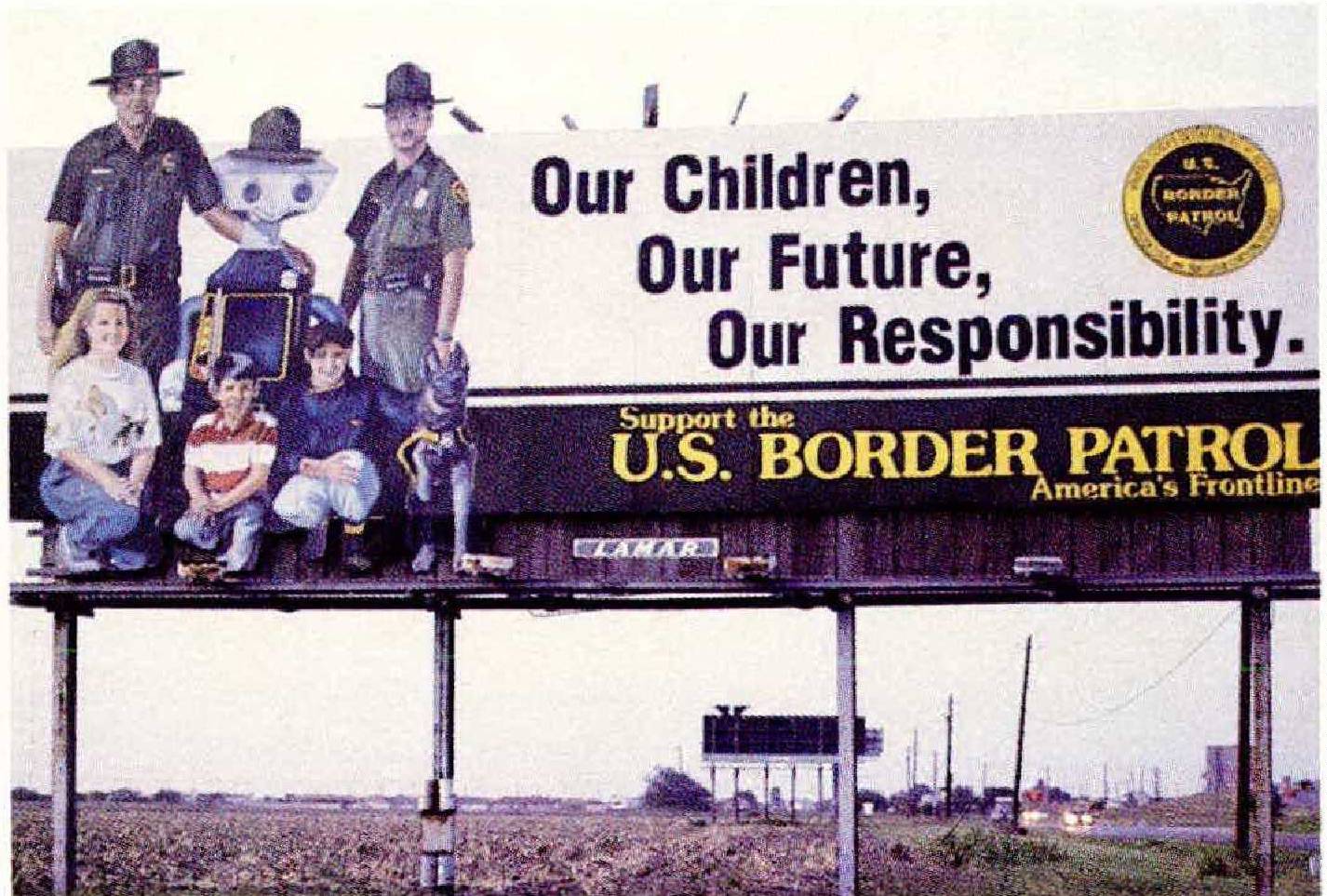
There are as many women as men. Some use the time to file for political asylum; while their requests are being processed, they cannot be deported. Others simply eat and sleep before hiding again and traveling north. They hear about the camp from fellow travelers, or from taxi drivers in Brownsville. This is peculiar: though the Border Patrol cannot find them in the bushes, apparently the taxi drivers can. Throughout the day I spent at the camp, taxis pulled up and discharged people, sometimes entire families. The drivers went the other way, too: a Honduran hired a cab to take him back to the river, to find his sisters, whom he had left hiding. I do not know what became of them; the border is a dangerous place for undocumented immigrants, and hours later the Hondurans had not returned.
I talked to a Guatemalan who had been to the United States five years before but had gotten drunk and been arrested and deported. Back in Guatemala he returned to his village and his family of eight sisters and a brother. When his father was shot by the army, he decided to go north again to find another sister, who had married and was living in Miami. It took him three weeks to come through Mexico. Crossing the Rio Grande at Laredo he was caught and thrown back four times. He avoided repatriation to Guatemala by claiming to be a Mexican. On the fifth attempt, here at Brownsville, he slipped by the Border Patrol. I asked him how he planned to get to Miami. He was not sure. I asked him how he would find his sister, and he admitted that he did not know her address or her married name. The camp was full of similar problems: a brother somewhere in Chicago, a cousin last heard of in Houston, obsolete addresses, disconnected telephones, people lost in the mass of human migration.
The white-haired nun in the camp office was a Spaniard, and she was angry. She said, “You preach that here in the U.S. is paradise, and people believe you.” A business jet, no doubt on a mission for the maquilas, screamed overhead. She said, “The big companies, they are miserable people with unlimited ambition. The suffering you see around you is the result of their greed. The border is a sore—the sickness is within us.”
She was an ideologue, and she packaged the world too simply. But she was right about this: The border is a reflection of us all.