Malaysia: Rotten Royals
A meek country is finally turning on its corrupt, pampered sultans—but at the same time, its headstrong reformist Prime Minister is turning on the United States, at least rhetorically
FIVE YEARS AGO, when my family was living in Malaysia, I ran into a European friend near the fanciest golf course in Kuala Lumpur. “That’s where it happened,” he said in a whisper. pointing to a fairway. “The caddie and the King.”
Instantly I felt that I should be speaking in an undertone too, even though no one else was standing within fifty yards of us. The man was touching on the great rumor of the time: that the country’s King, a flamboyant and short-tempered character in his fifties named Mahmood Iskandar ibni al-Marhum Sultan Ismail, had beaten a caddie to death with a golf club after the caddie had giggled at one of the King’s muffed shots.
A few months later I was traveling with my family in the Malaysian state of Pahang, in the fat part of the Malay Peninsula, south of its isthmus at the border with Thailand. Pahang contains most of the remaining tropical rain forest of peninsular Malaysia, which lies in a national forest reserve known as Taman Negara. Every two or three minutes a logging truck would barrel past us on the road, each truck laden with gigantic logs still dripping sap. Even if the trucks were carrying every single tree being cut in Pahang, which seemed unlikely, the forest would have to be disappearing much faster than the government claimed. When I asked an official back in Kuala Lumpur about this, he began whispering too. “The sultan, you see . . .” He explained that the sultan of the state of Pahang had a nearly limitless right to claim the state’s forest land as his own and to sell the logging rights to foreign timber companies.
In those days the role of royal families in Malaysia seemed like the role of special interests in America: vast, certainly, but difficult to pin down. Signs of royal privileges and influence were everywhere you turned. Mansions popped up on prime residential land, a little nameplate identifying each one as the istana, or palace, of this or that royal family. Bentleys and Rolls-Royces prowled the streets of Kuala Lumpur, despite taxes on luxury cars which amounted to more per car than many Malaysians would earn in their entire lives. Everyone knew that the cars must belong to sultans, who were exempted, within limits, from the need to pay luxury taxes or get import permits for their cars, but no one knew exactly how many such loopholes and special favors the royal families enjoyed. The Malaysian press provided few clues—the main papers were owned by the ruling political party and served as instruments of the government. A climate of whispering and rumors prevailed.
When I was back in Malaysia early this year, I could hardly believe I was in the same country. The papers were still controlled by the ruling party, and still expressed the government’s view, but that view had changed completely. A typical day’s issue of the New Straits Times, the main English-language paper, carried a dozen or more stories on the greed, dishonesty, vulgarity, and outright criminality of the country’s royal families. The Malay-language press was also on the case. In every office and restaurant Malaysians seemed to be talking about their rulers in the way the American colonists of the 1770s must have talked about George III. What got into everybody?
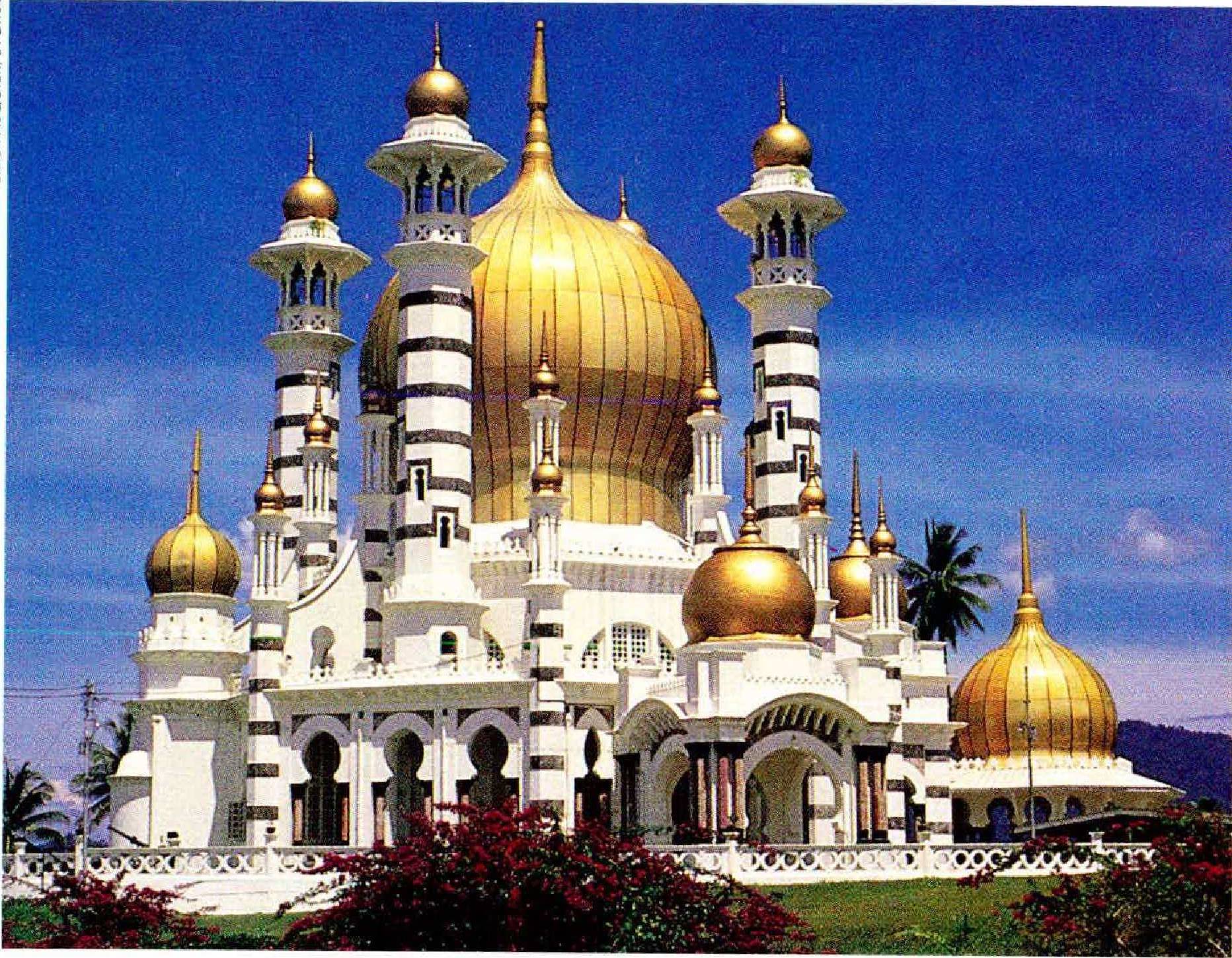
MALAYSIA consists of thirteen states, two of them on the island of Borneo and the rest on the Malay Peninsula. Most of the peninsular states have long had traditional ruling families headed by sultans. When the country became independent of Great Britain, in 1957, nine sultans remained on the thrones of nine states. In principle they were constitutional monarchs, since a Parliament and a Prime Minister ran the country’s government. But in practice the sultans’ power remained nearly absolute—they could demand virtually unlimited tribute from their states, and they were immune from the provisions of the nation’s laws. Since no single sultan was recognized as sovereign over the others, the nine families agreed to take fiveyear turns serving as the nation’s Agong, or King.
The good side of having sultans was that they served as symbols of historical continuity in a country whose borders and ethnic makeup had been established by the British and which therefore lacked a strong sense of its own history. In particular they were important symbols for the ethnic Malays, who make up about half the country’s population and are chronically at odds with the ethnic Chinese minority that dominates business in Malaysia, as overseas Chinese do in most of Southeast Asia.
But two problems were inherent in this system. One was the contradiction in principle between the growth of a modern democracy and the existence of rulers who were completely above the law. The other was a question of scale. Malaysia has a third as many people as the United Kingdom and an economy one fifth as large, yet it has nine times as many layabout royal families to support.
The tensions created by this system might have remained beneath the surface for a long time were it not for one man: the golfing King, Iskandar. Iskandar is from the royal family of Johore, Malaysia’s southernmost state, which sits across the Straits of Johore from Singapore. In the early 1970s, when Iskandar’s father was the sultan of Johore and Iskandar was the crown prince, Iskandar was tried and convicted of “causing hurt” to a fellow Malaysian named Narendran. (Only sultans themselves, not their children, are completely exempt from prosecution.) The “hurt” was in fact Narendran’s death. Apparently Iskandar had been taking potshots while flying in his helicopter, and one of his bullets killed Narendran. The judge who presided at Iskandar’s trial was scathing in his condemnation of the prince, who was then in his early forties. He said, “The keynote of this whole case can be epitomized by two words— sadistic brutality—[in] every corner of this case from beginning to end, devoid of relief and palliation.”
After Iskandar was convicted, his father exercised his sultanic prerogative to pardon him. Fifteen years later, in 1987, the same Iskandar was accused of having beaten the caddie to death. In one of the improbable touches that typify life in out-of-the-way places, the judge who condemned Iskandar, himself a prince, from the state of Perak, had in the meantime succeeded his father as sultan of Perak, and in 1989 he succeeded Iskandar as King. He is now on the throne.
The caddie case remained hushed up in Malaysia until last fall, when Iskandar struck again. In November, Iskandar, back in place as the sultan of Johore, summoned the coach of a local college hockey team to the Johore palace and beat him up, as palace toughs and bodyguards looked on. The origin of the dispute mattered to few people except the coach and the sultan (it involved which tournaments the team would enter), but the sultan’s crudity outraged the whole country. Within two weeks the normally torpid Parliament had passed a unanimous resolution condemning the sultan for his part in the event. Iskandar’s fit of pique also gave an opening to the other main figure in Malaysia’s political dramas: the country’s Prime Minister, Dr. Mahathir Mohamad.
Mahathir (pronounced Ma-ha-teer) is emerging as his country’s counterpart to Lee Kuan Yew of Singapore. Each is an intelligent and autocratic leader who pushes domestic dissenters out of his way in pursuit of his vision of national development. Each is easier to respect than to like. Mahathir, who has held office since 1981, was the country’s first Prime Minister to have no family connections to royalty. He had been a doctor in a small town called Alor Setar before going into politics, and like Lyndon Johnson in the face of the Kennedys, he seemed permanently resentful of the country’s silver-spoon class. Like all his predecessors as Prime Minister, he saw the sultans as a potential challenge to his personal and political power. Mahathir’s suspicions of the royals were hardened after he survived a bitter leadership struggle in 1987, in which he nearly lost the prime ministership to an insurgent prince. So when Iskandar hit the hockey coach, Mahathir seized his chance.
Starting last December, all the things that had been whispered became the stuff of the daily news. The caddiekilling incident was even brought up in Parliament. Under the country’s sedition laws, to criticize any member of the royalty was a grave offense, but for the time being Mahathir’s government decided not to enforce the law. People popped up every day to tell reporters new stories about Iskandar’s physical cruelty. He had ordered that members of a soccer team be tied to trees and left in the sun as punishment for poor play. When he was windsurfing one day, he thought that a Malaysian naval vessel was causing too many waves. He forced the captain to swim to shore and then beat him up. Iskandar and his son had apparently been involved in twenty-three criminal episodes, including rapes and assaults.
Stories emerged about many of the other sultans, too—stories less about brutality than about stupendous greed. The sultan of Pahang had a Boeing 727 that was flown and maintained by the Royal Malaysian Air Force, as were the jet and the helicopter owned by Iskandar as sultan of Johore. The sultan of Pahang also owned several hundred racehorses—whose upkeep costs, like those of the airplane, he billed to his state. Over the preceding four years he had received timber-cutting rights in the country’s rain forest worth some $100 million. It is almost impossible for private citizens to obtain guns legally in Malaysia, but another sultan had received permits to import 3,000 guns. Sultans were given to demanding that their states build them new palaces, and abandoning ones that displeased them in some way. The point is not that these views are outrageous—many Americans share Mahathir’s worries about where democracy may lead. What has puzzled me about Mahathir is the unrelieved snarl in his tone. Fidel Castro, Muammar alQaddafi, Saddam Hussein—these are people with bona fide reasons to be antiAmerican. Why should anyone from Malaysia be so angry?
And the cars! In a country whose per capita income is one ninth of America’s, cars cost two to four times as much as in the United States. My family, enjoying a lavish income by local standards, could barely afford a tenyear-old Toyota station wagon when we lived there—yet the roads were filled with luxury cars. I could not figure out how so many Malaysians could cover the taxes—but they didn’t have to, because thousands upon thousands of cars were brought in tax-free for sultans and then resold to their cronies.
Every day the papers published several pages’ worth of outrages, to be followed the next day by coverage of completely new ones. Malaysia is a comfortable and prosperous-seeming country, but so much money had been siphoned off that people started wondering how prosperous they might otherwise have been. There were almost no countervailing accounts of generosity, restraint, stepping back from the trough. The sultans were supposed to be exemplars of Islamic virtue, but many of them seemed to love drinking and gambling. One even owned a huge pig farm—something of a public-relations problem in a mainly Islamic country.
Since last winter the government, at Mahathir’s urging, has tried to effect a dramatic political and social transformation. Mahathir pushed through Parliament a bill ending the sultans’ immunity from prosecution. He ordered the Malaysian military to stop maintaining the sultans’ planes and instructed civil servants not to obey sultans’ requests for special favors. The newspapers carried none-too-subtle reports on the fate of the Russian czars and other abusive monarchs who had overstayed their welcome. The domestic politics of the issue was complicated by the ethnic balancing act that affects everything about Malaysia. Mahathir tried to assure rural village-dwelling Malays that he was not upsetting the traditional order. (Urban Malays seemed overwhelmingly on his side.) The country’s Chinese have neither an ethnic nor a religious tie to the sultans, but many Chinese businessmen had operated as the hidden partners of the profiteering royals— buying the timberland, reselling the cars—and they implicitly resisted the campaign.
Mahathir assured everyone that his goal was not to destroy Malaysia’s royal tradition but just to curb the “excesses” of irresponsible monarchs. Perhaps, but it is hard for me to see how the anti-royal campaign can be limited or called back. The monarchs will have a hard time recovering any claim to legitimacy after such a long and persuasive public demonstration that they have been utterly self-serving and corrupt.
THIS TURNABOUT may not have much impact on the world outside Malaysia, but—apart from its simple novelty value—it had an effect on me. It forced me to reconsider my longstanding hostility to Mahathir himself, which had been based on my two years of residence under his rule.
If Mahathir were to be judged strictly on what he has done for his country, it would be hard not to consider him a success. The country suffers from deep ethnic tensions between Chinese and Malays, but—as Mahathir needlingly pointed out after last year’s Los Angeles riots—in Malaysia the tensions rarely lead to crime or bloodshed. Malaysia’s main economic problem is that its growth rate is too high; so many factories, condos, and new houses are springing up in Kuala Lumpur that its air is becoming polluted and its roads are jammed. Mahathir has not been able to run his country for as many years and with as little interference as Lee Kuan Yew did, but in a decade he has carried out the majority of his plans. His handling of most issues has resembled his approach to the royals. He has knocked opponents out of the way and tried to squelch all disagreement (he closed opposition papers and jailed dissidents while I was living there), but he has generally moved the country toward modernity.
So why did I find myself grinding my teeth when reading his speeches and pronunciamentos in adoring articles in each morning’s New Straits Times? The answer involves special circumstances of small-country politics which are often overlooked in tire United States— or at least by Americans like me.
In the past half-dozen years Mahathir has assigned himself the role of rhetorical scourge of the West. I assume that his hostility is purely rhetorical, since his country coexists so easily and on so many levels with Western nations. Thousands of Malaysian students flock to American universities each year, many on Malaysian-government scholarships. Intel, Motorola, Texas Instruments, and other high-tech companies have large modern factories in Malaysia. Unlike the Japanese-owned factories in Malaysia, which are supervised by cadres of managers and experts from Japan, many ot the American-owned plants are run top to bottom by Malaysian citizens. (A team from a Motorola factory in Malaysia recently won the company’s international quality competition.) Of Malaysia’s total exports to the United States, 70 percent are manufactured goods; of its total exports to Japan, only 10 percent are manufactured. TV networks and movie theaters in Malaysia are full of American products. In Korea, the Philippines, and Japan, I’ve often been dragooned into conversations in which I’m supposed to defend or justify American policies; this almost never happened to me in Malaysia.
Yet to hear Mahathir tell it in any of his numerous and lengthy speeches, Malaysia and the United States are at fundamental odds, locked into a cultural struggle that only one side can win. Editorials in the daily newspapers, a wholly reliable indicator of Mahathir’s own thoughts, harp constantly on the corruption, inner sickness, and impending collapse of American society. Mahathir’s major addresses lovingly explore these same themes.
For instance, at the United Nations in 1991 he explained why it was wrong and hypocritical for the United States to tell anyone else about democracy and human rights. “If democracy means to carry guns; to flaunt homosexuality; to disregard the institution of marriage; to disrupt and damage the well-being of the community in the name of individual rights; to destroy a particular faith; to have privileged institutions [that is, the Western press] which are sacrosanct even if they indulge in lies and instigations which undermine society, the economy, and international relations; to permit foreigners to break national laws—if these are the essential details, cannot the new converts opt to reject them? . . . Hegemony by democratic powers is no less oppressive than hegemony by totalitarian states.”
The key, I’ve come to think, lies in Mahathir’s line about hegemony. Each time an American politician, columnist, or average citizen talks about the country’s status as “the only superpower” or “the greatest nation in the world,” hackles rise in the rest of the world. Most of the world recognizes that the United States has used its strength more benignly than preceding great powers, that American pop culture is attractive, that the nation is open and admirable in many ways. Still, much more than most Americans let themselves realize, people hate to have differences in power rubbed in. For tactical reasons various nations will flatter the United States about its virtue and power—Britain to sustain the “special relationship,”Russia to attract aid and investment, China to keep U.S. markets open and to keep American troops in Asia so that Japan will not re-arm more quickly than it is already doing. But each of these countries would prefer to be the stronger party, so that it could be the one to receive flattery and give lectures on its ideas about human rights.
Mahathir is simply more open than many other leaders in showing what he resents. During his first few years in office he led a “Buy British Last!” campaign, triggered by an increase in fees for foreign students (many of them Malaysian) at British universities but given its edge by resentment of the arrogance of the colonial Brits. “Our early elites were so very, very British,” a Malaysian academic once told me. “They had their flats in London, their Oxford colleges, their drinking styles. Mahathir believed we must stop being brown sahibs, brown Englishmen, and find our Asian roots.” This campaign tapered off after Margaret Thatcher invited Mahathir for a long personal dinner—that is, showed that she took him seriously. In contrast, Mahathir still burns with resentment against James Baker for a perceived personal slight. According to a rumor that is taken in Malaysia for truth, Baker and Mahathir both attended a diplomatic reception in Tokyo. Baker was wearing a business suit, Mahathir a traditional MalayIslamic cap and shirt. Baker allegedly asked a Japanese diplomat, “Who’s the guy in the native costume?” which infuriated Mahathir when word got back to him. Mahathir openly gloated over Bill Clinton’s victory—or, as he saw it, James Baker’s humiliating defeat.
The change of Administrations and the departure of Baker may give the United States a new chance with this proud, touchy man. But the problem involves more than his personality or his country. It involves the eternal struggle between the big and the small.
—James Fallows