Word Histories
mock
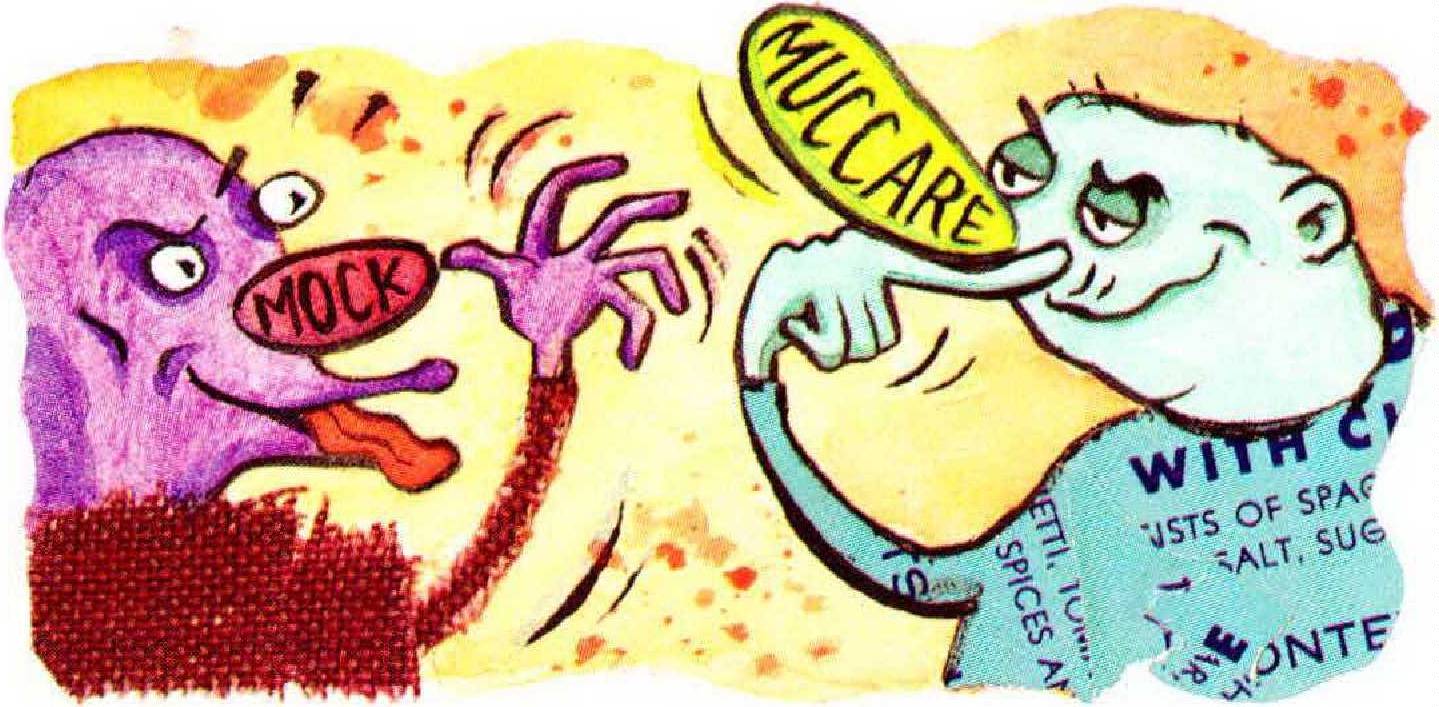
Tensions between the military and President Bill Clinton surfaced on a visit paid by Clinton to the U.S.S. Theodore Roosevelt last spring. One reporter later recalled the visit in a remark to the President: “Sailors . . . were mocking you . . . even though you are the Commander in Chief.” The origins of mock (to ridicule, deride) are uncertain. The word may be from the dialect German mucken, “to growl, grumble.” The famous word chronicler Eric Partridge has proposed that mock originates in Momos, the Greek god of ridicule, who criticized virtually everything. Most authorities, however, believe that the word comes instead from the Latin mucus, “mucus,” and its colloquial derivative *muc-care, “to wipe the nose.” This became mocquer in medieval France, where—perhaps not Surprisingly—the verb acquired the sense of wiping or thumbing one’s nose as a gesture of contempt and ridicule. (The reflexive verb form of “to ridicule” in Modern French is a vestige of the nose-wiping idea: se moquer de quelqu’un literally means “to wipe one’s nose at someone.”) The word was quickly appropriated by the English and spelled moke or mock (“Have the non other man to moke, but ever me?”—Mankind, 1450). Because to mock a thing is often to parody or imitate it, the word later also came to mean “imitation,” as in mock turtle, “a dish consisting of calf’s head dressed with sauces and condiments so as to resemble turtle.”
posh
In his first radio address, last February, President Bill Clinton discussed cutting costs on Capitol Hill, including dispensing with “needless luxuries like posh dining rooms.” According to one often-heard theory, posh (classy, stylish, first-rate) derives from an acronym for “Port Outward, Starboard Home,” which was supposedly stamped on some tickets for passage to India, and stipulated the location of the passenger’s cabin. Those who could afford this luxury, the story goes, enjoyed shadier, cooler cabins than their fellow travelers. The acronym then became a word in its own right to refer to anything luxurious or expensive. Sadly, there is no hard evidence—not even a stamped ticket—to support this clever tale. Others have suggested that posh is from poshed up (dressed up), which in turn is probably from polished up. Still others suggest that posh is an alteration of the Scots tosh (neat, trim). A final possibility is that the word comes by way of thieves’ slang from the Romany, or Gypsy, word påšh, which originally meant “half,” as in “halfpenny,” and then, altered to posh, came to refer to money in general, especially coins (“That sort of patter ... is the thing to get the posh” — Montagu Williams, Round London, 1892). Although the shift in meaning from “money” to “moneyed” (“Frank . . . said ... he had a friend waiting outside for him named Murray Posh, adding he was quite a swell”—George Grossmith and Walter Weedon Grossmith, Diary of a Nobody, 1892) and finally to “swank, expensive, first class” is not well documented, most sources agree that this is the most plausible history of the word.
scuttle
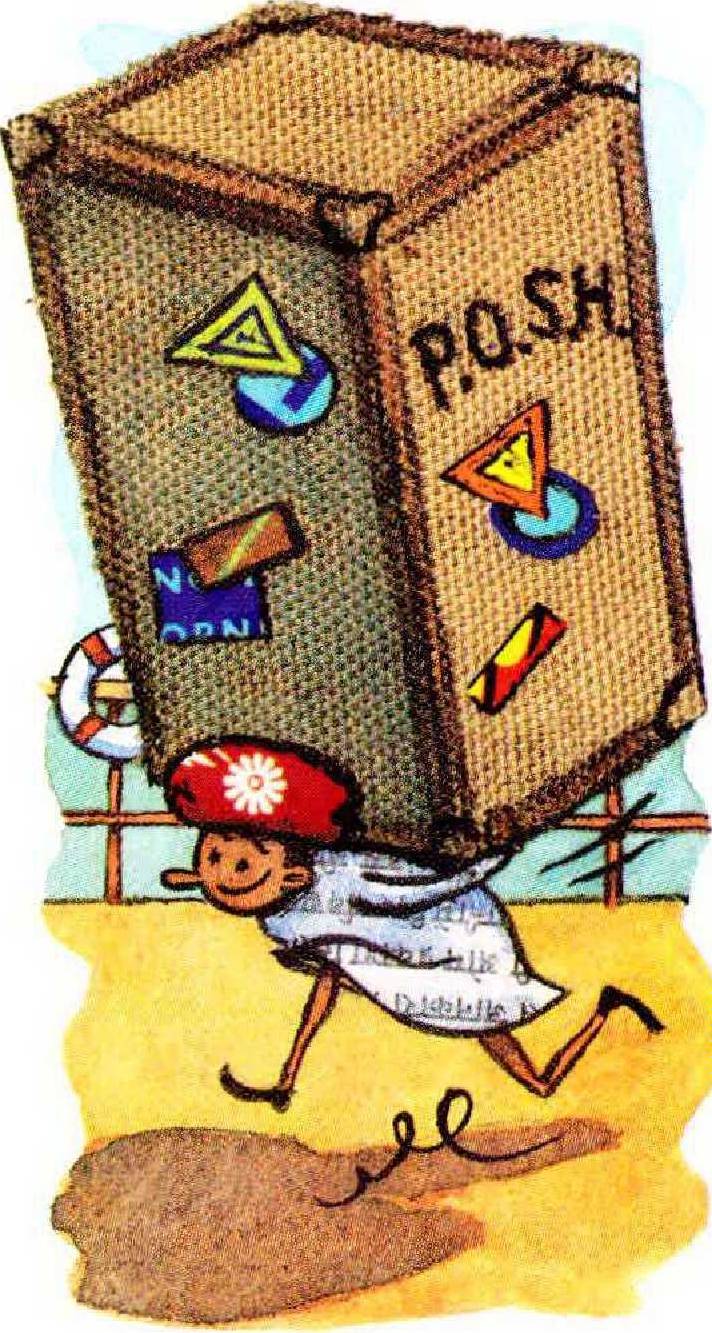
Just before leaving office last January, Attorney General William Barr accepted a scathing report that criticized William Sessions’s conduct as FBI director. Sessions responded angrily: “My Attorney General accepted the report and then fled the office. He was in league with others in the department who were determined to scuttle the director.” Scuttle (to damage; to abandon; to sink a ship) is from the Old French escoutille (a ship’s hatchway). Adopted into English in the fifteenth century as scuttle, the word then referred not to a hatchway but to a smaller square or rectangular hole either in the deck, for purposes of communication between decks, or in the side of a ship, for light and air (“Wee have had in a watch in the night a fish flie into a little scuttle of a cabbin, noe bigger then the hande of a man”—Captain Wyatt, The Voyage of Robert Dudley, ca. 1595). Used as a verb, scuttle meant “to cut holes in the sides or bottom of a ship in order to sink it” (“He was the mildest manner’d man/ That ever scuttled ship or cut a throat”—Lord Byron, Don Juan, 1821). The origin of the French escoutille is disputed. Because both a scuttle and a hatchway have lids or trap-door coverings, escoutille may have come from the Dutch schutten (to shut). Alternatively, the Old French word may come from the Old Spanish éscotilla, a diminutive of escote, “an opening in a garment.” Some suggest that the word may also be related to the French ecoute, “listening place.” A scuttledbutt was a butt, or cask, with a square hole cut in it, kept on deck to hold fresh water. It was around this drinking barrel that shipmates gathered and exchanged the latest scuttlebutt, or gossip.