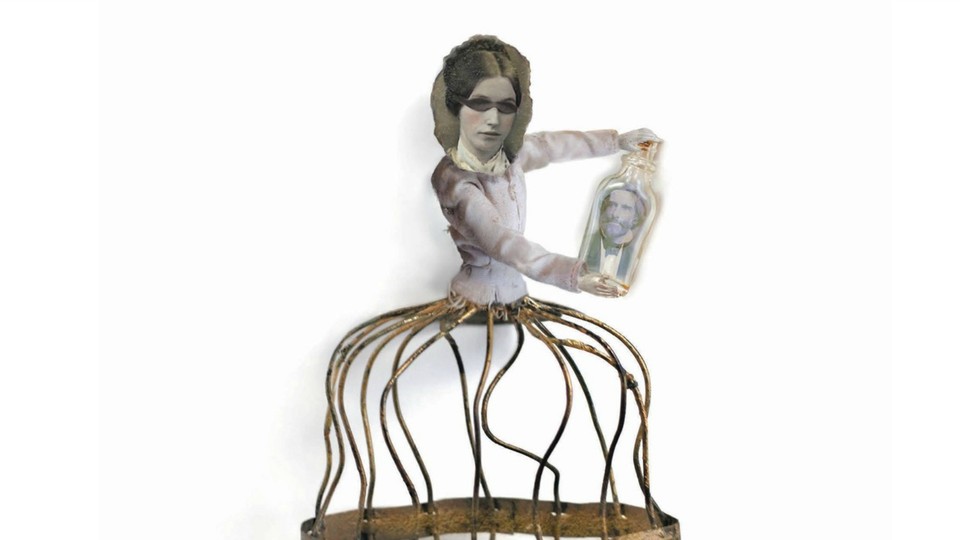
Elkins holed up in the library, and emerged ready to scrutinize real-life eminences and explore unexpected power relations: the man who makes Bridgman’s education his cause, Dr. Samuel Gridley Howe, struggles to tame his wife, the poet Julia Ward Howe, as well as his restless pupil. Elkins’s bolder feat is to feel her way into Bridgman’s “marble cell, impervious to any ray of light, or particle of sound.” That’s how Charles Dickens, who was awed by 12-year-old Laura on a visit in 1842, described her plight. The world Elkins discovers within is anything but muted. In tactile prose, she evokes a soul and a body with hungers (yes, there is sex) that none of Bridgman’s guides begins to imagine.
When you buy a book using a link on this page, we receive a commission. Thank you for supporting The Atlantic.