On the Brink of Global Recession
The economist Adam Posen on the effect of the war in Iran on the world’s economy and the darkening economic outlook for the United States. Plus: A shifting partisan balance of power and Ask Not: The Kennedys and the Women They Destroyed, by Maureen Callahan.

Subscribe here: Apple Podcasts | Spotify | YouTube
In this episode of The David Frum Show, The Atlantic’s David Frum opens with a discussion of the likelihood that the partisan balance of power will shift from Republicans to Democrats at state-government level.
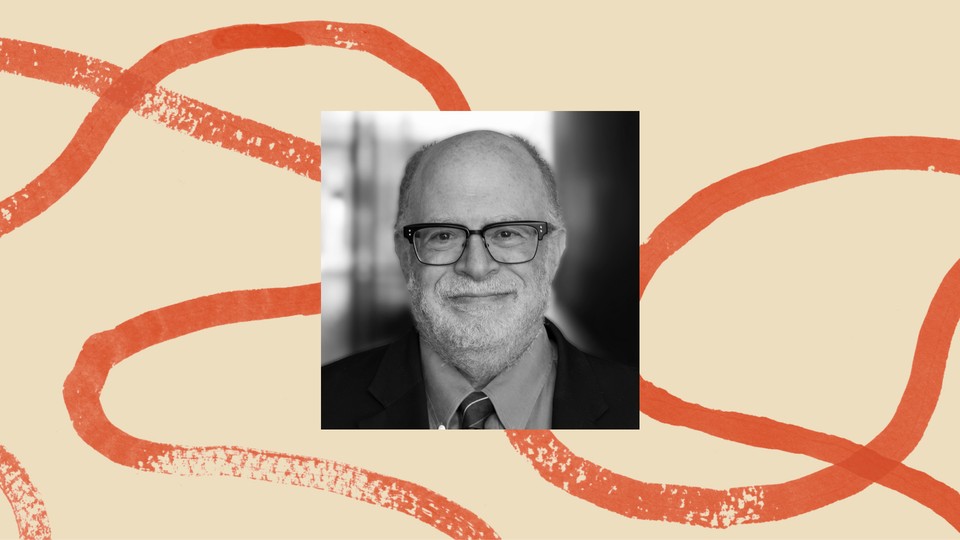
Then, David is joined by the president of the Peterson Institute for International Economics, Adam Posen, for a conversation about the state of the world’s economy. Frum and Posen discuss the economic effect of the war in Iran, the United States’ reputational hit caused by Trump’s tariffs, and the chance of global recession.
Finally, David ends the episode with a discussion of Ask Not: The Kennedys and the Women They Destroyed, by Maureen Callahan, and reflects on why reactions to the abuse of women by men in power seem to have become a partisan issue.
The following is a transcript of the episode:
David Frum: Hello, and welcome to The David Frum Show. I’m David Frum, a staff writer at The Atlantic. If you are viewing this program, you will have immediately noticed that there’s something different this week. I am recording this introduction in London, where I’m traveling. We had a change of plan in the show that we intended to bring to you this week. We originally had a different theme, a non-Iran-themed program, but because of the looming crisis in the peace negotiations and the gathering threat to the world economy, I thought it was urgent this week to talk about the economic fallout of President Trump’s Iran war. And I have invited Adam Posen of the Peterson Institute for International Economics to give us a truly global perspective on the worsening, darkening economic outlook for the United States and for the rest of the world.
My book this week will be Ask Not: [The Kennedys and the Women They Destroyed], a study of the Kennedy family and the maltreatment of Kennedy women, both those born into the family and those married into it.
Before either the dialogue with Adam Posen or the book discussion, let me revert to some opening thoughts recorded earlier this week in Washington, D.C., where I discussed the likelihood of a great swing of partisan balance of power from Republicans to Democrats at state government, and why this swing of state power may be the most surprising and important outcome of the pending 2026 midterm elections.
[Music]
Frum: When the Supreme Court struck down the Roe v. Wade decision protecting abortion rights and sent the abortion decision back to the states, a lot of people who are concerned for abortion rights understandably shuddered. State government is one of the most conservative branches of the American government, overwhelmingly dominated by Republican legislators. To send something back to the states is to send it for conservatives to govern.
You have to be a quite middle-aged person to remember when it was contrary. Republicans have controlled the vast majority of the state governments for a long time. There are 99 state chambers in the United States. Most states have two; Nebraska has one. Of the 99 state chambers, the Republicans have controlled the overwhelming majority since the 2010s. You have to go all the way back to the early Obama years to remember a time when it was otherwise.
But the Republican edge has been dwindling for quite some time. More and more of the state races that we are seeing in 2025 and 2026 are witnessing Republican defeats in state contests that Republicans had no business losing at all or close calls where Republicans used to have enormous advantage. If the blue wave that seems to be building in 2026 is as big as it looks like it’s going to be, it will affect not only the U.S. House, not only potentially the United States Senate, but state governments as well. It’s just, for so long, it has been so Republican that people—again, unless you’re quite middle-aged—cannot imagine that it could ever be otherwise. But it could be otherwise, and it’s very possible that after 2026, it will be otherwise. And that has a lot of implications for our political philosophy on both the left side and the right side of the political spectrum.
Federalism has looked like a kind of thin protection against the abuses at the center of the government, especially as President Trump and his administration have abused the authority of ICE, and his local police departments have tried to protect the rights of the citizens of their states. I think a lot of people on the liberal side have discovered maybe the rights of states and the decentralization of power, maybe that’s a kind of beneficial thing after all. Maybe the conservatives were right about that. Now, they’ve been restrained by the sheer partisan imbalance, caused often by extreme gerrymandering. But if the gerrymandering is overcome by a sufficient political wave and the state balances right themselves, suddenly the idea of sending the abortion decision back to the states, that will look not like a charter for the most conservative people in the country to oppress women, but for moderate and more liberal states to write into their state law the defense of abortion rights that was removed from federal law.
So whatever you used to think about federalism, if you’re on the blue side of the ledger, if you’re on the liberal side, you may be about to discover the wisdom of the long conservative teaching that power is most safely entrusted when it is entrusted closest to the people and that the best bulwark against the abuse of power by authoritarian leaders at the center is a distribution of power to many leaders in the states and in the localities.
And now my conversation with Adam Posen. But first, a quick break.
[Break]
Frum: Adam Posen is president of the Peterson Institute for International Economics, a position he has held since January 2013. After service at the Federal Reserve Bank of New York in the 1990s, he was appointed by the British chancellor of the exchequer as an external voting member of the Bank of England’s Monetary Policy Committee, where he advocated activist policy responses to the financial crisis and helped pioneer quantitative easing. He was awarded an honorary CBE [Commander of the British Empire] by Queen Elizabeth II in 2014 and in 2021 received Japan’s Order of the Rising Sun for his contributions to U.S.-Japan relations.
Adam, I am so grateful you are here. Welcome to The David Frum Show.
Adam Posen: Thank you for having me on The David Frum Show, David.
Frum: (Laughs.) So the reason I was so eager to speak to you at this urgent moment was it looks like peace talks with Iran—between the United States and Iran, or between the United States, Israel, and Iran—are at an impasse. There’s a lot of talking up the prospects of peace by the Trump administration in order to calm markets. Financial markets so far seem to be believing the reassuring talk, but energy markets are not, and the Asian economies, about which you know so much, seem to be plunging into, really, generational crisis. So would you give us a tour of the world economy as it stands—we are just short of the deadline for the renewal of the cease-fire—where we are today and where we are likely to be if the cease-fire breaks down, as it seems on its way to doing?
Posen: David, thank you for having me on. I think the way to understand first what financial markets, particularly the stock market in the U.S., are telling you is not necessarily that they believe in the cease-fire; it’s that they believe that there is a tomorrow eventually, so you might as well buy now, and that, relatively speaking, if the U.S. is bombing the world and creating energy shortages, it’s better to park your money in the U.S. The financial markets are not telling you that they’re confident or that there’s gonna be a cease-fire that holds. And so when we look beyond the equity markets, the stock markets in the U.S., you do see a much more grim picture.
The way to think about this is partly a matter of how much our country is dependent on energy from the Middle East and fertilizer from the Middle East and helium from the Middle East—I know you and your listeners are aware now, there’s a lot of things that go through the [Strait] of Hormuz—but also what position they are in when they start in terms of how much energy and other key materials they’ve stockpiled, in terms of how flexible their economies are.
And so the short answer is, as usual, the developing world is in deep trouble because when there’s an energy crisis like this, generally, the countries that import energy also import food, also import fertilizers. Very few countries can physically be self-sufficient. And so they are going to be hammered on those prices, but they’re also in a situation where, as I just mentioned, money is seeking temporary safety in the U.S., so that makes their credit conditions harder. And third, money is flowing into the dollar, which, again, is a risk response, not a long-term vote of confidence in the dollar. And so the developing countries, from the large ones like India and Brazil all the way down to—I don’t mean “down” otherwise, but in size—to South Asia, sub-Saharan Africa, Central America, are in deep trouble. They’re gonna have weakening currencies, higher prices, have to raise interest rates.
Frum: So basically, from the point of view of those countries, the United States blew up the world economy, money panics and flowed into the United States, which then profiteered from its own economic actions, blowing up everyone else’s economy. But the rest of the world is paying a price that is intensifying. Americans seem to have this idea that it won’t touch them. The figure that we are hearing a lot is that 20 percent of the world’s oil comes from the Persian Gulf, but 80 percent of that flows to Asian markets. The United States is a relatively small importer from the Persian Gulf. It imports some; it exports other. But it’s a net exporter of energy, and President Trump took from this the idea that therefore the United States wouldn’t be affected at all. But if all of America’s trading partners, or former trading partners, are heading into crisis, the crisis blows back. And yet the financial market is happy because they think, Ah, well, at least we’re the least dirty shirt in the sack of laundry.
Posen: We’re the least dirty shirt in the sack of laundry, and someday people will need their dress shirts back again, even if at the moment we don’t.
But I just want to emphasize two things out of what you just said, David. First is the blowback to the U.S. does come more indirectly. There are advantages to being an energy exporter; we can’t lie about that. But in the end, you’re gonna end up with inflation in the U.S. We’re already en route to that, and it’s gonna get much worse, in my view. Because while we’re not gonna have shortages, perhaps like Asia or the developing world will, we will have price rises because in the end, Japan and Korea and Germany and the U.K.—and for that matter, China, if this goes on for a while—will spend what they need to get the energy, and that will drive up the prices in the U.S. as well.
Frum: How close are we to either a global recession or to another bout of global inflation like that which we suffered after COVID?
Posen: I think we’re very close to another bout of global inflation. I think, actually, in some ways, that’s a place where the U.S. is gonna be worse off than a lot of the other high-income economies because we didn’t quell inflation enough over the last few years since COVID. But I also think that the recession is very imminent in what’s called the global South and in certain parts of the middle-income economies.
The one thing which I am a little less gloomy [about], although the foreign policy doesn’t get justified by this, is I do think the U.S. and Western Europe will likely avoid a sharp recession. But that’s a small comfort. (Laughs.)
Frum: How do the U.S. and Europe escape?
Posen: In the U.S. case, it’s primarily, as it’s been for the last couple years, that you have a combination of huge corporate investment in artificial intelligence and related industries, and you have steady consumption by not a K-shape, not a small portion of the economy, but by roughly two-thirds of American households. That may weaken. They may decide their income is going down, their world is scary, and they may cut back. We just saw some survey data from the very dependable surveys of small business, the National Federation of Independent [Business], that suggests their confidence has crashed since the Iran bombings. So it could happen, but probably, that’s enough of a prop: AI and consumption.
In Europe, the case is more they’re starting from a better place. They have room to cut interest rates. They don’t have inflation yet. And so they’re not gonna be happy, but they are gonna have more room to offset.
Frum: Well, let me take you to an area that is a specialty of yours: monetary economics. President Trump is trying to put a new chairman of the Federal Reserve Board in place. There’s some paralysis about this because one crucial senator, Thom Tillis of North Carolina, is saying, I won’t give you a vote on your nominee until you stop the harassment and bogus, fake criminal prosecution of Jerome Powell, which may stalemate the opinion. But President Trump desperately wants interest-rates cuts in the face of rising price pressure, and Jerome Powell didn’t give those cuts to him, not as fast as he wanted, anyway. The new chairman may or may not. Is this how you get a stagflation like that which we had in the ’70s, which is that you have a downward economy in an inflationary time, and the political authorities press the central bank, give us interest-rates cuts, and it doesn’t make the economy any better—it just makes the money less valuable?
Posen: Yeah, you get stagflation, as you said, David, when you take a contractionary shock and you add on top of it price hikes. And the price hikes generally come when the central bank is perceived to be soft on inflation. And as you indicated, the new chair—who’s still likely to be Kevin Warsh, the nominee—in a sense is getting a get-out-of-jail-free card because it would be so criminally malpractice to cut rates right now that vast majority of members of the Federal Open Market Committee have publicly all said we should sit tight for now. I would be arguing they should be ready to raise rates, but leaving that aside, even some of the ones who President Trump appointed or has promoted and who had been talking about rate cuts are, with one exception, saying, No, now we gotta worry. We gotta hold off on rate cuts.
So they could make a huge mess of this. This could be like Arthur Burns 50 years ago failing to raise rates—in fact, cutting rates to please a sitting, paranoid president. But in a sense, the oil shock makes it less likely that you’ll get a committee that agrees to it. So instead, the Fed will be a little behind the curve, in my view, and so inflation’ll get some momentum, but we won’t get the full-on stagflation. That could get worse, but for now.
Frum: If the Federal Reserve has to increase interest rates to cope with the price increases from the war, is that enough to push the U.S. economy into recession, or is the AI boom just so strong that nothing will stop it?
Posen: No, if you had to raise rates more than, say, 50 basis points, or a half a percentage point, or 75, once you start getting into those kinds of numbers, you probably could cause a recession.
A key thing has shifted on the AI front, which isn’t so much the prospects for the returns on AI; it’s that the big companies have spent so much money on the investment the last few years that they’re now having to borrow to finance their stream of investment. Up until now, the Facebooks, Googles, Apples, Microsofts, all the big ones, have been able to largely finance their investment without borrowing ’cause they had so much retained profits they had been sitting on. But once they start having to borrow to finance their investment, they are more sensitive to Fed interest-rate hikes. So this is the usual central-banker argument, which is, you try to be ahead of things so you can raise rates a little bit so it scares people into behaving in the sense of not raising prices and wages too much, and then you hope you don’t have to do a lot of it. If you have to do a lot of interest-rate hikes, then usually, it causes a recession. Interestingly, surprisingly, in 2022, it didn’t, but that was coming out of COVID, so that was kind of weird.
Frum: Well, many people listening to us or watching us will remember the dot-com bust, which followed a huge wave of investment in the 1990s in all kinds of infrastructure of the internet, especially fiber-optic cable. There was a huge investment, made the economy go, go, go from ’96 to 2000, then boom, bust. It wasn’t the worst bust in the world. The history of the 19th-century United States is railway booms followed by railway busts. And those were big—
Posen: Those were big.
Frum: —those were much bigger booms and then much bigger busts. Every investment boom is followed by a bust sooner or later, when people realize, You know what? We’ve built enough railway track, or We’ve got enough fiber-optic cable for the next 10 years, and let’s stop. And it seems like everyone will hit the brakes at the same time and then bang. So if that were to happen in the next few weeks or few months, if that kind of sense of AI has—enough money has been spent, and you have these crises all over the world, is that the impetus for a recession?
Posen: Again, I don’t wanna rule it out, but I am gonna be slightly less pessimistic because, usually, when you get a recession worthy of the name, rather than just a slowdown, in addition to the falloff of what we call “animal spirits”—the common sense of a bunch of people, We should be investing a lot right now—two other things usually happen.
You usually have a fragile financial system, as we most certainly did, for example, in the savings-and-loan crisis in the ’80s or we did, obviously, in 2007, ’08, ’09. And that amplifies the cutback. And right now we don’t know fully what’s going on in what’s called private credit, but it looks like the financial system’s pretty secure.
The other thing that tends to happen—again, sorry to repeat—but it tends to be a function of how much, how quickly the Fed has to raise rates and is able to get inflation under control. And so that’s where I’m more worried, that the Fed is gonna have to be pretty aggressive to get inflation under control, and that’ll get you the recession.
Frum: How much harm to the U.S. and world economy did the Trump administration do in 2025 with its tariffs? And how much relief is the world economy getting in 2026 from the Supreme Court ruling that the largest bulk of those tariffs turned out to be unconstitutional, illegal, and even the money has to be refunded, although the Trump administration is dragging its feet on the refunds?
Posen: Yeah, you covered a lot there.
I think, David, the main point is that, in a world where the government has arbitrary power in ways that [involve] intervening in business life and consumer life that it hadn’t for a long time, it’s a huge adjustment. And particularly the way the Trump administration did it—that they were bullying and bargaining and threatening China, and not doing anything on China, and suddenly attacking Japan for no particular reason, and back and forth—created this huge air of uncertainty. And that’s not an abstract concept. What happened, what we see in the data, is, starting basically in April last year, with April Fools’ “Liberation” Day, is that business investment outside of the AI sector just completely flatlines. And that’s been true for the last 12 to 14 months.
And if you think about what else was in the Trump economic agenda, there were a lot of things that should have boosted investment: There was the passage of the tax cuts that were favorable to investment. There was deregulation. There was reduced enforcement of regulation. There was reduced energy prices, until we got to the Iran bombings. There was a whole list of things—there was reversal of what I thought were some very bad Biden policies against mergers and acquisitions, and monopolies. And so what you had were all the components for maybe not a sustainable, but at least a short-term investment boom, and none of it happened outside of AI. And it is, clearly, between the tariffs and the antimigration policy, the Trump administration has created so much uncertainty that people, businesses are just unwilling to take the risk.
Frum: Okay, so in April, they got a bunch of hammers and started hitting themselves in the head.
Posen: Yep.
Frum: And now it’s 2026, and good news, the Supreme Court has taken the hammers away, or at least most of them.
Posen: No, the Supreme Court hasn’t taken the hammers away. The Supreme Court has said, Don’t use the ball-peen hammer, and give them a Band-Aid for hitting them, but it hasn’t taken all the hammers away. The threat of the hammers is still there. And that’s the point, that even if the tariffs get refunded, the threat of tariffs and the behavior of businesses and investors all over the world in reaction to the ongoing threat of crazy U.S. economic behavior is real. And so it’s good the Supreme Court did this. They were right to draw a limit somewhere on the president’s emergency powers, not just because of tariffs; they made the decision on a legal basis, not an economic basis. But it doesn’t reassure people, it doesn’t reassure long-horizon businesses that the Trump administration won’t do something like this again. And they keep saying they will, so.
Frum: One of the challenges that nonspecialists, non-economists, have in understanding economic events is getting their minds around relative scale. The U.S. economy is enormous. It has a lot of room for governments to do stupid things; governments are always doing stupid things. And we tend to, as non-economists, react to the scale of the stupidity of the thing rather than to the scale of the thing. So you’ll hear about some policy, and that sounds pretty dumb, but in the end, the scale of this policy is in the billions of dollars in an economy that is denominated in the tens of trillions of dollars. So help us understand scale—in terms of the size of the event, how big an event is the energy shock from the Iran war? How big an event was the trade policy? How big are these events, and if they continue, how big are they relative not only to the United States, but to the world?
Posen: Okay, so let me try to benchmark. If you think about the U.S. as having an economy of $30 to $33 trillion in national income every year, currently, and normally, it grows at a rate of about 1.5 percent a year because we have productivity growth, and we accumulate some useful structures and capital, and we have now almost zero workforce growth because of no immigration. So in a normal year, the U.S. economy should be growing by roughly $4 to $4.5, up to $5 trillion. And anything below that suggests something is wrong, because this is just returns on capital, progress, nothing—and you’re right about the different sizes of government effects, David. There’s all kinds of stupid things that don’t fundamentally alter that path.
Then you get something like the oil shock. And the key points about the oil shock are, first, it affects the likelihood that the Fed’s gonna raise rates, which affects the whole economy at once; it doesn’t just affect one sector. Some places are more dependent on credit than others, but it affects everything from home mortgages to car loans to business investment to the price of stocks. That’s why it’s so powerful, and that’s why people care who’s at the Fed. So when you create a situation that either makes it difficult for the Fed to do the right thing, makes it confusing and the Fed messes up, or actually creates large inflation so the Fed has to act, you’re talking big numbers. So then what happens is you normally get a recession to slow down the inflation. And a recession means growth of, say, minus a half a percent or minus a percent over a full year instead of positive a percent and a half. So you’re talking about a swing of, on the order, $6 trillion, which is an enormous, enormous number. If you go from decent inflation, no Fed tightening to high inflation, Fed tightening, that’s the kind of swing you’re talking about.
If you’re looking at the global economy and the trade war, what we emphasize at the Peterson Institute, what other mainstream, responsible economists emphasize, is what I tried to convey a minute ago: that the direct effects of the tariffs were bad, but they’re somewhere closer to the policy you said about just it’s stupid. It affected 10 percent of the value of 18 percent of the economy, and it affected it in part by distorting the prices, not by wiping out availability. So you’re talking about something that takes two- or three-tenths of a percent of growth off in terms of making steel so much more expensive, aluminum so much more expensive, shortages of various goods from China. It’s real money—it’s in the hundreds of billions of dollars—but it’s not an absolutely enormous number.
The problem is when you get these things interacting. So the rest of the world is making less money. The rest of the world is more nervous about the dollar. American business is less willing to invest. And investment usually is about 15 percent of the economy. Investment is usually about $4 to $5 trillion a year. And if investment flatlines outside of AI, that means you’re only doing 2.5 percent, $2.5 trillion of investment a year. So arguably, the tariffs ended up costing us a few percent of GDP because we skipped the investment, and more importantly, it costs us down the road because we don’t get the benefits of that investment we skipped.
So they’re different animals. The oil shock is what happens now, what happens over the next two years. The tariffs and the antimigration policies are a business-confidence shock, and that spreads over more years.
Frum: So let’s focus very specifically on the energy shock. The United States is a net exporter of oil and gas. It imports some, primarily from Canada. It exports others. And oil is not one product; it’s got many different versions. And we’re all going to, unfortunately, have to learn a lot more about this than we knew before February 28. (Laughs.) But Americans have an idea that—at least, the president has an idea that the United States is insulated from the world economy because it imports relatively little and it exports more, so the United States is fine. And indeed, a lot of Americans are going to make money because those Americans who do produce and refine and sell oil will enjoy higher prices. So that’s good news for people in the fracking industry. That’s good news for Texas. Or is it?
Posen: It’s good news in the short term for a few people, yeah. It’s just like one can say, Well, if there’s a war, the munitions makers may end up making some money and may end up selling their munitions at higher prices. And is that a justification for putting the whole economy for a ringer? No, it’s just something, when you’re realistically looking at things, you take that into accounting.
So the U.S. does export energy. As you pointed out, David, it’s important, the different types of petroleum, the different ways of exporting natural gas, because it’s not totally interchangeable; certain places are only set up to receive certain kinds of oil and gas. But essentially, you have one global market in natural gas and one global market with a little bit of this differentiation in petroleum for fuel. And in the end, if there’s a shortage, the countries who have money and need the stuff—meaning Western Europe, Japan, Korea, China, and to a lesser degree, India has enough money because it’s so large—they will bid up the price of energy. Some of that becomes a windfall for American producers, but other pieces of that spill out into things like higher food prices, higher helium prices, higher opportunity costs for what you can do with your money. And so at the gas pump, the consumer is still gonna be hit. And then again, that brings us back to: What are you doing to one small part of the economy, versus what are you doing to inflation and then interest rates and then growth overall?
Frum: Well, this is a point that President Trump really seems unable to process, because he will simultaneously reassure Americans the United States is net self-sufficient in oil and gas, so no problem. And then he will say to the rest of the world, We have lots; come buy from us. And then it’s, well, if the money comes in and the oil comes out, then you’re going to equilibrate the American price with the price on the rest of the planet. The only way the self-sufficiency turns into low prices is if you can somehow stop your export economy.The president does have a very statist vision of the economy—maybe he has in mind something like that. There’ll be kind of not only import barriers, but export barriers. But the export barriers have to be pretty tough to prevent energy from moving. And if you don’t have those kinds of export barriers, if you are selling to other people, then you import their price along with the energy you export.
Posen: Exactly. And just to take it further, I’ve been visiting with European officials recently, and they’re very worried about President Trump putting export controls on U.S. energy and using it for political purposes vis-à-vis Ukraine or Israel or Iran or whatever. And so they’re not only saying, Oh my God, if we buy from the U.S., they’re gonna jack up prices. They’re saying, Oh my God, we don’t wanna be dependent on the U.S., so we gotta stockpile energy. We gotta switch to other forms of energy. We gotta try to cut out the U.S. and buy from elsewhere. And so over the long term, meaning the next few years, the U.S. share of energy markets is gonna go down, on top of everything you said, David, which is, ultimately, unless the president really does go Chinese Communist style and set up barriers around the whole U.S. economy, which would be insane and require huge police presence, it won’t work.
Frum: On that point about the European fears, I think you have to have a bit of memory here to understand how amazing this is. So Russia escalates the war in Ukraine to a full-scale war in February of ’22. In order to put pressure on the rest of the world, in the month before the war, in the winter of ’21, ’22, Russia began turning off gas exports to Europe. Gas, of course, typically moves through pipelines. That’s the cheapest way to move gas. It’s a gas—you have to encase it in a pipeline and flow it through. And a pipeline can’t go up in a day. Gas has to follow along certain routes, like electricity. You can’t just put it in a boat and move it the way you can with oil. And Europe was very dependent on Russian gas, and they had a big energy crisis in January and February of ’22. And a lot of people thought that this was going to be a catastrophic event; I wrote a lot about it for The Atlantic. And through amazing acts of both technology and solidarity and planning and self-sacrifice, Europeans actually got through the crisis. But one of the things that helped was the United States under President Biden said, We’ve got gas in the United States, and we can’t build you a pipeline, but what you can do is put the gas in a giant machine and smush it and make it into a liquid and then put it in a boat, keep it cold, and move it around the world, and the United States invited the Europeans to invest a lot of money in building facilities to receive liquid natural gas from the United States. And everybody thought, Well, what a better world it is when Europe no longer has to depend on authoritarian, corrupt, nontransparent Russia for pipeline gas and can instead import liquid gas from democratic, reliable, NATO-friendly, Europe-friendly United States. And it turns out, oh, wait, (Laughs.) one’s almost as bad as the other as a supplier. One is as capricious and arbitrary and corrupt—well, I shouldn’t say as, because that’s not true, but—
Posen: No, no, but you go from being oblivious about the risks of depending on Russia to—
Frum: You went from thinking you could trust the United States as a supplier to saying, Oh, well, it’s better than Russia, but it’s not good.
Posen: Right. Which is a pretty huge reduction in the dependability of the U.S. And so you just gotta think about this: If I’m a German or—let’s leave the French out of it—a British or a Japanese official, and in the Japanese case, I have such a national-security dependence on the U.S. that it’s, like the kids say, ride or die; I have to stick with it. But if I’m the Germans or other Europeans, like you said, I can make other adjustments. I can increase the diversity of places I build pipelines with. I can decrease my dependence on natural gas. All these things have costs; all these things take time. But if I’m worried I’m gonna be cut off at any moment, then, yeah, I’m gonna do those things. (Laughs.)
Frum: Yeah, well, maybe when you’re saying about the long-term costs of this war, one of them is changing the way the whole planet thinks about energy supplies. Because I think the way many people would have thought about this problem four years ago is, too much of the world’s oil comes from places that are unstable, either because they’re unstable themselves, like Russia, or because they have bad neighbors, like the Persian Gulf. And the goal of sound energy policy is, one, to get more non-oil-and-gas energy sources—so those are more predictable and reliable. No one’s turning off the wind; no one’s turning off the sun. And [former Chancellor of Germany] Angela Merkel turned off nuclear, unfortunately, but if you can reconstitute an update to the nuclear program, it would be more self-sufficient. And anyway, gas comes from the United States, and you can trust them. And gas can come from lots of different places beside the United States. But we now have an image of an energy market in which almost all those sources look unpredictable. And maybe the conclusion that everybody takes is, this is the moment where you do need to make the tough choices to reduce dependence on oil and gas because North America is not to be trusted either.
Posen: Well, let’s follow that logic, David, ’cause it’s affecting not just energy immediately right now, but it’s affecting a whole host of things, right? So think about Canada. I was in Canada shortly before the election of [Prime Minister] Mark Carney 14 months ago, 15 months ago, when the fight between Trump and Carney was just starting up. And you had Canadian officials saying, Oh my God, we suddenly realized we’re entirely dependent on the U.S. for internet access. All our cables run through the U.S. or through U.S. satellites. It could be turned off by the U.S. at any time. What the bleep do we do? You have people in U.K. who are completely dependent on the U.S. for various kinds of military supplies. And whatever the pluses and minuses of it, the idea that the U.K. was this incredibly close ally that was boots on the ground next to us in Afghanistan and Iraq, as well as many other wars, was totally dependent on the U.S. for spare parts and intelligence, and then they see what’s happening in Ukraine, and they see what’s happening elsewhere, and they see Trump turn from, Oh, I love you, and I wanna have a state dinner, to Oh, but you’re idiots. You gotta pay me money. So now we’ve got the so-called Eurofighter, and we’ve got the joint Italian-Japanese-British development of a fighter plane to be an alternative to the F-35.
So it’s happening right now in energy. You can’t avoid it. It’s terrifying. But it’s important to understand the U.S. is causing even allies—or, one would argue, especially allies—to have to rethink their dependence on the U.S., and that has huge foreign-policy, as well as economic, implications.
Frum: Well, and this maybe goes to your core beliefs and the core work of the Peterson Institute, which is, we’ve developed a way of thinking over the past 30 years about the world economy, which is to say, if you could build enough trust between countries, if you could eliminate the kind of, potentially, annihilation of state competition that was the Cold War, and build a world that was more stable and predictable, then you could have more trade. You could have more specialization. And it wouldn’t matter that the screws came from one place and the nails came from somewhere else and the plates came from a third place and the batteries from someplace else and that they were assembled—you could do that all efficiently, capture all of these incredible gains for standard of living. And that was the story of the 1990s: The world got very rich very fast because it could do business in a more efficient way because there was less fear of country upon country.
And if in the story of the 2020s is—when people use terms like deglobalization, what we really mean is more fear, more fear. And if we feel fear, we pay a price for insurance: Well, we have to make all our own screw factories because we are afraid to depend on foreign screw suppliers.I remember this was one of the points that Howard Lutnick used to make. He would hold up the iPhone and complain that the little screws at the bottom of the iPhone were made in China, as they were. And so how do you get little, tiny iPhone screws made in America? You need to have a big tariff wall and you need to leave it there for a long time to encourage people to invest in building tiny factories to build tiny screws in the United States to go into iPhones. All of that costs money. All of that reduces efficiency. All of that means instead of one screw factory supplying the entire Earth, you have lots and lots of screw factories for each relevant economic bloc, and we all get poorer faster in the way that we got richer faster.
Posen: We all get screwed, basically.
Frum: Yeah. I remember seeing this chart that just explained the origin of the Great Depression by tracking the shrinkage of world trade between 1929 and 1933 as a kind of inner spiral.
Posen: Right. It’s a famous chart by an economic historian named Charles Kindleberger. And what he said was, obviously, the start of the Great Depression was the, going back to things we were talking about a couple of minutes ago, the stock market crash and the Fed reacting in the wrong way and a collapse of the banking system. But then you couldn’t get out of it, because everybody in the world started cutting off everybody else. And so the lack of trust you were talking about—which obviously had a basis in a lot of things that had geopolitical reasons, not economic reasons—undermined the purchasing power of everybody because a little screw suddenly had to be artisanal, locally developed little screws. And you had to pay people less because you had to get an American or a Brit or a German to screw in the little screws instead of somebody out in the colonies somewhere, who was paid much less. And so suddenly, everything became much more expensive, and everybody cuts back when everything becomes more expensive.
And the key point I wanna go back to, David, is what you said, is the word insurance. So what I argued in Foreign Affairs last fall—I talked about what I called the “new economic geography.” And the basic point was that the U.S. had been providing all the insurance to allow that kind of commercial integration you were talking about. They provided safety on the seas so you could ship the screws. They provided property rights so everybody knew who was getting what. There was various forms of cheating, particularly from the Chinese, but basically, the U.S. collected various forms of premia payments from people and provided lots of insurance, including a market in the U.S. you could sell into, including a Treasury market that was very liquid.
The Trump administration took it from being insurance to being a protection racket. They walked around cracking their knuckles and telling people, You have a nice economy there; it would be a shame if anything happened to it. So therefore, you should pay me. And that’s a very different business model. And then that leads to people wanting to get out from being in the protection racket. So it’s a very much scarier world, which just reinforces your point that the trust breaks down and then you get these spirals: When something bad happens, people pull back more. They pull back more, things get worse.
Frum: Yeah, and you said something that I don’t think gets said enough, which is, the United States gets benefits from the system, that Donald Trump offers Americans a vision of the world in which he says, Okay, the United States provides security, provides all these rules, and the United States is just being terribly taken advantage of, because what does it get back in return?, and as you know, it gets back a lot of things. They’re not always advertised, because Americans, when they set up this system—which was good for everybody; everyone benefited. And there are many people who benefited more than Americans did, proportionally to the small size—
Posen: But that’s not at the expense of Americans. That’s the point.
Frum: But the United States didn’t like to talk about what it got as benefits, because best not to draw attention to them. But the fact that countries hold their wealth in United States dollars, which allows the United States government to borrow more cheaply, that’s a product of the system. The fact that Americans by and large don’t need to learn a second language is—it would be good if more did, but they don’t, in a way that people all over the planet have to learn English. And just think about what is the benefit to you to spend that time doing something else, where your German or Japanese or even Chinese counterpart has to learn some amount of English to function in the world economy.
Posen: No, no, there’s a laundry list, and all those you mentioned are very real. And in particular, I just wanna emphasize: The fact that everybody felt, with the exception of a few sanctioned oligarchs, that they could put money into the U.S. Treasury market and when you wanted to go get it back, it would be worth the same amount, and no one would discriminate against you, and no one would notice was a huge thing that meant that our country and our people were paying much less for our Treasury bills, much less for our government activities. We had, in addition to all the things you mentioned—
Frum: Which fed through and therefore paying much less for mortgage. Thirty-year mortgages are a uniquely American product.
Posen: And similarly, one of the things we got, to our benefit, was standard-setting. So when there were industries, we didn’t necessarily directly control it, but because the U.S. was the provider of insurance and safety, U.S. got to pretty much say, Hey, here’s this kind of chemical, and you don’t like it, that’s your business, but this is the way we’re gonna decide how things get used. Hey, this is the way for property rights and motion-picture agencies. Yes, there’s a lot of theft, but we’re gonna prosecute it, and most of the world is gonna pay Hollywood when it’s time to buy movies. And then there were all the things Joseph Nye used to call “soft power,” all the cultural things, that people believed in the U.S. and therefore wanted to buy U.S. cultural products, wanted to pay universities to be educated or to get qualifications, wanted to have the kinds of foods and cars and even cigarettes that the Americans wanted.
All these things went together, and so you hit the core point, David. Trump has sold people on the idea that the U.S. was getting ripped off. The U.S. wasn’t getting ripped off; it was running a very good business, running not an insurance racket, a genuine insurance company. We were getting premiums. If we thought the premiums were a little low, we could have offered to ask them to slightly increase the premium. But you don’t turn from that into being a gangster, because then everybody has an interest in seeing you lose.
Frum: Yeah. Well, as we move to the end, this is the vision that most haunts me about how American power ends. Because the story of, ever since there is a world system, going back 500 years or so, that at any given moment, there’s a strongest power. And once, it was the Habsburgs, based in Spain and Austria, and then it was the Bourbons, based in France, and other people—they are different No. 1 powers. But the No. 1 power, while stronger than any other power, was never stronger than all the other powers. And what would happen was anyone who emerged as the strongest power, all the other powers would combine to tear down the strongest power because they perceived it as a threat to each of them in turn. And the coalition against the strongest power would always win and the strongest power would always lose because the combined strength of powers 2 through 10 was greater than the power of No. 1.
And when the United States emerged as the world’s strongest power—and you can take that whenever you want, but 1945, conveniently—when the United States emerged as the world’s strongest power, it cracked this puzzle by saying, Well, what if we use our power in ways that are not threatening to powers 2 through 10—or at least, actually, in those days, deeply threatening to power No. 2, the Soviet Union—but 3 through 10, the power protects you. And so 3 through 10 combined with 1 against 2, instead of 2 through 10 combining together against No. 1. And that the United States, through this generous system, also bought itself safety against envy and attack. And the thing I worry about most is, when Donald Trump says the United States is going to behave more like a traditional great power, that he doesn’t think through, and that means he is going to unleash the kind of reaction that is traditionally unleashed by the world’s great power when it acts alone—that is, it frightens people and causes them to combine with one another.
Now, China, for the moment, remains such a bad global actor that I don’t think they’re going to have a lot of success getting people to combine with them against the United States. But that depends on American behavior as much as it depends on Chinese behavior. And if American behavior continues to be not only unpredictable, but often kind of predatory and even sinister, you’re marching down the path that the Habsburgs and the Bourbons took before the United States.
Posen: Basically, yes. And it starts being seen in the economic sphere before the military sphere because so many countries depended on exactly what you said, David, that the U.S. wasn’t a direct threat to them, that sometimes we were liked, sometimes we were not liked, but none of the powers 3 through 10 viewed us as a genuine direct threat. And now, at a minimum, people are saying, No, I have to insure against the possibility the U.S. does pull out the rug from under me in terms of support for NATO or in terms of availability of natural gas or in terms of kill switches and the technology we buy. And once you start doing that, it starts unraveling down the path you’re talking about. And I agree with you—that’s when the U.S. ends up not only in trouble, but we end up losing the reason why we want the U.S. to be okay, because then we’ve become just another exploitive, bullying government.
Frum: The Americans of the period from the end of the Second World War to the Great Recession, let’s say, I think did understand this. And some understood it more self-consciously and articulately than others, but most people sort of sensed it. And when you think, Why did we know that for those [periods]?, because there was this kind of memory of the trauma of the Great Depression and the two world wars, and how all of this was caused by the fear of one country against another, and that if only you could find some way to a world system where there is more trust and mutual benefit, you wouldn’t have to suffer what people suffered from 1914 to 1945; you would have the better world they enjoyed from 1945 onward. And passage of time, people forget those lessons. And I worry, is there any way that we can learn these lessons without the trauma? Can we read a book or something? Or do we have to suffer directly in order to gain wisdom?
Posen: I fear we’re in the latter situation. There are an awful lot of books out there—some of them are even quite good, well written; others boring—but there are an awful lot of books out there making this point. And I don’t know if it’s a majority of people, but there’s a politically effective plurality of people who have this politics of resentment convinced that the U.S. was not gaining in its enlightened self-interest from the way it behaved after World War II through the last 10 years. And I think that’s wrong. And I think fear of China is part of this. But going back to where you started, we need a world where it’s No. 1 and Nos. 3 through 10 facing together against China, to the degree that’s necessary, and not a world where Nos. 3 through 10—or, for that matter, 3 through 90—say, Well, I don’t really wanna choose between U.S. or China, ’cause they’re both bad. Those are bad outcomes.
Frum: Last question for you on the way out: What is our best-case scenario of exit from the Iran conflict? What do we hope for?
Posen: Combining the national security and economics, the best-case scenario is Trump declares victory, and somehow domestically in Iran, they get enough control on the dispersed [Islamic] Revolutionary Guard Corps to reduce the threat of anybody shooting missiles at ships in the Persian Gulf. And within a couple weeks, shipping goes back to normal and energy prices start coming down, though they don’t come down the full way. That’s the best-case scenario.
Frum: And the war’s legacy is an Iran that has fewer offensive weapons, but the price of oil is higher.
Posen: Fewer offensive weapons, but everybody except the U.S. feels they have to self-provision, and that can be the UAE and Saudi and the other states in the region saying, I don’t wanna be dragged in a war by the U.S., so I’m gonna start hedging my bets more. It can be people in Europe and East Asia saying, I don’t wanna be dependent on the U.S. for energy. So some of that’s good: I’ll become more efficient. And some of that’s bad: I’m gonna stockpile huge amounts of energy. And then you get a bunch of developing countries going back to where we opened, which are like, Hey, the U.S. just did this and caused a major recession and a huge decline in purchasing power in energy for my people for no clear reason. Why did you do this to me? So it’s not a good legacy, even before you get to the foreign policy. It’s not a good legacy.
Frum: And we don’t have to specify the worst-case scenarios, because why depress everybody? The best-case scenario is bad enough.
Adam Posen, thank you so much for making time for me.
Posen: Thank you for having me on The David Frum [Show], David.
Frum: Bye-bye.
[Music]
Frum: Thanks so much to Adam Posen for joining me today. And now my book talk, as recorded earlier in Washington, D.C.
[Music]
Frum: The book for discussion this week is on a related topic. The book is Ask Not: The Kennedys and the Women They Destroyed, by Maureen Callahan, published in 2024. Ask Not is a heartrending collective portrait of three generations of women born into or married into the Kennedy family and the tragic fates that often overtook them. We meet, for example, Rosemary Kennedy, the daughter of Joe Kennedy, the sister of President Kennedy and [Senators] Bobby and Teddy Kennedy, was locked away in an institution for all of her life. We meet Jacqueline Kennedy, who was so betrayed during her lifetime by President Kennedy and then traduced after his death for her second marriage to Aristotle Onassis. We meet Mary Richardson Kennedy, the wife of Bobby Kennedy Jr., who was driven to suicide. We meet Carolyn Bessette, the wife of John Kennedy Jr., who, along with her sister, died in a plane crash caused by her husband’s carelessness. We meet Joan Kennedy, the wife of Ted Kennedy. We meet the young women in the White House of President John F. Kennedy who are preyed upon in a way that often came to the verge of rape by a president who seemed to regard the women around him as his entitlement, his right, his prerogative, with no regard for them or for his oaths to his wife, Jacqueline Kennedy.
And maybe most excruciatingly of all, we meet Mary Jo Kopechne, the brilliant young aide to Robert Kennedy, so important to his 1968 presidential drive, who made the mistake of getting into an automobile with Senator [Ted] Kennedy in 1969. Ted Kennedy drove the car off a bridge, flipped it over. He made good his own escape, but left Mary Jo Kopechne while Kennedy made no effort to gain help to save her life, a life that might’ve been saved had he acted in a speedier and less selfish manner.
The book also serves as a collective portrait of the Kennedy men, of the common themes, that we meet the same kind of behaviors again and again and again. And they remain relevant into our own time because one of those men is in the Cabinet of President Trump.
Ask Not is an exquisitely researched book and excruciatingly written. It is a powerful book, and it often hurts to read because the stories are so heartrending, especially those of the very youngest women, some of them still alive, who are trying to make sense out of what happened to them, of how they were used and how they were betrayed.
The book you might have thought would’ve gotten a big response at this time when we are increasingly alive to the rights of women and increasingly prone not to blame women for the way that they are taken advantage of by rapacious men. It didn’t get that response—or it seems to me; I don’t wanna do an injustice to the book—but scanning the reviews, it didn’t get the response it might have, because there’s a strong whiff of conservative politics about Ask Not. Maureen Callahan, the author, is a columnist for the Daily Mail, and she made one of her very first media appearances to promote the book on the Megyn Kelly podcast, where Megyn Kelly gloated over the unquestionably terrible behavior of the Kennedy family.
And I think a lot of people might have thought it’s kind of strange in the year 2024 to be paying so much attention to the Kennedys when, with President Trump, we have a civilly adjudicated sexual assailant in the White House with cases of credibly attested sexual-assault allegations against him over many, many years. AndI think that’s an impulse that I can understand, but that needs to be put aside. And I’ll tell a story about this.
On the night that Congressman Eric Swalwell resigned from the House, I happened to be in a Trump-friendly space where there were a lot of television sets. The space was noisy, so I couldn’t hear what was on the television sets, but I didn’t need to, because I could see the gloating faces of the Fox News hosts in the 8 o’clock hour as they devoted the first quarter of an hour of the newscast to Swalwell and his fall. You would not know from watching the program that a Republican congressman, Tony Gonzales, had resigned that same day over his own heinous allegations of sexual misconduct. And of course, you would never know that Fox News had defended President Trump against credible allegation after credible allegation, going back for many years, of his outrageous behavior. There was a strong mood of This is one for our team. Our team has scored one. We nailed one of the other guys. We brought ’em down. Yay, us; boo, them.
And the question I found myself thinking about is, “Is the fair and decent treatment of women, is that a matter of morality, or is that a matter of convenience? Is that an important part of how we judge people in public life or not?” If it is, then, like cheating on your taxes, like drunk driving, like any other kind of moral outrage, it’s something that needs to be assessed equally to all people and without regard to whether or not our team or their team is the affected party. That’s not how we often do it, but it’s the way we should do it. And it should be possible to say, You know what? The Kennedys and the Trumps, both bad. And not bad in every respect—who would deny that the Kennedy family made great and important contributions to the politics of this country? And not that there was not much to admire, especially in President Kennedy and Bobby Kennedy, less so in Robert Kennedy Jr., about whom there’s not much to admire. But it is important to note in the ledger the terrible things they did and the terrible suffering that they inflicted on people they purported to care about or on people they just used and tossed away. And if you’re going to do that for them, you can do it equally for everybody.
Thanks so much for joining me today on The David Frum [Show]. Thanks for watching and listening. As ever, the best way to support the work of this program, if you’re minded to do it, is by subscribing to The Atlantic, where you can see the work of myself and all of my colleagues. I hope you will consider liking and sharing this podcast on social media. It does propitiate the algorithm gods if you press that little button. It really makes a difference to bringing the work of the show to more and more people. Thank you so much for watching and listening this week. See you next week on The David Frum Show. Bye-bye.
[Music]