The Atlantic Politics Daily: Warning: A Toxic 2020 Ahead
The president’s rally last night “previewed just how toxic the coming year will be.” Plus, is Joe Biden still Schrödinger’s candidate, at once flopping and the front-runner?
It’s Thursday, December 19. In today’s newsletter: Who said it? “You know, in the life of Trump, 10 months is an eternity. It’s a long time.” (It was the president.)

(Scott Olson / Getty)
Here’s what the president was doing last night as Congress moved to brand him with a scarlet letter “I.”
He wasn’t huddled with advisers in the Oval Office. Instead, he was in Battle Creek, Michigan for a campaign rally that became a sort of ornament-filled Christmas tree displaying all his favorite grievances. As my colleague Peter Nicholas writes, the speech “previewed just how toxic the coming year will be.” (Happy holidays to us all.)
On the receiving end of Trump’s venom last night:
1. John Dingell, the late Michigan congressman: Trump brought up Dingell, who was the longest-serving member of Congress in history and represented a district about an hour-and-a-half drive from Battle Creek, saying he might be “looking up” from hell. “That proved too much even for a crowd of his ardent supporters,” Peter writes. “Groans wafted from the seats.”
2. Senate Minority Leader Chuck Schumer: “I used to be a big contributor. He used to kiss my ass,” Trump said of the New York senator, who has requested witnesses at the Senate impeachment trial. “Find out how much money did I give or raise to Chuck Schumer. And Chuck, give all that money back, please.”
3. Senator Elizabeth Warren: Trump called out the 2020 Democratic candidate, claiming that she isn’t filling seats at her events: “His son Barron, he argued, could draw bigger crowds than Warren in New York’s Central Park—‘and he’s 13.’”
4. Sinks and showers: Yes, really. “Last night, he went on a long, nostalgic tangent about sinks, showers, toilets, and light bulbs that weren’t built to conserve energy or resources,” Peter writes. “He misses them. These days, said the loud guy on the bar stool—er, the 45th president—‘you want to wash your hands and turn on the sink,’ but ‘no water comes out.’”
(Charles Krupa / AP)
Watching tonight’s debates? Here’s what to keep in mind about some of the candidates (only seven this time) who will be fighting for the spotlight in Los Angeles.
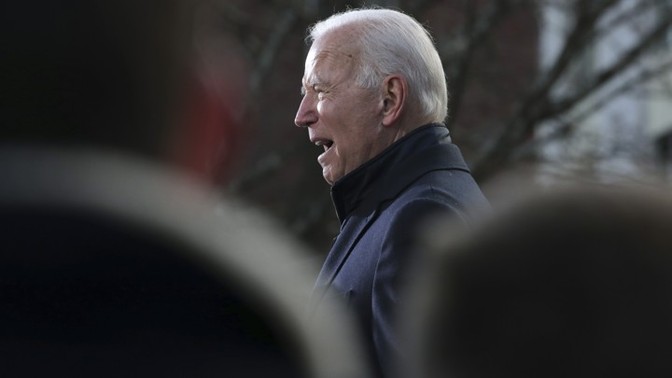
1. Edward-Isaac Dovere on Joe Biden, Schrödinger’s candidate: “The former vice president is at once being written off as finished and yet still a front-runner in most national and state polls.” Will that hold true after tonight?
2. Elaine Godfrey on Amy Klobuchar’s difficult position as a moderate: “This could be Klobuchar’s moment. But it appears, at least right now, to be someone else’s. Pete Buttigieg, the 37-year-old mayor of South Bend, Indiana, has also been casting himself as the pragmatic alternative to the more progressive front-runners.” Will the two joust over anything tonight?
3. Isaac on Buttigieg’s recent McKinsey kerfuffle: “By releasing the names of his clients and talking about his work at McKinsey, Buttigieg is trying to end this conversation. And he recognizes that the sudden public interest over his time there proves both that he’s being taken seriously as a threat by other campaigns, and that they’re not focusing on more substantive issues his campaign is truly concerned with.”
4. Derek Thompson on the progressive left’s support of Bernie Sanders and Elizabeth Warren: “Compared with the average American, Progressive Activists—‘young, secular, cosmopolitan, and angry’—were more likely to be under 30, college-educated, and white; twice as likely to say they never pray; and three times as likely to say they’re ‘ashamed’ of the country.” Will the issues this group cares about take center stage?
Read more about the candidates still running here.
(ALEX WONG / GETTY)
Is Obamacare effectively dead?
An appeals court’s recent ruling on the Affordable Care Act argues that most—or all, the court was unclear—of the law may be unconstitutional. That court then punted the case back to a judge who’d a year ago declared the entire law invalid.
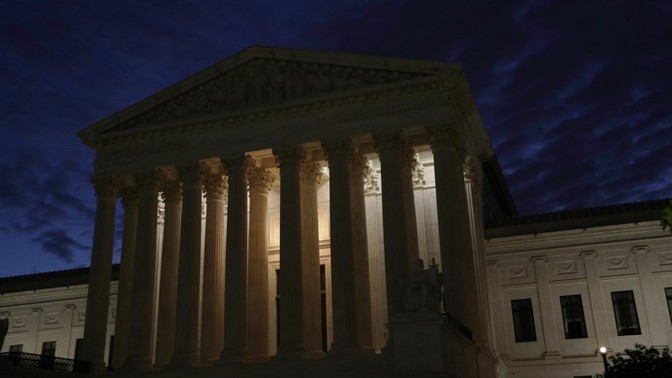
Texas v. United States might soon head to the Supreme Court. That would return the future of American health care to its central role in a national election. Or, the justices of the highest court might wait for a lower court to rule. The law professor Nicholas Bagley argues:
Neither outcome is good. And it’s all completely unnecessary. The case is a partisan stunt that’s been roundly condemned by lawyers on both sides of the aisle. It should’ve been laughed out of contention long ago.

(John Moore / Getty)
A 7-year-old Honduran girl with a life-threatening infection was living at a makeshift refugee camp in Mexico. Three times, Customs and Border Protection denied her entry into the U.S. for care, only relenting after a mounting pressure campaign.
Jeremy Raff tried to make sense of the situation.
Helen Perry, a nurse practitioner from Florida who set up the mobile clinic at the Matamoros camp, told me she has facilitated emergency medical exemptions from MPP for about 25 asylum seekers since October. She said she presses CBP to grant exceptions for only the most severe illnesses. “We tried to be respectful of CBP’s time,” she said. Sick people whom she persuaded CBP to “parole” into the U.S. include a boy whose appendix had burst, a man who’d had a heart attack, and a baby with third-degree burns from a campfire, Perry said.
Today’s newsletter was written by Saahil Desai, an associate editor on our Politics team, and edited by Shan Wang, who oversees newsletters. You can reply directly to this newsletter with questions or comments, or send a note to [email protected].
Your support makes our journalism possible. Subscribe here.