
The reason so many of us declare confidently—standing tall at the ripe old ages of 10,11,12—that we want to be astronauts when we grow up is the magical pull of an idea that reaches deep, an exhilarating challenge to the furthest limits of curiosity. For most people imagination is as far as it goes, and for those who actually pursue the ambition to become an astronaut, the barrier to entry is extremely high. NASA selects only a tiny fraction of applicants. In 2013, more than 6,000 people applied. NASA picked eight.
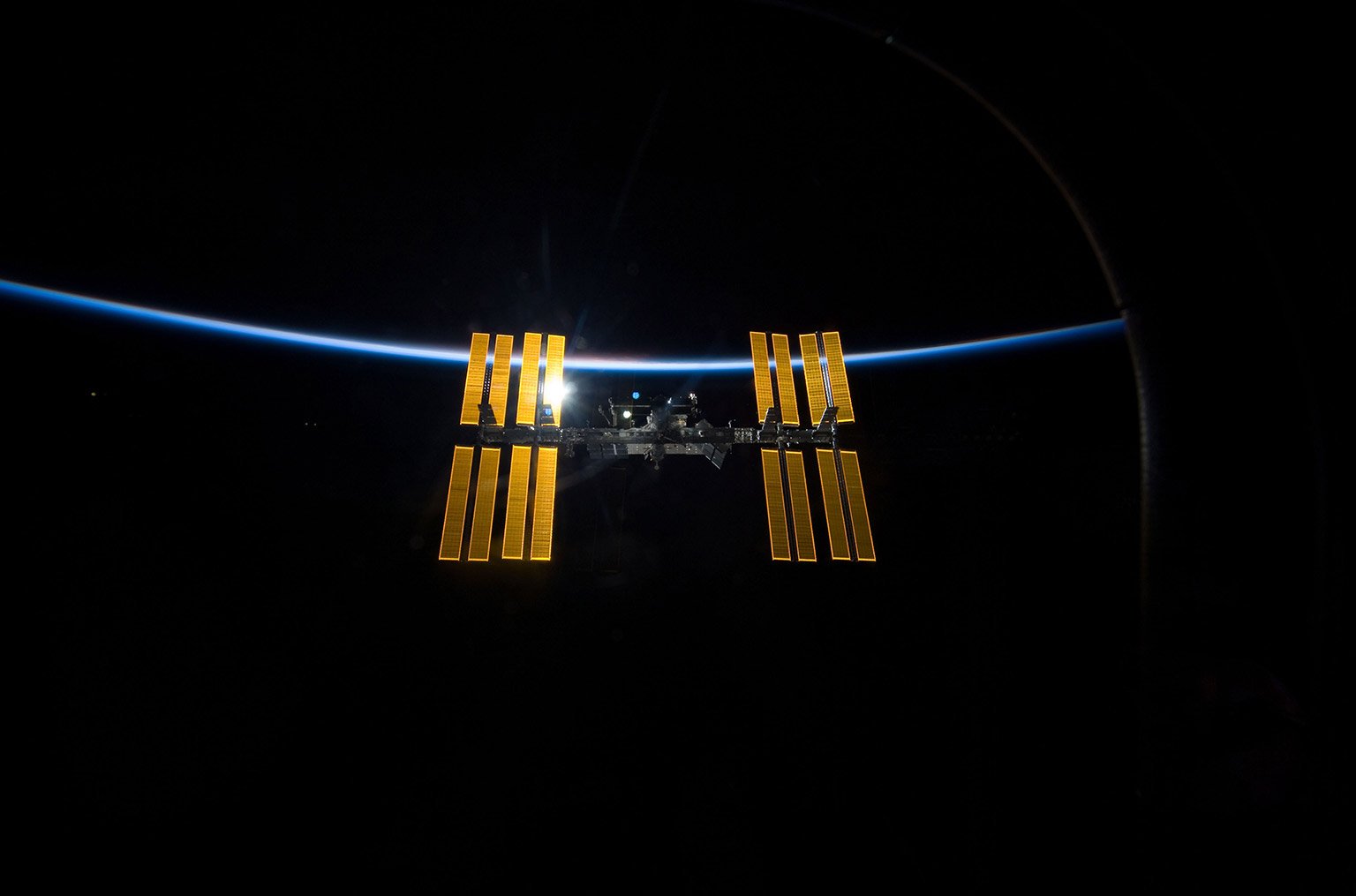
Of those who make it all the way through astronaut training, even fewer have the opportunity to visit the International Space Station—an orbiting laboratory a bit larger than a six-bedroom house that contains one of the world’s best examples of international cooperation in the pursuit of knowledge. It’s up there right now, orbiting the earth once every 90 minutes, 220 miles up. NASA will help you find where it is at any given moment right here.
What follows is for those of us who will never get to make the trip: a chance to see what it’s like up close.
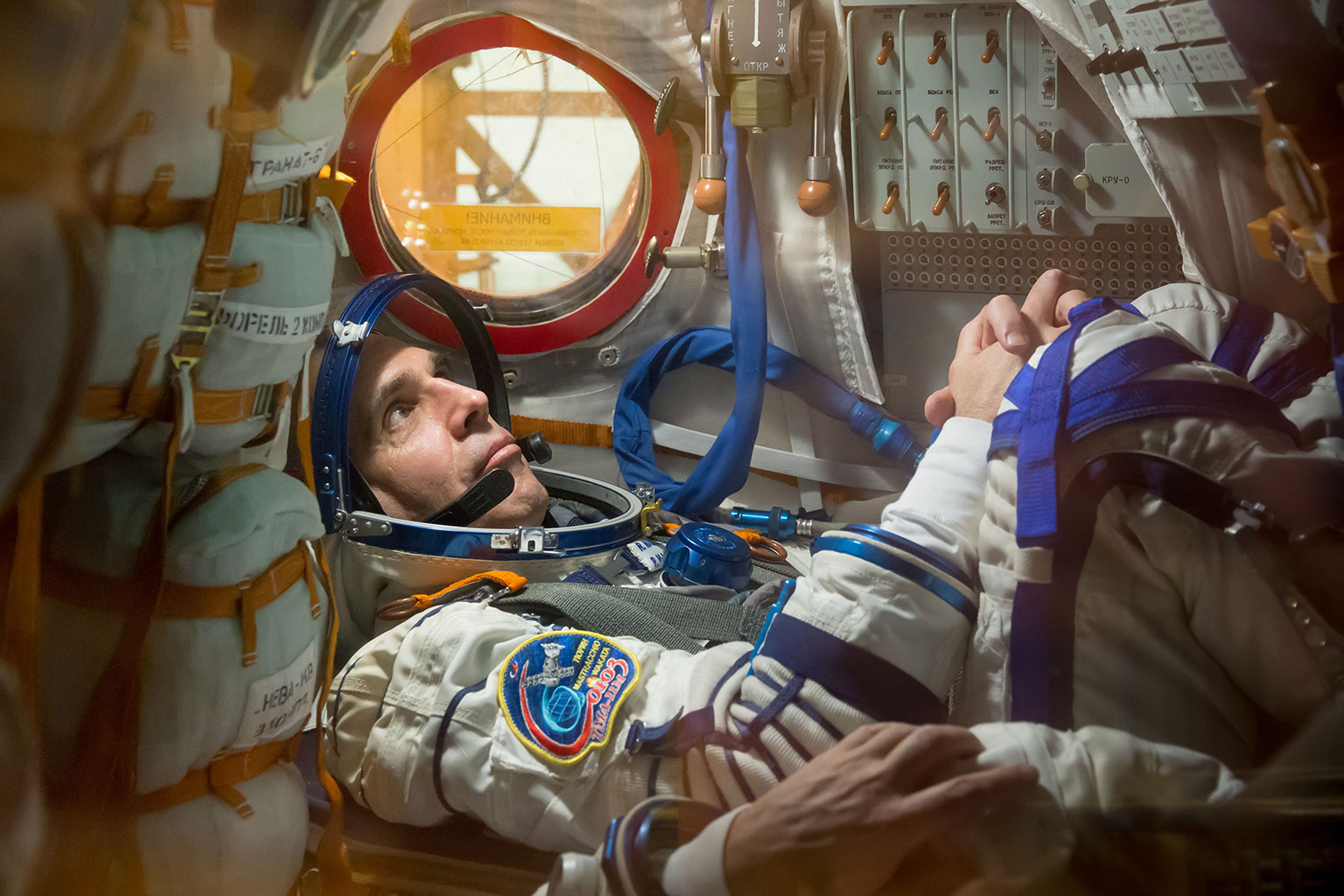
Astronaut participates in a dress rehearsal
Photo: NASA
When astronaut candidates begin training, one of the first things they have to master, oddly enough, is swimming. In addition to becoming scuba-certified, they have to swim three lengths of a 25-meter pool without stopping. Then they have to do it again in a flight suit and tennis shoes. This prepares them for spacewalks, also known as Extra-Vehicular Activities (EVAs), which refer to any work that’s done outside a spacecraft. Astronaut candidates also undergo extensive training in hypobaric and hyperbaric environments, and with periods of simulated weightlessness.
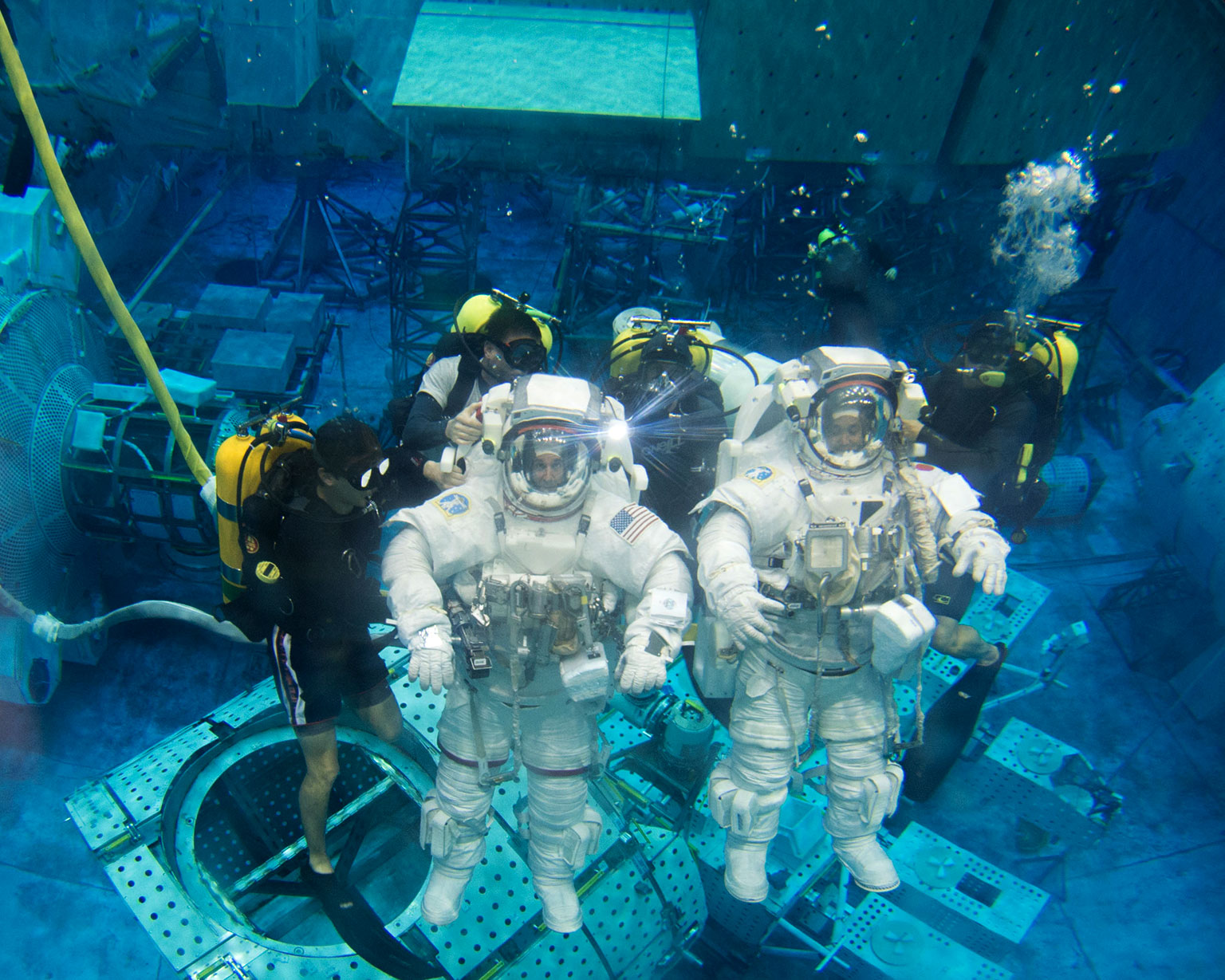
Missions to the ISS can require an additional two or three years of training after the initial astronaut candidate period. At the Sonny Carter Training Facility, also known as the Neutral Buoyancy Laboratory, a 6.2-million gallon water tank is used to simulate weightlessness, and a model of the International Space Station, fully submerged, allows them to practice everything they’ll be doing at the ISS, from such daily activities as preparing food to spacewalks.
Spacewalk training in the Neutral Buoyancy Lab
Photo: NASA
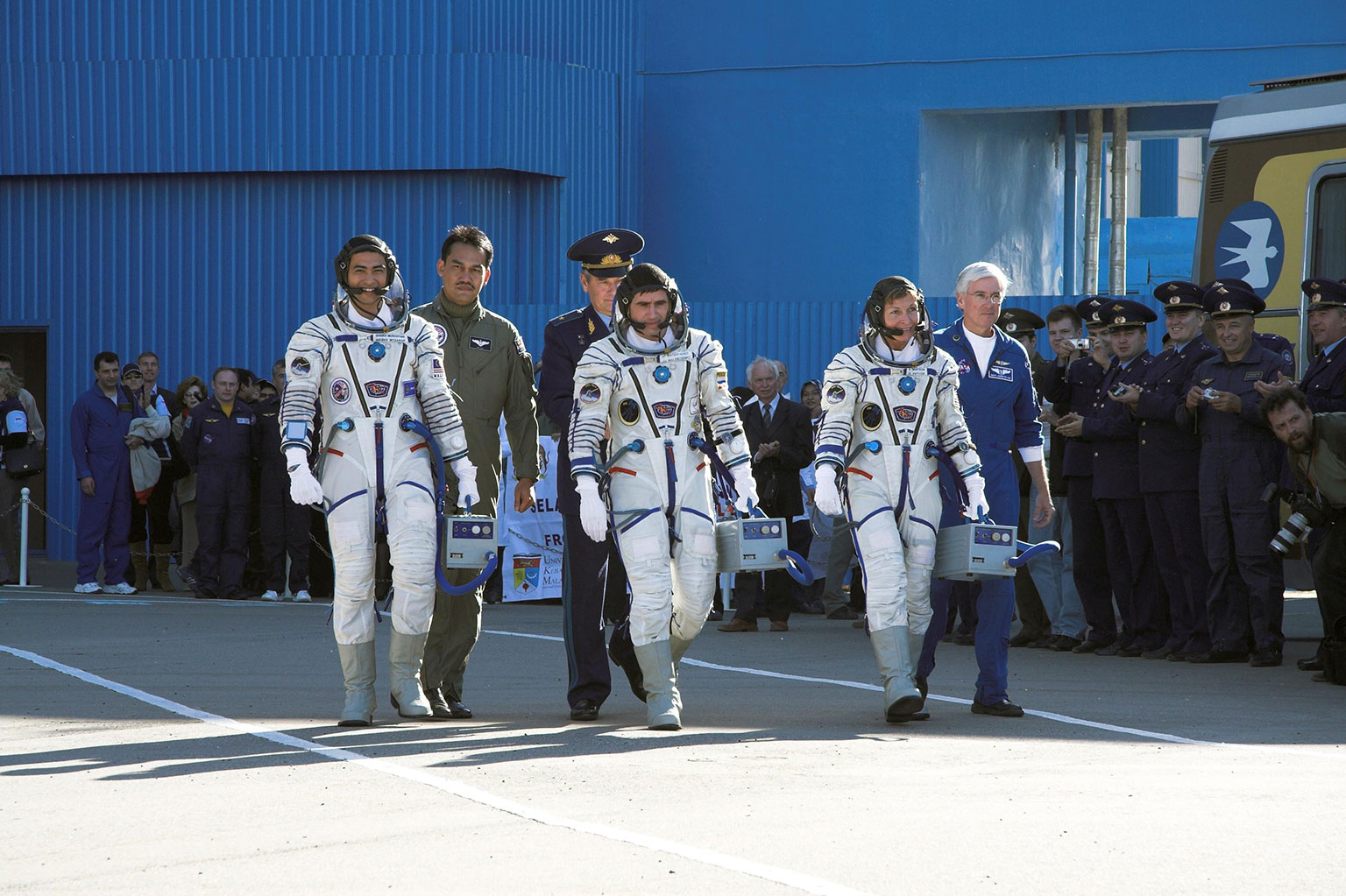
ISS Expedition 16 astronauts and cosmonauts walk toward their spacecraft
Photo: NASA
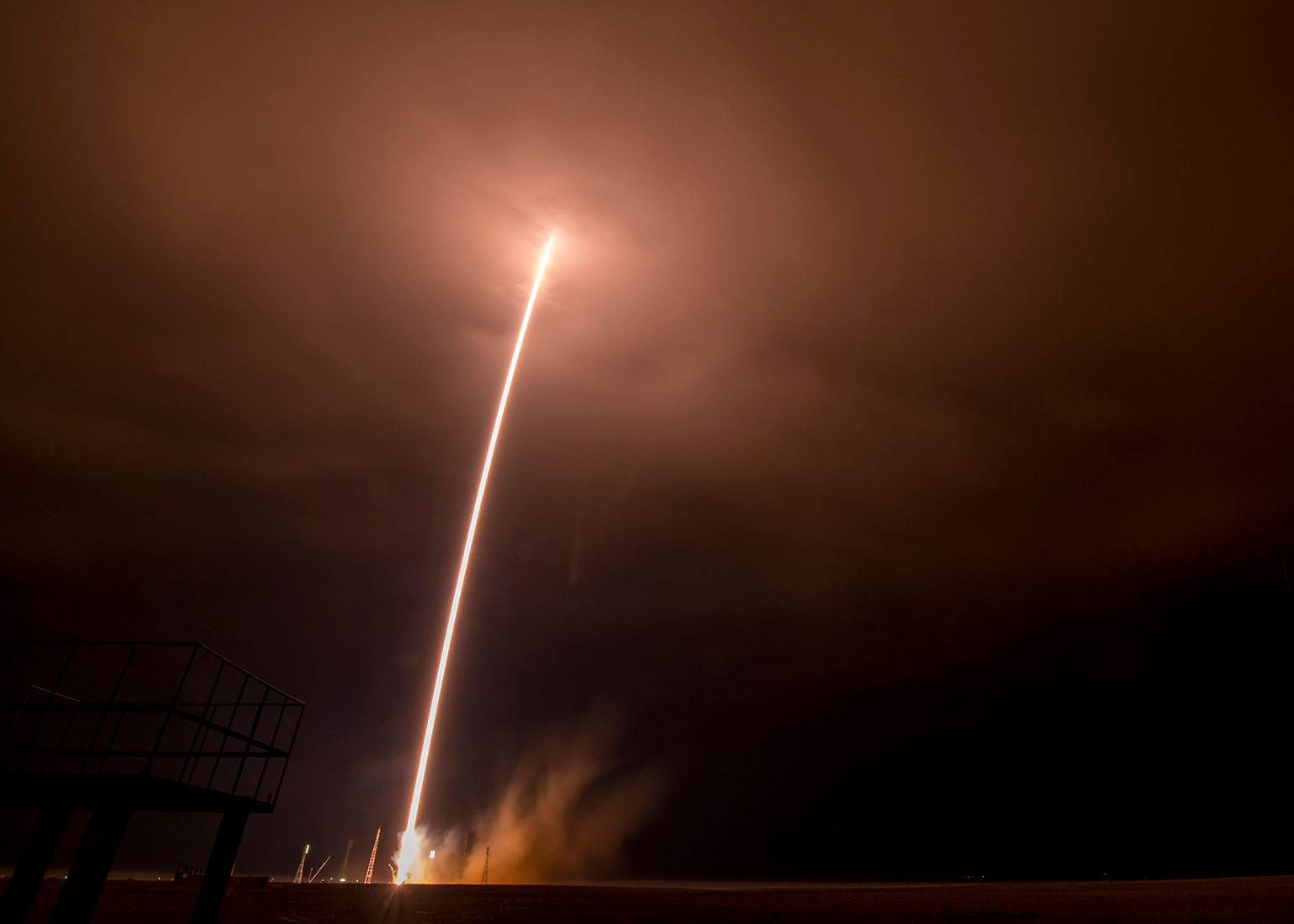
Since the end of the US Space Shuttle program in 2011, the Soviet Union’s Soyuz capsule has provided the only transportation for astronauts and cosmonauts going to the International Space Station. Before takeoff, the team comes together at the Yuri Gagarin Cosmonaut Training Center in Star City, Russia, where they undergo a few more weeks of training. When it’s time to leave, the Soyuz, with 3 people fitting snugly aboard on top of a Soyuz rocket, launches from Baikonu, Kazahkstan, and travels the approximately six hours it takes to get to the ISS.
When you can’t move, it can be kind of excruciatingly painful. But, ya know, it’s the price we pay for getting to fly in space.”
Soyuz launches with ISS Expedition 43 crew
Photo: NASA
MERCURY SPACECRAFT
1959 - 1963
Long before the Russian Soyuz Capsule and the US Space Shuttle, there was Mercury.
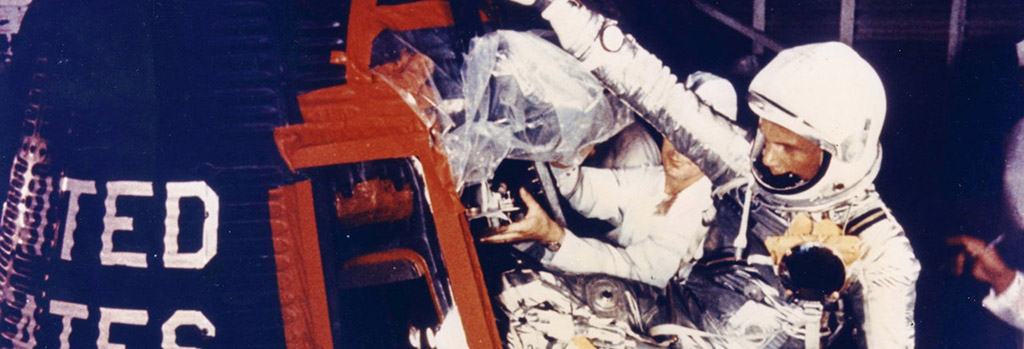
When Russia launched the Sputnik satellite in 1957, the United States began its own manned space program, called Project Mercury, kicking off what came to be known as “the space race.” McDonnell Aircraft Corp., which later merged with Boeing, was selected as the lead contractor for the spacecraft in 1959 and was ultimately responsible for sending the first American into space, in 1961.

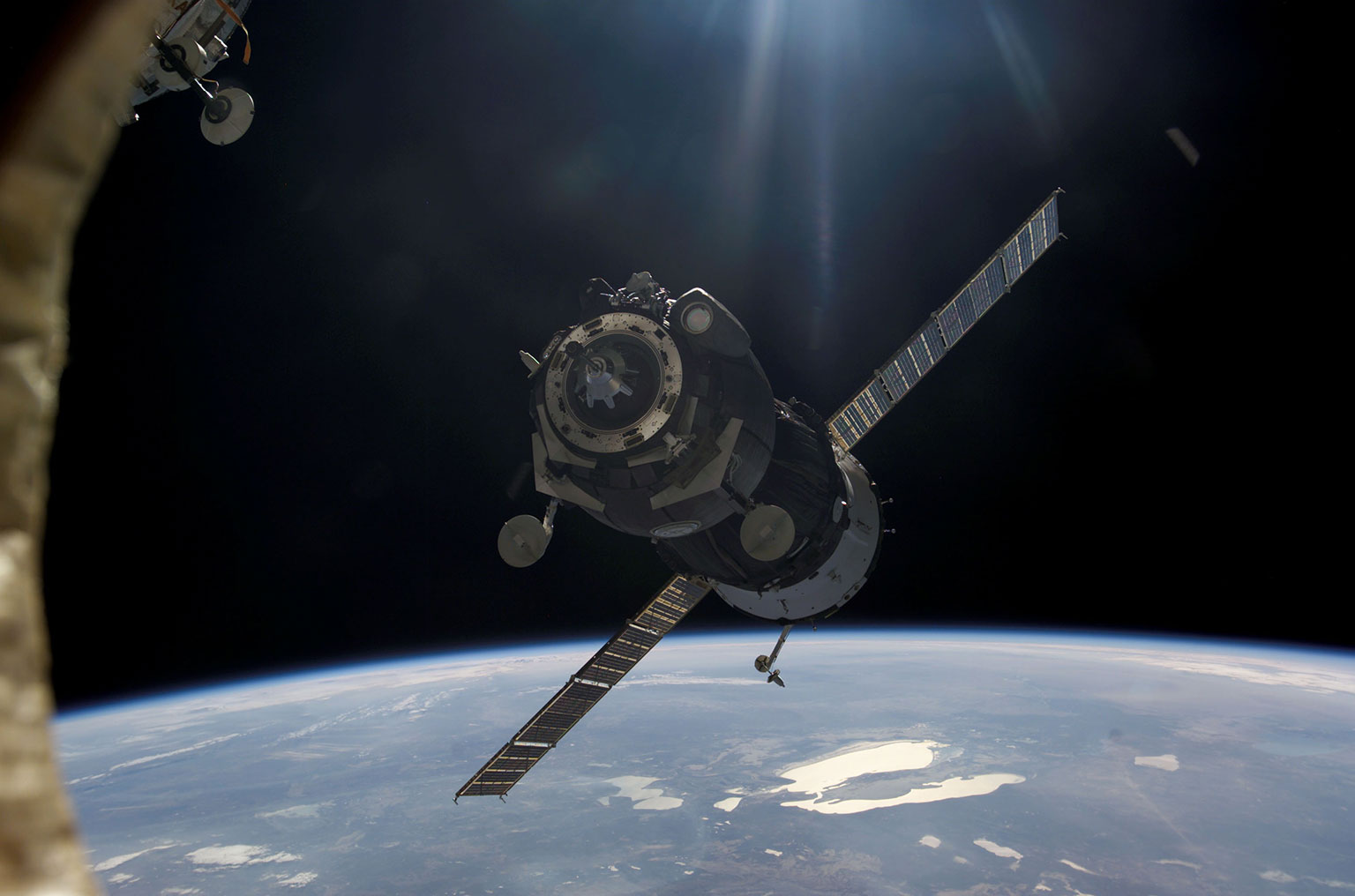
Soyuz approaching the International Space Station
Photo: NASA
While it takes around 9.5 minutes to get to space, it used to take a total of two days to arrive at the ISS because of the extended docking process. But in March 2013, the Soyuz was able to complete the first leg of the journey in under six hours, bringing down the number of orbits required for alignment from 34 to about four. The forty-plus saved hours make a big difference when you’re crammed into a capsule in a massive spacesuit.
Sounds of the ISS
Soyuz Docking
ONBOARD THE ISS
Duration: 3 Months – 1 Year
- 01TRAINING
- 02LAUNCH
- 03DOCKING
- 04ONBOARD THE ISS
- 05RETURN HOME
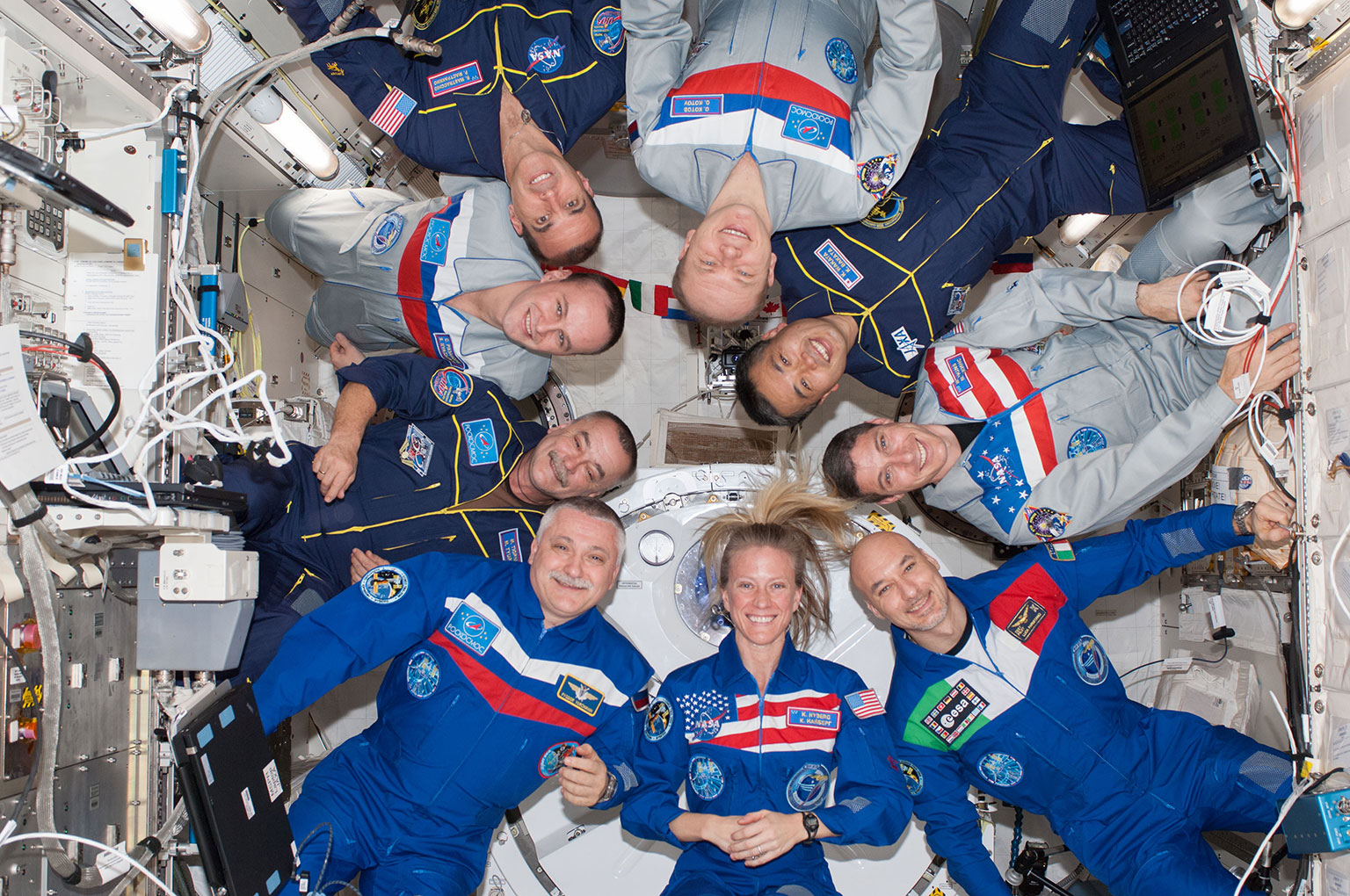
Nine station crew members gather for a portrait aboard the ISS
Photo: NASA
Up until March of this year, typical missions to the ISS have lasted between three and six months. But now, American astronaut Scott Kelly and Russian cosmonaut Mikhail Kornienko are almost halfway through the first ever one-year mission to the ISS. More explicitly than any previous mission, the goal of the one-year experience is to see how the two men's bodies and minds react to such an extended period in space. This will help NASA determine how far humans are from being able to handle–physically and psychologically–a trip to Mars, which could take several years. To get a sense of what that would be like, here’s a look at Kelly and Kornienko’s home:
External equipment on the International Space Station
Photo: NASA
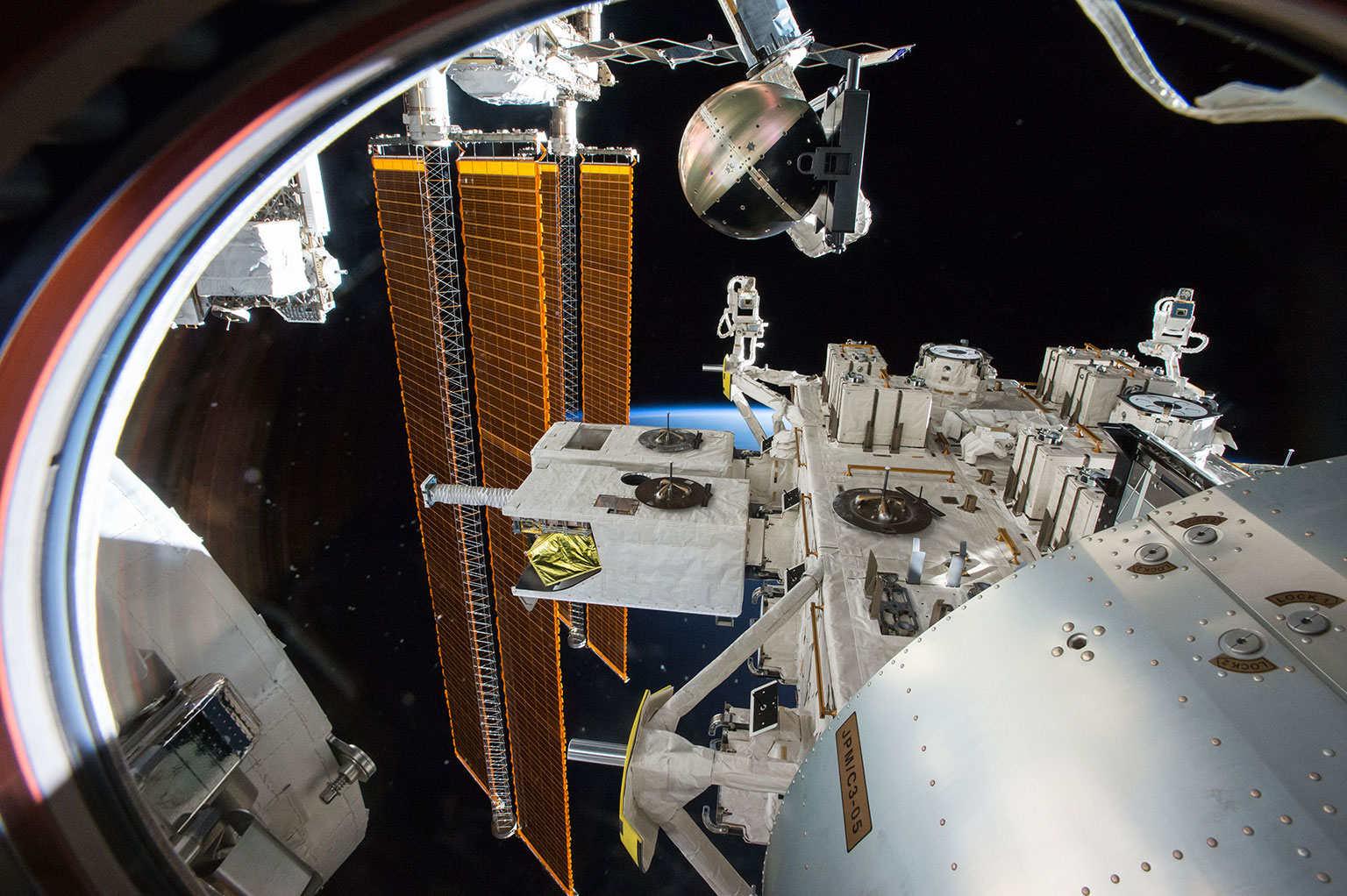
Onboard the ISS
WEIGHTLESSNESS
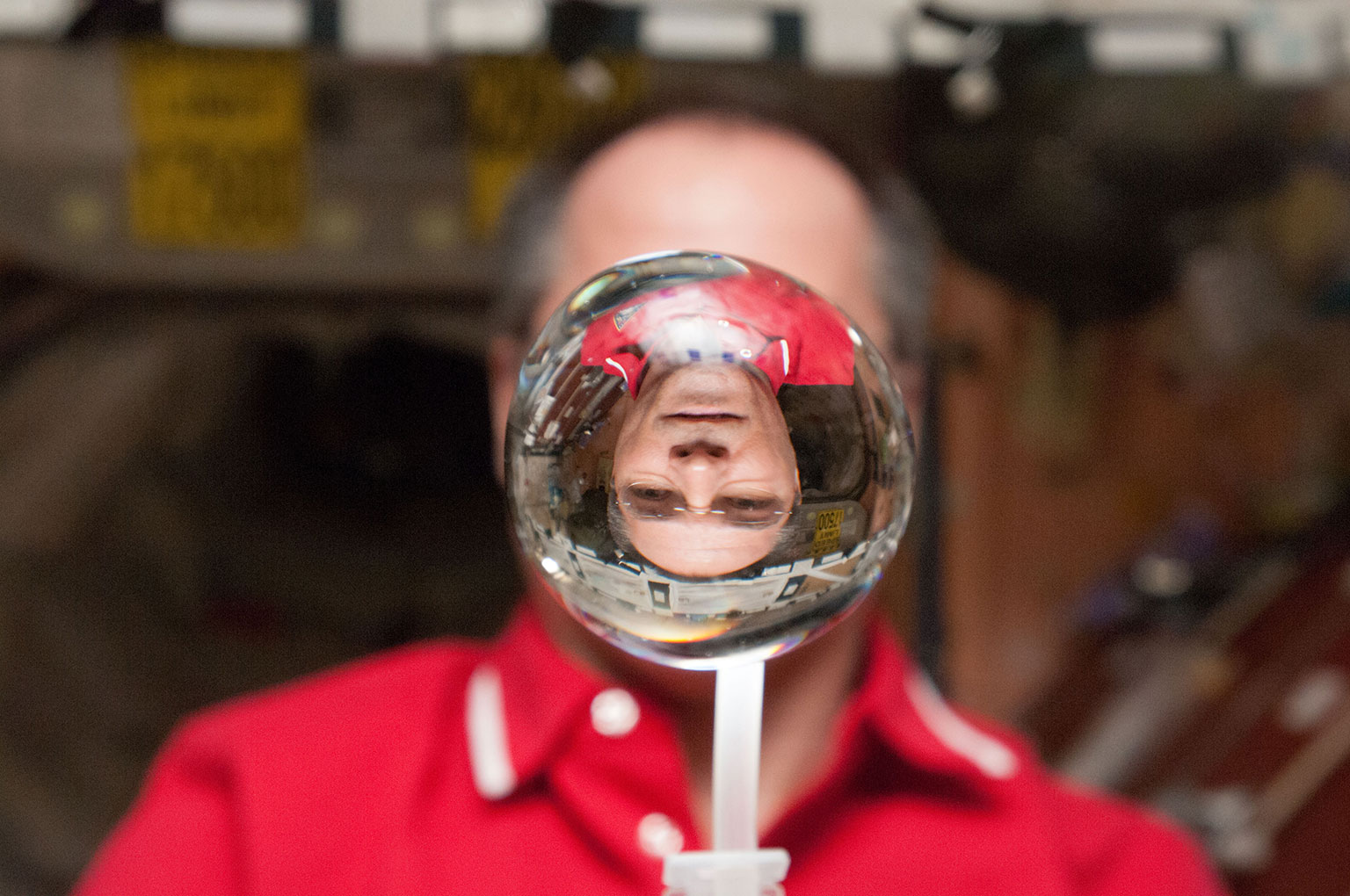
Refracted image of an astronaut through a floating bubble of water.
Photo: NASA
Most people think it’s zero gravity that causes astronauts to float, but on the ISS that’s actually not the case. In fact, the station is subject to 90 percent of the gravity that’s found on the earth. Astronauts float on the ISS and outside on spacewalks because they are in a state of free-fall. They miss the earth because the speed at which they are traveling–17,500 mph–is enough to counteract the force of gravity that would otherwise pull them down, so they just keep falling, as if they’re always on the downhill side of a roller coaster. Even though they understand all this, they say, the feeling of weightlessness never gets old.
A little push with your big toe will take you halfway across the station. It’s like being Superman—with just the brush of a finger. It does not get old, even after 381 days.”
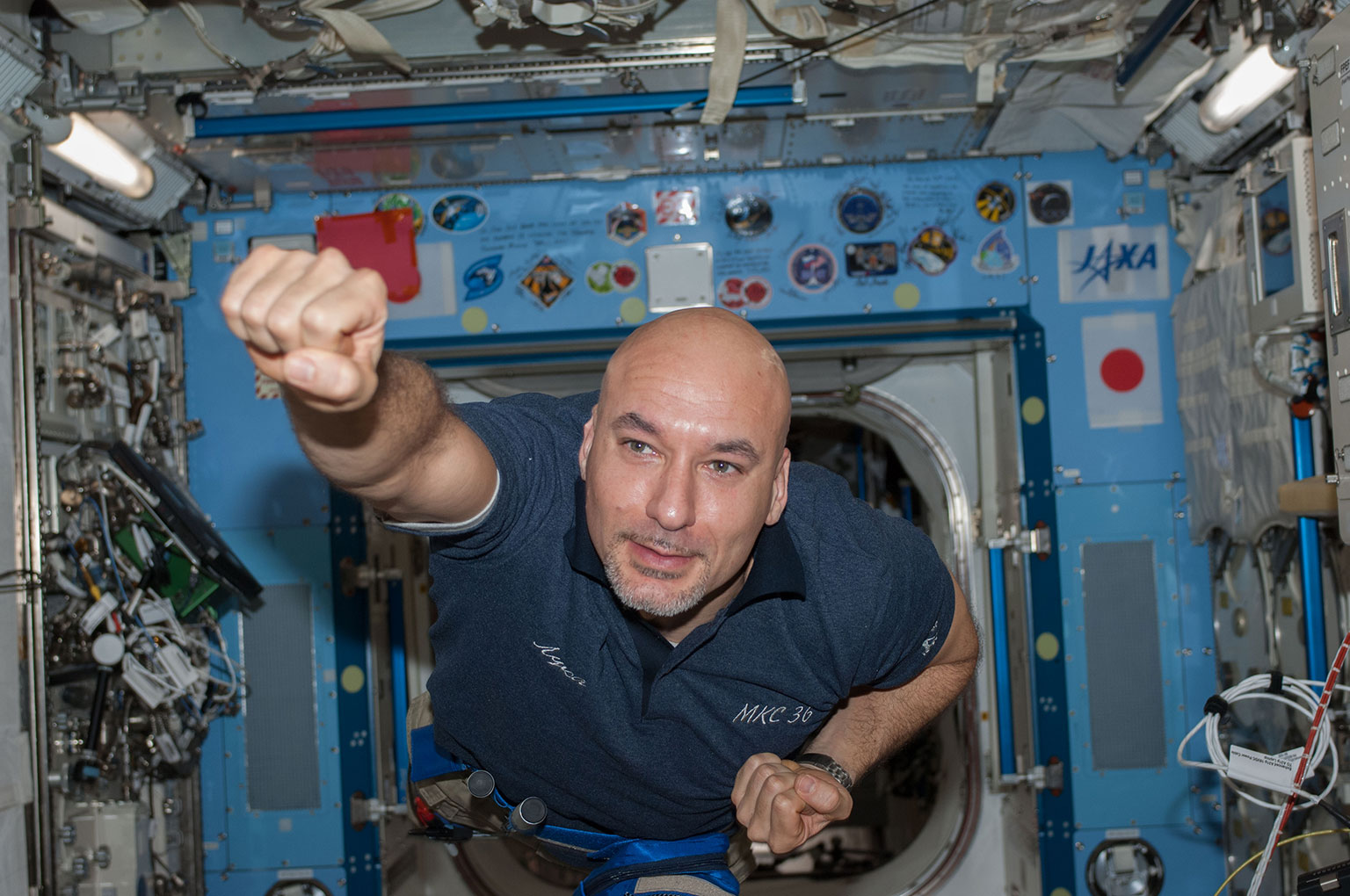
Astronaut Luca Parmitano floats freely aboard the ISS.
Photo: NASA
Onboard the ISS
EXERCISE
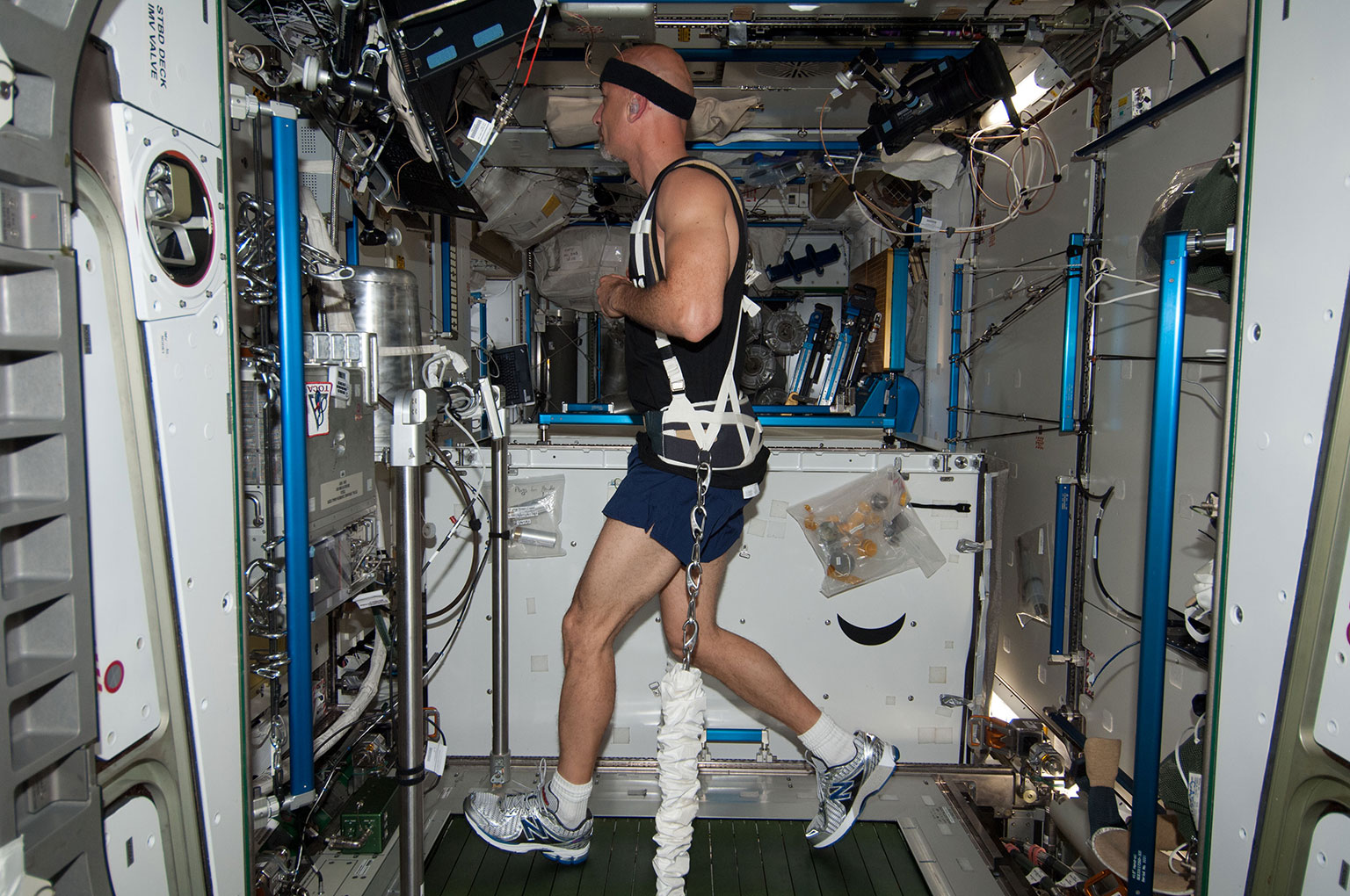
Astronaut Luca Parmitano on the treadmill
Photo: NASA
However exhilarating, the state of weightlessness can actually be damaging to astronauts’ health. Over extended periods of time, astronauts can experience muscle weakening and bone loss (at a rate ten times that of an earthbound 70-year-old), because their bodies aren’t forced to work against the pull of gravity. To counteract this, astronauts have to exercise for approximately 2 hours a day in machines that look quite different from those on earth.
You sweat buckets up there. On the ground, when you’re riding the bike, the sweat drips off you. Up there, the sweat sticks to you—you have pools of sweat on your arms, your head, around your eyes. Once in a while, a glob of it will go flying off.”
– Astronaut Mike Hopkins (5,200 Days in Space, The Atlantic)
Onboard the ISS
SLEEP
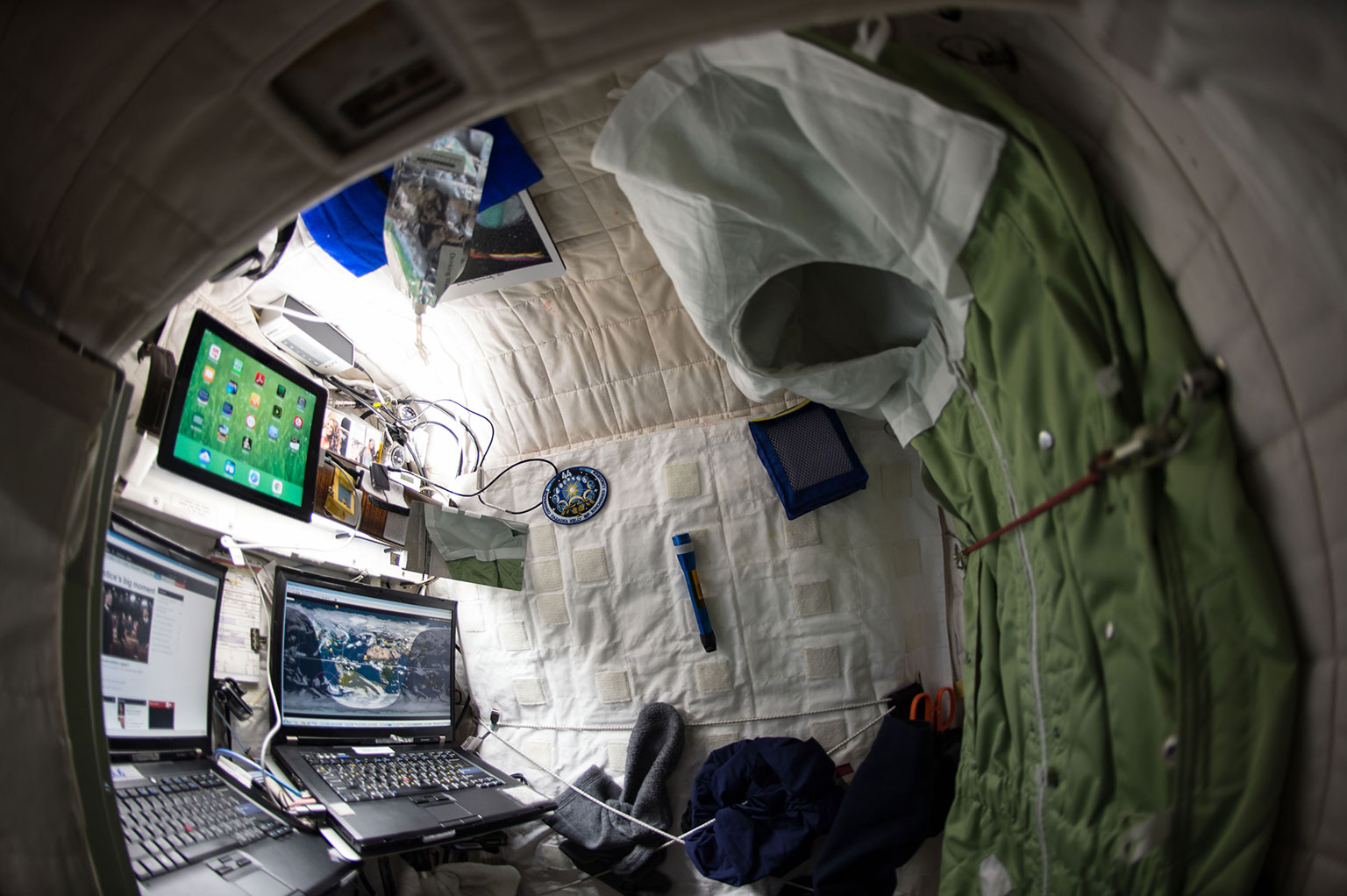
Astronaut Scott Kelly’s living quarters
Photo: NASA
In many elements of the ISS astronaut experience, there are attempts to approximate the creature comforts of life on earth. But, obviously, it’s never quite the same, and sleep might be the quintessential example of that. When it’s time to turn in for the night, astronauts don comfy pajamas, open the doors to their sleep pods, and zip themselves into a sleeping-bag-like enclosure. In space, though, they never actually lie down, knowing that when the lights go out and the doors close, they’ll just float in their sleeping bags, unaware of which way is up.
Sounds of the ISS
Sleep Station
Onboard the ISS
FOOD
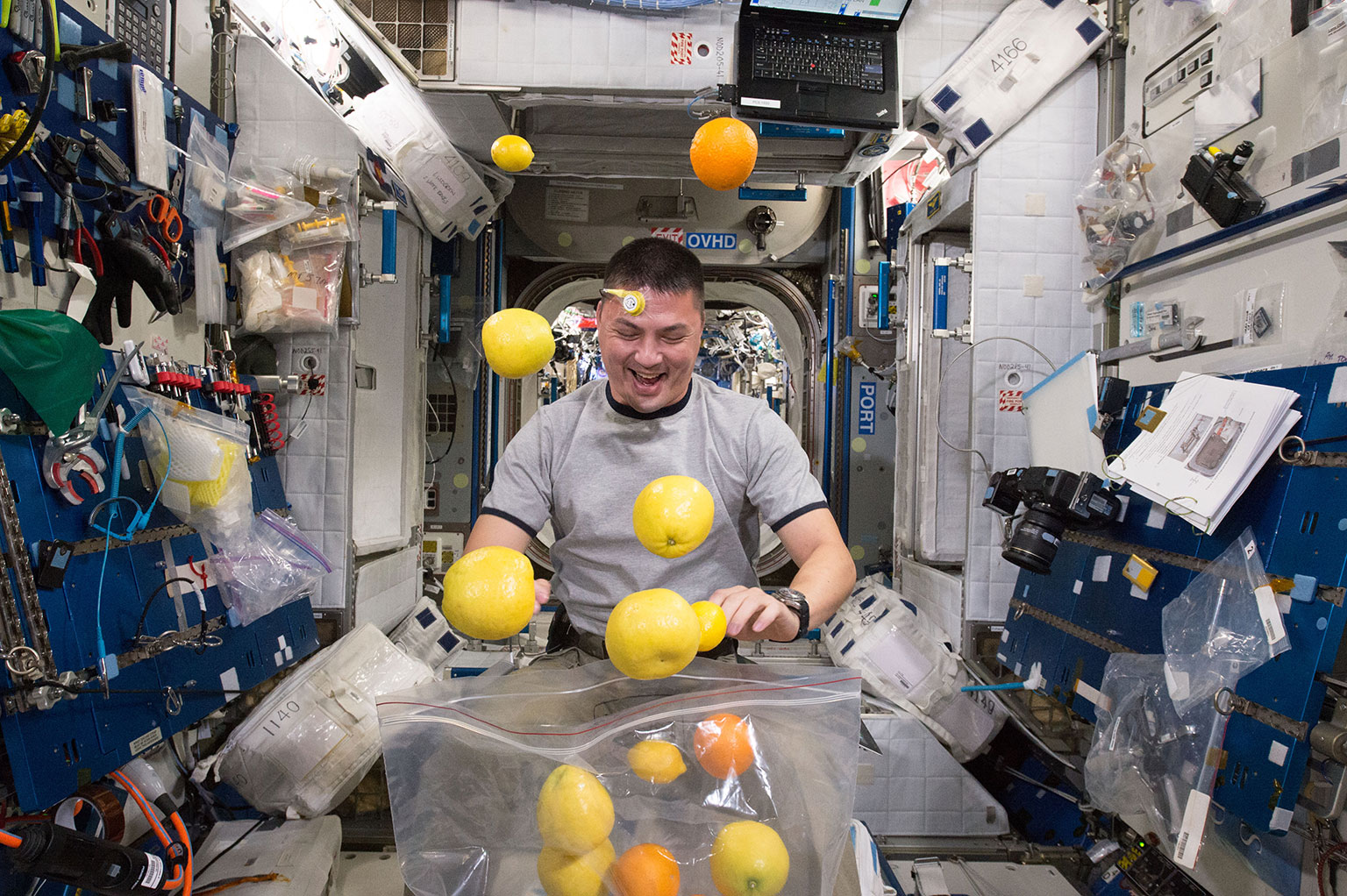
Astronaut Kjell Lindgren corrals the supply of fresh fruit.
Photo: NASA
A lot of people think astronauts’ food is nothing like what we eat on earth–that it’s all unrecognizable and, well, gross. But while almost everything they eat is either freeze-dried, thermostabilized (i.e. canned but not stored in metal), or powdered, requiring rehydration—and while some foods are off the table entirely because they don’t conform to NASA’s requirements—meals aren’t as limited or unappetizing as we think, and the menu isn’t completely out of astronauts’ hands. There are more than 200 items on the “core menu” that NASA offers, about 110 of which have been developed from scratch by the food lab scientists. Before traveling to the ISS, astronauts meet with NASA’s food lab to try out their options and make some selections for what they want to eat (each gets to pick nine for every six-month stint on the ISS). One of the astronauts’ favorites is freeze-dried shrimp cocktail with a spicy cocktail sauce, both of which have to be rehydrated.
Every once in a while, though, the astronauts get a shipment of fresh fruits, and even non-freeze-dried ice cream. And when that happens, it’s a party!
Onboard the ISS
WONDER
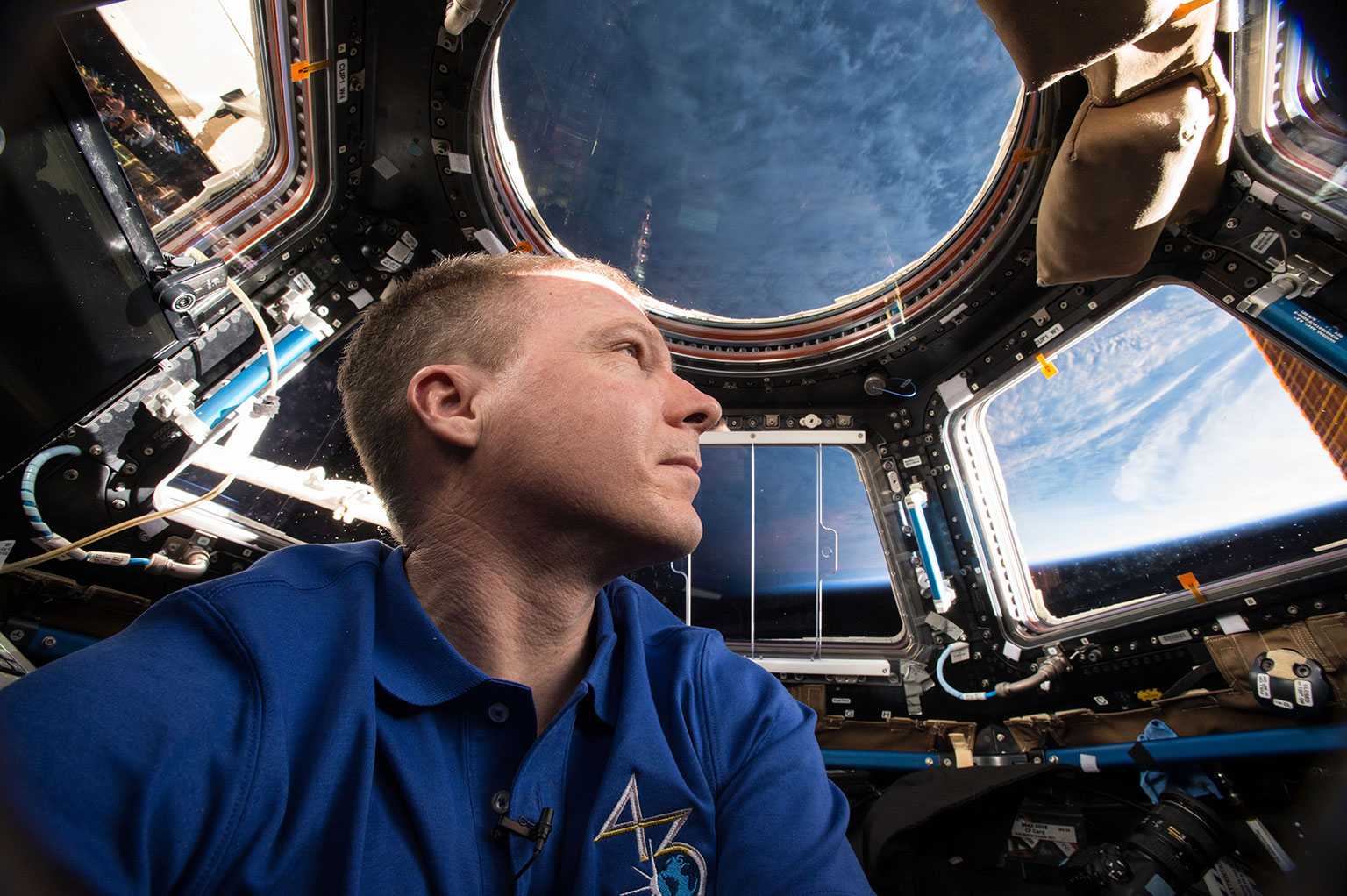
Astronaut Terry Virts gazes out the window in the cupola module.
Photo: NASA
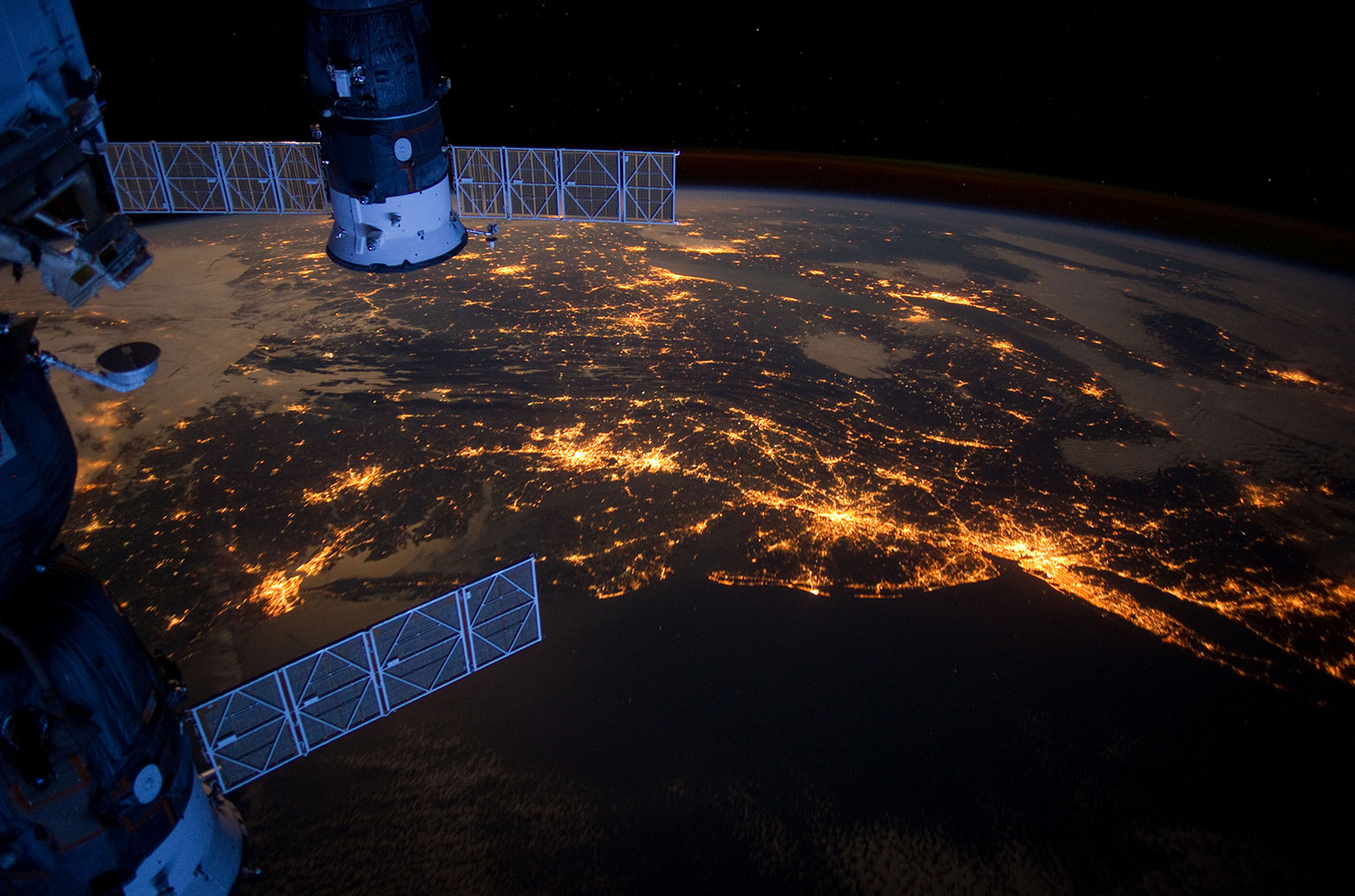
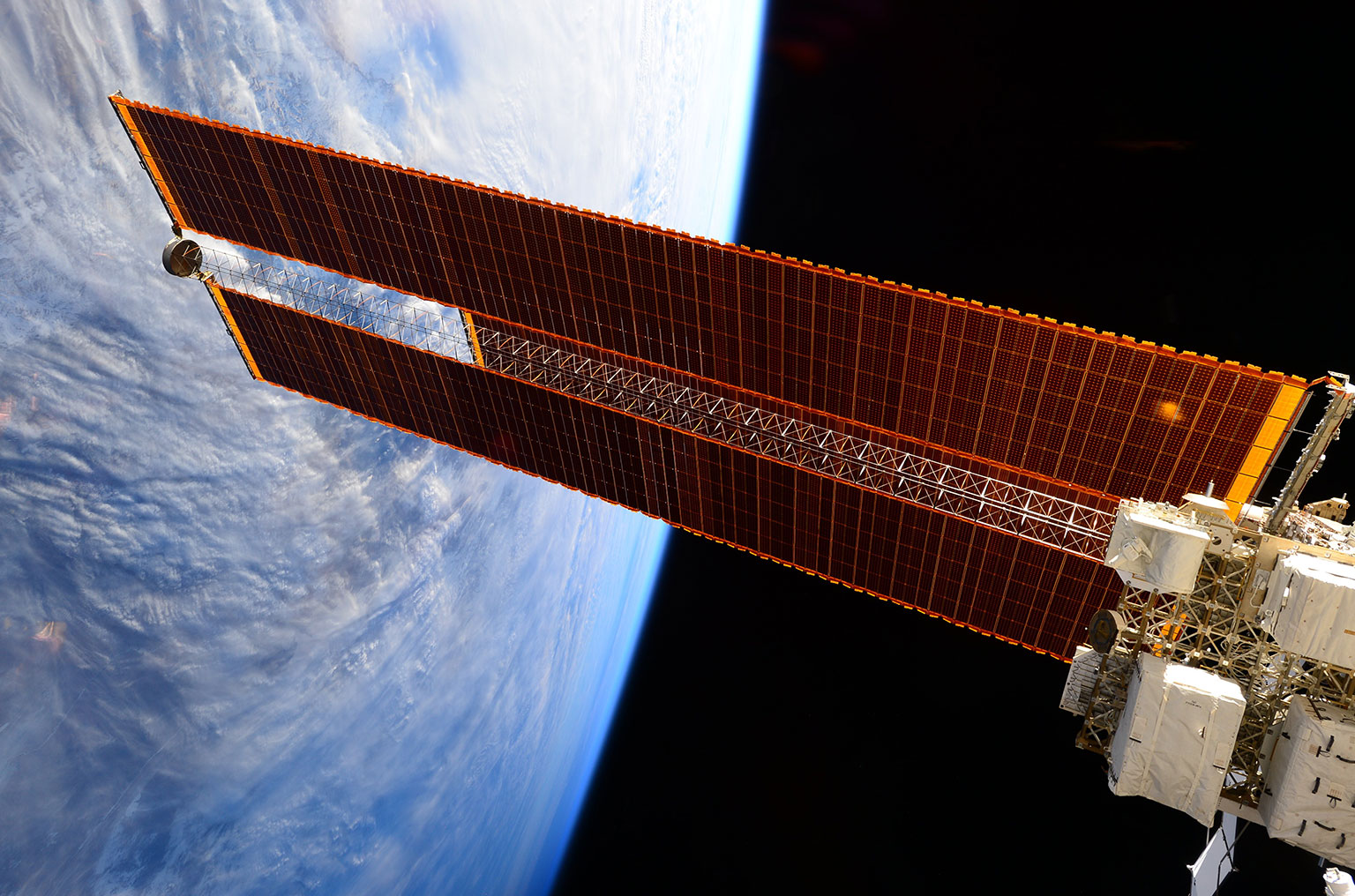
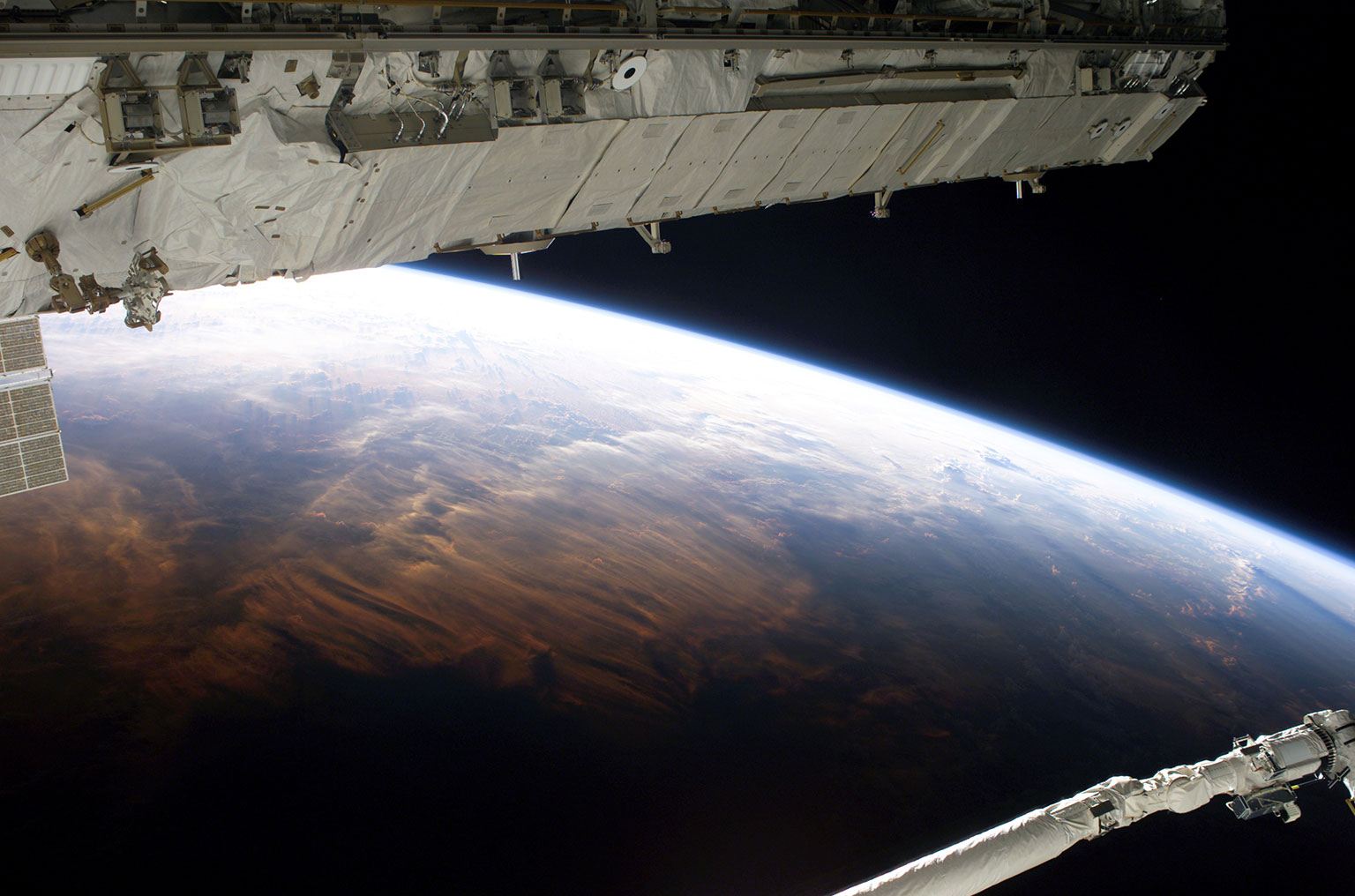
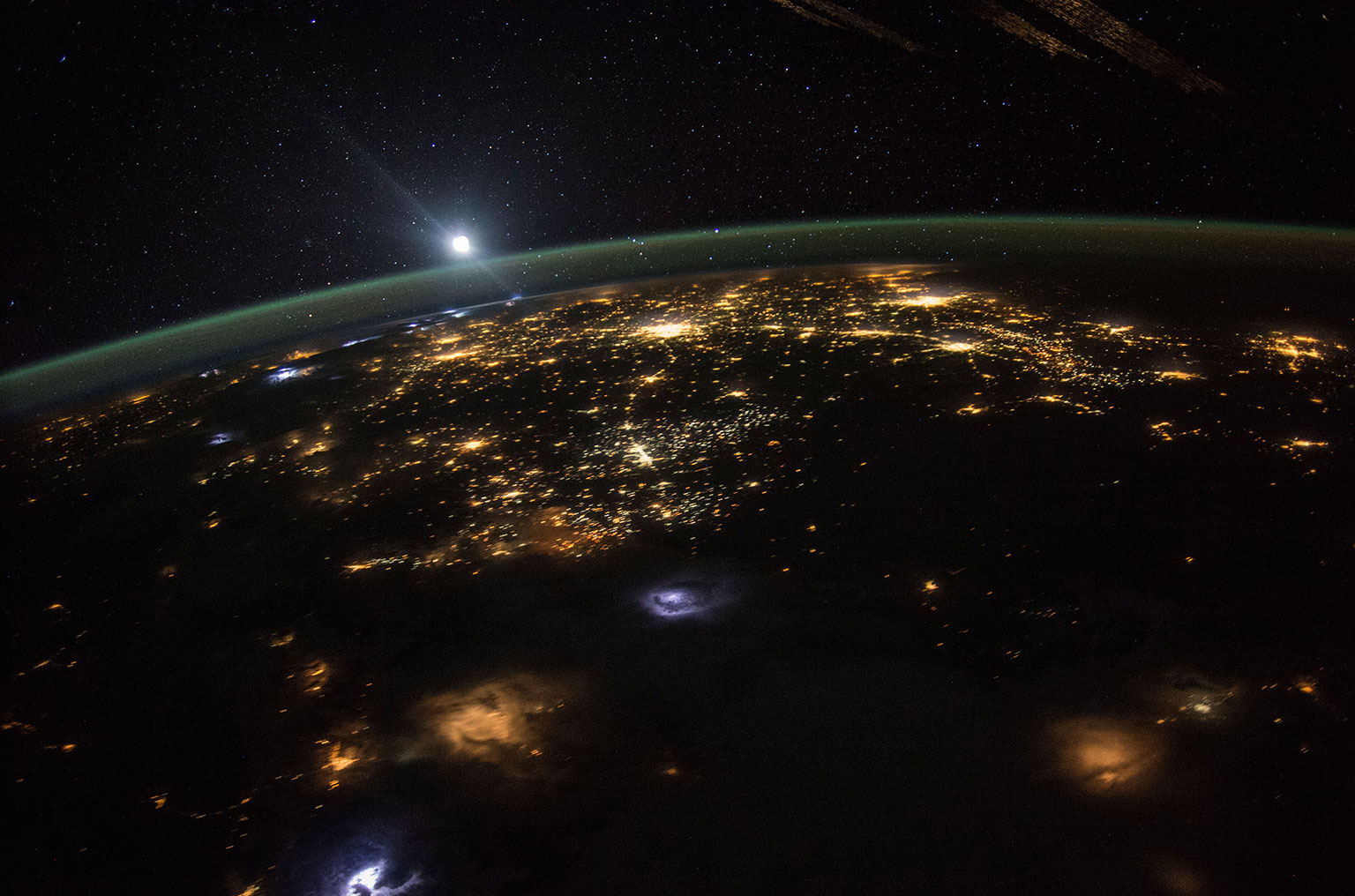
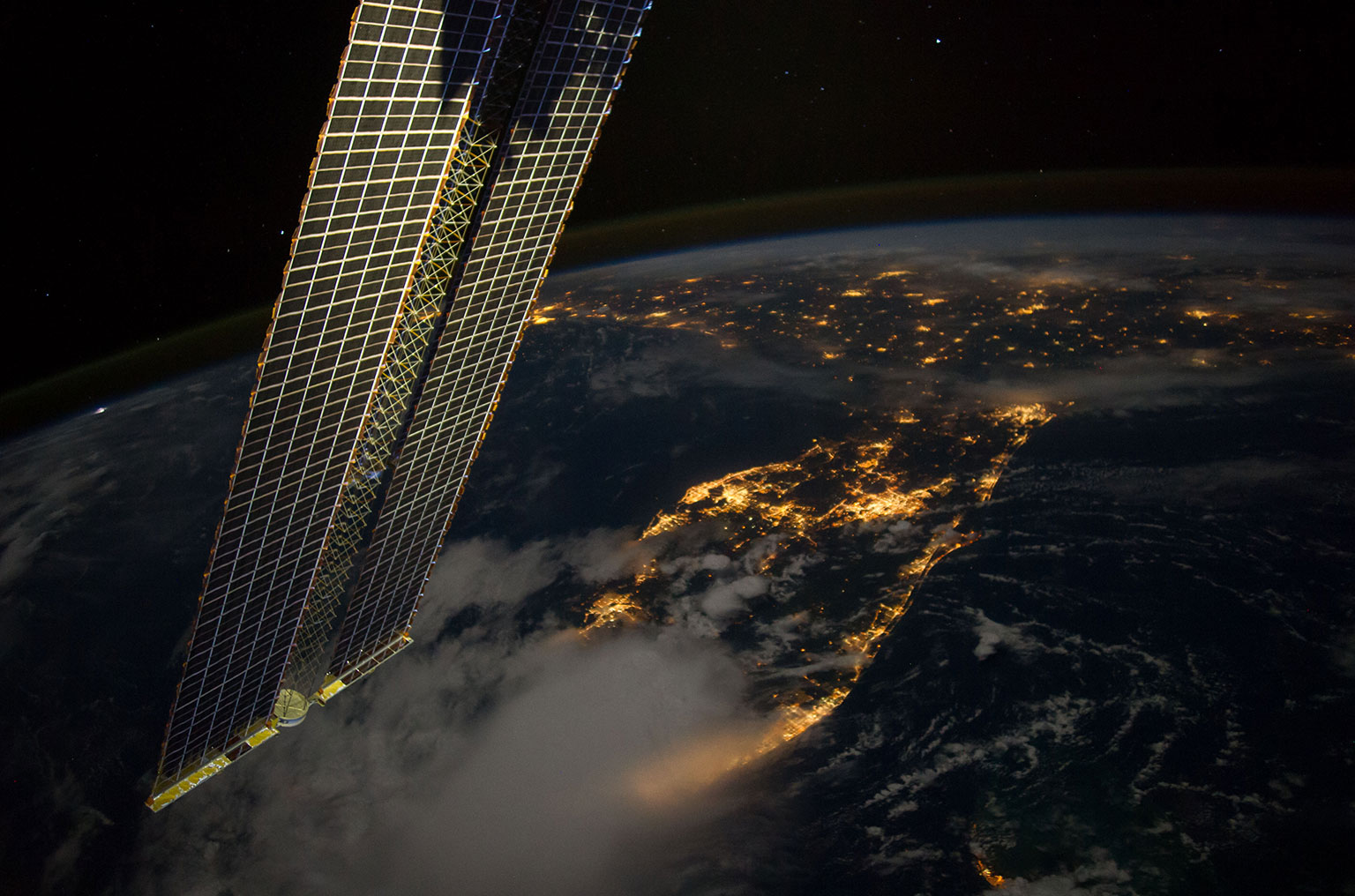
The beauty of seeing Earth as a planet, as opposed to being down here among it, is a wonderful experience. To then start to get into what we call ‘The Big Picture Effect’ or ‘The Overview Effect.’”
Onboard the ISS
WORK
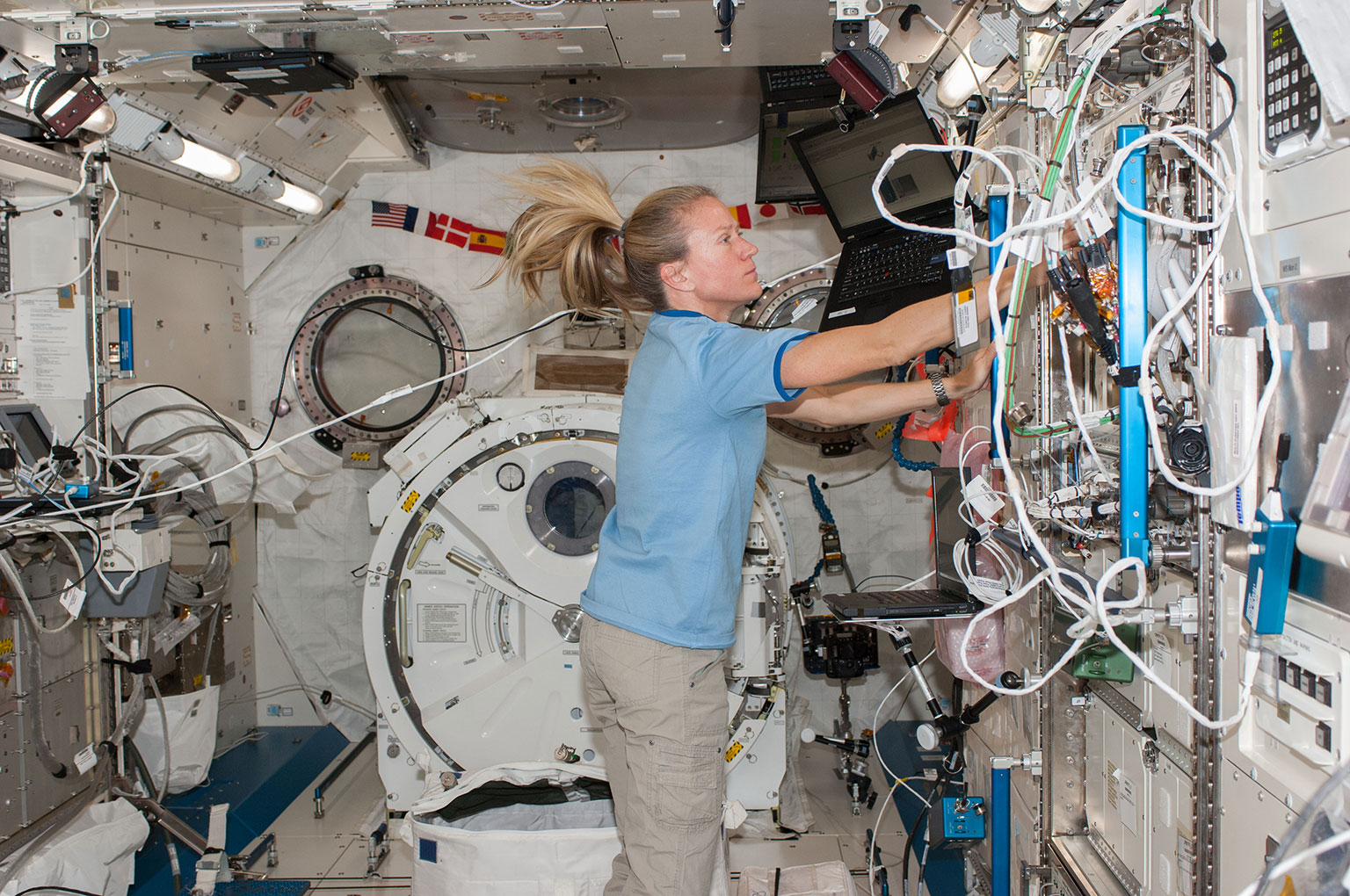
Astronaut Karen Nyberg in one of the ISS’s labs.
Photo: NASA
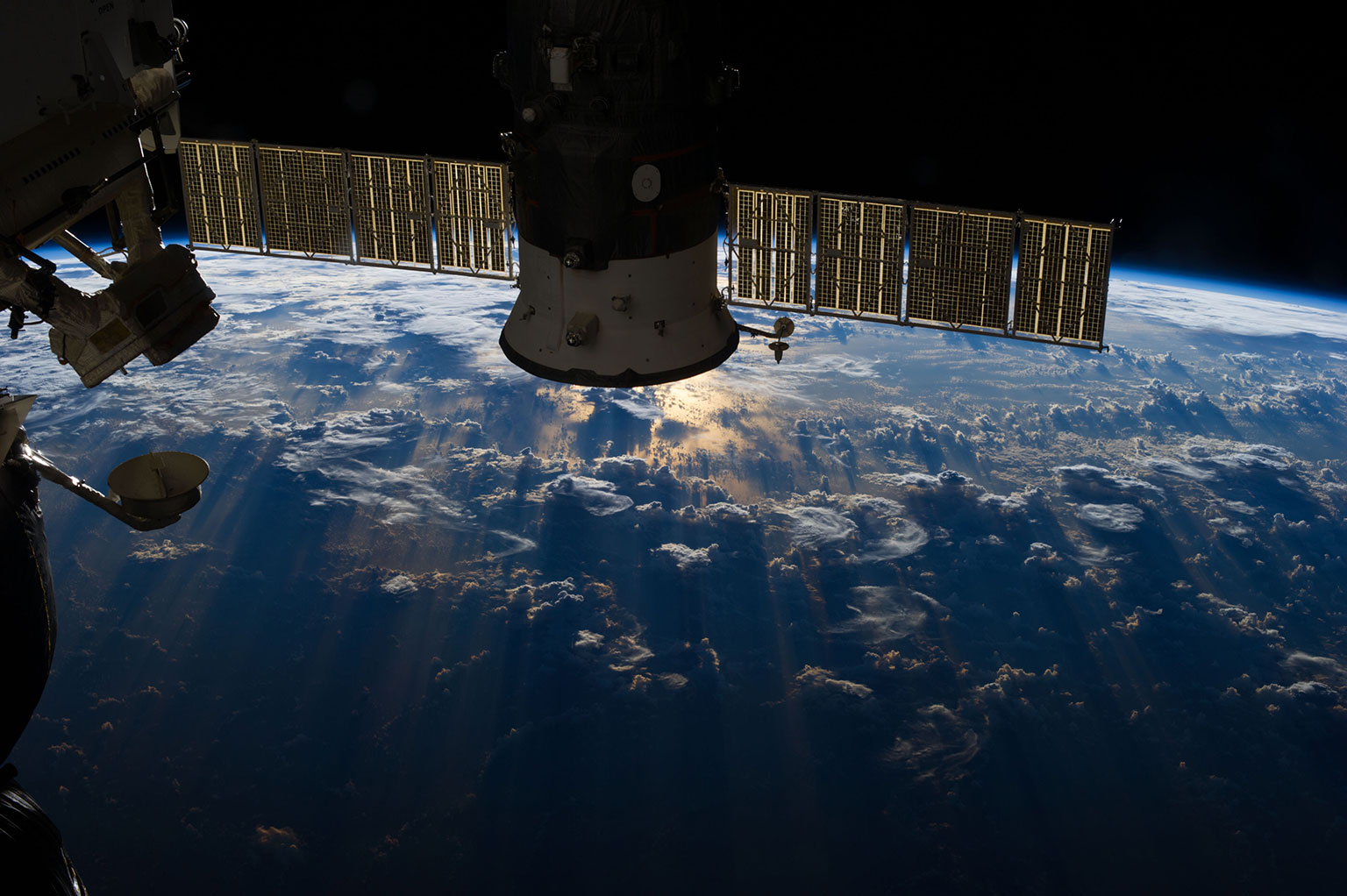
The ISS is, above all, a laboratory. There are usually more than 200 experiments happening at any one time, which include everything from observing ant colonies to attempting 3D printing (in a weightless environment) to testing humanoid robots. Most of the experiments are focused on understanding how conditions in space affect, well, everything—including the astronauts themselves. NASA astronaut Cady Coleman once referred to herself as a "walking, talking osteoporosis experiment" to see how human bodies hold up during extended periods of weightlessness, with the hope of better understanding how we can make space travel safe enough to go farther.
Cosmonauts prep for a spacewalk.
Photo: NASA
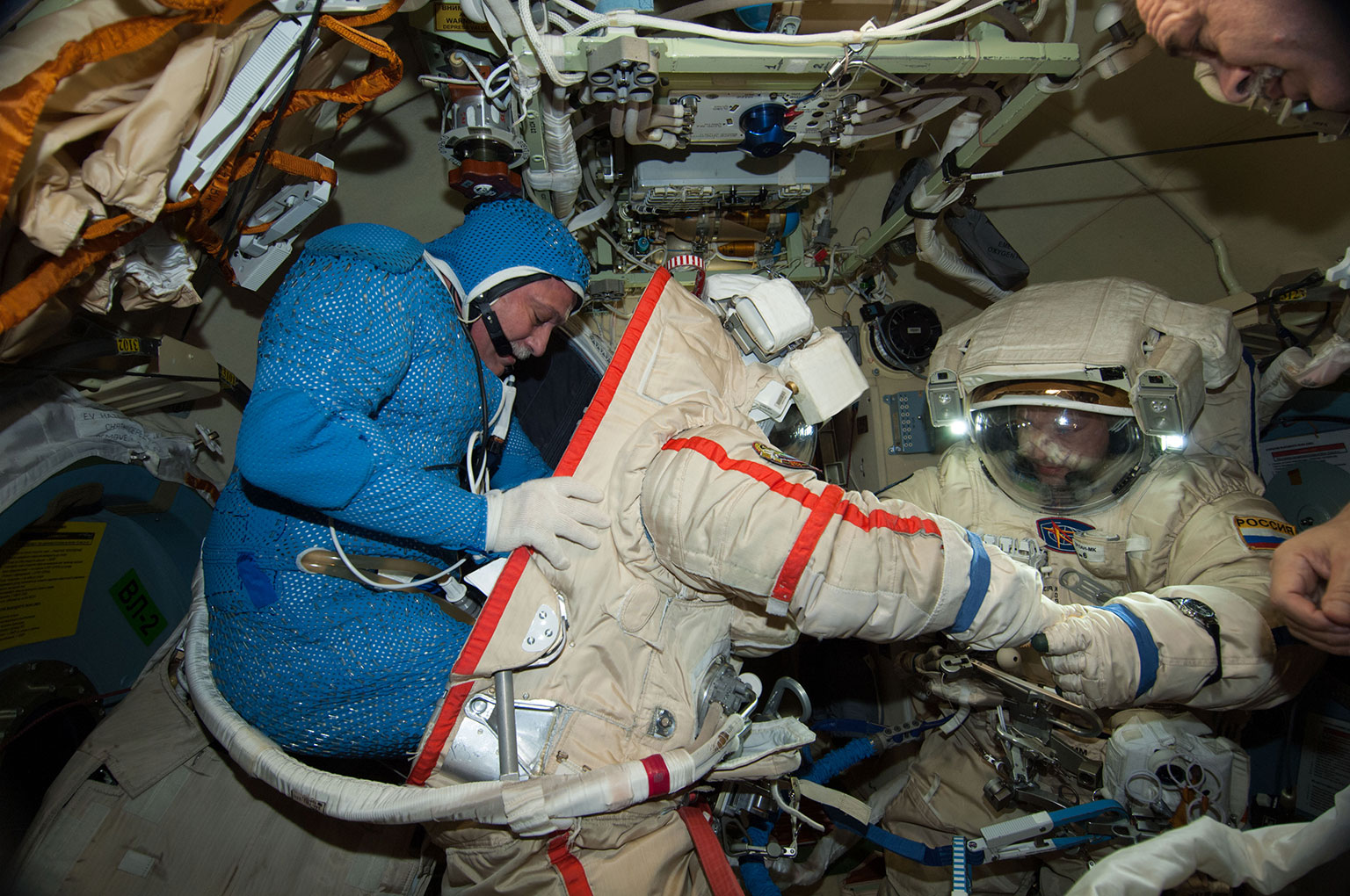
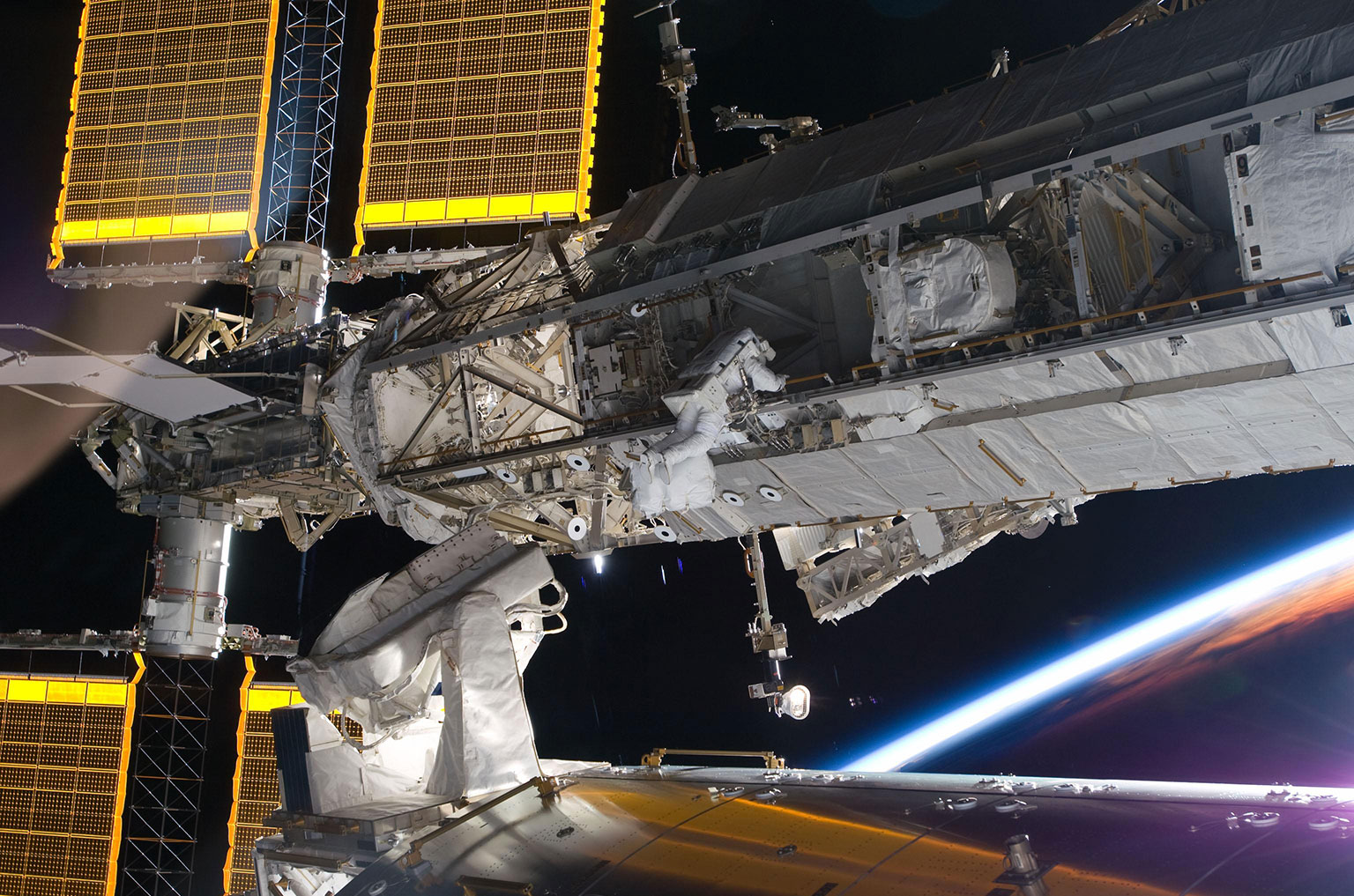
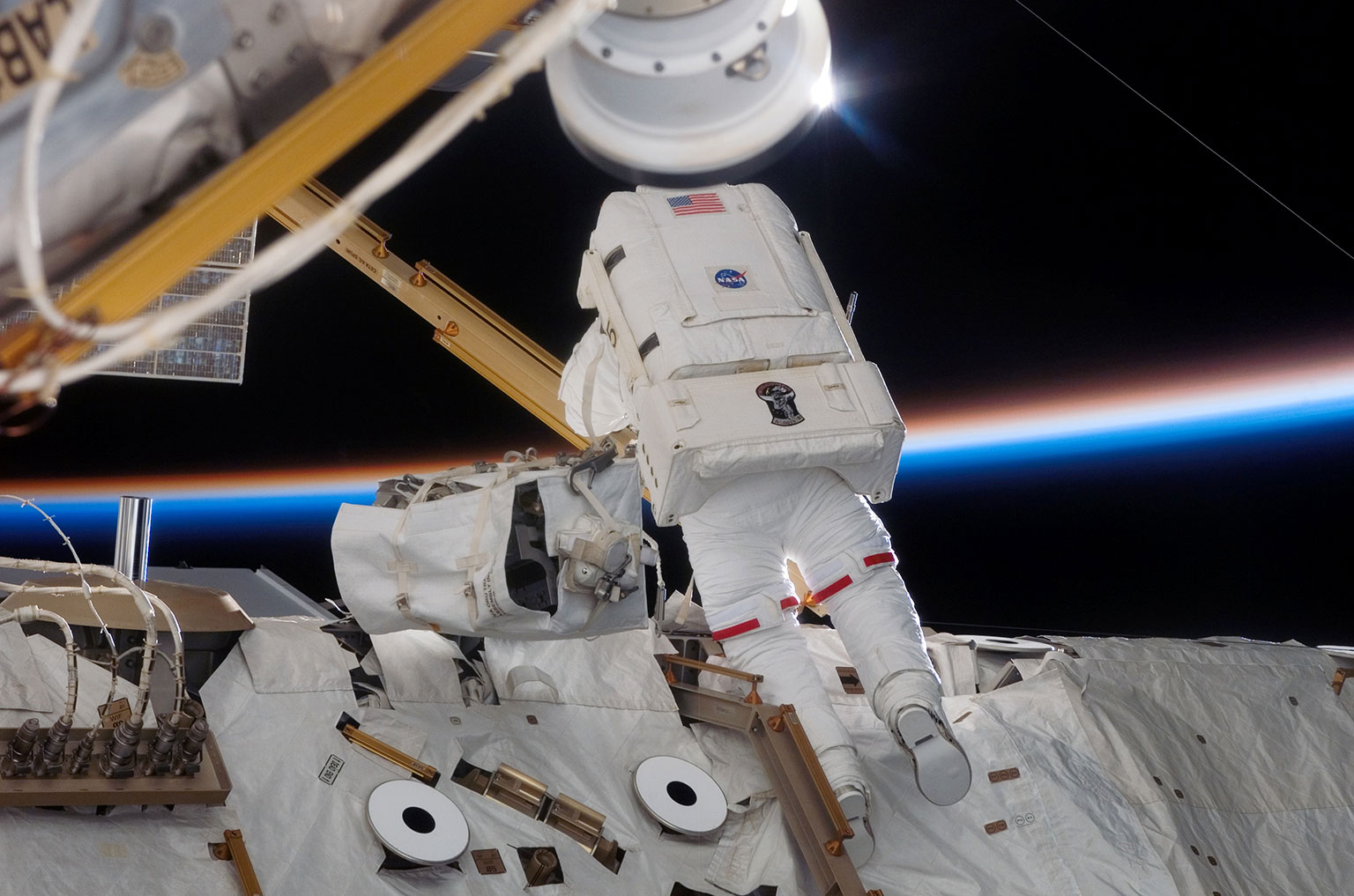
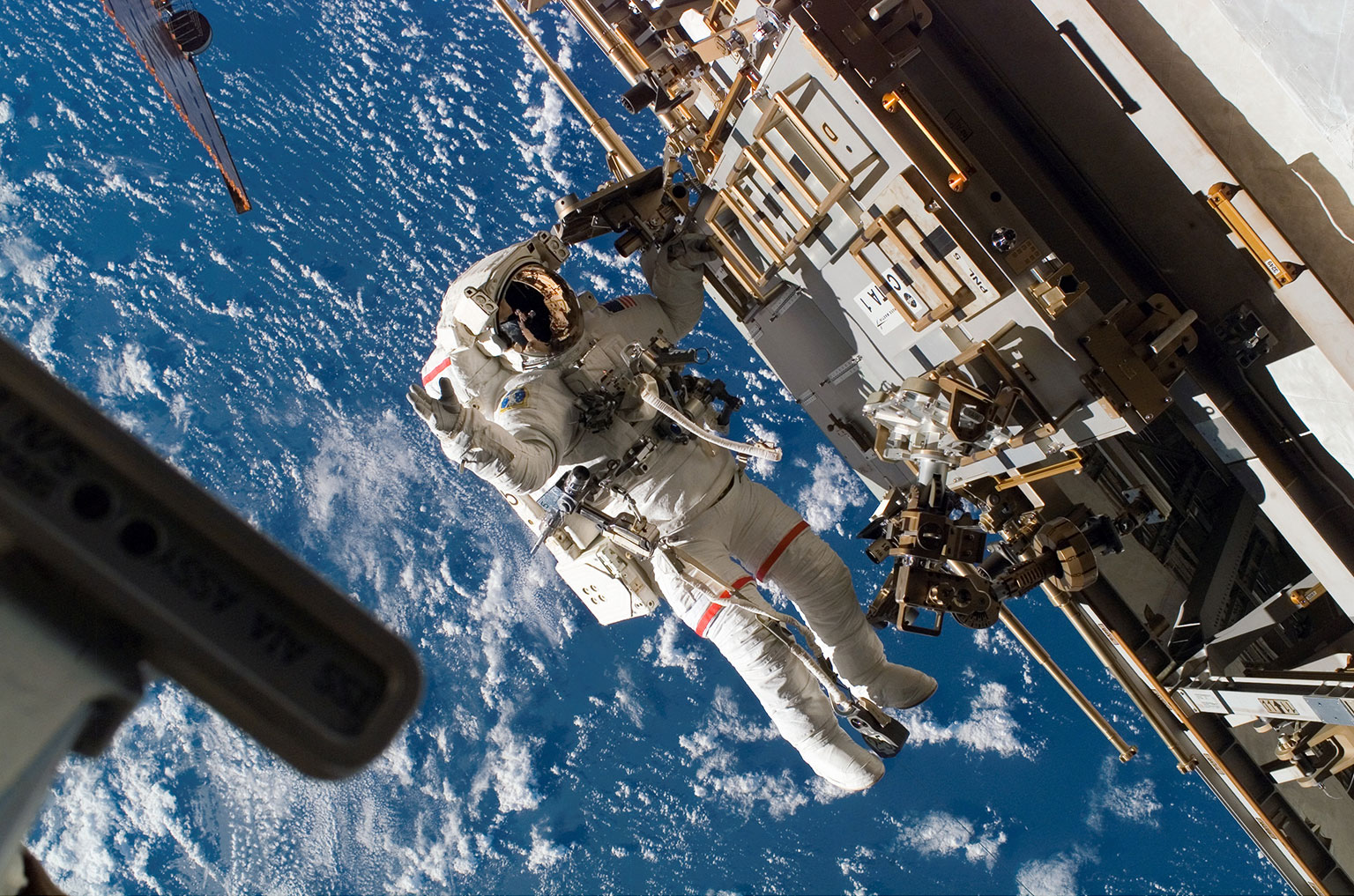
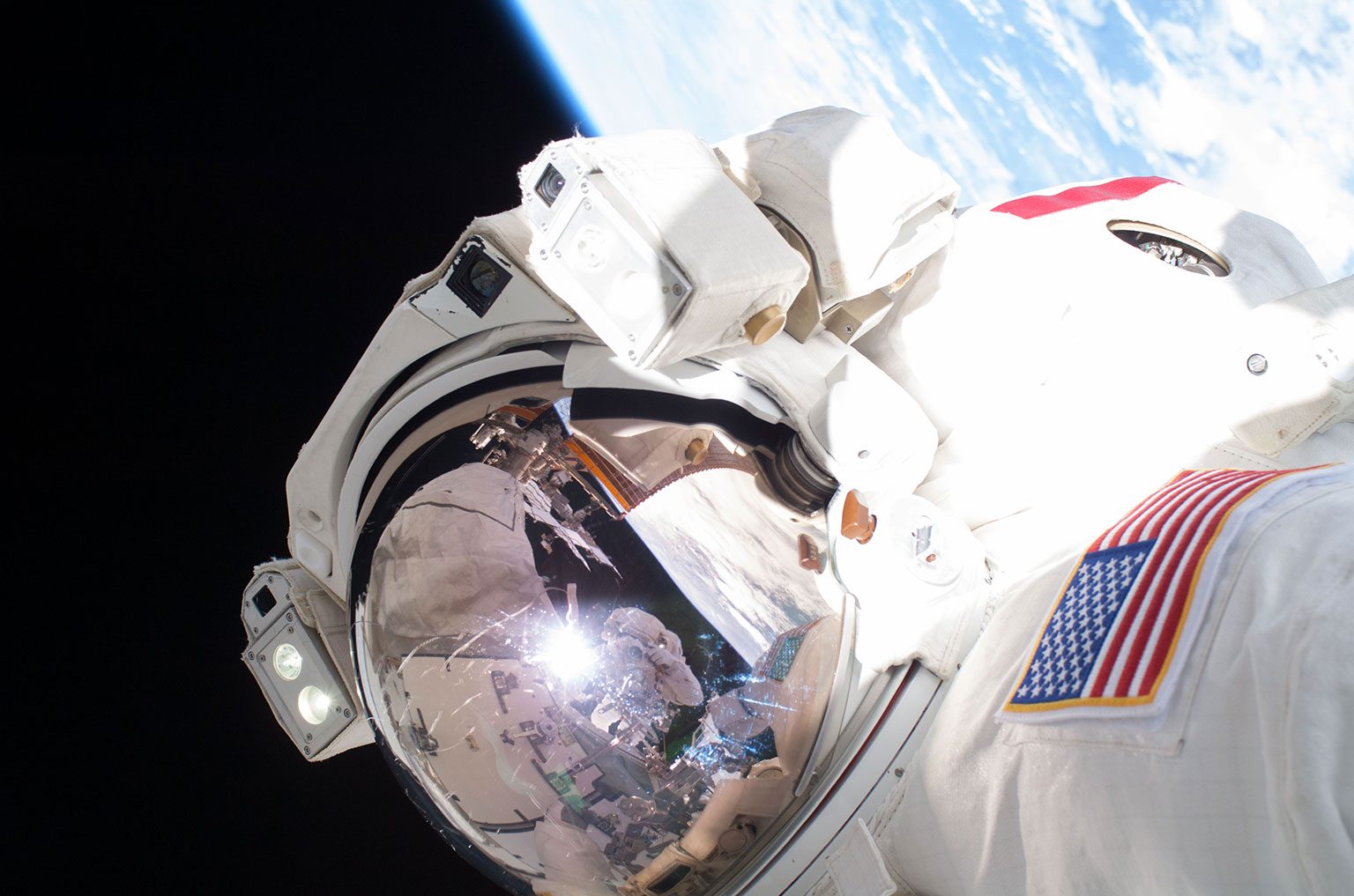
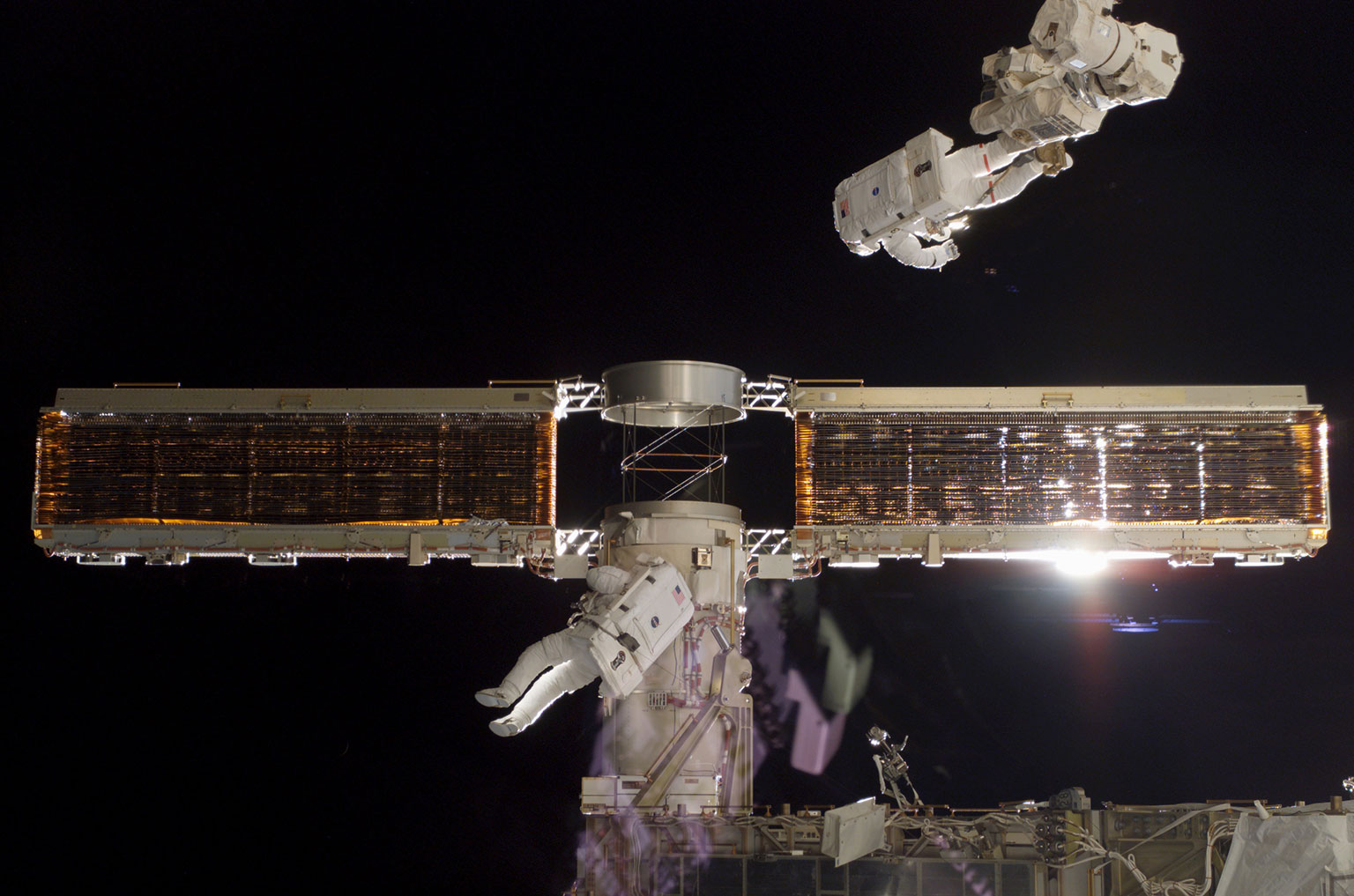
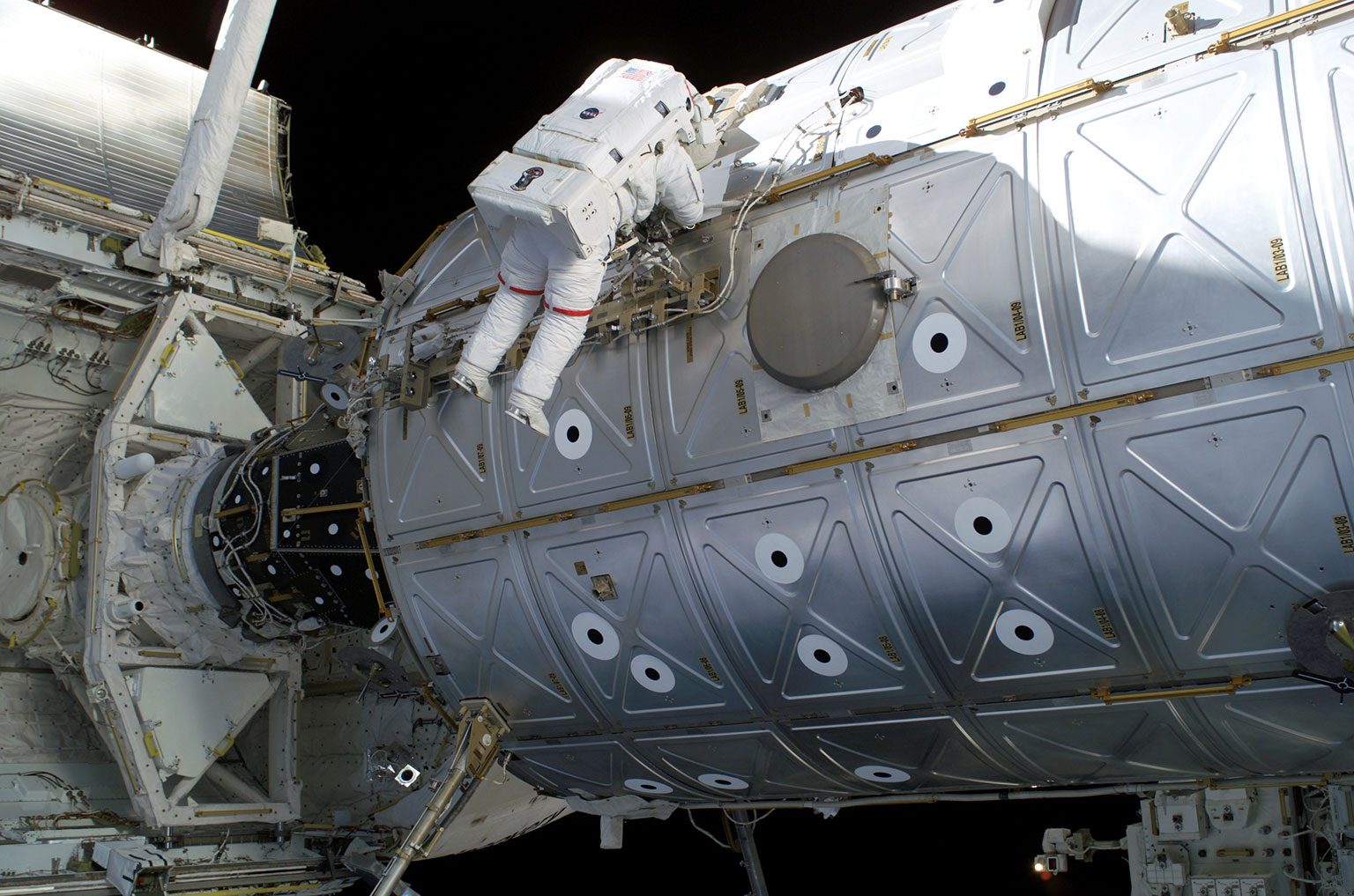
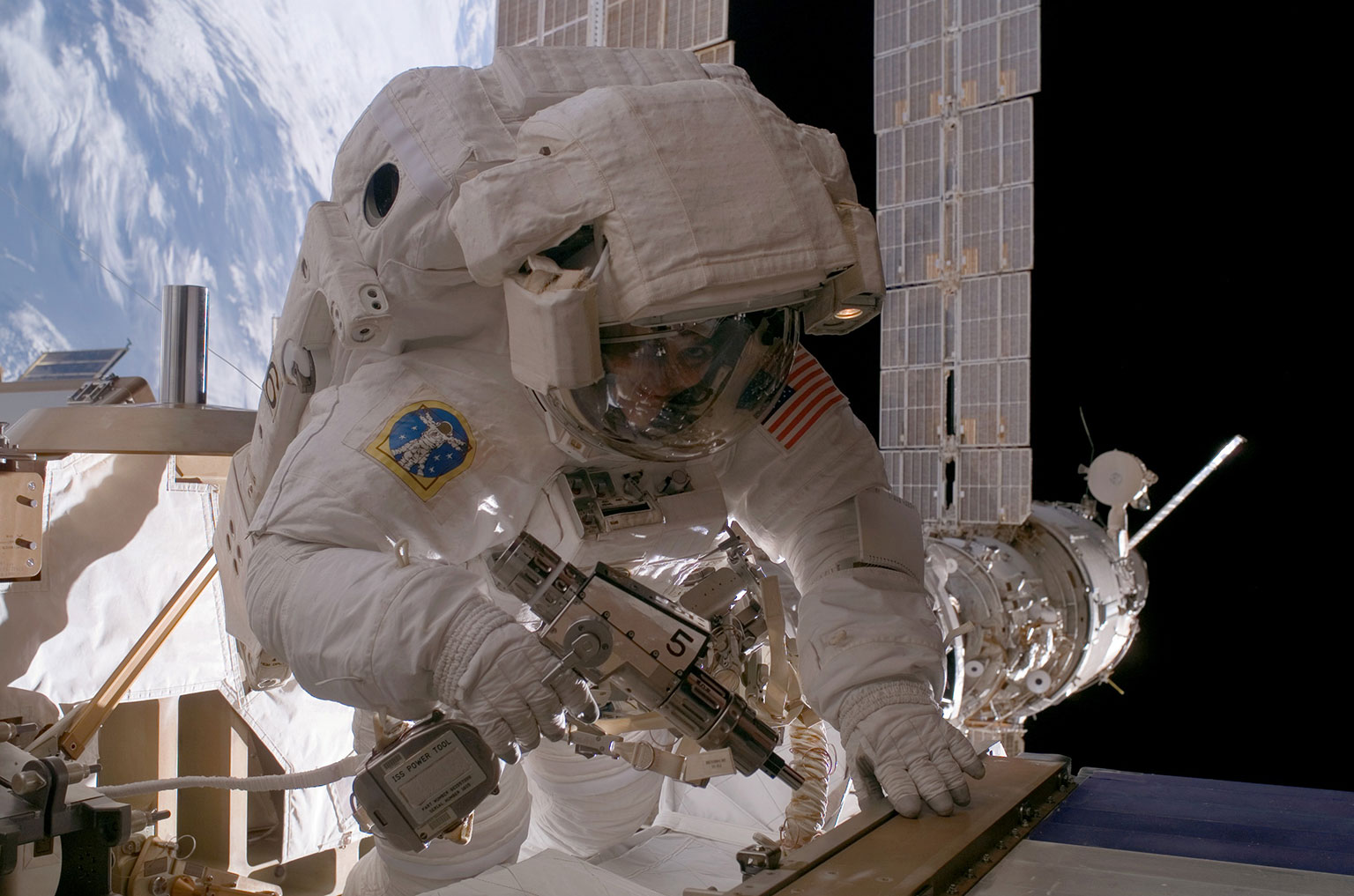
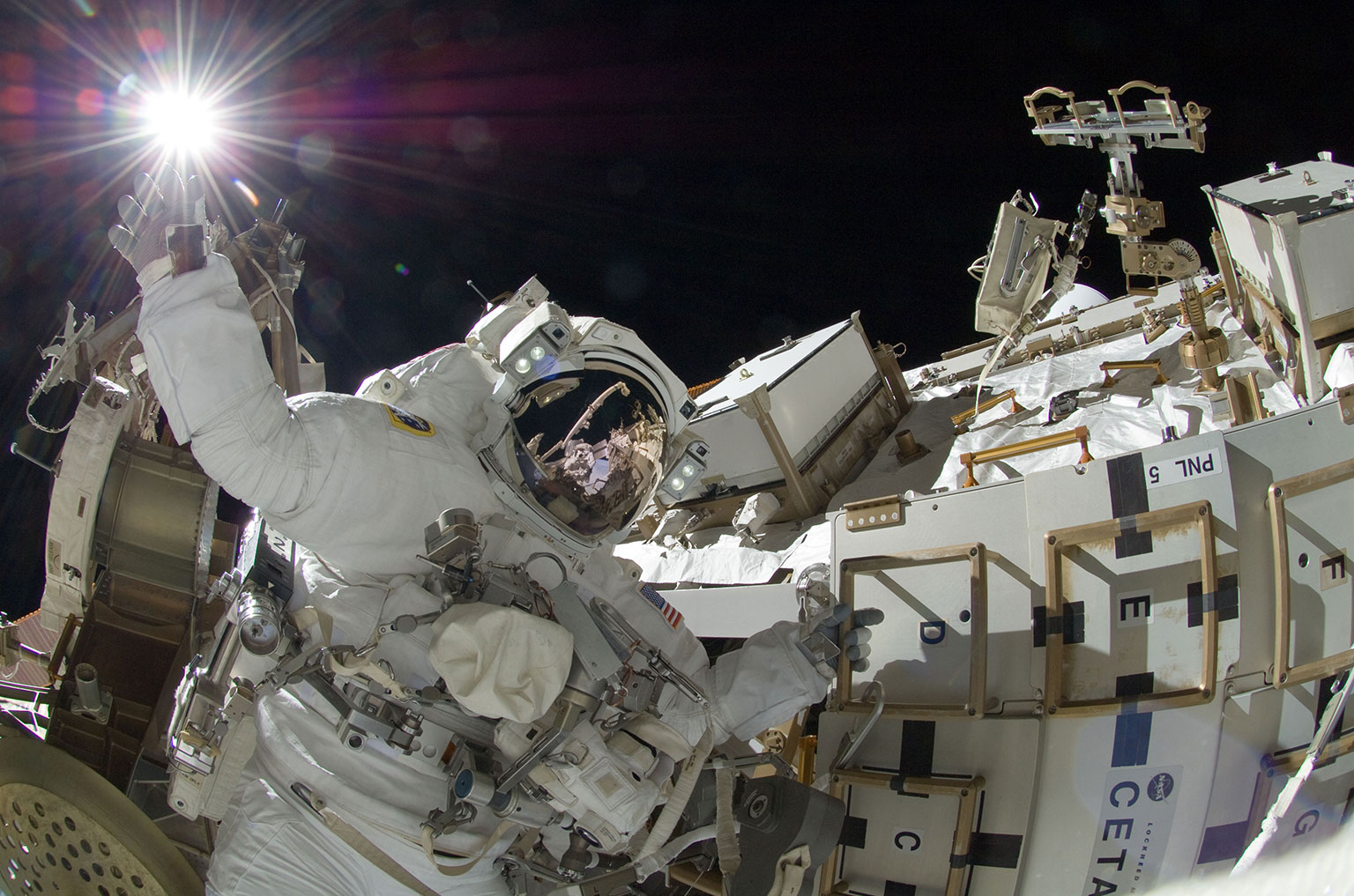
Since the first expeditions to the ISS, there have been 188 spacewalks. Depending on the purpose, each one tends to last between five and eight hours. Spacewalk missions include testing equipment, making repairs to the station, and conducting experiments in open space. Not only can it be terrifying, it can also be extremely physically demanding, in part because the suits are pressurized and inflated with oxygen.
The suit is like a latex glove that if you blow up, the fingers want to stick straight out, so it takes a little effort to grab onto things.”
– Astronaut Mike Foreman (The Telegraph)
For every hour they will spend on a spacewalk, astronauts train for seven in the giant pool in the Neutral Buoyancy Laboratory, where they perform virtual-reality simulations wearing gloves that allow their movements to appear integrated into a video of what they’ll be doing on the spacewalk.
Sounds of the ISS
Spacesuit Internal Pump
Onboard the ISS
STAYING CONNECTED
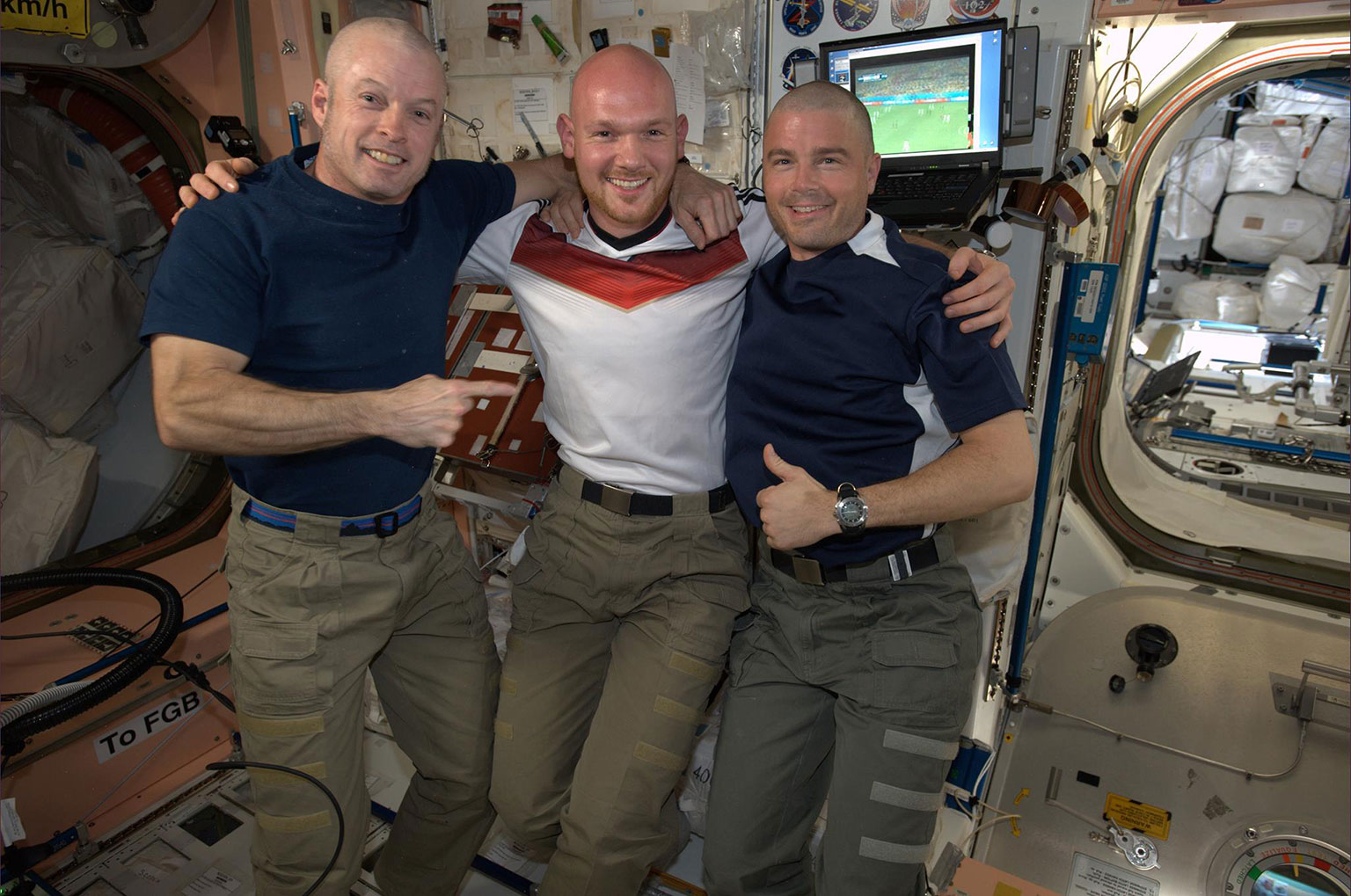
Astronauts watch the 2014 World Cup from the ISS.
Photo: NASA
No matter how incredible it is to float freely in space, to gaze at the earth during the sixteen sunrises or sunsets the crew experiences every day, there is, of course, an incredible longing for home and a need to stay connected. Luckily, they can call their families whenever they want from an IP phone and receive presents from loved ones during the holidays. And when it’s just them up there on the Fourth of July, straining to remember what BBQ smells like, sometimes they can catch a glimpse of fireworks on earth.
You miss literally everything. You miss water that flows from the faucet and doesn’t fly around you. You want to be surrounded by nature. You miss Earth, even though it’s always in front of you. All the normal everyday things that we often don’t value here. Up there, they become most important.”
BOEING CST-100 STARLINER
Beginning 2017
The Future of Passenger Space Travel
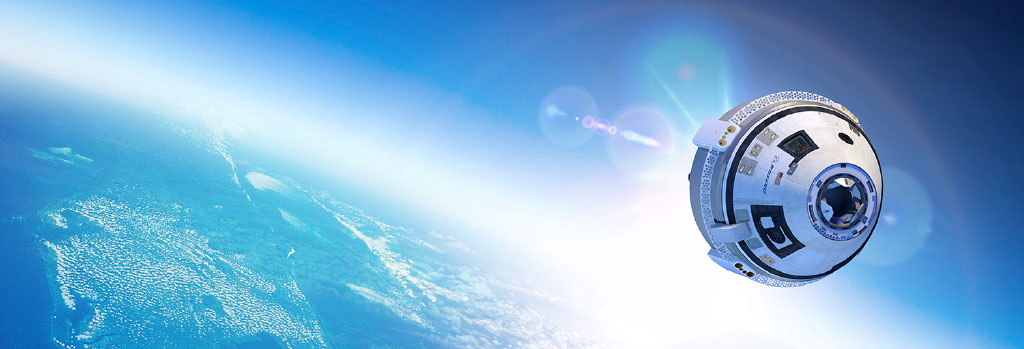
Last year, Boeing won a $4.2 billion contract to design and build a passenger spacecraft that will bring people to and from the ISS. This will be the first American passenger spacecraft since the space shuttle was retired, in 2011, and will provide an alternative to the Russian Soyuz. One day in the not-too-distant future, it may provide commercial rides to space.
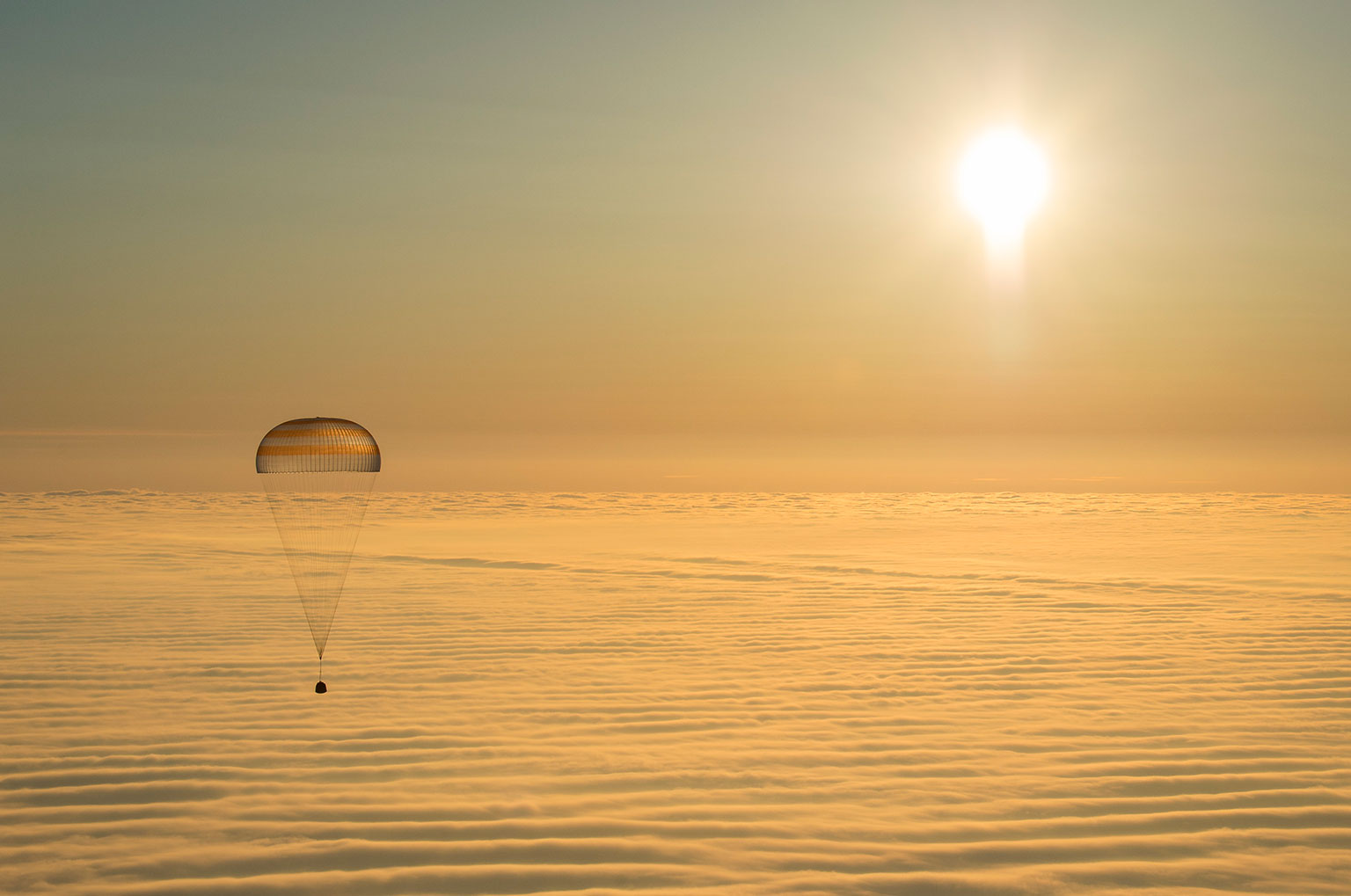
Expedition 42 Soyuz landing
Photo: NASA
It's kind of like going over Niagara Falls in a barrel, but the barrel is on fire.”
– Astronaut Dave Wheelock (ABC News)
The trip back to earth from the ISS is quite different from the six-hour, rocket-propelled first leg. This time astronauts get back into the Soyuz and, after separation, do a careful de-orbit burn to slow down and achieve exactly the trajectory that will allow the capsule to reenter the atmosphere safely. After that, the long fall back to earth takes less than 3.5 hours.
Reentering the earth’s atmosphere means reintroducing the body to the sense of its own weight. As the astronauts start to experience that feeling in the capsule, they’re pulled deeper into their seats, which helps them brace for landing. Parachutes deploy and rockets fire from below to slow down the descent, which culminates in a relatively soft landing and rendezvous with a search and rescue team.
Astronaut Rick Mastracchio is carried to the medical tent just after landing.
Photo: NASA
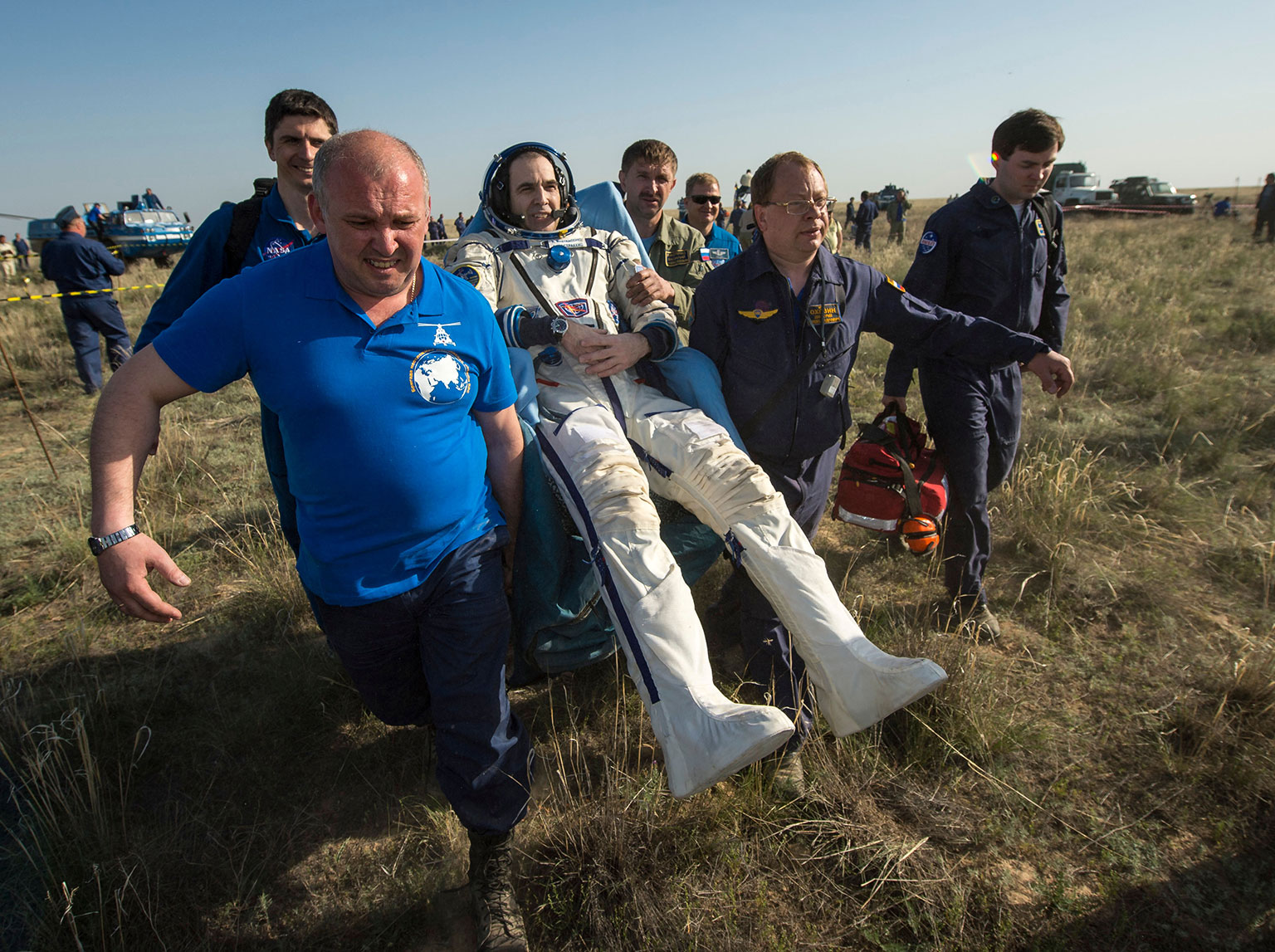
I’ve been telling people it’s like getting on the Tilt-a-Whirl, you know, that amusement ride — sitting on that for a couple of months and then getting off.”
And they are never the same, perhaps most of all because they have a new perspective on home, having seen Planet Earth from afar. As ISS astronaut Nicole Stott puts it: “I don't know how you can come back and not, in some way, be changed. It may be subtle. You see a difference in different people in their general response when they come back from space. But I think, collectively, everybody has that emblazoned on their memories, the way the planet looks. You can't take that lightly."