
The 20th president of the United States, James Garfield, studied at Williams College in the 1850s with a renowned philosophy professor named Mark Hopkins. Later, Garfield famously quipped, “The ideal college is Mark Hopkins on one end of a log and a student on the other.” This aphorism distills learning to the simple joy of Socratic dialogue. Some have begun to consider AI a partner in this, one of our key endeavors as a species. “We’re inherently curious creatures,” said Ben Gomes, SVP, Learning & Sustainability at Google. “Learning is what makes us human, what makes us special.”
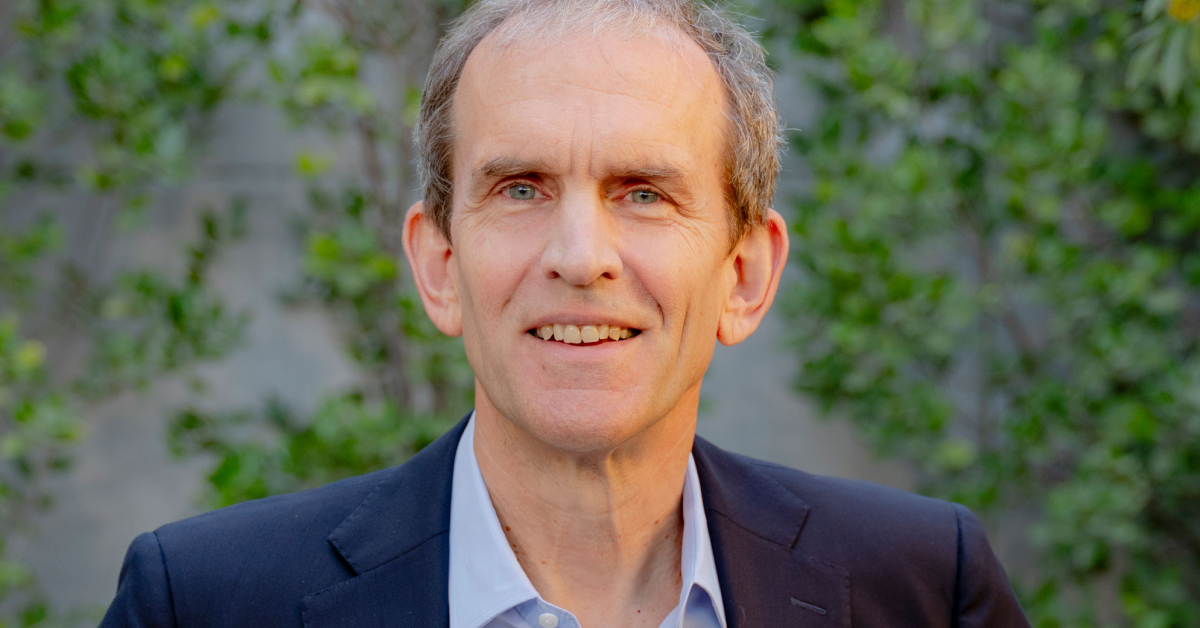
When I spoke with Gomes about how the company is approaching learning, he displayed the boyish demeanor of someone who is perpetually fascinated by life. He’s prone to doing deep dives on far-flung topics, from geology to woodworking. He views AI as a form of “augmented intelligence”—technology that entices more people to do the same, by making the discovery of knowledge more accessible and engaging. Lately, Gomes has been guiding the effort to install a foundation of pedagogy and responsible learning into Google’s suite of AI tools, including LearnLM. Google’s internal pedagogy and learning sciences team conferred with a range of experts, such as researchers and practitioners, to identify fundamental principles that support human curiosity. The key findings were that the system must be encouraging, make learning as active as possible, avoid overwhelming people with too much information, and adapt to the learner’s goals and needs.
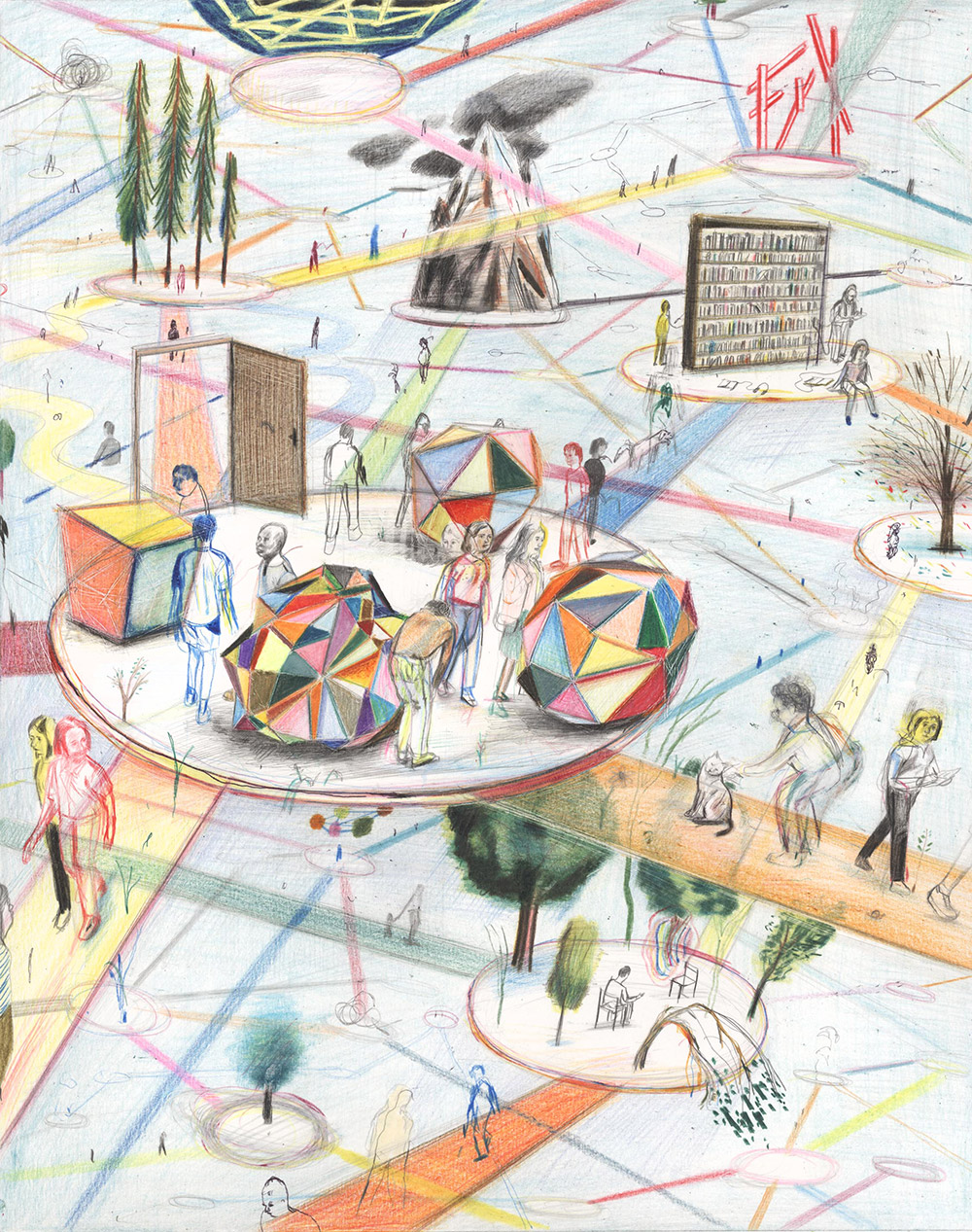
Like a tinkerer who’s been busy in his workshop, Gomes showed off a new Google Labs experiment called Learn About, which breaks down and explains large and complicated topics. After typing in a prompt, “Tell me about the history of writing,” I see an AI-generated timeline, with images and explanations of cuneiform, Linear B, and the Rosetta stone. A related YouTube video is highlighted. By hitting buttons, you can “Simplify,” “Go Deeper,” or “Get Images.” I’m guided to related questions, such as “How were hieroglyphics translated?” Instead of being confronted with blocks of text and links, I feel as if I’m walking into a well-curated multimedia museum exhibit that has a deliberate flow, that orients you to a topic and gives you multiple paths through it. Gomes said the intention was to organize large topics better and present them more richly at the same time.
One of the most effective ways to learn is also one of the oldest: a conversation. Google is working on a feature that will allow you to “raise your hand” and ask a question during a YouTube video. The tool will generate an answer to your question based on the material that’s being discussed. Another tool in development, called Illuminate, can transform any academic paper into an audio output that sounds a lot like a conversation. Illuminate doesn’t just turn text into speech; two different voices are reacting to and discussing what’s important, new, and interesting in the paper. So a doctor, a Ph.D. student, or just a curious civilian can follow along and keep up with the latest research in any field while doing the dishes.
A surprising aspect of simulated conversation is that some people report being more comfortable asking an AI a question than they do a human, perhaps because there’s no chance of judgment or embarrassment. This dynamic highlights how a significant part of the learning experience is guided by emotions, not only by intellect. Learning can be daunting; everyone appreciates encouragement. But what it means to be “encouraging” as a pedagogical principle remains a balancing act; one that is fully on display with ShiffBot, a collaboration between Google and Daniel Shiffman, a computer science professor at NYU who has a popular YouTube channel. ShiffBot is a virtual coding tutor that runs in the web browser alongside the code editor that Shiffman uses in the classroom and in his videos. The ShiffBot chats in a similar tone to Shiffman’s: warm and supportive. When students get stuck, ShiffBot can point them to the moment in a video when Shiffman discusses a similar issue. One explicit goal in designing this interface was to make the conversation with ShiffBot “a safe space to make mistakes.” And not only for learners. When he’s teaching with the coding tools in his videos, Shiffman himself sometimes triggers error messages, hits bugs, or makes mistakes in his videos, which he handles with good humor. The bot, too, will inevitably go astray at times. So the goal is to learn from mistakes, no matter where they come from—a good life lesson, not just a good teaching strategy.
While it’s typical to think of learning as confined to the classroom and formal education, AI joins previous information technologies to make learning more accessible to people around the world and at all stages of life. Anna Mills is a community college writing instructor in California who also works as an adviser to tech companies. She lauds the “delightful ways” that self-directed adults can turn to AI as a learning companion. “As a lifelong learner, I feel like I have more freedom to experiment,” she says. “For example, last night I was listening to a story by [Jorge Luis] Borges and I needed more context. So I could talk to an AI about his biography and politics.” Mills says she also uses AI to challenge herself and assess her knowledge. She might upload a scholarly article she’s reading and then prompt the AI to ask her questions about it—again, simulating a conversational mode.
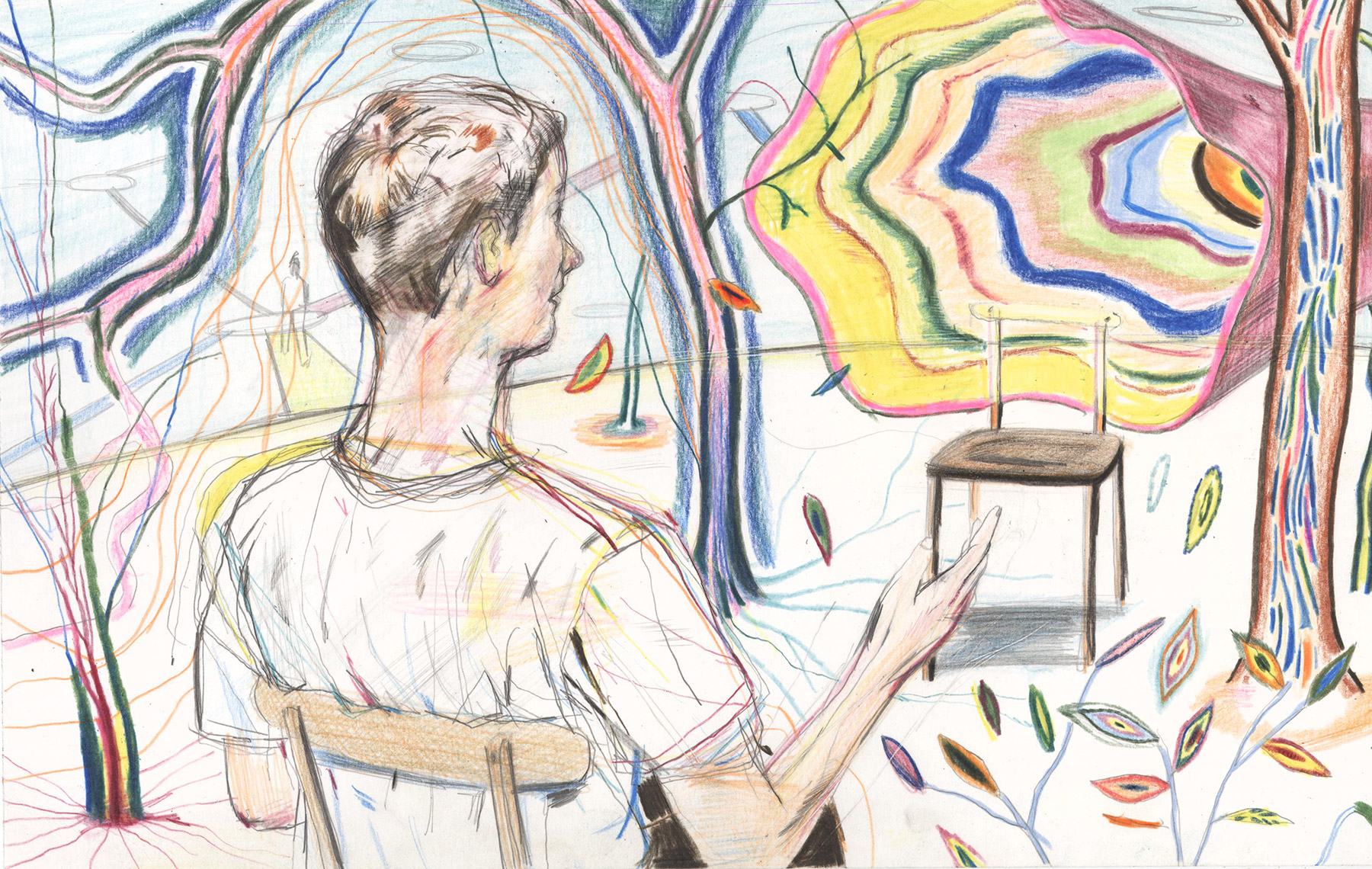
Mills works with fellow educators to develop their AI literacy and apply it to their own pedagogy. She says the ultimate goal for herself and her fellow teachers is to empower students to engage in AI as lifelong learners: “The idea is to spend a bunch of hours with it, try a million things. Be ready for it to fail, but continue to keep an open mind to it as a thought partner.” This approach includes making students aware that the technology has flaws and shouldn’t replace the enjoyment of, say, talking over what you’re reading with a friend. “It can extend rather than replace the things we would otherwise do to build our thinking,” Mills says.
The strategy of putting learners in the driver’s seat and making learning for its own sake even more appealing could be AI’s most promising educational application. This is a classically progressive stance that views AI as a new palette with which the user can paint whatever picture she wants.
“Clearly, AI is opening up an entirely new world for education,” said Andreas Schleicher. He’s the director for Education and Skills at the Organisation for Economic Co-operation and Development (OECD). In this role, he works with government ministers and education leaders worldwide to improve quality and equity in education. The key, he said, is ownership. “AI can give learners greater ownership over what they learn, how they learn, where they learn, and when they learn.”
The learning potential of AI will be realized, Schleicher believes, only when it’s paired with the best ideas and educational practice. For a reality check, he pointed out that the results of PISA, the international exam program administered by the OECD, demonstrate that classrooms using the most technology often have lower outcomes in core subjects. “That’s not necessarily a bad reflection on AI, but on our capacity to use it effectively,” he said. “AI is not a magic power. AI is just an amazing accelerator and an incredible amplifier. It will amplify good ideas and good educational practice in the same way it amplifies bad ideas and bad practice.”
Just as Google has done in building Google Classroom over the past decade, the countries leading in the integration of AI—Korea, China, Estonia—are working closely with teachers from the outset in AI development, Schleicher said. “These countries all stand out by having teachers not just implement AI-based tools but be actively engaged in their design and the research around them.” Along the way, teachers are modeling a growth mindset for their students. “Educational institutions need to become organizations where everyone learns from and with each other, and that’s exactly what we see in the countries advancing fastest.” Engaging teachers in the design and development of AI tools, Schleicher says, will be essential for implementation.
One of the overlooked aspects of AI and learning is, clearly, related to the emotional component of learning. Specifically, joy. “AI can make learning fun,” Schleicher said. This is a big theme for Gomes as well: “We want to bring back the pleasure of learning. The feeling where it clicks and everybody has that joy.”
The pursuit of fun is also something that guides Sal Khan, who built Khan Academy, a nonprofit library of educational videos that now has 165 million registered users. Khan Academy is piloting Khanmigo, an AI-powered tutor and teaching assistant. He told me that a subtle dimension of the work has been developing a voice for AI instruction that inspires curiosity: “How do you motivate the student, how do you pull them into the content? How do you keep them engaged?”
To be sure, there are economic and social barriers to educational access that can never be overcome with technology alone. But, at least with this set of pedagogically informed tools and applications, the potential for AI to empower lifelong learners is clear. The information in libraries and archives has become nearly infinite and universally accessible, through platforms like Google Search and YouTube, while this new technology is adaptable and conversational and awakens a new sense of wonder.
Gomes and other close observers and creators in the world of AI hope that the rising generation of applications allows even more people to learn independently, and find deeper enjoyment in the process. “I hope for a world—and I feel this myself—where people find the whole world interesting,” Gomes said. “This unbelievable oyster with pearls of knowledge that people are eager to go after.” It is true that humans and algorithms learn differently; humans first experience the physical world with their senses, then learn language, whereas machines start with language. AI has the potential to help us appreciate our own learning and ability to understand—a trait that is uniquely available to us as a species that no technology, no matter how good it gets, can ever replace.