

In just a few short years, AI has gone from pilot program to classroom staple. said they now use AI in their studies, according to the Digital Education Council’s 2024 Global AI report.
“I’ve talked to a lot of students,” says Sal Khan. “All of them are using it.” And, he says, that’s a great thing.
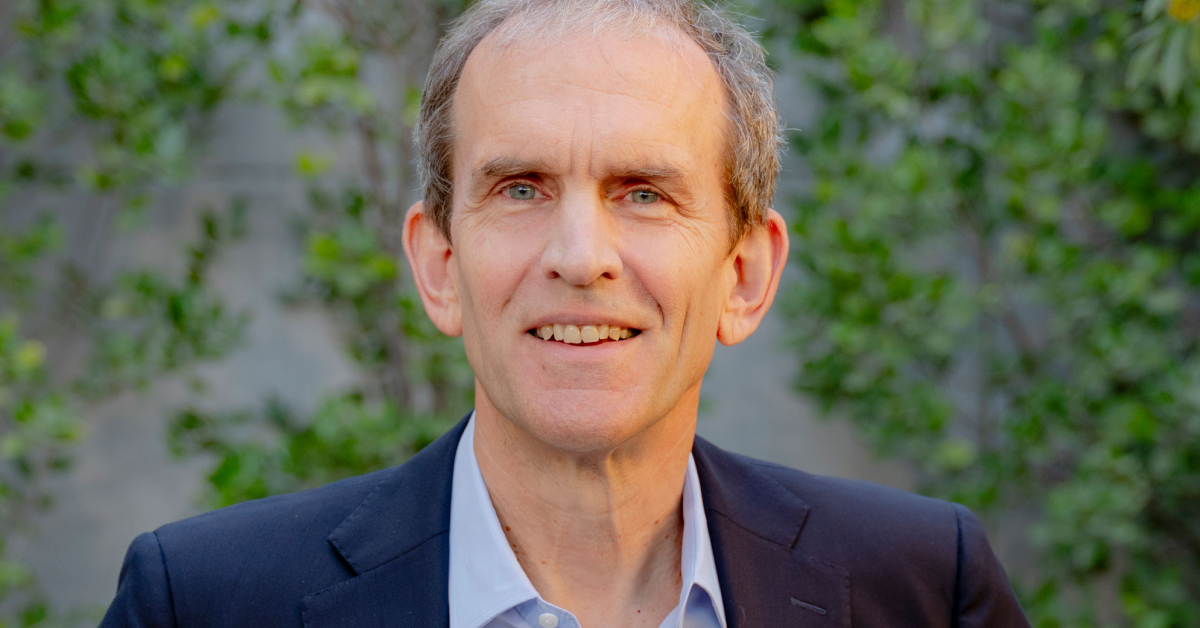
Khan is the founder and CEO of Khan Academy, the nonprofit educational platform he started in 2008 after the viral success of his bite-size math tutorial videos on YouTube. The platform spent more than a decade democratizing education through a library of free video lessons before Khan turned his attention to AI. An early proponent of agentic AI’s capabilities to customize, tutor, and monitor student progress, Khan’s AI-enhanced learning platform will be used by 2 million students and teachers this year alone. We spoke to Khan about the evolved classroom and how to prepare the next generation for our AI-driven future.
Our conversation has been edited for length and clarity.
Leigh Belz Ray Let’s start with the broad future vision: What does AI-augmented learning look like versus the traditional classroom experience?
Sal Khan I always like to take a step back and think about—AI aside—what does ideal learning look like? If you were to go back 2,300 years, Alexander the Great would have had Aristotle as his personal tutor. And what would he have done? Well, he would have personalized it. If young Alexander was ready to speed up, he would have sped up. If young Alexander was having trouble, he would have doubled down.
He would have been able to motivate based on what was engaging for the young prince. And he would have been constantly assessing the student, not just on the things that you could measure in, say, a multiple-choice exam, but on other traits like the ability to communicate, sense of humor, and resilience.
Fast-forward to now, and we’ve had to make a ton of compromises in the name of mass public education at a reasonable cost. Everyone has to move in lockstep. AI holds the potential for more personalization, customization of content, and richer forms of assessment that can broaden but still be reasonably standardized.
Belz Ray If every student will have the ability to learn at their own pace, how will the classroom experience and the role of teachers change?
Khan When I reflect on the teachers that made a real difference in my life, I remember the conversations. They looked in my eye, they believed in me—or they told me that I needed to step up. It was them being coaches in the best sense of the word.
Things like grit, resilience, personal development, social-emotional skills, these things don’t show up in your SAT score. Your SAT score might be a by-product of some of them, though. And so in a world where teachers get things taken off their plate in terms of grading papers, lesson planning, and doing the minutiae, it will help the teacher be that much better of a coach.
And, historically, there was a time in the 19th century, when textbooks came out, that some teachers were up in arms. They thought that they had to be the source of the knowledge. And textbooks had them questioning: “What’s my role?” Well, now there’s not a teacher alive who doesn’t find some value in a textbook.
Belz Ray The other side of the equation is how this changes learning goals for the student. If large language models are able to handle complex problem-solving, what skills become more central for students to graduate with?
Khan I’ve called myself a “traditionalist plus.” I actually do think that math, reading, writing, and content knowledge—the context of how things fit together—is as important as ever, maybe more important. We’ve seen over and over again, the people who have that knowledge are better users of the internet, better users of search. And they’re also better users of AI.
The one thing we’ve seen is how many students have almost atrophied in terms of the ability to ask good questions. And some of it is they’re not used to asking the questions, but some of it is they don’t have enough context to be able to ask a good question.
I also think there’s going to be just a general muscle, which I’ve called “cool entrepreneurship.” The tools are evolving so fast. And the people who are going to do well aren’t afraid to say, Hey, maybe I can take tool A, mix it with tool B, and then do a layer of my secret sauce on top of that and get an output that’s way better than before.
And then some of the things that are old school—that have always been super important but have never shown up on a transcript—are communication skills, sense of humor, salesmanship, relationship building, and trust. They’ve always mattered, but they’re going to matter even more in an AI world.
Belz Ray The idea of parents looking to “future-proof” their children by encouraging high-agency skills over conformity has been in the news recently. Can you talk a bit about how we can encourage learners to use AI to be more well-rounded?
Khan Step one is to have really solid traditional skills. And step two is encouraging creative, not prescriptive, use of these tools. I’ve seen, over the last 30, 40 years, people who are just training their kids to jump through the next hoop perfectly. But the hoops are gonna change. And when [those kids are] in their mid-20s and 30s, their parents aren’t there to tell them which hoop to go through, much less optimizing how they jump through them.
When I was in college, I did some improv comedy, and now I think about how valuable that was. Because we’re all going to have to improv our way in the next 10, 20 years. That’s really the answer: more improvisation, more agency, more learning to engage with other human beings, even when it’s hard. I think the improvisers, the risk-takers, and the people-people are going to do really well!
Belz Ray What are some myths you’ve heard about the role of AI in education that you’d like to dispel, based on your experience scaling Khan Academy’s platforms globally?
Khan One of the myths is that professors think they can detect AI use. You can’t. There are some companies that claim they have AI detectors, but it’s snake oil. I’ve talked to a lot of students who are getting falsely accused.
A second is that I think schools are lying to themselves when they say that they can just have an honor code and everyone’s going to follow it.
And then the last myth is that somehow AI is going to undermine everything. But, as we talked about, you can [focus on] in-person learning, push the students to do more, and use AI tools to make the process transparent.
The last thing I’ll say is there’s no running away from this. It’s there. So you’ve got to adapt—you’ve got to improvise.