Dialogues Magazine

See the work

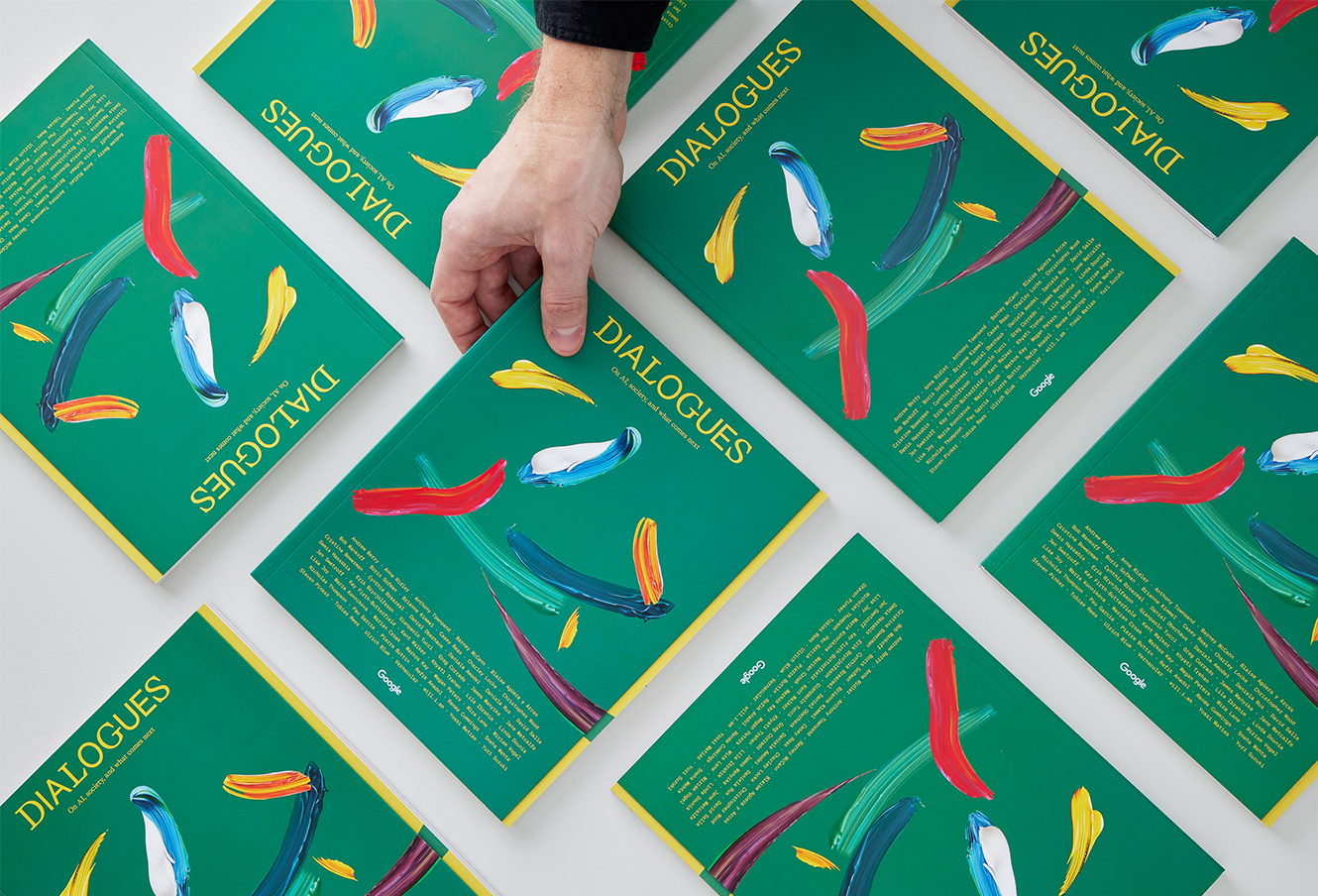
Dialogues is a print magazine that goes both broad and deep on the vast impact of AI.

Much of the current conversation around the rise of artificial intelligence can be categorized in one of two ways: uncritical optimism or dystopian fear. The truth tends to land somewhere in the middle—and the truth is much more interesting. Produced alongside Google, we assembled a diverse masthead of journalists, technologists, artists, scientists, and academics to engage in thoughtful, nuanced conversation on AI, society, and what comes next.

See the results

The Story

Answering the most essential questions

How can we maximize the possibilities of AI, while mitigating its risks? How might it empower creativity? How should it be regulated? And why can’t it consistently beat us at the most human game—poker? In the inaugural issue of Dialogues, the answers—positioned in response to seven galvanizing questions—are insightful and considered.

AI is the “biggest new thing humanity has discovered in years,” The Atlantic’s CEO Nicholas Thompson writes in the issue’s introductory note. These stories are meant to help readers explore, understand, and get even more curious about the technology, and serve as reminders that as long as we’re willing to confront complexities, there will always be something new to discover.

Dialogues Magazine — Issue 1

Form

Designing a Magazine
for the Moment

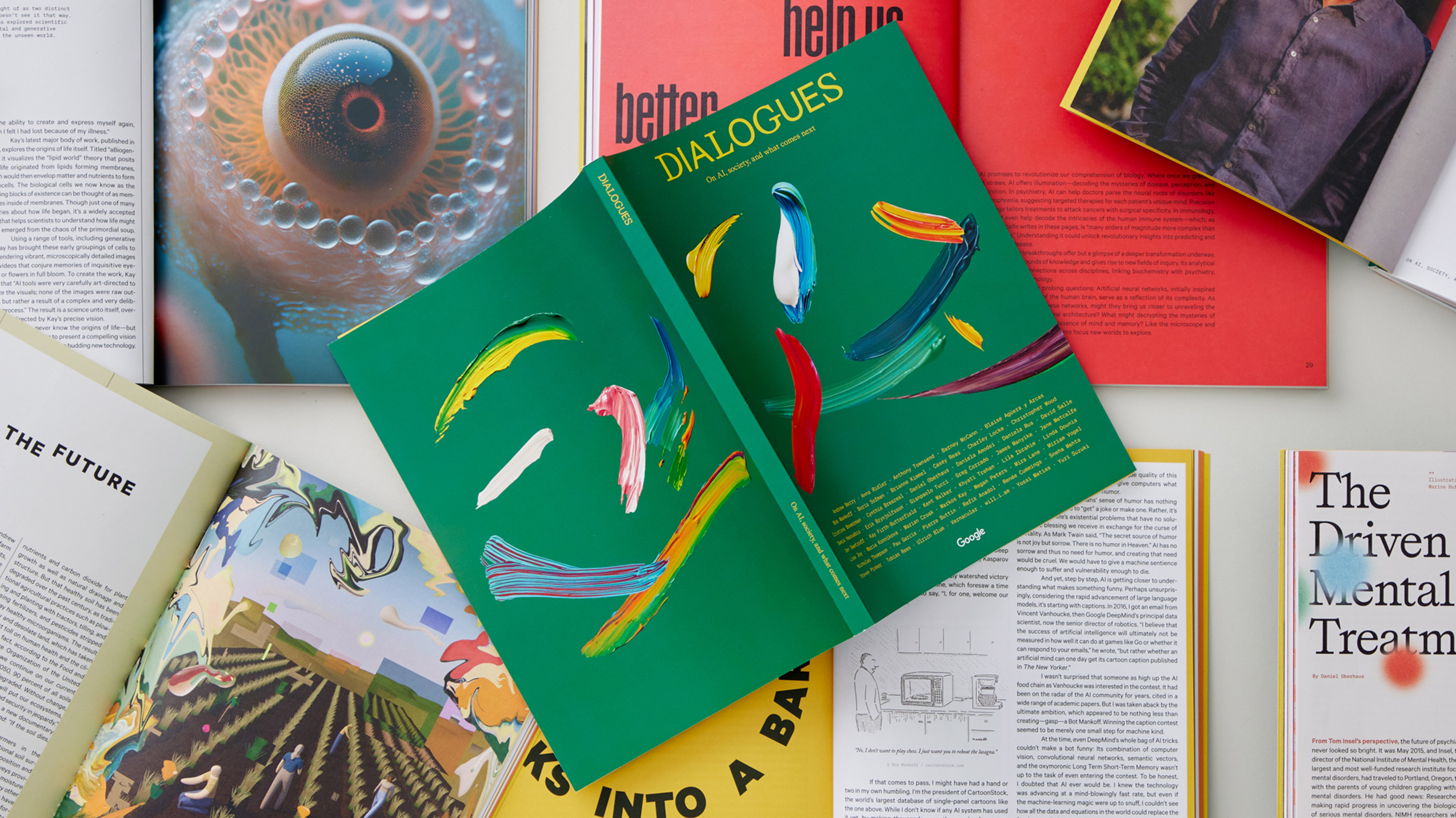
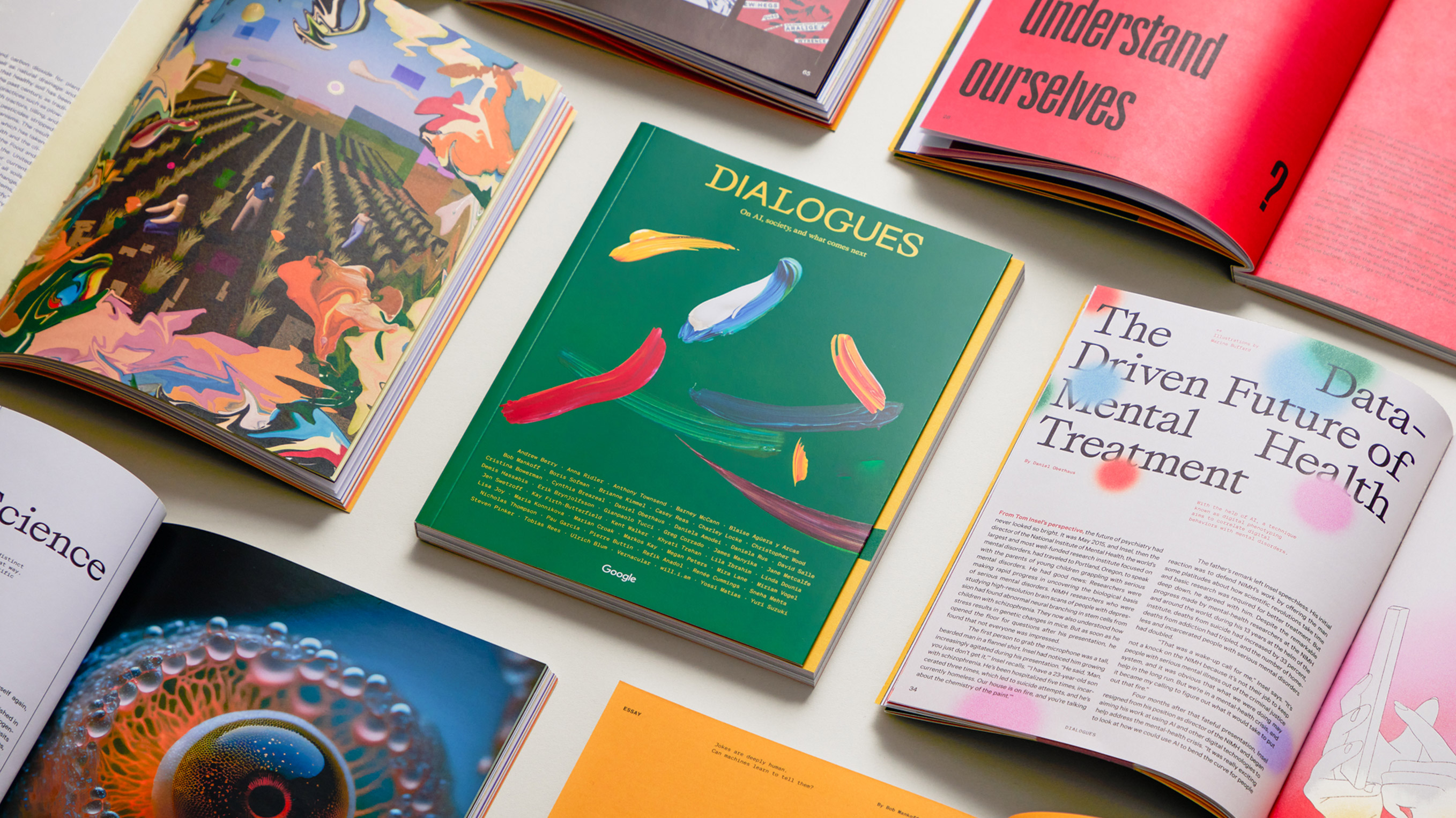
In committing the best thinking about AI to print, we strove to make Dialogues a keepsake object that was both durable and highly considered. The result? An entirely bespoke system of layout, color, type, and visuals to allow a wide range of stories to live in harmony.

Stack of Dialogues magazines
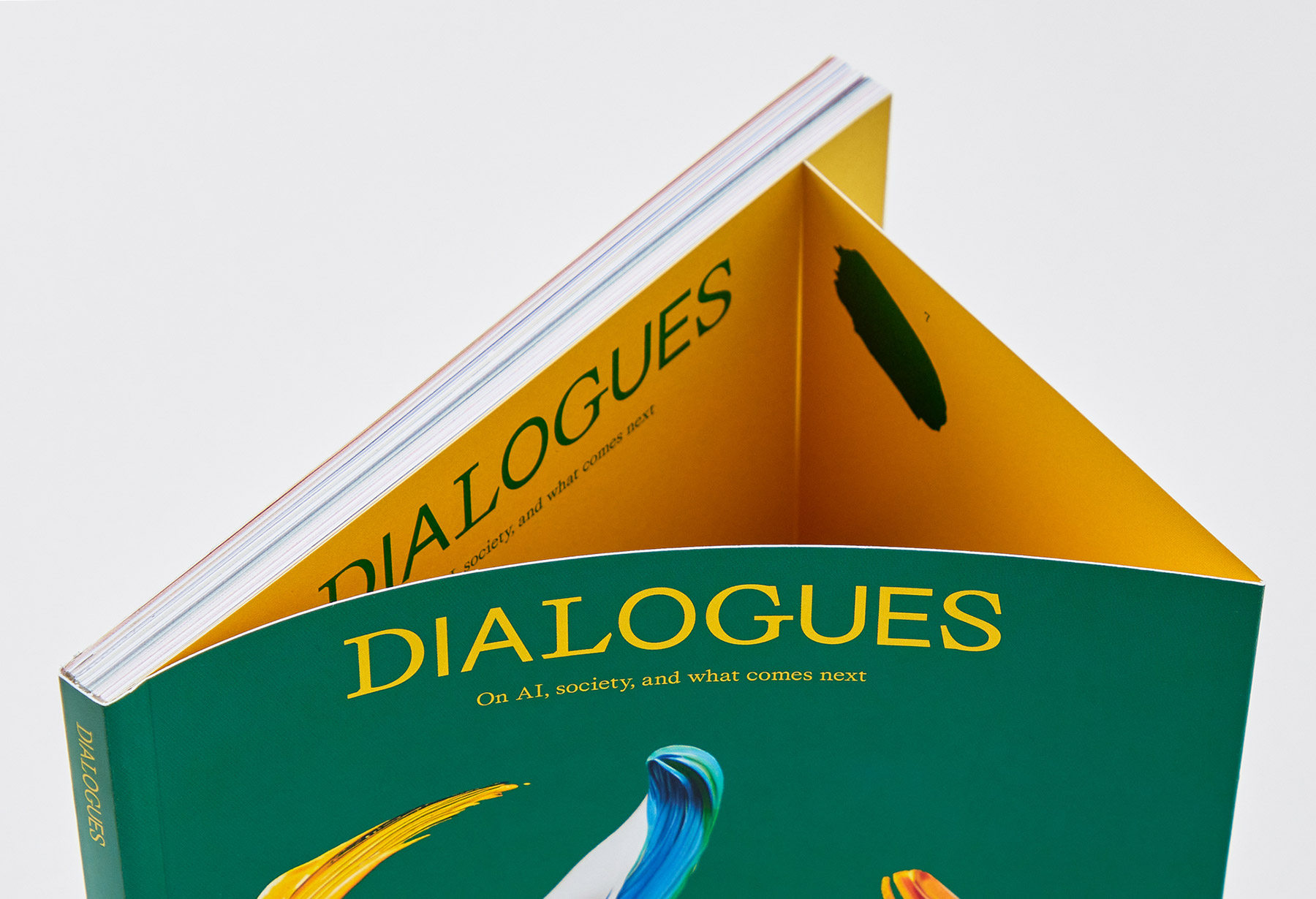
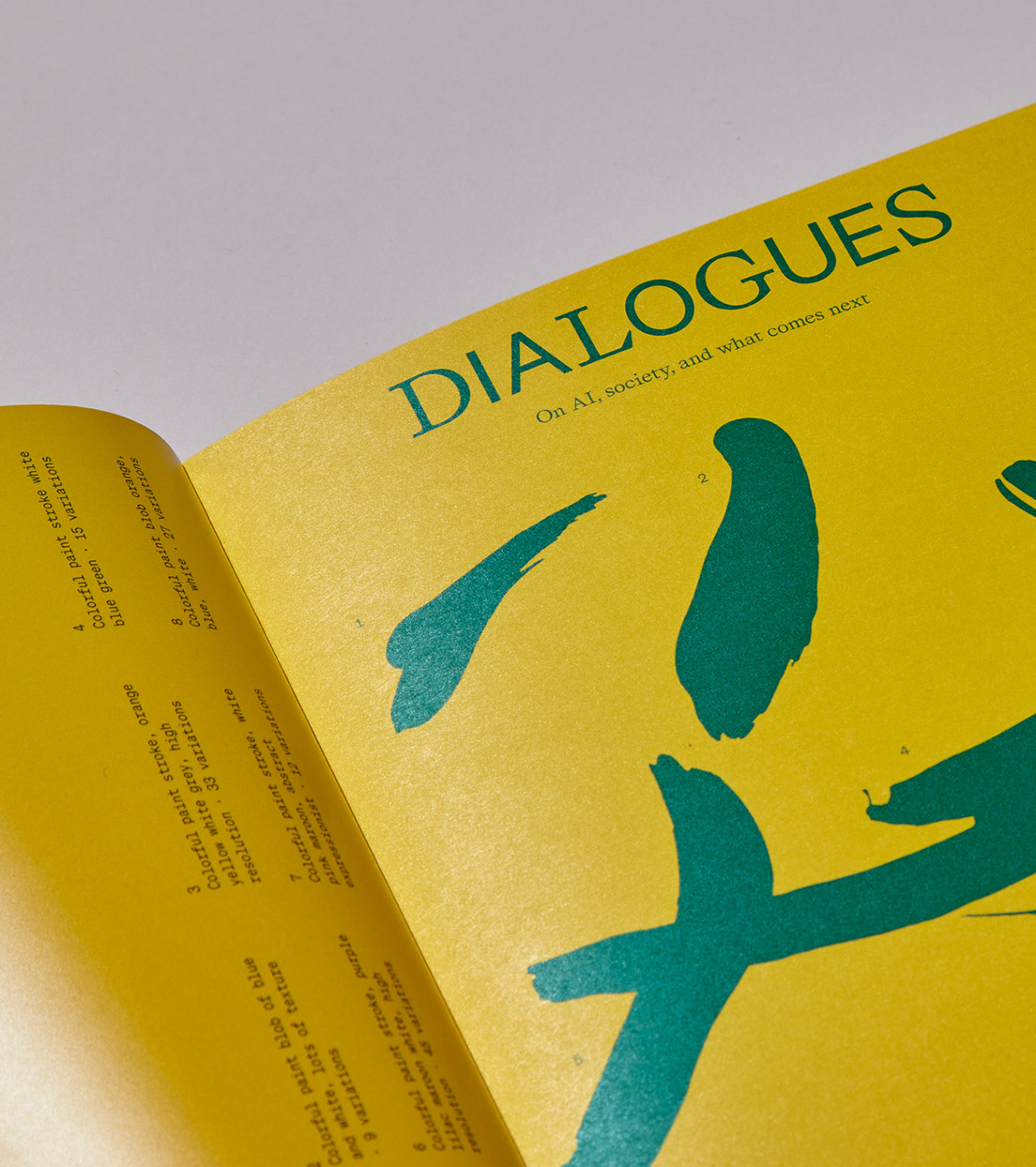
Dialogues interior cover detail
Applying the highest level of integrity to the project meant finding a thoughtful and meaningful use of AI itself. For the cover of the first issue, signature paint strokes were created with assistance from generative AI tools. The texture, beauty, richness, and colors are all the result of collaboration with the technology. At times, the results matched the initial intention; other times, repeated experimentation produced a happy accident. The prompts that created each stroke are included as annotations in the masthead and colophon.
Dialogues cover flap detail
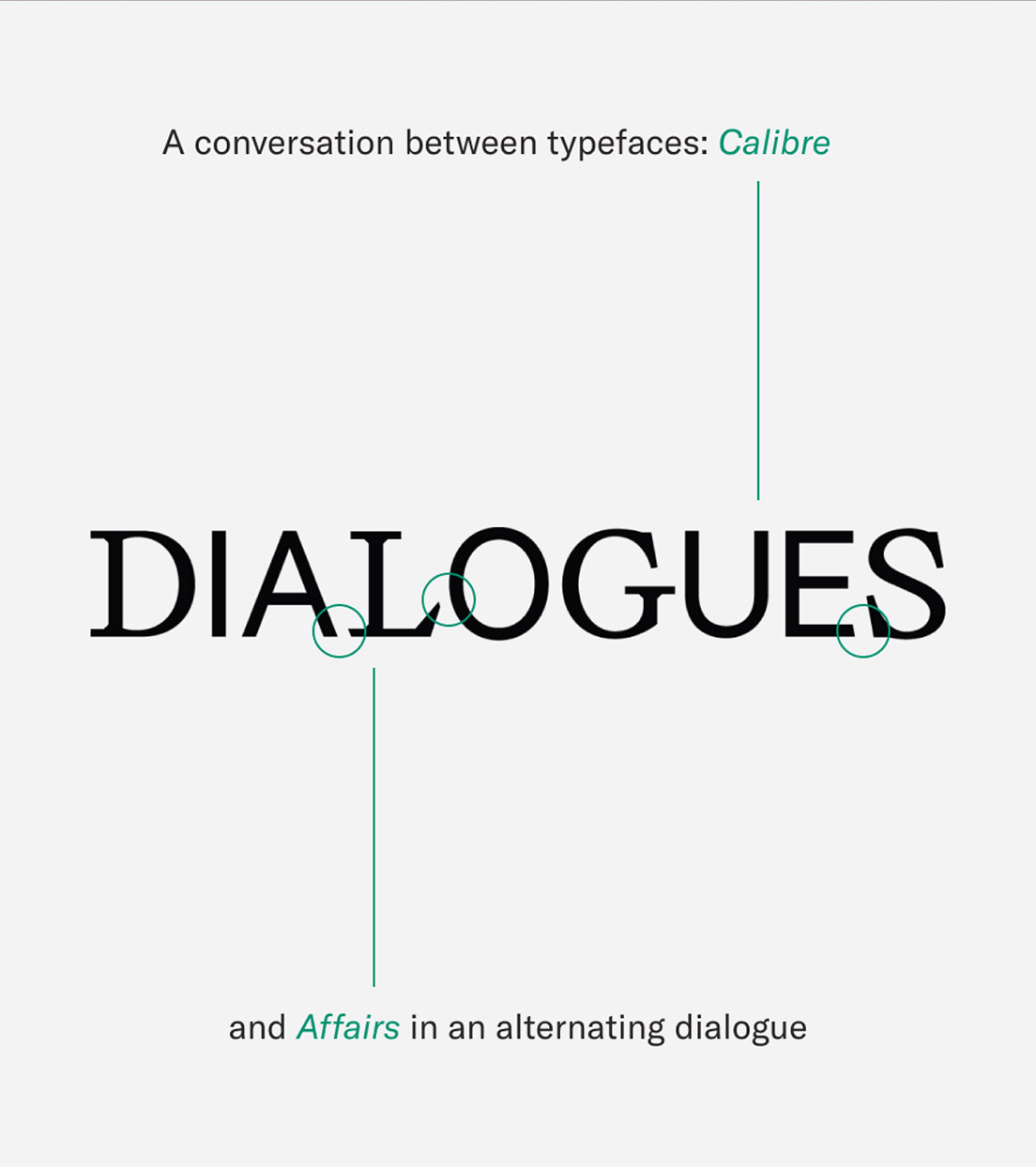
Dialogues wordmark
In the spirit of the conversational nature of the magazine, the publication title was designed to lean into this concept, with a combination of sans serif and serif typefaces in alternating dialogue.
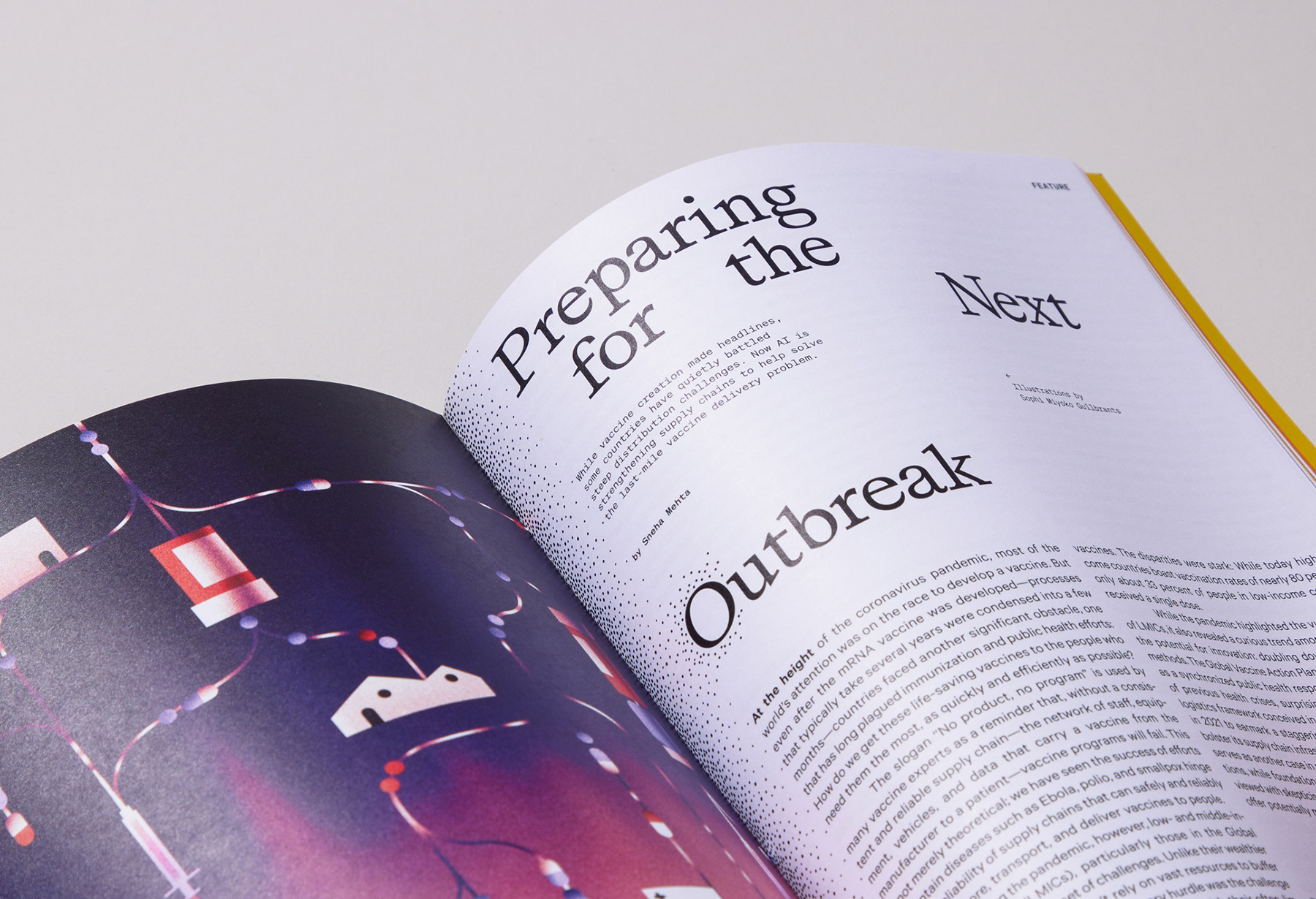
Dialogues story interior detail
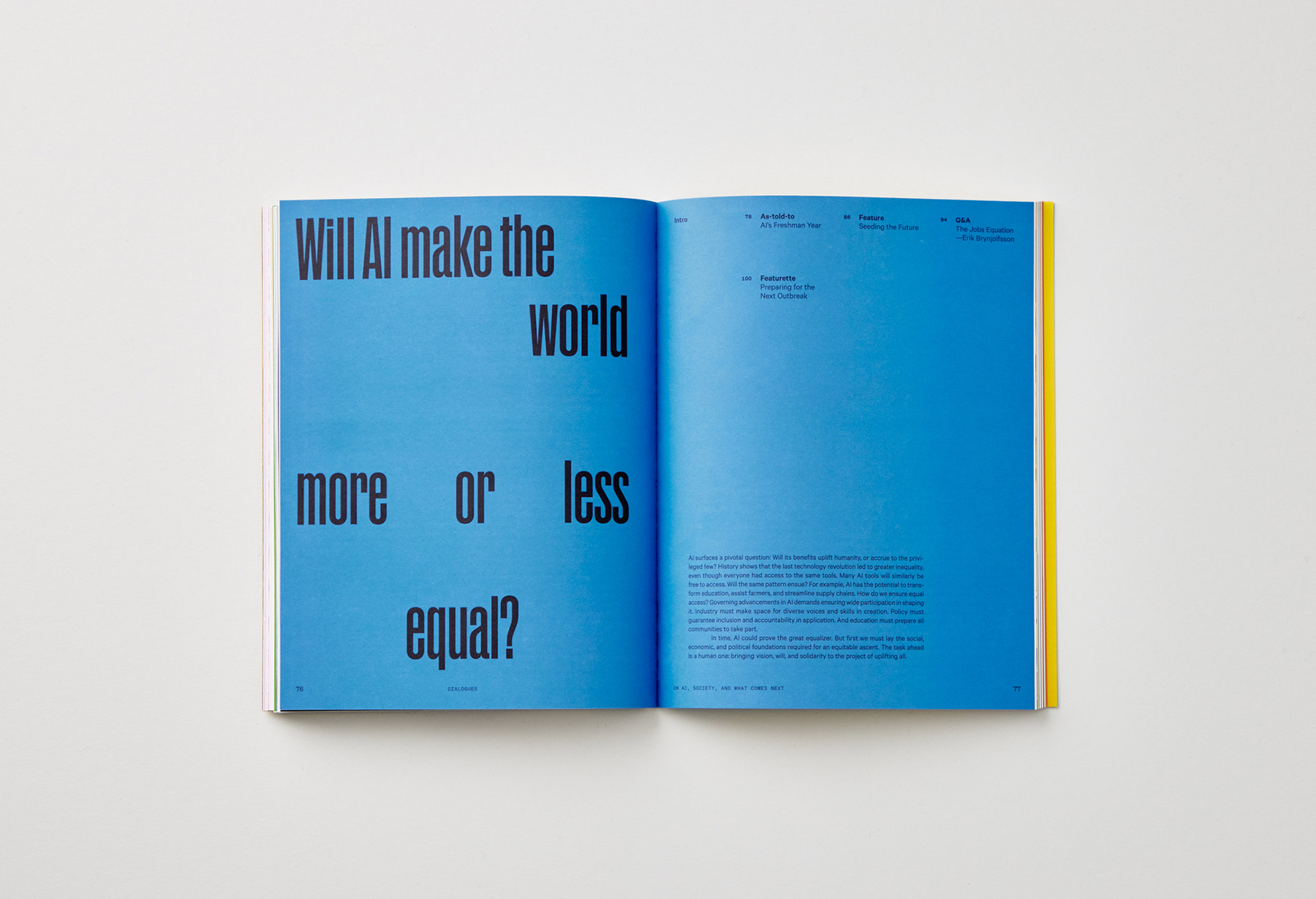
The underlying grid for every story layout is anchored in seven columns, echoing our seven-question structure, with exaggerated outer margins that push right to the edges of the page. They mirror the boundaries we endeavored to push with the storytelling itself.
Dialogues AI question spread
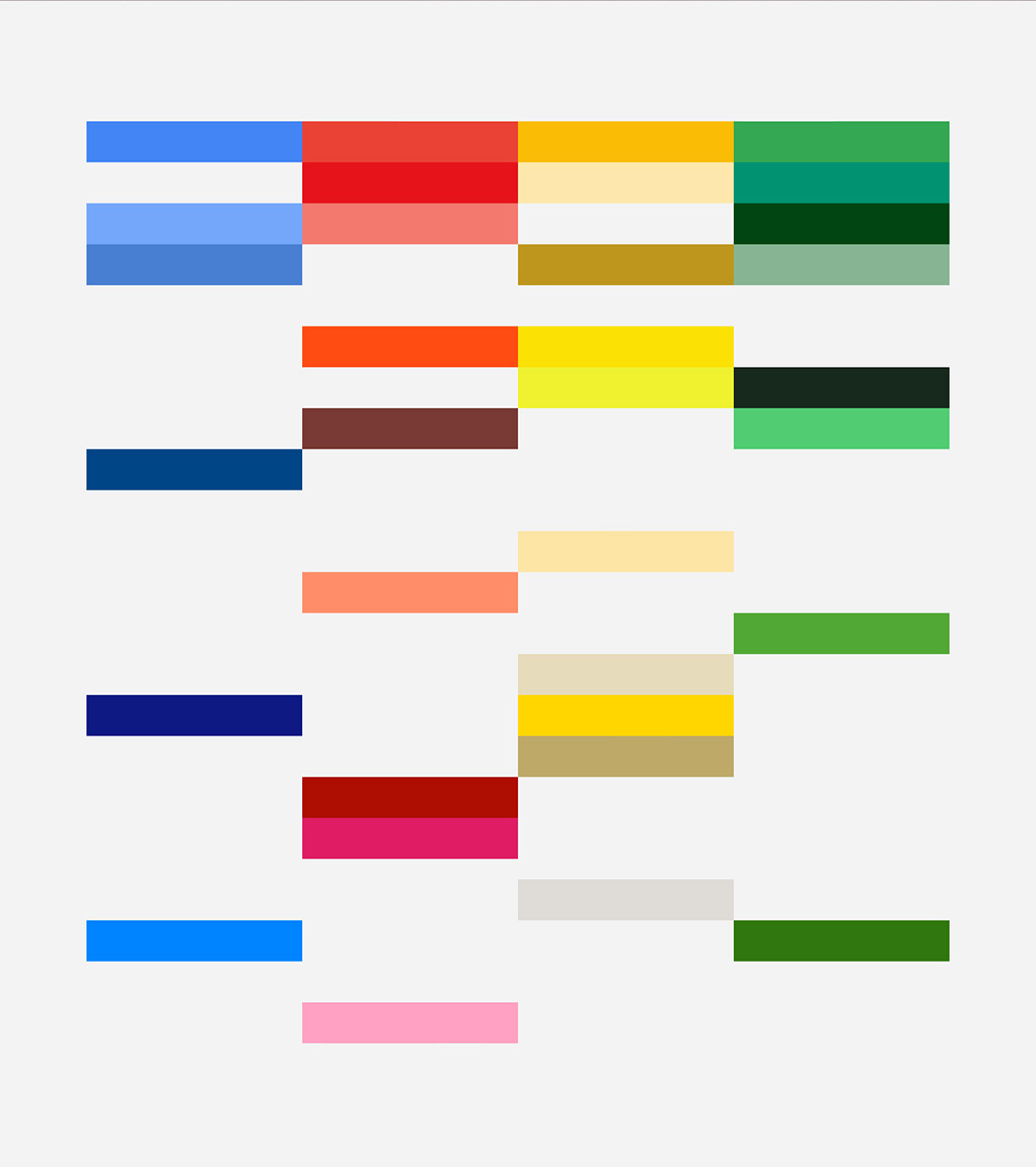
Dialogues colors
We leveraged adjacent colors to Google’s signature swatches, making our pages feel rich and attractive, exemplified by the rainbow of full bleed spreads that we used to demarcate each chapter beginning.
Dialogues story detail
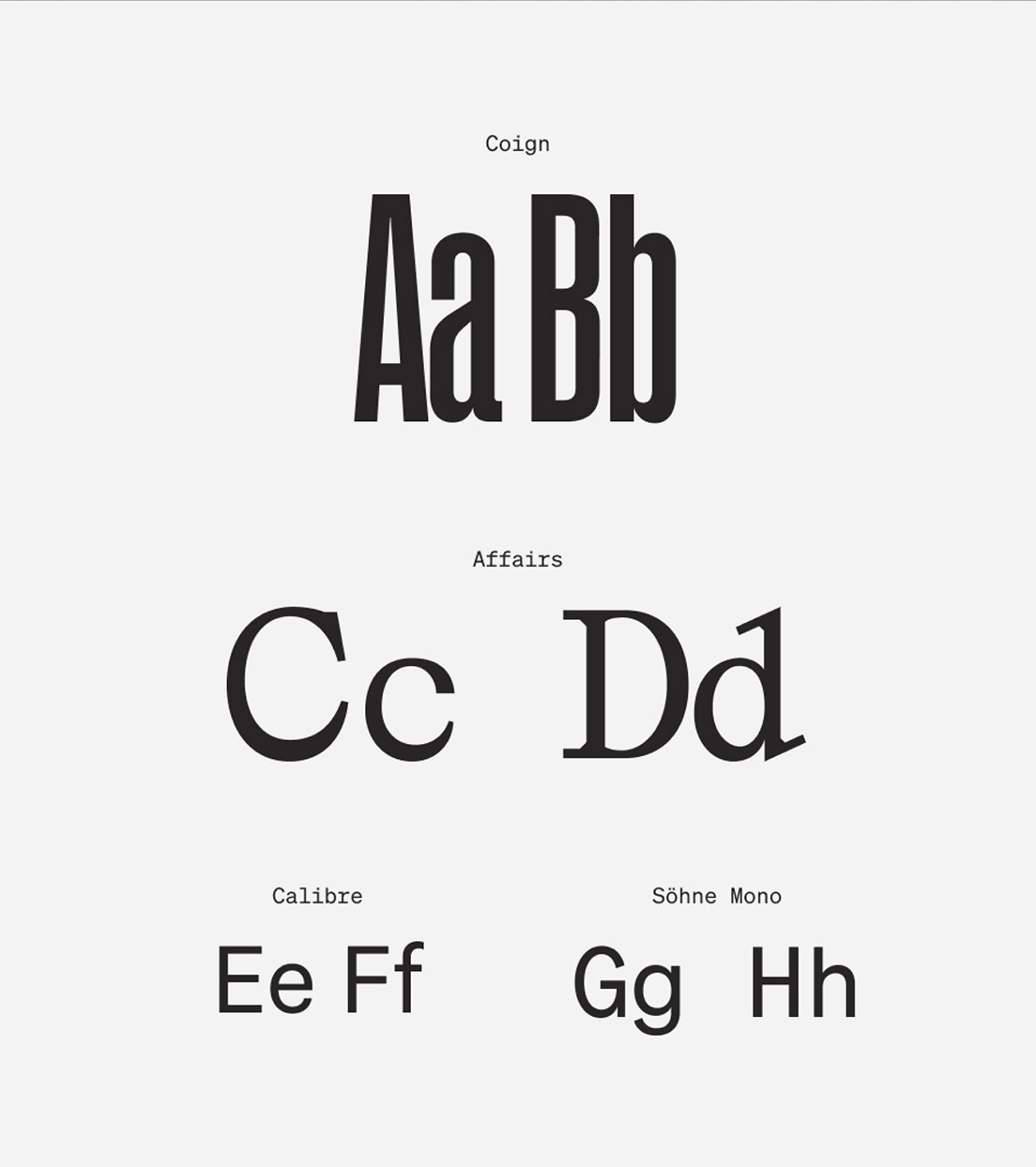
Dialogues typography
Four type families were used interchangeably, treated with similar placement and hierarchy while allowing flexibility and dynamism. The body copy remained consistent throughout the issue—intimately reviewed for sizing, leading, line length, and contrast for an optimal reading experience throughout the magazine’s 44,000+ words.

Dialogues is typeset in Coign (Colophon Foundry), Affairs (SM Foundry), as well as Calibre and Söhne Mono (Klim Type Foundry).

Substance

Facilitating Dialogues

In the magazine business, we call it the well—an issue’s mid-section where the most ambitious stories live. With a single-topic focus as multifaceted as AI, we knew Dialogues would be all well, and would demand a manifest of stories and writers as dexterous as AI itself.

That’s why the issue teems with considerations of how to leverage the technology for good, for creativity, for equity, for emotion, and for economic uplift, as well as the myriad ways it may defy containment and governability.

Dialogues Magazine — Issue 1
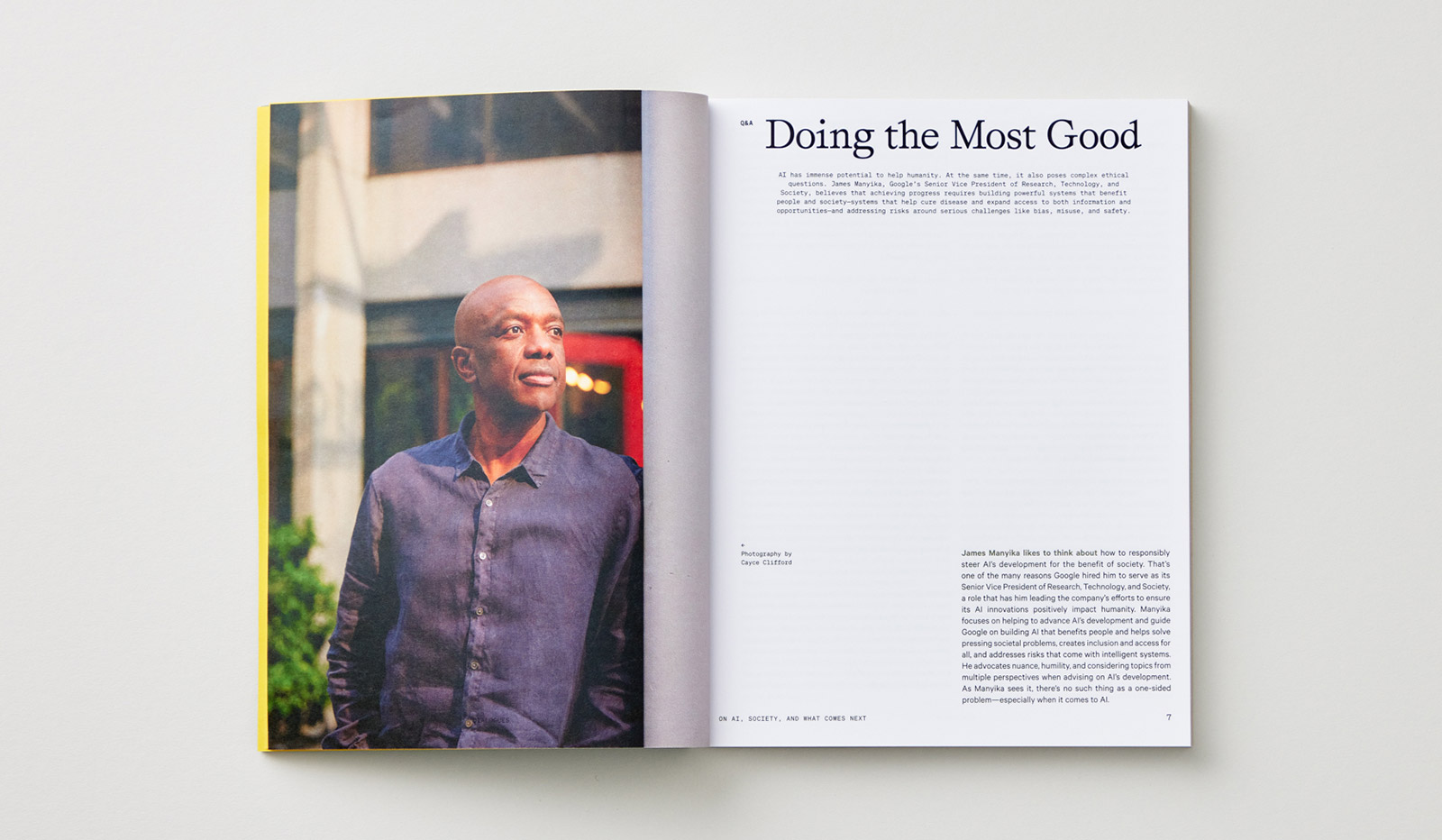
Doing the Most Good spread
Google’s James Manyika is interviewed about the right path forward for AI | Photo by Cayce Clifford
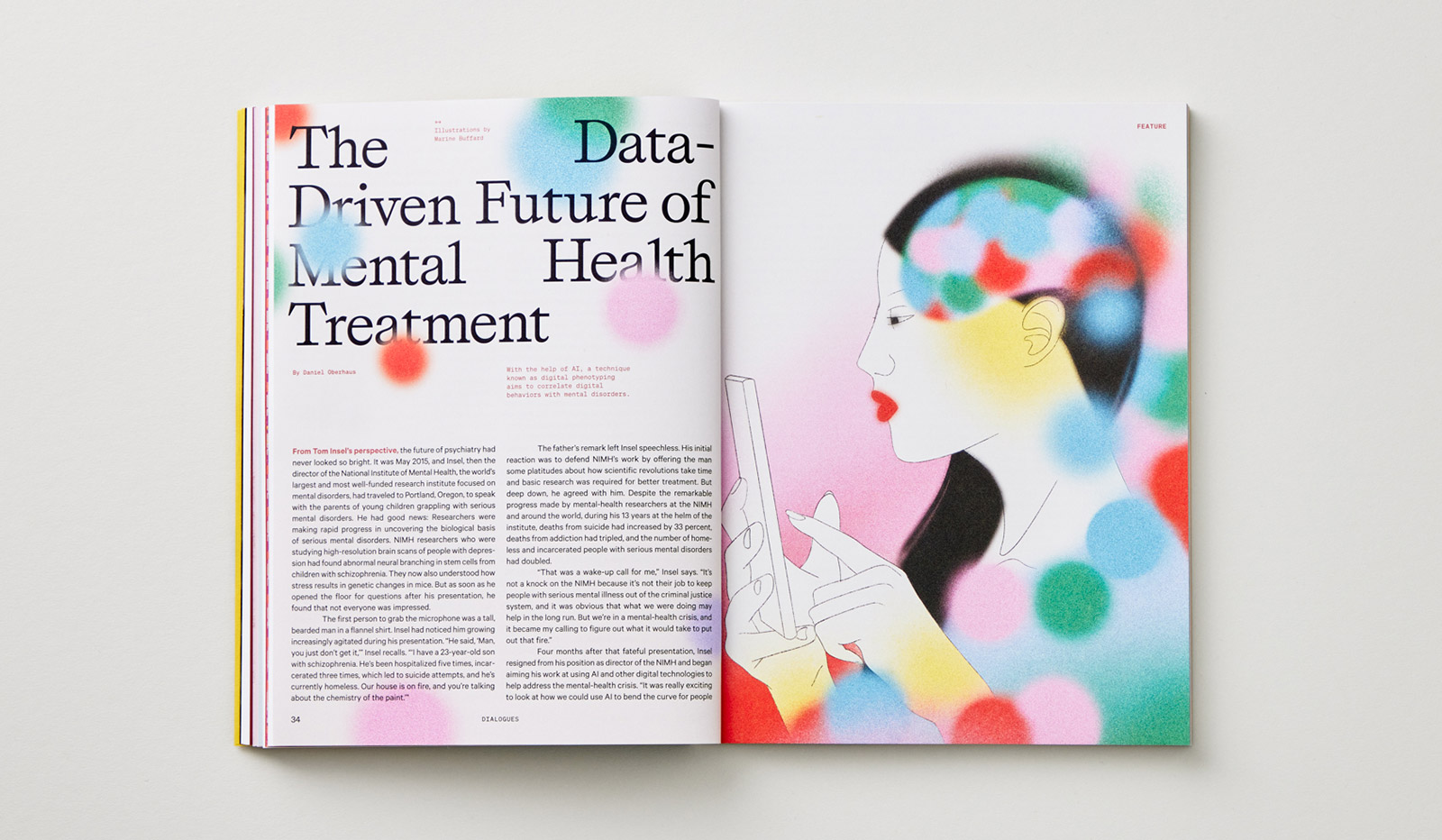
The Data Driven Future of Mental Health Treatment spread
Daniel Oberhaus writes about AI’s role in promoting mental health | Artwork by Marine Buffard
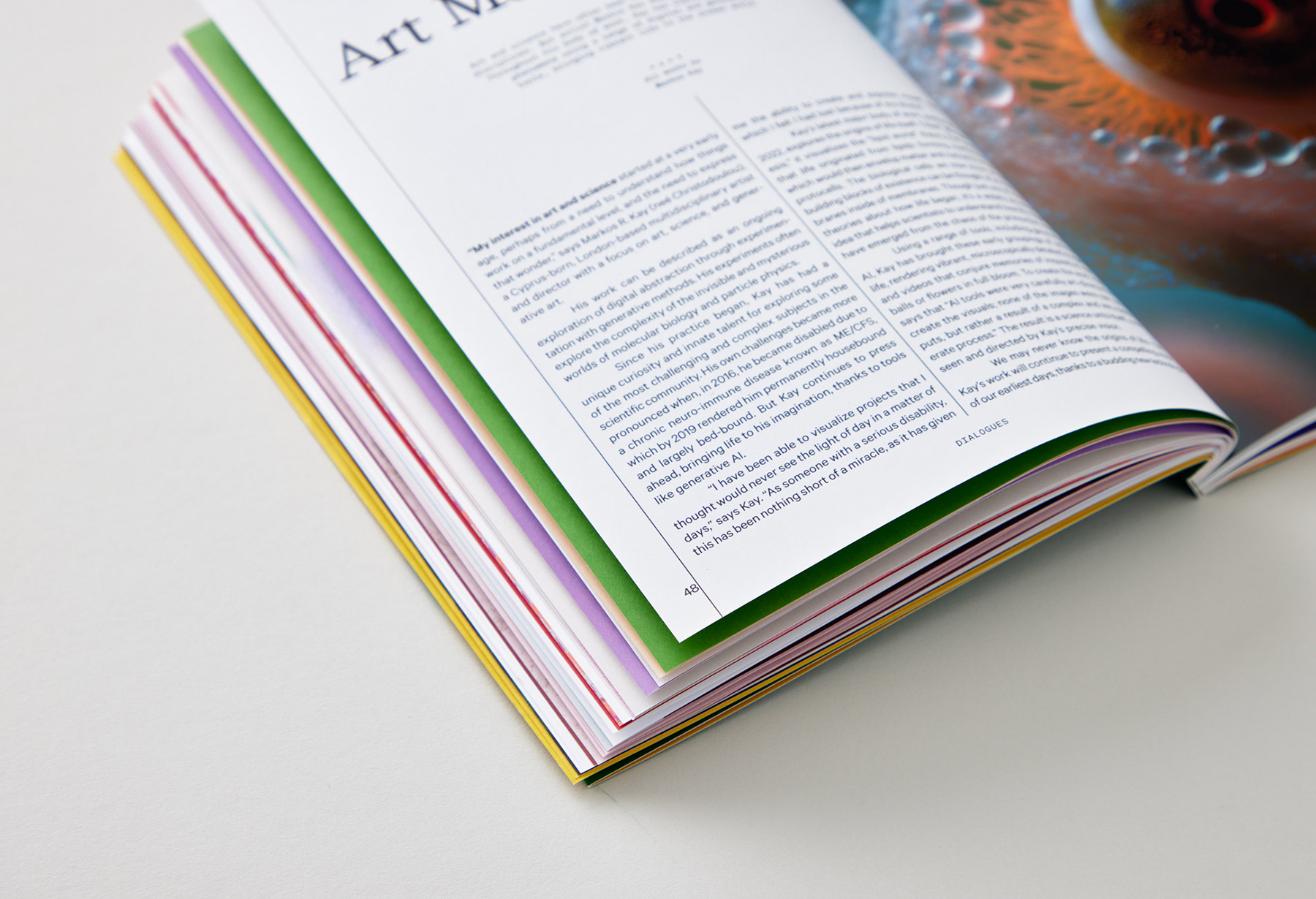
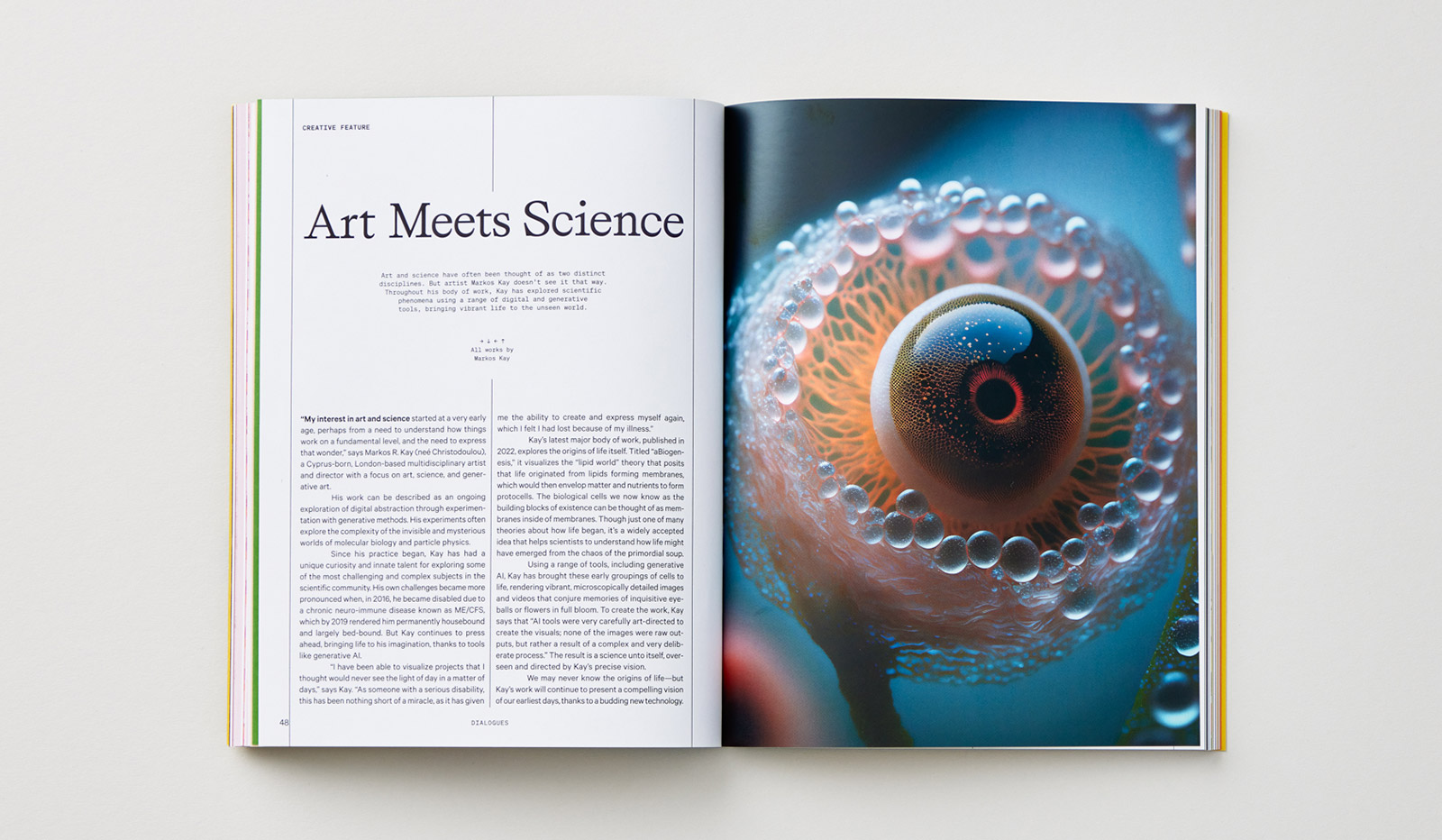
Art Meets Science spread
Artist Markos Key uncovers unseen worlds and the origin of life through his generative AI practice
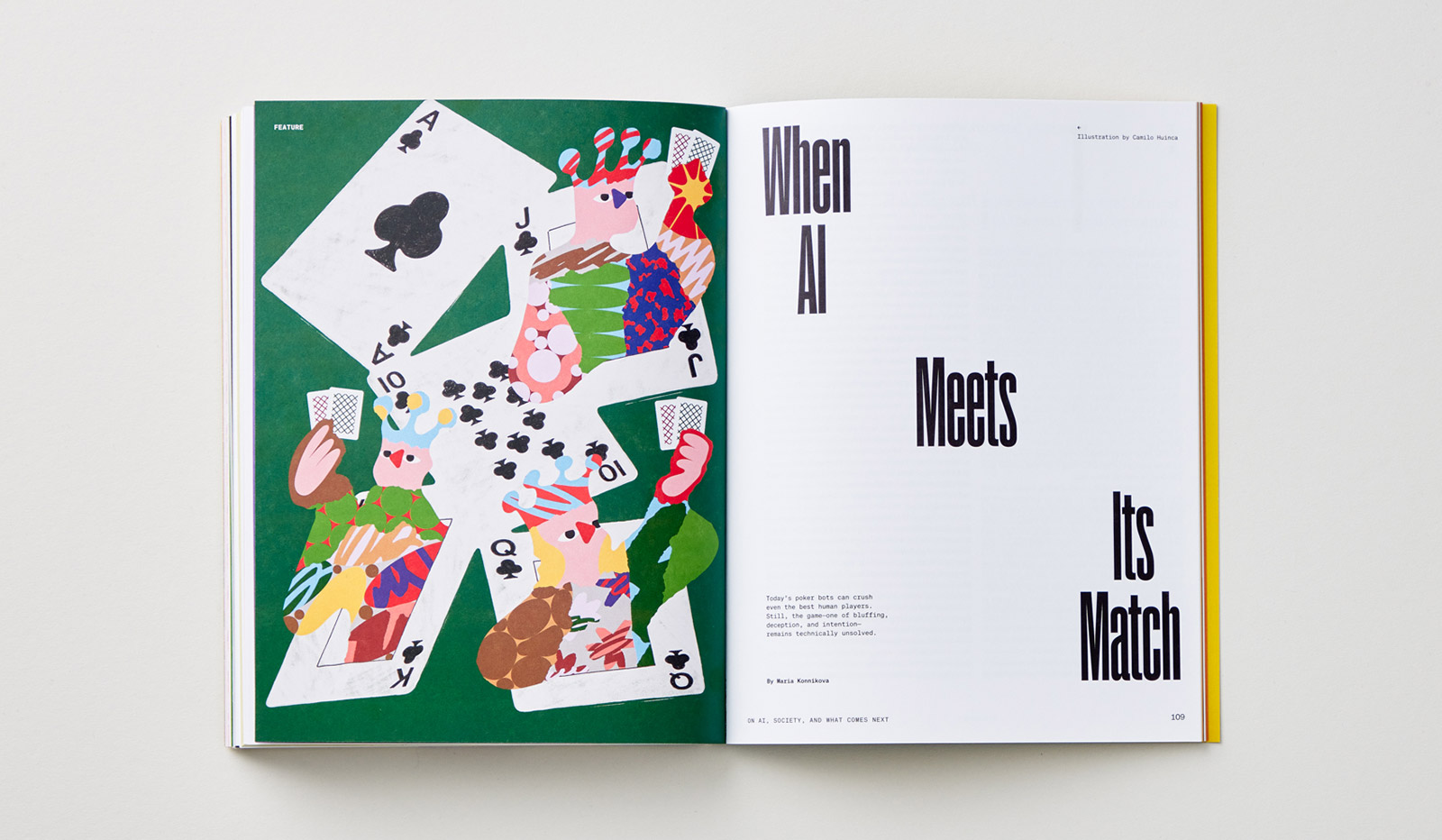
When AI Meets Its Match spread
Maria Konnikova challenges AI to a game of poker | Artwork by Camilo Huinca

This vital mélange of perspectives ensured the insights contained within Dialogues were rigorous, enriching, and urgent in the now.

Contributors needed to be equal to the task of considering big ideas as well as drilling down into specific AI interventions, from mobility to immunology, mental health to art, design, and DEI. To that end we assembled a contributor list of leading scientists, artists, journalists, researchers, and technologists who, as the reporting and analysis developed, were engaging in daily conversations, enacting experiments and asking tough questions as they pushed the boundaries of AI in their respective fields.

These deep veins of expertise spanned Pau Garcia applying Gen-AI art to help Alzheimer’s patients recover memories to renowned cartoonist Bob Mankoff mining the humor created by tech rather than dismissing it. From educators and students confronting implications in human learning to an economist addressing the jobs equation head on: in aggregate, this vital mélange of perspectives ensured the insights contained within Dialogues were rigorous, enriching, and urgent in the present and primed to evolve with the technology itself.

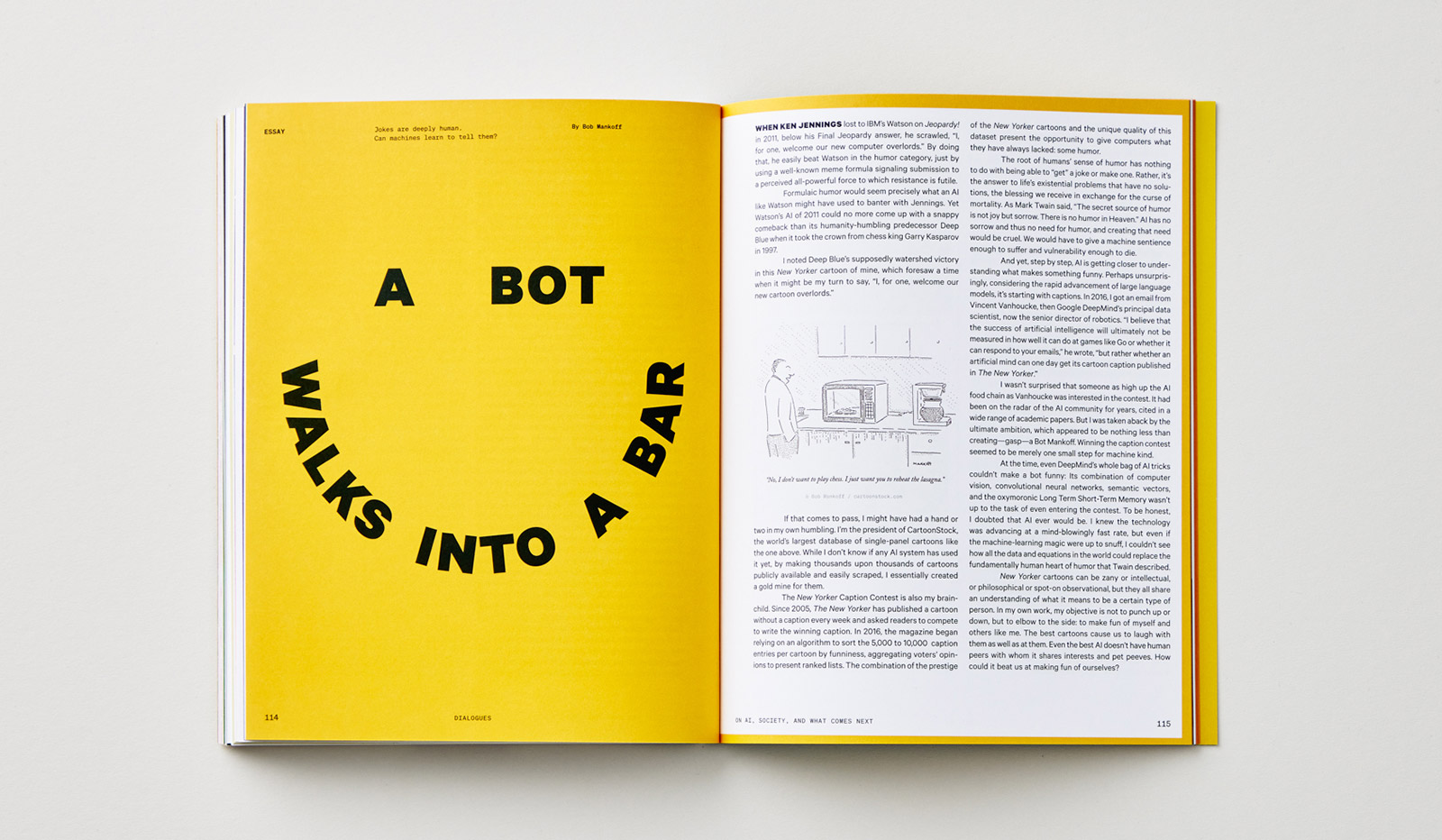
A Bot Walks Into a Bar spread
Former cartoon editor of The New Yorker, Bob Mankoff, asks whether AI has a sense of humor
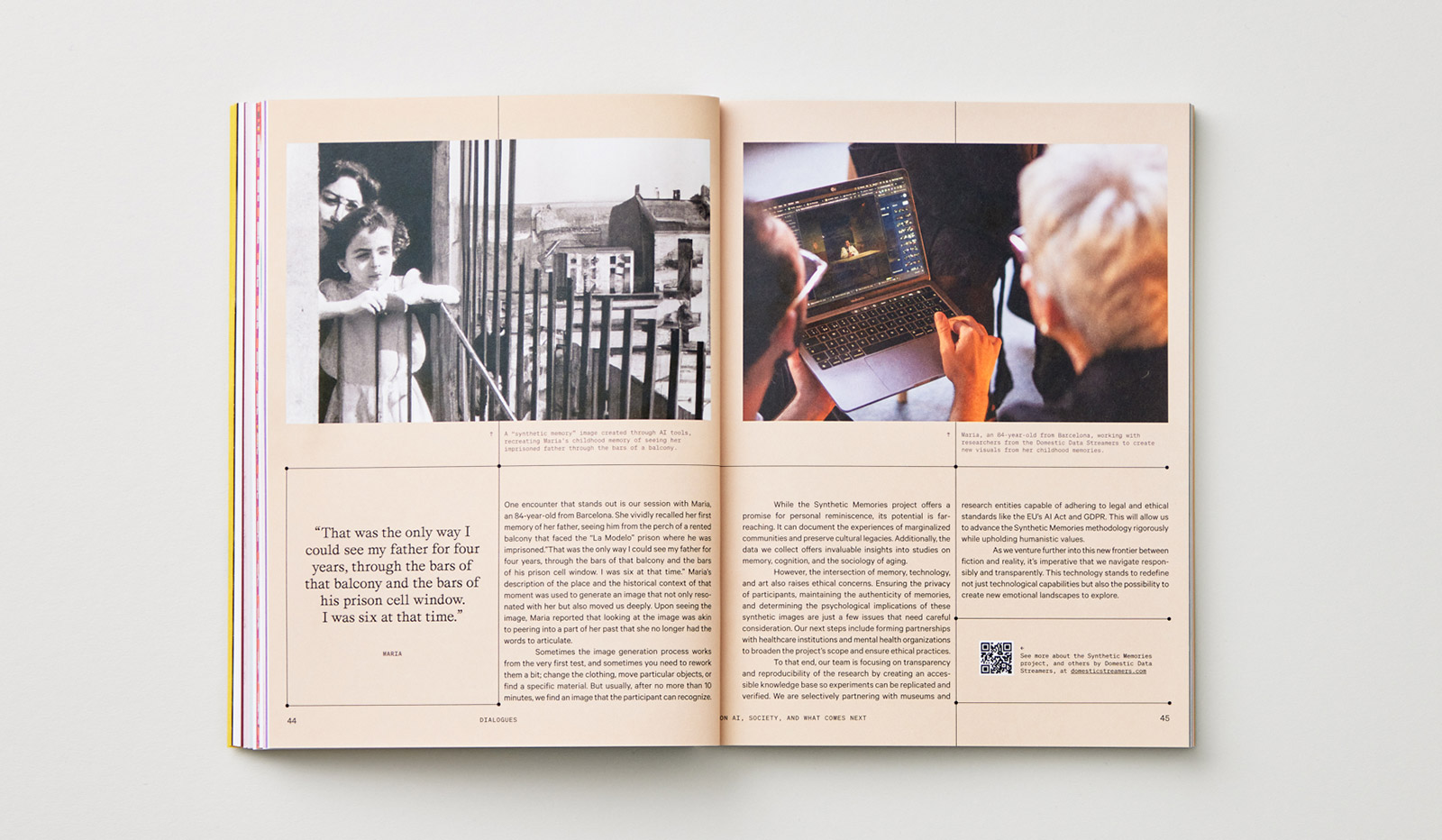
Synthetic Memories spread
Pau Garcia gives us a peek into his “Synthetic Memories” project | Images provided by Domestic Data Streamers
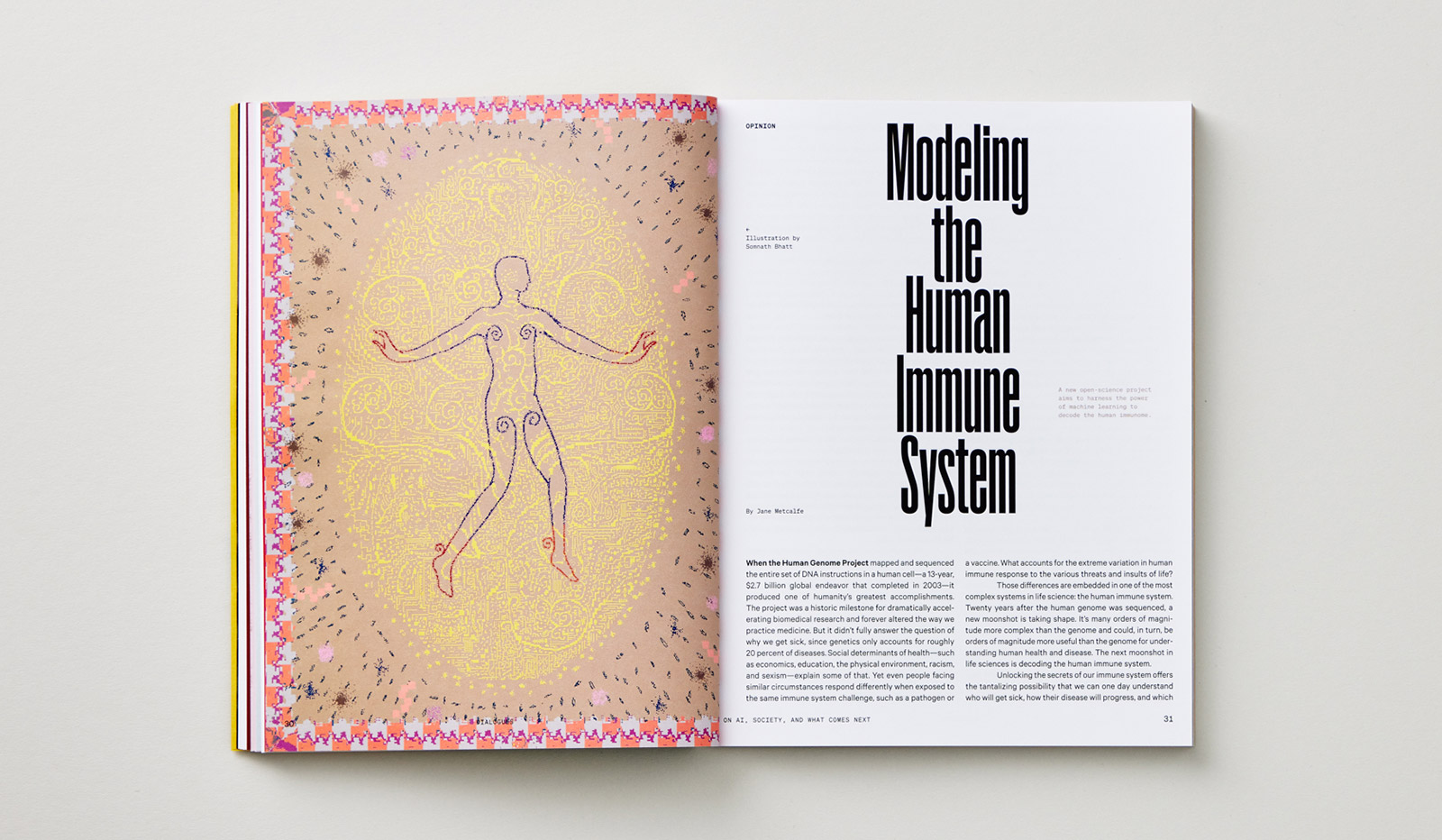
Modeling the Human Immune System spread
Co-founder of Wired magazine, Jane Metcalfe, makes a case for the power of machine learning to decode the human immunome | Artwork by Somnath Blath
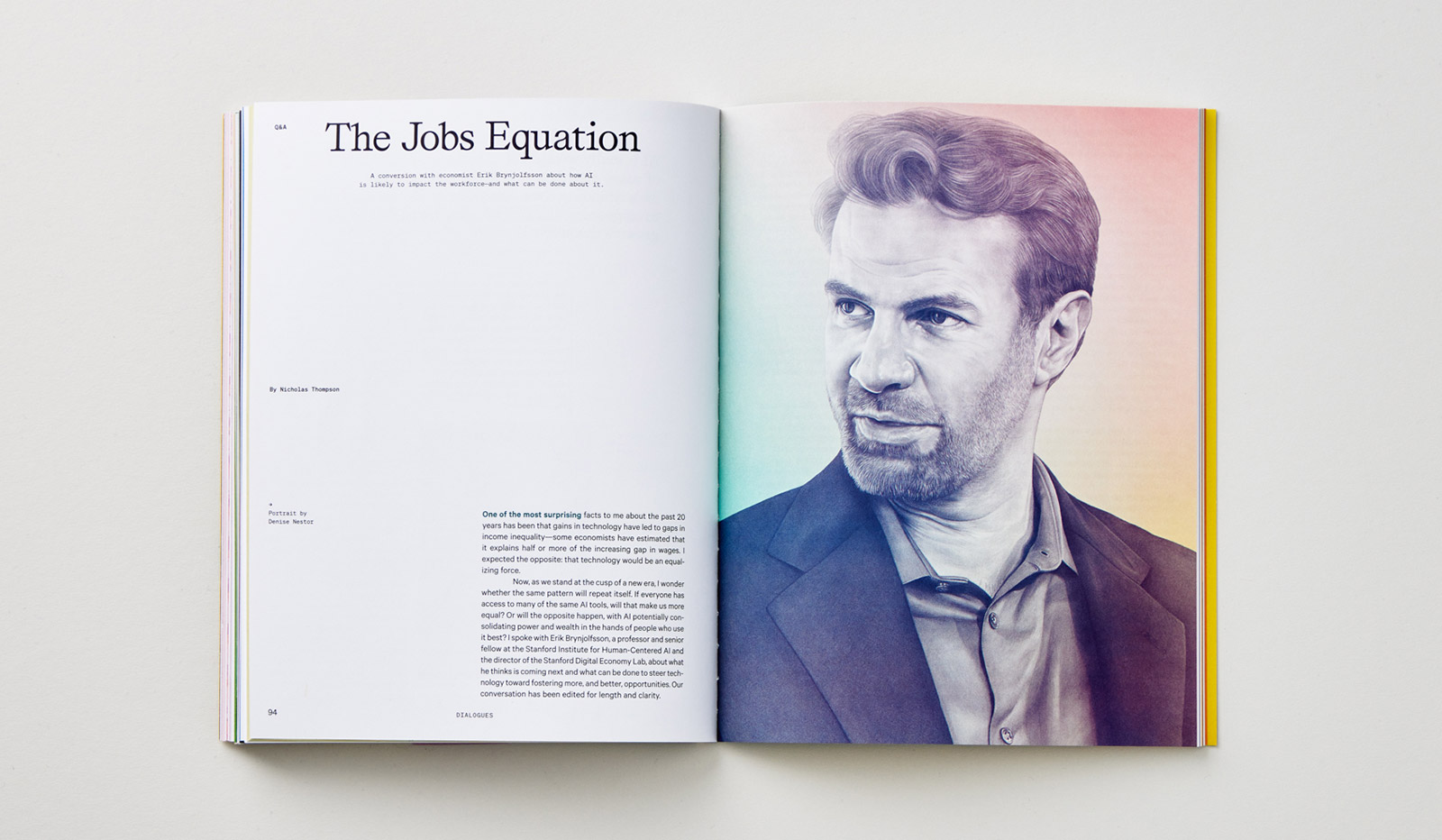
The Jobs Equation spread
The Atlantic CEO Nick Thompson interviews economist Erik Brynjolfsson about how AI is likely to impact the workforce | Portrait by Denise Nestor

Results

Dialed-in Audiences

Beyond the 14,000 copies of Dialogues we issued in print—a high-end touchpoint distributed to boardrooms, tech industry events, and to influential leaders—we also offered digital downloads via a companion landing page and QR code in the January/February 2024 issue of The Atlantic.

These engagement tactics yielded ten times more downloads than our benchmarks. Social posts to @TheAtlantic handles consistently exceeded engagement and CTR benchmarks, in some cases dozens of times over. It was clear that the context and timeliness of our storytelling deeply connected with our readers, and registered with an audience even beyond the bounds of The Atlantic.

  • 10x Downloads of the content in PDF form bested CTR benchmarks ten times over
  • 18x Scans of the print-ad QR code were 18x higher than our benchmarks
  • 5.6M Impressions on our social channels showed benchmark improvements of up to 75x
See the work

Credits

Atlantic Re:think

  • Elizabeth Haq Head of Creative Strategy & Editorial Director
  • Drew Campbell Creative Director
  • Hanah Slotterback Art Director
  • Monica Schmelzer Senior Director, Account Management
  • Stacey Barnes Senior Front End Developer

Collaborators

  • Gabriel Muller Co-Managing Editor
  • Ricki Harris Co-Managing Editor
  • Jaime Brockway Copy Editor