You're one of the first people who's never lived in a world without graphical web browsers.
In September 2010, Niraj Chokshi noted how little the browser interface had changed since 1993.
Around the time you were born, CIA double agent Aldrich Ames was sentenced to life imprisonment without parole.
In February 1998, Edward G. Shirley wrote about the broken culture of the CIA, first revealed to the world with the discovery of KGB mole Ames.
You were born in January of 1994. This year, The Atlantic celebrates its 160th birthday, making it 5 times as old as you.
The year you were born, Eric Schlosser wrote about mandatory-minimum sentences and the vigorous enforcement of marijuana laws.
Jason Redmond / AP
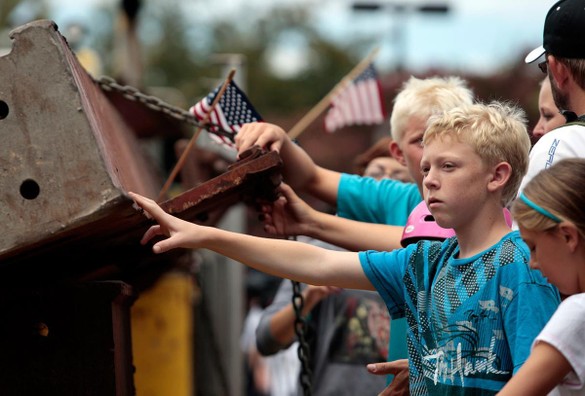
At 7 years old, you were part of the generation most shaped by 9/11.
The conflicts and displacements touched off around the world by the attacks have been reverberating for the majority of your life. “This ‘war’ [on terrorism] will never be over,” wrote James Fallows, a few years after the towers fell.
Your life can be divided into two halves: before and after YouTube.
In June 2013, Michael Anthony Adams wrote about how the video-sharing service has helped fill a void in his life—and the lives of many other young viewers.

Everett Collection
This is what Hollywood thought teenagers looked like the year you became one.
Juno was released in 2007.

Danny Moloshok / Reuters
In 2010, Justin Bieber, who was born the same year as you, released his first studio album, My World 2.0, which was certified triple-platinum.
In November 2015, Spencer Kornhaber wrote about the changing face of pop music.

Goran Tomasevic / Reuters
When you turned 16, you witnessed the revolutionary fervor that transformed the Arab world in 2010, a movement led by your generation.
When 26-year-old Mohamed Bouazizi set himself on fire, he ignited a tinderbox of protests that continue to roil the Middle East, and kindled the beginnings of democracy in Tunisia.
Around your 18th birthday, the European Union adopted an embargo against Iran in protest of its nuclear program.
In April 2015, Peter Beinart discussed the United States' nuclear deal with Iran and alternatives.
By the time you turn 27, scientists estimate it will no longer be possible to keep global temperatures from rising at least 1.5 degrees Celsius.
In December 2015, Robinson Meyer wrote about why scientists had accepted this fact.
History is happening all around you, every day.
The Atlantic is here to help you process it, in stories like these:
Tell your story.