



Previously in Soundings:

Samuel Taylor Coleridge, "This Lime-tree Bower My Prison" (September 27, 2000)
Read by Steven Cramer, Stanley Plumly, and Thomas Sleigh. With an introduction by Steven Cramer.

Elizabeth Bishop, "Sonnet" (March 29, 2000)
Read by Gail Mazur, Robert Pinsky, Lloyd Schwartz, and Mark Strand. With an introduction by Lloyd Schwartz.

John Clare, "I Am" (December 8, 1999)
Read by David Barber, Carolyn Kizer, and Christopher Ricks. With an introduction by David Barber.

More Soundings in Atlantic Unbound.

More on poets and poetry.

Click on the names below to hear these poets read "To His Coy Mistress" (in RealAudio):

Linda Gregerson

J. D. McClatchy

Heather McHugh
(For help, see a note about the audio.)


Atlantic Unbound | February 26, 2001
 
Soundings
 
Andrew Marvell, To His Coy Mistress

Introduction by Linda Gregerson
 
.....

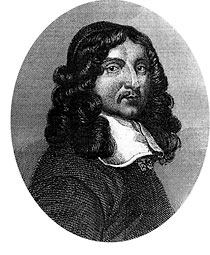
Andrew Marvell
Andrew Marvell

ohn Dryden once wittily described John Donne's love poetry as calculated to "perplex the mind of the fair sex." Part of the pleasure of the witticism, of course, lies in its cutting edge. Beneath the surface of impassioned courtship, Dryden suggests, one finds a less-than-fully deferential attitude toward women: the overheated importunities of Donne's love poems—the most athletic love poems in the language—are assumed to be pitched quite above the heads of the lady or ladies to whom they purport to be addressed. Does Dryden mean to suggest that Donne's method (the dizzying virtuosity of his syntax and imagery) and his ostensible subject matter (sexual seduction) are intractably at odds? That Donne undermines himself by indulging in his own chronic propensity for showing off? Or are we rather to understand that perplexity is somehow conducive to sexual surrender? The one unambiguous link between Dryden's witty analysis and Donne's witty poetry, at least as Dryden would have us construe it, appears to be the rakish misogyny that serves as their common foundation: sexual gamesmanship is imagined to be a species of pleasure that takes place at the expense of its "fairer" partner.

These playful entanglements of sex and condescension are conspicuous in another of the poets we have come to call Metaphysical. Andrew Marvell (1621-1678) does not favor so convoluted a syntax nor so fevered a display of philosophical speculation as we associate with Donne, but, like Donne, he works at the boundaries of excess. His overwrought similes and outsized metaphors—conceits, as we call them—confess their own laboriousness and thus their insufficiency. Behind the busy figurative surface there appears a discomfitting gap, an inadequate fit between the material world, or the figurative imagination that draws upon it, and the "something else" that imagination tries to represent.

When Dryden and Samuel Johnson first described this seventeenth-century penchant as "metaphysical," they used the term disparagingly. Dr. Johnson in particular heartily disapproved of a poetry in which "the most heterogeneous ideas are yoked by violence together." Modern readers have come to regard the Metaphysicals with a friendlier eye, but they have not disputed the violence of the Metaphysical imagination, its willful enactment of discordance and disproportion, its preference for friction over smoothness. Our own sensibilities find a sympathetic echo in these very dynamics. But we ought not to tame Dr. Johnson's insight overmuch: there is something dark, something dangerous, behind the flamboyance and conspicuous exertion of the Metaphysical imagination. We may see this darkness at work not only in the figurative yoking—the Metaphysical conceit Dr. Johnson had in mind—but also in the sexual yoking so central to the Metaphysical poem. Here, for example, is Andrew Marvell's most frequently anthologized lyric:
To His Coy Mistress

Had we but world enough, and time,
This coyness, Lady, were no crime.
We would sit down and think which way
To walk, and pass our long love's day.
Thou by the Indian Ganges' side
Shouldst rubies find; I by the tide
Of Humber would complain. I would
Love you ten years before the Flood,
And you should, if you please, refuse
Till the conversion of the Jews.
My vegetable love should grow
Vaster than empires, and more slow;
An hundred years should go to praise
Thine eyes and on thy forehead gaze;
Two hundred to adore each breast,
But thirty thousand to the rest;
An age at least to every part,
And the last age should show your heart.
For, Lady, you deserve this state,
Nor would I love at lower rate.

   But at my back I always hear
Time's wingèd chariot hurrying near;
And yonder all before us lie
Deserts of vast eternity.
Thy beauty shall no more be found,
Nor, in thy marble vault, shall sound
My echoing song: then worms shall try
That long preserved virginity,
And your quaint honor turn to dust,
And into ashes all my lust:
The grave's a fine and private place,
But none, I think, do there embrace.

   Now therefore, while the youthful hue
Sits on thy skin like morning dew,
And while thy willing soul transpires
At every pore with instant fires,
Now let us sport us while we may,
And now, like amorous birds of prey,
Rather at once our time devour
Than languish in his slow-chapped power.
Let us roll all our strength and all
Our sweetness up into one ball,
And tear our pleasures with rough strife
Through the iron gates of life;
Thus, though we cannot make our sun
Stand still, yet we will make him run.
ow shall we begin to parse the extravagant rhetoric in the first verse paragraph? Exotic location: "Indian Ganges." Hyperbolic expanses of time: "an hundred years," "two hundred," "thirty thousand." Elevated language: rhymed couplets, stately tetrameter, refined grammatical mood (dominated by the future subjunctive). The poem is addressed to the speaker's "mistress," that is, a lady to whom courtesy and courtly convention and erotic longing attribute a superordinate status, a power to command. She is said to be "coy," that is, strategically withholding. She is thus imagined as capable of calculation and of extracting erotic compliment at a high "rate." The poet professes to be more than willing to provide what she would have, but surely it is less than complimentary to charge the lady with calculation. "Coyness" in Marvell's era might be used to connote mere reticence, but the less neutral connotation was already coming into ascendancy; it would take a very innocent lady indeed to gaze into the mirror of Marvell's poem and see herself figured as unaffectedly "shy." We may note, while we're at it, the conspicuous third-person possessive in the title of the poem: to his, not my, coy mistress. The body of the poem is written in the first and second person; the loved addresses his lady directly. And yet in the title of the poem, he coolly acknowledges another audience. For whose amusement is this lady being wooed?

And then there is the extended subjunctive: hypothesis contrary to fact. Had we world enough and time... but we do not. Taking everything back before it is given, the poet inventories the lavish forms of courtship he "would," but will not, be happy to perform. The inventory itself, if truth be told, is rather perfunctory: ten years, a hundred, etc.; your eyes, your forehead, etc. "Vegetable love" is wonderful—though what exactly does it mean? (Scholarly annotation about the ancient division of souls—vegetative, sensitive, and rational—falls flat somehow.) "Till the conversion of the Jews" (i.e. till the eve of Apocalypse) is better yet. It is perhaps too good. The apocalyptic vista rhymes so neatly with the lady's scruple ("Jews," "refuse") that the poem's wide disproportions are made to seem preposterous. It is not chiefly lack of time and "world" that prevent the suitor from suing in the heightened manner dictated by poetic convention; it is aesthetic disdain. The suitor is burlesquing the very expansiveness with which he is expected to sue. Expected by whom? By the lady, or so her lover unchivalrously implies. It is as though a woman of our own day were charged with basing her fantasy life upon the romances of the daytime soaps. Marvell's coy mistress finds herself accused not only of manipulative affectation but also of frank bad taste. What kind of woman would be wooed like this?

The tone of insult deepens in the second section of the poem:
   But at my back I always hear
Time's wingèd chariot hurrying near;
And yonder all before us lie
Deserts of vast eternity.
Thy beauty shall no more be found,
Nor, in thy marble vault, shall sound
My echoing song: then worms shall try
That long preserved virginity,
And your quaint honor turn to dust,
And into ashes all my lust:
The grave's a fine and private place,
But none, I think, do there embrace.
Following the slightly acerbic stipulation with which he concluded the first section of his wooing speech (I think too highly of your deserts and of myself to love "at lower rate"), the lover puts forth his official explanation for refusing to woo by the book. And as if to show what he could do if he would, he "explains" in a flight of eloquence. Far from affording us dignified or delectable leisure, he says, time is a "wingèd chariot" hastening toward our end. The only vastness at our disposal is the vastness of the afterlife. The afterlife affords no vistas of erotic or moral "desert," but merely the emptiness of a desert. The logic of the lover's argument is the logic of carpe diem: "seize (or savor) the day." It was a well-worn logic in the Renaissance, as it had been since the time of Horace. "Gather ye rosebuds while ye may," wrote Marvell's contemporary Robert Herrick, "Old time is still a-flying;/ And this same flower that smiles today,/ Tomorrow will be dying." Counseling a maiden to seize the day was also a well-worn stratagem of seducers, as the conclusion of Herrick's poem makes clear:
Then be not coy, but use your time,
    And while ye may, go marry;
For, having lost but once your prime,
    You may forever tarry.
(This poem is brazenly addressed "To the Virgins, to Make Much of Time.")

Like Herrick, Marvell is quite explicit about the unlovely threat his hurry-up implies. In neither poet do we find the faithful suitor's profession, "To me you shall always be lovely." Nor even, "I shall love you forever despite the ravages of age." Not at all. Explicated for the benefit of virgins in general, or a coy mistress in particular, desire is found to be quite as ruthless as time. Desire has a short half-life; ladies must get while the getting is good. Lest the lewdness of the insult be lost on the lady, Marvell introduces a pair of genital insinuations. You scruple to preserve your bodily intactness? the lover taunts. You haven't a prayer; it's either me or the worms. Nor is "quaint" honor half so fastidious as it at first appears to be: Chaucer used "queynte"—and Renaissance authors used it too—to denote the female pudendum.

Now that both mistress and lovemaking have been quite stripped of their pretensions, now that the lady knows just where she stands, both in the general marketplace and in her lover's particular regard, the lover unleashes his most fevered proposition:
   Now therefore, while the youthful hue
Sits on thy skin like morning dew,
And while thy willing soul transpires
At every pore with instant fires,
Now let us sport us while we may,
And now, like amorous birds of prey,
Rather at once our time devour
Than languish in his slow-chapped power.
Let us roll all our strength and all
Our sweetness up into one ball,
And tear our pleasures with rough strife
Through the iron gates of life;
Thus, though we cannot make our sun
Stand still, yet we will make him run.
Note the driven enjambments: "all / Our sweetness," "sun / Stand still." This is forward motion with a vengeance. Not turtle doves, but "birds of prey." Not gilded portals, but "iron gates." The lover proposes a world in which the alternatives are not so much "eat or be eaten," but "eat and be eaten" or "be eaten alone." Not one creature is not caught in the mortal machinery; only with violence can the day (and the initiative) be seized.

he poet's bravado is undeniably exhilarating, and yet we may return to the question that Dryden implicitly asked of Donne: Can this poem really be after what it purports to be after? Can it, as a seduction poem, by even the wildest stretch of imagination be designed to work? What kind of woman would be successfully wooed like this? Either, I would respectfully suggest, she must be a very stupid one, one so dull to insult and so eager to be swept off her feet that she succumbs to her fate obliviously, or she must be a very clever one indeed, one willing to join the lover in his high-spirited contempt for convention, one capable of discerning the compliment behind the ostensible slur. This lady—the second one—would be a woman to whom the poet might signal above the head, as it were, of the foolish figure he playfully pretends to take her for. It is this second lady in whom I prefer to believe, and whom I believe the Marvellian poem proposes: a worthy and active partner in intellect, in appetite, in irreverent conversation, and in bed.

Click on the names below to hear these poets read "To His Coy Mistress" (in RealAudio):

Linda Gregerson J. D. McClatchy Heather McHugh

(For help, see a note about the audio.)


What do you think? Discuss this feature in Post & Riposte.

More Soundings in Atlantic Unbound.

More on poetry in Atlantic Unbound and The Atlantic Monthly.

Linda Gregerson is the author of The Woman Who Died in Her Sleep (1996), a book of poems, and The Reformation of the Subject: Spenser, Milton, and the English Protestant Epic (1995). Negative Capability: Essays on Contemporary American Poetry is forthcoming this spring. She teaches Renaissance literature and directs the MFA program in creative writing at the University of Michigan.

J. D. McClatchy is the author of four collections of poems, most recently Ten Commandments (1998). He has just edited James Merrill's Collected Poems (2001), and his new translation of The Magic Flute was published last fall. McClatchy is the editor of The Yale Review.

Heather McHugh is the author of several collections of poems, including The Father of All Predicaments (1999) and Hinge and Sign: Poems 1968-1993. She is the cotranslator, with her husband, Nikolai Popov, of a new edition of Paul Celan's poems, Glottal Stop (2000).

Copyright © 2001 by The Atlantic Monthly Group. All rights reserved.