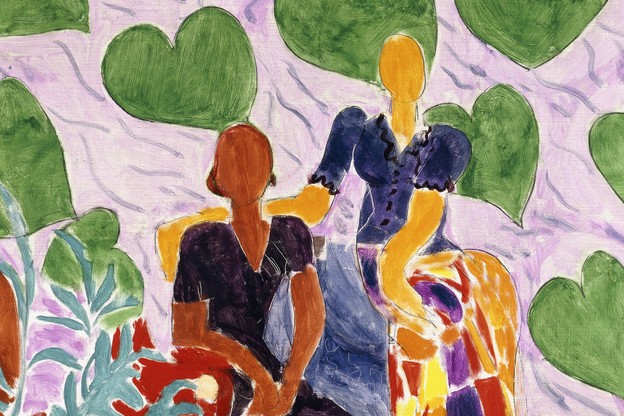
Is Cohabitation the Feminist Future?
Stories about women living together are proliferating—and offering alternative visions to the nuclear family.
Introducing The Atlantic’s expanded books coverage: essays, criticism, fiction, poetry, and recommendations from our writers and editors
Stories about women living together are proliferating—and offering alternative visions to the nuclear family.

A new biography brings the late photographer’s relationship with the artist Paul Thek to vivid life.

We’ve had Henry David Thoreau the environmentalist, the libertarian, the life coach. To understand his influence, think of him first as a dissident.

A minimally speaking autistic man just wrote a best-selling book. Or did he?

Testing has become so advanced that doctors now miss important elements of diagnosis.
Each is animated by the author’s love—for their subject, for language, and for pushing the boundaries of what the genre can do.

These six books demand discussion—with a pal, a date, or a book club.

Each of these titles will widen your perspective, offering you original insight and vision.

These titles are worth picking up, even if you have only a moment to spare.

Our culture editors’ weekly guide to the best in books.
A short story

A short story

A short story

A short story

Published in The Atlantic in 1994

The narrator in Rebecca Makkai’s novel I Have Some Questions for You has a healthy skepticism of true crime—but a decades-old murder pulls her in deep.

The simple logic of a fable can reveal something bigger about our culture: Your weekly guide to the best in books

A new book argues that the playwright’s work was central to defining whiteness as a racial category—one that has persisted ever since.

“Maybe a person is everyone she’s ever been, not just who she is at the present moment. With those we love, we see overlays of their best selves.”

Despite a history of embarrassment, the Academy has somehow managed to hold on to its prestige.

The Argentine writer Mariana Enriquez shows how violence can haunt and destabilize a civilization.

For many historians today, the present is forever trapped in the past and defined by the worst of it.

Bob and Sheryl Guterl saw their family as a kind of “ark for the age of the nuclear bomb” and attempted to gather “two of every race.”
