|


Return to the November 1997 A&E Preview Cover |
Arts & Entertainment Preview - November 1997
   
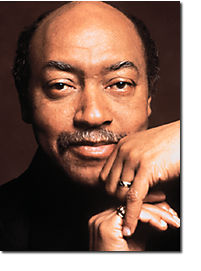
Tracks featuring the quintet, now in its second decade, encapsulate Barron's musical personality. At the keyboard his touch and voicings are strong but not heavy, rich yet open, and his compositions are conceived in the same spirit. "Marie Laveau" sustains a swampy mystery for thirteen minutes without going slack; "Tongue in Cheek" juggles a witty conjunction of allusions to Thelonius Monk. The collective pacing is impeccable, thanks to the trumpeter Eddie Henderson, the tenor saxophonist John Stubblefield, the bassist David Williams, and the drummer Victor Lewis, longtime associates who share Barron's knack for putting the right notes in the right places. Three guest stars enhance Things Unseen with far more than cameo appearances. The percussionist Mino Cinelu provides lessons in meshing with Lewis, and functions as the sole rhythmic anchor on the shuffle blues "Christopher's Dance." Naoko Terai is a violinist Barron heard in a Japanese nightclub, and her melodic focus is especially impressive on the improvised duet "Rose Noire." The guitarist John Scofield, nearly a decade younger than Barron but possessed of a similar versatility and unflagging inspiration, completes the package with typically off-center spice, adding one more reason why Things Unseen should not go unheard. --B.B. 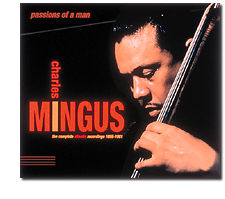 No label could present a more complete picture of the bassist and composer
Charles Mingus's achievements than Rhino's exceptional six-disc anthology
Passions of a Man: The Complete
Atlantic Recordings (1956-1961). Pithecanthropus Erectus (1956) and
The Clown (1957) capture the first flowering of Mingus's approach. His
use of scales rather than chord changes, spontaneously cued modulations, tempo
variations, noise elements, and improvised spoken narrative were radical
departures that produced music of unprecedented range and emotion, and his
performance of "Haitian Fight Song" redefined jazz-bass virtuosity. Two
invaluable collaborators, the trombonist Jimmy Knepper and the drummer Dannie
Richmond, make material from The Clown particularly enlightening. The
albums Blues & Roots (1959) and Oh Yeah (1961) find Mingus
belatedly articulating his ties to jazz's gospel foundations in a churning stew
of ecstatic and often caustic voices. Booker Ervin and Roland Kirk add
scorching sax work; Mingus plays piano and sings on Oh Yeah. The set
also includes a 1960 Antibes Jazz Festival performance and a 75-minute
interview wherein Mingus verbalized the principles that his music so eloquently
articulates. --B.B. No label could present a more complete picture of the bassist and composer
Charles Mingus's achievements than Rhino's exceptional six-disc anthology
Passions of a Man: The Complete
Atlantic Recordings (1956-1961). Pithecanthropus Erectus (1956) and
The Clown (1957) capture the first flowering of Mingus's approach. His
use of scales rather than chord changes, spontaneously cued modulations, tempo
variations, noise elements, and improvised spoken narrative were radical
departures that produced music of unprecedented range and emotion, and his
performance of "Haitian Fight Song" redefined jazz-bass virtuosity. Two
invaluable collaborators, the trombonist Jimmy Knepper and the drummer Dannie
Richmond, make material from The Clown particularly enlightening. The
albums Blues & Roots (1959) and Oh Yeah (1961) find Mingus
belatedly articulating his ties to jazz's gospel foundations in a churning stew
of ecstatic and often caustic voices. Booker Ervin and Roland Kirk add
scorching sax work; Mingus plays piano and sings on Oh Yeah. The set
also includes a 1960 Antibes Jazz Festival performance and a 75-minute
interview wherein Mingus verbalized the principles that his music so eloquently
articulates. --B.B.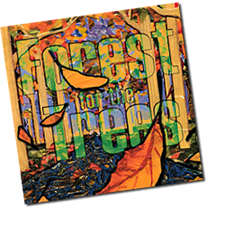 At a time when the music business is experiencing a crisis both in sales and in
meaning, with critics and artists alike complaining of creative doldrums,
Forest For the Trees arrives with an astonishing self-titled album (Dreamworks)
of undulating hip-hop beats and the best latter-day psychedelia this side of
the Butthole Surfers. Since "electronica" has become the classification of the
day, FFTT will probably be lumped with the Chemical Brothers and Prodigy, but
it is decidedly different in mood. Like the original psychedelia from the
Summer of Love, FFTT goes for whimsy and issues a friendly invitation to
subvert your own mind. In other words, it's psychedelia as if the violent
hostility of punk had never happened. So when you put on your headphones and
your brain dissolves in the hypnotic and oddly melodic swirls of sound from a
vast array of bizarre sources, you won't be contemplating suicide. You'll be
laughing. Mostly the work of Carl Stephenson, who co-wrote the hugely catchy
"Loser" with Beck and co-produced his debut album, Mellow Gold, FFTT
makes Beck seem like a traditionalist. A classically trained violinist who also
plays guitar, sitar, drums, didgeridoo, and all manner of synthesizer
weirdness, Stephenson wrote most of Forest For the Trees five years ago
and completed it three years ago. He then needed hospitalization for mental
problems. This will doubtless create a legend, but the proof here is in the
utterly liberating music, not in speculation about creativity and insanity.
Three years late, it's still ahead of all the currently charted competition.
--C.M.Y. At a time when the music business is experiencing a crisis both in sales and in
meaning, with critics and artists alike complaining of creative doldrums,
Forest For the Trees arrives with an astonishing self-titled album (Dreamworks)
of undulating hip-hop beats and the best latter-day psychedelia this side of
the Butthole Surfers. Since "electronica" has become the classification of the
day, FFTT will probably be lumped with the Chemical Brothers and Prodigy, but
it is decidedly different in mood. Like the original psychedelia from the
Summer of Love, FFTT goes for whimsy and issues a friendly invitation to
subvert your own mind. In other words, it's psychedelia as if the violent
hostility of punk had never happened. So when you put on your headphones and
your brain dissolves in the hypnotic and oddly melodic swirls of sound from a
vast array of bizarre sources, you won't be contemplating suicide. You'll be
laughing. Mostly the work of Carl Stephenson, who co-wrote the hugely catchy
"Loser" with Beck and co-produced his debut album, Mellow Gold, FFTT
makes Beck seem like a traditionalist. A classically trained violinist who also
plays guitar, sitar, drums, didgeridoo, and all manner of synthesizer
weirdness, Stephenson wrote most of Forest For the Trees five years ago
and completed it three years ago. He then needed hospitalization for mental
problems. This will doubtless create a legend, but the proof here is in the
utterly liberating music, not in speculation about creativity and insanity.
Three years late, it's still ahead of all the currently charted competition.
--C.M.Y.Self-Titled, Forest For The Trees
"Dream," AU, Real Audio 28.8 Copyright 1997, Dreamworks Records SKG Music L.L.C.
Bob Blumenthal is a jazz critic for The Boston Globe. Charles M. Young reviews popular music for Playboy, Musician, and other publications.  
Copyright © 1997 by The Atlantic Monthly Company. All rights reserved. | ||||||||||||
| |||||||||||||