|


Return to the October 1997 A&E Preview Cover |
Arts & Entertainment Preview - October 1997
    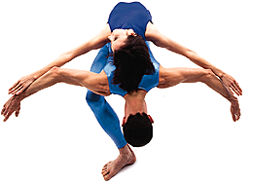 In his sixtieth year of performing,
Merce Cunningham still takes to the stage with his customary relish. He will
stand stock still and then, in a great flurry, mark up the air with rapid yet
precise gestures of hand, elbow, eyebrow. Just as in the days when he could fly
like a bird, he leaves phosphorescent trails behind--strange tracers, gleaming
afterimages. This month finds him landing in one of his customary haunts: the
Brooklyn Academy of Music. There he will perform, one expects, in excerpts from
repertory cunningly called BAMEvents, flexible affairs that change from
evening to evening, depending on--as it is ever with this, our grandest, our
clearest-minded, our most visionary choreographer--his whim. From night to
night the BAMEvents scenery will change too, offering a chance to see
historic decor by Andy Warhol (magical floating silver pillows), Jasper Johns
(a transcendently wonderful set that deconstructs Duchamp's The Bride
Stripped Bare by Her Bachelors, Even), Robert Rauschenberg (whose antic
spirit has long enlivened Cunningham's stages), and William Anastasi (whose
cryptic means match the choreographer's own), among others. All this is in
addition to a repertory that offers three local premieres and one brand-new
work. This last, called Scenario, will have decor by the Japanese
couturier Rei Kawakubo. Takehisa Kosugi, whose recent work with Cunningham
involved a set of glass bells, quite lovely and eerie, will do the score.
Installations is a complex, technically oriented work incorporating
multiple video monitors. The other dances are Rondo, which changes from
performance to performance, depending on last-minute casting choices made, and
the luminous Windows, named for the computer program, and making use of
the same opportunities for spacing, overlapping, sizing, and such. The dance
contains a brief, buoyant solo for Tom Caley that looks like youth itself in
all its springtime glory. What else would one now expect from Cunningham,
golden in years, young as tomorrow? (October 14-19; 718-636-4100.) --N.D.
In his sixtieth year of performing,
Merce Cunningham still takes to the stage with his customary relish. He will
stand stock still and then, in a great flurry, mark up the air with rapid yet
precise gestures of hand, elbow, eyebrow. Just as in the days when he could fly
like a bird, he leaves phosphorescent trails behind--strange tracers, gleaming
afterimages. This month finds him landing in one of his customary haunts: the
Brooklyn Academy of Music. There he will perform, one expects, in excerpts from
repertory cunningly called BAMEvents, flexible affairs that change from
evening to evening, depending on--as it is ever with this, our grandest, our
clearest-minded, our most visionary choreographer--his whim. From night to
night the BAMEvents scenery will change too, offering a chance to see
historic decor by Andy Warhol (magical floating silver pillows), Jasper Johns
(a transcendently wonderful set that deconstructs Duchamp's The Bride
Stripped Bare by Her Bachelors, Even), Robert Rauschenberg (whose antic
spirit has long enlivened Cunningham's stages), and William Anastasi (whose
cryptic means match the choreographer's own), among others. All this is in
addition to a repertory that offers three local premieres and one brand-new
work. This last, called Scenario, will have decor by the Japanese
couturier Rei Kawakubo. Takehisa Kosugi, whose recent work with Cunningham
involved a set of glass bells, quite lovely and eerie, will do the score.
Installations is a complex, technically oriented work incorporating
multiple video monitors. The other dances are Rondo, which changes from
performance to performance, depending on last-minute casting choices made, and
the luminous Windows, named for the computer program, and making use of
the same opportunities for spacing, overlapping, sizing, and such. The dance
contains a brief, buoyant solo for Tom Caley that looks like youth itself in
all its springtime glory. What else would one now expect from Cunningham,
golden in years, young as tomorrow? (October 14-19; 718-636-4100.) --N.D.Imagine if the turn-of-the-century impresario David Belasco produced Jackie. Instead his name simply adorns the Broadway theater into which Gip Hoppe's comedy careens on October 18. Infatuated 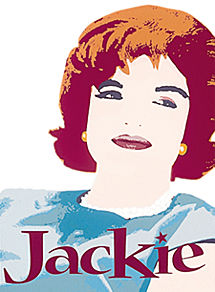 with using real stuff
onstage, Belasco famously imported Carolina mud for one production. The opening
scene of Hoppe's satire on the life and times of Jacqueline Kennedy Onassis is
set at the recent Sotheby's auction of Jackie's household goods--and those
props would have depleted Belas-co's fortune. Luckily, Hoppe knows the value of
fake pearls. His barbed burlesque, produced to acclaim in Boston last year,
employs an octet of actors--along with a phalanx of puppets and cardboard
cutouts--to portray more than 100 characters. Reviewers seemed relieved to find
that when the curtain descended on the comic chaos, the former First Lady's
reputation hadn't been lowered as well. Hoppe saved his sharpest satire for
Jackie's Kennedy in-laws, Marilyn Monroe, other assorted hangers-on,
and us Jackie-obsessed observers. "She paid an enormous price for her fame,"
the playwright told one interviewer. "Now it's somebody else's turn to pay
for it." All Jackie Onassis idolizers should recognize their cue and
line up for tickets (212-239-6200).
--J.I. with using real stuff
onstage, Belasco famously imported Carolina mud for one production. The opening
scene of Hoppe's satire on the life and times of Jacqueline Kennedy Onassis is
set at the recent Sotheby's auction of Jackie's household goods--and those
props would have depleted Belas-co's fortune. Luckily, Hoppe knows the value of
fake pearls. His barbed burlesque, produced to acclaim in Boston last year,
employs an octet of actors--along with a phalanx of puppets and cardboard
cutouts--to portray more than 100 characters. Reviewers seemed relieved to find
that when the curtain descended on the comic chaos, the former First Lady's
reputation hadn't been lowered as well. Hoppe saved his sharpest satire for
Jackie's Kennedy in-laws, Marilyn Monroe, other assorted hangers-on,
and us Jackie-obsessed observers. "She paid an enormous price for her fame,"
the playwright told one interviewer. "Now it's somebody else's turn to pay
for it." All Jackie Onassis idolizers should recognize their cue and
line up for tickets (212-239-6200).
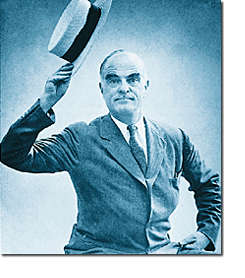
--J.I.America's cultural Age of Innocence reached its zenith in the late 1930s with two artistic bonbons: MGM's technicolor treatment of The Wizard of Oz and Thornton Wilder's more haunting voicing of the mantra "no place like home," Our Town. This month Kentucky's renowned Actors Theatre of Louisville (502-584-1205) re-examines each of these cultural icons in a festival of symposia, exhibitions, documentary screenings, and performances. ATL has declared October 18 "Oz Day" in conjunction with its musical production of The Wizard of Oz (sans Roseanne, alas). Then, starting on October 29, the company makes Wilder the subject of its annual "Classics in Context" festival, coinciding with the centenary of his birth. The centerpiece will be the debut of four never-before-produced Wilder one-acts, directed by Tazewell Thompson.
Nancy Dalva is the author of Dance Ink: The Photographs. John Istel is a senior editor at Stagebill.  
Copyright © 1997 by The Atlantic Monthly Company. All rights reserved. | ||||||||||||
| |||||||||||||