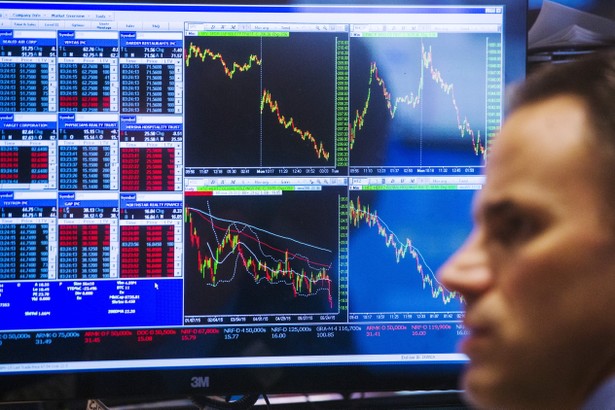
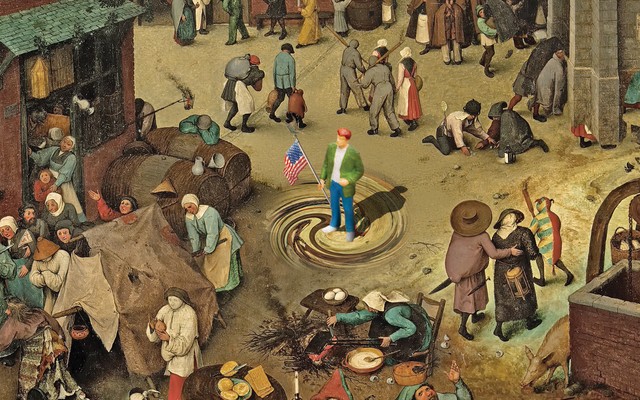
As election results rolled in, global and futures markets responded to the surprisingly close contest by plummeting, with the Dow dropping nearly 800 points. Follow along here for continuing updates on how the world financial markets are responding to the election of Donald Trump as 45th president of the United States.
While the U.S. election was still being decided on Tuesday night, markets in Asia took a dive during active trading as Donald Trump pulled ahead of projected-winner Hillary Clinton.
But markets in Asia bounced back this morning: An hour into trading, the Nikkei is up 6 percent, wiping out losses from yesterday. Stocks in Hong Kong and Shanghai have also recovered: Both the Hang Seng and Shanghai Composite have soared pass yesterday’s losses. (An odd sidenote: a stock in China which sounded like “Trump Wins Big” rallied while another stock which sounded like “Aunt Hillary” tumbled as votes were still being counted.)
It’s worth watching how investors in China will react to the actual Trump presidency. After all, the candidate has suggested that China’s economic relationship with the U.S. might get a lot more complicated once he takes office. During the course of his presidential campaign, Trump accused China of devaluing its currency (a claim that has been debunked) and unfairly taking manufacturing jobs away from Americans. Trump has also suggested imposing a 45 percent tariff on Chinese-made goods in order to reduce the trade deficit and bring jobs stateside, which would create a trade war between the two nations and undoubtedly affect China’s economic growth.
Reuters reports that Chinese President Xi Jinping congratulated Trump in a message earlier today, stating that he’s looking forward to working with Trump to “uphold the principles of non-conflict, non-confrontation, mutual respect, and win-win cooperation." For now, stocks in China, like those in the U.S., seem accepting of the impending Trump administration.
At the end of trading hours on Wednesday, it certainly seems that investors have digested Trump’s surprise victory in the U.S. Presidential election.
The Dow, S&P 500, and NASDAQ all rallied back from precipitous drops in the futures markets, with each closing up by at least 1 percent. The reversal was swift and intense—for the S&P the bounce back was largest since the days of the 2008 banking crisis. The Dow closed up 257 points, after diving 800 points last night in futures trading. Many analysts are attributing the market’s fast recovery to the tone of Trump’s late night acceptance speech, along with the potential benefits for Wall Street a Trump presidency could hold. Though Wall Street was expecting a Clinton win, the numbers seem to indicate that it is just as welcoming to the Trump presidency.
Asian markets open in just a few hours, and their performance tonight will either validate election night panic in emerging markets (the Nikkei plunged 5 percent, while the Hang Seng fell by 2 percent), or evaporate in the face of U.S. investor confidence.
DeVry Education Group is up 9 percent in today’s trading; Apollo Education Group, the company that owns several for-profit institutions—including the University of Phoenix—is up 7 percent; Bridgepoint Education (which was forced to forgive $24 million in student debt by the Consumer Financial Protection Bureau) up 17 percent; and Strayer Education (one of the most successful for-profit colleges) is up 12 percent.
The premise for investor confidence is that for-profit colleges—which have come under intense scrutiny in recent years by The Department of Education for fraudulent marketing, bad results, and saddling students with student-loan debt—might enjoy looser regulatory oversight once Trump becomes President. Afterall, Trump University, which shuttered in 2010, was a for-profit education company. Before Trump is sworn in next year, he will appear in court just after Thanksgiving as a witness in a class-action civil trial over alleged fraud at Trump University.
Bloombergreports that the billionaire investor Carl Icahn—a long time Trump supporter—left the president-elect’s victory party in the wee hours of the morning to bet $1 billion on the U.S. stock market.
Icahn’s take was that the 100-point drop in the S&P 500 was a temporary and irrational reaction that would soon reverse itself. And it looks like he was right, near the close of trading, the S&P was up more than 1 percent—the largest reversal for the index since the 2008 crisis.
As Rupert Neate of The Guardian notes, there are secondary market winners given the outcome of last night’s election: private prisons and oil companies.
The biggest corporate winners from Trump's victory. Private prisons and oil companies pic.twitter.com/xVjRgH1Ziz
The companies are soaring as analysts reckon that Trump will row back on the Department of Justice’s ruling this summer to phase out privately run jails. The companies could benefit still further from Trump’s plan for the mass deportation of immigrants.
And what about oil?
During his campaign, Trump has pledged to implement what he calls an “America first energy plan.” That plan calls for total energy independence achieved by undoing President Obama’s executive actions meant to curb energy production or emissions in favor of more climate-friendly policies, more exploration of shale, oil, and natural gas reserves, and exploration of “clean coal”.
Conversely, Trump has said that he would reverse the current U.S. commitment to battle climate change, including pulling out of the Paris Agreement. My colleague Robinson Meyer wrote about the potential environmental consequences of a Trump presidency here, saying:
This could shatter the international consensus on reducing greenhouse-gas emissions, similar to how the second Bush administration’s withdrawal from the Kyoto Protocol effectively ended that treaty’s functional life within the United States. It could enable other countries to abandon their commitments and emit greenhouse gases at much higher rates.
While markets have rebounded broadly, there are still big winners and big losers today.
At the conclusion of this election, concerns over the diminished power of the second amendment have seemed to dissipate. With Americans no longer concerned that a Clinton presidency would mean stricter gun control laws, the sense of urgency causing some to stock up on arms may have eased, causing a drop in major gun manufacturing stocks, such as Smith and Wesson, which declined by more than 3.75 percent around 12:20pm.
Sectors whose stocks were poised for a decrease in regulation under a Trump presidency —particularly large pharmaceutical organizations—climbed on Wednesday. Pharmaceutical and biotech companies have been cautious of a Clinton-presidency, based on her campaign promises that she would dramatically rein in drug prices. At 12:30 p.m, Bayer had surged more than 4 percent, while shares of Pfizer increased by more than 7.5 percent and GlaxoSmithKline was up more than 3 percent.
On Monday, world markets surged ahead on the projection that Democratic candidate Hillary Clinton would narrowly capture the presidency.
U.S. indicators—the Dow, the Nasdaq, and the S&P 500—rose 2 percent on forecasts predicting a Clinton victory.
But as the tides began to change last night—with Donald Trump pulling an eventual upset to become the U.S. president-elect—the market began to react. For a variety of reasons, markets don’t always respond well to uncertainty. The market shifts were somewhat predictable: the peso plunged to a record low, U.S. futures dived, Asian markets—particularly the Nikkei which dropped 5 percent by close—also dived, while gold rallied big. Analysts noted that the volatility seen last night was much greater than following the surprising result of the Brexit vote earlier this year.
This is not the outcome investors anticipated, but U.S. markets have since recovered: all three indices are surging ahead gaining nearly 1 percent by noon.
So why are the markets worried? First of all, the policy statements of Mr Trump have been both vague and erratic—on issues such as trade, foreign policy, the independence of the Federal Reserve and even the commitment to repay Treasury bonds in full. What is hard to know is how serious his policy proposals might be, and how much Congress would allow him to enact. He has more freedom in foreign policy areas than in the domestic arena. That is why emerging markets might take the greatest hit.
For the richest men on Earth, everything is free and nothing matters.
At the end of Paul Thomas Anderson’s 2007 movie, There Will Be Blood, Daniel Day-Lewis’s oil-baron character, old now and richer than Croesus, beats Paul Dano’s preacher to death with a bowling pin. Dano’s Eli Sunday, a nemesis of Day-Lewis’s Daniel Plainview during his seminal, wealth-building years, has come to sell Plainview the oil-rich land that he once coveted. But Plainview doesn’t need the land anymore, because—as he explains in one of the most famous monologues in modern cinema—he has sucked out all the oil hidden beneath it from an adjoining property, like a milkshake.
Desperate for money, Eli begs for a loan. Instead, Plainview chases him around a bowling alley and murders him with great enthusiasm. Once it’s over, a butler comes to see what all the noise was about. “I’m finished,” Plainview yells.
Kash Patel has alarmed colleagues with episodes of excessive drinking and unexplained absences.
On Friday, April 10, as FBI Director Kash Patel was preparing to leave work for the weekend, he struggled to log on to an internal computer system. He quickly became convinced that he had been locked out, and he panicked, frantically calling aides and allies to announce that he had been fired by the White House, according to nine people familiar with his outreach. Two of these people described his behavior as a “freak-out.”
Patel oversees an agency that employs roughly 38,000 people, including many who are trained to investigate and verify information that can be presented under oath in a court of law. News of his emotional outburst ricocheted through the bureau, prompting chatter among officials and, in some corners of the building, expressions of relief. The White House fielded calls from the bureau and from members of Congress asking who was now in charge of the FBI.
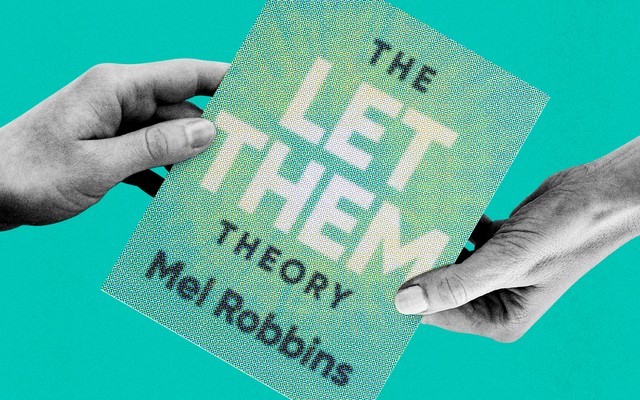
Years before Mel Robbins published her best-selling self-help book, a struggling writer posted a poem with a similar message.
The year 2020 was a bad one for Cassie Phillips. Her husband had recently returned from an overseas deployment, and while he was away, she told me, she’d rarely heard from him. The pandemic began, and the family moved to Savannah, Georgia, where they didn’t know many people. Phillips felt isolated in her new home, and her marriage was falling apart.
Late at night, on her computer, she started writing out some lines—“If they want to go weeks without talking to you, LET THEM”; “If they want to follow the crowd, LET THEM”—to remind herself that she couldn’t control her husband’s behavior. The writing was an attempt to “get through the day knowing I didn’t have anybody but myself,” Phillips said; she was “learning not to give up on other people, but understanding I had to trust myself.”
I spent 10 months working at the institution because I thought I could help protect it. What I observed there is far worse than the public knows.
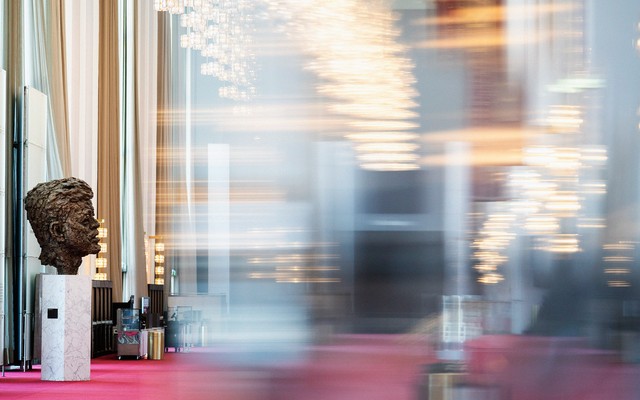
On the day I was laid off from the Kennedy Center, I felt a little like Dolley Madison saving the Stuart portrait of Washington before the British sacked the capital. I was the staffer in charge of the artworks in the building. A crucial difference is that my institution, unlike the White House in 1814, had been on fire for months.
About a year elapsed between the moment President Trump took over the Kennedy Center in early 2025 and his declaration this past February that he’d decided to shut down the nation’s cultural center for two years. In between, we had seen artist cancellations, shrinking audiences, firings of old staffers and influxes of new ones—a lot of drama, just not onstage. The date Trump announced for the closure was July 4, the country’s 250th birthday, an event that I had been hired to help commemorate as the institution’s first curator of visual arts and special programming.
For more than a year after Donald Trump returned to the White House, Ukraine held out hope—at least publicly—of winning him over. Trump, who revealed his affection for Russia’s Vladimir Putin again and again, largely halted American military aid to Kyiv. He insulted Ukrainian leaders regularly, personally berating President Volodymyr Zelensky in the Oval Office in February 2025. Nevertheless, Ukraine diligently took part in Trump’s peace negotiations, which were tilted to reward Putin’s invasion and turned out to be fruitless. Zelensky agreed to mineral deals that supposedly promised to enrich Americans. He even lavishly praised Trump himself. Despite Ukrainian leaders’ growing doubts, they calculated that speaking sweetly of the American president would do no harm and just might gain his favor.
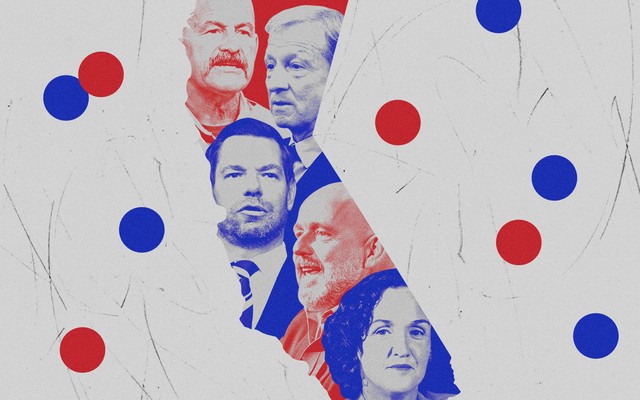
One of the most liberal states in the country can’t find a Democrat to lead it.
On a chilly Saturday late last month, I met Eric Swalwell at a Little League diamond near Capitol Hill, where the Bay Area congressman and his wife, Brittany, would be watching their 8-year-old son. Swalwell, who was running to succeed Gavin Newsom as the next governor of California, had been gradually rising above a Lilliputian cast of candidates and had acquired a strong scent of momentum in the race.
“Impeccable timing for you,” he’d texted me on my drive over. He attached a just-published Washington Post article reporting that FBI Director Kash Patel was seeking to release files relating to a decade-old investigation into Swalwell that had turned up no evidence of wrongdoing. If true, the Post story presented a publicity godsend to Swalwell’s campaign, further elevating his status as a nemesis of the vindictive president.
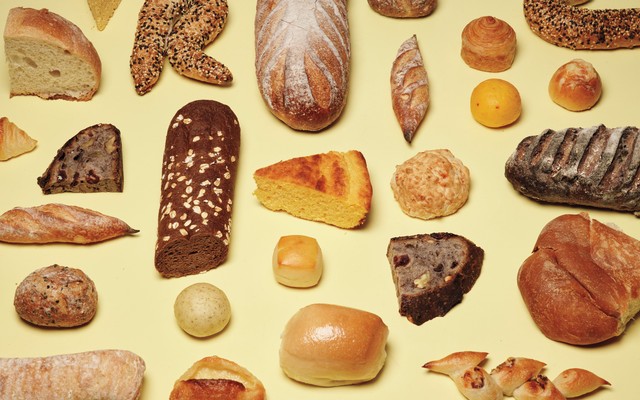
Thirteen thousand miles. Infinite contenders. One beautiful loaf.
This article was featured in the One Story to Read Today newsletter. Sign up for it here.
Here is the promise you and I must cling to across the thousands of words that follow: At some point within this text, I will reveal to you what—after 555 responses, 13,000 miles of travel, and months of monomaniacal research—I have determined to be the best free restaurant bread in America. I will not attempt to slither to the moral high ground, arguing that best is a meaningless measure, or insisting that all bread is dear in its own way. Even if you attempt to betray me—for instance, by merely scanning the text that follows for the phrase Here it is: the best free restaurant bread in America—I will uphold my end of the bargain.
People scrutinizing influencers for their views should also hold them to account for their facts.
Last week, Pod Save America, the popular podcast founded by former Obama-administration staffers, hosted the influencer and leftist provocateur Hasan Piker. A charismatic and pugnacious socialist streamer, Piker has become a flash point in a broader debate among Democrats over how far their party’s big tent ought to extend. Unsurprisingly, Piker’s hourlong interview generated controversy. Critics on the right and left highlighted his refusal to condemn Hamas. Others were upset that the influencer said he would “vote for Hamas over Israel every single time,” even as he reiterated his reticence to back a progressive politician such as Gavin Newsom over J. D. Vance.
But a very different part of the podcast caught my attention, because it illustrates the problem with the wrangling over Piker: It revolves around his contentious opinions about a narrow subject—Jews and Israel—while giving short shrift to his broader worldview and his tendency to be wrong on the facts. The issue is not whether to engage with figures like Piker; it’s how to do so in a way that’s genuinely informative.
The Sorrow and the Pity has lessons for how authoritarianism takes root—and how to fight against it.
The best thing I watched in the past year was an epically long movie about retired militants, but it wasn’t One Battle After Another, the Oscar winner for Best Picture. It was The Sorrow and the Pity, a four-hour documentary from 1969 about life in Nazi-occupied France. Reviewing the film in The Atlantic in 1972, David Denby called it “one of the greatest documentaries ever made,” and that remains true. What makes the film so effective is not how it looks at the Germans, a spectral presence, but how it chronicles the way that many ordinary citizens simply lived their lives as if nothing had changed.
The director Marcel Ophuls, who died last year at 97, explores collaboration and resistance through the lens of a small city, Clermont-Ferrand. It’s about an hour from Vichy, where the Nazis established a puppet government headed by the World War I hero Philippe Pétain. Pétain’s former protégé Charles de Gaulle fled to Britain, coordinated resistance to the Nazis, and returned to lead a free France. The idea that the French almost uniformly opposed Nazism, with only a few bad apples collaborating, is foundational to France’s postwar identity. The problem, as Ophuls, a Franco-German Jew, demonstrates, is that this is a myth.
This article was featured in the One Story to Read Today newsletter. Sign up for it here.
Maybe you’ve seen photos of Tehran in the 1970s, just before the Islamic Revolution: images of young women going to work in miniskirts, of couples making out in parks while wearing bell-bottoms, of people at pools in bikinis. It looks like Paris or Milan or Los Angeles. But in 1979 the revolution happened, and now Tehran looks like something from an earlier century.
Sometimes I think that our whole world has become kind of like that—going backwards in time. The religious movements thriving in today’s secularized age are the traditionalist ones that dissent from large parts of contemporary culture—not only the Shiite Islam of post-revolution Iran, but Orthodox Judaism and conservative Catholicism. Young Americans are flooding into Eastern Orthodox churches.