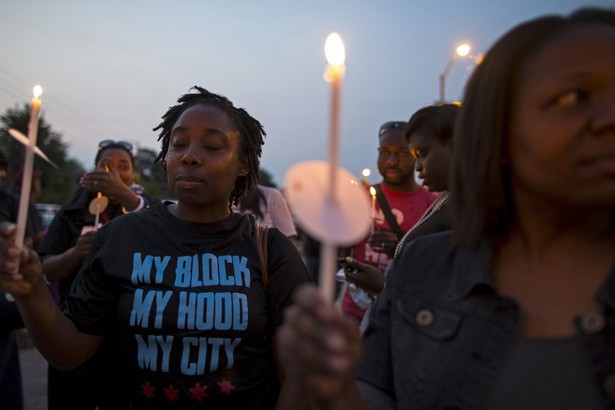
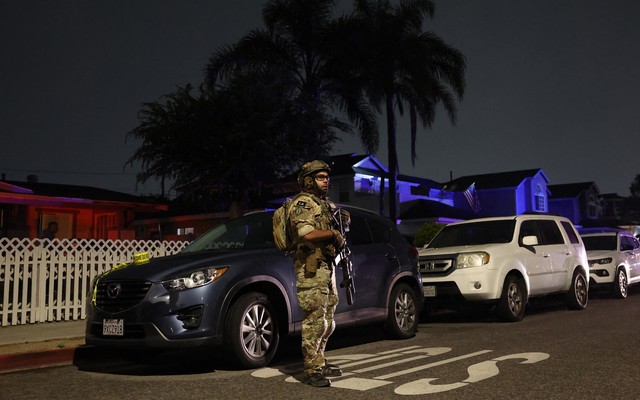
Chicago is already well past the 491 homicide-mark of last year. But with the death of a 24-year-old man on the city’s southwest side Monday, the city passed another bloody milestone: 600 homicides.
There are more homicides this year in Chicago than there are in New York and Los Angeles combined. The city has had 24 percent more homicides than this time last year. Meanwhile, non-lethal shootings are also up, as 2,100 people have been shot and injured, 500 more people than were shot this time last year.
Eddie Johnson, Chicago’s chief of police, put the blame on repeat gun offenders, saying in a statement Tuesday:
While we have increased our enforcement efforts this month—including arrests for murder and illegal gun confiscations—the lack of accountability for repeat gun offenders is sickening and it continues to drive the cycle of violence in Chicago.
Chicago already announced plans to hire an additional 1,000 police officers to help combat the crime surge. It would be the largest police surge of the last two decades.
Alabama Declares State of Emergency After Pipeline Explosion
A plume of smoke and flames caused by an explosion involving the Colonial Pipeline in Shelby County, Alabama, on October 31, 2016 (Marvin Gentry / Reuters)
Alabama declared a state of emergency Tuesday following the explosion of a gas pipeline in Shelby County, which killed one worker and injured six others.
The blast at the Colonial Pipeline took place Monday after a group of nine workers conducting repairs struck one of the gas lines, causing a large fire and forcing the evacuations of several homes in the area, according to Reuters. Colonial Pipeline Co. said its main gasoline line could remain closed until at least Saturday—a decision which caused gasoline prices to rise as much as 15 percent in affected areas. The 5,500-mile pipeline is one of the largest pipeline systems in the country, supplying more than 3 million barrels of gasoline to 13 states within the southeast and northeast United States.
The state of emergency is in effect until December.
This is the second time the Colonial Pipeline has been shut down in recent months. As my colleague David Graham reported, drivers in Georgia, Tennessee, and North Carolina faced gasoline shortages and price increases during repairs to the pipeline in September.
The Pope Reaffirms That the Catholic Church Will Never Ordain Women
Reuters
The pope has been in Sweden for the past two days commemorating the 500th anniversary of the Protestant Reformation. On the plane heading back to Rome, reporters asked whether the Roman Catholic Church will ever ordain women as priests. Francis affirmed what the Church has long taught: Women cannot be part of the priesthood, and that teaching will likely stand forever. “Really? Never?” a reporter asked, according to Catholic News Service. “If one carefully reads the declaration of St. John Paul, it goes in that direction, yes,” the pope answered.
Francis has recently pushed the Church to take up the question of women’s leadership. Last spring, he announced that a new commission will study the possibility of women as deacons, ordained ministers of the Church who can lead worship and conduct weddings, funerals, and baptisms. Deacons cannot administer some of the most important Catholic rites, though, such as offering communion or hearing confession. Many people, including the female religious-order leaders who proposed the idea, were thrilled that the pope created an opening for expanded women’s roles. Some want to see the Church go further, advocating the full ordination of women as priests. But as the pope said Tuesday, there’s little chance of that happening.
While Francis spent the beginning of this week working to strengthen ties between Catholics and Lutherans, his comments on the ride home show just how different the two groups’ teachings still are. While the Lutheran World Federation doesn’t have fully centralized rules on women’s ordination like the Roman Catholic Church, “more than 80 percent of [its] member churches ordain women.” Lutherans have steadily moved toward greater female participation in their leadership ranks, while the Catholic Church has remained firm that the Church has “no authority whatsoever to confer priestly ordination on women.” The pope may be working toward the “full communion of all Christians,” as he said during a mass in Malmo this week, but that doesn’t mean he will change the Church’s fundamental teachings.
Venezuela's President Releases 3 Imprisoned Opposition Activists
Jorge Silva / Reuters
Venezuelan President Nicolas Maduro released three jailed political activists, days after he met with opposition party leaders for the first time in two years in talks mediated by the Vatican.
The most well-known activist released was Carlos Melo, who was arrested in August and accused of carrying an explosive device as part of a coup to oust Maduro. The others, Andres Moreno and Marco Trejo, were accused of damaging military morale for allegedly making a political video of a soldier suffering the same economic afflictions that have befallen many Venezuelans. Opposition leaders praised Maduro’s decision to release the activists, whom they regard as political prisoners.
The Vatican-mediated talks come amid a backdrop of economic and political instability in Venezuela. The country’s economy has nearly collapsed amid the declining price of oil, a major contributor to the economy. Attempts to recall Maduro through a nationwide referendum, passed by the opposition-controlled legislature, were stymied by the electoral commission, which is packed with the president’s loyalists. The protests that followed turned violent. About 100 or so Maduro opponents are still in jail, and Maduro has called any motion to remove him from office a coup. Opposition leaders have also called for a march on the presidential palace this week.
A damaged mosque minaret in Dahiyet al-Assad, western Aleppo on October 29, 2016. (Ammar Abdullah / Reuters)
Civilian areas throughout Aleppo have faced repeated air strikes—attacks the United Nations says have been committed by “all sides” in the Syrian conflict and may amount to war crimes.
“All parties in Aleppo are conducting hostilities which are resulting in large numbers of civilian casualties, and creating an atmosphere of terror for those who continue to live in the city,” Ravina Shamdasani, a spokeswoman for the UN High Commissioner for Human Rights, said in Geneva Tuesday.
The remarks follow a weekend of heightened violence after rebel groups launched an offensive Friday to break the Syrian government’s siege on the eastern part of the city, considered the rebels’ last major stronghold in Syria. Eastern Aleppo has seen unparalleled destruction since Syrian and Russian forces began a bombing campaign in September to retake the city. Of the 275,000 people remaining in the city, more than 2,000 have been killed.
Western governments have accused Moscow and Damascus of war crimes, and on Sunday Staffan de Mistura, the UN envoy to Syria, said he was “appalled and shocked” that rebels conducted what he called “relentless and indiscriminate” rocket attacks in civilian centers, from which the BBC reports an estimated 40 people have been killed.
In Damascus, Syrian President Bashar al-Assad reaffirmed Monday the government’s aim to regain control of the entire country, which he said he expects to rule until the end of his term in 2021.
The Bizarre Political Scandal That Has Embroiled South Korea's President
A protester calls on South Korean President President Park Geun-hye to step down during a rally in Seoul, South Korea, on November 1, 2016. (Ahn Young-joon / AP)
Park Geun-hye, the South Korean president, has been embroiled in political scandal since it emergedlast week that she had allegedly received private counsel from her longtime friend, Choi Soon-sil—accusations that have spurred protests calling for Park’s resignation. Now, Choi, who has been compared to Rasputin, has been placed under emergency detention until authorities can determine if they’ll formally press charges, according to local media.
“Choi has denied all of the charges against her, and we're concerned that she may destroy evidence,” a prosecution official told Yonhap News Agency on Monday. “She has fled overseas in the past, and she doesn't have a permanent address in Korea, making her a flight risk. She is also in an extremely unstable psychological state, and it's possible an unexpected event could occur if she is released.”
Here’s what happened: Last Tuesday, Park issued a public apology after it was revealed she had received private counsel from Choi ranging from edits to her campaign speeches to sharing “certain” official documents with Choi. Though Park has denied receiving any improper counsel—having only apologized for causing “public distress”—her critics say the relationship afforded Choi, who holds neither public office nor security clearance, undue influence. They’ve accused Choi of embezzlement and of using her connection to the president to solicit millions of dollars in corporate donations for her two foundations. They further allege Choi’s daughter was admitted to one of the country’s top universities because of her mother’s relationship to Park.
Choi appeared before prosecutors Monday during which she said: “I have committed a crime I deserve to die for. Please forgive me.” With 48 hours to decide whether or not to press formal charges, Yonhap reported Tuesday, authorities are reviewing Choi’s financial records to determine if the embezzlement allegations are true.
Iraqi security forces continued to push into Mosul from the east on Tuesday, where they were met with sniper fire, mortars blasts, and booby-trapped car bombs set by the Islamic State. Meanwhile, to the north and west of the city, Kurdish fighters and government-backed Shia paramilitary forces have encircled the city in what is becoming a much quicker operation than expected to take back the ISIS stronghold in northern Iraq.
On Monday, Iraqi forces entered Mosul for the first time since ISIS claimed it in 2014. It is the largest city under ISIS’s control.
The battle for Mosul began a little more than two weeks ago, and though it could be months before it ends, the 50,000 Iraqi security troops have cleared most surrounding villages and are now pressing upon all sides toward the city’s center. Iraqi Prime Minister Haider al-Abadi said Monday that remaining ISIS fighters—believed to be about 3,000 to 5,000 strong—“have no escape, they either die or surrender."
As ISIS retreats, its fighters have lit oil fields on fire and used civilians as human shields. The group’s tactics has worried some humanitarian groups who fear for the 1 million citizens still living in Mosul. As Iraqi troops pressed into the edges of the city, there were reports of mass executions while ISIS moved people into the city center. About 18,000 civilians have been displaced since the operation began October 17. On Tuesday, Iraqi forces moved 500 citizens to a camp beyond the frontline, some of whom held white flags as they led their livestock away from the city.
The Chicago Tribune and the Los Angeles Times will not become part of Gannett. (Jim Yong / Reuters)
Gannett, the media giant that owns USA Today, says it will no longer pursue its acquisition ofTronc, which publishes the Chicago Tribune and the Los Angeles Times.
News of the possible acquisition first emerged in April, but Tronc rejected as inadequate Gannett’s offer of $12.25 per share. The two companies continued talks over the next few months and had apparently agreed that Gannett would pay $18.75 for each Tronc share. A deal was expected to be announced last week, but lenders deemed $18.75 too high given the state of the newspaper industry and the health of the two companies, Bloombergreported. Consequently, shares of both companies plunged sharply last week; Gannett’s decline was compounded by its poor third-quarter earnings.
The collapse of the deal is a blow to Gannett, the largest U.S. newspaper publisher. The LA Times notes the failure undermines the company’s “strategy to fight the decline in newspaper circulation by assembling a nationwide network for advertisers and saving money through consolidation and operational efficiencies.”
A successful deal would have brought under one roof USA Today, the LA Times, Chicago Tribune, San Diego Union-Tribune, Baltimore Sun, and hundreds of other daily newspapers.
Nearly 5,000 transit workers in Philadelphiabegan a strike at midnight Tuesday after talks between the Transport Workers Union Local 234 and the Southeastern Pennsylvania Transportation Authority (SEPTA) broke down over a new contract.
Here’s Philly.com on the issues separating the two sides:
Union workers were unwilling to accept the possibility of health care hikes that could have boosted their contribution from $552 a year to up to $6,000 if they wanted to keep equivalent medical coverage, union representatives said. They also were unhappy about a pension cap at $50,000 for workers while managers' pensions had no cap at all. Matters not related to dollars and cents were also in dispute. TWU members said SEPTA's break policies for vehicle operators barely left them enough time to use the bathroom between routes, and complained the nine hours of down time a worker must receive between shifts was not enough, forcing operators to drive vehicles while fatigued.
SEPTA, for its part, argued its $1.2 billion pension is only 62 percent funded and a substantial increase in pension benefits would make that disparity worse. It also said workers currently enjoy a "Cadillac" health care plan that costs them just $46 a month, and that work was already underway to adjust schedules.
The strike affects all of SEPTA’s operations: buses, trolleys, and subways, which together run about 850,000 trips per day. SEPTA said Regional Rail train service will be the only option for travel in and around Philadelphia.
It’s unclear how long the strike will last, but a prolonged dispute could have an impact on next Tuesday’s presidential election. Donald Trump, the Republican presidential nominee, is targeting Pennsylvania, a Democratic stronghold. But Hillary Clinton’s campaign is relying heavily on the strongly Democratic turnout in Philadelphia and its suburbs to keep the state blue. SEPTA could seek a court injunction to force workers back to their jobs if the strike lasts until Election Day.
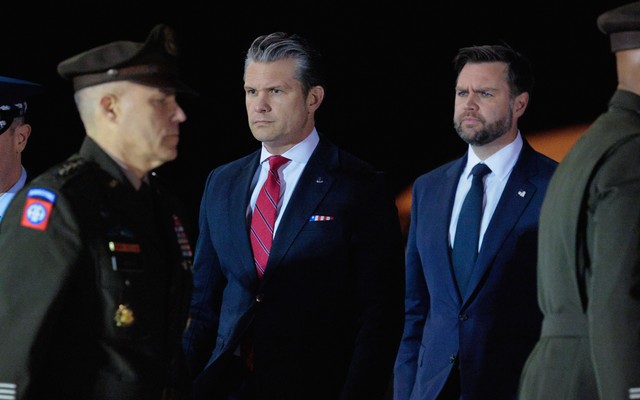
Vice President Vance is worried that the U.S. is running low on weapons.
In closed-door meetings, J. D. Vance has repeatedly questioned the Defense Department’s depiction of the war in Iran and whether the Pentagon has understated what appears to be the drastic depletion of U.S. missile stockpiles.
Two senior administration officials told us that the vice president has queried the accuracy of the information the Pentagon has provided about the war. He has also expressed his concerns about the availability of certain missile systems in discussions with President Trump, several people familiar with the situation told us. The consequences of a dramatic drawdown in munitions reserves are potentially dire: U.S. forces would need to draw from these same stockpiles to defend Taiwan against China, South Korea against North Korea, and Europe against Russia.
For a brief moment this weekend, the president appeared introspective.
This article was featured in the One Story to Read Today newsletter. Sign up for it here.
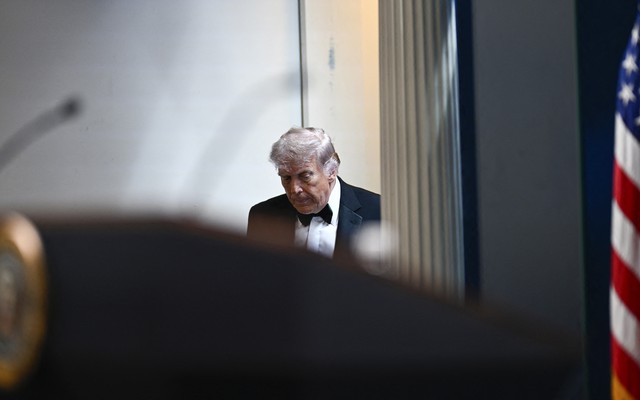
For a guy who had just been rushed out of a ballroom at the sound of gunfire, he seemed remarkably calm. For a president who regularly attacks the press, he seemed unusually gracious. For a fleeting period on Saturday night, Donald Trump appeared introspective, or at least as introspective as he’s capable of being in public.
“It’s always shocking when something like this happens,” he told reporters in the White House briefing room, standing in his tux and appearing to speak without notes. He briefly seemed to consider how familiar he was with threats to his life, and how the shock doesn’t fade: “Happened to me a little bit. And that never changes.”
The legal right spent decades empowering the presidency. Now it must reckon with the system it helped create.
Julius Caesar styled himself as a servant of the republic, claiming to speak for the people even as he disregarded laws and norms to govern by caprice. The Roman republic did not survive him.
The second Trump administration has revealed American Caesarism in nearly full bloom. Despite ambitions to fundamentally change the course of the country, this administration has no real legislative agenda. Instead, the president governs by executive orders, emergency decrees, and extortionate transactions, using his power to reward his friends and punish his enemies. He’s launched foreign military adventures and full-blown wars seemingly based on personal whim, and has made the military a political prop and a tool for domestic law enforcement. With Congress sidelined and the courts reluctant to check Donald Trump’s excesses, America has been left with what some legal scholars have described as an “executive unbound”—and with a president who threatens to supplant the republic in all but name.
For the richest men on Earth, everything is free and nothing matters.
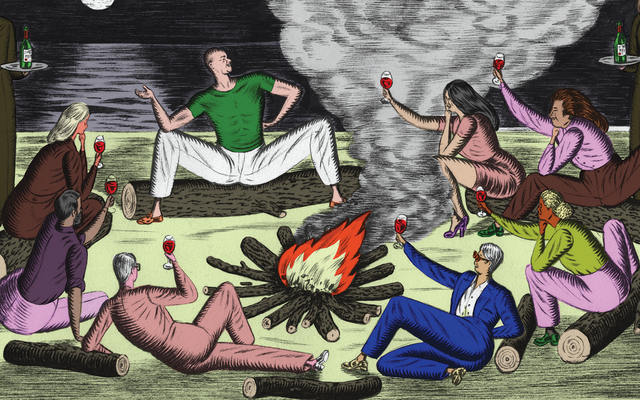
At the end of Paul Thomas Anderson’s 2007 movie, There Will Be Blood, Daniel Day-Lewis’s oil-baron character, old now and richer than Croesus, beats Paul Dano’s preacher to death with a bowling pin. Dano’s Eli Sunday, a nemesis of Day-Lewis’s Daniel Plainview during his seminal, wealth-building years, has come to sell Plainview the oil-rich land that he once coveted. But Plainview doesn’t need the land anymore, because—as he explains in one of the most famous monologues in modern cinema—he has sucked out all the oil hidden beneath it from an adjoining property, like a milkshake.
Desperate for money, Eli begs for a loan. Instead, Plainview chases him around a bowling alley and murders him with great enthusiasm. Once it’s over, a butler comes to see what all the noise was about. “I’m finished,” Plainview yells.
To understand the significance of someone running a marathon in less than two hours, you also need to understand that, until recently, the notion of this actually happening was truly, utterly absurd. Sure, a physiologist named Michael Joyner had floated the idea that such a feat might be humanly possible in a journal paper way back in 1991. But his peers laughed off the idea, and not much changed over the succeeding decades. In Runner’s World in 2014, I predicted that it would happen in 2075. Frankly, even that forecast seemed overly optimistic to me, but I figured I’d be dead by then, so no one would be able to call me on it.
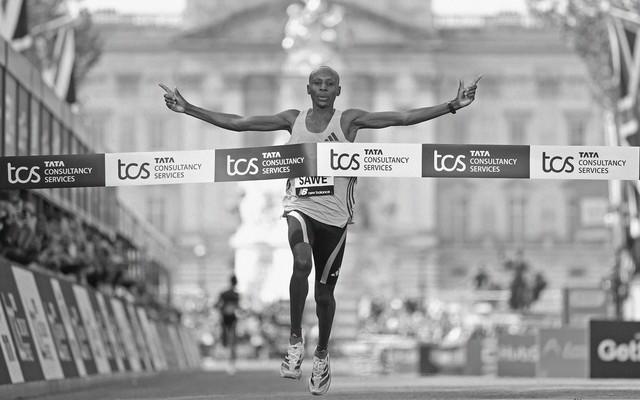
Well, I was wrong. Yesterday morning, the two-hour marathon barrier finally went down. A relatively unheralded 31-year-old Kenyan named Sabastian Sawe won the London Marathon with a time of 1:59:30. That is, for reference, 26.2 miles run at an average of 4:34 a mile—or, put another way, a pace that most recreational runners would struggle to sustain for more than a few seconds, if they could hit it at all. Perhaps even more arresting was the fact that the man who took second place, Ethiopia’s Yomif Kejelcha, also ran under two hours, finishing just 11 seconds behind Sawe.
The administration could exert much greater control over the industry—but just how far would it go?
AI companies are beginning to entertain the possibility that they could cease to exist. This notion was, until recently, more theoretical: A couple of years ago, an ex-OpenAI employee named Leopold Aschenbrenner wrote a lengthy memo speculating that the U.S. government might soon take control of the industry. By 2026 or 2027, Aschenbrenner wrote, an “obvious question” will be circling through the Pentagon and Congress: Do we need a government-led program for artificial general intelligence—an AGI Manhattan Project? He predicted that Washington would decide to go all in on such an effort.
Aschenbrenner may have been prescient. Earlier this year, at the height of the Pentagon’s ugly contract dispute with Anthropic, Secretary of Defense Pete Hegseth warned that he could invoke the Defense Production Act (DPA), a Cold War–era law that he reportedly suggested would allow him to force the AI company to hand over its technology on whatever terms the Pentagon desired. The act is one of numerous levers the Trump administration can pull to direct, or even commandeer, AI companies. And the companies have been giving the administration plenty of reason to consider doing so.
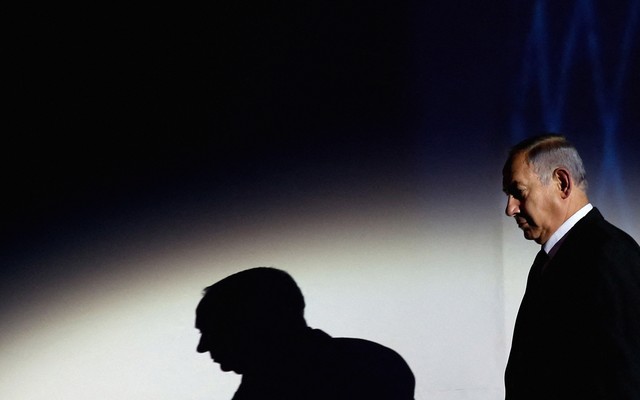
The Israeli prime minister’s focus is, as always, on himself and his near-term political needs. The plight of American Jews is simply not his concern.
The relationship between the United States and Israel is in crisis. Six in 10 Americans have a negative view of Israel, and a majority of those under 50 in both major parties view Israel as well as its prime minister, Benjamin Netanyahu, negatively. After the brutal Gaza war, a large percentage of liberal-leaning Generation Z considers Israel a pariah state. Democratic candidates are scrambling to distance themselves from Israel and its controversial leader; earlier this month, 40 of the 47 Democratic senators voted against a military aid package for the country. And hostility toward Israel is spilling over into hostility toward Jews. Liberal influencers, activists, podcasters, and even politicians are invoking age-old anti-Semitic tropes with frightening regularity.
Instead of a crackdown on his enemies, Trump wants his ballroom.
When an assassin murdered Charlie Kirk in September 2025, the MAGA movement seized the moment to demand a campaign of repression. Vice President Vance called for an ambitious program to “go after the NGO network that foments, facilitates, and engages in violence.” He named the Ford Foundation, Open Society Foundations, and The Nation magazine as examples of candidates for the retaliation he had in mind. The people who faced consequences after the killing almost universally did so for things they had written or said, not for acts of violence. In November, Reuters counted some 600 cases of people who were fired, suspended, or otherwise disciplined for their speech about Kirk’s life and death.
Now another gunman has attacked political targets. At the White House Correspondents’ Association Dinner, a man discharged a firearm in the vicinity of hundreds of people from the worlds of politics, media, and business—among them, the president and vice president of the United States. Although much about the event remains unclear, the available evidence suggests that the gunman was motivated by an anti-Trump agenda. Yet this time, MAGA’s immediate response to political violence has been much less aggressive. At his press conference after yesterday’s attempted shooting, President Trump cited the attack as proof of the need for his wished-for White House ballroom. Social-media accounts that take their cues from the White House promptly echoed the message.
The pontiff has proved unwilling to subordinate his faith to politics, or to adjust his commitment to the Gospel in exchange for access to power.
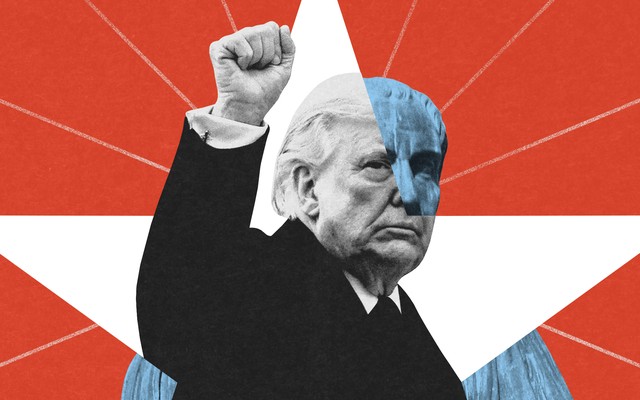
American presidents and popes have clashed before, but the battle of words and wills between Donald Trump and Pope Leo XIV is unprecedented.
The distinctiveness of their clash is not due mainly to the fact that Robert Francis Prevost is the first American-born pope, though that is significant. After all, Leo can’t be dismissed as a foreigner who is speaking about a country and culture he doesn’t understand. When he is critical of America, on matters ranging from war to mass deportation to those who “manipulate religions and the very name of God,” it comes from a place of love and devotion.
Nor does it have to do solely with the nature of the disagreements, most specifically the war waged by Trump against Iran. Past popes have criticized past presidents for going to war.
What makes the Trump-Leo collision most unusual is the manner of the disagreement, not on the part of the pope—whose criticisms have been direct but restrained—but on the part of the president.
A manifesto-like email allegedly sent by the dinner shooter suggests a murderous obsession with Trump’s politics.
The line “I experience rage thinking about everything this administration has done” could probably have been written in an email to friends by any number of the attendees at last night’s White House Correspondents’ Association dinner. But the line was apparently written by a man who showed up with a shotgun and pistol and was ready to kill “most everyone” there to get to Donald Trump and assassinate him and his Cabinet. In a manifesto-like email that he reportedly sent to family minutes before allegedly shooting, Cole Tomas Allen wrote that the assembled journalists and machers “chose to attend a speech by a pedophile, rapist, and traitor, and are thus complicit.” Allen never came near the president or the gala floor. A Secret Service agent was shot in the vest before Allen was tackled and arrested.