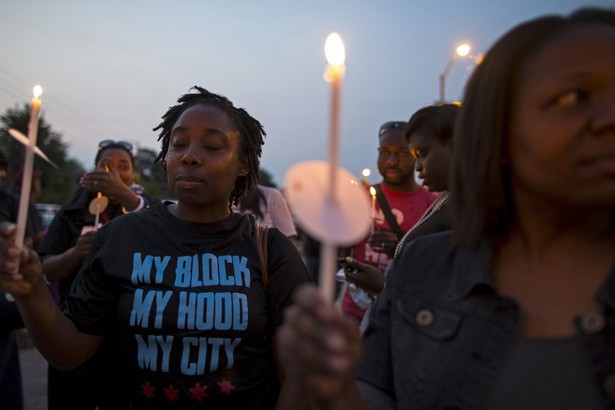
Chicago is already well past the 491 homicide-mark of last year. But with the death of a 24-year-old man on the city’s southwest side Monday, the city passed another bloody milestone: 600 homicides.
There are more homicides this year in Chicago than there are in New York and Los Angeles combined. The city has had 24 percent more homicides than this time last year. Meanwhile, non-lethal shootings are also up, as 2,100 people have been shot and injured, 500 more people than were shot this time last year.
Eddie Johnson, Chicago’s chief of police, put the blame on repeat gun offenders, saying in a statement Tuesday:
While we have increased our enforcement efforts this month—including arrests for murder and illegal gun confiscations—the lack of accountability for repeat gun offenders is sickening and it continues to drive the cycle of violence in Chicago.
Chicago already announced plans to hire an additional 1,000 police officers to help combat the crime surge. It would be the largest police surge of the last two decades.
Alabama Declares State of Emergency After Pipeline Explosion
A plume of smoke and flames caused by an explosion involving the Colonial Pipeline in Shelby County, Alabama, on October 31, 2016 (Marvin Gentry / Reuters)
Alabama declared a state of emergency Tuesday following the explosion of a gas pipeline in Shelby County, which killed one worker and injured six others.
The blast at the Colonial Pipeline took place Monday after a group of nine workers conducting repairs struck one of the gas lines, causing a large fire and forcing the evacuations of several homes in the area, according to Reuters. Colonial Pipeline Co. said its main gasoline line could remain closed until at least Saturday—a decision which caused gasoline prices to rise as much as 15 percent in affected areas. The 5,500-mile pipeline is one of the largest pipeline systems in the country, supplying more than 3 million barrels of gasoline to 13 states within the southeast and northeast United States.
The state of emergency is in effect until December.
This is the second time the Colonial Pipeline has been shut down in recent months. As my colleague David Graham reported, drivers in Georgia, Tennessee, and North Carolina faced gasoline shortages and price increases during repairs to the pipeline in September.
The Pope Reaffirms That the Catholic Church Will Never Ordain Women
Reuters
The pope has been in Sweden for the past two days commemorating the 500th anniversary of the Protestant Reformation. On the plane heading back to Rome, reporters asked whether the Roman Catholic Church will ever ordain women as priests. Francis affirmed what the Church has long taught: Women cannot be part of the priesthood, and that teaching will likely stand forever. “Really? Never?” a reporter asked, according to Catholic News Service. “If one carefully reads the declaration of St. John Paul, it goes in that direction, yes,” the pope answered.
Francis has recently pushed the Church to take up the question of women’s leadership. Last spring, he announced that a new commission will study the possibility of women as deacons, ordained ministers of the Church who can lead worship and conduct weddings, funerals, and baptisms. Deacons cannot administer some of the most important Catholic rites, though, such as offering communion or hearing confession. Many people, including the female religious-order leaders who proposed the idea, were thrilled that the pope created an opening for expanded women’s roles. Some want to see the Church go further, advocating the full ordination of women as priests. But as the pope said Tuesday, there’s little chance of that happening.
While Francis spent the beginning of this week working to strengthen ties between Catholics and Lutherans, his comments on the ride home show just how different the two groups’ teachings still are. While the Lutheran World Federation doesn’t have fully centralized rules on women’s ordination like the Roman Catholic Church, “more than 80 percent of [its] member churches ordain women.” Lutherans have steadily moved toward greater female participation in their leadership ranks, while the Catholic Church has remained firm that the Church has “no authority whatsoever to confer priestly ordination on women.” The pope may be working toward the “full communion of all Christians,” as he said during a mass in Malmo this week, but that doesn’t mean he will change the Church’s fundamental teachings.
Venezuela's President Releases 3 Imprisoned Opposition Activists
Jorge Silva / Reuters
Venezuelan President Nicolas Maduro released three jailed political activists, days after he met with opposition party leaders for the first time in two years in talks mediated by the Vatican.
The most well-known activist released was Carlos Melo, who was arrested in August and accused of carrying an explosive device as part of a coup to oust Maduro. The others, Andres Moreno and Marco Trejo, were accused of damaging military morale for allegedly making a political video of a soldier suffering the same economic afflictions that have befallen many Venezuelans. Opposition leaders praised Maduro’s decision to release the activists, whom they regard as political prisoners.
The Vatican-mediated talks come amid a backdrop of economic and political instability in Venezuela. The country’s economy has nearly collapsed amid the declining price of oil, a major contributor to the economy. Attempts to recall Maduro through a nationwide referendum, passed by the opposition-controlled legislature, were stymied by the electoral commission, which is packed with the president’s loyalists. The protests that followed turned violent. About 100 or so Maduro opponents are still in jail, and Maduro has called any motion to remove him from office a coup. Opposition leaders have also called for a march on the presidential palace this week.
A damaged mosque minaret in Dahiyet al-Assad, western Aleppo on October 29, 2016. (Ammar Abdullah / Reuters)
Civilian areas throughout Aleppo have faced repeated air strikes—attacks the United Nations says have been committed by “all sides” in the Syrian conflict and may amount to war crimes.
“All parties in Aleppo are conducting hostilities which are resulting in large numbers of civilian casualties, and creating an atmosphere of terror for those who continue to live in the city,” Ravina Shamdasani, a spokeswoman for the UN High Commissioner for Human Rights, said in Geneva Tuesday.
The remarks follow a weekend of heightened violence after rebel groups launched an offensive Friday to break the Syrian government’s siege on the eastern part of the city, considered the rebels’ last major stronghold in Syria. Eastern Aleppo has seen unparalleled destruction since Syrian and Russian forces began a bombing campaign in September to retake the city. Of the 275,000 people remaining in the city, more than 2,000 have been killed.
Western governments have accused Moscow and Damascus of war crimes, and on Sunday Staffan de Mistura, the UN envoy to Syria, said he was “appalled and shocked” that rebels conducted what he called “relentless and indiscriminate” rocket attacks in civilian centers, from which the BBC reports an estimated 40 people have been killed.
In Damascus, Syrian President Bashar al-Assad reaffirmed Monday the government’s aim to regain control of the entire country, which he said he expects to rule until the end of his term in 2021.
The Bizarre Political Scandal That Has Embroiled South Korea's President
A protester calls on South Korean President President Park Geun-hye to step down during a rally in Seoul, South Korea, on November 1, 2016. (Ahn Young-joon / AP)
Park Geun-hye, the South Korean president, has been embroiled in political scandal since it emergedlast week that she had allegedly received private counsel from her longtime friend, Choi Soon-sil—accusations that have spurred protests calling for Park’s resignation. Now, Choi, who has been compared to Rasputin, has been placed under emergency detention until authorities can determine if they’ll formally press charges, according to local media.
“Choi has denied all of the charges against her, and we're concerned that she may destroy evidence,” a prosecution official told Yonhap News Agency on Monday. “She has fled overseas in the past, and she doesn't have a permanent address in Korea, making her a flight risk. She is also in an extremely unstable psychological state, and it's possible an unexpected event could occur if she is released.”
Here’s what happened: Last Tuesday, Park issued a public apology after it was revealed she had received private counsel from Choi ranging from edits to her campaign speeches to sharing “certain” official documents with Choi. Though Park has denied receiving any improper counsel—having only apologized for causing “public distress”—her critics say the relationship afforded Choi, who holds neither public office nor security clearance, undue influence. They’ve accused Choi of embezzlement and of using her connection to the president to solicit millions of dollars in corporate donations for her two foundations. They further allege Choi’s daughter was admitted to one of the country’s top universities because of her mother’s relationship to Park.
Choi appeared before prosecutors Monday during which she said: “I have committed a crime I deserve to die for. Please forgive me.” With 48 hours to decide whether or not to press formal charges, Yonhap reported Tuesday, authorities are reviewing Choi’s financial records to determine if the embezzlement allegations are true.
Iraqi security forces continued to push into Mosul from the east on Tuesday, where they were met with sniper fire, mortars blasts, and booby-trapped car bombs set by the Islamic State. Meanwhile, to the north and west of the city, Kurdish fighters and government-backed Shia paramilitary forces have encircled the city in what is becoming a much quicker operation than expected to take back the ISIS stronghold in northern Iraq.
On Monday, Iraqi forces entered Mosul for the first time since ISIS claimed it in 2014. It is the largest city under ISIS’s control.
The battle for Mosul began a little more than two weeks ago, and though it could be months before it ends, the 50,000 Iraqi security troops have cleared most surrounding villages and are now pressing upon all sides toward the city’s center. Iraqi Prime Minister Haider al-Abadi said Monday that remaining ISIS fighters—believed to be about 3,000 to 5,000 strong—“have no escape, they either die or surrender."
As ISIS retreats, its fighters have lit oil fields on fire and used civilians as human shields. The group’s tactics has worried some humanitarian groups who fear for the 1 million citizens still living in Mosul. As Iraqi troops pressed into the edges of the city, there were reports of mass executions while ISIS moved people into the city center. About 18,000 civilians have been displaced since the operation began October 17. On Tuesday, Iraqi forces moved 500 citizens to a camp beyond the frontline, some of whom held white flags as they led their livestock away from the city.
The Chicago Tribune and the Los Angeles Times will not become part of Gannett. (Jim Yong / Reuters)
Gannett, the media giant that owns USA Today, says it will no longer pursue its acquisition ofTronc, which publishes the Chicago Tribune and the Los Angeles Times.
News of the possible acquisition first emerged in April, but Tronc rejected as inadequate Gannett’s offer of $12.25 per share. The two companies continued talks over the next few months and had apparently agreed that Gannett would pay $18.75 for each Tronc share. A deal was expected to be announced last week, but lenders deemed $18.75 too high given the state of the newspaper industry and the health of the two companies, Bloombergreported. Consequently, shares of both companies plunged sharply last week; Gannett’s decline was compounded by its poor third-quarter earnings.
The collapse of the deal is a blow to Gannett, the largest U.S. newspaper publisher. The LA Times notes the failure undermines the company’s “strategy to fight the decline in newspaper circulation by assembling a nationwide network for advertisers and saving money through consolidation and operational efficiencies.”
A successful deal would have brought under one roof USA Today, the LA Times, Chicago Tribune, San Diego Union-Tribune, Baltimore Sun, and hundreds of other daily newspapers.
Nearly 5,000 transit workers in Philadelphiabegan a strike at midnight Tuesday after talks between the Transport Workers Union Local 234 and the Southeastern Pennsylvania Transportation Authority (SEPTA) broke down over a new contract.
Here’s Philly.com on the issues separating the two sides:
Union workers were unwilling to accept the possibility of health care hikes that could have boosted their contribution from $552 a year to up to $6,000 if they wanted to keep equivalent medical coverage, union representatives said. They also were unhappy about a pension cap at $50,000 for workers while managers' pensions had no cap at all. Matters not related to dollars and cents were also in dispute. TWU members said SEPTA's break policies for vehicle operators barely left them enough time to use the bathroom between routes, and complained the nine hours of down time a worker must receive between shifts was not enough, forcing operators to drive vehicles while fatigued.
SEPTA, for its part, argued its $1.2 billion pension is only 62 percent funded and a substantial increase in pension benefits would make that disparity worse. It also said workers currently enjoy a "Cadillac" health care plan that costs them just $46 a month, and that work was already underway to adjust schedules.
The strike affects all of SEPTA’s operations: buses, trolleys, and subways, which together run about 850,000 trips per day. SEPTA said Regional Rail train service will be the only option for travel in and around Philadelphia.
It’s unclear how long the strike will last, but a prolonged dispute could have an impact on next Tuesday’s presidential election. Donald Trump, the Republican presidential nominee, is targeting Pennsylvania, a Democratic stronghold. But Hillary Clinton’s campaign is relying heavily on the strongly Democratic turnout in Philadelphia and its suburbs to keep the state blue. SEPTA could seek a court injunction to force workers back to their jobs if the strike lasts until Election Day.
Kash Patel has alarmed colleagues with episodes of excessive drinking and unexplained absences.
On Friday, April 10, as FBI Director Kash Patel was preparing to leave work for the weekend, he struggled to log into an internal computer system. He quickly became convinced that he had been locked out, and he panicked, frantically calling aides and allies to announce that he had been fired by the White House, according to nine people familiar with his outreach. Two of these people described his behavior as a “freak-out.”
Patel oversees an agency that employs roughly 38,000 people, including many who are trained to investigate and verify information that can be presented under oath in a court of law. News of his emotional outburst ricocheted through the bureau, prompting chatter among officials and, in some corners of the building, expressions of relief. The White House fielded calls from the bureau and from members of Congress asking who was now in charge of the FBI.
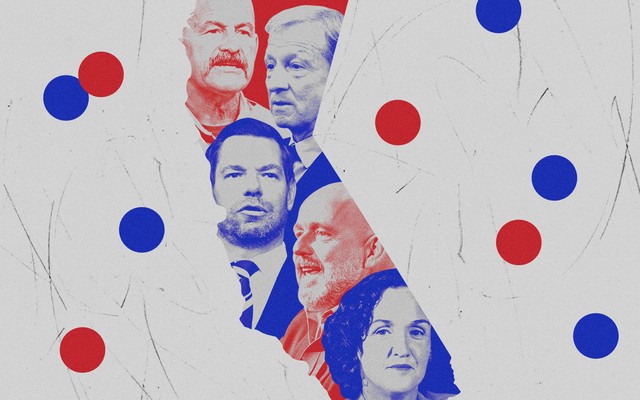
One of the most liberal states in the country can’t find a Democrat to lead it.
On a chilly Saturday late last month, I met Eric Swalwell at a Little League diamond near Capitol Hill, where the Bay Area congressman and his wife, Brittany, would be watching their 8-year-old son. Swalwell, who was running to succeed Gavin Newsom as the next governor of California, had been gradually rising above a Lilliputian cast of candidates and had acquired a strong scent of momentum in the race.
“Impeccable timing for you,” he’d texted me on my drive over. He attached a just-published Washington Post article reporting that FBI Director Kash Patel was seeking to release files relating to a decade-old investigation into Swalwell that had turned up no evidence of wrongdoing. If true, the Post story presented a publicity godsend to Swalwell’s campaign, further elevating his status as a nemesis of the vindictive president.
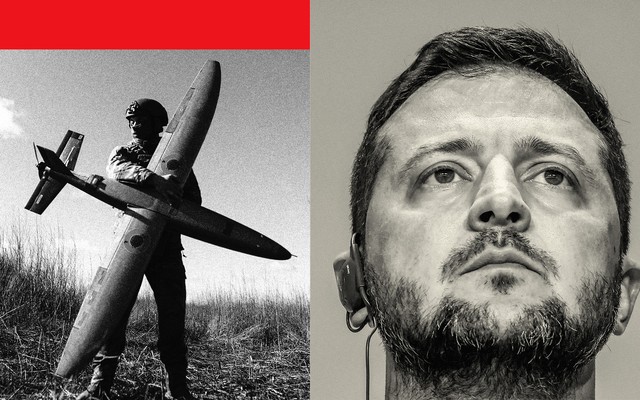
For more than a year after Donald Trump returned to the White House, Ukraine held out hope—at least publicly—of winning him over. Trump, who revealed his affection for Russia’s Vladimir Putin again and again, largely halted American military aid to Kyiv. He insulted Ukrainian leaders regularly, personally berating President Volodymyr Zelensky in the Oval Office in February 2025. Nevertheless, Ukraine diligently took part in Trump’s peace negotiations, which were tilted to reward Putin’s invasion and turned out to be fruitless. Zelensky agreed to mineral deals that supposedly promised to enrich Americans. He even lavishly praised Trump himself. Despite Ukrainian leaders’ growing doubts, they calculated that speaking sweetly of the American president would do no harm and just might gain his favor.
People scrutinizing influencers for their views should also hold them to account for their facts.
Last week, Pod Save America, the popular podcast founded by former Obama-administration staffers, hosted the influencer and leftist provocateur Hasan Piker. A charismatic and pugnacious socialist streamer, Piker has become a flash point in a broader debate among Democrats over how far their party’s big tent ought to extend. Unsurprisingly, Piker’s hourlong interview generated controversy. Critics on the right and left highlighted his refusal to condemn Hamas. Others were upset that the influencer said he would “vote for Hamas over Israel every single time,” even as he reiterated his reticence to back a progressive politician such as Gavin Newsom over J. D. Vance.
But a very different part of the podcast caught my attention, because it illustrates the problem with the wrangling over Piker: It revolves around his contentious opinions about a narrow subject—Jews and Israel—while giving short shrift to his broader worldview and his tendency to be wrong on the facts. The issue is not whether to engage with figures like Piker; it’s how to do so in a way that’s genuinely informative.
I spent 10 months working at the institution because I thought I could help protect it. What I observed there is far worse than the public knows.
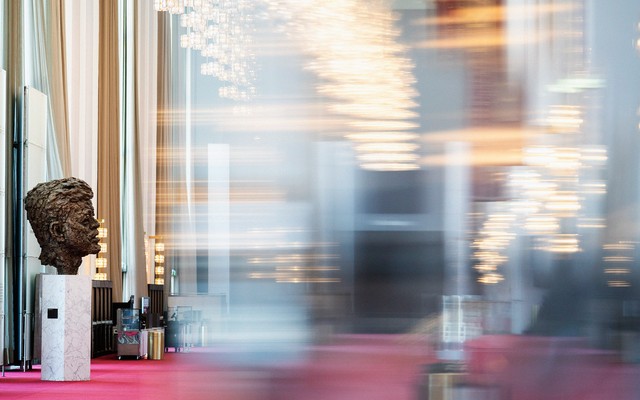
On the day I was laid off from the Kennedy Center, I felt a little like Dolley Madison saving the Stuart portrait of Washington before the British sacked the capital. I was the staffer in charge of the artworks in the building. A crucial difference is that my institution, unlike the White House in 1814, had been on fire for months.
About a year elapsed between the moment President Trump took over the Kennedy Center in early 2025 and his declaration this past February that he’d decided to shut down the nation’s cultural center for two years. In between, we had seen artist cancellations, shrinking audiences, firings of old staffers and influxes of new ones—a lot of drama, just not onstage. The date Trump announced for the closure was July 4, the country’s 250th birthday, an event that I had been hired to help commemorate as the institution’s first curator of visual arts and special programming.
The Sorrow and the Pity has lessons for how authoritarianism takes root—and how to fight against it.
The best thing I watched in the past year was an epically long movie about retired militants, but it wasn’t One Battle After Another, the Oscar winner for Best Picture. It was The Sorrow and the Pity, a four-hour documentary from 1969 about life in Nazi-occupied France. Reviewing the film in The Atlantic in 1972, David Denby called it “one of the greatest documentaries ever made,” and that remains true. What makes the film so effective is not how it looks at the Germans, a spectral presence, but how it chronicles the way that many ordinary citizens simply lived their lives as if nothing had changed.
The director Marcel Ophuls, who died last year at 97, explores collaboration and resistance through the lens of a small city, Clermont-Ferrand. It’s about an hour from Vichy, where the Nazis established a puppet government headed by the World War I hero Philippe Pétain. Pétain’s former protégé Charles de Gaulle fled to Britain, coordinated resistance to the Nazis, and returned to lead a free France. The idea that the French almost uniformly opposed Nazism, with only a few bad apples collaborating, is foundational to France’s postwar identity. The problem, as Ophuls, a Franco-German Jew, demonstrates, is that this is a myth.
Thirteen thousand miles. Infinite contenders. One beautiful loaf.
This article was featured in the One Story to Read Today newsletter. Sign up for it here.
Here is the promise you and I must cling to across the thousands of words that follow: At some point within this text, I will reveal to you what—after 555 responses, 13,000 miles of travel, and months of monomaniacal research—I have determined to be the best free restaurant bread in America. I will not attempt to slither to the moral high ground, arguing that best is a meaningless measure, or insisting that all bread is dear in its own way. Even if you attempt to betray me—for instance, by merely scanning the text that follows for the phrase Here it is: the best free restaurant bread in America—I will uphold my end of the bargain.
This article was featured in the One Story to Read Today newsletter. Sign up for it here.
Maybe you’ve seen photos of Tehran in the 1970s, just before the Islamic Revolution: images of young women going to work in miniskirts, of couples making out in parks while wearing bell-bottoms, of people at pools in bikinis. It looks like Paris or Milan or Los Angeles. But in 1979 the revolution happened, and now Tehran looks like something from an earlier century.
Sometimes I think that our whole world has become kind of like that—going backwards in time. The religious movements thriving in today’s secularized age are the traditionalist ones that dissent from large parts of contemporary culture—not only the Shiite Islam of post-revolution Iran, but Orthodox Judaism and conservative Catholicism. Young Americans are flooding into Eastern Orthodox churches.
Pastor John Mark Comer has won a massive audience by encouraging his followers to free themselves from the gnawing sense that there is always more to do.
John Mark Comer can be a hard man to find. He’s one of the most famous pastors in America right now, an author whose books have together sold more than 1 million copies, but he’s not the most reachable guy. He has a professional website but no contact page. He rarely travels. And as I reported this story, I began to learn his habits: Sending him a text early in the day was a wash, for instance, because he doesn’t check his phone until after morning prayer time. Once, when I reached out by email, I got an out-of-office response that he had set before Christmas explaining that he was observing “rhythms of rest” and asking that I try him again after his return in mid-January. Incoming messages sent in the meantime would be deleted.
A shocking number of the president’s supporters have turned against him.
Tomas Montoya has sold festival foods—funnel cakes, burgers, hot dogs—across the American Southwest for years. But lately, business has been rough. Costs are up, so he’s increased his prices. Employees are begging for hours he can’t give them. In Arizona, where he lives, Montoya pays $6 a gallon to fill up his food trucks with diesel. This summer, he may have to skip the California leg of his festival route because fuel is even more expensive there.
“It’s Trump,” Montoya told us outside a popular Hispanic grocery store in Casa Grande, Arizona, much of which sits in one of the most evenly divided House districts in the country. Montoya voted for President Trump in 2024, but now, well, frustrated doesn’t begin to cover how he’s feeling. The president is bragging about the economy, even though everyone Montoya knows is hurting; he promised to stop wars, but started one in Iran. “When Trump opens his mouth, three-quarters of what he says is stories, lies,” Montoya said. He’s planning to vote in the midterm elections this fall. But he may not choose a Republican.