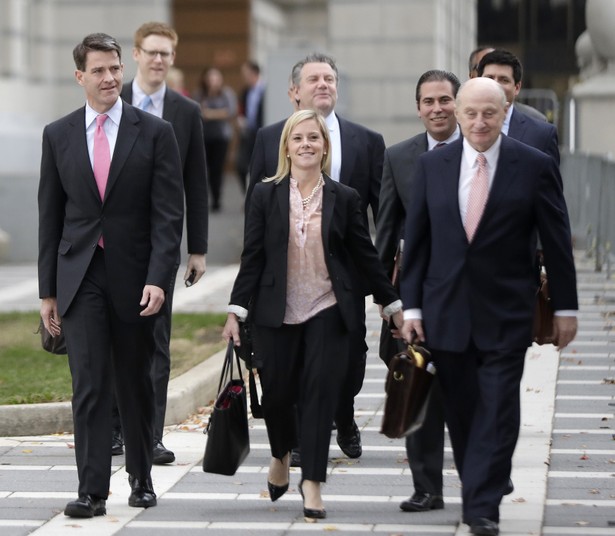
Bill Baroni, left, and Bridget Anne Kelly depart the federal court on Nov. 3.
Julio Cortez / AP
—A jury in Newark, New Jersey, has found two former top associates of Governor Chris Christie guilty of all charges in the “Bridgegate” scandal. More here
—A jury in Charlottesville, Virginia, has found that Rolling Stone magazine defamed a former University of Virginia administrator in a discredited 2014 article about sexual assault on the campus. More here
—The U.S. economy added 161,000 jobs in October, slightly less than estimates. The unemployment rate was mostly unchanged at 4.9 percent. But average hourly earnings increased sharply. More here
—We’re live-blogging the news stories of the day below. All updates are in Eastern Daylight Time (GMT -4).
Rolling Stone Magazine Found Liable in UVA Defamation Lawsuit
Nicole Eramo, the former University of Virginia administrator, leaves federal court with her attorney, Tom Clare, on November 1 in Charlottesville, Virginia. (Steve Helber / AP)
A jury in Charlottesville, Virginia, has found that Rolling Stone magazine defamed a former University of Virginia administrator in a discredited 2014 article about sexual assault on the campus.
The jury found the magazine, its publisher Wenner Media, and reporter Sabrina Rubin Erdely liable for defamation and said they had acted with “actual malice,” the constitutional threshold required to overcome the First Amendment’s shield against libel for journalists.
Nicole Eramo, the former associate dean of students at the University of Virginia, sued the magazine for $7.5 million over how it portrayed her in the article. At issue was the story about the rape of Jackie, the name used by the magazine to identify a young woman who said she was gang-raped in 2012 during a fraternity party at the school. The article, which alleged the school was callous toward complaints by the victims of sexual assault, prompted outrage and spurred the university to suspend all its fraternities. But The Washington Post published several articles poking holes in the story by Erdely, and Rolling Stone eventually retracted the piece in April 2015.
Eramo’s attorney, Tom Clare, had argued Rolling Stone ignored facts that disproved Erdely’s suggestion of callousness toward sexual-assault victims on UVa.’s part. But the magazine’s attorney, Scott Sexton, said the magazine didn’t know the story was false at the time it was published.
Jurors will decide later this month how much should be awarded to Eramo in damages.
San Antonio Cop Sacked for Feeding a Fecal Sandwich to a Homeless Person
(Allan Baxter / Getty)
A San Antonio policeman was fired after allegedly feeding a fecal sandwich to a homeless person, San Antonio Express-News reports.
The officer, who was not identified, was terminated after an investigation revealed he placed the excrement between two pieces of bread and offered it to a homeless person. Joe Krier, a city councilman representing San Antonio, called the officer a “bad apple,” adding: “We have very few bad apples in a barrel full of outstanding police ... it’s our job to get the bad apples out of the barrel as quickly as possible when they do bad things.”
Ivy Taylor, the San Antonio mayor, condemned the officer’s actions as “a betrayal of very value we have in our community.”
The officer, who has the right to appeal his termination, has hired an attorney, according to the San Antonio Police Officers Association. The motive behind the officer’s actions and the state of the homeless person who received the sandwich remain unknown.
The incident follows a recent increase in the city’s homeless population, which local homeless center Haven for Hope puts at an estimated 2,891 people.
Oil Fires Near Mosul Are Creating Toxic Clouds of Smoke Larger Than Los Angeles
Alaa Al-Marjani / Reuters
Oil fires set by the Islamic State in the area surrounding Mosul have created plumes of toxic gas that now cover an area larger than Los Angeles. Interviews with locals in the northern region conducted by Oxfam, a global charitable organization, as well as newly released satellite photos, show how the billowing black smoke and oily soot have become a health concern, contaminating drinking water for nearly 900 square miles.
The fires have affected thousands of families, who have no access to clean water or health services. Oxfam has called upon the Iraqi government to prioritize extinguishing the at least 19 oil fires. Some 1,000 people have been treated for breathing problems, and there are reports of some deaths.
ISIS has used the tactic to cover its moves as Iraqi security forces, backed by U.S. airstrikes, march north toward Mosul, the largest city in the group’s self-declared caliphate. This is not a new tactic. In 1991 Saddam Hussein torched oil wells to cover his retreat from Kuwait during the Gulf War. He did it again in 2003, in southern Iraq at Rumaila oilfields, which in a month spewed 600 kilotons of sulfur dioxide, the largest non-volcanic release scientists have ever recorded.
Violence Reported Amid Russian-Declared Pause in Aleppo
People walk past damaged buildings in northeastern Aleppo, Syria, on November 2, 2016. (Abdalrhman Ismail / Reuters)
Two Russian soldiers and a Syrian journalist were injured in eastern Aleppo Friday just hours into a 10-hour truce unilaterally declared by Moscow.
Several mortar rounds allegedly fired by Syrian rebel forces struck the al-Castello corridor, a designated exit route for civilians and rebel fighters in the eastern part of the divided city, state-run SANA reports. The Russian Defense Ministry said two of its serviceman were lightly wounded, and Walid Hanaya, a Syrian television reporter, was also injured. No fatalities were reported.
The halt in fighting, which was scheduled to run from 9 a.m. to 7 p.m. local time, is the second such pause to be declared by Moscow in less than a month. The previous pause also had reports of clashes between Syrian government and rebel forces, focused mainly at these designated exit corridors.
Webcam footage of the exit corridors by the Russian Defense Ministry showed them to be largely unused, despite the Syrian government reportedly dropping leaflets urging those remaining in the eastern part of the city to leave, The Associated Press reports. Though it remains unclear if fighting will resume after the truce’s deadline passes, the area, which is the last major rebel redoubt in Syria, has been the target of heightened airstrikes by Russia and Syria.
Last week rebel groups launched an offensive to break the Syrian government’s siege on eastern Aleppo. The United Nations condemned all parties for targeting civilians, saying it might amount to war crimes.
Jury Finds 2 Ex-Chris Christie Aides Guilty of All Charges in 'Bridgegate' Scandal
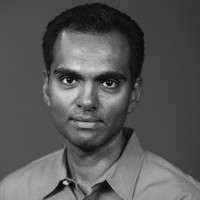
Bill Baroni (Eduardo Munoz / Reuters)
A jury in Newark, New Jersey, has found Bill Baroni and Bridget Anne Kelly, two former top associates of Governor Chris Christie, guilty of all charges in the “Bridgegate” scandal.
Baroni, the former deputy executive director of the Port Authority of New York and New Jersey, and Kelly, Christie’s deputy chief of staff, were indicted last year on nine counts of conspiracy and fraud in connection with the scheme in 2013 to close lanes on a section of the George Washington Bridge in Fort Lee, New Jersey, over the refusal of its Democratic mayor to endorse Christie, a Republican, for re-election. They face up to 20 years in prison, but are unlikely to be sentenced for that long.
Federal prosecutors’ main witness in the six-week trial was David Wildstein, a Christie appointee to the Port Authority who admitted to masterminding the plan. The jury also heard testimony from more than 30 other witnesses, including Baroni and Kelly. Federal prosecutors alleged Christie was aware of the actions of his aides.
Friday’s verdict is a blow to Christie, who is a top surrogate of Donald Trump, the Republican presidential nominee. But he has consistently denied any knowledge or involvement in the lane closures, and hasn’t been charged with any wrongdoing.
British Prime Minister Theresa May has told European Commission President Jean-Claude Juncker and German Chancellor Angela Merkel that the government’s timetable for the invocation of Article 50 is unchanged.
The comments come a day after the U.K. High Court ruled the government must seek a parliamentary vote before invoking Article 50 of the EU Charter, which would trigger talks on the U.K.’s formal separation from the European Union. In a statement, May’s spokesperson said the prime minister told Juncker and Merkel in a phone conversation “that while the government was disappointed with the judgment, it had strong legal arguments ahead of the case moving to the Supreme Court.”
The U.K. government is appealing the High Court ruling to the country’s Supreme Court, which is expected to hear the case early next month. The ruling put the government in an awkward position because the U.K. public voted 52 percent-to-48 percent in June to withdraw from the EU. Although those who want the U.K. to remain the EU celebrated the decision, newspapers that called for Brexit were unanimous in their coverage:
A Shipping Vessel Has Been Stuck in Baltimore Harbor for 7 Weeks
(Pablo Martinez Monsivais / AP)
A Malta-registered shipping vessel has been anchored in the Baltimore harbor for seven weeks, its crew of 18 mariners unable to come ashore or leave because of engine trouble the ship’s owner is unable to pay for.
Granadino crew ‘using salt for brushing’ teeth: Crew aboard NewLead bitumen tanker await word on engine repai... https://t.co/E9SGK7VUMQ
The Newlead Granadino broke down September 20. It was only meant to anchor in the harbor a few days while it delivered a shipment of asphalt. The crew of 18 men don’t have visas and are unable to come ashore. Their supplies are limited and they’ve relied on donations from the U.S. Coast Guard and the Seafarers Center, a local nonprofit. Tradewinds Newsreported the crew had run so low on essentials they were using salt to brush their teeth.
The International Transport Workers Federation (ITWF) told WBFF that some of the men have not been home in a year, have not been paid by the ship’s owner, Aeolus Compania Naviera S.A., and that the company is behind on the ship’s lease.
“What needs to happen at this point is that the bank that has the lien on this ship needs to come forward and take care of these men,” Barbara Shipley of the ITWF said, “take care of the issues taking place on this vessel.”
This type of harbor stalemate is not entirely uncommon. In September a fleet of about 90 ships and their crews were stuck in harbors all over the world because the ship’s South Korean owner, Hanjin Shipping, filed bankruptcy. The harbors refused to unload the cargo unless paid upfront, and the company feared if they docked their ships would be repossessed. Some are apparently still stranded, and one ship in Vancouver finally docked last week because it had run out of supplies.
Pakistan to Deport National Geographic’s ‘Afghan Girl’
Police escort Sharbat Gula to court in Peshawar, Pakistan, on November 4, 2016. (Fayaz Aziz / Reuters)
More than 30 years after she appeared on the cover of National Geographic as the green-eyed symbol of her country’s wars, Sharbat Gula will be deported back to Afghanistan, a Pakistani court ruled Friday.
Gula, who was arrested last week on charges of carrying fake ID, pleaded guilty to all charges against her in a Peshawar court Friday, Dawn reports. The court handed her a 15-day prison sentence and a 110,000-rupee ($1,050) fine, though the previous nine days she spent in jail since her arrest will count as time served. After that, she will be deported to Afghanistan.
Dubbed the “Afghan Girl,” Gula gained worldwide fame for her iconic photo on the 1985 cover of National Geographic. Though she remained relatively anonymous in the years after the issue was published, she was rediscovered by the magazine nearly two decades later at a refugee camp in Pakistan with her husband and their three daughters. It remains unclear how long she resided in the country without papers.
Gula’s arrest and deportation comes amid a nationwide crackdown on unregistered refugees in Pakistan, where an estimated 1 million unregistered Afghan refugees live. The UN Refugee Agency has called the Afghan refugee crisis “one of the most difficult protracted refugee situations in the world.”
Harvard Suspends Men's Soccer Team for Lewd 'Scouting Report' of Female Players
Elise Amendola / AP
Harvard suspended its top-of-the league men’s soccer team for the rest of the season Thursday after the school’s student paper, The Harvard Crimson, published an article explaining how each year men on the team kept a lewd “scouting report” that rated each freshman from the women’s team based on their attractiveness and sex appeal.
The Harvard Crimsonpublished its article late last month. The men kept their list on a Google document that until recently was publicly available, as well as the group’s full email list. The nine-page document is believed to have been created by the 2012 men’s team, but updated each year by the successive men’s team. The document judged each incoming freshman on the women’s team by attractiveness, based on a number scale, and designated each woman with a sexual position.
“She seems relatively simple and probably inexperienced sexually, so I decided missionary would be her preferred position,” the document read of one woman.
The men’s team is currently in first place in the Ivy League.
“The decision to cancel a season is serious and consequential, and reflects Harvard’s view that both the team’s behavior and the failure to be forthcoming when initially questioned are completely unacceptable, have no place at Harvard, and run counter to the mutual respect that is a core value of our community,” University President Drew Faust said late Thursday night.
U.S. Military Trainers Reportedly Killed in Jordan
U.S. soldiers take part in Exercise Eager Lion at a Jordanian military base in Zarqa on May 24, 2016. (Muhammad Hamed / Reuters)
Updated at 3:17 p.m. ET
Three U.S. service members were killed Friday in a shooting incident at a Jordanian military base, the U.S. Defense Department said in a statement.
“The three service members were in Jordan on a training mission, and the initial report is that they came under fire as they were entering the facility in vehicle,” the statement said.
Jordan’s state-run Petra news agency reported earlier that two trainers were killed in an exchange of fire at the gates of the King Feisal Airbase, in al-Jafr, Jordan. It added that a Jordanian officer and a U.S. trainer were also injured in the incident, citing an official source at the Jordan Armed Forces. But CNN, citing a U.S. official, said one American was killed at the gate and two were taken to hospital where they died.
Jordan is one of the closest U.S. allies in the Middle East, and the U.S. trains Syrian rebels in the country.
Jobs Report: U.S. Added 161,000 Jobs in October; Unemployment Rate at 4.9 Percent
Reuters
Total nonfarm payroll employment rose by 161,000 last month, the Department of Labour said Friday in the last jobs report before the November 8 presidential election. The unemployment rate was little changed at 4.9 percent.
“Employment continued to trend up in health care, professional and business services, and financial activities,” the department said.
Bloomberg reported economists expected the creation of 173,000 jobs. But average hourly earnings increased 2.8 percent year over year, a level last seen in July 2008, making it likely the U.S. Federal Reserve will raise rates interest next month.
The report also revised upward job creation in August and September; 44,000 extra jobs were created in those two months.
The report is likely to be closely watched by the presidential campaigns of Donald Trump and Hillary Clinton. Trump, the Republican nominee, has made what many regard as an uneven economic recovery since the 2008 global recession, the centerpiece of his campaign. Clinton, pointing to the state of the economy when President Obama inherited it, has pointed to job creation since then.
South Korea's President Denies Involvement With a Cult
People watch President Park Geun-hye’s televised statement in Seoul, South Korea, on November 4. (Kim Hong-Ji / Reuters)
Park Geun-hye’s presidency is being buffeted by questions about her friendship with Choi Soon-sil, a woman whom South Korean media have described as Rasputin-like, and on Friday Park denied she had fallen victim to a cult.
"There have been claims that I fell for a religious cult or had [shamanist rituals] performed in the Blue House,” she said in a nationally televised address, sometimes appearing on the verge of tears, “but I would like to clarify that those are absolutely not true.” But Park did apologize for giving Choi, who is not a public servant, access to policy-making. She also said she was willing to be questioned over the scandal.
As my colleague Yasmeen Serhan reported, a South Korean court issued an arrest warrant Thursday for Choi, 60, who is accused of attempted fraud and abuse of authority. Prosecutors she used her relationship with Park to seek millions of dollars in donations for her two nonprofit foundations.
The president’s approval rating sunk to 5 percent amid the scandal, and there have been calls for her impeachment or resignation.
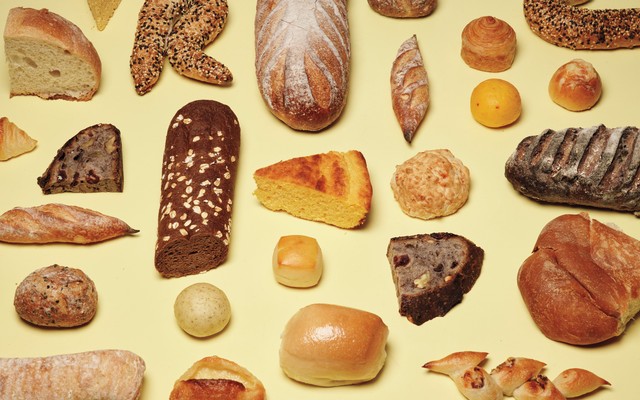
Thirteen thousand miles. Infinite contenders. One beautiful loaf.
This article was featured in the One Story to Read Today newsletter. Sign up for it here.
Here is the promise you and I must cling to across the thousands of words that follow: At some point within this text, I will reveal to you what—after 555 responses, 13,000 miles of travel, and months of monomaniacal research—I have determined to be the best free restaurant bread in America. I will not attempt to slither to the moral high ground, arguing that best is a meaningless measure, or insisting that all bread is dear in its own way. Even if you attempt to betray me—for instance, by merely scanning the text that follows for the phrase Here it is: the best free restaurant bread in America—I will uphold my end of the bargain.
The president is on a losing streak, and even some of his aides are dismayed by his choices.
This article was featured in the One Story to Read Today newsletter. Sign up for it here.
You’ve heard the joke: The White House is going to start talking about the Epstein files to distract from how badly the Iran war is going.
Except that this reverse “Wag the dog” is based on bizarre truth: First Lady Melania Trump did bring the disgraced financier up, unprompted, late last week in an effort to distance herself from the scandal (in a move that, predictably, only shifted it back into the spotlight once again). Meanwhile, as negotiations with Iran stumble forward, the Strait of Hormuz is still in Tehran’s hands and now President Trump has authorized a risky naval blockade that will likely send prices soaring further. Moreover, Trump’s poll numbers have continued to fall, Republicans worry that both houses of Congress could be lost in November, and the president threw away a remarkable amount of geopolitical capital trying to support his now-defeated illiberal buddy Viktor Orbán of Hungary. Oh, and Trump deeply offended adherents of the world’s two largest religions in one week’s time.
The car industry says it has an answer for drivers wary of going electric.
Two hours into a road trip in my Tesla, I start to get twitchy. By that point, the battery in my 2019 Model 3 has dipped to an uncomfortably low percentage. If I can’t reach the next plug, I’m in trouble. This is the kind of problem that Ram’s electric pickup truck—the first of a new breed of EV to arrive in the United States—is intended to solve. When the range starts to dwindle, the truck automatically fires up a hidden gas engine that refills the giant battery. The “electric” vehicle keeps on chugging down the highway, hour after hour; pit stops are once again decided by the need for bathroom breaks rather than battery range.
The Ram 1500 REV, set to debut later this year, is what’s called an “extended-range electric vehicle,” or EREV. In essence, it is an electric vehicle that burns gas. There’s nothing revolutionary about a half-gas, half-electric car, of course. Hybrids have been a mainstay in the United States since the Toyota Prius broke through two decades ago, and automakers have released more efficient plug-in hybrids—allowing drivers to charge up for about 30 miles of electric driving, just enough to accomplish daily errands without fossil fuels. An extended-range EV is a different kind of beast. The engine burns gasoline for the sole purpose of replenishing the battery—it never actually pushes the wheels. In the Ram, the battery can run for about 150 miles of electric driving, and the whole setup delivers enough range to travel nearly 700 miles between stops.
A minimally speaking autistic man just wrote a best-selling book. Or did he?
On a recent morning at Rockefeller Center, NBC employees strolled through the crowd with copies of Upward Bound, the latest book-club pick from the Today show co-host Jenna Bush Hager. “It’s deeply heartfelt and moving,” Hager said, after holding up the debut novel from the 28-year-old Woody Brown, “and the reason it’s so authentic is that the author understands autism firsthand.”
That understanding is indeed profound. Brown’s autism is such that he can barely speak, and he communicates mostly by pointing to letters, one by one, on a laminated board. This is also how his novel, which is already a New York Times best seller, came to be. In the recorded interview that followed Hager’s introduction, Brown’s mother, Mary, sat beside him, holding the letter board and reading his tapped-out messages.
Maybe you’ve seen photos of Tehran in the 1970s, just before the Islamic Revolution: images of young women going to work in miniskirts, of couples making out in parks while wearing bell-bottoms, of people at pools in bikinis. It looks like Paris or Milan or Los Angeles. But in 1979 the revolution happened, and now Tehran looks like something from an earlier century.
Sometimes I think that our whole world has become kind of like that—going backwards in time. The religious movements thriving in today’s secularized age are the traditionalist ones that dissent from large parts of contemporary culture—not only the Shiite Islam of post-revolution Iran, but Orthodox Judaism and conservative Catholicism. Young Americans are flooding into Eastern Orthodox churches.
Is the president’s son-in-law carrying out the public’s business or pursuing his own private interests?
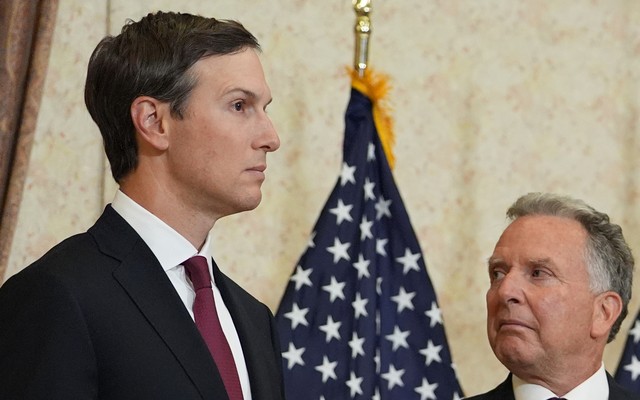
In 2021, shortly after he left his role as a senior White House adviser, Jared Kushner let it be known that he had loved his job but disliked the scrutiny and disclosure that came with being a top U.S. government official. He set up a private-equity firm and took a $2 billion investment from a Saudi fund led by Crown Prince Mohammed bin Salman. He proclaimed that he was embracing private life. “I’m an investor now,” Kushner said in a 2024 interview. If President Trump “calls you on November whatever and says, ‘I’d like you to come back to D.C.,’ you say, ‘Thanks, but I’m good’?” the interviewer, Dan Primack of Axios, pressed. “Yes,” Kushner responded.
But Kushner did come back. Two days before the United States and Israel attacked Iran this past February, he was in Geneva in a negotiation of the highest possible stakes. Over the weekend, he traveled with Vice President Vance to Islamabad to participate in failed peace talks with Iran. Without title or remit or any kind of official designation—only “presidential son-in-law”—Kushner has in the first 14 months of the second Trump administration sat down with world leaders including Vladimir Putin, Benjamin Netanyahu, and Volodymyr Zelensky, along with Saudis and multiple other actors from the Middle East.
The president’s attempts to interfere with the midterms demand vigilance, but a recent flimsy gambit is an argument against despair.
This is an edition of The Atlantic Daily, a newsletter that guides you through the biggest stories of the day, helps you discover new ideas, and recommends the best in culture. Sign up for it here.
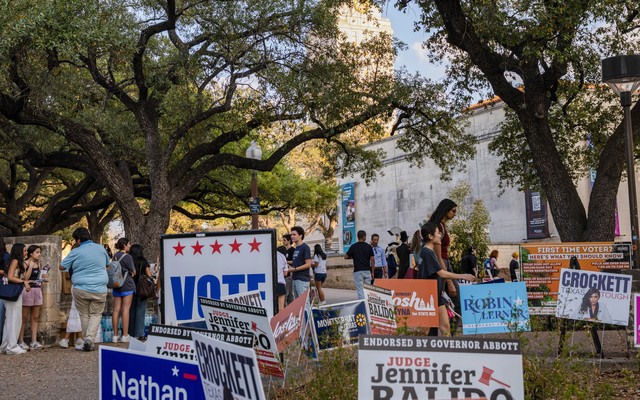
Anxiety among election officials and experts had been building for months before Donald Trump issued his latest executive order purporting to ensure election integrity late last month. When the actual text emerged, the reaction wasn’t relief exactly—but a definite sense that things could have been much worse.
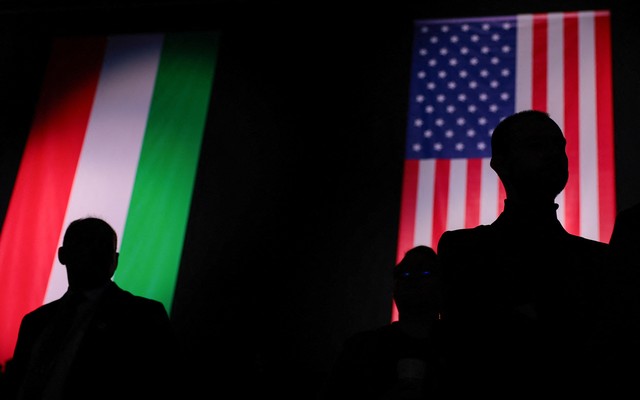
Americans have many reasons to be worried about whether the midterm elections will be free and fair. As I laid out in a cover story last fall, the president’s plan to subvert the 2026 election is multifaceted and already in swing. But last month’s order and the dismissive reaction it’s received from experts—along with this weekend’s decisive defeat of Hungarian Prime Minister Viktor Orbán, which shows how the competitive-authoritarian playbook that Trump has imitated can be beaten—also point to the reasons to resist doomerism.
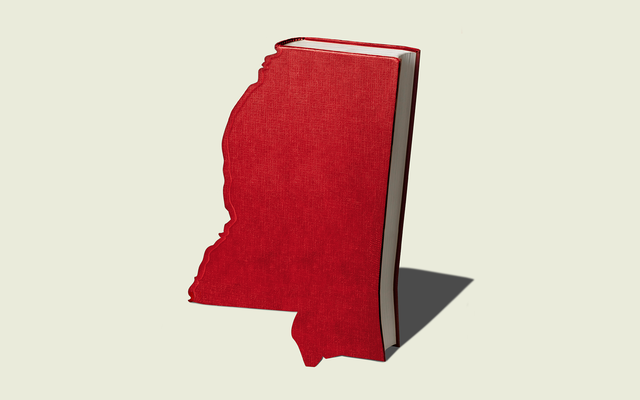
A phonics-based curriculum is only one part of how Mississippi went from worst to first in education. The other part is much harder to pull off.
Updated at 8:52 p.m. ET on April 9, 2026
This article was featured in the One Story to Read Today newsletter. Sign up for it here.
No story has caught the imagination of education reformers this decade quite like the “Mississippi miracle.” From 1998 to 2024, fourth-grade reading and math scores in my home state—the nation’s poorest—rose from among the worst in the country to among the best. When adjusting for demographic factors such as poverty, we’re in first place.
Other states are now trying to emulate what Mississippi did. Those efforts largely revolve around adopting what’s known as the “science of reading”— a set of principles and teaching techniques, including phonics, that are grounded in decades of empirical research. Last fall, for example, the Wall Street Journal editorial board marveled that “even California is now following Mississippi’s lead by returning to phonics” as Governor Gavin Newsom prepared to sign a major new reading bill into law. But what many outsiders fail to understand is that Mississippi changed far more than just how reading is taught. They therefore miss why and how our literacy approach succeeded.
On many recent nights, Donald Trump has been posting obsessively on his Truth Social site into the wee hours. The president, of course, has never been one for a solid night’s sleep—or restrained and temperate commentary on social media—but his emotional state seems to be fraying: This weekend, he attacked Pope Leo XIV, presented himself as Jesus Christ, and then jabbed at his phone until dawn.
Judging from those posts, the commander in chief is in distress. No one can say for sure what is causing the president’s bizarre behavior. Perhaps Trump’s narcissistic insistence that he is always successful in everything he undertakes is feeling the sting and strain of multiple public failures, including the collapse of his campaign to dislodge the Iranian regime, plummeting approval ratings, the decline of the U.S. economy, and, on Sunday, the crushing defeat of one of his favorite fellow authoritarians, Hungary’s Viktor Orbán.
Hungary offers lessons in defeating right-wing populists.
To the outside world, Hungarian Prime Minister Viktor Orbán began his rule as a pariah—an obstreperous, often lone dissenter from European Union policies, especially over migration. Then he became a prophet to new-style “national conservatives”—the anti-immigration, anti-elite right-wing movement that has reshaped the politics of the West. After resoundingly losing national elections held on April 12, Orbán has become a parable for how populism can be defeated.
His political demise was hardly inevitable. It had to be shrewdly engineered by politicians and voters who put aside their ideological differences to defeat him. In politics, there is no natural law of self-correction.
From 2010 until now, Orbán and his Fidesz party transformed Hungary into a new kind of state, which he proudly proclaimed as an “illiberal democracy.” He and his allies rewrote the constitution to entrench his power, centralizing control over civil society and countervailing institutions such as courts and universities. Péter Magyar, the presumptive next prime minister, triumphed against a tilted electoral system—gerrymandered districts, government influence over traditional media and even over the country’s billboards—designed to keep Fidesz in power. Magyar understood that such a regime does not simply collapse under the weight of its own contradictions and mismanagement.