The American presidential election is tomorrow, U-Va. administrator awarded $3 million in Rolling Stone defamation, and more from the United States and around the world.
—There was another twist Sunday in a presidential campaign marked by many: FBI Director James Comey said newly discovered emails do not change the bureau’s conclusion that Hillary Clinton should not be charged with a crime. Tomorrow is Election Day.
—Rolling Stone will pay a University of Virginia administrator $3 million after a federal jury determined the magazine defamed her in a now-discredited article from 2014. More here
—Janet Reno, the Clinton-era attorney general, has died. She was 78. More here
—We’re live-blogging the news stories of the day below. All updates are in Eastern Daylight Time (GMT -4).
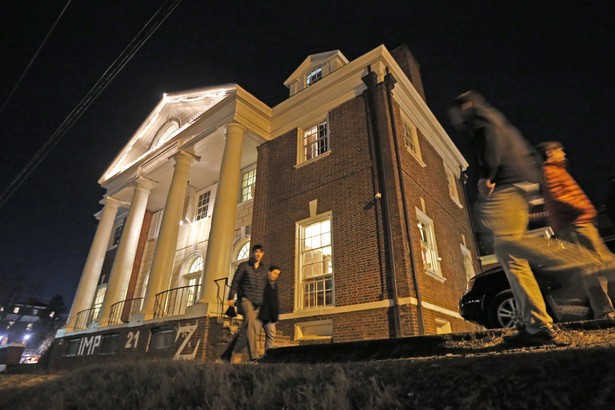
University of Virginia Administrator Awarded $3 Million After Rolling Stone Defamation
Steve Helber / AP
Rolling Stone will pay a University of Virginia administrator $3 million after a federal jury determined the magazine defamed her in a now-discredited article from 2014.
Nicole Eramo, a dean who was poorly portrayed in an article about an alleged gang rape at a fraternity house, had sued for $7.5 million. As the Associated Press reports:
The jury concluded Friday that the magazine, its publisher and journalist Sabrina Rubin Erdely were responsible for libel, with actual malice.
As part of her testimony, Eramo said she experienced suicidal thoughts after the article was published. Rolling Stone is covering the legal fees of the reporter who wrote the original article.
While the article was widely circulated after it published, sparking a fierce national debate about sexual assault on college campuses, it was soon after debunked. Police in Charlottesville found no evidence to support the article’s allegations. Later, the reporter of the story revealed she never spoke to alleged perpetrators of the gang rape.
India Issues Health Advisory Amid Air-Pollution Emergency in New Delhi
A woman wears a mask to protect herself from air pollution during a protest in Delhi, India, on November 7, 2016. (Cathal McNaughton / Reuters)
The Indian government issued a health advisory Monday warning citizens to avoid high-pollution areas amid heightened concerns of a health emergency in New Delhi, the country’s capital.
The advisory is the latest measure taken byauthorities to address rising pollution levels, which the U.S. Embassy in New Delhi placed Monday afternoon at 467 micrograms per cubic meters—a level considered “hazardous” for the high risk of respiratory ailments. The Indian government also declared a three-day closure of schools in the capital, as well as a five-day moratorium on construction and demolitions—considered one of the primary contributors to the city’s high-pollution levels.
Hundreds of people demonstrated in central New Delhi Sunday calling on officials to reduce pollution levels in the city, considered one of the most polluted in the world. Here’s what the protests looked like:
Aurora, Colorado, Pays $2.6 Million to Family of Unarmed Black Man Shot to Death by Police
Aurora police officers in 2008 (Mark Leffingwell / Reuters)
Aurora will pay $2.6 million to the family of an unarmed black man who was fatally shot by police last year last year, marking the largest settlement in the Colorado city’s history.
The settlement to the family of Naeschylus Carter-Vinzant will also include reforms to the Aurora Police Department intended to increase police accountability and improve officer relations with the community, The Denver Postreported Monday.
Carter-Vinzant, 27, was shot and killed in March 2015 by police officer Paul Jerothe. Jerothe became an Aurora Police officer in 2006 and provided live-saving medical assistance to victims of the 2012 Aurora movie-theater shooting that left 12 people dead. The case was presented to a grand jury, which determined in December there was not sufficient evidence to bring criminal charges against Jerothe. Carter-Vinzant’s family said then it would “look beyond the grand jury for other lawful means for justice and progress.”
The fatal shooting occurred as SWAT officers attempted to arrest Carter-Vinzant for crimes including domestic violence, kidnapping, and removing an ankle bracelet he was required to wear as part of his parole. Three days before he was shot, Carter-Vinzant had reportedly smashed the window of his wife’s car, punched her in the face, took their two-month old child and her purse from the vehicle, and fled. When officers approached Carter-Vinzant on the street, he appeared to be talking on a cellphone and had his right arm in the pocket of his jacket, according to the grand-jury report. Carter-Vinzant ran, and Jerothe shot him.
An Aurora city official said Monday the settlement “is in the best interests of the family and the community.”
Several U.S. cities have recently paid settlements to the families of unarmed black men killed by white police officers, most of whom were not criminally charged in the deaths. In 2015, Eric Garner’s family received $5.9 million from New York City; Freddie Gray’s family received $6.4 million from Baltimore; and Walter Scott’s family received $6.5 million from North Charleston, South Carolina. In April, the family of Tamir Rice received $6 million from the city of Cleveland, 17 months after the 12-year-old boy was killed.
Saakashvili, Ex-Georgian Leader, Quits as Governor of Ukraine’s Odessa
Mikheil Saakashvili, the governor of Ukraine's southern Odessa region, speaks at a press conference where he announced his resignation on November 7. (Reuters)
Mikheil Saakashvili, the former Georgian president who was appointed governor of Ukraine’s Odessa region last May, resigned Monday, citing his frustration with persistent corruption.
Saakashvili, Georgia’s president until 2013, was known for his pro-Western views and his wariness of Russian President Vladimir Putin. Last May, Ukraine’s president, Petro Poroshenko, who is embroiled in his own battle with Putin’s Russia, named Saakashvili governor of Odessa province, and gave him the task of reducing corruption and increasing transparency in the region. But Saakashvili said Monday government officials continue to take bribes, The New York Timesreported.
“The president personally supports two clans,” Saakashvili told reporters. “Odessa can only develop once Kiev will be freed from these bribe takers, who directly patronize organized crime and lawlessness.”
Here’s more on Saakashvili’s brief governorship, from the Times:
In Odessa, Mr. Saakashvili and a team of young reformists tried to tackle the acceptance of bribes in the corruption-plagued customs service and to make government services more responsive and transparent.
Yet, government officials in Kiev thwarted these efforts, Mr. Saakashvili said, because they interfered with the various enrichment schemes that allowed many of them to amass healthy fortunes.
Mr. Saakashvili said his plan to open a new customs service center in Odessa was undone when the money allocated for its refurbishment was stolen.
Saakashvili was granted Ukrainian citizenship after his presidential term ended in Georgia. Giorgi Lortkipanidze, Odessa’s police chief and a fellow Georgian, has also resigned.
Nicaragua's Ortega Easily Wins Reelection in a Vote the Opposition Says Is Rigged
Reuters
Nicaraguan President Daniel Ortega easily won a third term on Sunday in an election the opposition has called rigged at best, if not a complete farce.
Ortega, a former Marxist guerrilla, leads the country’s Sandinista National Liberation Front, the group that removed the U.S.-backed dictator Anastasio Somoza from power in 1979. Ortega was president from 1979 until 1990 when he was ousted in an election upset. He regained the presidency in 2006 and has since become increasingly authoritarian, removing term limits, installing friends and relatives in political office, and is accused of setting up a “family dictatorship.” For his next five-year term, Ortega’s wife will serve as his vice president. Many believe she will eventually take over the party. But Ortega is also popular given Nicaragua’s economic growth and its relatively low levels of violence compared to its Central American neighbors.
Ortega won 72 percent of the vote Sunday, with about 65 percent of the country’s 3.8 million registered voters showing up to the polls. This number has been disputed, however, and the opposition party says far fewer people voted because citizens knew there would be little true competition in the race. Five other candidates ran for president, but none were considered serious competition, because in July Nicaragua’s Supreme Electoral Council removed much of the opposition Broad Front for Democracy’s leaders from congress. They refused to recognize their party’s appointed leader, Pedro Reyes, a man regarded as an Ortega ally.
5.0 Earthquake Strikes Near Major Oklahoma Oil Hub
Crude oil tanks in Cushing, Oklahoma (Nick Oxford / Reuters)
Several buildings in Cushing, Oklahoma—dubbed the “Pipeline Crossroads of the World”—sustained “substantial damage” after a 5.0-magnitude earthquake struck Sunday night.
Steve Spears, the Cushing city manager, said at a news conference Monday that approximately 40 to 50 buildings were damaged, though no major injuries were reported. Cushing is home to one of the world’s largest crude-oil storage terminals. No damage to the pipelines, however, was reported and the oil and gas division of the Oklahoma Corporation Commission said Monday the pipelines resumed normal operations.
The city’s downtown area has been evacuated until the infrastructure can be fully examined. Here’s what the damage looked like:
Serious damage in Cushing, Oklahoma from a damaging 5.0 overnight earthquake. Picture from a KOCO viewer. pic.twitter.com/jSFwdn6xn1
Oklahoma experienced multiple smaller earthquakes this past week—tremors a 2015 Oklahoma Geological Survey said may be linked to the injection of hydraulic fracking wastewater into the ground.
The Latest on the Battles Against ISIS in Raqqa and Mosul
Azad Lashkari / Reuters
Kurdish forces began the fight to take back Raqqa, the Islamic State’s de-facto capital in Syria, while in Iraq on Monday the fight to reclaim Mosul entered its fourth week. Both cities represent ISIS’s most crucial strongholds, and the loss of either would likely devastate the insurgents.
While the offensive in Mosul, which was seized by ISIS in 2014, has gone according to plan—even ahead of schedule—Raqqa presents an especially difficult operation. In Mosul, Iraqi security forces are working with Kurdish peshmerga, as well as the Shia Popular Mobilization Forces, and are backed by U.S. airstrikes. They have cleared ISIS from many of the villages surrounding Mosul, and government soldiers are moving closer to downtown Mosul from the east. ISIS has used snipers, car bombs, and positioned civilians as human shields to slow the advance, but so far the plan to retake the city, Iraq’s second-biggest, is going well.
"Everything in Mosul is ahead of schedule on all axes of advance, but Daesh, as we expected, is putting up a fierce fight and I expect this will take some time to conclude," said Brett McGurk, U.S. State Department's special presidential envoy for the Global Coalition to Counter ISIS.
In Raqqa, the Syrian city ISIS claimed in 2014, international politics makes the battle much less straightforward. The U.S., France and Britain said they will provide air support to the Syria Democratic Forces, a hodgepodge of mostly Arab and Kurdish fighters that sometimes fight among themselves. Complicating the operation is that Russia backs the Syrian government, and while Turkey and the U.S. have so far shared an interest in helping rebels, Turkey views the Kurdish forces as a threat. Everyone involved is interested in ridding the region of ISIS, but the most advantageous way to do this has complicated the more than five-year-long civil war in Syria. Collectively, there are about 30,000 fighters who will work to retake Raqqa, home to about 200,000 civilians and an estimated 5,000 ISIS insurgents.
China Prevents 2 Hong Kong Lawmakers From Taking Office
Riot police block a street during a standoff with protesters outside the China Liaison Office in Hong Kong on Sunday. (Bobby Yip / Reuters)
China has prevented two pro-independence Hong Kong lawmakers from taking office after they refused to pledge allegiance to Beijing while being sworn in. The move is the most direct intervention by Beijing in Hong Kong’s affairs since the handover of the former British colony in 1997—and critics say it’s the beginning of the end of Hong Kong.
Chinese authorities bypassed Hong Kong’s courts and blocked Sixtus Leung and Yau Wai-ching, who are both legally elected, from taking their seats in the legislature. Beijing used a section of the Chinese territory’s laws that bars from office any official who doesn’t “sincerely and solemnly” take the oath. Under the one-country-two-systems formula that has governed relations between Beijing and Hong Kong since the handover, the territory enjoys wide-ranging autonomy, but Beijing still has final say over how the Basic Law, Hong Kong’s mini constitution, is interpreted.
Mr Leung and Ms Yau belong to the Youngspiration party, which sprang from the 2014 Occupy Central pro-democracy protests. They have called for Hong Kong to break away from China entirely.
They were elected in September, and have attempted to take their oaths several times, but each time have provocatively changed the wording.
Their attempts included using a variation of a derogatory word for China, and displaying a pro-independence banner.
There wereprotests Sunday night in Hong Kong in anticipation of Beijing’s decision. Four people were arrested and two police officers were injured.
Sweden Sets New Date for Julian Assange's Interview
(Markus Schreiber / AP)
Swedish authorities will interview Julian Assange at the Ecuadorian Embassy in London on November 14, the Swedish prosecutor’s office said Monday. Authorities were scheduled to interview the WikiLeaks founder on October 17, but delayed the process so Assange’s attorney could be present.
Assange was arrested [in the U.K.] in 2010 under a European Arrest Warrant issued by Sweden over claims of sexual assault—claims he denies. But in 2012, while on bail, he sought asylum in the Ecuadorian Embassy in London so he could avoid extradition. Last year, Swedish authorities dropped two cases of sexual assault against him, though the allegation of rape still stands—and it’s in connection with that case the Swedish prosecutor wants to question him. Assange says he fears that if he’s sent to Sweden he’d be extradited to the U.S., whose secret diplomatic cables were published by Wikileaks. The U.S. says there’s no sealed indictment against Assange.
Ecuador had agreed in August to let Swedish authorities interview Assange, ending an impasse over the investigation into the rape allegation. But in that time, Assange, lauded as a hero by his supporters and reviled by his critics, has emerged as a figure in the U.S. presidential election. WikiLeaks, the group he founded, has released emails purported to belong to John Podesta, the chairman of Hillary Clinton’s presidential campaign, Assange has appeared on Fox News to discuss those leaks, and Ecuador cut off his internet access at its embassy in London because, it said, it didn’t want to influence an election in another country.
Philadelphia Transit Strike Ends; SEPTA, Union Reach Tentative Agreement
(Jacqueline Larma / AP)
Philadelphia’s weeklong transit strike is over. The Transport Workers Union Local 234, which represents some 5,000 transit workers in the city, and the Southeastern Pennsylvania Transportation Authority (SEPTA) said Monday they have reached a tentative agreement over a new contract.
The sides have tentatively agreed to a new five-year contract, WPVI-TV, the local ABC affiliate, reported. SEPTA service will be restored Monday in phases.
Here’s what separated the two sides when the union announced the strike last week, via Philly.com:
Union workers were unwilling to accept the possibility of health care hikes that could have boosted their contribution from $552 a year to up to $6,000 if they wanted to keep equivalent medical coverage, union representatives said. They also were unhappy about a pension cap at $50,000 for workers while managers' pensions had no cap at all. Matters not related to dollars and cents were also in dispute. TWU members said SEPTA's break policies for vehicle operators barely left them enough time to use the bathroom between routes, and complained the nine hours of down time a worker must receive between shifts was not enough, forcing operators to drive vehicles while fatigued.
SEPTA, for its part, argued its $1.2 billion pension is only 62 percent funded and a substantial increase in pension benefits would make that disparity worse. It also said workers currently enjoy a "Cadillac" health care plan that costs them just $46 a month, and that work was already underway to adjust schedules.
The strike affected all of SEPTA’s operations: buses, trolleys, and subways, which together run about 850,000 trips per day.
There were fears a prolonged dispute could have an impact on Tuesday’s presidential election. Donald Trump, the Republican presidential nominee, is targeting Pennsylvania, a Democratic stronghold. But Hillary Clinton’s campaign is relying heavily on the strongly Democratic turnout in Philadelphia and its suburbs to keep the state blue.
Janet Reno, First Female Attorney General, Dies at 78
(Barry Thumma / AP)
Janet Reno, the Clinton-era attorney general who was the first woman to hold that position, died early Monday, her goddaughter told the Associated Press. Reno was 78.
Here’s more:
Reno died from complications of Parkinson's disease, her goddaughter Gabrielle D'Alemberte said. D'Alemberte said Reno spent her final days at home in Miami surrounded by family and friends.
Reno, a former prosecutor, is best known for being at the center of perhaps two of the most controversial moments of Bill Clinton’s presidency: the siege at Waco, Texas, that ended with the deaths of David Koresh, the leader of the Branch Davidians, and about 80 of his followers; and the seizure of Elian Gonzalez, the 5-year-old Cuban boy taken by federal agents from his relatives in Miami and returned to his father in Cuba.
More from the AP: “After Waco, Reno figured into some of the controversies and scandals that marked the Clinton administration, including Whitewater, Filegate, bungling at the FBI laboratory, Monica Lewinsky, alleged Chinese nuclear spying and questionable campaign financing in the 1996 Clinton-Gore re-election.”
Reno ran unsuccessfully for Florida governor in 2002, losing in the Democratic primary.
Kash Patel has alarmed colleagues with episodes of excessive drinking and unexplained absences.
On Friday, April 10, as FBI Director Kash Patel was preparing to leave work for the weekend, he struggled to log into an internal computer system. He quickly became convinced that he had been locked out, and he panicked, frantically calling aides and allies to announce that he had been fired by the White House, according to nine people familiar with his outreach. Two of these people described his behavior as a “freak-out.”
Patel oversees an agency that employs roughly 38,000 people, including many who are trained to investigate and verify information that can be presented under oath in a court of law. News of his emotional outburst ricocheted through the bureau, prompting chatter among officials and, in some corners of the building, expressions of relief. The White House fielded calls from the bureau and from members of Congress asking who was now in charge of the FBI.
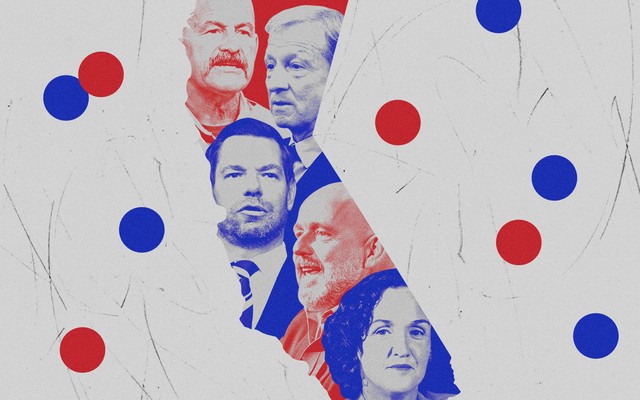
One of the most liberal states in the country can’t find a Democrat to lead it.
On a chilly Saturday late last month, I met Eric Swalwell at a Little League diamond near Capitol Hill, where the Bay Area congressman and his wife, Brittany, would be watching their 8-year-old son. Swalwell, who was running to succeed Gavin Newsom as the next governor of California, had been gradually rising above a Lilliputian cast of candidates and had acquired a strong scent of momentum in the race.
“Impeccable timing for you,” he’d texted me on my drive over. He attached a just-published Washington Post article reporting that FBI Director Kash Patel was seeking to release files relating to a decade-old investigation into Swalwell that had turned up no evidence of wrongdoing. If true, the Post story presented a publicity godsend to Swalwell’s campaign, further elevating his status as a nemesis of the vindictive president.
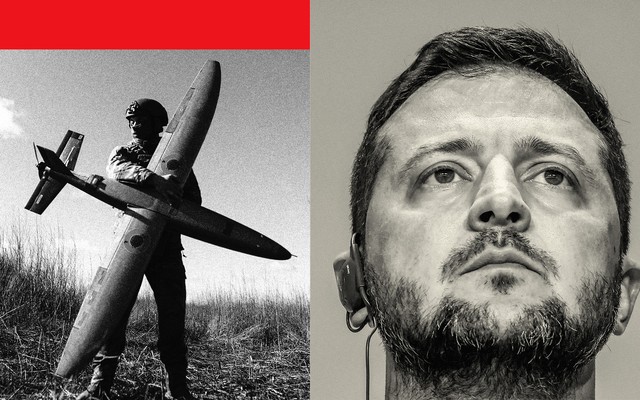
For more than a year after Donald Trump returned to the White House, Ukraine held out hope—at least publicly—of winning him over. Trump, who revealed his affection for Russia’s Vladimir Putin again and again, largely halted American military aid to Kyiv. He insulted Ukrainian leaders regularly, personally berating President Volodymyr Zelensky in the Oval Office in February 2025. Nevertheless, Ukraine diligently took part in Trump’s peace negotiations, which were tilted to reward Putin’s invasion and turned out to be fruitless. Zelensky agreed to mineral deals that supposedly promised to enrich Americans. He even lavishly praised Trump himself. Despite Ukrainian leaders’ growing doubts, they calculated that speaking sweetly of the American president would do no harm and just might gain his favor.
People scrutinizing influencers for their views should also hold them to account for their facts.
Last week, Pod Save America, the popular podcast founded by former Obama-administration staffers, hosted the influencer and leftist provocateur Hasan Piker. A charismatic and pugnacious socialist streamer, Piker has become a flash point in a broader debate among Democrats over how far their party’s big tent ought to extend. Unsurprisingly, Piker’s hourlong interview generated controversy. Critics on the right and left highlighted his refusal to condemn Hamas. Others were upset that the influencer said he would “vote for Hamas over Israel every single time,” even as he reiterated his reticence to back a progressive politician such as Gavin Newsom over J. D. Vance.
But a very different part of the podcast caught my attention, because it illustrates the problem with the wrangling over Piker: It revolves around his contentious opinions about a narrow subject—Jews and Israel—while giving short shrift to his broader worldview and his tendency to be wrong on the facts. The issue is not whether to engage with figures like Piker; it’s how to do so in a way that’s genuinely informative.
I spent 10 months working at the institution because I thought I could help protect it. What I observed there is far worse than the public knows.
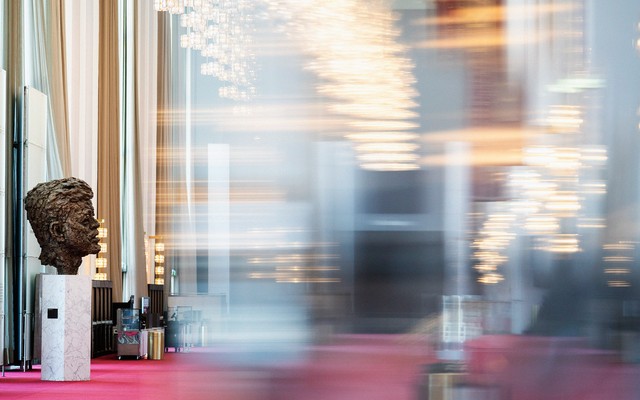
On the day I was laid off from the Kennedy Center, I felt a little like Dolley Madison saving the Stuart portrait of Washington before the British sacked the capital. I was the staffer in charge of the artworks in the building. A crucial difference is that my institution, unlike the White House in 1814, had been on fire for months.
About a year elapsed between the moment President Trump took over the Kennedy Center in early 2025 and his declaration this past February that he’d decided to shut down the nation’s cultural center for two years. In between, we had seen artist cancellations, shrinking audiences, firings of old staffers and influxes of new ones—a lot of drama, just not onstage. The date Trump announced for the closure was July 4, the country’s 250th birthday, an event that I had been hired to help commemorate as the institution’s first curator of visual arts and special programming.
The Sorrow and the Pity has lessons for how authoritarianism takes root—and how to fight against it.
The best thing I watched in the past year was an epically long movie about retired militants, but it wasn’t One Battle After Another, the Oscar winner for Best Picture. It was The Sorrow and the Pity, a four-hour documentary from 1969 about life in Nazi-occupied France. Reviewing the film in The Atlantic in 1972, David Denby called it “one of the greatest documentaries ever made,” and that remains true. What makes the film so effective is not how it looks at the Germans, a spectral presence, but how it chronicles the way that many ordinary citizens simply lived their lives as if nothing had changed.
The director Marcel Ophuls, who died last year at 97, explores collaboration and resistance through the lens of a small city, Clermont-Ferrand. It’s about an hour from Vichy, where the Nazis established a puppet government headed by the World War I hero Philippe Pétain. Pétain’s former protégé Charles de Gaulle fled to Britain, coordinated resistance to the Nazis, and returned to lead a free France. The idea that the French almost uniformly opposed Nazism, with only a few bad apples collaborating, is foundational to France’s postwar identity. The problem, as Ophuls, a Franco-German Jew, demonstrates, is that this is a myth.
Thirteen thousand miles. Infinite contenders. One beautiful loaf.
This article was featured in the One Story to Read Today newsletter. Sign up for it here.
Here is the promise you and I must cling to across the thousands of words that follow: At some point within this text, I will reveal to you what—after 555 responses, 13,000 miles of travel, and months of monomaniacal research—I have determined to be the best free restaurant bread in America. I will not attempt to slither to the moral high ground, arguing that best is a meaningless measure, or insisting that all bread is dear in its own way. Even if you attempt to betray me—for instance, by merely scanning the text that follows for the phrase Here it is: the best free restaurant bread in America—I will uphold my end of the bargain.
This article was featured in the One Story to Read Today newsletter. Sign up for it here.
Maybe you’ve seen photos of Tehran in the 1970s, just before the Islamic Revolution: images of young women going to work in miniskirts, of couples making out in parks while wearing bell-bottoms, of people at pools in bikinis. It looks like Paris or Milan or Los Angeles. But in 1979 the revolution happened, and now Tehran looks like something from an earlier century.
Sometimes I think that our whole world has become kind of like that—going backwards in time. The religious movements thriving in today’s secularized age are the traditionalist ones that dissent from large parts of contemporary culture—not only the Shiite Islam of post-revolution Iran, but Orthodox Judaism and conservative Catholicism. Young Americans are flooding into Eastern Orthodox churches.
Pastor John Mark Comer has won a massive audience by encouraging his followers to free themselves from the gnawing sense that there is always more to do.
John Mark Comer can be a hard man to find. He’s one of the most famous pastors in America right now, an author whose books have together sold more than 1 million copies, but he’s not the most reachable guy. He has a professional website but no contact page. He rarely travels. And as I reported this story, I began to learn his habits: Sending him a text early in the day was a wash, for instance, because he doesn’t check his phone until after morning prayer time. Once, when I reached out by email, I got an out-of-office response that he had set before Christmas explaining that he was observing “rhythms of rest” and asking that I try him again after his return in mid-January. Incoming messages sent in the meantime would be deleted.
A shocking number of the president’s supporters have turned against him.
Tomas Montoya has sold festival foods—funnel cakes, burgers, hot dogs—across the American Southwest for years. But lately, business has been rough. Costs are up, so he’s increased his prices. Employees are begging for hours he can’t give them. In Arizona, where he lives, Montoya pays $6 a gallon to fill up his food trucks with diesel. This summer, he may have to skip the California leg of his festival route because fuel is even more expensive there.
“It’s Trump,” Montoya told us outside a popular Hispanic grocery store in Casa Grande, Arizona, much of which sits in one of the most evenly divided House districts in the country. Montoya voted for President Trump in 2024, but now, well, frustrated doesn’t begin to cover how he’s feeling. The president is bragging about the economy, even though everyone Montoya knows is hurting; he promised to stop wars, but started one in Iran. “When Trump opens his mouth, three-quarters of what he says is stories, lies,” Montoya said. He’s planning to vote in the midterm elections this fall. But he may not choose a Republican.