—Hate crimes against Muslims in the United States rose by 67 percent in 2015, according to an FBI crime report released Monday.
—Gwen Ifill, the American journalist who worked for PBS since 1999, died Monday of cancer. She was 61.
—President Obama kicks off his final major foreign-policy trip tonight, leaving Washington for Athens. He will visit Berlin and Lima later this week, where he’s expected to try to reassure leaders surprised by the unexpected election of Donald Trump.
—We’re live-blogging the news stories of the day below. All updates are in Eastern Standard Time (GMT -5).
A federal judge has ordered Brendan Dassey, one of the two imprisoned Wisconsin men featured in the Netflix documentary “Making a Murderer,” be released from prison.
The judge, William E. Duffin, previously overturned Dassey’s conviction in the 2005 murder and sexual assault of a photographer. Duffin argued Dassey “was mentally unfit, that he had been coerced into a confession he later recanted and that his court-appointed lawyer had been content to cut a deal,” The New York Timesreports.
Dassey’s uncle, Steven Avery, is also serving a life sentence for murder and sexual assault.
Wisconsin Attorney General Brad Shimel has appealed the judge’s ruling. He is also temporarily blocking Dassey’s release from prison.
Dassey’s lawyers said Monday they hoped to get Dassey home by Thanksgiving, adding:
Dassey's family is concentrated in northeastern Wisconsin. There is no indication that he has the inclination much less the means to flee or will otherwise fail to appear as may be legally required.
Dassey has been in prison since he was convicted in 2007.
U.S. Forces Accused of Possible War Crimes in Afghanistan
Lucas Jackson / Reuters
There is “reasonable basis to believe” that U.S. forces and the CIA may have committed war crimes in Afghanistan, the International Criminal Court said Monday.
Fatou Bensouda, the ICC chief prosecutor, signaled in an annual report that the court would open investigations into “war crimes of torture and related ill-treatment” by U.S. forces deployed in Afghanistan in CIA-operated detention facilities between 2003 and 2004. The probe will include investigating the possible use of “torture, cruel treatment, outrages upon personal dignity, and rape.”
Here’s more from the report:
These alleged crimes were not the abuses of a few isolated individuals. Rather, they appear to have been committed as part of approved interrogation techniques in an attempt to extract ‘actionable intelligence’ from detainees. According to information available, the resort to such interrogation techniques was ultimately put to an end by the authorities concerned, hence the limited time-period during which the crimes allegedly occurred.
Though the final decision to launch the investigation has not been announced, Bensouda said she would decide whether to ask the court’s judges for permission “imminently.” If the investigation goes forward, it would mark the first time U.S. forces have been exposed to an ICC probe.
Anti-Muslim Hate Crimes in the U.S. Rose by 67 Percent in 2015
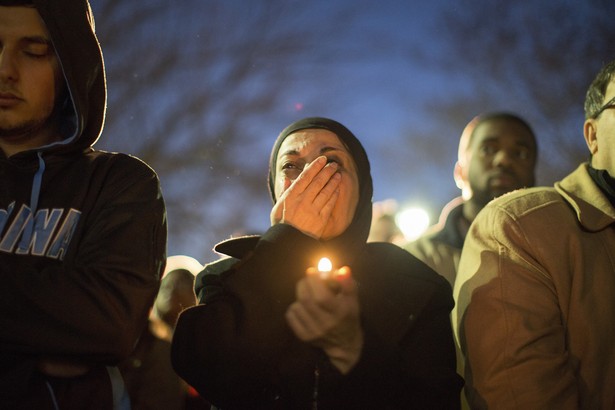
A woman cries at a vigil for three Muslim students killed in Chapel Hill, North Carolina on February 11, 2015. (Chris Keane / Reuters)
Hate crimes against Muslims in the United States rose by 67 percent in 2015, according to an FBI crime report released Monday.
The bureau’s Uniform Crime Report documented a total of 5,850 hate-crime incidents reported in 2015 overall—a 6 percent increase from the 5,479 incidents reported the previous year. Of these incidents, 257 of them were classified as anti-Muslim hate crimes, a significant increase from the 154 incidents reported in 2014. This latest report marks one of the largest increases in anti-Muslim hate crimes in more than a decade, second only to the 481 anti-Muslim hate crimes reported in 2001, according to the Southern Poverty Law Center.
Overall, religion-based incidents made up 21 percent of the hate crimes documented, with more than 50 percent targeting Jews and 22 percent targeting Muslims. Anti-Semitic hate crimes, which remain the largest religious-based hate crimes reported, rose by 9 percent.
Other hate crimes reported were based on sexual orientation, disability, gender, and gender identity.
The FBI’s latest report comes amid an increase in reported hate crimes following last week’s presidential election, including racist, anti-Semitic, and anti-Muslim incidents.
Gwen Ifill, the American journalist who worked for PBS since 1999, died Monday of cancer. She was 61.
“I am very sad to tell you that our dear friend and beloved colleague Gwen Ifill passed away today in hospice care in Washington,” Sharon Percy Rockefeller, the CEO of WETA, Washington D.C.’s public TV and radio stations, wrote in an email to staff on Monday, Politico reports. “I spent an hour with her this morning and she was resting comfortably, surrounded by loving family and friends.”
Ifill went on leave from PBS from early April to mid-May this year to address ongoing health issues, which she did not make public. She took a leave again last week before Election Day.
Ifill served as a co-anchor on PBS “NewsHour” and as moderator of “Washington Week,” the longest-running primetime news program on television. Before joining PBS, Ifill was the chief congressional and political corresponded for NBC News, a White House correspondent for The New York Times, and reporter for The Washington Post.
Ifill and her “NewsHour” co-host Judy Woodruff became the first all-female team to anchor the show in 2013. Ifill acknowledged the significance of her role in particular, tellingThe New York Times:
“When I was a little girl watching programs like this — because that’s the kind of nerdy family we were — I would look up and not see anyone who looked like me in any way. No women. No people of color,” she said.
“I’m very keen about the fact that a little girl now, watching the news, when they see me and Judy sitting side by side, it will occur to them that that’s perfectly normal — that it won’t seem like any big breakthrough at all,” she added.
Ifill covered seven presidential campaigns during her long career in Washington. She moderated the 2004 vice-presidential debate between Dick Cheney and John Edwards, the 2008 vice-presidential debate between John Biden and Sarah Palin, and the final Democratic primary debate last year.
President Obama praised Ifill’s work at the start of a press conference Monday afternoon, and described the veteran journalist as “an especially powerful role model for young women and girls.”
“I always appreciated Gwen's reporting, even when I was at the receiving end of one of her tough and thorough interviews,” Obama said. “Whether she reported from a convention floor or from the field, whether she sat at the debate moderator’s table or at the anchor’s deck, she not only informed today’s citizens but she also inspired tomorrow’s journalists.”
Ifill was named in August as the recipient of the 2016 John Chancellor Award for excellence in journalism and was scheduled to receive the award this week in New York.
Archaeologists in Egypt have discovered an ancient mummy bound in linen inside a colorful sarcophagus that has remained in very good condition, according to Egypt's antiquities ministry.
Spanish archeologists announced their discovery Sunday, saying they believed the mummy is that of a nobleman named Amenrenef, a servant to the royal household of King Thutmose II. The burial site is located near a temple for the king on the west bank of the Nile, 435 miles south of Cairo near Luxor, a city of about 500,000 people and the site of many ancient tombs.
The mummy was adorned with religious symbols and gods, like Isis, Nephtys, and the sons of Horus, and he sarcophagus was brightly colored. The practice of mummification dates back to 4500 BC, although this tomb is believed to be more recent; archaeologists put it somewhere between 1075 BC and 664 BC.
Qienabh Tappii, center, wins the Miss Transgender Indonesia pageant in Jakarta on November 11, 2016. (Dita Alangkara / AP)
Hundreds of transgender activists crowned the winner of a transgender beauty pageant in Indonesia over the weekend in an event that was kept almost entirely secret, the Associated Press reports.
Qienabh Tappii, a 28-year-old representing the Indonesian capital, defeated more than 30 other contestants Friday for the title of Miss Waria, the Indonesian word for transgender. Tappii, who will represent Indonesia at the Miss International Queen pageant in Thailand next year, told the AP, “I want waria to be accepted, appreciated, and understood in our society, and to be equal with other Indonesians. I will work really hard to achieve it.”
The pageant’s organizers said they kept the event in Jakarta secret because they feared the country’s Islamic hardliners would try to shut it down. Organizers told only a few journalists about when and where the event would be held.
“If the public knew in advance that there will be such an event, those who use religion as their mask could attack us,” Nancy Iskandar, one of the pageant’s organizers, said. “That's why we kept it secret until the last minute.”
Indonesia’s religious culture is considered more moderate compared to other Muslim-majority countries. But the nation has increasingly drawn criticism from human-rights organizations for its treatment of its LGBT community. This year, some Indonesian lawmakers have called for measures banning LGBT students from university campuses and instituting “healing programs” to cure sexual orientation.
The United States and Australia reached a deal Sunday to resettle asylum seekers held in detention centers in Papua New Guinea and Nauru that were stopped while trying to reach Australia by boat.
Under a one-time deal, the U.S. has agreed to accept individuals who have already received refugee status from the United Nations. Officials have not said how many refugees will be transported, or exactly when and where. Australian Prime Minister Malcolm Turnbull said the deal will prioritize “women, children, and families.” He said the transfer would likely begin after President-elect Donald Trump took office in January.
The detention camps hold about 1,200 men, women, and children who are mostly from Iran, Afghanistan, Vietnam, and Malaysia.
The deal, which has been in the works for months, comes after Papua New Guinea’s supreme court ruled this spring that it was unconstitutional for the island to host Australia’s migrants.
The facilities have attracted controversy since they opened about 15 years ago, in part because many migrants wait about three years for the government to process their applications while living in mostly poor conditions. In the early 2000s, Australia began a policy of detaining migrants in offshore processing centers, essentially renting out some of its migration processing duties to Nauru and Papua New Guinea. The centers are favored among Australian conservatives, but were closed briefly in 2008 after the progressive Labor Party took power.
Iraqi soldiers fighting to reclaim Mosul from the Islamic State have nearly surrounded the city and will begin a collective push toward downtown in the coming days. The operation is nearing the end of its fourth week, and over the weekend the fighting mostly slowed to allow forces to regroup and to minimize civilian deaths.
So far only the elite Iraqi special forces entering from the east have breached ISIS’s front lines in Mosul, the country’s second-largest city and a key stronghold for ISIS in Iraq. But Kurdish peshmerga and Iraqi forces in the north, as well as the Shia Popular Mobilization Force in the southwest, have advanced slowly toward the city center as they recapture towns along the outskirts. On Sunday, to the north of Mosul, Iraqi forces nearly reached the Habda neighborhood. Their arrival would mark the first time security forces reached the city limits from this direction.
“The enemy is collapsing and losing control, and we are now taking only two days to seize a neighborhood where we planned to be fighting for four days,” Maan al Saadi, a commander with Iraqi special forces, told The Wall Street Journal.
More than 1 million people live in Mosul and about 54,000 people have been displaced as fighting intensified. ISIS has moved residents to the city’s center and used them as human shields against bombing attacks. The Telegraphreported Monday that injured children have overwhelmed hospitals in the area, seeking treatment for gunshots, burns, and shrapnel from bombs, which militants have placed in roadways to slow the advance of Iraqi forces.
About 1,000 Tourists Stranded After New Zealand Earthquake
Landslides block a highway near Kaikoura on the upper east coast of New Zealand's South Island on November 14, 2016. (Sam Shepherd / Royal New Zealand Defence Force/ Reuters)
Tsunami warnings have been canceled in New Zealand a day after a 7.8-magnitude earthquake struck the country, triggering dangerous waves and dozens of aftershocks that were felt for hours.
Two people were killed in the quake, Radio New Zealand reported Monday night local time. One person died in a house in Mount Lyford, a ski resort located north of Christchurch, and another died in a collapsed house in Kaikoura, a coastal town to the country’s east.
The quake caused major landslides in Kaikoura, blocking roads and stranding about 1,000 tourists and hundreds of residents. New Zealand officials say they will send in helicopters, which could each pick up about 18 people at a time, the AP reports. A ship from Auckland is also on its way. But the rescue operation could take several days.
"From all directions, Kaikoura has essentially been isolated," Air Commodore Darryn Webb, the head of New Zealand's Joint Forces, told the AP.
Prime Minister John Key estimated the damage of the quake to be in the billions of dollars, according to the AP. “It’s just utter devastation,” said Key, who flew over Kaikoura by helicopter to survey the landslides.
Small aftershocks were still being recorded as recently as Tuesday morning, according to GeoNet, which monitors seismic activity in the country.
The city of Christchurch is still recovering from a 2011 earthquake that killed 185 people and destroyed scores of buildings.
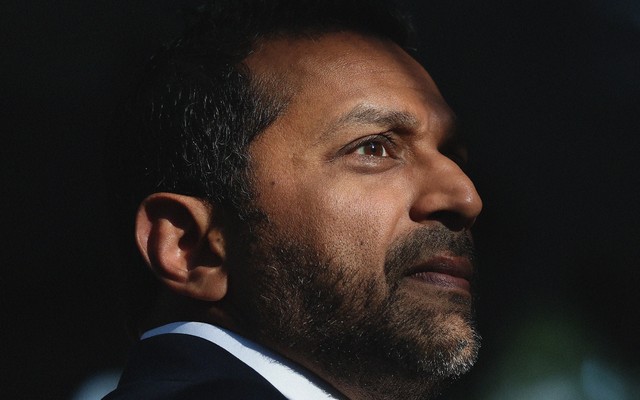
Kash Patel has alarmed colleagues with episodes of excessive drinking and unexplained absences.
On Friday, April 10, as FBI Director Kash Patel was preparing to leave work for the weekend, he struggled to log into an internal computer system. He quickly became convinced that he had been locked out, and he panicked, frantically calling aides and allies to announce that he had been fired by the White House, according to nine people familiar with his outreach. Two of these people described his behavior as a “freak-out.”
Patel oversees an agency that employs roughly 38,000 people, including many who are trained to investigate and verify information that can be presented under oath in a court of law. News of his emotional outburst ricocheted through the bureau, prompting chatter among officials and, in some corners of the building, expressions of relief. The White House fielded calls from the bureau and from members of Congress asking who was now in charge of the FBI.
I spent 10 months working at the institution because I thought I could help protect it. What I observed there is far worse than the public knows.
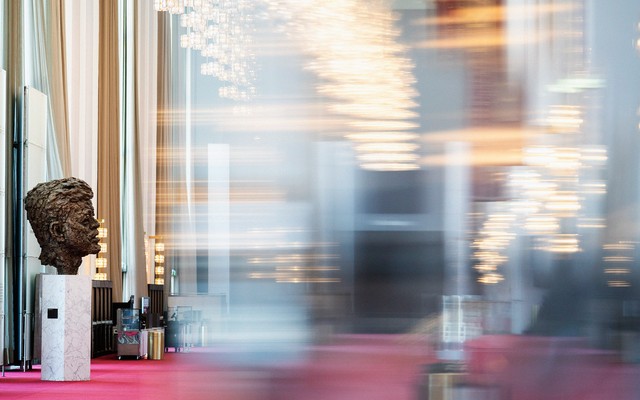
On the day I was laid off from the Kennedy Center, I felt a little like Dolley Madison saving the Stuart portrait of Washington before the British sacked the capital. I was the staffer in charge of the artworks in the building. A crucial difference is that my institution, unlike the White House in 1814, had been on fire for months.
About a year elapsed between the moment President Trump took over the Kennedy Center in early 2025 and his declaration this past February that he’d decided to shut down the nation’s cultural center for two years. In between, we had seen artist cancellations, shrinking audiences, firings of old staffers and influxes of new ones—a lot of drama, just not onstage. The date Trump announced for the closure was July 4, the country’s 250th birthday, an event that I had been hired to help commemorate as the institution’s first curator of visual arts and special programming.
A shocking number of the president’s supporters have turned against him.
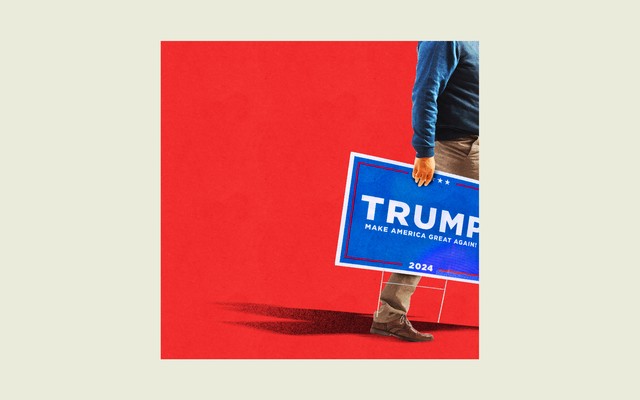
Tomas Montoya has sold festival foods—funnel cakes, burgers, hot dogs—across the American Southwest for years. But lately, business has been rough. Costs are up, so he’s increased his prices. Employees are begging for hours he can’t give them. In Arizona, where he lives, Montoya pays $6 a gallon to fill up his food trucks with diesel. This summer, he may have to skip the California leg of his festival route because fuel is even more expensive there.
“It’s Trump,” Montoya told us outside a popular Hispanic grocery store in Casa Grande, Arizona, much of which sits in one of the most evenly divided House districts in the country. Montoya voted for President Trump in 2024, but now, well, frustrated doesn’t begin to cover how he’s feeling. The president is bragging about the economy, even though everyone Montoya knows is hurting; he promised to stop wars, but started one in Iran. “When Trump opens his mouth, three-quarters of what he says is stories, lies,” Montoya said. He’s planning to vote in the midterm elections this fall. But he may not choose a Republican.
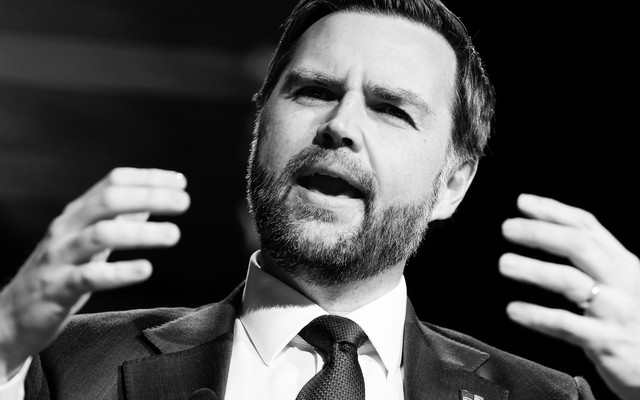
The vice president has decided he’s a more accomplished theologian than Leo XIV.
The Trump administration doesn’t seem to have many rules, but one of them is that once the president picks a fight, his posse must show up to support him, no matter how ill-advised the conflict. And few senior officials are more eager to back up the boss in every embarrassing beef than Vice President Vance, who recently seems to have decided that he, and not Pope Leo XIV, is the true arbiter of Catholic doctrine.
President Trump is personally angry with Leo because the pontiff has been deeply critical of America’s war of choice in Iran. Accordingly, Trump lashed out at His Holiness twice over the past few days. Vance might have seen this as a valuable opportunity to say nothing and let the storm pass; Leo, naturally, doesn’t seem to care all that much what Trump thinks. (As my colleague Liz Bruenig wrote, Leo answers to a higher authority.) Had the vice president remained silent, Trump might have moved on, and Vance, a relatively recent convert to Catholicism, would have been able to stay out of a dustup between his president and his spiritual leader.
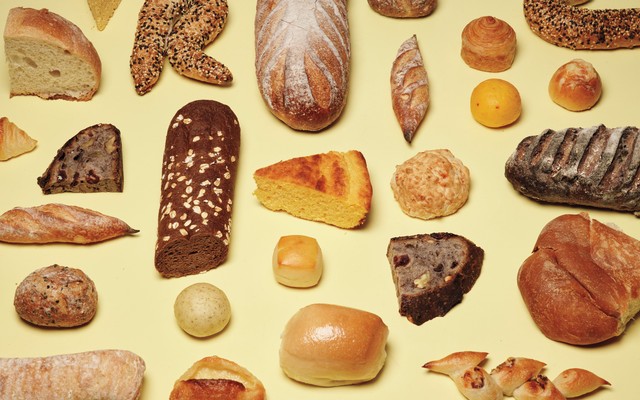
Thirteen thousand miles. Infinite contenders. One beautiful loaf.
This article was featured in the One Story to Read Today newsletter. Sign up for it here.
Here is the promise you and I must cling to across the thousands of words that follow: At some point within this text, I will reveal to you what—after 555 responses, 13,000 miles of travel, and months of monomaniacal research—I have determined to be the best free restaurant bread in America. I will not attempt to slither to the moral high ground, arguing that best is a meaningless measure, or insisting that all bread is dear in its own way. Even if you attempt to betray me—for instance, by merely scanning the text that follows for the phrase Here it is: the best free restaurant bread in America—I will uphold my end of the bargain.
Trump has developed a reputation for backing down from his most over-the-top threats, but dismissing his words is a mistake.
Twelve hours after Donald Trump warned that a “whole civilization will die tonight, never to be brought back again”—after he’d previously threatened to bomb Iran “back to the Stone Ages”—the president agreed to a temporary cease-fire. Since then, initial peace negotiations failed and Trump responded with a naval blockade of the Strait of Hormuz; a new round of talks may begin soon.
But what to do with his everyone in Iran is going to die comments last week? Because they were designed to pressure Iran to come to the table, and because the promised carnage did not materialize, many observers simply moved on, explaining away Trump’s threats as a ham-fisted negotiation tactic, some kind of 5-D chess, or another example of the president’s propensity to “TACO” (Trump Always Chickens Out).
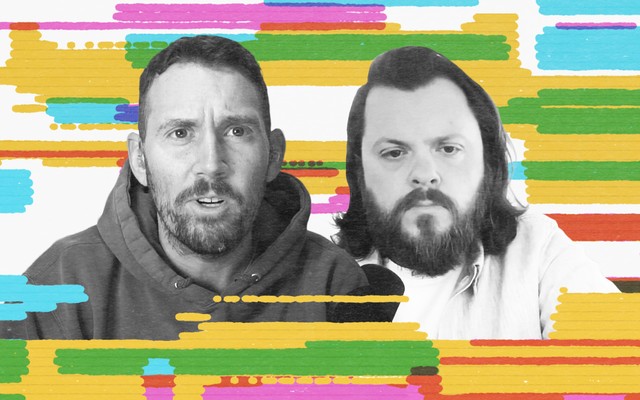
In this episode of Galaxy Brain, Charlie Warzel speaks with Josh Owens, a videographer and the author of a memoir about his years working for Infowars, the media company of the conspiracy theorist Alex Jones. Owens traces his journey from a film-school student who stumbled onto Jones’s radio show to an insider who spent four years filming, editing, and traveling for the organization. Owens describes how Jones’s conspiracy machine works, as well as how his own moral compass was scrambled by Jones’s manipulative management. The conversation explores radicalization, the conspiratorial media ecosystem Jones helped create, and how Owens was able to pull himself out.
This article was featured in the One Story to Read Today newsletter. Sign up for it here.
Maybe you’ve seen photos of Tehran in the 1970s, just before the Islamic Revolution: images of young women going to work in miniskirts, of couples making out in parks while wearing bell-bottoms, of people at pools in bikinis. It looks like Paris or Milan or Los Angeles. But in 1979 the revolution happened, and now Tehran looks like something from an earlier century.
Sometimes I think that our whole world has become kind of like that—going backwards in time. The religious movements thriving in today’s secularized age are the traditionalist ones that dissent from large parts of contemporary culture—not only the Shiite Islam of post-revolution Iran, but Orthodox Judaism and conservative Catholicism. Young Americans are flooding into Eastern Orthodox churches.
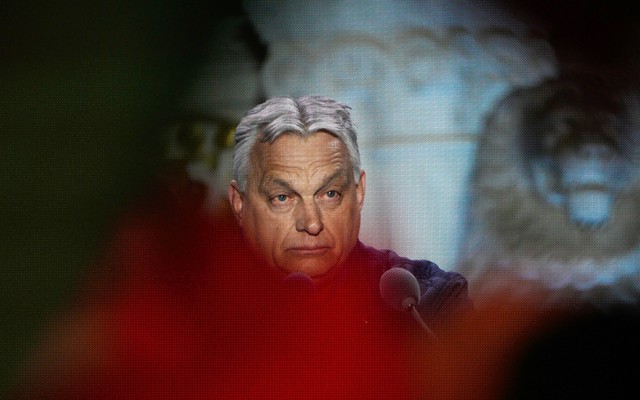
The Hungarian strongman Viktor Orbán, who lost his election in a landslide on Sunday after 16 years in power, presented himself as a defender of Western civilization. But at best, his lofty rhetoric was a code for bigotry and a justification for the persecution of minorities; at worst, it was a scam to fleece Hungarians by persuading them to blame everyone but those responsible for their problems. Maybe both.
Eventually Hungarians decided that a major source of their problems was Orbán himself. Maybe someday Americans will come to a similar realization about Orbán’s great admirer, Donald Trump, who praised the former Hungarian leader before the election as a “fantastic man” who had done a “fantastic job.”
Has the president failed to learn the lessons of classic cautionary fables—or does he just understand them in his own novel ways?
This is an edition of The Atlantic Daily, a newsletter that guides you through the biggest stories of the day, helps you discover new ideas, and recommends the best in culture. Sign up for it here.
Donald Trump, as even some of his fiercest admirers will admit, is not always a paragon of personal virtue. Although the president’s aides sometimes treat him like he is a toddler, as the political scientist Daniel Drezner has observed, he’s not an especially well-behaved one. Trump often acts in ways that would result in detention or other punishment for an elementary-school student: bald-faced dishonesty, name-calling, unkindness, refusal to share, and an inability to use an inside voice. Put another way, Trump sometimes seems as though he missed out on all of the lessons that children are supposed to learn from fables and fairy tales. (Meanwhile, his administration is seeking to evict some lessons about tolerance from classrooms.) But perhaps that’s uncharitable: Trump isn’t ignoring those fables; he’s just taking different lessons away from them than the familiar ones. Here’s a set of classic stories and their morals, reinterpreted for MAGA political correctness.