An attacker at Ohio State University, an order to evacuate North Dakota pipeline protesters, Zika in Texas, and more from the United States and around the world.
Wildfires Threaten Great Smoky Mountains National Park
John Bazemore / AP
Officials have had to close large sections of Great Smoky Mountains National Park, as the area braces for potentially disastrous wildfires raging nearby. Air quality is already at hazardous levels. As the Southeast faces its worst drought in years and winds blow as strong as 70 mph, firefighters are struggling to quell 14 fires near Gatlinburg, Tennessee, where some residents have been forced to evacuate. “We’ve had trees coming down, limbs coming down, and the fire is continuing to grow,” one National Park Service spokesperson said Monday. In recent weeks, wildfires have spread across the South, boosted by strong winds in Tennessee, Virginia, and north Carolina. Rain, though, is forecasted for the area in the coming days.
Due to continued erratic winds, the fires are very unpredictable and more fire growth is expected. pic.twitter.com/BYd9ANQeT4
North Dakota Pipeline Protesters Ordered to Evacuate
Andrew Cullen / Reuters
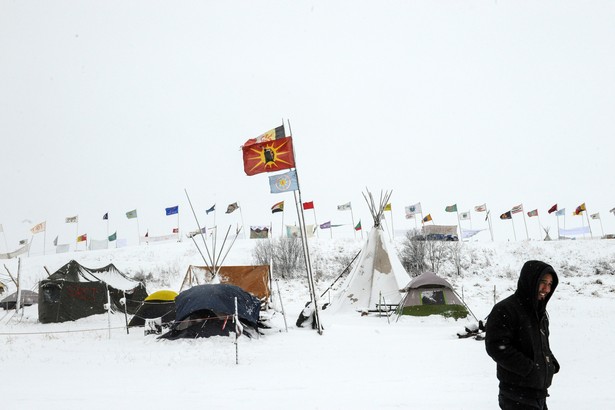
The governor of North Dakota has ordered an emergency evacuation of all pipeline protesters camping on U.S. Army Corps of Engineers land. All demonstrators protesting the Dakota Access Pipeline, which they say goes through sacred Standing Rock Sioux land and could harm water sources, must leave their camps because of dangerous winter weather, Governor Jack Dalrymple said in the order signed Monday. A spokesman for the governor’s office told The West Fargo Pioneer, though, that the state would not forcibly remove people from the land, putting the burden on the federal government. The Corps said Friday that all protesters must leave the land north of the Cannonball River by December 5. The tribe, though, says it still plans to block the pipeline’s construction on reservation lands.
Texas Reports First Local Transmission of Zika Virus
Aedes aegypti mosquitoes, the carriers of the Zika virus (Paulo Whitaker / Reuters)
The Zika virus has been transmitted by a mosquito in Texas for the first time, state health officials said Monday. The infected individual lives in Cameron County and has not traveled recently to countries where local transmission of the virus is common and well documented, officials said. She is also not pregnant. The Zika virus is most dangerous to pregnant women, and can cause a condition called microcephaly in babies born to infected women that results in smaller-than-normal heads. Officials say the virus was detected in the woman's urine and not her blood, which means the virus can no longer be spread through mosquito bites. Zika is primarily transmitted through Aedesaegypti mosquitoes, which thrive in warm climates, like in Texas and in South America, where the virus has led to thousands of cases of microcephaly since last year.
San Francisco's Transit System Is Back to Normal After a Ransomware Hack
Robert Galbraith / Reuters
San Francisco’s transit system returned to normal late Sunday after hackers hijacked its computer network over the weekend and granted tens of thousands of free fares. On Friday, San Francisco Municipal Transportation Agency (Muni) payment screens read “OUT OF ORDER” in subway stations across the city. In agents’ booths the screens read: “You Hacked, ALL Data Encrypted.” The attackers, who were anonymous, also demanded through their message that Muni pay 100 Bitcoin, or about $73,000, to restore access to its software. The attack did not affect transit service other than rendering Muni’s payment system useless, so for much of Friday, Saturday, and Sunday, Muni was free. This type of hack is caused by ransomeware, in which hackers encrypt data until the owner pays a requested fee. Ransomware hacks have become increasingly common, and this past year several hospital computer systems were breached in similar attacks. Although Muni service had been restored, Hoodline, a local news site, reported that the hackers responsible claim to have accessed vital agency functions, like payroll, and are still demanding money.
Protesters rally Monday in central Delhi against the Indian government's decision to withdraw 500- and 1,000-rupee banknotes from circulation. (Cathal McNaughton / Reuters)
Thousands of protesters demonstrated Monday against the Indian government’s decision to scrap 500-rupee and 1,000-rupee banknotes, the BBC reports. Indian Prime Minister Narendra Modi, who made the announcement earlier this month, said the move is an effort to fight corruption and to remove fraudulent notes from circulation. He added those still using the denominations would have until the end of the year to deposit them into banks. But critics say the move caused a “financial emergency” by removing 86 percent of the country’s cash overnight. Modi, meanwhile, has called on people to embrace digital, cashless forms of payment. More than 90 percent of India’s transactions are in cash.
German Court Upholds Former Nazi Guard's Conviction
AP
A German federal court on Monday upheld the conviction of a former Nazi guard at the Auschwitz death camp. Oskar Gröning, now 95 years old, was convicted in July 2015 of being an accessory to the murder of 300,000 Jews. He appealed the ruling because he said he was only responsible for gathering and sorting valuables at Auschwitz, and was not involved in any crimes. The decision sets a precedent for prosecuting Nazi criminals; the ruling marks the first time an appeals court has determined that helping a concentration camp operate—or as the judge put it, participating in the “machinery of death”—is enough to be convicted, even if prosecutors lack evidence of specific killings. Deutsche Wellereports that the decision could affect several other pending Nazi wartime cases.
Dylann Roof Can Represent Himself at His Death-Penalty Trial
Reuters
A federal judge in South Carolina ruled Monday that Dylann Roof, who is charged in the killing of nine black churchgoers last year, can represent himself in his death-penalty trial. Judge Richard Gergel of the Federal District Court in Charleston, speaking directly to Roof, called the decision “strategically unwise” but that “it is a decision you have the right to make." Roof made the last-minute request Monday morning as jury selection in his case was set to begin. Roof is accused of shooting and killing nine people at Emanuel AME church in June 2015. Federal authorities say he targeted the individuals because they were black. Roof offered to plead guilty last week in exchange for a life sentence, but prosecutors refused the deal. If Roof does represent himself, it will allow the self-avowed white supremacist to interview witnesses and family members called to testify.
At least 11 people were injured in an attack at the Ohio State University Monday morning. The suspect was shot and killed by police. Nine people sustained stab wounds wounds. One person is in critical condition. Earlier, OSU said there’s an active shooter on campus, and urged students to shelter in place—but it’s unclear if a gun was used in the attacks.
Buckeye Alert: Active Shooter on campus. Run Hide Fight. Watts Hall. 19th and College.
Japanese Amusement Park Shuts Down Its Ice Rink Filled With Thousands of Frozen Fish
Space World / Facebook
A Japanese theme park was closed Sunday after widespread complaints about its new ice-skating rink, an attraction that featured thousands of dead fish frozen in ice. The rink in the southwest city of Kitakyushu opened two weeks ago and advertised its “Freezing Port” as a world first. It featured about 5,000 dead mackerel, sprats, crabs, and other fish bought from a local market entombed in the ice, some with their mouths open. CNN reported that a Facebook ad for the park featured photos of the frozen fish with caption: “I am d... d... drowning, s ... s... suffocating" (the post has since been deleted). Space World’s manager told CNN the park would unfreeze the fish and hold an “appropriate religious service"; then reuse them as fertilizer.
Syrian Government Troops Take a Key Rebel-Held Part of Aleppo
Syrians who evacuated the eastern districts of Aleppo are gathered in a government-held part of the city in this picture provided by the state-run Syrian Arab News Agency on Sunday. (Sana / Reuters)
Syrian government troops have captured Sakhour, a district in the rebel-controlled portion of Aleppo, effectively dividing the city in two, according to state media and the U.K.-based Syrian Observatory for Human Rights, a monitoring group. Russian state-run news sources say the government now controls 40 percent of eastern Aleppo, the last major rebel stronghold; the BBC puts that figures at about one-third. The development is a boost to President Bashar al-Assad, who with the help of Russia, Iran, and Hezbollah, now appears more firmly in charge of Syria than at any point since the civil war began more than five years ago. About 250,000 civilians live in rebel-held eastern Aleppo; the Syrian government’s assault on the divided city has been criticized by human-rights groups who have called it a war crime.
President-elect Donald Trump is expected to reveal more members of his Cabinet this week. Among those positions likely to be announced is secretary of state. Mitt Romney—the former Massachusetts governor, 2012 GOP presidential nominee, and leading Republican critic of Trump—is said to be a contender, though Kellyanne Conway, a Trump adviser, appeared to dismiss that idea on ABC. Separately, responding to efforts by Jill Stein, the Green Party nominee, to seek a recount in several states Trump won, the president-elect, in a series of tweets, suggested—with no evidence—that voter fraud had denied him the popular vote, which Hillary Clinton, his Democratic rival, is leading by about 2 million votes. As my colleague Adam Serwer noted this morning: “The source of Trump’s claim that ‘millions’ of votes were cast illegally appears to be a report from the conspiracy theory website InfoWars, itself based on a tweet from an anti-vote fraud activist who provided no evidence for his claim.” Separately, Trump said Monday: “If Cuba is unwilling to make a better deal for the Cuban people, the Cuban/American people and the U.S. as a whole, I will terminate deal.”
Paul Nuttall has been elected the new leader of the U.K. Independence Party. He takes over from Nigel Farage, who had stepped in as interim leader after Diane James, the previous winner, quit the post after 18 days on the job. Nuttall, 39, was UKIP’s deputy leader. He defeated Suzanne Evans, a former deputy chair of the party, and John Rees-Evans. “We must hold the government’s feet to the fire on leaving the EU,” Nuttall said after his victory. “Brexit must mean Brexit.” Although UKIP wasn’t an official part of the “Leave” campaign, the far-right party championed the U.K.’s exit from the EU.
Kash Patel has alarmed colleagues with episodes of excessive drinking and unexplained absences.
On Friday, April 10, as FBI Director Kash Patel was preparing to leave work for the weekend, he struggled to log into an internal computer system. He quickly became convinced that he had been locked out, and he panicked, frantically calling aides and allies to announce that he had been fired by the White House, according to nine people familiar with his outreach. Two of these people described his behavior as a “freak-out.”
Patel oversees an agency that employs roughly 38,000 people, including many who are trained to investigate and verify information that can be presented under oath in a court of law. News of his emotional outburst ricocheted through the bureau, prompting chatter among officials and, in some corners of the building, expressions of relief. The White House fielded calls from the bureau and from members of Congress asking who was now in charge of the FBI.
I spent 10 months working at the institution because I thought I could help protect it. What I observed there is far worse than the public knows.
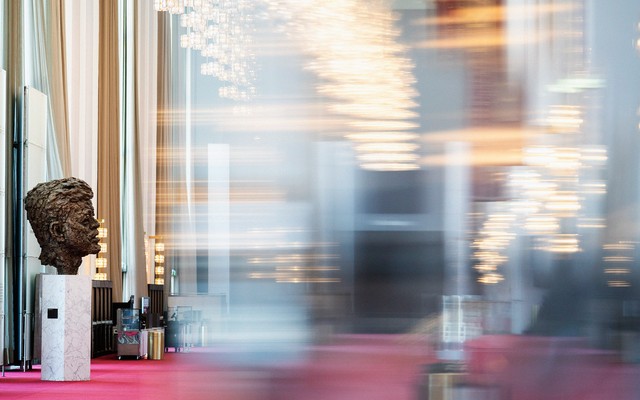
On the day I was laid off from the Kennedy Center, I felt a little like Dolley Madison saving the Stuart portrait of Washington before the British sacked the capital. I was the staffer in charge of the artworks in the building. A crucial difference is that my institution, unlike the White House in 1814, had been on fire for months.
About a year elapsed between the moment President Trump took over the Kennedy Center in early 2025 and his declaration this past February that he’d decided to shut down the nation’s cultural center for two years. In between, we had seen artist cancellations, shrinking audiences, firings of old staffers and influxes of new ones—a lot of drama, just not onstage. The date Trump announced for the closure was July 4, the country’s 250th birthday, an event that I had been hired to help commemorate as the institution’s first curator of visual arts and special programming.
A shocking number of the president’s supporters have turned against him.
Tomas Montoya has sold festival foods—funnel cakes, burgers, hot dogs—across the American Southwest for years. But lately, business has been rough. Costs are up, so he’s increased his prices. Employees are begging for hours he can’t give them. In Arizona, where he lives, Montoya pays $6 a gallon to fill up his food trucks with diesel. This summer, he may have to skip the California leg of his festival route because fuel is even more expensive there.
“It’s Trump,” Montoya told us outside a popular Hispanic grocery store in Casa Grande, Arizona, much of which sits in one of the most evenly divided House districts in the country. Montoya voted for President Trump in 2024, but now, well, frustrated doesn’t begin to cover how he’s feeling. The president is bragging about the economy, even though everyone Montoya knows is hurting; he promised to stop wars, but started one in Iran. “When Trump opens his mouth, three-quarters of what he says is stories, lies,” Montoya said. He’s planning to vote in the midterm elections this fall. But he may not choose a Republican.
The vice president has decided he’s a more accomplished theologian than Leo XIV.
The Trump administration doesn’t seem to have many rules, but one of them is that once the president picks a fight, his posse must show up to support him, no matter how ill-advised the conflict. And few senior officials are more eager to back up the boss in every embarrassing beef than Vice President Vance, who recently seems to have decided that he, and not Pope Leo XIV, is the true arbiter of Catholic doctrine.
President Trump is personally angry with Leo because the pontiff has been deeply critical of America’s war of choice in Iran. Accordingly, Trump lashed out at His Holiness twice over the past few days. Vance might have seen this as a valuable opportunity to say nothing and let the storm pass; Leo, naturally, doesn’t seem to care all that much what Trump thinks. (As my colleague Liz Bruenig wrote, Leo answers to a higher authority.) Had the vice president remained silent, Trump might have moved on, and Vance, a relatively recent convert to Catholicism, would have been able to stay out of a dustup between his president and his spiritual leader.
Thirteen thousand miles. Infinite contenders. One beautiful loaf.
This article was featured in the One Story to Read Today newsletter. Sign up for it here.
Here is the promise you and I must cling to across the thousands of words that follow: At some point within this text, I will reveal to you what—after 555 responses, 13,000 miles of travel, and months of monomaniacal research—I have determined to be the best free restaurant bread in America. I will not attempt to slither to the moral high ground, arguing that best is a meaningless measure, or insisting that all bread is dear in its own way. Even if you attempt to betray me—for instance, by merely scanning the text that follows for the phrase Here it is: the best free restaurant bread in America—I will uphold my end of the bargain.
Trump has developed a reputation for backing down from his most over-the-top threats, but dismissing his words is a mistake.
Twelve hours after Donald Trump warned that a “whole civilization will die tonight, never to be brought back again”—after he’d previously threatened to bomb Iran “back to the Stone Ages”—the president agreed to a temporary cease-fire. Since then, initial peace negotiations failed and Trump responded with a naval blockade of the Strait of Hormuz; a new round of talks may begin soon.
But what to do with his everyone in Iran is going to die comments last week? Because they were designed to pressure Iran to come to the table, and because the promised carnage did not materialize, many observers simply moved on, explaining away Trump’s threats as a ham-fisted negotiation tactic, some kind of 5-D chess, or another example of the president’s propensity to “TACO” (Trump Always Chickens Out).
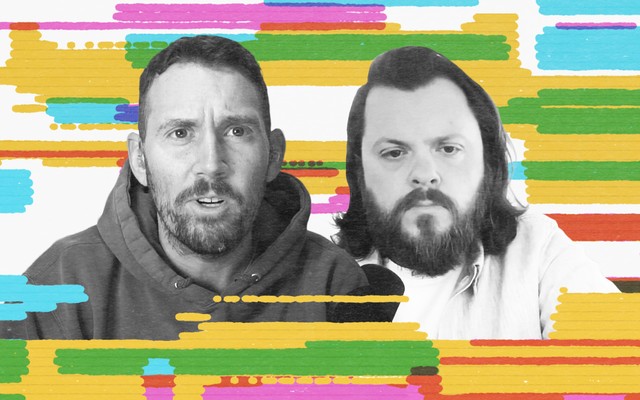
In this episode of Galaxy Brain, Charlie Warzel speaks with Josh Owens, a videographer and the author of a memoir about his years working for Infowars, the media company of the conspiracy theorist Alex Jones. Owens traces his journey from a film-school student who stumbled onto Jones’s radio show to an insider who spent four years filming, editing, and traveling for the organization. Owens describes how Jones’s conspiracy machine works, as well as how his own moral compass was scrambled by Jones’s manipulative management. The conversation explores radicalization, the conspiratorial media ecosystem Jones helped create, and how Owens was able to pull himself out.
This article was featured in the One Story to Read Today newsletter. Sign up for it here.
Maybe you’ve seen photos of Tehran in the 1970s, just before the Islamic Revolution: images of young women going to work in miniskirts, of couples making out in parks while wearing bell-bottoms, of people at pools in bikinis. It looks like Paris or Milan or Los Angeles. But in 1979 the revolution happened, and now Tehran looks like something from an earlier century.
Sometimes I think that our whole world has become kind of like that—going backwards in time. The religious movements thriving in today’s secularized age are the traditionalist ones that dissent from large parts of contemporary culture—not only the Shiite Islam of post-revolution Iran, but Orthodox Judaism and conservative Catholicism. Young Americans are flooding into Eastern Orthodox churches.
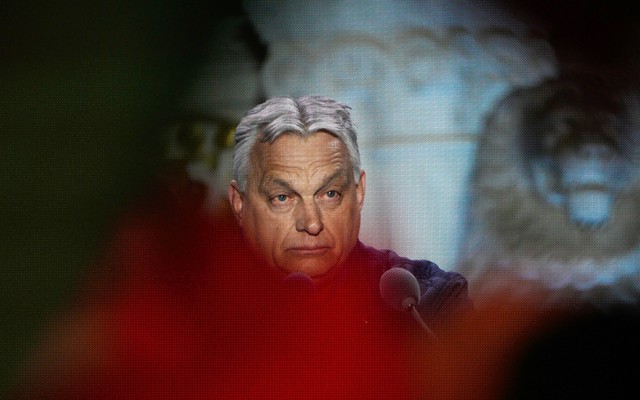
The Hungarian strongman Viktor Orbán, who lost his election in a landslide on Sunday after 16 years in power, presented himself as a defender of Western civilization. But at best, his lofty rhetoric was a code for bigotry and a justification for the persecution of minorities; at worst, it was a scam to fleece Hungarians by persuading them to blame everyone but those responsible for their problems. Maybe both.
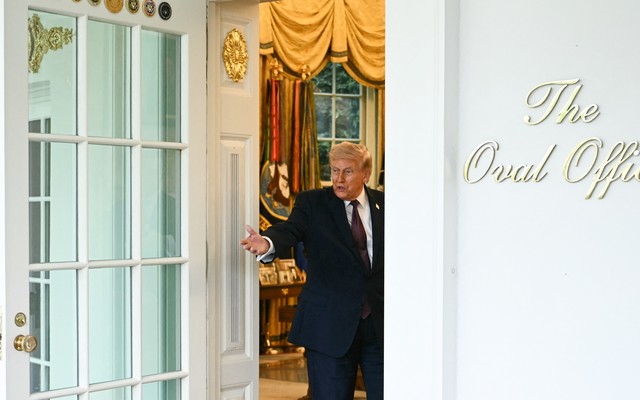
Eventually Hungarians decided that a major source of their problems was Orbán himself. Maybe someday Americans will come to a similar realization about Orbán’s great admirer, Donald Trump, who praised the former Hungarian leader before the election as a “fantastic man” who had done a “fantastic job.”
Has the president failed to learn the lessons of classic cautionary fables—or does he just understand them in his own novel ways?
This is an edition of The Atlantic Daily, a newsletter that guides you through the biggest stories of the day, helps you discover new ideas, and recommends the best in culture. Sign up for it here.
Donald Trump, as even some of his fiercest admirers will admit, is not always a paragon of personal virtue. Although the president’s aides sometimes treat him like he is a toddler, as the political scientist Daniel Drezner has observed, he’s not an especially well-behaved one. Trump often acts in ways that would result in detention or other punishment for an elementary-school student: bald-faced dishonesty, name-calling, unkindness, refusal to share, and an inability to use an inside voice. Put another way, Trump sometimes seems as though he missed out on all of the lessons that children are supposed to learn from fables and fairy tales. (Meanwhile, his administration is seeking to evict some lessons about tolerance from classrooms.) But perhaps that’s uncharitable: Trump isn’t ignoring those fables; he’s just taking different lessons away from them than the familiar ones. Here’s a set of classic stories and their morals, reinterpreted for MAGA political correctness.