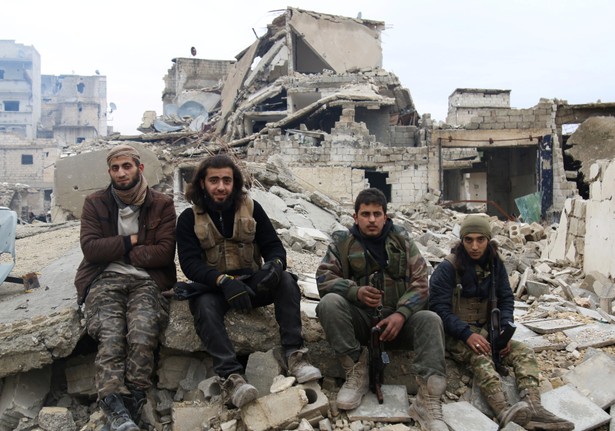
Rebel fighters sit on the rubble of damaged buildings as they wait to be evacuated from a rebel-held sector of eastern Aleppo.
Abdalrhman Ismail / Reuters
—President-elect Donald Trump criticized China’s “unprecedented” seizure of an underwater U.S. Navy drone in a Saturday morning tweet. More here
—A 7.9-magnitude earthquake struck off the coast of Papua New Guinea on Saturday, causing minimal damage. More here
—We’re live-blogging the news stories of the day below. All updates are in Eastern Standard Time (GMT -5).
Trump Says China Should Keep the U.S. Navy Drone It Seized
Lucas Jackson / Reuters
President-elect Donald Trump responded to China’s seizure of an unmanned underwater U.S. Navy drone by calling it an “unprecedented act” on his Twitter account on Saturday morning.
China steals United States Navy research drone in international waters - rips it out of water and takes it to China in unprecedented act.
The seizure took place in international waters Friday in the South China Sea, where China and neighboring countries have been sparring over disputed territorial claims. According to the U.S. military, the drone was part of an oceanic research project carried out by the Navy research vessel USNS Bowditch. The Chinese Defense Ministry accused the U.S. of “hyping up” the drone’s seizure on Saturday and said it would be returned “in an appropriate manner.” Trump’s tweet comes just two weeks after the president-elect spoke with Taiwan President Tsai Ing-wen by phone, the first contact of its kind between Taiwanese leaders and a U.S. president in almost four decades.
Update, 9:01 p.m. ET: President-elect Trump has revised his position on the drone’s status. In a tweet Saturday evening, he wrote China should keep the seized U.S. Navy property because “we don’t want the drone they stole back.”
We should tell China that we don't want the drone they stole back.- let them keep it!
Trump did not elaborate on his view. The stance marks a shift away from one taken earlier by Jason Miller, the Trump transition team's communications director, who credited the president-elect for China's announcement it would return the seized drone.
Suicide Car Bomb Kills At Least 14 Turkish Soldiers
Turan Bulut / Reuters
At least 14 off-duty Turkish soldiers were killed Saturday by a suicide car bomb, Turkish officials said. Interior Minister Suleyman Soylu said another 56 people were injured. The explosion occurred next to a bus carrying the soldiers as it drove through Kayseri, a city in central Turkey. According to Agence-France Press, local officials blamed the attack on the Kurdistan Workers’ Party, also known as the PKK, a Kurdish separatist movement that has battled the Turkish government for years. No public claims of responsibility have been made. The BBC reported that Turkish officials instituted a temporary press blackout shortly after the bombing, an increasingly common practice in the country. The bombing comes one week after two blasts outside Istanbul’s Vodafone Stadium killed 44 people, most of whom were police officers, and wounded dozens more shortly after a soccer match between two of the country’s most well-known teams. A PKK splinter faction claimed responsibility.
Henry Heimlich, Anti-Choking Maneuver's Inventor, Dies at 96
Henry Heimlich in 2014. (Al Behrman / AP)
Henry Heimlich, whose eponymous technique of using abdominal thrusts to save a choking person’s life became an international first-aid staple, died Saturday at a Cincinnati hospital. He was 96 years old. Heimlich, a thoracic surgeon, first published a paper about the method in 1974. The American Red Cross and the American Heart Association added it to their guidelines for treating choking victims two years later, leading to its wide use throughout the world. According to the BBC, the maneuver is believed to have saved over 100,000 people in the U.S. alone since its adoption. Heimlich himself performed the maneuver earlier this year at age 96 to save the life of a fellow retirement-home resident who had begun choking at dinner. Alongside the maneuver and his work on a chest valve to re-inflate collapsed lungs, Heimlich also received criticism for his controversial support of malariotherapy, in which weaker strains of malaria are used as treatments for illnesses ranging from cancer to HIV/AIDS. Its efficacy remains unproven.
7.9-Magnitude Earthquake Strikes Near Papua New Guinea
In this 2009 file photo, a geophysicist studies earthquake readings at the Pacific Tsunami Warning Center. (Hugh Gentry / Reuters)
A strong 7.9-magnitude tremor struck off the coast of Papua New Guinea on Saturday night local time, causing minimal damage and no reported injuries so far. The earthquake occurred 29 miles east of New Ireland, a Papua New Guinean island in the eastern Bismarck Archipelago, at a depth of about 61 miles beneath the Earth’s surface, according to the U.S. Geological Survey. As the Associated Press noted, tremors at lower depths tend to cause less damage. The quake nonetheless prompted tsunami warnings throughout the southwestern Pacific Ocean, including in Indonesia, Nauru, and New Zealand. According to the Sydney Morning Herald, those warnings have now ended without signs of serious waves.
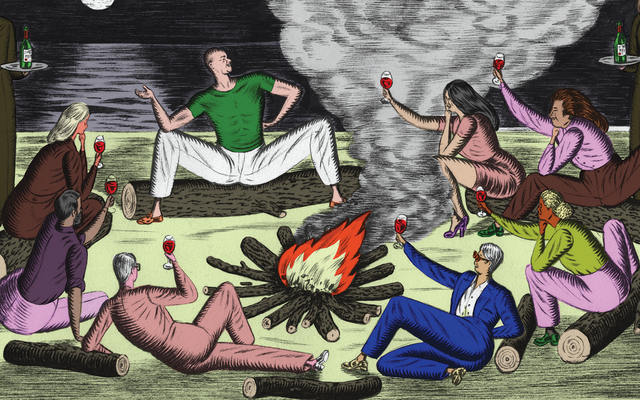
For the richest men on Earth, everything is free and nothing matters.
At the end of Paul Thomas Anderson’s 2007 movie, There Will Be Blood, Daniel Day-Lewis’s oil-baron character, old now and richer than Croesus, beats Paul Dano’s preacher to death with a bowling pin. Dano’s Eli Sunday, a nemesis of Day-Lewis’s Daniel Plainview during his seminal, wealth-building years, has come to sell Plainview the oil-rich land that he once coveted. But Plainview doesn’t need the land anymore, because—as he explains in one of the most famous monologues in modern cinema—he has sucked out all the oil hidden beneath it from an adjoining property, like a milkshake.
Desperate for money, Eli begs for a loan. Instead, Plainview chases him around a bowling alley and murders him with great enthusiasm. Once it’s over, a butler comes to see what all the noise was about. “I’m finished,” Plainview yells.
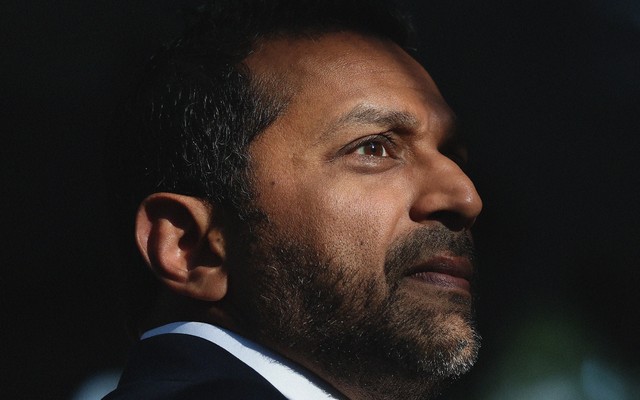
Kash Patel has alarmed colleagues with episodes of excessive drinking and unexplained absences.
On Friday, April 10, as FBI Director Kash Patel was preparing to leave work for the weekend, he struggled to log on to an internal computer system. He quickly became convinced that he had been locked out, and he panicked, frantically calling aides and allies to announce that he had been fired by the White House, according to nine people familiar with his outreach. Two of these people described his behavior as a “freak-out.”
Patel oversees an agency that employs roughly 38,000 people, including many who are trained to investigate and verify information that can be presented under oath in a court of law. News of his emotional outburst ricocheted through the bureau, prompting chatter among officials and, in some corners of the building, expressions of relief. The White House fielded calls from the bureau and from members of Congress asking who was now in charge of the FBI.
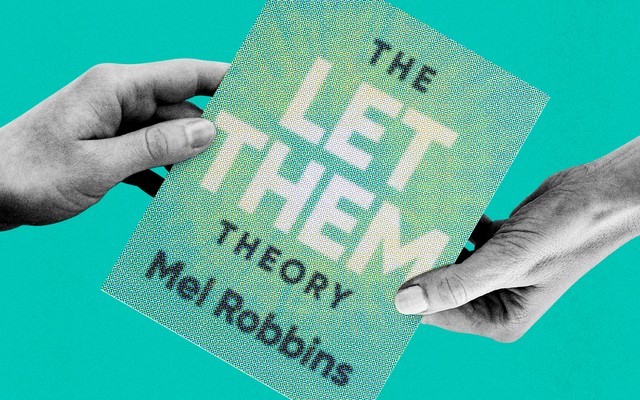
Years before Mel Robbins published her best-selling self-help book, a struggling writer posted a poem with a similar message.
The year 2020 was a bad one for Cassie Phillips. Her husband had recently returned from an overseas deployment, and while he was away, she told me, she’d rarely heard from him. The pandemic began, and the family moved to Savannah, Georgia, where they didn’t know many people. Phillips felt isolated in her new home, and her marriage was falling apart.
Late at night, on her computer, she started writing out some lines—“If they want to go weeks without talking to you, LET THEM”; “If they want to follow the crowd, LET THEM”—to remind herself that she couldn’t control her husband’s behavior. The writing was an attempt to “get through the day knowing I didn’t have anybody but myself,” Phillips said; she was “learning not to give up on other people, but understanding I had to trust myself.”
Monogamy is one of the last bipartisan ideals—even if people struggle to live up to it.
People like to say that American culture has a puritanical streak: one that entails, among other things, a certain haughty piousness, instilled by the killjoys who reached New England’s shores in the 17th century. Yet the Pew Research Center, in a pair of reports released last month, asked participants in various countries about a host of moral issues—and found few in the United States that were widely condemned. Spanking children? Doctor-assisted euthanasia? Clear majorities said they weren’t morally wrong. Gambling? Marijuana use? Compared with respondents in many nations, Americans were notably permissive. The poll also revealed clear political divides: Republicans were much more likely to oppose homosexuality and divorce, for instance, and Democrats were more likely to reject the death penalty and extreme wealth.
Thirteen thousand miles. Infinite contenders. One beautiful loaf.
This article was featured in the One Story to Read Today newsletter. Sign up for it here.
Here is the promise you and I must cling to across the thousands of words that follow: At some point within this text, I will reveal to you what—after 555 responses, 13,000 miles of travel, and months of monomaniacal research—I have determined to be the best free restaurant bread in America. I will not attempt to slither to the moral high ground, arguing that best is a meaningless measure, or insisting that all bread is dear in its own way. Even if you attempt to betray me—for instance, by merely scanning the text that follows for the phrase Here it is: the best free restaurant bread in America—I will uphold my end of the bargain.
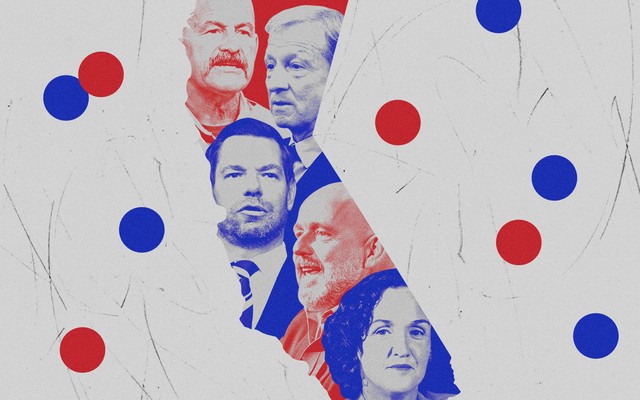
One of the most liberal states in the country can’t find a Democrat to lead it.
On a chilly Saturday late last month, I met Eric Swalwell at a Little League diamond near Capitol Hill, where the Bay Area congressman and his wife, Brittany, would be watching their 8-year-old son. Swalwell, who was running to succeed Gavin Newsom as the next governor of California, had been gradually rising above a Lilliputian cast of candidates and had acquired a strong scent of momentum in the race.
“Impeccable timing for you,” he’d texted me on my drive over. He attached a just-published Washington Post article reporting that FBI Director Kash Patel was seeking to release files relating to a decade-old investigation into Swalwell that had turned up no evidence of wrongdoing. If true, the Post story presented a publicity godsend to Swalwell’s campaign, further elevating his status as a nemesis of the vindictive president.
I spent 10 months working at the institution because I thought I could help protect it. What I observed there is far worse than the public knows.
On the day I was laid off from the Kennedy Center, I felt a little like Dolley Madison saving the Stuart portrait of Washington before the British sacked the capital. I was the staffer in charge of the artworks in the building. A crucial difference is that my institution, unlike the White House in 1814, had been on fire for months.
About a year elapsed between the moment President Trump took over the Kennedy Center in early 2025 and his declaration this past February that he’d decided to shut down the nation’s cultural center for two years. In between, we had seen artist cancellations, shrinking audiences, firings of old staffers and influxes of new ones—a lot of drama, just not onstage. The date Trump announced for the closure was July 4, the country’s 250th birthday, an event that I had been hired to help commemorate as the institution’s first curator of visual arts and special programming.
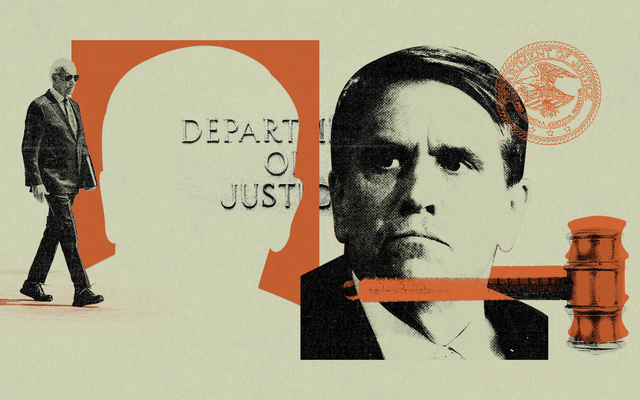
A new DOJ report purports to show bias under the Biden administration—and fails spectacularly.
The day that Donald Trump swore his second oath of office, he signed an executive order demanding “accountability for the previous administration’s weaponization of the Federal Government against the American people.” Within weeks, freshly confirmed Attorney General Pam Bondi had established a “Weaponization Working Group” aimed at rooting out supposed “abuses of the criminal justice process” under the Biden administration.
Despite this initial fanfare, the Weaponization Working Group has been largely quiet—until now. Last week, the group released its very first report, trumpeting its discovery of “shameful” abuses of prosecutorial power under Joe Biden against “pro-life Americans.” But the Weaponization Working Group has discovered very little “weaponization” at all. And whatever sins it does describe—both real and imagined—may serve as justification for perpetrating the very thing it decries. The weaponization report takes the form of a classic Trump two-step: First, claim that normal law-enforcement work, when directed against you or your friends, is illegitimate; then, use that supposed illegitimacy as justification for your own revenge. This is justice according only to the playground principle of “I’m rubber; you’re glue.”
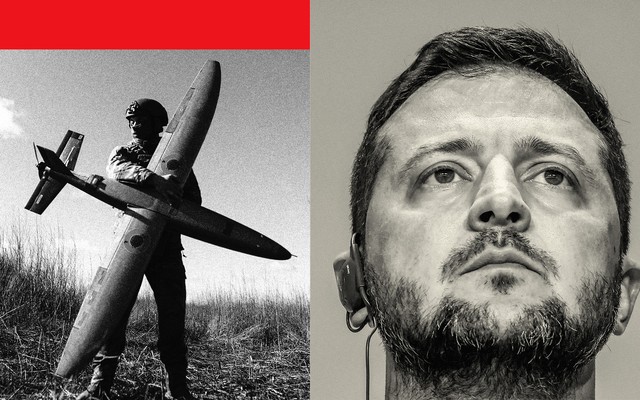
For more than a year after Donald Trump returned to the White House, Ukraine held out hope—at least publicly—of winning him over. Trump, who revealed his affection for Russia’s Vladimir Putin again and again, largely halted American military aid to Kyiv. He insulted Ukrainian leaders regularly, personally berating President Volodymyr Zelensky in the Oval Office in February 2025. Nevertheless, Ukraine diligently took part in Trump’s peace negotiations, which were tilted to reward Putin’s invasion and turned out to be fruitless. Zelensky agreed to mineral deals that supposedly promised to enrich Americans. He even lavishly praised Trump himself. Despite Ukrainian leaders’ growing doubts, they calculated that speaking sweetly of the American president would do no harm and just might gain his favor.
People scrutinizing influencers for their views should also hold them to account for their facts.
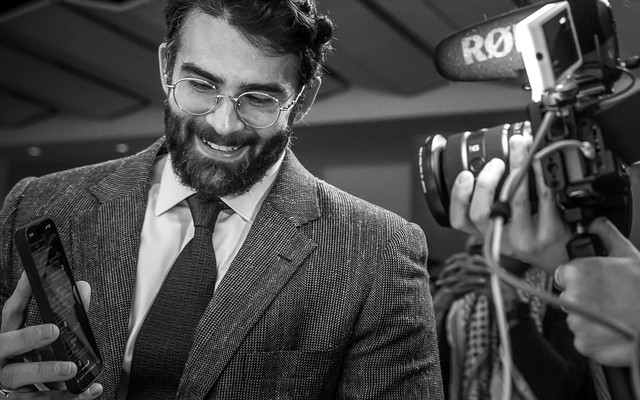
Last week, Pod Save America, the popular podcast founded by former Obama-administration staffers, hosted the influencer and leftist provocateur Hasan Piker. A charismatic and pugnacious socialist streamer, Piker has become a flash point in a broader debate among Democrats over how far their party’s big tent ought to extend. Unsurprisingly, Piker’s hourlong interview generated controversy. Critics on the right and left highlighted his refusal to condemn Hamas. Others were upset that the influencer said he would “vote for Hamas over Israel every single time,” even as he reiterated his reticence to back a progressive politician such as Gavin Newsom over J. D. Vance.
But a very different part of the podcast caught my attention, because it illustrates the problem with the wrangling over Piker: It revolves around his contentious opinions about a narrow subject—Jews and Israel—while giving short shrift to his broader worldview and his tendency to be wrong on the facts. The issue is not whether to engage with figures like Piker; it’s how to do so in a way that’s genuinely informative.