—The U.S. decided not to veto a United Nations Security Council resolution demanding that Israel end its settlements in Palestinian territories. More here
—The manhunt to find the suspect in the Berlin Christmas market attack ended Friday, after the Tunisian man was killed in a shootout with Milan police. More here
—We’re live-blogging the news stories of the day below. All updates are in Eastern Standard Time (GMT -5).
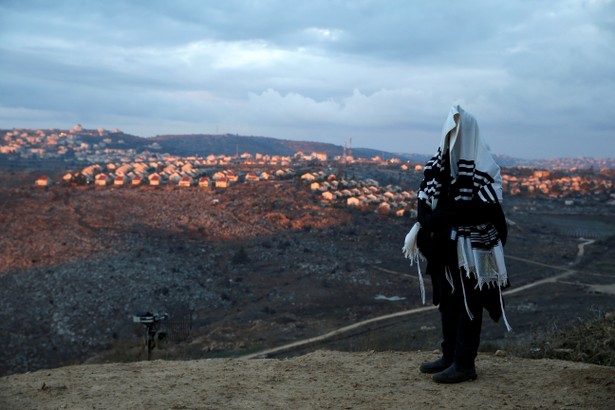
U.S. Allows UN Resolution Criticizing Israeli Settlements
Baz Ratner / Reuters
The U.S. decided not to veto a United Nations Security Council resolution demanding that Israel end its settlements in Palestinian territories. The measure passed with 14 of 15 members voting yes. The abstention from the U.S. is a rare occasion where the U.S. did not protect Israel from criticism on the international stage. The U.S. has previously vetoed 30 resolutions regarding Israel and Palestinians. The resolution was co-sponsored by New Zealand, Malaysia, Senegal, and Venezuela. A similar resolution was withdrawn from Egypt earlier this week following pressure from Israel and U.S. President-elect Donald Trump. Israel has accused the Obama administration of being “shameful” and not supporting Israel on this issue. Secretary of State John Kerry has spoken strongly on this issue in the past. The resolution by the 15-member panel says that Israeli settlements in the West Bank and East Jerusalem are a violation of international law. While it is highly unlikely that the Israeli government would abide by the resolution, the vote on Friday was a damning rebuke of the country’s actions. The vote could have major repercussions in the U.S., as Senator Lindsey Graham, a South Carolina Republican, threatened the UN Friday afternoon if the resolution passed.
If UN moves forward with ill-conceived #Israel resolution, I'll work to form a bipartisan coalition to suspend/reduce US assistance to UN.
While criticizing what she called the UN’s bias against Israel, Samantha Power, the U.S. ambassador to the UN, quoted from Ronald Reagan's 1982 proposal for Israeli-Palestinian peace to say that “Further settlement activity is in no way necessary for the security of Israel and only diminishes the confidence of the Arabs that a final outcome can be freely and fairly negotiated.” Though Reagan’s proposal was never adopted, Power said the vote Friday was “fully in line with the bipartisan history” how the U.S. approaches the Israeli settlement issue.
Deutsche Bank Agrees to Pay $7.2 Billion Settlement
Deutsche Bank headquarters pictured in Frankfurt, Germany, on June 9, 2015. (Ralph Orlowski / Reuters)
Germany’s Deutsche Bank agreed Friday to a $7.2 billion settlement over an investigation into its sale of toxic mortgage securities leading up to the 2008 financial crisis. Under the agreement, the bank will pay a $3.1 billion penalty and provide $4.1 billion in consumer relief—such as loan modifications and loan forgiveness—over at least the next five years. The agreement is not final until it is approved by the Justice Department. If the sum is approved, it will be considerably lower than the $14 billion the U.S. originally asked for in September. Deutsche Bank is one of several institutions under investigation by the U.S. over allegations of selling and pooling toxic mortgage securities in the run-up to the financial crisis. The Justice Department announced Thursday that it will sue Barclay’s Bank over similar allegations.
West African Nations Will Send in Troops if Gambian President Refuses to Concede
Jerome Delay / AP
If Gambian President Yahya Jammeh does not step down by the end of his term, West African nations will send in troops to intervene. The Economic Community of West African States said Friday that Senegal would lead the coalition if Jammeh, the long-time ruler who lost reelection on December 1, does not leave office by January 19. Except for a thin coastline, Senegal surrounds Gambia entirely. West African leaders have tried in vain to convince Jammeh to end his 22-year tenure and allow his rival Adama Barrow to take office. Jammeh and his ruling party have called for fresh elections, after first saying he would accept the results. In the weeks that followed the election, Jammeh has mobilized troops and seized national election headquarters. Jammeh recently said that only “Allah” can deprive him of his victory.
Record Number of Migrants Drown in the Mediterranean Sea in 2016
Yara Nardi / Reuters
More than 5,000 migrants have drowned in the Mediterranean Sea this year, a record level during this crisis. According to the International Organization for Migration, two oversized inflatable dinghies capsized off the coast of Libya en route to Italy on Thursday. Authorities believe 100 passengers, mostly from West Africa, died, bringing the 2016 death toll up to record levels. This is a significant rise from 2015, where around 3,800 migrants died at sea. United Nations officials blame the rise in death on bad weather and the drastic measures used by smugglers to get migrants into Europe, including the use of fragile boats. Most migrants traveling by sea arrived in Europe through Italy and Greece. More than 358,000 migrants and refugees have gone to Europe by sea this year. Several European countries have closed their borders to new arrivals, forcing migrants to take the dangerous journey across the Mediterranean.
Hostages Released After Libyan Plane Hijacked in Malta
Afriqiyah Airways planes at Tripoli International Airport in Libya on December 23, 2016 (Hani Amara / Reuters)
Everyone on board the hijacked Afriqiyah Airways flight has been released and the hijackers taken into custody, Malta Prime Minister Joseph Muscat announced Friday. The 118-passenger flight A320, traveling from the southwestern Libyan city of Subha to Tripoli, the capital, was diverted to the Mediterranean island of Malta Friday morning local time after two hijackers threatened to blow the plane up with a hand grenade. Muscat said the passengers included 82 men, 28 women, and one infant, as well as seven crew members. Officials of the UN-brokered Libyan government told the Associated Press that the two men are in their early twenties and are seeking political asylum in Europe, though the hijackers’ demands were not made public. Muscat said in a press conference that the hijackers were armed with at least one hand grenade and a pistol, and that no demands for political asylum have been made.
Berlin Suspect Killed in Shoot-Out With Italian Police
Reuters
The manhunt to find the suspect in the Berlin Christmas market attack ended Friday after the Tunisian man was killed in a shoot-out with Milan police. In a press conference following the standoff, Italian Interior Minister Marco Minniti confirmed that the deceased person was Anis Amri, who authorities believe killed 12 people and injured 56 more when he drove a truck through a crowd in Germany on Monday. Police found Amri’s fingerprints in the truck. ISIS has claimed responsibility for the attack, and said Friday the attacker pledged allegiance to the group in a video. The standoff ensued when two officers stopped Amri in a routine police check. After the officers asked for identification, Amri pulled a gun from his bag. One officer was shot in the right shoulder and is in good condition. Amri died from a gunshot wound to the chest. Amri arrived in Milan by train around 1 a.m. Friday, and was confronted by police two hours later. Police must now determine whether the gun Amri used in Milan was the same gun used in the death of the Polish truck driver killed in the attack in Berlin.
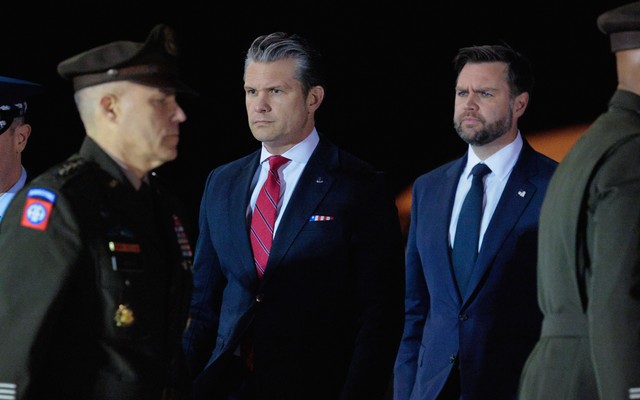
The vice president is worried that the U.S. is running low on weapons.
In closed-door meetings, J. D. Vance has repeatedly questioned the Defense Department’s depiction of the war in Iran and whether the Pentagon has understated what appears to be the drastic depletion of U.S. missile stockpiles.
Two senior administration officials told us that the vice president has queried the accuracy of the information the Pentagon has provided about the war. He has also expressed his concerns about the availability of certain missile systems in discussions with President Trump, several people familiar with the situation told us. The consequences of a dramatic drawdown in munitions reserves are potentially dire: U.S. forces would need to draw from these same stockpiles to defend Taiwan against China, South Korea against North Korea, and Europe against Russia.
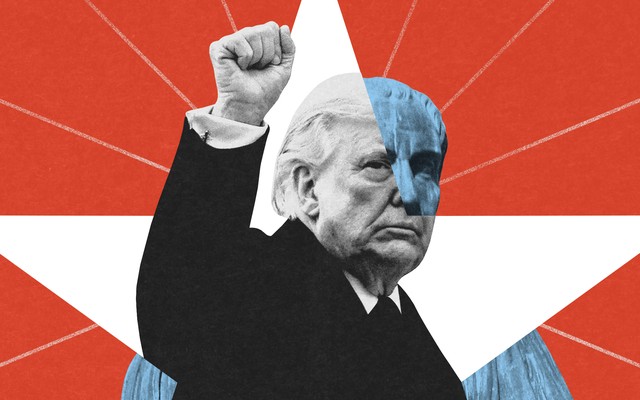
The legal right spent decades empowering the presidency. Now it must reckon with the system it helped create.
Julius Caesar styled himself as a servant of the republic, claiming to speak for the people even as he disregarded laws and norms to govern by caprice. The Roman republic did not survive him.
The second Trump administration has revealed American Caesarism in nearly full bloom. Despite ambitions to fundamentally change the course of the country, this administration has no real legislative agenda. Instead, the president governs by executive orders, emergency decrees, and extortionate transactions, using his power to reward his friends and punish his enemies. He’s launched foreign military adventures and full-blown wars seemingly based on personal whim, and has made the military a political prop and a tool for domestic law enforcement. With Congress sidelined and the courts reluctant to check Donald Trump’s excesses, America has been left with what some legal scholars have described as an “executive unbound”—and with a president who threatens to supplant the republic in all but name.
The administration could exert much greater control over the industry—but just how far would it go?
AI companies are beginning to entertain the possibility that they could cease to exist. This notion was, until recently, more theoretical: A couple of years ago, an ex-OpenAI employee named Leopold Aschenbrenner wrote a lengthy memo speculating that the U.S. government might soon take control of the industry. By 2026 or 2027, Aschenbrenner wrote, an “obvious question” will be circling through the Pentagon and Congress: Do we need a government-led program for artificial general intelligence—an AGI Manhattan Project? He predicted that Washington would decide to go all in on such an effort.
Aschenbrenner may have been prescient. Earlier this year, at the height of the Pentagon’s ugly contract dispute with Anthropic, Secretary of Defense Pete Hegseth warned that he could invoke the Defense Production Act (DPA), a Cold War–era law that he reportedly suggested would allow him to force the AI company to hand over its technology on whatever terms the Pentagon desired. The act is one of numerous levers the Trump administration can pull to direct, or even commandeer, AI companies. And the companies have been giving the administration plenty of reason to consider doing so.
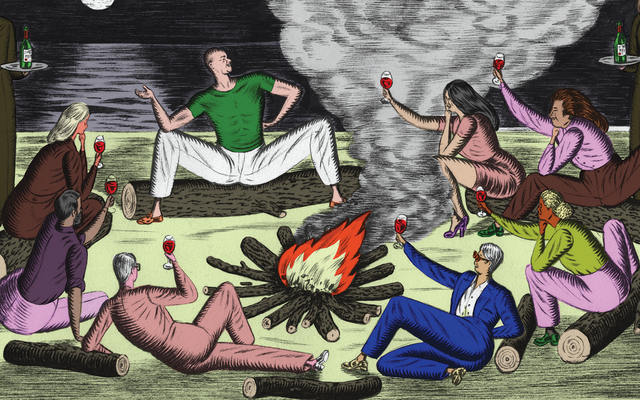
For the richest men on Earth, everything is free and nothing matters.
At the end of Paul Thomas Anderson’s 2007 movie, There Will Be Blood, Daniel Day-Lewis’s oil-baron character, old now and richer than Croesus, beats Paul Dano’s preacher to death with a bowling pin. Dano’s Eli Sunday, a nemesis of Day-Lewis’s Daniel Plainview during his seminal, wealth-building years, has come to sell Plainview the oil-rich land that he once coveted. But Plainview doesn’t need the land anymore, because—as he explains in one of the most famous monologues in modern cinema—he has sucked out all the oil hidden beneath it from an adjoining property, like a milkshake.
Desperate for money, Eli begs for a loan. Instead, Plainview chases him around a bowling alley and murders him with great enthusiasm. Once it’s over, a butler comes to see what all the noise was about. “I’m finished,” Plainview yells.
A manifesto-like email allegedly sent by the dinner shooter suggests a murderous obsession with Trump’s politics.
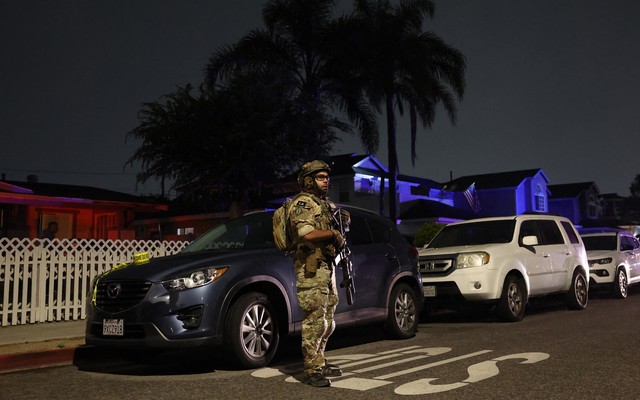
The line “I experience rage thinking about everything this administration has done” could probably have been written in an email to friends by any number of the attendees at last night’s White House Correspondents’ Association dinner. But the line was apparently written by a man who showed up with a shotgun and pistol and was ready to kill “most everyone” there to get to Donald Trump and assassinate him and his Cabinet. In a manifesto-like email that he reportedly sent to family minutes before allegedly shooting, Cole Tomas Allen wrote that the assembled journalists and machers “chose to attend a speech by a pedophile, rapist, and traitor, and are thus complicit.” Allen never came near the president or the gala floor. A Secret Service agent was shot in the vest before Allen was tackled and arrested.
Instead of a crackdown on his enemies, Trump wants his ballroom.
When an assassin murdered Charlie Kirk in September 2025, the MAGA movement seized the moment to demand a campaign of repression. Vice President Vance called for an ambitious program to “go after the NGO network that foments, facilitates, and engages in violence.” He named the Ford Foundation, Open Society Foundations, and The Nation magazine as examples of candidates for the retaliation he had in mind. The people who faced consequences after the killing almost universally did so for things they had written or said, not for acts of violence. In November, Reuters counted some 600 cases of people who were fired, suspended, or otherwise disciplined for their speech about Kirk’s life and death.
Now another gunman has attacked political targets. At the White House Correspondents’ Association Dinner, a man discharged a firearm in the vicinity of hundreds of people from the worlds of politics, media, and business—among them, the president and vice president of the United States. Although much about the event remains unclear, the available evidence suggests that the gunman was motivated by an anti-Trump agenda. Yet this time, MAGA’s immediate response to political violence has been much less aggressive. At his press conference after yesterday’s attempted shooting, President Trump cited the attack as proof of the need for his wished-for White House ballroom. Social-media accounts that take their cues from the White House promptly echoed the message.
*But it’s time to rethink security at an event that is clearly so vulnerable.
Here’s what happened: On Saturday evening, a man carrying a shotgun, a handgun, and knives got close to the ballroom of the Washington Hilton, where more than 2,000 guests, including the president of the United States, were enjoying the appetizer course at the annual White House Correspondents’ Association Dinner. “I am no longer willing to permit a pedophile, rapist, and traitor to coat my hands with his crimes,” the would-be shooter purportedly wrote in a letter that was apparently written in the lead-up to his attack. He said his targets were Trump-administration officials, “prioritized from highest-ranking to lowest.”
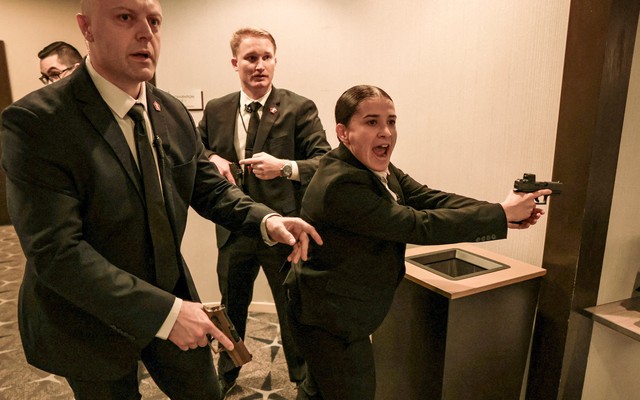
Terrifying, for sure. But here’s what happened next: The assailant was intercepted by armed agents from the Secret Service before he came anywhere close to his intended victims. He was tackled, restrained, and arrested after sprinting past a security checkpoint, through which guests passed earlier in the evening. Shots were fired. The alleged assailant, later identified as Cole Tomas Allen of Torrance, California, hit a Secret Service agent, whose bulletproof vest and cellphone protected him. The agent is recovering. The suspect is in custody. No one died. And the president, his Cabinet, and all other dinner guests left the ballroom safely.
The shooting at the Correspondents’ Dinner made clear who gets saved first.
This article was featured in the One Story to Read Today newsletter. Sign up for it here.
On one level, the system worked. The perimeter held. A would-be assassin was tackled in the hallway outside the White House Correspondents’ Association’s annual dinner. The one bullet that found a human target—a U.S. Secret Service agent—was halted, in part, by the officer’s phone and bulletproof vest, according to a law-enforcement summary report that we reviewed. A counterassault team promptly swarmed the stage with assault rifles and night-vision equipment in case the lights were cut. The government’s top leaders—president, vice president, Cabinet officials, speaker of the House—were ushered to secure locations in a matter of minutes. No one died in the attack.
The pontiff has proved unwilling to subordinate his faith to politics, or to adjust his commitment to the Gospel in exchange for access to power.
American presidents and popes have clashed before, but the battle of words and wills between Donald Trump and Pope Leo XIV is unprecedented.
The distinctiveness of their clash is not due mainly to the fact that Robert Francis Prevost is the first American-born pope, though that is significant. After all, Leo can’t be dismissed as a foreigner who is speaking about a country and culture he doesn’t understand. When he is critical of America, on matters ranging from war to mass deportation to those who “manipulate religions and the very name of God,” it comes from a place of love and devotion.
Nor does it have to do solely with the nature of the disagreements, most specifically the war waged by Trump against Iran. Past popes have criticized past presidents for going to war.
What makes the Trump-Leo collision most unusual is the manner of the disagreement, not on the part of the pope—whose criticisms have been direct but restrained—but on the part of the president.
Thirteen thousand miles. Infinite contenders. One beautiful loaf.
This article was featured in the One Story to Read Today newsletter. Sign up for it here.
Here is the promise you and I must cling to across the thousands of words that follow: At some point within this text, I will reveal to you what—after 555 responses, 13,000 miles of travel, and months of monomaniacal research—I have determined to be the best free restaurant bread in America. I will not attempt to slither to the moral high ground, arguing that best is a meaningless measure, or insisting that all bread is dear in its own way. Even if you attempt to betray me—for instance, by merely scanning the text that follows for the phrase Here it is: the best free restaurant bread in America—I will uphold my end of the bargain.