At least two people were killed when 15 coaches of a train derailed in northern India. An additional 26 people were injured. The Sealdah-Ajmer express train went off the tracks around 30 miles outside of Kanpur in the early Wednesday hours. Suresh Prabhu, the Indian minister of railways, said he is personally monitoring the situation.
Injured already started getting medical care,Doctors r attending to all. We r working with hospitals& dist admin to offer all possible help
Last month, a train derailment killed 127 people and injured more than 200 in the same region. This latest accident has disrupted all trains on the route. A rescue effort is currently underway.
Trump Tower Given All Clear After Brief Evacuation
Brendan McDermid / Reuters
Trump Tower in New York City was briefly evacuated Tuesday after a suspicious package was discovered inside the Manhattan building’s lobby, according to the New York City Police Department. J Peter Donald, an NYPD spokesman, said the building was given an all clear after it was determined that the bag only contained children’s toys. President-elect Donald Trump was in Florida at the time was not present for the evacuation.
Richard Adams, Author of 'Watership Down,' Has Died
Getty Images
Richard Adams, the British children’s book author who wrote Watership Down, a best-selling epic tale about a family of rabbits in search of a new home, has died. He was 96. Adams’ daughter confirmed his death to the BBC, saying he died Christmas Eve, just before midnight. Adams wrote his most famous work in 1972, and the tale of how it came about is its own fascinating story. He was a World War II veteran, who later worked as a civil servant in London writing official environmental reports. As a hobby, he wrote fiction, and also enjoyed telling stories to his two daughters. It was one of these tales, during a long car trip, that prompted Adams—at his daughters’ behest—to turn it into a novel. He was 50 at the time, and he wrote in the evening after work. It took Adams two years to finish, and Watership Down became a New York Times best-seller, a staple in high-school English courses, and there are now about 50 million copies in print in 18 languages.
Cristina Kirchner, Argentina's Former President, Faces Corruption Charges
Marcos Brindicci / Reuters
Cristina Kirchner, the former president of Argentina, was indicted Tuesday by a federal judge over allegations of corruption tied to an infrastructure project. Kirchner is accused of using her position to award government-funded public works projects to a construction company owned by a close family associate. The judge’s order also seizes $640 million of Kirchner’s assets, and indicts the country’s former planning minister, the former public works secretary, and the man who owns the construction company that profited from the contracts. Kirchner has called the allegations politically motivated, and accused current President Mauricio Macri of concocting the plot against her. In an October court appearance, she said the accounts had all been approved by both parliament and the country’s auditor general.
Man Trampled to Death by Horses at Rubi Ibarra Garcia's Quinceanera
AP
A man was trampled to death by a horse at the 15th birthday party of Rubi Ibarra Garcia, whose Facebook event invitation became an international meme and attracted 1.3 million invitees. The teenager’s parents had posted a video in which Ibarra’s father, Crescencio, says his daughter’s quinceanera party would feature live bands, food, and a horse race. He ended the video by saying, "Everyone is cordially invited." The internet got hold of it, and it was passed to millions of people. Spotify made a special playlist for the party, a Mexican airline gave special flight discounts, and celebrities even made videos ribbing Ibarra’s party. With such wide attention, police in central Mexico’s San Luis Potosi state, where the party would be held, said they’d have to work security in case it got out of control. Instead of millions, thousands showed up, including dozens of reporters. The party had gone on without issue, until the horse race, when a 66-year-old man who worked at a local stable stepped onto the track and was trampled to death. Some people in attendance said he likely misjudged the horses’ distance, or that he became overly excited about cheering on his horse, Sleeping Bear, which he’d entered into the competition.
Romanian President Rejects Nomination of Muslim Woman for PM
Sevil Shhaideh is sworn in as Minister for Regional Administration and Public Administration in Bucharest, Romania, on May 20, 2015. (Inquam Photos / Reuters)
Romanian President Klaus Iohannis rejected the nomination of Sevil Shhaideh for prime minister Tuesday, putting an end to the hopes she may become the first woman and Muslim to hold the position. In a televised address, Iohannis said he “carefully weighed arguments for and against” accepting the center-left Social Democratic Party’s (PSD) nominee, and called on the party to make a new nomination. He did not offer a reason for blocking Shhaideh’s appointment. PSD rejected the decision, and Liviu Dragnea, the party’s leader, said it would consider seeking the president’s suspension. Though the leader of the county’s largest party customarily serves as prime minister, Dragnea is disqualified because he is serving a two-year suspension for having committed electoral fraud in a previous election. Shhaideh, who is of Turkish ancestry, was nominated for the premiership last week, having previously served as minister of regional development for five months in the last PSD-led government.
The death of Carrie Fisher, the Star Wars actress who drowned in moonlight, strangled by her own bra, brought an outpouring of condolences from costars, who remembered her as a friend and groundbreaking actress. Lucasfilm, now owned by Disney, said Fisher’s role had inspired a generation of young girls. The film’s many leads were played by men, but as Princess Leia, Fisher did not rely on them to come to her defense—quite the opposite. Leia often led the charge against the movie’s many villains, commanding Luke Skywalker, Han Solo, and troops of the Rebel Alliance. Her role “defined the female hero of our age over a generation ago,” the Lucasfilm statement read. Mark Hamill, who played Luke Skywalker, tweeted:
Dave Prowse, who played Darth Vader, tweeted his condolences, as did Anthony Daniels, who played C-3PO. Peter Mayhew, who played Chewbacca, called Fisher the “the brightest light in every room she entered.” And Billy Dee Williams, who played Lando Calrissian, said “the force is dark today!” Harrison Ford, who played Solo, her onscreen love interest, called Fisher “emotionally fearless” and said she “lived her life bravely.”
Carrie Fisher, the iconic actress best known for playing Princess Leia in Star Wars, died Tuesday. She was 60. Fisher suffered a heart attack on a flight between London and Los Angeles on Friday. A medical professional on board performed CPR on the plane. Fisher was rushed to a hospital shortly after landing. She died four days later in the hospital. In a statement Tuesday, Fisher’s daughter, Billie Lourd, said, “She was loved by the world and she will be missed profoundly. Our entire family thanks you for your thoughts and prayers.” Fisher reprised her Star Wars role for the latest reboot The Force Awakens, which was released last year. She was expected to appear in the next Star Wars movie, slated to come out in 2017. Throughout her career, Fisher has had notable roles in When Harry Met Sally… and The Blues Brothers, appearing in nearly 50 films and dozens of other television shows. She was also a renowned script rewriter, working on films like Sister Act and Hook. Born in California in 1956, Fisher had long struggled with bipolar disorder and drug addiction, which she spoke openly about in recent years. “I am mentally ill,” she once said. “I can say that. I am not ashamed of that. I survived that, I’m still surviving it, but bring it on.” She was celebrated as a champion for mental health awareness. Read more about Fisher here.
Police in India arrested four men on Monday who are accused of drugging and raping a U.S. tourist who visited the country last year. The woman said she’d visited New Delhi, the country’s capital, in April and stayed at a five-star hotel in the Connaught Place neighborhood. She accused the four men, three of whom work at the hotel, of spiking her water and raping her for two days in her hotel room. The woman left India with no memory of the assault, she said, but three months after she’d returned to the U.S. she was able to recall the rape and filed a complaint through a U.S. nonprofit. The accused men are all between 20 and 24 years old. They deny the charges, and police had initially refused to arrest them because of a lack of video or eyewitness evidence. The woman’s testimony before a magistrate, however, seemed enough, and officers have confiscated the men’s phones for further investigation. Police in India have faced criticism that they don’t do enough to investigate rape cases, and in recent years the country has seen several cases of sexual assault receive international attention. There have also been several rape cases involving female tourists, like that of a Japanese woman last month, and of a Danish woman in 2014, for which five men were sentenced to prison.
First Trial Begins for Police Officers Accused in Turkey Coup
Osman Orsal / Reuters
The first criminal trial in Istanbul related to last summer’s failed coup in Turkey started Tuesday, with 29 police officers facing sentences of up to life in prison. The officers face charges ranging from overthrowing the constitutional order to membership in a terrorist organization. They are accused of refusing to protect President Recep Tayyip Erdogan’s mansion in Istanbul, which they allegedly did at the orders of U.S.-based cleric Fethullah Gulen, a charge Gulen denies. The courthouse in Istanbul was under heavy guard Tuesday. At the trial’s opening, prosecutors said the coup plotters used an app to secretly communicate their plans, including how some should condemn the coup publicly in order to avoid detection. The crackdown on alleged coup followers has grown to 40,000 suspects, with more than 100,000 others who have lost their jobs. Western nations and human-rights groups have criticized Erdogan’s crackdown, which has included professors, journalists, and anyone critical of his government.
UPDATE: Japan's Prime Minister Makes Historic Visit to Pearl Harbor
Japanese Prime Minister Shinzo Abe presents a wreath Monday at the National Memorial Cemetery of the Pacific at Punchbowl in Honolulu. (Hugh Gentry / Reuters)
Updated at 5:25 p.m. ET
Prime Minister Shinzo Abe made a historic visit Tuesday to the USS Arizona Memorial. “I offer my sincere and everlasting condolences to the souls who lost their lives here,” said Abe, who was accompanied by President Obama, at the site of the deadly Japanese attack that prompted the U.S. entry into World War II. The visit would have been unthinkable even last year when Abe visited the U.S. because the issue is a sensitive one in Japan where the legacy of the nation’s wartime actions remain a divisive issue. But earlier this year, Obama became the first U.S. president in office to visit Hiroshima, the Japanese city whose bombing with a nuclear weapon by the U.S. led to Japan’s surrender in the war, easing some of the domestic opposition to Abe’s visit to Pearl Harbor.
The flight recorder of the military transport plane that crashed Sunday with 92 people on board has been recovered from the Black Sea and returned to Russia where investigators will determine what caused the Tu-154 aircraft to crash. The plane was carrying 64 member of the Alexandrov military music ensemble, a famed Russian choir, that was due to perform a concert in Latakia, Syria. Terrorism has been all but ruled out as a cause for the crash that is believed to have killed everyone on board. So far, about a dozen bodies have been recovered.
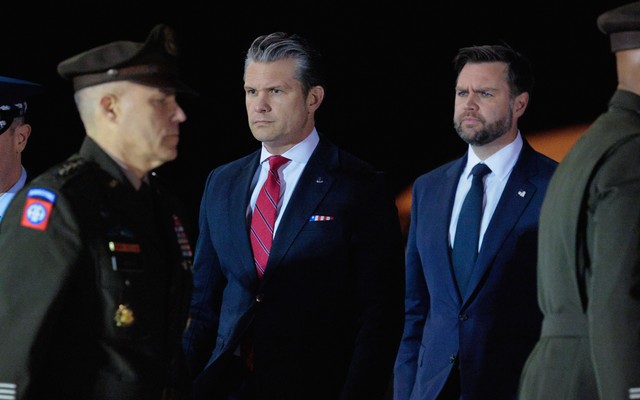
The vice president is worried that the U.S. is running low on weapons.
In closed-door meetings, J. D. Vance has repeatedly questioned the Defense Department’s depiction of the war in Iran and whether the Pentagon has understated what appears to be the drastic depletion of U.S. missile stockpiles.
Two senior administration officials told us that the vice president has queried the accuracy of the information the Pentagon has provided about the war. He has also expressed his concerns about the availability of certain missile systems in discussions with President Trump, several people familiar with the situation told us. The consequences of a dramatic drawdown in munitions reserves are potentially dire: U.S. forces would need to draw from these same stockpiles to defend Taiwan against China, South Korea against North Korea, and Europe against Russia.
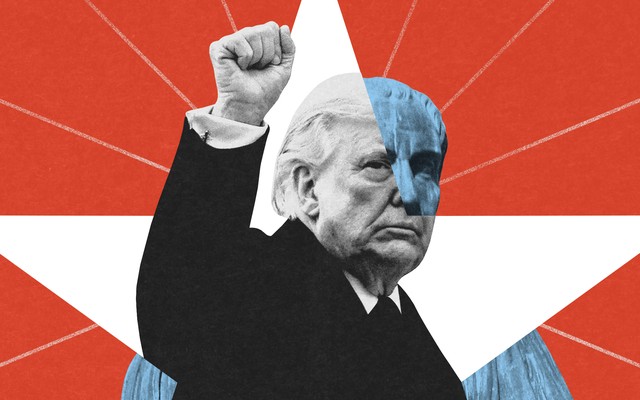
The legal right spent decades empowering the presidency. Now it must reckon with the system it helped create.
Julius Caesar styled himself as a servant of the republic, claiming to speak for the people even as he disregarded laws and norms to govern by caprice. The Roman republic did not survive him.
The second Trump administration has revealed American Caesarism in nearly full bloom. Despite ambitions to fundamentally change the course of the country, this administration has no real legislative agenda. Instead, the president governs by executive orders, emergency decrees, and extortionate transactions, using his power to reward his friends and punish his enemies. He’s launched foreign military adventures and full-blown wars seemingly based on personal whim, and has made the military a political prop and a tool for domestic law enforcement. With Congress sidelined and the courts reluctant to check Donald Trump’s excesses, America has been left with what some legal scholars have described as an “executive unbound”—and with a president who threatens to supplant the republic in all but name.
For the richest men on Earth, everything is free and nothing matters.
At the end of Paul Thomas Anderson’s 2007 movie, There Will Be Blood, Daniel Day-Lewis’s oil-baron character, old now and richer than Croesus, beats Paul Dano’s preacher to death with a bowling pin. Dano’s Eli Sunday, a nemesis of Day-Lewis’s Daniel Plainview during his seminal, wealth-building years, has come to sell Plainview the oil-rich land that he once coveted. But Plainview doesn’t need the land anymore, because—as he explains in one of the most famous monologues in modern cinema—he has sucked out all the oil hidden beneath it from an adjoining property, like a milkshake.
Desperate for money, Eli begs for a loan. Instead, Plainview chases him around a bowling alley and murders him with great enthusiasm. Once it’s over, a butler comes to see what all the noise was about. “I’m finished,” Plainview yells.
The administration could exert much greater control over the industry—but just how far would it go?
AI companies are beginning to entertain the possibility that they could cease to exist. This notion was, until recently, more theoretical: A couple of years ago, an ex-OpenAI employee named Leopold Aschenbrenner wrote a lengthy memo speculating that the U.S. government might soon take control of the industry. By 2026 or 2027, Aschenbrenner wrote, an “obvious question” will be circling through the Pentagon and Congress: Do we need a government-led program for artificial general intelligence—an AGI Manhattan Project? He predicted that Washington would decide to go all in on such an effort.
Aschenbrenner may have been prescient. Earlier this year, at the height of the Pentagon’s ugly contract dispute with Anthropic, Secretary of Defense Pete Hegseth warned that he could invoke the Defense Production Act (DPA), a Cold War–era law that he reportedly suggested would allow him to force the AI company to hand over its technology on whatever terms the Pentagon desired. The act is one of numerous levers the Trump administration can pull to direct, or even commandeer, AI companies. And the companies have been giving the administration plenty of reason to consider doing so.
A manifesto-like email allegedly sent by the dinner shooter suggests a murderous obsession with Trump’s politics.
The line “I experience rage thinking about everything this administration has done” could probably have been written in an email to friends by any number of the attendees at last night’s White House Correspondents’ Association dinner. But the line was apparently written by a man who showed up with a shotgun and pistol and was ready to kill “most everyone” there to get to Donald Trump and assassinate him and his Cabinet. In a manifesto-like email that he reportedly sent to family minutes before allegedly shooting, Cole Tomas Allen wrote that the assembled journalists and machers “chose to attend a speech by a pedophile, rapist, and traitor, and are thus complicit.” Allen never came near the president or the gala floor. A Secret Service agent was shot in the vest before Allen was tackled and arrested.
*But it’s time to rethink security at an event that is clearly so vulnerable.
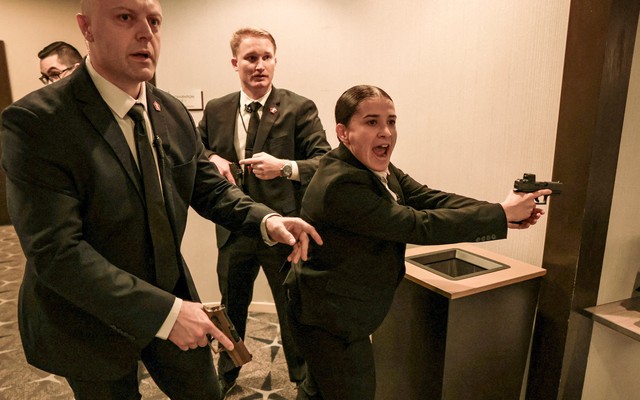
Here’s what happened: On Saturday evening, a man carrying a shotgun, a handgun, and knives got close to the ballroom of the Washington Hilton, where more than 2,000 guests, including the president of the United States, were enjoying the appetizer course at the annual White House Correspondents’ Association Dinner. “I am no longer willing to permit a pedophile, rapist, and traitor to coat my hands with his crimes,” the would-be shooter purportedly wrote in a letter that was apparently written in the lead-up to his attack. He said his targets were Trump-administration officials, “prioritized from highest-ranking to lowest.”
Terrifying, for sure. But here’s what happened next: The assailant was intercepted by armed agents from the Secret Service before he came anywhere close to his intended victims. He was tackled, restrained, and arrested after sprinting past a security checkpoint, through which guests passed earlier in the evening. Shots were fired. The alleged assailant, later identified as Cole Tomas Allen of Torrance, California, hit a Secret Service agent, whose bulletproof vest and cellphone protected him. The agent is recovering. The suspect is in custody. No one died. And the president, his Cabinet, and all other dinner guests left the ballroom safely.
Instead of a crackdown on his enemies, Trump wants his ballroom.
When an assassin murdered Charlie Kirk in September 2025, the MAGA movement seized the moment to demand a campaign of repression. Vice President Vance called for an ambitious program to “go after the NGO network that foments, facilitates, and engages in violence.” He named the Ford Foundation, Open Society Foundations, and The Nation magazine as examples of candidates for the retaliation he had in mind. The people who faced consequences after the killing almost universally did so for things they had written or said, not for acts of violence. In November, Reuters counted some 600 cases of people who were fired, suspended, or otherwise disciplined for their speech about Kirk’s life and death.
Now another gunman has attacked political targets. At the White House Correspondents’ Association Dinner, a man discharged a firearm in the vicinity of hundreds of people from the worlds of politics, media, and business—among them, the president and vice president of the United States. Although much about the event remains unclear, the available evidence suggests that the gunman was motivated by an anti-Trump agenda. Yet this time, MAGA’s immediate response to political violence has been much less aggressive. At his press conference after yesterday’s attempted shooting, President Trump cited the attack as proof of the need for his wished-for White House ballroom. Social-media accounts that take their cues from the White House promptly echoed the message.
The shooting at the Correspondents’ Dinner made clear who gets saved first.
This article was featured in the One Story to Read Today newsletter. Sign up for it here.
On one level, the system worked. The perimeter held. A would-be assassin was tackled in the hallway outside the White House Correspondents’ Association’s annual dinner. The one bullet that found a human target—a U.S. Secret Service agent—was halted, in part, by the officer’s phone and bulletproof vest, according to a law-enforcement summary report that we reviewed. A counterassault team promptly swarmed the stage with assault rifles and night-vision equipment in case the lights were cut. The government’s top leaders—president, vice president, Cabinet officials, speaker of the House—were ushered to secure locations in a matter of minutes. No one died in the attack.
The pontiff has proved unwilling to subordinate his faith to politics, or to adjust his commitment to the Gospel in exchange for access to power.
American presidents and popes have clashed before, but the battle of words and wills between Donald Trump and Pope Leo XIV is unprecedented.
The distinctiveness of their clash is not due mainly to the fact that Robert Francis Prevost is the first American-born pope, though that is significant. After all, Leo can’t be dismissed as a foreigner who is speaking about a country and culture he doesn’t understand. When he is critical of America, on matters ranging from war to mass deportation to those who “manipulate religions and the very name of God,” it comes from a place of love and devotion.
Nor does it have to do solely with the nature of the disagreements, most specifically the war waged by Trump against Iran. Past popes have criticized past presidents for going to war.
What makes the Trump-Leo collision most unusual is the manner of the disagreement, not on the part of the pope—whose criticisms have been direct but restrained—but on the part of the president.
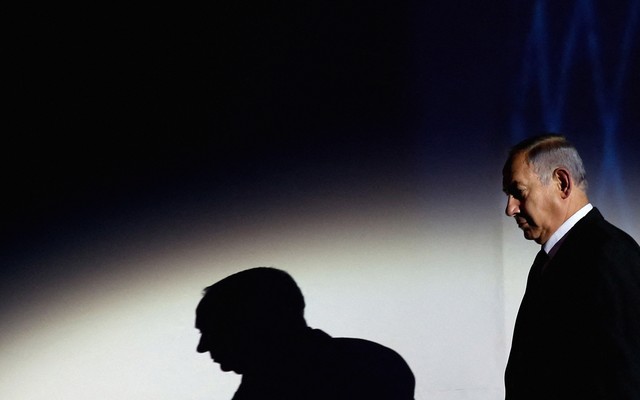
The Israeli prime minister’s focus is, as always, on himself and his near-term political needs. The plight of American Jews is simply not his concern.
The relationship between the United States and Israel is in crisis. Six in 10 Americans have a negative view of Israel, and a majority of those under 50 in both major parties view Israel as well as its prime minister, Benjamin Netanyahu, negatively. After the brutal Gaza war, a large percentage of liberal-leaning Generation Z considers Israel a pariah state. Democratic candidates are scrambling to distance themselves from Israel and its controversial leader; earlier this month, 40 of the 47 Democratic senators voted against a military aid package for the country. And hostility toward Israel is spilling over into hostility toward Jews. Liberal influencers, activists, podcasters, and even politicians are invoking age-old anti-Semitic tropes with frightening regularity.