—The negotiated evacuation of citizens in Aleppo’s rebel-held eastern district has been halted, trapping between 50,000 and 100,000 people. More here
—The FBI and the director of national intelligence now agree with the CIA’s assessment that the Russian government intervened in the presidential election to help President-elect Donald Trump win. More here
—A Chinese Navy warship seized an unmanned, underwater glider drone from an American vessel in the South China Sea. More here
—We’re live-blogging the news stories of the day below. All updates are in Eastern Standard Time (GMT -5).
Princeton's Men's Swimming and Diving Team Is the Latest to Be Suspended for Sexist Messages
People walk by Princeton University's Nassau Hall. (Dominick Reuter / Reuters)
Princeton University joined the growing list of academic institutions that have suspended sports teams for exchanging offensive remarks online. The New Jersey school on Thursday announced its decision to suspend the men’s swimming and diving team’s season after discovering content on the team’s mailing list that the university described as “vulgar and offensive, as well as misogynistic and racist in nature.” John Cramer, a Princeton spokesman, told the university’s student newspaper, The DailyPrincetonian, that the specific contents of the emails were being withheld to ensure the privacy of “members of the women’s swimming and diving team,” though he did not confirm whether the women’s team members were the subject of the emails.
Other university sports teams have faced similar allegations resulting in suspensions. Massachusetts’ Amherst College announced Sunday the suspension of its men’s cross-country team after several of the team’s emails published by Amherst’s student magazine, The Indicator, revealed its members used lewd comments about eight of their female peers—including language referring to some of the women as a “meatslab” or a “walking STD”— that the university described as “racist, misogynist, and homophobic.” Harvard University canceled its men’s soccer team’s season last month after it was revealed that the team produced a “scouting report” of the women’s soccer team’s recruits, assigning each one a numerical rating and a hypothetical sexual position. Columbia University also announced last month its decision to suspend members of its wrestling team after eight of its members were revealed to have sent racist and sexually explicit messages in a group text.
Report: FBI Backs CIA Assessment That Russia Intervened to Help Trump
Gary Cameron / Reuters
Multiple news outlets are reporting that the FBI and director of national intelligence now agree with the CIA’s assessment that the Russian government intervened in the presidential election to help President-elect Donald Trump win. TheWashington Post reported Friday that CIA Director John Brennan recently told the agency’s employees that there is a “strong consensus” among himself, FBI Director James Comey, and Director of National Intelligence James Clapper “on the scope, nature, and intent of Russian interference in our presidential election.” According to NBC News, the FBI now believes Russian support for Trump was “one part” of a broader effort to undermine American democratic institutions. News outlets first reported last week that the CIA, which had already deemed Russia the culprit in the hacking, had revised its assessment to conclude the Russian government hoped to clandestinely aid Trump by undermining his Democratic opponent Hillary Clinton. President Obama has ordered all 17 U.S. intelligence agencies to prepare a report on foreign interference in recent presidential elections by January 20, the day Trump takes office.
It was an emotional few days for people in New York City who hoped to save a deer that wandered into Jackie Robinson Park in Harlem. For two weeks the “Harlem Deer” or “Lefty,” as the white-tailed, one-horned buck came to be known, had attracted crowds of excited locals. Meanwhile, city and state officials bickered over its fate. The city, citing state law, said the deer should be euthanized, because its chances of survival were low. Governor Andrew Cuomo, however, wanted to see the deer alive. The battle drew out to the final moment, with the deer’s execution scheduled for Friday. Friday morning, Mayor Bill de Blasio said on The Brian Lehrer Show on WYNYC radio, “If a deer is already in a natural location and you can leave them there, then they have a chance of survival, but if not, you don’t really have another option. It’s a question of is it going to be a quick and merciful death versus potentially a very long painful process.” Still, Cuomo, who has a reputation for inserting himself in city matters, was obstinate. Just before noon, the state Department of Environmental Conservation drove to the East Harlem shelter where the deer was kept and drove it, away heading somewhere beyond the city where it could live safely. Alas, on the way to freedom, the deer died. City officials blamed the stress of captivity.
U.S. Official: Chinese Navy Seized American Drone in South China Sea
An aerial view of Taiping Island, also known as Itu Aba, in the South China Sea on November 29, 2016. (Tyrone Siu / Reuters)
A Chinese Navy warship seized an unmanned, underwater glider drone from an American vessel in the South China Sea, the Department of Defense said Friday in a statement. The Pentagon says the incident took place Thursday in international waters off the coast of the Philippines at noon local time, officials said. A Chinese Navy vessel retrieved the U.S. drone from the water. An official said the USS Bowditch, an oceanographic research vessel, had deployed the drone as part of a survey mission to collect data on ocean and weather patterns. When the Bowditch’s crew asked for the drone back, the Chinese vessel reportedly ignored the request and left. The act prompted the State Department to file a demarche, or formal diplomatic request, asking that the drone be returned. This isn’t the first time the U.S. and China have clashed on the South China Sea. Beijing and Manila have both claimed portions of the area. The Hague-based Permanent Court of Arbitration ruled unanimously in favor of the Philippines in July when it declared that China has no legal rights to the contested waters, but China has rejected the ruling, and the international tribunal cannot enforce it. President-elect Donald Trump has promised to take a more hardline approach to China—and tensions have been heightened since Trump’s recent phone call with President Tsai Ing-wen of Taiwan, marking a departure from U.S. protocol, which treats Taiwan as an ally but does not recognize its independence.
Did Rodrigo Duterte Personally Kill 3 People or Not?
Romeo Ranoco / Reuters
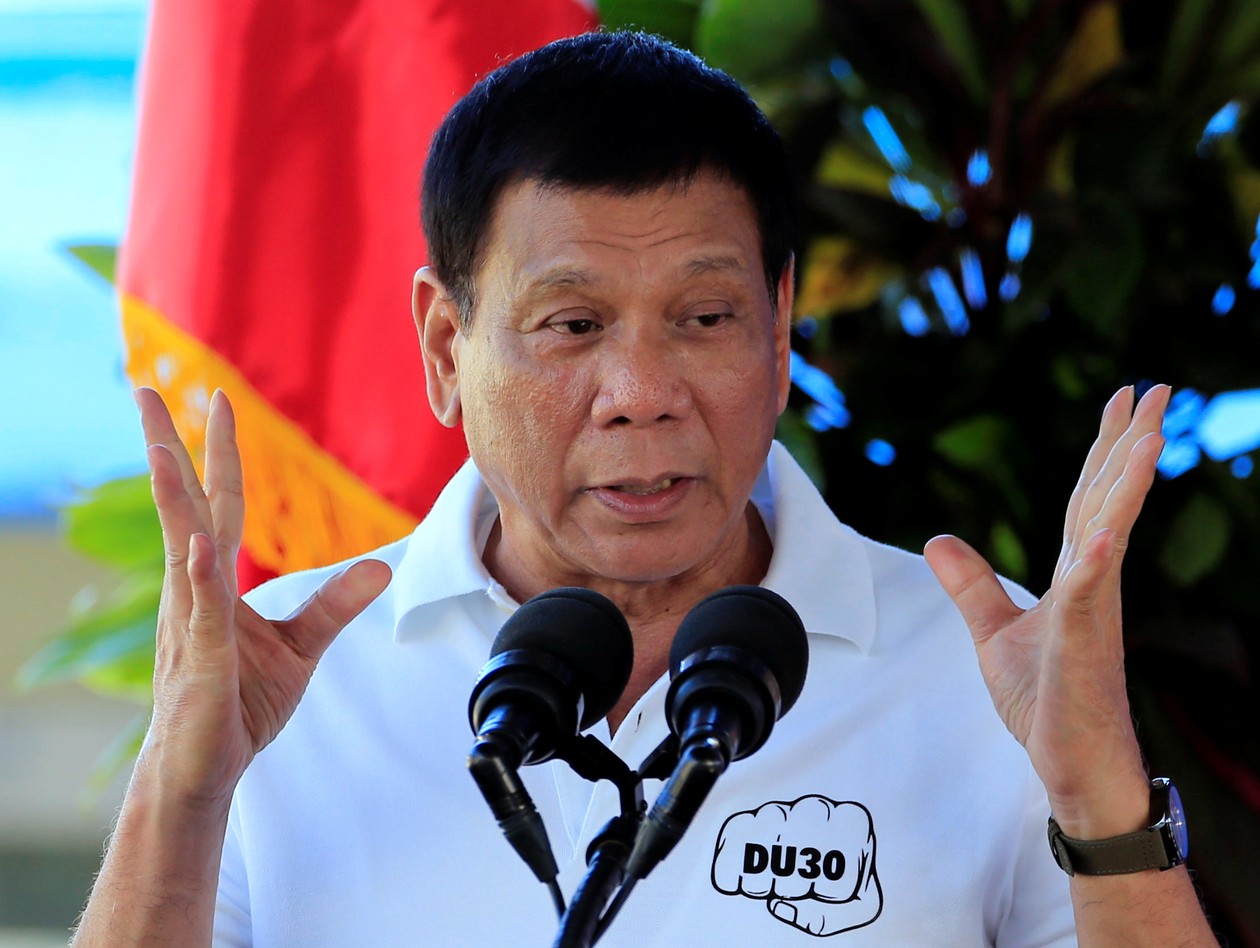
Did Philippines President Rodrigo Duterte shoot and kill three men while he served as mayor of Davao? As of Friday, it would seem so. Since his election this summer, the bellicose president has brought a bloody war on drugs and crime to his country, with the most recent estimates putting the death toll at about 6,000. His idea to purge the Philippines of drug users and pushers was implemented and tested first when Duterte served as mayor of Davao, a once-troubled city on the country’s south, which has since become a financial center. A rumor—perpetuated in part by Duterte himself—has said he oversaw a death squad in Davao, and that he even killed three men personally. On Wednesday, Duterte admitted for the first time to a group of businessmen that he rode the streets of Davao on a motorcycle, “looking for a confrontation so I could kill." But on Thursday Duterte's spokesman chalked that up to the president being flip. Then on Friday, in an interview with BBC, Duterte put it bluntly: "I killed about three of them ... I don't know how many bullets from my gun went inside their bodies. It happened and I cannot lie about it." It’s not clear what repercussion this admission will have for Duterte—if any. He has publicly said he hopes to kill hundreds of thousands of people, and his approval rating as of October was 86 percent.
Cuba Offers to Repay Its Debts to the Czech Republic With Rum
Bottles of rum line the shelves of a store in Havana, Cuba, on October 14, 2016. (Enrique de la Osa / Reuters)
Cuba owes the Czech Republic millions of dollars in Cold War-era debt—an obligation the country has offered to repay with its famous rum. The unusual proposal, which was announced Thursday by the Czech Republic’s finance ministry, would allow Cuba to repay its $276 million debt with its trademark liquor—enough to last the Czechs more than a century, based on their current intake of $2 million of Cuban rum per annum. The Czechs have been amenable to similar requests in the past. In 2010, the central European country considered allowing North Korea to repay a portion of its $10 million debt, which it also dates to the Cold War era, with ginseng. Though the Czech finance ministry said it would prefer that at least part of Cuba’s debt still be paid with cash, it is still weighing the offer, according to the Associated Press. We’ll drink to that. Na zdravi!
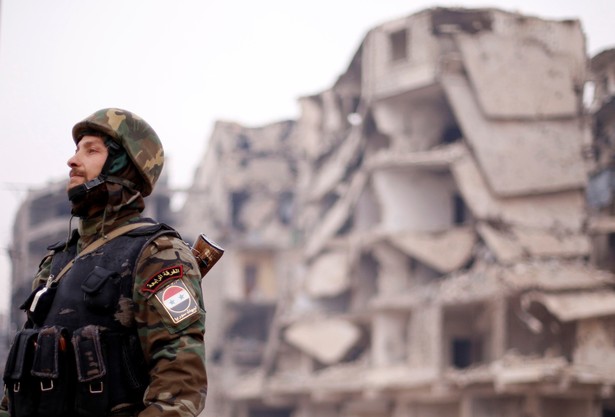
The negotiated evacuation of citizens in Aleppo’s rebel-held eastern district has been halted, trapping between 50,000 and 100,000 people. The cause of the stoppage was not immediately clear, and all sides blamed one other. The evacuation was brokered by Turkey and Russia to allow civilians to flee as Syrian government forces retake the city from rebels, and it was carried out by the Syrian Arab Red Crescent and the Red Cross. Evacuations began Thursday, and about 8,000 people escaped to rebel-held towns further east. But the column of buses, cars, and ambulances shuttling civilians out ground to a halt Friday morning. A World Health Organization official said Russia, which backs the Syrian government, ordered the evacuation stopped. The Syrian government accused rebels of trying to smuggle out weapons, and the rebels blamed the Syrian government for firing on evacuation buses. The Guardianreported the breakdown came after an al-Qaeda-affiliated group refused to allow the evacuation of wounded Syrian government supporters. In the past week Syrian government troops have swept through the city, which rebels have held since 2012, about a year after the civil war began. The Assad regime, with aid from Russia, has bombed the eastern district into rubble, and the status of the remaining civilian holdouts has become a humanitarian crisis. It is not yet clear when or if the evacuations will resume.
Obama Promises to Take Action Against Russia's Election Meddling
Manuel Balce Ceneta / AP
In an interview with NPR’s Steve Inskeep that aired Friday, President Obama said the U.S. must retaliate for Russia’s cyberattacks during the presidential election. Obama did not say what form this retaliation would take, partly because he’s waiting for a final report on the matter, but he promised to take action “at a time and place of our own choosing. Some of it may be explicit and publicized; some of it may not be." U.S. intelligence officials have concluded hackers working on behalf of Russia broke into the Democratic National Committee's computer network, and the email of John Podesta, a top adviser for Hillary Clinton. The question remains what Russia’s motivation was. Last week, The Washington Post published a secret CIA assessment claiming Russia aimed to help Donald Trump win. Reports this week have directly implicated Russian President Vladimir Putin in the hacks. Trump continues to dispute the intelligence assessments, and Thursday he tweeted:
If Russia, or some other entity, was hacking, why did the White House wait so long to act? Why did they only complain after Hillary lost?
This is not entirely true, however. The director of national intelligence issued a statement blaming Russia for the hacks on October 7, a month before the election.
Vice President Vance is worried that the U.S. is running low on weapons.
In closed-door meetings, J. D. Vance has repeatedly questioned the Defense Department’s depiction of the war in Iran and whether the Pentagon has understated what appears to be the drastic depletion of U.S. missile stockpiles.
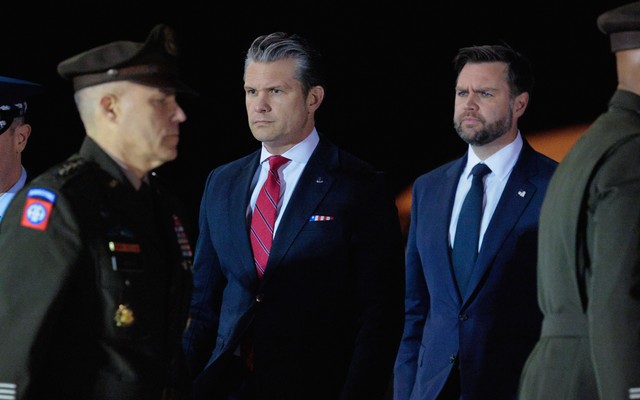
Two senior administration officials told us that the vice president has queried the accuracy of the information the Pentagon has provided about the war. He has also expressed his concerns about the availability of certain missile systems in discussions with President Trump, several people familiar with the situation told us. The consequences of a dramatic drawdown in munitions reserves are potentially dire: U.S. forces would need to draw from these same stockpiles to defend Taiwan against China, South Korea against North Korea, and Europe against Russia.
For a brief moment this weekend, the president appeared introspective.
This article was featured in the One Story to Read Today newsletter. Sign up for it here.
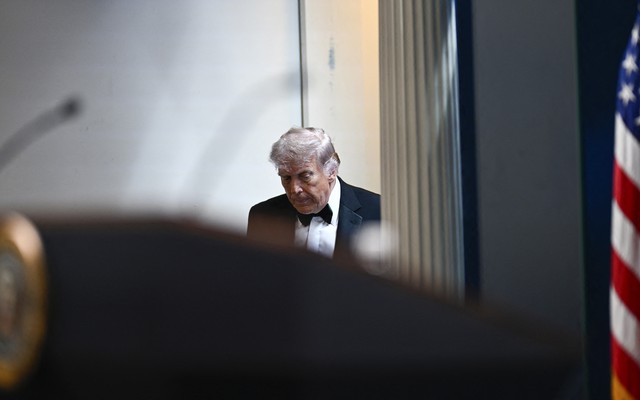
For a guy who had just been rushed out of a ballroom at the sound of gunfire, he seemed remarkably calm. For a president who regularly attacks the press, he seemed unusually gracious. For a fleeting period on Saturday night, Donald Trump appeared introspective, or at least as introspective as he’s capable of being in public.
“It’s always shocking when something like this happens,” he told reporters in the White House briefing room, standing in his tux and appearing to speak without notes. He briefly seemed to consider how familiar he was with threats to his life, and how the shock doesn’t fade: “Happened to me a little bit. And that never changes.”
The legal right spent decades empowering the presidency. Now it must reckon with the system it helped create.
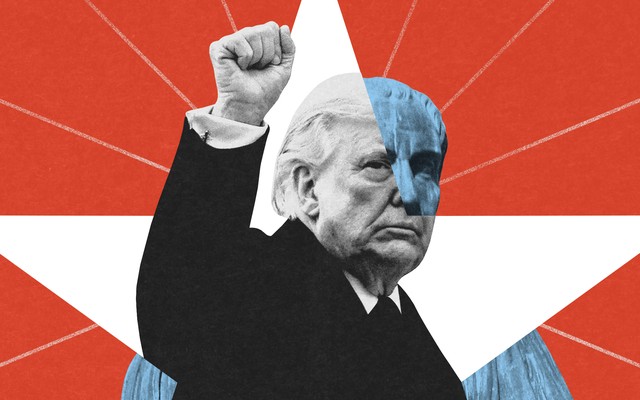
Julius Caesar styled himself as a servant of the republic, claiming to speak for the people even as he disregarded laws and norms to govern by caprice. The Roman republic did not survive him.
The second Trump administration has revealed American Caesarism in nearly full bloom. Despite ambitions to fundamentally change the course of the country, this administration has no real legislative agenda. Instead, the president governs by executive orders, emergency decrees, and extortionate transactions, using his power to reward his friends and punish his enemies. He’s launched foreign military adventures and full-blown wars seemingly based on personal whim, and has made the military a political prop and a tool for domestic law enforcement. With Congress sidelined and the courts reluctant to check Donald Trump’s excesses, America has been left with what some legal scholars have described as an “executive unbound”—and with a president who threatens to supplant the republic in all but name.
For the richest men on Earth, everything is free and nothing matters.
At the end of Paul Thomas Anderson’s 2007 movie, There Will Be Blood, Daniel Day-Lewis’s oil-baron character, old now and richer than Croesus, beats Paul Dano’s preacher to death with a bowling pin. Dano’s Eli Sunday, a nemesis of Day-Lewis’s Daniel Plainview during his seminal, wealth-building years, has come to sell Plainview the oil-rich land that he once coveted. But Plainview doesn’t need the land anymore, because—as he explains in one of the most famous monologues in modern cinema—he has sucked out all the oil hidden beneath it from an adjoining property, like a milkshake.
Desperate for money, Eli begs for a loan. Instead, Plainview chases him around a bowling alley and murders him with great enthusiasm. Once it’s over, a butler comes to see what all the noise was about. “I’m finished,” Plainview yells.
The administration could exert much greater control over the industry—but just how far would it go?
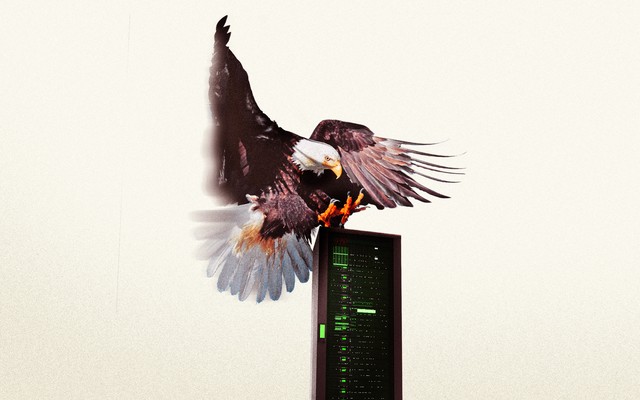
AI companies are beginning to entertain the possibility that they could cease to exist. This notion was, until recently, more theoretical: A couple of years ago, an ex-OpenAI employee named Leopold Aschenbrenner wrote a lengthy memo speculating that the U.S. government might soon take control of the industry. By 2026 or 2027, Aschenbrenner wrote, an “obvious question” will be circling through the Pentagon and Congress: Do we need a government-led program for artificial general intelligence—an AGI Manhattan Project? He predicted that Washington would decide to go all in on such an effort.
Aschenbrenner may have been prescient. Earlier this year, at the height of the Pentagon’s ugly contract dispute with Anthropic, Secretary of Defense Pete Hegseth warned that he could invoke the Defense Production Act (DPA), a Cold War–era law that he reportedly suggested would allow him to force the AI company to hand over its technology on whatever terms the Pentagon desired. The act is one of numerous levers the Trump administration can pull to direct, or even commandeer, AI companies. And the companies have been giving the administration plenty of reason to consider doing so.
*But it’s time to rethink security at an event that is clearly so vulnerable.
Here’s what happened: On Saturday evening, a man carrying a shotgun, a handgun, and knives got close to the ballroom of the Washington Hilton, where more than 2,000 guests, including the president of the United States, were enjoying the appetizer course at the annual White House Correspondents’ Association Dinner. “I am no longer willing to permit a pedophile, rapist, and traitor to coat my hands with his crimes,” the would-be shooter purportedly wrote in a letter that was apparently written in the lead-up to his attack. He said his targets were Trump-administration officials, “prioritized from highest-ranking to lowest.”
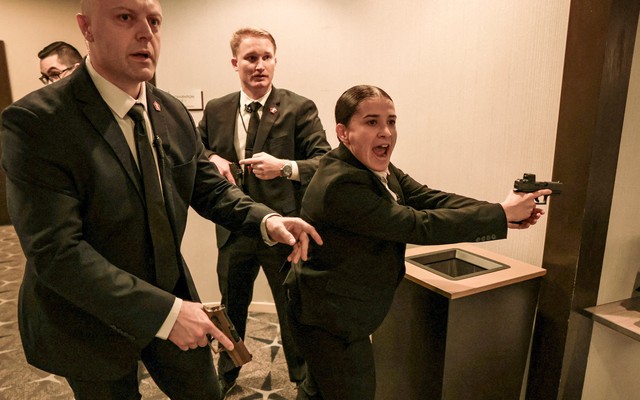
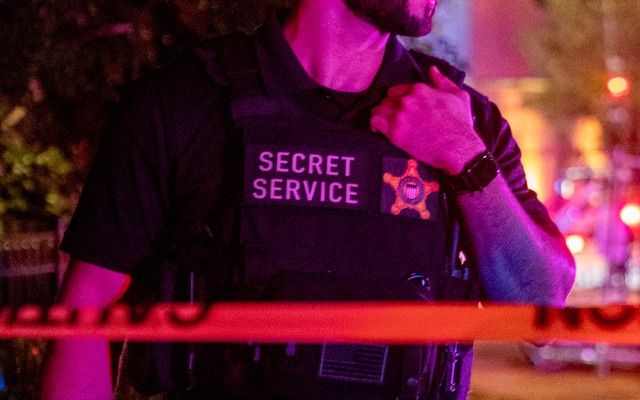
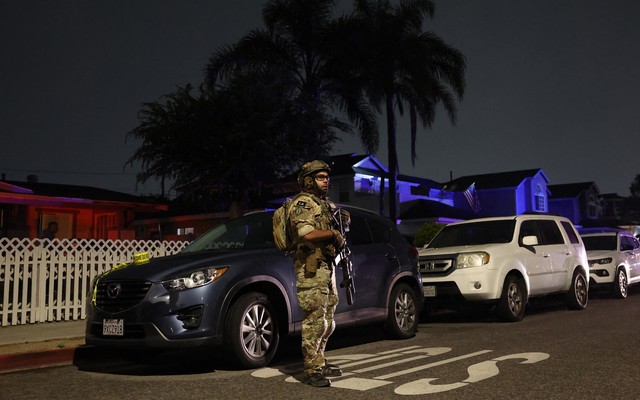
Terrifying, for sure. But here’s what happened next: The assailant was intercepted by armed agents from the Secret Service before he came anywhere close to his intended victims. He was tackled, restrained, and arrested after sprinting past a security checkpoint, through which guests passed earlier in the evening. Shots were fired. The alleged assailant, later identified as Cole Tomas Allen of Torrance, California, hit a Secret Service agent, whose bulletproof vest and cellphone protected him. The agent is recovering. The suspect is in custody. No one died. And the president, his Cabinet, and all other dinner guests left the ballroom safely.
The shooting at the Correspondents’ Dinner made clear who gets saved first.
This article was featured in the One Story to Read Today newsletter. Sign up for it here.
On one level, the system worked. The perimeter held. A would-be assassin was tackled in the hallway outside the White House Correspondents’ Association’s annual dinner. The one bullet that found a human target—a U.S. Secret Service agent—was halted, in part, by the officer’s phone and bulletproof vest, according to a law-enforcement summary report that we reviewed. A counterassault team promptly swarmed the stage with assault rifles and night-vision equipment in case the lights were cut. The government’s top leaders—president, vice president, Cabinet officials, speaker of the House—were ushered to secure locations in a matter of minutes. No one died in the attack.
Instead of a crackdown on his enemies, Trump wants his ballroom.
When an assassin murdered Charlie Kirk in September 2025, the MAGA movement seized the moment to demand a campaign of repression. Vice President Vance called for an ambitious program to “go after the NGO network that foments, facilitates, and engages in violence.” He named the Ford Foundation, Open Society Foundations, and The Nation magazine as examples of candidates for the retaliation he had in mind. The people who faced consequences after the killing almost universally did so for things they had written or said, not for acts of violence. In November, Reuters counted some 600 cases of people who were fired, suspended, or otherwise disciplined for their speech about Kirk’s life and death.
Now another gunman has attacked political targets. At the White House Correspondents’ Association Dinner, a man discharged a firearm in the vicinity of hundreds of people from the worlds of politics, media, and business—among them, the president and vice president of the United States. Although much about the event remains unclear, the available evidence suggests that the gunman was motivated by an anti-Trump agenda. Yet this time, MAGA’s immediate response to political violence has been much less aggressive. At his press conference after yesterday’s attempted shooting, President Trump cited the attack as proof of the need for his wished-for White House ballroom. Social-media accounts that take their cues from the White House promptly echoed the message.
A manifesto-like email allegedly sent by the dinner shooter suggests a murderous obsession with Trump’s politics.
The line “I experience rage thinking about everything this administration has done” could probably have been written in an email to friends by any number of the attendees at last night’s White House Correspondents’ Association dinner. But the line was apparently written by a man who showed up with a shotgun and pistol and was ready to kill “most everyone” there to get to Donald Trump and assassinate him and his Cabinet. In a manifesto-like email that he reportedly sent to family minutes before allegedly shooting, Cole Tomas Allen wrote that the assembled journalists and machers “chose to attend a speech by a pedophile, rapist, and traitor, and are thus complicit.” Allen never came near the president or the gala floor. A Secret Service agent was shot in the vest before Allen was tackled and arrested.
The pontiff has proved unwilling to subordinate his faith to politics, or to adjust his commitment to the Gospel in exchange for access to power.
American presidents and popes have clashed before, but the battle of words and wills between Donald Trump and Pope Leo XIV is unprecedented.
The distinctiveness of their clash is not due mainly to the fact that Robert Francis Prevost is the first American-born pope, though that is significant. After all, Leo can’t be dismissed as a foreigner who is speaking about a country and culture he doesn’t understand. When he is critical of America, on matters ranging from war to mass deportation to those who “manipulate religions and the very name of God,” it comes from a place of love and devotion.
Nor does it have to do solely with the nature of the disagreements, most specifically the war waged by Trump against Iran. Past popes have criticized past presidents for going to war.
What makes the Trump-Leo collision most unusual is the manner of the disagreement, not on the part of the pope—whose criticisms have been direct but restrained—but on the part of the president.