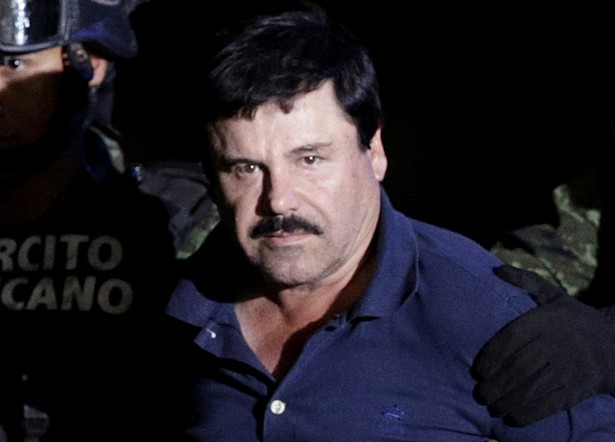
—Mexican drug lord Joaquin “El Chapo” Guzman has been extradited to the United States from a Mexican prison, one day before Donald Trump assumes the presidency. More here
—Police in Washington, D.C. deployed tear gas as hundreds of protesters gathered outside a pro-Trump gala Thursday night. More here
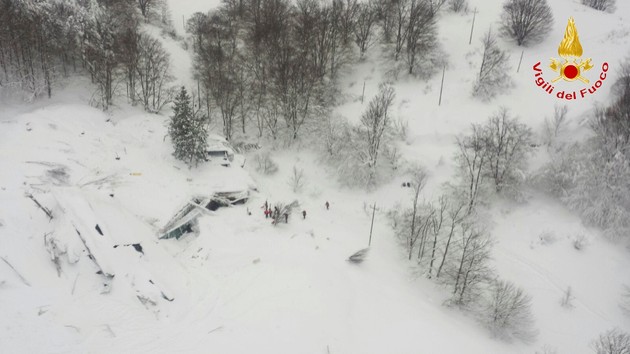
—An avalanche, reportedly triggered by an earthquake, struck a hotel in central Italy; rescue workers say at least 30 people are missing. More here; live blog here
—We’re tracking the news stories of the day below. All updates are in Eastern Standard Time (GMT -5).
D.C. Police Launch Tear Gas at Anti-Trump Protesters
John Minchillo / AP
Police in Washington, D.C. deployed tear gas as hundreds of protesters gathered outside a pro-Trump gala Thursday night. Local media reports that some attendees of the “DeploraBall” were hit by objects and clashed with anti-Trump protesters as they left the National Press Club. Some protesters, blocking the street, called gala attendees “racists” and “Nazis.” Other protesters set fires in trash cans and in the middle of the street. There was also a 15-foot-tall white elephant with a banner labeled “racism” on its side. Police arrested several people.
Mexican drug lord Joaquin “El Chapo” Guzman has been extradited to the United States from a Mexican prison, one day before Donald Trump assumes the presidency. Guzman, a notorious cartel kingpin who was arrested by Mexican police in a raid last January, six months after escaping prison, is facing federal indictments in seven courts across the U.S. for distributing narcotics, murder, and organized crime. He landed in New York since the indictment for the Eastern District of New York requires Guzman enter the U.S. through the district to preserve the indictment. He was in a prison in Juarez, near the Texas border. Guzman, who had a net worth of $1 billion, escaped prison in Mexico twice before. In the last prison escape, he vanished through a mile-long tunnel, from a shower to a nearby construction site. The incident was a massive embarrassment for the Mexican government. A top U.S. official told Reuters that the Mexican government did not give the timing of the extradition “a whole lot of thought.”
Brazilian Judge Investigating Political Scandal Dies in Plane Crash
Ueslei Marcelino / Reuters
Teori Zavascki, the Brazilian Supreme Court justice who presided over Operation Carwash, a massive scandal that has embroiled politicians from across the political spectrum, has died in a plane crash, his son said on Facebook. The crash occurred outside Paraty, in Rio state, O Globo, the Brazilian newspaper, reported. Bloomberg adds: “Zavascki is the judge overseeing the trials of defendants in the Operation Carwash investigation at the Supreme Court.” The scandal involves corruption at Petrobras, the state-run oil firm. The investigation into the case is led by Sergio Moro, another judge.
Gambia's New President Sworn In as Old President Refuses to Leave
Crowds gather outside the Gambian embassy ahead of President-elect Adama Barrow’s inauguration in Dakar, Senegal on January 19, 2017. (Reuters)
Senegalese troops crossed the border into Gambia Thursday after the UN Security Council voted unanimously in favor of a resolution recognizing Adama Barrow as the West African country’s rightful president. The move comes one day after the troops threatened to “take action” if longtime Gambian leader Yahya Jammeh did not step down, and hours after the swearing in of Barrow as Gambia’s president from the Gambian embassy in neighboring Dakar. Jammeh, who originally conceded to Barrow in the December election only to later reverse his decision, filed an injunction barring Barrow from being sworn in and on Wednesday declared a state of national emergency. Senegal and other West African leaders have threatened to remove Jammeh by force, though the UN reaffirmed in its adoption of the resolution that the transition of power should be pursued “by political means first.”
This is a victory of the Gambian nation. Our national flag will fly high among those of the most democratic nations of the world. #Gambiapic.twitter.com/QRGZg1gzbs
Oakland Raiders File Paperwork to Move to Las Vegas
(Reuters)
The Oakland Raiders have filed paperwork to move the NFL team to Las Vegas, Steve Sisolak, the Clark County, Nevada, Commission Chair said on Twitter Thursday. The move must now be approved the owners of the NFL’s 32 teams. Mark Davis, the Raiders majority owner, needs 24 votes. The Raiders were established in 1960 and have spent much of the time since then in Oakland—though there were 12 years (1982-94) the team played in Los Angeles. Thursday’s announcement comes just days after the Chargers announced they’d leave their longtime home, San Diego, for L.A.
It is official! The @RAIDERS have filed their paperwork to relocate to #LasVegas.
Firefighters Among Dead as Landmark Tehran Building Catches Fire, Collapses
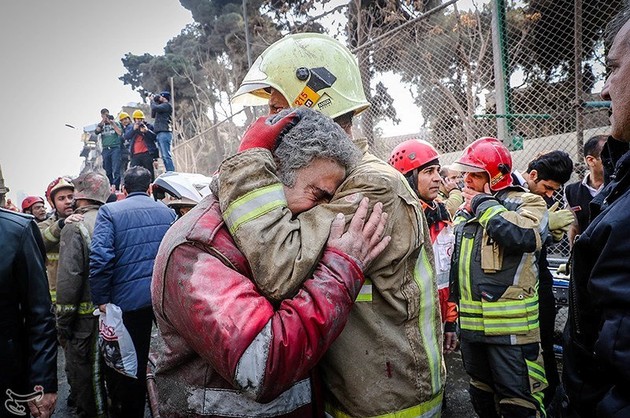
Firefighters grieve at the site of the collapsed high rise in Tehran, Iran, on January 19. (Tasnim News Agency / Reuters)
The 17-story Plasco building, a Tehran landmark, caught fire and collapsed Thursday, killing many firefighters, the state-run Islamic Republic News Agency (IRNA) reported. IRNA, which described the building as “a center for making apparel,” reported the structure was engulfed in a blaze that resulted in the collapse of a wall on its northern side—and the structure’s eventual collapse. Firefighters had been battling the blaze for hours when it collapsed in a matter of seconds—a moment captured on live television. Pir-Hossein Kolivand, the head of the national emergency medical services, said it was unclear how many firemen were killed in the collapse, only that there were many fatalities. About 200 people have been taken to local hospitals, the news agency added.
URGENT: Footage shows the moment of major commercial building collapses in Iran's capital Tehran after hours of severe blaze pic.twitter.com/89GPmRa3GU
Many Are Feared Dead as Avalanche Hits Italian Hotel
(Reuters)
An avalanche triggered Thursday by several earthquakes in central Italy swept away a hotel in the Abruzzo region, leaving “many dead,” ANSA, the Italian news agency, reports. The avalanche struck the Hotel Rigopiano in the region’s Gran Sasso National Park. Rescuers pulled out one victim from the snow; about 30 others are missing. Two people have been rescued, ANSA added. Follow our live blog here
Trump Reportedly Names Sonny Perdue as Choice For USDA
President-elect Donald Trump has reportedly picked Sonny Perdue, the former Georgia governor, as agriculture secretary. Perdue, who served as governor from 2003 to 2011, was the state’s first Republican governor since Reconstruction. The post, which needs Senate confirmation, would put Perdue in charge of a department that has a budget of $150 billion and oversees everything from food safety to food stamps. The nomination is Trump’s last before his inauguration Friday as the 45th president of the United States. His Cabinet would be the first that hasn’t included a Hispanic since President Reagan.
The shooting at the Correspondents’ Dinner made clear who gets saved first.
This article was featured in the One Story to Read Today newsletter. Sign up for it here.
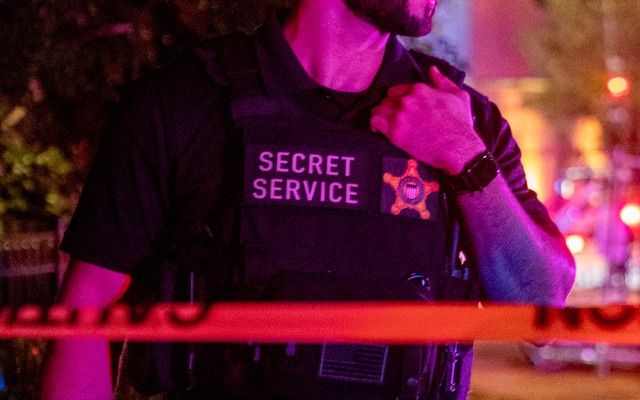
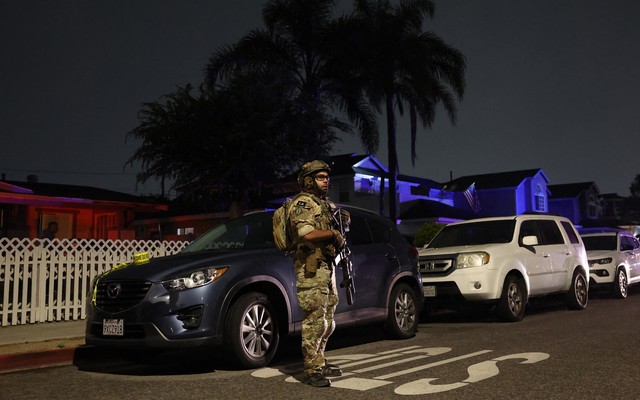
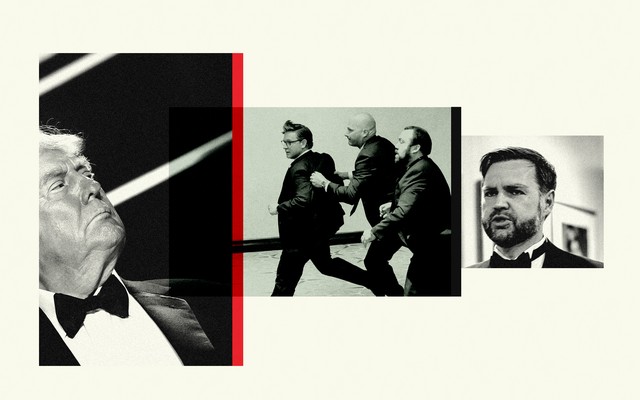
On one level, the system worked. The perimeter held. A would-be assassin was tackled in the hallway outside the White House Correspondents’ Association’s annual dinner. The one bullet that found a human target—a U.S. Secret Service agent—was halted, in part, by the officer’s phone and bulletproof vest, according to a law-enforcement summary report that we reviewed. A counterassault team promptly swarmed the stage with assault rifles and night-vision equipment in case the lights were cut. The government’s top leaders—president, vice president, Cabinet officials, speaker of the House—were ushered to secure locations in a matter of minutes. No one died in the attack.
Instead of a crackdown on his enemies, Trump wants his ballroom.
When an assassin murdered Charlie Kirk in September 2025, the MAGA movement seized the moment to demand a campaign of repression. Vice President Vance called for an ambitious program to “go after the NGO network that foments, facilitates, and engages in violence.” He named the Ford Foundation, Open Society Foundations, and The Nation magazine as examples of candidates for the retaliation he had in mind. The people who faced consequences after the killing almost universally did so for things they had written or said, not for acts of violence. In November, Reuters counted some 600 cases of people who were fired, suspended, or otherwise disciplined for their speech about Kirk’s life and death.
Now another gunman has attacked political targets. At the White House Correspondents’ Association dinner, a man discharged a firearm in the vicinity of hundreds of people from the worlds of politics, media, and business—among them, the president and vice president of the United States. Although much about the event remains unclear, the available evidence suggests that the gunman was motivated by an anti-Trump agenda. Yet this time, MAGA’s immediate response to political violence has been much less aggressive. At his press conference after yesterday’s attempted shooting, President Trump cited the attack as proof of the need for his wished-for White House ballroom. Social-media accounts that take their cues from the White House promptly echoed the message.
*But it’s time to rethink security at an event that is clearly so vulnerable.
Here’s what happened: On Saturday evening, a man carrying a shotgun, a handgun, and knives got close to the ballroom of the Washington Hilton, where more than 2,000 guests, including the president of the United States, were enjoying the appetizer course at the annual White House Correspondents’ Association Dinner. “I am no longer willing to permit a pedophile, rapist, and traitor to coat my hands with his crimes,” the would-be shooter purportedly wrote in a letter that was apparently written in the lead-up to his attack. He said his targets were Trump-administration officials, “prioritized from highest-ranking to lowest.”
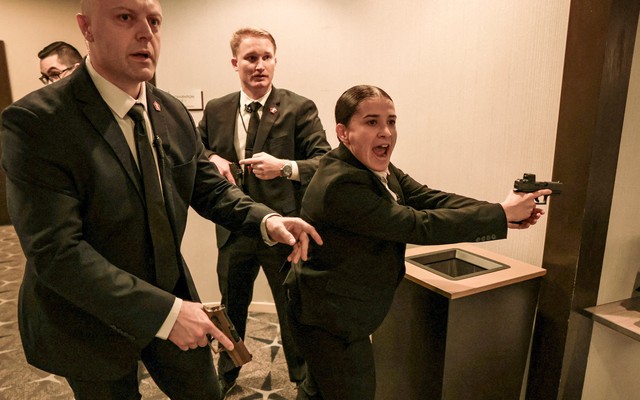
Terrifying, for sure. But here’s what happened next: The assailant was intercepted by armed agents from the Secret Service before he came anywhere close to his intended victims. He was tackled, restrained, and arrested after sprinting past a security checkpoint, through which guests passed earlier in the evening. Shots were fired. The assailant, later identified as Cole Tomas Allen of Torrance, California, hit a Secret Service agent, whose bulletproof vest and cellphone protected him. The agent is recovering. The suspect is in custody. No one died. And the president, his Cabinet, and all other dinner guests left the ballroom safely.
For the richest men on Earth, everything is free and nothing matters.
At the end of Paul Thomas Anderson’s 2007 movie, There Will Be Blood, Daniel Day-Lewis’s oil-baron character, old now and richer than Croesus, beats Paul Dano’s preacher to death with a bowling pin. Dano’s Eli Sunday, a nemesis of Day-Lewis’s Daniel Plainview during his seminal, wealth-building years, has come to sell Plainview the oil-rich land that he once coveted. But Plainview doesn’t need the land anymore, because—as he explains in one of the most famous monologues in modern cinema—he has sucked out all the oil hidden beneath it from an adjoining property, like a milkshake.
Desperate for money, Eli begs for a loan. Instead, Plainview chases him around a bowling alley and murders him with great enthusiasm. Once it’s over, a butler comes to see what all the noise was about. “I’m finished,” Plainview yells.
A manifesto-like email allegedly sent by the dinner shooter suggests a murderous obsession with Trump’s politics.
The line “I experience rage thinking about everything this administration has done” could probably have been written in an email to friends by any number of the attendees at last night’s White House Correspondents’ Association dinner. But the line was apparently written by a man who showed up with a shotgun and pistol and was ready to kill “most everyone” there to get to Donald Trump and assassinate him and his Cabinet. In a manifesto-like email that he reportedly sent to family minutes before allegedly shooting, Cole Tomas Allen wrote that the assembled journalists and machers “chose to attend a speech by a pedophile, rapist, and traitor, and are thus complicit.” Allen never came near the president or the gala floor. A Secret Service agent was shot in the vest before Allen was tackled and arrested.
The Trump administration could exert much greater control over the AI industry.
AI companies are beginning to entertain the possibility that they could cease to exist. This notion was, until recently, more theoretical: A couple of years ago, an ex-OpenAI employee named Leopold Aschenbrenner wrote a lengthy memo speculating that the U.S. government might soon take control of the industry. By 2026 or 2027, Aschenbrenner wrote, an “obvious question” will be circling through the Pentagon and Congress: Do we need a government-led program for artificial general intelligence—an AGI Manhattan Project? He predicted that Washington would decide to go all in on such an effort.
Aschenbrenner may have been prescient. Earlier this year, at the height of the Pentagon’s ugly contract dispute with Anthropic, Secretary of Defense Pete Hegseth warned that he could invoke the Defense Production Act (DPA), a Cold War–era law that he reportedly suggested would allow him to force the AI company to hand over its technology on whatever terms the Pentagon desired. The act is one of numerous levers the Trump administration can pull to direct, or even commandeer, AI companies. And the companies have been giving the administration plenty of reason to consider doing so.
Requiring schools to endorse biblical laws is both unconstitutional and counterproductive.
When you were in elementary school, did your mind occasionally rise above the smell of pencil shavings and the sound of squeaking desk chairs to contemplate whether you ought to commit murder? Did you ponder what it would mean to covet your neighbor’s wife? Ordinarily those aren’t questions addressed in grade-school classrooms, but according to legislators in Alabama, Louisiana, Texas, and Arkansas, they ought to be.
In those districts, state Republicans are rallying behind laws that would mandate posting the Ten Commandments in public-school classrooms and common areas, such as cafeterias and libraries. This fad began in 2024, when Louisiana Governor Jeff Landry signed such a bill, reviving a debate long silenced by the Supreme Court’s 1980 decision in Stone v. Graham to strike down a similar Kentucky law.Other states followed suit: Arkansas and Texas last year, and Alabama just this month. Although these laws pose a threat to the First Amendment rights of students and teachers, the trend is spreading, so far unchecked by courts. Opponents of Texas’s law suffered a defeat last week when an appellate court decided in the state’s favor. The ACLU and other organizations representing the plaintiffs—a multifaith group of Texas families—are expected to appeal this decision to the Supreme Court.
A new history of the Red Scare prompts the question: Does literature still have enough influence to bring down the powerful?
Revenge is a dish best served cold, but how cold? Can we set that dish to cool for 400 years? Satisfaction so long deferred might seem beside the point. We want to watch our enemies humbled in an instant, to see their heads bowed low before our rage burns clean.
In A Treacherous Secret Agent, the prominent Harvard English professor Marjorie Garber proposes a subtler and far slower model of revenge. Garber’s subject is the role of literature in the Red Scare of the 1950s, a period during which artists and writers suspected of Communist sympathies were scapegoated, blacklisted, and hauled in front of investigative committees. In transcripts of hearings of the notorious House Un-American Activities Committee (HUAC), Garber finds an upwelling of voices from the literary past, among them Christopher Marlowe, the revenge dramatist Thomas Kyd, and, from first to last, Shakespeare, Shakespeare, Shakespeare.
The Israeli prime minister’s focus is, as always, on himself and his near-term political needs. The plight of American Jews is simply not his concern.
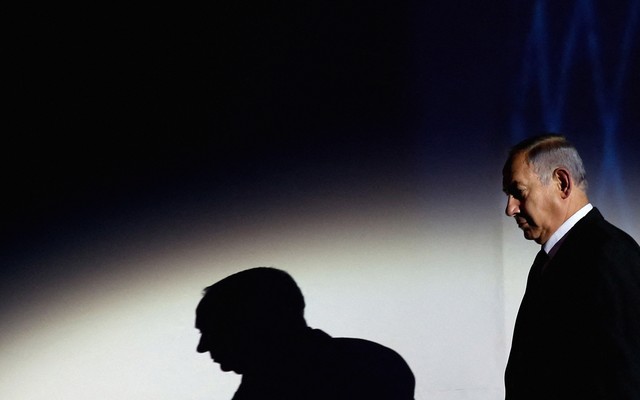
The relationship between the United States and Israel is in crisis. Six in 10 Americans have a negative view of Israel, and a majority of those under 50 in both major parties view Israel as well as its prime minister, Benjamin Netanyahu, negatively. After the brutal Gaza war, a large percentage of liberal-leaning Generation Z considers Israel a pariah state. Democratic candidates are scrambling to distance themselves from Israel and its controversial leader; earlier this month, 40 of the 47 Democratic senators voted against a military aid package for the country. And hostility toward Israel is spilling over into hostility toward Jews. Liberal influencers, activists, podcasters, and even politicians are invoking age-old anti-Semitic tropes with frightening regularity.
This weekend’s failed attack highlighted a risk that often goes unspoken.
In the chaotic swirl of events after President John F. Kennedy’s assassination, doctors feared that Vice President Lyndon B. Johnson had suffered a heart attack upon arrival at Parkland Memorial Hospital in Dallas. The signs were ominous: Johnson’s face was ashen, and he was clutching his chest. “There was the real possibility that the No. 3 in the line of succession would become president,” the historian Michael Beschloss told me. Johnson was reportedly examined and a heart attack ruled out—but not before then–House Speaker John McCormack was told that he might be the next president. The declaration prompted a severe bout of vertigo in the 71-year-old.
Few moments in history have so starkly exposed the vulnerabilities of the presidential line of succession—or the lack of clarity about how it is protected. Last night provided another illustration of them. If events at the White House Correspondents’ Association Dinner had gone differently, a gunman who breached security at the Washington Hilton could have reached a ballroom containing an unusually dense cluster of American power. The president and the vice president were seated a few feet apart. Congressional leadership and many Cabinet secretaries were also on hand. In other words, much of the presidential line of succession was in the same spot—and subject to the same vulnerabilities.