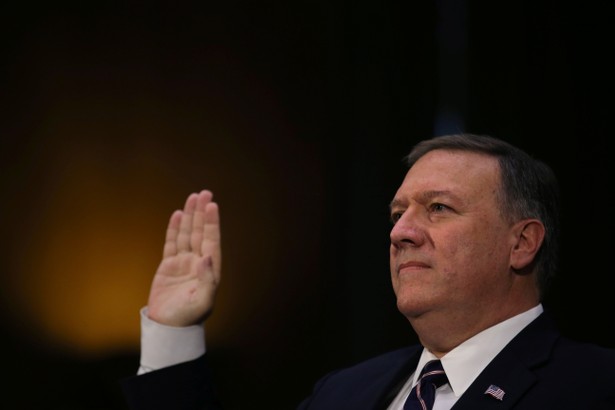
The Senate, in a bipartisan 66-32 vote on Monday evening, confirmed Mike Pompeo to be the next CIA director. Pompeo was in his fourth term in the House. The only Republican to vote against Pompeo was Kentucky Senator Rand Paul. The other 31 votes against Pompeo came from Democrats. As my colleague Russell Berman writes:
Pompeo’s harshest critic was Senator Ron Wyden of Oregon, a privacy hawk who delivered a lengthy speech criticizing the Kansas Republican’s “enthusiasm” for broad surveillance programs and what he said were Pompeo’s shifting positions on torture and on Russia’s interference in the November election. Other Democrats had said they were satisfied with Pompeo’s assertion during his confirmation hearing that he would not restart the CIA’s use of enhanced interrogation techniques in violation of the law, even if Trump ordered him to do so.
Snapchat Filter Not Responsible for Distracted Driver Claim, Judge Rules
Eric Thayer / Reuters
A lawsuit claiming Snapchat was to blame for a high-speed car crash was dismissed by a Georgia court Friday, citing the social media company’s immunity under the Communication’s Decency Act. The case was brought against Snapchat in April by Wentworth and Karen Maynard, who claimed the application’s “speed filter,” which shows how fast the phone is moving at the time the photo or video is taken, caused 18-year-old Christal McGee to crash into Wentworth Maynard’s car while driving at 107 miles per hour (171 kilometer per hour), leaving Maynard with severe brain damage. McGee, who was also sued by the Maynards, claimed she was “just trying to get the car to 100 miles per hour to post it on Snapchat.” In his ruling Friday, Spalding County State Court Judge Josh Thacker said the social media company was exempt from liability under the CDA’s immunity clause, which states that “no provider or user of an interactive computer service shall be treated as the publisher or speaker of any information provided by another information content provider.” Snapchat’s attorneys told the Associated Press Monday the ruling reaffirms the need for “responsible use of these technologies by the driver.”
The First Drone Strikes Under Trump Target Al-Qaeda in Yemen
Khaled Abdullah / Retuers
The U.S. carried out several drone strikes in Yemen over the weekend targeting al-Qaeda leaders, marking the first drone strikes under the new Trump administration. The bombings hit the country’s southwestern Bayda province, and among the targets was Abu Anis al-Abi, a field commander with al-Qaeda in the Arabian Peninsula. These strikes did not necessarily require Trump to sign off on them, because the Obama administration enabled the four-star commander of U.S. Central Command, General Joseph Votel, to oversee strikes. Drone strikes increased to unprecedented levels under Obama, much to the anger of human-rights groups, which decry their use because of the risk of collateral damage. On Thursday, U.S. intelligence officials released a report saying that under Obama as many as 117 civilians died in drone bombings. These numbers, however, are often viewed as extremely low by human rights groups.
Trump Signs Executive Order Withdrawing From the TPP
Kevin Lamarque / Reuters
President Trump signed an executive order Monday to withdraw the U.S. from the Trans-Pacific Partnership (TPP), a longstanding campaign pledge. The TPP, a project initiated by the Obama administration, would have placed the U.S. and 11 Asia-Pacific countries in an unprecedented free-trade zone. Trump’s executive order pulls the U.S. out of that deal, an effort to refocus on putting “America first,” as the president repeated in his inauguration address Friday. The trade deal had been a tough sell for both major political parties, with former-President Obama struggling to convince even Democrats of its worth because it had been painted during the election campaign as detrimental to U.S. manufacturing. Until this election, trade deals had received mostly bipartisan support. Trump has also said he wants to renegotiation the NAFTA, which set up a free-trade zone from Mexico to Canada.
Trump Reinstates Mexico City Rule, Blocking U.S. Funding for Abortion Services Worldwide
Kevin Lamarque / Reuters
President Trump, in one of his first acts since assuming office, reinstated Monday a policy blocking U.S. funding for health programs that provide abortions or related services overseas. Known commonly as the Mexico City policy or the “global gag rule,” the policy restricts foreign organizations receiving U.S. family-planning funding from conducting any abortion-related services, even if they are conducted with non-U.S. funds. Since it went into effect in 1984, the policy has routinely been enacted by Republican administrations and rescinded by Democratic ones. As my colleague Anna Diamond writes:
Now, the signing of the order is filled with symbolism. Always falling on or within days of the January 22nd anniversary of Roe v. Wade, it’s become a way for the incoming president to signal to his party and supporters an initial commitment for or against abortion rights.
A Violent California Storm Destroys an Iconic Concrete Ship
Gregory Bull / AP
A harsh storm hit the California coast this weekend and set surf records, with wave heights reaching nearly 35 feet in some places. They were particularly violent near Santa Cruz, about 80 miles south of San Francisco, where the storm wrecked a local icon, a historic World War I concrete ship called the S.S. Palo Alto. Then-President Woodrow Wilson ordered a fleet of concrete ships built in 1917, and while other ships had been made of this material, none had ever been made so large—420 feet long. The S.S. Palo Alto was one of 24 others built at the time, and it came to rest near Santa Cruz in 1930, where it connected to a pier and became a famous icon of the beach. The ship’s hull had been crumbling for some time, and over the decades it served as a home for the area’s wildlife, like sea lions, fish, and sea birds. In the mid-2000s, a leak in the ship’s tank spilled old oil into the waters and the California Department of Fish and Wildlife spent $1.7 million to clean up the fuel. This weekend’s storm sent waves crashing against the hull and split off the stern. It’s unclear what will be done with the crumbling remains.
What was once a solid structure, is now in 2 pieces. The S.S. Palo Alto's stern has taken enough beating and gave-in to Mother nature. pic.twitter.com/ljRytxwpf7
Syrian Government, Rebels Meet for Talks in Kazakhstan
(Mukhtar Kholdorbekov / Reuters)
Representatives of the Syrian government and rebel groups are meeting in Astana, the Kazakh capital, for the first time in more than a year for talks on ways to end the more than five-year-long civil war. Russian, Turkish, and Iranian officials are also attending; the three countries brokered a cease-fire between the fighting factions December 30. Bashar Ja’afari, Syria’s ambassador to the UN, and military officials are representing the government of President Bashar al-Assad. Mohammad Alloush of the Army of Islam is leading the rebel delegation. Talks are scheduled to continue until Tuesday.
The Trump Administration's War of Words With the Media
President Trump was inaugurated in Washington, D.C., Friday. A day later, a women’s march in the city, and others across the country and the world, vowed to oppose some of the Trump administration’s policies. Photographs from both events, coupled with crowd estimates, suggested more people turned out to the march in Washington than the inauguration. Trump and his aides apparently disagreed. At an appearance Saturday before the CIA, the president railed against the media, calling it “dishonest.” Later, Sean Spicer, the White House spokesman, repeated those claims, adding: “This was the largest audience ever to witness an inauguration, period, both in person and around the globe”—a demonstrably false claim. On Sunday, Kellyanne Conway, Trump’s counselor, went on NBC’s Meet the Press, and countered the view Spicer was lying, adding “our press secretary gave alternative facts to that.” When Chuck Todd, the show’s host, asked Conway why Spicer had said something that was clearly not true, she replied: “If we're going to keep referring to the press secretary in those types of terms, I think we're going to have to rethink our relationship here.” Trump himself initially criticized Saturday’s protest march, saying on Twitter he “was under the impression that we just had an election! Why didn't these people vote?” He later tweeted out a more conciliatory message:
Peaceful protests are a hallmark of our democracy. Even if I don't always agree, I recognize the rights of people to express their views.
The shooting at the Correspondents’ Dinner made clear who gets saved first.
This article was featured in the One Story to Read Today newsletter. Sign up for it here.
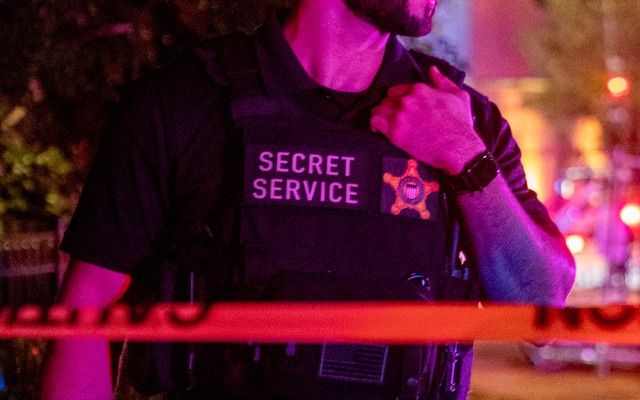
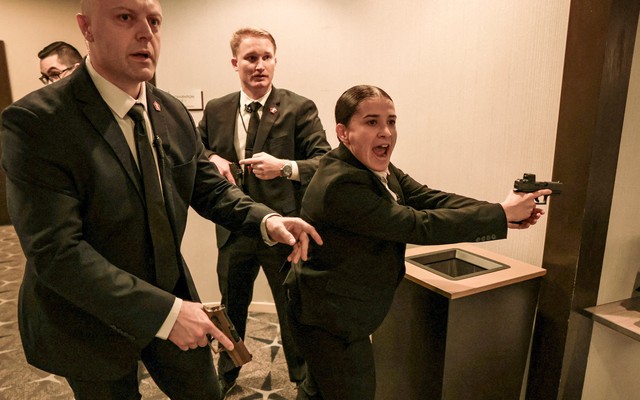
On one level, the system worked. The perimeter held. A would-be assassin was tackled in the hallway outside the White House Correspondents’ Association’s annual dinner. The one bullet that found a human target—a U.S. Secret Service agent—was halted, in part, by the officer’s phone and bulletproof vest, according to a law-enforcement summary report that we reviewed. A counterassault team promptly swarmed the stage with assault rifles and night-vision equipment in case the lights were cut. The government’s top leaders—president, vice president, Cabinet officials, speaker of the House—were ushered to secure locations in a matter of minutes. No one died in the attack.
Instead of a crackdown on his enemies, Trump wants his ballroom.
When an assassin murdered Charlie Kirk in September 2025, the MAGA movement seized the moment to demand a campaign of repression. Vice President Vance called for an ambitious program to “go after the NGO network that foments, facilitates, and engages in violence.” He named the Ford Foundation, Open Society Foundations, and The Nation magazine as examples of candidates for the retaliation he had in mind. The people who faced consequences after the killing almost universally did so for things they had written or said, not for acts of violence. In November, Reuters counted some 600 cases of people who were fired, suspended, or otherwise disciplined for their speech about Kirk’s life and death.
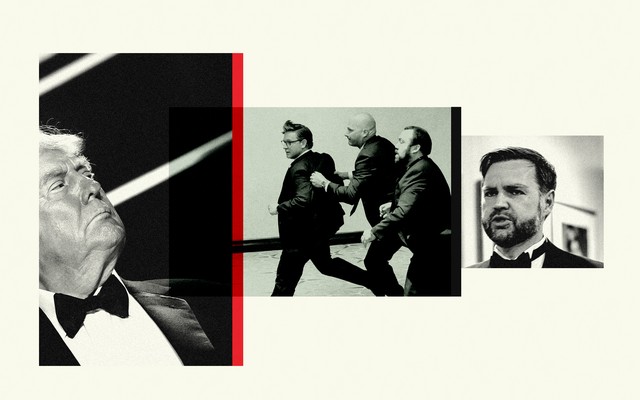
Now another gunman has attacked political targets. At the White House Correspondents’ Association dinner, a man discharged a firearm in the vicinity of hundreds of people from the worlds of politics, media, and business—among them, the president and vice president of the United States. Although much about the event remains unclear, the available evidence suggests that the gunman was motivated by an anti-Trump agenda. Yet this time, MAGA’s immediate response to political violence has been much less aggressive. At his press conference after yesterday’s attempted shooting, President Trump cited the attack as proof of the need for his wished-for White House ballroom. Social-media accounts that take their cues from the White House promptly echoed the message.
*But it’s time to rethink security at an event that is clearly so vulnerable.
Here’s what happened: On Saturday evening, a man carrying a shotgun, a handgun, and knives got close to the ballroom of the Washington Hilton, where more than 2,000 guests, including the president of the United States, were enjoying the appetizer course at the annual White House Correspondents’ Association Dinner. “I am no longer willing to permit a pedophile, rapist, and traitor to coat my hands with his crimes,” the would-be shooter purportedly wrote in a letter that was apparently written in the lead-up to his attack. He said his targets were Trump-administration officials, “prioritized from highest-ranking to lowest.”
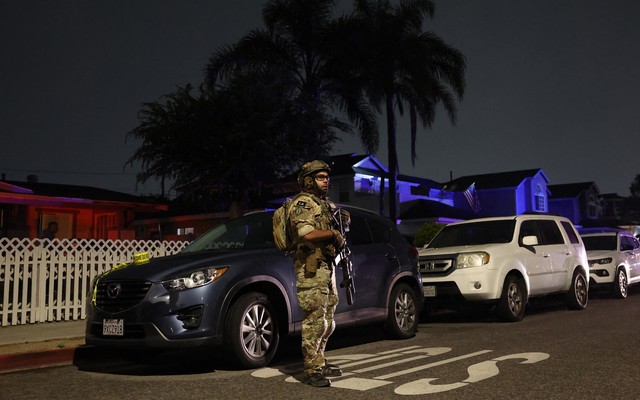
Terrifying, for sure. But here’s what happened next: The assailant was intercepted by armed agents from the Secret Service before he came anywhere close to his intended victims. He was tackled, restrained, and arrested after sprinting past a security checkpoint, through which guests passed earlier in the evening. Shots were fired. The assailant, later identified as Cole Tomas Allen of Torrance, California, hit a Secret Service agent, whose bulletproof vest and cellphone protected him. The agent is recovering. The suspect is in custody. No one died. And the president, his Cabinet, and all other dinner guests left the ballroom safely.
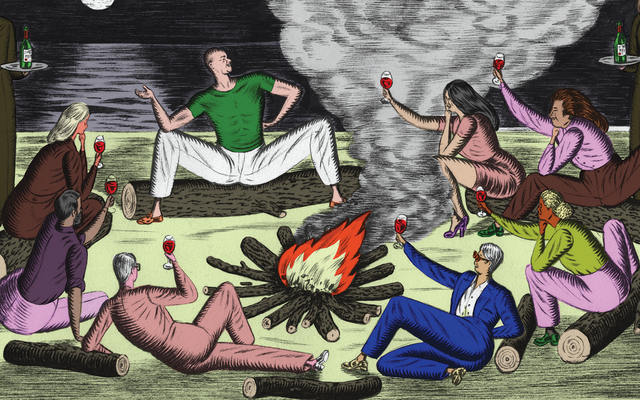
For the richest men on Earth, everything is free and nothing matters.
At the end of Paul Thomas Anderson’s 2007 movie, There Will Be Blood, Daniel Day-Lewis’s oil-baron character, old now and richer than Croesus, beats Paul Dano’s preacher to death with a bowling pin. Dano’s Eli Sunday, a nemesis of Day-Lewis’s Daniel Plainview during his seminal, wealth-building years, has come to sell Plainview the oil-rich land that he once coveted. But Plainview doesn’t need the land anymore, because—as he explains in one of the most famous monologues in modern cinema—he has sucked out all the oil hidden beneath it from an adjoining property, like a milkshake.
Desperate for money, Eli begs for a loan. Instead, Plainview chases him around a bowling alley and murders him with great enthusiasm. Once it’s over, a butler comes to see what all the noise was about. “I’m finished,” Plainview yells.
A manifesto-like email allegedly sent by the dinner shooter suggests a murderous obsession with Trump’s politics.
The line “I experience rage thinking about everything this administration has done” could probably have been written in an email to friends by any number of the attendees at last night’s White House Correspondents’ Association dinner. But the line was apparently written by a man who showed up with a shotgun and pistol and was ready to kill “most everyone” there to get to Donald Trump and assassinate him and his Cabinet. In a manifesto-like email that he reportedly sent to family minutes before allegedly shooting, Cole Tomas Allen wrote that the assembled journalists and machers “chose to attend a speech by a pedophile, rapist, and traitor, and are thus complicit.” Allen never came near the president or the gala floor. A Secret Service agent was shot in the vest before Allen was tackled and arrested.
The Trump administration could exert much greater control over the AI industry.
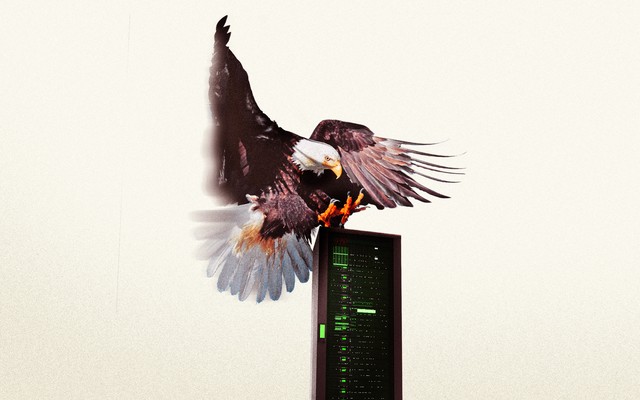
AI companies are beginning to entertain the possibility that they could cease to exist. This notion was, until recently, more theoretical: A couple of years ago, an ex-OpenAI employee named Leopold Aschenbrenner wrote a lengthy memo speculating that the U.S. government might soon take control of the industry. By 2026 or 2027, Aschenbrenner wrote, an “obvious question” will be circling through the Pentagon and Congress: Do we need a government-led program for artificial general intelligence—an AGI Manhattan Project? He predicted that Washington would decide to go all in on such an effort.
Aschenbrenner may have been prescient. Earlier this year, at the height of the Pentagon’s ugly contract dispute with Anthropic, Secretary of Defense Pete Hegseth warned that he could invoke the Defense Production Act (DPA), a Cold War–era law that he reportedly suggested would allow him to force the AI company to hand over its technology on whatever terms the Pentagon desired. The act is one of numerous levers the Trump administration can pull to direct, or even commandeer, AI companies. And the companies have been giving the administration plenty of reason to consider doing so.
Requiring schools to endorse biblical laws is both unconstitutional and counterproductive.
When you were in elementary school, did your mind occasionally rise above the smell of pencil shavings and the sound of squeaking desk chairs to contemplate whether you ought to commit murder? Did you ponder what it would mean to covet your neighbor’s wife? Ordinarily those aren’t questions addressed in grade-school classrooms, but according to legislators in Alabama, Louisiana, Texas, and Arkansas, they ought to be.
In those districts, state Republicans are rallying behind laws that would mandate posting the Ten Commandments in public-school classrooms and common areas, such as cafeterias and libraries. This fad began in 2024, when Louisiana Governor Jeff Landry signed such a bill, reviving a debate long silenced by the Supreme Court’s 1980 decision in Stone v. Graham to strike down a similar Kentucky law.Other states followed suit: Arkansas and Texas last year, and Alabama just this month. Although these laws pose a threat to the First Amendment rights of students and teachers, the trend is spreading, so far unchecked by courts. Opponents of Texas’s law suffered a defeat last week when an appellate court decided in the state’s favor. The ACLU and other organizations representing the plaintiffs—a multifaith group of Texas families—are expected to appeal this decision to the Supreme Court.
A new history of the Red Scare prompts the question: Does literature still have enough influence to bring down the powerful?
Revenge is a dish best served cold, but how cold? Can we set that dish to cool for 400 years? Satisfaction so long deferred might seem beside the point. We want to watch our enemies humbled in an instant, to see their heads bowed low before our rage burns clean.
In A Treacherous Secret Agent, the prominent Harvard English professor Marjorie Garber proposes a subtler and far slower model of revenge. Garber’s subject is the role of literature in the Red Scare of the 1950s, a period during which artists and writers suspected of Communist sympathies were scapegoated, blacklisted, and hauled in front of investigative committees. In transcripts of hearings of the notorious House Un-American Activities Committee (HUAC), Garber finds an upwelling of voices from the literary past, among them Christopher Marlowe, the revenge dramatist Thomas Kyd, and, from first to last, Shakespeare, Shakespeare, Shakespeare.
The Israeli prime minister’s focus is, as always, on himself and his near-term political needs. The plight of American Jews is simply not his concern.
The relationship between the United States and Israel is in crisis. Six in 10 Americans have a negative view of Israel, and a majority of those under 50 in both major parties view Israel as well as its prime minister, Benjamin Netanyahu, negatively. After the brutal Gaza war, a large percentage of liberal-leaning Generation Z considers Israel a pariah state. Democratic candidates are scrambling to distance themselves from Israel and its controversial leader; earlier this month, 40 of the 47 Democratic senators voted against a military aid package for the country. And hostility toward Israel is spilling over into hostility toward Jews. Liberal influencers, activists, podcasters, and even politicians are invoking age-old anti-Semitic tropes with frightening regularity.
This weekend’s failed attack highlighted a risk that often goes unspoken.
In the chaotic swirl of events after President John F. Kennedy’s assassination, doctors feared that Vice President Lyndon B. Johnson had suffered a heart attack upon arrival at Parkland Memorial Hospital in Dallas. The signs were ominous: Johnson’s face was ashen, and he was clutching his chest. “There was the real possibility that the No. 3 in the line of succession would become president,” the historian Michael Beschloss told me. Johnson was reportedly examined and a heart attack ruled out—but not before then–House Speaker John McCormack was told that he might be the next president. The declaration prompted a severe bout of vertigo in the 71-year-old.
Few moments in history have so starkly exposed the vulnerabilities of the presidential line of succession—or the lack of clarity about how it is protected. Last night provided another illustration of them. If events at the White House Correspondents’ Association Dinner had gone differently, a gunman who breached security at the Washington Hilton could have reached a ballroom containing an unusually dense cluster of American power. The president and the vice president were seated a few feet apart. Congressional leadership and many Cabinet secretaries were also on hand. In other words, much of the presidential line of succession was in the same spot—and subject to the same vulnerabilities.