—A bus full of students returning to Budapest, Hungary, from a field trip to France, slammed into a pylon while driving through northern Italy and killed more than a dozen people.
—The Taliban has claimed credit for a bomb that exploded in a crowded Pakistani market and killed more than 50 people.
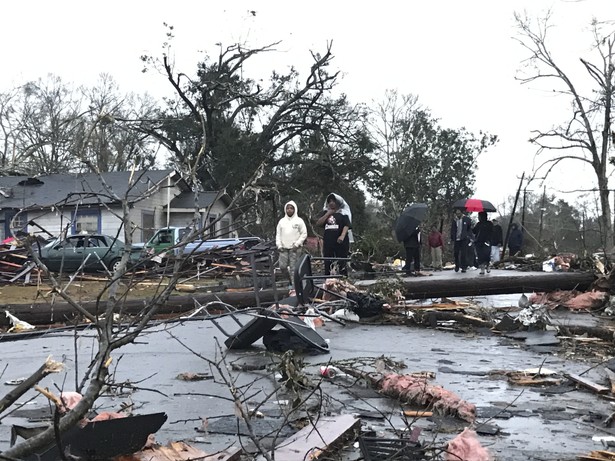
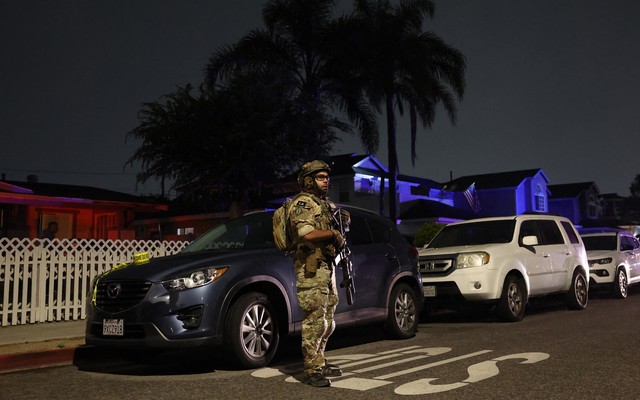
—Storms, including a tornado, killed four people in southern Mississippi and destroyed homes in the city of Hattiesburg, where the mayor declared a state of emergency.
—We’re tracking the news stories of the day below. All updates are in Eastern Standard Time (GMT -5).
A Deadly Tornado Cuts Through Southern Mississippi
AP
A tornado struck the southern Mississippi city of Hattiesburg early Saturday in the dark and ripped roofs off homes, downed trees, and killed four people. The tornado was part of a violent storm rolling across the area, bringing sheets of rain and heavy winds. Hattiesburg is a city of about 46,000, and a search is still underway there for those who might be trapped in their homes beneath debris. Pictures of the damage sent out by the city and residents showed crumpled homes and trees in the street. A fire station received heavy damage, as well as William Carey University, a private Christian college, where the windows shattered and parts of the roof tore off. The mayor of Hattiesburg declared a state of emergency. The National Weather Service in Jackson, Mississippi, issued a severe weather warning for the state and parts of Arkansa, telling people to expect hail the size of golfballs, winds gust up to 60 miles per hour, and possibly more tornados.
A wide shot of all the homes damaged looking towards Edwards Street in downtown Hattiesburg. pic.twitter.com/elmJ2hA10c
A Bombing Attack in a Pakistani Vegetable Market Kills 22 People
AP
A bomb exploded Saturday in a vegetable market in Pakistan’s northwestern tribal region of Kurram and killed at least 22 people and wounded 50 others. The blast happened in the city of Parachinar, a mainly Shia Muslim area near the border of Afghanistan. A sectarian militant group called Tehreek-e-Taliban Pakistan, a banned Sunni extremist faction of the Pakistani Taliban, claimed responsibility, and has carried out similar attacks in the area in the past. There are varied accounts of what caused the blast, with some saying it was an improvised explosive device hidden in a box of vegetables, and others saying it was a suicide attack. Some of the wounded were airlifted to a hospital in Peshawar, the capital of another province nearby. It’s expected the death toll will rise as other wounded victims die from their wounds. The region of Kurram has been the site of increased violence lately, as the Pakistani army carries out operations to fight extremists in the area. In 2015 a bomb blast in the same market killed more than 20 people.
A Bus Full of Hungarian Students Returning From a Field Trip Crashes in Italy and Kills 16 People
AP
A bus full of Hungarian students returning from a ski field trip in France crashed into a pylon while driving through Italy and killed 16 people, injuring about 40 more. Police in the nearby city of Verona, in the north of Italy, said the victims were teenage students, parents, and teachers on their way back to Budapest. Officers are still investigating the cause of the crash, and said there was no other vehicle involved and it appears the bus veered off the road of its own accord. A driver who was following the bus as it crashed told an Italian radio station he’d noticed a problem with one of the wheels on the bus and had tried to alert the driver, The Guardianreported. After slamming into the pylon the bus caught fire, and some of its 55 passengers were thrown out of the windows while others were trapped with the flames. The survivors were taken to local hospitals, and at least one person was placed in a medically induced coma.
The shooting at the Correspondents’ Dinner made clear who gets saved first.
This article was featured in the One Story to Read Today newsletter. Sign up for it here.
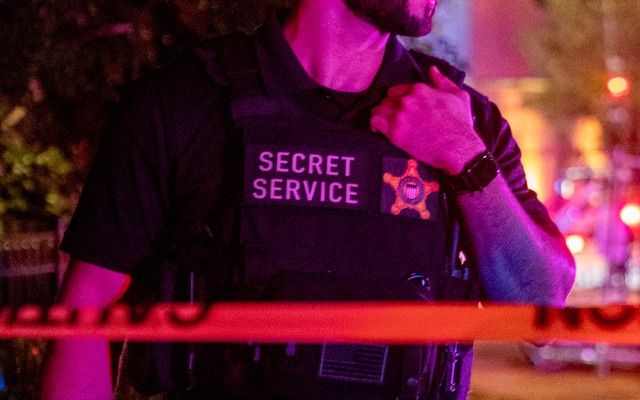
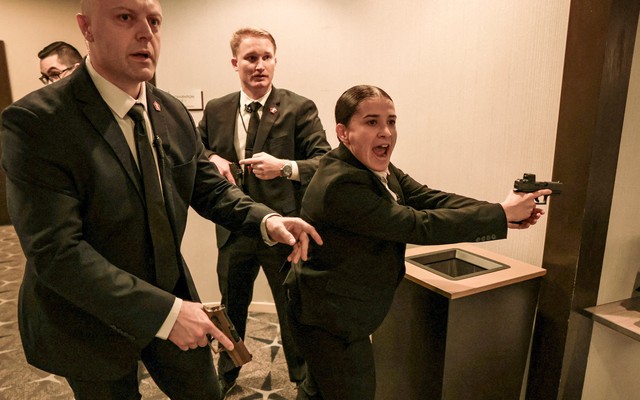
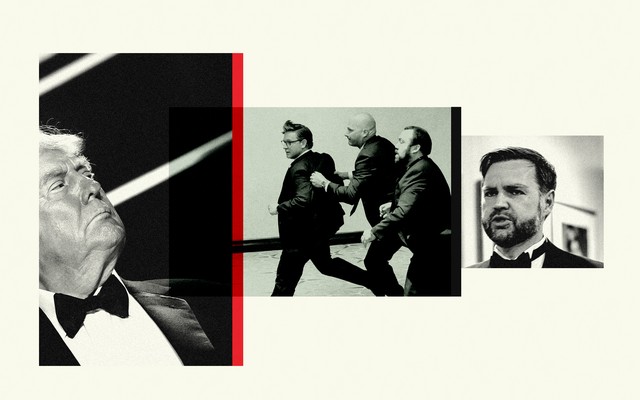
On one level, the system worked. The perimeter held. A would-be assassin was tackled in the hallway outside the White House Correspondents’ Association’s annual dinner. The one bullet that found a human target—a U.S. Secret Service agent—was halted, in part, by the officer’s phone and bulletproof vest, according to a law-enforcement summary report that we reviewed. A counterassault team promptly swarmed the stage with assault rifles and night-vision equipment in case the lights were cut. The government’s top leaders—president, vice president, Cabinet officials, speaker of the House—were ushered to secure locations in a matter of minutes. No one died in the attack.
Instead of a crackdown on his enemies, Trump wants his ballroom.
When an assassin murdered Charlie Kirk in September 2025, the MAGA movement seized the moment to demand a campaign of repression. Vice President Vance called for an ambitious program to “go after the NGO network that foments, facilitates, and engages in violence.” He named the Ford Foundation, Open Society Foundations, and The Nation magazine as examples of candidates for the retaliation he had in mind. The people who faced consequences after the killing almost universally did so for things they had written or said, not for acts of violence. In November, Reuters counted some 600 cases of people who were fired, suspended, or otherwise disciplined for their speech about Kirk’s life and death.
Now another gunman has attacked political targets. At the White House Correspondents’ Association dinner, a man discharged a firearm in the vicinity of hundreds of people from the worlds of politics, media, and business—among them, the president and vice president of the United States. Although much about the event remains unclear, the available evidence suggests that the gunman was motivated by an anti-Trump agenda. Yet this time, MAGA’s immediate response to political violence has been much less aggressive. At his press conference after yesterday’s attempted shooting, President Trump cited the attack as proof of the need for his wished-for White House ballroom. Social-media accounts that take their cues from the White House promptly echoed the message.
*But it’s time to rethink security at an event that is clearly so vulnerable.
Here’s what happened: On Saturday evening, a man carrying a shotgun, a handgun, and knives got close to the ballroom of the Washington Hilton, where more than 2,000 guests, including the president of the United States, were enjoying the appetizer course at the annual White House Correspondents’ Association Dinner. “I am no longer willing to permit a pedophile, rapist, and traitor to coat my hands with his crimes,” the would-be shooter purportedly wrote in a letter that was apparently written in the lead-up to his attack. He said his targets were Trump-administration officials, “prioritized from highest-ranking to lowest.”
Terrifying, for sure. But here’s what happened next: The assailant was intercepted by armed agents from the Secret Service before he came anywhere close to his intended victims. He was tackled, restrained, and arrested after sprinting past a security checkpoint, through which guests passed earlier in the evening. Shots were fired. The assailant, later identified as Cole Tomas Allen of Torrance, California, hit a Secret Service agent, whose bulletproof vest and cellphone protected him. The agent is recovering. The suspect is in custody. No one died. And the president, his Cabinet, and all other dinner guests left the ballroom safely.
For the richest men on Earth, everything is free and nothing matters.
At the end of Paul Thomas Anderson’s 2007 movie, There Will Be Blood, Daniel Day-Lewis’s oil-baron character, old now and richer than Croesus, beats Paul Dano’s preacher to death with a bowling pin. Dano’s Eli Sunday, a nemesis of Day-Lewis’s Daniel Plainview during his seminal, wealth-building years, has come to sell Plainview the oil-rich land that he once coveted. But Plainview doesn’t need the land anymore, because—as he explains in one of the most famous monologues in modern cinema—he has sucked out all the oil hidden beneath it from an adjoining property, like a milkshake.
Desperate for money, Eli begs for a loan. Instead, Plainview chases him around a bowling alley and murders him with great enthusiasm. Once it’s over, a butler comes to see what all the noise was about. “I’m finished,” Plainview yells.
A manifesto-like email allegedly sent by the dinner shooter suggests a murderous obsession with Trump’s politics.
The line “I experience rage thinking about everything this administration has done” could probably have been written in an email to friends by any number of the attendees at last night’s White House Correspondents’ Association dinner. But the line was apparently written by a man who showed up with a shotgun and pistol and was ready to kill “most everyone” there to get to Donald Trump and assassinate him and his Cabinet. In a manifesto-like email that he reportedly sent to family minutes before allegedly shooting, Cole Tomas Allen wrote that the assembled journalists and machers “chose to attend a speech by a pedophile, rapist, and traitor, and are thus complicit.” Allen never came near the president or the gala floor. A Secret Service agent was shot in the vest before Allen was tackled and arrested.
The Trump administration could exert much greater control over the AI industry.
AI companies are beginning to entertain the possibility that they could cease to exist. This notion was, until recently, more theoretical: A couple of years ago, an ex-OpenAI employee named Leopold Aschenbrenner wrote a lengthy memo speculating that the U.S. government might soon take control of the industry. By 2026 or 2027, Aschenbrenner wrote, an “obvious question” will be circling through the Pentagon and Congress: Do we need a government-led program for artificial general intelligence—an AGI Manhattan Project? He predicted that Washington would decide to go all in on such an effort.
Aschenbrenner may have been prescient. Earlier this year, at the height of the Pentagon’s ugly contract dispute with Anthropic, Secretary of Defense Pete Hegseth warned that he could invoke the Defense Production Act (DPA), a Cold War–era law that he reportedly suggested would allow him to force the AI company to hand over its technology on whatever terms the Pentagon desired. The act is one of numerous levers the Trump administration can pull to direct, or even commandeer, AI companies. And the companies have been giving the administration plenty of reason to consider doing so.
Requiring schools to endorse biblical laws is both unconstitutional and counterproductive.
When you were in elementary school, did your mind occasionally rise above the smell of pencil shavings and the sound of squeaking desk chairs to contemplate whether you ought to commit murder? Did you ponder what it would mean to covet your neighbor’s wife? Ordinarily those aren’t questions addressed in grade-school classrooms, but according to legislators in Alabama, Louisiana, Texas, and Arkansas, they ought to be.
In those districts, state Republicans are rallying behind laws that would mandate posting the Ten Commandments in public-school classrooms and common areas, such as cafeterias and libraries. This fad began in 2024, when Louisiana Governor Jeff Landry signed such a bill, reviving a debate long silenced by the Supreme Court’s 1980 decision in Stone v. Graham to strike down a similar Kentucky law.Other states followed suit: Arkansas and Texas last year, and Alabama just this month. Although these laws pose a threat to the First Amendment rights of students and teachers, the trend is spreading, so far unchecked by courts. Opponents of Texas’s law suffered a defeat last week when an appellate court decided in the state’s favor. The ACLU and other organizations representing the plaintiffs—a multifaith group of Texas families—are expected to appeal this decision to the Supreme Court.
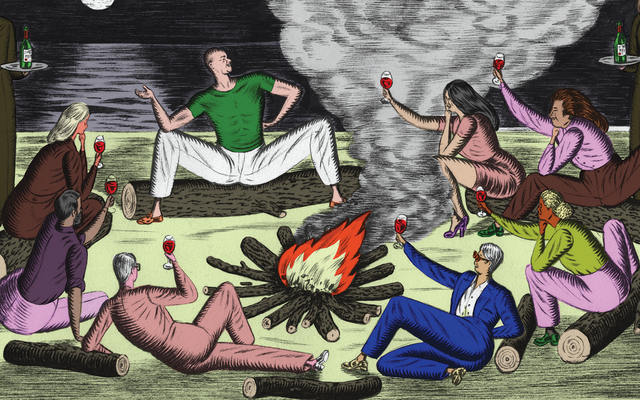
A new history of the Red Scare prompts the question: Does literature still have enough influence to bring down the powerful?
Revenge is a dish best served cold, but how cold? Can we set that dish to cool for 400 years? Satisfaction so long deferred might seem beside the point. We want to watch our enemies humbled in an instant, to see their heads bowed low before our rage burns clean.
In A Treacherous Secret Agent, the prominent Harvard English professor Marjorie Garber proposes a subtler and far slower model of revenge. Garber’s subject is the role of literature in the Red Scare of the 1950s, a period during which artists and writers suspected of Communist sympathies were scapegoated, blacklisted, and hauled in front of investigative committees. In transcripts of hearings of the notorious House Un-American Activities Committee (HUAC), Garber finds an upwelling of voices from the literary past, among them Christopher Marlowe, the revenge dramatist Thomas Kyd, and, from first to last, Shakespeare, Shakespeare, Shakespeare.
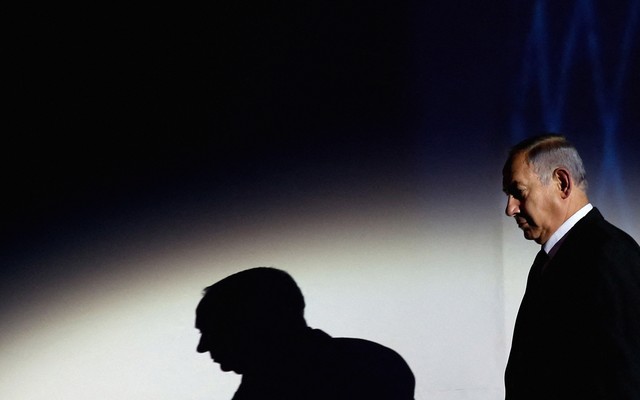
The Israeli prime minister’s focus is, as always, on himself and his near-term political needs. The plight of American Jews is simply not his concern.
The relationship between the United States and Israel is in crisis. Six in 10 Americans have a negative view of Israel, and a majority of those under 50 in both major parties view Israel as well as its prime minister, Benjamin Netanyahu, negatively. After the brutal Gaza war, a large percentage of liberal-leaning Generation Z considers Israel a pariah state. Democratic candidates are scrambling to distance themselves from Israel and its controversial leader; earlier this month, 40 of the 47 Democratic senators voted against a military aid package for the country. And hostility toward Israel is spilling over into hostility toward Jews. Liberal influencers, activists, podcasters, and even politicians are invoking age-old anti-Semitic tropes with frightening regularity.
This weekend’s failed attack highlighted a risk that often goes unspoken.
In the chaotic swirl of events after President John F. Kennedy’s assassination, doctors feared that Vice President Lyndon B. Johnson had suffered a heart attack upon arrival at Parkland Memorial Hospital in Dallas. The signs were ominous: Johnson’s face was ashen, and he was clutching his chest. “There was the real possibility that the No. 3 in the line of succession would become president,” the historian Michael Beschloss told me. Johnson was reportedly examined and a heart attack ruled out—but not before then–House Speaker John McCormack was told that he might be the next president. The declaration prompted a severe bout of vertigo in the 71-year-old.
Few moments in history have so starkly exposed the vulnerabilities of the presidential line of succession—or the lack of clarity about how it is protected. Last night provided another illustration of them. If events at the White House Correspondents’ Association Dinner had gone differently, a gunman who breached security at the Washington Hilton could have reached a ballroom containing an unusually dense cluster of American power. The president and the vice president were seated a few feet apart. Congressional leadership and many Cabinet secretaries were also on hand. In other words, much of the presidential line of succession was in the same spot—and subject to the same vulnerabilities.